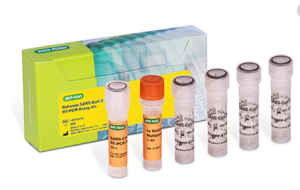
Bio-Rad Laboratories has launched its Reliance SARS-CoV-2 RT-PCR Kit (IVD) for European markets after having met the CE-IVD mark requirements. The Reliance SARS-CoV-2 RT-PCR Kit is a real-time reverse-transcription PCR (RT-PCR) test that can detect nucleic acid in SARS-CoV-2, the virus associated with COVID-19 disease. A version of the assay kit is also available in the United States under an U.S. FDA emergency use authorization (EUA).
The Reliance SARS-CoV-2 RT-PCR Kit (IVD) is designed for clinical diagnostic labs that conduct COVID-19 testing. The assay kit offers the qualitative detection of two separate target regions in the nucleocapsid gene (N1 and N2 regions) of SARS-CoV-2 in nasopharyngeal swab specimens from individuals suspected of being infected by COVID-19.
Because the test are designed to target the nucleocapsid gene, the assay’s performance is not affected by known coronavirus variants as determined by in-silico analysis. The assay kit contains Bio-Rad’s standard and negative molecular controls as well as assay reagents. It is validated to run on Bio-Rad’s CFX96 Dx RT-PCR system, as well as RT-PCR systems from other manufacturers.
“We are excited about the European launch of our SARS-CoV-2 RT-PCR Kit (IVD), a reliable, sensitive, and accurate solution for COVID-19 testing,” said Steven Blakely, Bio-Rad Global Director of Marketing, Life Science Group, Gene Expression. “Testing laboratories worldwide use Bio-Rad’s RT-PCR systems for the detection of SARS-CoV-2. The assay kit is the latest addition to our COVID-19 offering of research and testing products, reflecting our ongoing commitment to helping in the fight against COVID-19,” he said.




C4Diagnostics gets CE mark for Covid-19 IVD test using RT-LAMP technology
, /in E-News /by panglobalC4Diagnostics, a French biotech, has received CE marking for their C4Covid-19 Human for the rapid diagnosis of Covid-19 from a saliva sample. The performance of the test was calculated upon a clinical trial of 1320 participants, carried out in collaboration with Synlab Provence Laboratories. Sensitivity is 86% and specificity is 97.5%.
Shimadzu introduces new AOC-30 Series automatic PRODUCT sample injection system
, /in Product News /by Shimadzu Europa GmbHShimadzu, one of the world leaders in analytical instrumentation, has announced the release of the AOC-30 series of automatic sample injection systems for gas chromatographs.
Porvair provides protocol guide for preparation of buccal swabs for RNA extraction
, /in E-News /by Porvair Sciences Ltd.A large number of COVID-19 diagnostic tests are reliant on detection of viral RNA from buccal swabs by PCR.
Agena Bioscience launches new panel for detection of SARS-CoV-2 variants
, /in E-News /by panglobalAgena Bioscience, has unveiled their MassARRAY® SARS-CoV-2 Variant Panel for Research Use Only (RUO) for the detection of key SARS-CoV-2 virus strains, including the UK (B.1.1.7), South Africa (B.1.351), Brazil (P.1) and Denmark (Cluster 5) variants.
Paradigm4 unveils analytical development data management tool to unlock Allotrope data format ‘treasure trove’
, /in E-News /by panglobalParadigm4 has unveiled its scalable solution for efficiently working with the Allotrope Data Format (ADF).
AMSBIO introduces range of cytosections for antibody screening, immunohistochemistry protocol development
, /in E-News /by AMS Biotechnology (UK) LTDAMSBIO has launched a comprehensive range of cytosections that offer a verified, reproducible and renewable source of positive / negative controls where the expression of the target biomarker is confirmed for accuracy and specificity by an immunoassay.
DiaSys launches SARS-CoV-2 UTAB FS for reliable monitoring of total antibodies for SARS-CoV-2
, /in Product News /by DiaSys Diagnostic Systems GmbHQuantitative assessment of antibodies in Covid-19 is becoming increasingly important. It provides information on the actual spread of infection in the population and enables characterization of a vaccine-induced immune response.
Book now for UKMedLab21 – integrating FOCUS & FiLM
, /in Events /by panglobalCB is delighted to welcome you to register for its first online national congress UKMedLab21. The meeting, which integrates the meetings formerly known as FOCUS and Frontiers in Laboratory Medicine (FiLM) will offer delegates the opportunity to hear from leaders in clinical science, laboratory management and education about development in policy, practice and management.
UKMedLab21 is packed with multiple sessions in two key streams: Leadership & Management and Science & Education.
The event will help laboratory professionals at all levels to regain ground on essential CPD activity that may have been lost in 2020 during the pandemic. We’ll also be featuring a Training Day on 14th June, virtual poster sessions and awards and an industry Expo in partnership with the British Invitro Diagnostics Association (BIVDA).
Flexible ticket types allow you to build a programme tailored to your interests, availability and budget. Workshops will include moderated Q&A opportunities with speakers and presenters.
Evaluation of Recovery of Basic Analytes with Microlute® CP 30 mg Mixed-Mode Strong Cation Exchange (SCX) SPE by HPLC-MS
Laboratory, /in White Papers /by panglobalBackground Sample preparation is important in any type of chromatography analysis. While it can add on extra time, the process of cleaning up samples before injection onto a system results in a range of benefits to the analyst – better recoveries, more reproducible analysis, less downtime of instruments, reduction of troubleshooting, as well as less […]
Bio-Rad launches its Reliance SARS-CoV-2 RT-PCR assay kit in Europe
, /in Product News /by panglobalBio-Rad Laboratories has launched its Reliance SARS-CoV-2 RT-PCR Kit (IVD) for European markets after having met the CE-IVD mark requirements. The Reliance SARS-CoV-2 RT-PCR Kit is a real-time reverse-transcription PCR (RT-PCR) test that can detect nucleic acid in SARS-CoV-2, the virus associated with COVID-19 disease. A version of the assay kit is also available in the United States under an U.S. FDA emergency use authorization (EUA).
The Reliance SARS-CoV-2 RT-PCR Kit (IVD) is designed for clinical diagnostic labs that conduct COVID-19 testing. The assay kit offers the qualitative detection of two separate target regions in the nucleocapsid gene (N1 and N2 regions) of SARS-CoV-2 in nasopharyngeal swab specimens from individuals suspected of being infected by COVID-19.
Because the test are designed to target the nucleocapsid gene, the assay’s performance is not affected by known coronavirus variants as determined by in-silico analysis. The assay kit contains Bio-Rad’s standard and negative molecular controls as well as assay reagents. It is validated to run on Bio-Rad’s CFX96 Dx RT-PCR system, as well as RT-PCR systems from other manufacturers.
“We are excited about the European launch of our SARS-CoV-2 RT-PCR Kit (IVD), a reliable, sensitive, and accurate solution for COVID-19 testing,” said Steven Blakely, Bio-Rad Global Director of Marketing, Life Science Group, Gene Expression. “Testing laboratories worldwide use Bio-Rad’s RT-PCR systems for the detection of SARS-CoV-2. The assay kit is the latest addition to our COVID-19 offering of research and testing products, reflecting our ongoing commitment to helping in the fight against COVID-19,” he said.