



Artificial integrates NVIDIA’s BioNeMo to advance AI-driven drug discovery workflows
Artificial Inc has successfully demonstrated the integration of NVIDIA’s BioNeMo generative AI platform with its laboratory orchestration system, showcasing capabilities for self-driving virtual screening in drug discovery applications. The proof-of-concept represents a significant technical advancement in applying AI technologies to pharmaceutical research workflows.
Technical integration details
The technical collaboration leverages NVIDIA NIM microservices within Artificial’s orchestration platform to facilitate sophisticated molecular screening processes. Artificial’s system architecture is designed to connect laboratory instruments, devices, personnel and data systems within a unified framework that can incorporate advanced computational models.
Through its open API library and adapter modules, the platform enables seamless incorporation of BioNeMo’s AI/ML modelling capabilities directly into laboratory workflows. BioNeMo provides specialised tools for accelerating biomolecular AI model design and training specifically optimised for drug discovery applications.
“We are excited by the work with NVIDIA to demonstrate our capabilities in this space, to redefine what is possible in lab automation and provide the tools to enable researchers to accelerate scientific discoveries and optimize operations through the power of AI,” said David Fuller, CEO of Artificial Inc.

David Fuller, CEO,
Artificial, Inc
Security accreditations achieved
Alongside the technical demonstration, Artificial has secured ISO 27001 and SOC 2 accreditations, establishing compliance with international standards for information security management and operational transparency. These certifications validate the company’s framework for data protection and risk minimisation throughout its platform. The accreditations are particularly significant given the sensitive nature of pharmaceutical and life science research data managed within laboratory information systems. Fuller emphasised the importance of these certifications: “To accelerate the development of gene therapies and life-saving drugs, or rapid pandemic response, the industry is increasingly recognizing the importance of adopting the latest breakthroughs in AI and machine learning. These accreditations reflect our dedication to our customers’ security and compliance needs.”
Applications for laboratory sciences
The integration capabilities demonstrated with NVIDIA technology illustrate potential applications for enhancing operational efficiency in laboratory environments through computational analysis within orchestrated workflows. The system architecture allows scientific teams to incorporate computational insights directly into existing laboratory procedures, potentially reducing research timelines and improving experimental precision. Artificial was previously selected for the NVIDIA Inception programme in 2024, establishing a foundation for the current collaborative project.
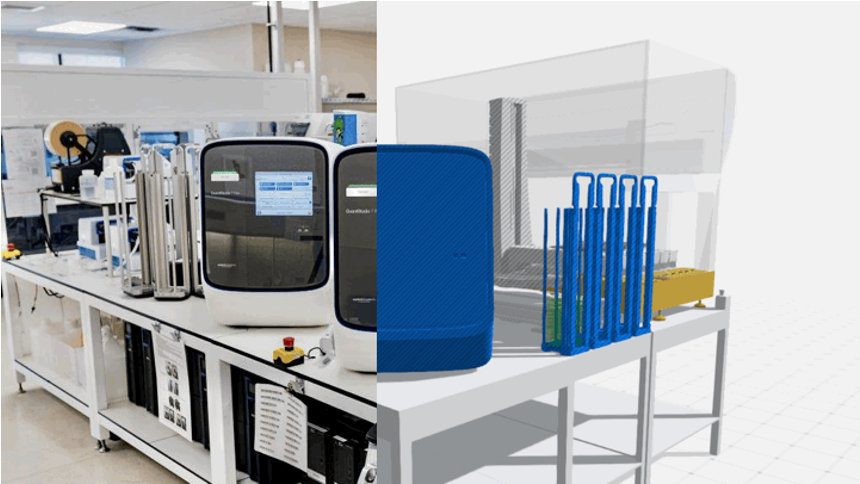
Artificial’s orchestration platform

