



Point-of-care glucose meters are used in a variety of settings to monitor glucose concentration in whole blood. Comparability between the results from these meters and results issued on plasma samples was examined by the International Federation of Clinical Chemistry and Laboratory Medicine (IFCC), which in 2006 recommended that all glucose results should be reported as a plasma concentration. The group advised that a conversion factor of 1.11 be used to convert whole blood results to plasma equivalence. As neonatal hematocrit differs from that seen in adults, the IFCC recommendation is not appropriate in neonatal samples. It was decided to review this recommendation.
by Mary Stapleton and Ruth O’Kelly
Introduction
Neonates may be at risk of hypoglycemia in the first few hours and days after birth, the cause of which may be attributed to the stress of extra-uterine life [1]. However, it may also signal an underlying pathology, and prolonged episodes of hypoglycemia have been described as a cause of neurodevelopmental morbidity [2]. Identification of hypoglycemic episodes is, therefore, considered to be vital in the neonatal period, but the population in question often includes extremely premature and small infants. By regularly using point-of-care (POC) devices to measure glucose in this cohort of patients, it is hoped to obtain useful results while avoiding unnecessary blood loss.
In instances where glucose results obtained on POC devices do not fit the clinical picture, a fluoride-preserved sample may be sent for plasma analysis.
Discrepancies between POC whole blood and laboratory plasma results may be a cause of lack of confidence in bedside technology. There are several causes of such discrepancies, and while literature has suggested that hypoglycemia is missed by using POC devices, the role of glycolysis as a pre-analytical factor is starting to be recognized [3]. The second possible cause is that differing sample types are measured and unlikely to be comparable. In 2006, the International Federation of Clinical Chemistry and Laboratory Medicine (IFCC) published a recommendation that manufacturers of POC devices were to report glucose concentration as though it were a plasma sample rather than whole blood. A conversion factor of 1.11 was calculated to equate the results from the two sample types (whole blood × 1.11 = plasma) [4].
The aim of this study was to perform glucose measurements in neonatal and adult whole blood and plasma samples by a laboratory method and a POC method without a plasma correction factor. By comparing results, it was hoped to determine the appropriateness of the plasma conversion factor as recommended by the IFCC.
Methods
The HemoCue 201+ POC methodology that was used to analyse whole blood samples consists of an analyser and measuring cuvette containing dried reagents. The cuvette serves as a pipette, reaction chamber and measuring vessel. Analysis of plasma for glucose concentration was performed on an automated chemistry platform (Beckman Coulter AU640) using a hexokinase method in a laboratory accredited to ISO 15189 standards.
Samples for plasma glucose analysis were obtained in tubes containing fluoride as an antiglycolytic agent. When measuring glucose in the POC device, an aliquot of sample was taken from the sample in the blood tube before separation.
Statistical analysis, using Bland–Altman analysis to compare results by two different methods, was performed using Analyse-It software for Microsoft Excel (Analyse-It Software Ltd).
Study 1
Fluoride-stabilized plasma samples from 25 neonates (aged 3 days or less) received into the laboratory for routine glucose estimation were included in the study. An aliquot was taken from each sample before centrifugation and analysis, and glucose determination by POC was performed on a HemoCue 201+ analyser located in the laboratory.
Study 2
Fluoride plasma samples from pregnant women (n = 34) were also analysed for whole blood and plasma glucose in the same manner described in study 1.
Study 3
A portion of patients who were a part of the study had a sample sent for full blood count (FBC) analysis on the same day of the glucose request. Results were subdivided into greater and less than the median result for both hematocrit and mean corpuscular volume (MCV). These were then reviewed against the reported glucose concentrations.
Results
Studies 1 and 2
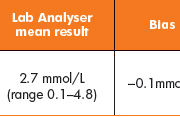
No significant difference was noted between neonatal samples analysed (Table 1, Fig. 1) (bias, 0.05mmol/L). However, a significant difference (P<0.0001) was noted between the two methods when samples had been obtained from adult patients (Table 2, Fig. 2) (bias, 0.6mmol/L).
Study 3
A standard calculation for determining the percentage of water in blood was reviewed (Equation 1). The data obtained from the FBC samples was used to propose plasma conversion factors for both adult and neonatal patients (Table 3). It was assumed that the median hematocrit in a healthy, non-pregnant adult is 0.43 L/L, with a resulting calculated conversion factor (CCF) of 1.11.
Discussion
This study investigated the reported difference between samples analysed for glucose using POC meters in a ward setting and those samples received for glucose analysis in a central laboratory. It may be seen that there is good correlation between POC and laboratory analyser methods in samples obtained from neonates.
This correlation was not seen in the set of adult samples analysed, and an average difference of up to 10% in results was reported from the two methods. By applying a plasma equivalence factor of 1.11 to the whole blood results from adults as recommended by the IFCC in 2006, the difference in results from adult patients could be explained.
The IFCC equivalence factor based on the hematocrit in neonates is 1.15, but this study confirms that the neonatal samples did not require this factor. POC glucose measurements in the HemoCue device include a cell lysis step and thus whole blood (intra-and extra-cellular) glucose is measured. However, neonatal blood is recognized as containing resistant cells and cells may not fully lyse causing the measured glucose to reflect extra-cellular glucose similar to plasma measurements.
In a previous study [5], Vadasdi and Jacobs compared heparinized samples from neonates that were analysed on the HemoCue immediately before centrifugation and assayed by the laboratory method. No significant difference was found between the mean values of the two methods over a hematocrit range of 0.185–0.72. Our study agrees with these findings.
Vadasdi and Jacobs suggested that the effect of hematocrit was decreased significantly by the hemolysis step in the cuvette. It is recognized that HemoCue POC meters are not affected by hematocrit [4, 5], which is why this meter is frequently used in a neonatal setting. Vadasdi and Jacobs also suggested that because the MCV (which describes the size of the red cells) is greater than seen in adults, there is less of a dilutional effect due to membrane proteins after lysis. Our study showed that the mean MCV in neonates was greater than seen in our adult (pregnant) subjects.
Conclusion
Laboratory measurements for glucose are usually performed on plasma samples while POC measurements are performed on whole blood. A difference in results may be expected as whole blood glucose is known to be approximately 11% lower than plasma glucose due to lower volume of water in the erythrocytes.
The difference between plasma and whole blood glucose in adults was similar to the recommended IFCC “plasma equivalent factor” of 1.11. The lack of difference between plasma and whole blood glucose in neonatal samples may be explained by the increased MCV or the presence of resistant red cells that may not undergo lysis in the POC device.
Many modern POC devices for measuring glucose now include the IFCC plasma conversion factor and such results should be carefully interpreted.
References
1. World Health Organization. Hypoglycaemia of the newborn. Review of the literature. WHO/CHD/97.1, 1997.
2. Lucas A, Morley R, Cole TJ. Adverse neurodevelopmental outcome of moderate neonatal hypoglycaemia. BMJ 1988; 297(6659): 1304–1308.
3. Stapleton M, Daly N, O’Kelly R, Turner MJ. Time and temperature affect glycolysis in blood samples regardless of fluoride- based preservatives: a potential underestimation of diabetes. Ann Clin Biochem 2017; 54: 671–676.
4. D’Orazio P, Burnett RW, Fogh-Anderson N, Jacobs E, Kuwa K, Külpmann WR, Larsson L, Lewenstam A, Maas AH, et al. Approved IFCC recommendation on reporting results for blood glucose: International Federation of Clinical Chemistry and Laboratory Medicine Scientific Division, Working Group on Selective Electrodes and Point of Care Testing (IFCC-SD-WG-SEPOCT). Clin Chem Lab Med 2006; 44: 1486–1490.
5. Vadasdi E, Jacobs E. HemoCue β-glucose photometer evaluated for use in a neonatal intensive care unit. Clin Chem 1993; 39(11): 2329–2332.
The authors
Mary Stapleton* FRCPath; Ruth O’Kelly FRCPath
Biochemistry Department, Coombe Women & Infants University Hospital, Dublin, Ireland
*Corresponding author
E-mail: mary.stapleton@nhs.net

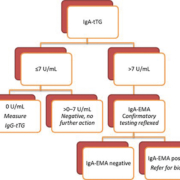
by L. Hughes, Dr A. Ballantyne, Dr C. Ford, Dr A. Ekbote and Prof. R. Gama Celiac disease (CD) is a common autoimmune gastrointestinal disease. Several serological tests are available to screen for CD. Since CD can present with fatigue, serological screening was incorporated into a ‘tired all the time’ testing profile available to general […]
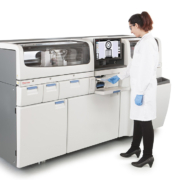
Mass spectrometry (MS) is a well-known and broadly used analytical technique, and one that is particularly effective when coupled with liquid chromatography (LC). LC-MS/MS operates by analyte separation, ionization, mass analysis and detection, and lends itself as an ideal technique to meet the needs of a range of laboratory types. Over the past decade, LC-MS/MS has been applied across several different fields of clinical diagnostics and has become commonplace for forensic and clinical toxicology. However, until now it has only been used across a limited number of specialities, including endocrinology and therapeutic drug monitoring.
By Professor Brian Keevil and Dr Sarah Robinson
Such a powerful technique has the potential to bring significant advantages to the clinical setting, and would enable clinicians to analyse multiple analytes at greater specificities than immunoassay-based methods. It has the potential to supersede alternative methods since it avoids the issues surrounding interferences and the subsequent generation of unreliable data. Even with such advantages, LC-MS/MS has not yet been further adopted by the clinical community. The lack of an automated system has limited its suitability to routine clinical use, while also presenting challenges to laboratories under pressures to standardize and harmonize their practices. Current LC-MS/MS systems involve multiple and complex manual stages that are open to human error while being both time- and labour-intensive. Furthermore, the lack of standardization of LC-MS/MS methods is deterring clinical labs from benefiting from their advantages.
Standardization is critical in clinical laboratories since it is necessary to ensure the correct results are obtained and they are in accordance with results from other labs, especially for therapeutic drug monitoring and endocrine applications.
The challenge of standardization
One of the barriers to more widespread LC-MS/MS use is the lack of properly standardized methods and different laboratories will often use a wide range of techniques, equipment and internal standards. Together, these factors may mean that different results are generated from the same sample.
This level of variation makes it challenging to obtain proper standardization of LC-MS/MS results and is highly problematic. Not only does it become difficult to control results within a lab and ensure they remain comparable year on year, but it can create discrepancies between labs. This could ultimately lead to incorrect patient diagnoses and clinicians recommending the wrong treatment programmes.
The drive for change
Until now, LC-MS/MS systems have been designed with the research laboratory in mind and, as such, are highly configurable making them great for developing methods. However, the needs of the clinical lab are different from those of the research community. The clinical setting requires a dedicated system that not only promotes, but also facilitates standardization. Studies have shown that, through careful use of the same instrument, column and methods, it is possible to generate consistent and reliable resulting data from LC-MS/MS systems based at different laboratories. There is currently a drive from organizations, such as the International Federation of Clinical Chemistry (IFCC), the Centers for Disease Control and Prevention (CDC), and the Endocrine Society, to harmonize assays across laboratories to improve levels of quality. The adoption of one dedicated system among an entire network of laboratories would not only satisfy this organizational drive, but also help clinicians be confident that the data across their entire network is standardized, and thus comparable and repeatable.
The availability of a dedicated system with standardized methods and procedures would make this process significantly easier and remove one of the primary barriers to uptake of this gold standard technique. A dedicated system would need to be optimized for the specific methods run by each laboratory, and available with columns, reagents, calibrators and controls that are consistent and designed specifically for the system. This would help to ensure all data generated is both reproducible and accurate – paramount to patient diagnosis and care. In addition, a clinical LC-MS/MS system would need to be automated and easy to use. Clinical labs are extremely busy so even the most junior members of the staff must be able to operate the instrument and walk away with the confidence that samples are being analysed without error or the need for manual intervention. A system such as this would help to ensure patients were properly diagnosed and appropriate treatment plans devised.
Breaking through the barrier
If a network of laboratories decided to start using a dedicated clinical analyser, it would be able to adopt common reference ranges and reagents, which would provide much greater confidence in the consistency of results. For example, if a patient was transferred to a different hospital mid-way through treatment then there would be a level of assurance that the test results would be the same from both facilities. The data would therefore be directly comparable as long as both labs were using the same dedicated LC-MS/MS system.
Proper standardization is extremely important, yet challenging, and is a key consideration when deciding on an analytical method for implementation. An automated, dedicated clinical LC-MS/MS system would enable inter-laboratory standardization, while allowing interference-prone immunoassay-based tests to be phased out and replaced by clinical LC-MS/MS analysers. The results obtained from one laboratory would then be consistent over many years, and match those results generated from the same patient samples in other labs using the same system. Furthermore, such a system could be operated by the entire laboratory team, removing the need for in-depth and specialist training. This ease of use would decrease the investment required in training, while freeing up more experienced team members to focus on their research.
Conclusion
Analytical techniques are a core component to clinical workflow to ensure accurate patient diagnosis and treatment. LC-MS/MS has clear advantages over alternative immunoassay-based methods, with the ability to analyse multiple analytes at greater specificities. However, its uptake across the clinical community has been slow. This is because LC-MS/MS systems to date have been developed for use in research laboratories, and although the data have been demonstrated to be of high quality, the technology does not simply translate to the needs of the clinical lab.
With analytical needs that directly correlate to patient treatment plans, analytical methods within the clinical lab need to be automated, standardized, reliable and provide walk-away capabilities. This clear need for a dedicated analytical technique has driven the development of the new Thermo Scientific™ Cascadion™ SM Clinical Analyzer*. This dedicated clinical LC-MS/MS system is accurate, easy to use, and has been designed specifically for the clinical laboratory, facilitating standardization both on an inter- and intra-laboratory level to enable clinicians to fully leverage the power of this technique. The impact of this system would help laboratories and laboratory networks to meet their clinical needs.
To find out more, visit www.thermofisher.com/cascadion
*This product is in development and not available for sale. This product is not CE marked or FDA 510(k) cleared.
The authors
Professor Brian Keevil1 and Dr Sarah Robinson2
1Consultant Clinical Scientist and Head of the Clinical Biochemistry Department, University Hospital of South Manchester
2Market Development Specialist, Thermo Fisher Scientific



Disease-associated variations in DNA methylation profiles hold significant potential for diagnostic and research applications. Unfortunately, scant and degraded samples often limit the analyses which can be performed. To overcome these issues, we developed Mass Spectrometry Minimal Methylation Classifier (MS-MIMIC) to identify then reliably analyse disease-specific DNA methylation profiles. The technique has now been validated in a cohort of pediatric medulloblastoma cases.
by Dr Ben Chaffey, Dr Debbie Hicks, Dr Edward Schwalbe and Prof. Steve Clifford
Background
Altered DNA methylation patterns have emerged as valuable biomarkers of disease pathogenesis, showing clear potential in diagnostics, sub-classification and prediction of therapeutic response/ disease course [1–7]. However, clinical assessment of these altered patterns can be problematic, with sample materials often being degraded/scant, such as formalin-fixed paraffin-embedded (FFPE) tissue and core biopsies, and certain platforms, such as DNA methylation microarrays, having a requirement for batched assessments of relatively large numbers of samples. This compromises generation of data from real-world samples within clinically meaningful timeframes, hampering translation of research findings into routine practice.
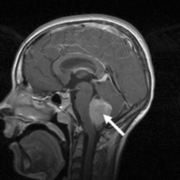
In this project, we focused on developing a new DNA methylation state assay to provide molecular subgrouping of cases of medulloblastoma (Fig. 1), the most frequently occurring malignant brain tumour in children. This disease has an approximate incidence of 1.5 cases per million, rising to 6 per million in children aged 1–9 years. It also occurs in adults, although in this group it is around ten times less common [8].
Although rates of survival to 5 years and beyond following diagnosis are around 65–70%, medulloblastoma still causes around 10% of all childhood cancer deaths. Initial treatment generally consists of complete or near complete surgical resection followed by adjuvant treatment with both post-operative radiotherapy and chemotherapy. Despite the fact that survival rates have improved over past decades, the delivery of individualized therapies based on patient-specific disease-risk profiles remains a major goal; intensified treatment for poor-risk disease, while reducing therapy for favourable-risk cases, with the overall aim of maximizing survival while minimizing late effects [9].
Medulloblastomas can be placed into one of four distinct subgroups, which are defined by specific methylomic, transcriptomic and genomic features. These are WNT, SHH, Group 3 and Group 4 [10]. Each group displays characteristic clinical and pathological features, drug targets and outcomes, and contributes significantly to the 2016 World Health Organization (WHO) classification of brain tumours [11]. Molecular subgrouping is, therefore, an important step in determining the most appropriate course of treatment and follow-up for individual patients [12].
Mass spectrometry minimal methylation classifier (MS-MIMIC) assay
The assay we have developed and validated, MS-MIMIC, is a novel polymerase chain reaction (PCR)-based assay for the multiplexed assessment of multiple signature CpG loci. We first identified a DNA methylation signature of 17 CpG loci using genome-scale Illumina 450k DNA methylation microarray data from 220 medulloblastoma cases. The 50 most discriminatory CpG loci for each molecular subgroup (200 loci in total) were considered as candidates for inclusion in the signature set. These were triaged using a 10-fold cross validated classification fusion algorithm, followed by a reiterative primer design process where amenability to primer design and multiplex bisulfite PCR was assessed in silico before finally undergoing in vitro PCR validation.
Candidate signature CpG loci were then analysed by a specific custom iPLEX assay [13] (Agena Bioscience). In this method (displayed schematically in Fig. 2), methylation-dependent SNPs representative of CpG methylation status are induced by initial treatment of DNA with sodium bisulfite [14] followed by multiplexed target-region amplification PCR, then single base extension and termination of target-specific probe oligonucleotides. The products of this reaction are analysed using MALDI-ToF (matrix-assisted laser desorption and ionisation – time of flight) mass spectrometry (MassARRAY System, Agena Bioscience). Each potential CpG locus variant yields a product with a unique and characteristic mass, enabling their rapid and unambiguous identification. MALDI-ToF analysis of single base variants is widely used to provide clinical DNA diagnostics in related genotyping applications [15], and is the key technical innovation which enables the robust assessment of medulloblastoma molecular subgroup, especially for samples which are refractory to analysis using conventional DNA methylation-array based methods.
Using these techniques, we generated an optimal, multiply-redundant 17-CpG locus signature and a robust assay for its detection.
A Support Vector Machine (SVM) classifier for the signature was then developed, using the existing 450k DNA methylation array data as a training set. SVM is a supervised machine learning technique commonly used in multiple areas of data analysis, including analysis of microarray data [16], making it well-suited to this application. Crucially, it returns a probability of group membership, enabling the assessment of confidence of subgroup assignment.
Next, we assessed MS-MIMIC performance against Illumina 450k methylation microarrays using an independent validation cohort of 106 medulloblastoma DNA samples which contained examples of all four medulloblastoma subgroups. These samples were also derived from tissue which reflected different clinical fixation methods commonly in use; fresh-frozen biopsies (n=40), FFPE tumour section (n=39), or FFPE-derived nuclear preparations [17] (n=27) produced by cytospin, a pre-analytical method that uses centrifugation to create a monolayer of cells for analysis on a slide from a low-concentration cellular suspension sample [18]. In this validation cohort, MS-MIMIC faithfully recapitulated DNA methylation array molecular subgroup assignments.
Quality control measures for CpG locus-specific assay failure were established; up to six failed CpG loci per sample were tolerated within the multiply-redundant signature/classifier, without impacting performance. Forty-three out of 106 validation cohort samples were affected by at least one locus failure, reflecting the damaged nature of DNA generally obtained from some of these samples. Five out of 106 samples had more than seven failed CpGs and were deemed not classifiable (NC). Molecular subgroup classifications were then compared, with MS-MIMIC classifications showed complete concordance with the reference subgroup, as determined by DNA methylation array [10]. Furthermore, CpG-level methylation estimates (β-values) were equivalent between methods (R2 = 0.79). As anticipated, fresh-frozen derivatives performed best (n=39/40; 98% successfully subgrouped), with 91% success (n=56/61) using FFPE-derived DNA from tumour sections and cytospin preparations (Fig. 3a–c).
Application of MS-MIMIC to the HIT-SIOP-PNET4 clinical trials cohort
Following successful assay development and validation, we next wished to test MS-MIMIC methylation signature detection in limited, poor quality, archival, clinical biopsies. Analysis of remnant material from the HIT-SIOP-PNET4 cohort [17] offered the first opportunity to determine the potential utility of molecular subgroup status to predict disease outcome in a clinical trial of risk-factor negative, ‘standard risk’ (SR) medulloblastoma. Only FFPE sections (n=42/153 available tumour samples) and cytospin nuclear preparations (approximately 30 000 nuclei isolated and centrifuged onto microscope slides; n=111/153) remained from this study archive and all DNA preparations fell below quality and quantity thresholds (>200 ng double-stranded DNA (dsDNA)) required for methylation profiling using conventional research methods (Illumina 450k and MethylationEpic arrays [16]). Using MS-MIMIC, 70% (107/153) of samples were successfully subgrouped, and subgroup assignments and β-value estimations were consistent across duplicate determinations. Assay performance was equivalent across the input DNA range (<2 ng (limit of detection) to 100 ng dsDNA (41.4 ng median DNA input).
Reasons for assay failure included unsuccessful bisulfite conversion/PCR (6%; 9/153), and inability to classify due to assay QC failure (24%; 37/153). These findings from HIT-SIOP-PNET4 reveal important subgroup-dependent molecular pathology in SR medulloblastoma. Group 4 was most common (n=62; 58%), with approximately equivalent numbers of WNT (18/170; 16%), SHH (17/107; 16%) and Group 3 (10/107; 9%) tumours observed. The majority (11/13) of events (defined as disease recurrence or progression following treatment) affected Group 4 patients [82% 5-year progression-free survival (PFS)], with >95% PFS in non-Group 4 patients. Subgroup assignment will thus be essential to inform future clinical and research studies in SR medulloblastoma.
Discussion
Detection of disease-specific variations in DNA methylation patterns has great potential for both supporting biomedical research and improving the quality of care that is delivered to patients. MS MIMIC has so far only been applied to medulloblastoma but this approach has clear potential for use in other cancers [7] and in other diverse settings, for example smoking [1], obesity [2], human fetal alcohol spectrum disorder [3] and aging [4].
Key resources which must be available for development of an MS-MIMIC assay for a given condition are a suitable collection of data concerning disease-state specific methylation patterns obtained using an array system such as those mentioned above, samples with which to perform assay validation, bioinformatics knowledge and support to create, optimize and operate the disease-specific SVM classifier system, plus access to a MassARRAY System for analysis. MS-MIMIC is discussed in greater detail in Schwalbe et al., 2017 [19].
References
1. Besingi W, Johansson A. Smoke-related DNA methylation changes in the etiology of human disease. Hum Mol Genet 2014; 23: 2290–2297.
2. Wahl S, Drong A, Lehne B, Loh M, Scott WR, Kunze S, Tsai PC, Ried JS, Zhang W et al. Epigenome-wide association study of body mass index, and the adverse outcomes of adiposity. Nature 2017; 541: 81–86.
3. Portales-Casamar E, Lussier AA, Jones MJ, MacIsaac JL, Edgar RD, Mah SM, Barhdadi A, Provost S, Lemieux-Perreault LP et al. DNA methylation signature of human fetal alcohol spectrum disorder. Epigenetics Chromatin 2016; 9: 1–20.
4. Ong ML, Holbrook JD. Novel region discovery method for Infinium 450 K DNA methylation data reveals changes associated with aging in muscle and neuronal pathways. Aging Cell 2014; 13: 142–155.
5. Mehta D, Klengel T, Conneely KN, Smith AK, Altmann A, Pace TW, Rex-Haffner M, Loeschner A, Gonik M et al. Childhood maltreatment is associated with distinct genomic and epigenetic profiles in posttraumatic stress disorder. Proc Natl Acad Sci USA 2013; 110: 8302–8307.
6. Bacalini MG, Gentilini D, Boattini A, Giampieri E, Pirazzini C, Giuliani C, Fontanesi E, Scurti M, Remondini D et al. Identification of a DNA methylation signature in blood cells from persons with Down Syndrome. Aging 2015; 7: 82–96.
7. Sturm D, Witt H, Hovestadt V, Khuong-Quang DA, Jones DT, Konermann C, Pfaff E, Tönjes M, Sill M et al. Hotspot mutations in H3F3A and IDH1 define distinct epigenetic and biological subgroups of glioblastoma. Cancer Cell 2012; 22: 425–437.
8. Smoll NR, Drummond KJ. The incidence of medulloblastomas and primitive neurectodermal tumours in adults and children. J Clin Neurosci 2012; 19: 1541–1544.
9. Pizer BL, Clifford SC. The potential impact of tumour biology on improved clinical practice for medulloblastoma: progress towards biologically driven clinical trials. British Journal Of Neurosurgery 2009; 23: 364–375.
10. Taylor MD, Northcott PA, Korshunov A, Remke M, Cho YJ, Clifford SC, Eberhart CG, Parsons DW, Rutkowski S et al. Molecular subgroups of medulloblastoma: the current consensus. Acta Neuropathol 2012; 123, 465–472.
11. Louis DN, Cavenee WK, Ohgaki H, Wiestler OD. WHO classification of tumours of the central nervous system, 4th edn. pp.184–200. IARC Press, 2016.
12. Schwalbe EC, Williamson D, Lindsey JC, Hamilton D, Ryan SL, Megahed H, Garami M, Hauser P, Dembowska-Baginska B et al. DNA methylation profiling of medulloblastoma allows robust subclassification and improved outcome prediction using formalin-fixed biopsies. Acta Neuropathol 2013; 125: 359–371.
13. Gabriel S, Ziaugra L, Tabbaa D. SNP genotyping using the Sequenom MassARRAY iPLEX platform. Current Protocols in Human Genetics, Chapter 2: Unit 2.12. Wiley & Sons 2009.
14. Wang RY, Gehrke CW, Ehrlich M. Comparison of bisulfite modification of 5-methyldeoxycytidine and deoxycytidine residues. Nucleic Acids Res 1980; 8: 4777–4790.
15. Griffin TJ, Smith LM. Single-nucleotide polymorphism analysis by MALDI-ToF mass spectrometry. Trends Biotechnol 2000; 18: 77–84.
16. Hovestadt V, Remke M, Kool M, Pietsch T, Northcott PA, Fischer R, Cavalli FM, Ramaswamy V, Zapatka M et al. Robust molecular subgrouping and copy-number profiling of medulloblastoma from small amounts of archival tumour material using high-density DNA methylation arrays. Acta Neuropathol 2013; 125: 913–916.
17. Clifford SC, Lannering B, Schwalbe EC, Hicks D, O’Toole K, Nicholson SL, Goschzik T, Zur Mühlen A, Figarella-Branger D et al. Biomarker-driven stratification of disease-risk in non-metastatic medulloblastoma: Results from the multicentre HIT-SIOP-PNET4 clinical trial. Oncotarget 2015; 6: 38827–38839.
18. Koh CM. Preparation of cells for microscopy using cytospin. Meth Enzymol 2013; 533: 235–240.
19. Schwalbe EC, Hicks D, Rafiee G, Bashton M, Gohlke H, Enshaei A, Potluri S, Matthiesen J, Mather M et al. Minimal methylation classifier (MIMIC): A novel method for derivation and rapid diagnostic detection of disease-associated DNA methylation signatures. Sci Rep 2017; 7: 13421.
The authors
Ben Chaffey1 PhD, Debbie Hicks2 PhD, Edward Schwalbe3 PhD, Steve Clifford2* PhD
1NewGene Ltd, International Centre for Life, Newcastle-upon-Tyne, UK
2Wolfson Childhood Cancer Research Centre, Northern Institute for Cancer Research, Newcastle University, Newcastle-upon-Tyne, UK
3Northumbria University, Newcastle-upon-Tyne, UK
*Corresponding author
E-mail: steve.clifford@ncl.ac.uk
March 2026


Prins Hendrikstraat 1
5611HH Eindhoven
The Netherlands
info@clinlabint.com
PanGlobal Media is not responsible for any error or omission that might occur in the electronic display of product or company data.