



Autoimmune thyroid diseases, comprised by Hashimoto thyroiditis, Graves disease, and their variants, are characterised histologically by lymphocytic infiltration of the thyroid gland, biochemically by the presence of well-defined autoantibodies, and clinically by the impairment of thyroid function. The aetiology and mechanisms of the autoimmune damage depend upon genes and environmental factors such as iodine intake and smoking.Three major autoantigens have been identified for autoimmune thyroid disease: thyroglobulin, thyroperoxidase and thyrotropin receptor. Antibodies against these autoantigens are now part of the clinical toolbox. They are not only used to confirm a diagnostic suspicion, but also to predict recurrence of future onset of thyroid autoimmunity.
by Dr Alessandra De Remigis and Dr Patrizio Caturegli
Background on autoimmune thyroid diseases
Autoimmune thyroid diseases (ATDs) comprise two major conditions: Hashimoto thyroiditis with goitre and euthyroidism or hypothyroidism, and Graves disease with goitre, hyperthyroidism and often ophthalmopathy. Hashimoto thyroiditis is named after Dr Hakaru Hashimoto who described in 1912 the thyroid pathological features of four women who had undergone thyroidecomty because of compressive symptoms [1]. Graves disease is named after Dr Robert Graves who reported three patients with hyperthyroid goitre and ocular involvement (Graves ophthalmopathy) [2]. Both conditions are characterised pathologically by infiltration of the thyroid gland with autoreactive T and B lymphocytes and biochemically by the production of thyroid autoantibodies and abnormalities in thyroid function. It is not uncommon to observe transition from one clinical picture to another within the same patient over time, suggesting the existence of common immunological mechanisms [3]. Numerous clinical variants are described for each ATD. For Hashimoto thyroiditis, in addition to the classical goitrous form, fibrous, juvenile, thyrotoxic, post-partum, and IgG4-related forms are described. For Graves disease, beside the classical goitrous form with hyperthyroidism, there is the variant with hyperthyroidism and ophthalmopathy, the one with just ophthalmopathy (called euthyroid Graves disease), and the one with ophthalmopathy and localised myxoedema. Similar to many other autoimmune diseases, ATDs can occur in isolation or associated with other autoimmune diseases, often affecting other endocrine glands. In some patients this association is clinically recognisable and defined as polyglandular autoimmune syndrome.
ATDs are the most common autoimmune diseases with a population prevalence around 2 % in women and 0.2% in men. These estimates are considered to be 10 times higher if ‘subclinical disease’ is taken into consideration [4].
The pathogenesis of ATDs remains to be elucidated but it is believed to rely on the interaction between endogenous genetic factors and exogenous environmental factors. Genes that confer susceptibility to ATDs have been investigated since the 1970s via candidate gene analysis, linkage analysis and genome-wide association studies. Only a handful of genes have been identified and confirmed to increase the risk of ATDs development, but each gene contributes only a very small effect, with odds ratios typically below 3. These genes include the class II region of the major histocompatibility complex, CTLA-4, PTPN22, CD40, CD25, FCRL3, thyroglobulin, and the TSH receptor [5]. Another endogenous factor that has been studied extensively in ATD is pregnancy [6],which is known to ameliorate disease severity. The two major environmental factors implicated in ATDs initiation and progression are iodine and smoking. High iodine intake triggers lymphocytic infiltration of the thyroid in genetically susceptible animals (BB/W rats and NOD.H-2h24 mice); and is associated with increased prevalence and incidence of autoimmune thyroiditis and overt hypothyroidism in humans [7]. Iodine supplementation should thus be kept within the WHO recommended range to prevent from one side iodine deficiency and from the other side autoimmune thyroiditis [8]. Smoking does not have a univocal effect on AITD. It increases the risk of developing Graves disease and aggravates Graves ophtalmopathy. Smoking cessation is associated wth a better response of Graves ophthalmopathy to immunosuppressive treatment [9]. However, smoking seems to have a beneficial effect on Hashimoto thyroiditis and decreases the levels of thyroid autoantibodies [10].
Significant progress has been accomplished on the identification and characterisation of the thyroid autoantigens that are targeted by the immune system in patients with ATDs, so that antibodies against thyroglobulin, thyroperoxidase and the TSH receptor are now well-established tools in the clinical arena.
Thyroid antigens and antibodies
Thyroglobulin
Thyroglobulin is a large glycoprotein made of two identical 330-kDa subunits composed of 2,768 amino acids. Each subunit contains 66 tyrosines that when iodinated and processed make up the thyroid hormones (T4 and T3). Thyroglobulin contains numerous immunodominant epitopes for both T and B lymphocytes. Some epitopes are located in the iodine-rich hormonogenic regions and are affected by the iodine content.
Thyroglobulin antibodies (TgAb) recognise predominantly conformational epitopes, tend to favour the IgG2 subclass and do not fix complement. TgAbs were originally detected by tanned red cell haemagglutination, then by quatitative RIAs or ELISAs, and more recently by automated chemiluminescent EIAs. The analytical sensitivity varies depending on the assay method used, and the cut-off value for positivity is typically set at 100 WHO units/mL.
TgAbs are a marker of underlying thyroid autoimmunity but can also be found in non-autoimmune thyroid diseases as well as in healthy controls [11]. Traditionally they are requested together with thyroperoxidase antibodies to corroborate a diagnostic suspicion of ATDs. Currently, however, the greatest utility of TgAb measurement is in the follow-up of patients with differentiated thyroid cancer. These patients undergo thyroidectomy, possibly combined with radioactive iodine administration, and are then followed by measuring thyroglobulin antigen in the serum. Since thyroglobulin is a thyroid-specific antigen, its serum levels should be undetectable after thyroid ablation in the absence of recurrence or metastasis. If the patient had autoimmune thyroiditis in addition to thyroid cancer, TgAbs can persist for years after thyroidectomy and interfere with the thyroglobulin antigen determination. In particular, they can cause falsely low or undetectable levels of thyroglobulin antigen, and therefore a false positive clinical assessement. This realisation has led to the introduction of reflex measurement of TgAbs any time thyroglobulin is measured in thyroid cancer patients. Numerous studies have attempted to distinguish the type of TgAb based on the specific epitopes they recognise. Latrofa and colleagues have recently reported a pattern of TgAb for patients with ATDs and another for patients with multinodular goitre and differentiated thyroid cancer [12]. TgAbs also seem to recognise distinct epitopes in healthy subjects and patients with clinically manifest disease [13], suggesting the potential clinical utility of TgAbs based on specific thyroglobulin epitopes rather than on the entire thyroglobulin molecule.
Thyroperoxidase
Thyroperoxidase is a large membrane-associated glycoprotein (933 amino acids with a molecular weight of approximately 105 kDa) expressed at the apical (follicular) side of the thyroid cell. It separates to the microvillar/microsomal fraction upon ultracentrifugation and for this reason was originally called M antigen. Thyroperoxidase antibodies (TPOAbs) are predominantly IgG, can fix complement and cause damage to the thyroid cell by cell-mediated cytotoxicity [14]. TPOAbs are considered more specific for autoimmune thyroiditis than TgAbs. They correlate directly with the number of autoreactive lymphocytes infiltrating the thyroid gland as well as with the degree of thyroid hypoechogenicity on thyroid ultrasound. Like TgAbs, TPOAbs were originally measured by semiquantitative methods, then by RIAs or ELISAs, and more recently by automated chemiluminescent EIAs. The analytical sensitivity, as for TgAbs, varies according the assay method used; and the cut-off for positivity is 100 WHO units/mL.
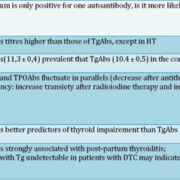
In the third National Health and Nutrition Examination Survey the presence of TPOAbs was strongly associated with TSH values greater than 4.5mUI/l and clinical hypothyroidism as well as with TSH values lower than 0.4 mUI/l and clinical hyperthyroidism [15]. These relationships were not observed for TgAbs, suggesting that their diagnostic and prognostic value is lower than that of TPOAbs [Table 1]. TPOAbs can thus be considered the best serological marker we currently have to establish or corroborate a diagnosis of autoimmune thyroiditis. They also have another unique clinical application in the prediction of post-partum thyroiditis. It has been shown that pregnant women who have TPOAbs at the beginning of pregnancy have a significantly greater risk to develop hypothyroidism in the first year after delivery, as well as permanent thyroid dysfunction in the long-term follow-up [16].
TSH Receptor autoantibodies
The thyrotropin receptor (TSHR) is a G protein-coupled glycoprotein composed of 764 amino acids with a molecular weight of approximately 87 kDa. It is composed of two subunits linked by disulphide bonds: a large extracellular A subunit at the N-terminus (residues 1-418) and a B subunit that spans the plasma membrane seven times and ends with a short cytoplasmic tail (residues 419-764). The region between residues 277 and 418 is called the hinge region, which is critical for defining the relationship among the various TSHR domains. After expression on the plasma membrane, the TSHR undergoes intramolecular cleavage so that a fragment of approximately 50 amino acids called C peptide is removed from the hinge region, leaving the A and B subunits linked by the disulphide bonds. After cleavage, some of the A subunits are shed from the cell surface. The TSHR is the master regulator of thyroid function, being involved in thyrocyte differentiation, proliferation and function [17].
Antibodies to the TSHR are found in Graves disease and are key mediators of the pathogenesis. Different categories of TSHR antibodies (TRAbs) have been identified: those with a stimulatory effect on the thyroid gland responsible for hyperthyroidism, those with an inhibitory effect on the receptor responsible for hypothyroidism, and those with neutral activity. TRAbs can be measured by immunoassays, which determine the presence and titre of the antibody but not the activity, and by bioassays. Immunoassays (the most commonly used) use a monoclonal antibody bound to a solid phase that recognises the native human TSHR produced by recombinant DNA technology in mammalian cells. Then bovine TSH labelled with biotin and the patient serum are co-incubated to compete for binding to the immobilised TSHR: the lower the signal the higher the titre of TRAbs in the patient’s serum. Sometimes it is important to establish not only whether TRAb are present but also their biological activity, usually to rule out blocking antibodies. Bioassays use cultured mammalian cells stably transfected with TSHR and then measure the increase (stimulating antibodies) or the decrease (blocking antibodies) in cAMP production, following the addition of the patient’s serum [Figure 1].
TRAbs are used in four main clinical settings: 1) to predict relapse and clinical course of Graves condition. For example, Graves disease patients with high TRAbs six months after diagnosis and medical treatment are more susceptible to relapse [18]; in addition, by combining TPOAbs and TRAbs measurements, the predictive power increases especially in those patients with moderately elevated TRAbs (6-10 IU/l) [19]; 2) to diagnose an autoimmune pathogenesis in patients with isolated Graves ophthalmopathy; 3) to distinguish in the post-partum period a thyrotoxicosis due to destructive thyroiditis from the hyperthyroidism due to Graves disease; and 4) to forecast the development of neonatal Graves disease in infants born to mothers with Graves disease.
Predictive role of thyroid autoantibodies in the natural history of ATD
In recent years there has been a resurgent interest in autoantibodies, for long considered just a mere disease biomarker rather than an important pathogenic player. Longitudinal studies of patients with autoimmune diseases have shown that autoantibodies precede the clinical diagnosis by several years, establishing the field of predictive antibodies. For ATDs, we have recently carried out a study in female US soldiers and shown that TPOAbs and TgAbs precede a clinical diagnosis of ATD by at least seven years in a significant percentage of the subjects [Figure 2], suggesting that when detected in healthy subjects, autoantibodies should not be overlooked because they can predict the onset of future clinically evident dysfunctions [20].
References
1. Hashimoto H. Archiv für Klinische Chirurgie 1912: 219-248.
2. RJ G. Newly observed affection of the thyroid gland in females (clinical lectures). Lond Med Surg J 1835.
3. Tamai H et al. J Clin Endocrinol Metab 1989; 69(1): 49-53
4. Weetman AP. Horm Res 1997; 48 Suppl 4: 51-54
5. Simmonds MJ, Gough SG. Clin Exp Immunol 2004; 136(1): 1-10
6. Landek-Salgado MA et al. Autoimmun Rev 2010; 9(3): 153-157
7. Teng W et al. N Engl J Med 2006; 354(26): 2783-2793
8. Sundick RS, Bagchi N, Brown TR. Autoimmunity 1992; 13(1): 61-68
9. Vestergaard P et al. Thyroid 2002; 12(1): 69-75
10. Belin RM et al. J Clin Endocrinol Metab 2004; 89(12): 6077-6086
11. Spencer CA et al. J Clin Endocrinol Metab 1998; 83(4): 1121-1127
12. Latrofa F et al. J Clin Endocrinol Metab 2008; 93(2): 591-596
13. Prentice L et al. J Clin Endocrinol Metab 1995; 80(3): 977-986
14. McLachlan SM, Rapoport B. Thyroid 2004; 14(7): 510-520
15. Hollowell JG et al. J Clin Endocrinol Metab 2002; 87(2): 489-499
16. Premawardhana LD et al. Thyroid 2004; 14(8): 610-615
17. Ludgate ME, Vassart G. Baillieres Clin Endocrinol Metab 1995; 9(1): 95-113
18. Schott M et al. Horm Metab Res 2005; 37(12): 741-744
19. Schott M et al. Horm Metab Res 2007; 39(1): 56-61
20. Hutfless S et al. J Clin Endocrinol Metab 2011; 96(9): E1466-71
The authors
Dr Alessandra De Remigis and Dr Patrizio Caturegli
Johns Hopkins University
Department of Pathology
Baltimore, MD, USA
e-mail: pcat@jhmi.edu

Oxidised LDL and antibodies to oxLDL are pathogenetically significant contributors in animal models of atherosclerosis, but the pathophysiological role of anti-oxLDL in humans, discussed in this article, remains to be clarified.
by Prof. Dr Thomas Dschietzig
Oxidised LDL
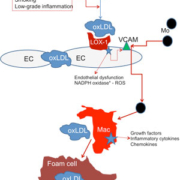
It is currently generally accepted that oxidised low-density lipoprotein (oxLDL) plays a major pathogenetic role in initiating and fueling the process of atherosclerosis [1], [Figure 1]. In the sub-endothelial space, it is taken up via different scavenger receptors (SR-A1, SR-A2, and LOX-1) on the surface of macrophages, which induces foam cell formation and the appearance of fatty streaks, the first histological signs of atherosclerosis. Moreover, oxLDL leads to endothelial dysfunction, chronic vascular inflammation and transformation of vascular smooth muscle cells into the so-called synthetic phenotype typical of vascular remodeling.
OxLDL is measured in plasma using ELISA techniques [2]. As oxidation of lipoproteins is a complex process generating hundreds of unique epitopes, the different antibodies used may vary significantly in their readings. This currently poses a major limitation since these ELISAs are not necessarily comparable, either in terms of absolute values or, more importantly, in terms of pathophysiological meaning [2]. On the other hand, the largest database, which was hitherto collected with the antibody E06 detecting the amount of oxidised phospholipid epitopes on apolipoprotein B-100 (oxPL/apoB), clearly reveals the potential clinical utility of measuring oxLDL: in several studies [2] including the Bruneck [3] and the EPIC-Norfolk study [4], oxPL/apoB was demonstrated to correlate strongly with atherosclerosis and to predict future death, myocardial infarction, stroke and need for revascularisation. In those analyses, the parameter was independent of all traditional and non-traditional risk factors, including inflammatory and thrombotic risk factors, with occasional exceptions for Lp(a). Even more importantly, in the EPIC-Norfolk study, there was evidence of increasing c-statistic values (a measure of added value of new parameters in logistic regression models) when a panel of oxidative biomarkers was added to oxPL/apoB, including Lp(a), CRP, myeloperoxidase, Lp-PLA2 (phospholipase A2) activity and soluble PLA2 mass and activity.
Auto-antibodies against oxLDL
The rate of LDL oxidation is increased when cardiovascular risk factors such as smoking, diabetes mellitus, dyslipidaemia and hypertension induce oxidative stress in the vessel wall [5]. OxLDL, in turn, represents a variety of differently modified lipid and protein components of LDL, the most abundant of which are malonyldialdehyde-LDL (MDA-LDL) and copper-oxidised LDL (Cu-LDL) [5]. This modification renders oxLDL highly immunogenic; correspondingly, auto-antibodies of the IgM and IgG classes are commonly found. Natural IgM auto-antibodies form immune complexes with oxLDL that cannot bind to Fcγ receptors on macrophages and, therefore, do not activate these key players in atherosclerosis. Hence, IgM auto-antibodies may serve to clear oxLDL particles from circulation in a non-inflammatory, protective manner. In contrast, IgG auto-antibodies obviously promote atherosclerosis because they bind and activate macrophages via Fcγ receptors [6] [Figure 2].
In animal studies, the circulating levels of free oxLDL auto-antibodies reflected the general activity of the atherosclerotic process [6]. Natural IgM antibodies – i. e. antibodies pertaining to innate immunity – recognising oxLDL were shown to be protective in different mouse models of atherosclerosis [7,8].
In clinical studies, an inverse relationship between circulating IgM anti-oxLDL and the occurrence of cardiovascular atherosclerosis (carotid artery disease, coronary artery disease) was observed while the opposite, a positive correlation, held true for IgG antibodies [9-11]. Additionally, an unstable phenotype of coronary plaque has been linked to high levels of IgG anti-oxLDL; in contrast, high levels of IgM anti-oxLDL are associated with stable plaques [6]. In these epidemiological studies, however, all described associations were not independent: after correction for other known risk factors in multivariate analyses, anti-oxLDL levels were no longer predictive of atherosclerotic burden. It remains therefore a matter of debate whether oxLDL antibodies in humans represent mere markers of disease or causal players, albeit that the above-mentioned animal studies provided remarkable evidence in favour of the latter hypothesis.
For anti-oxLDL detection by ELISA, oxidation-specific epitopes (‘model oxLDL’), mostly MDA-LDL or Cu-LDL epitopes, are generated in vitro and coupled onto micro-titre plates. Free oxLDL antibodies in diluted plasma samples bind to these epitopes and are then detected with secondary antibodies specific to IgG or IgM [see Figure 1].
Summary
Oxidised LDL and antibodies to oxLDL are pathogenetically significant contributors in animal models of atherosclerosis. As opposed to oxLDL itself, the pathophysiological role of anti-oxLDL in humans (marker or player?) remains to be clarified. Both parameters can be measured using ELISA techniques. For clinical risk assessment in patients with metabolic syndrome and atherosclerosis, circulating oxLDL appears to offer added value to traditional risk factors. It allows significant readjustment of the Framingham Risk Score [3;4] which will help determine how aggressively other risk factors should be treated. Also, combining oxLDL measurement with other parameters of oxidative damage may be useful, with the general caveat that new oxLDL tests be validated thoroughly with regard to their pathophysiological meaning.
References
1. Mitra S, Goyal T, Mehta JL. Oxidized LDL, LOX-1 and Atherosclerosis. Cardiovasc Drugs Ther 2011;25:419-429.
2. Tsimikas S, Miller YI. Oxidative modification of lipoproteins: mechanisms, role in inflammation and potential clinical applications in cardiovascular disease. Curr Pharm Des 2011;17:27-37.
3. Kiechl S, Willeit J, Mayr M, Viehweider B, Oberhollenzer M, Kronenberg F, Wiedermann CJ, Oberthaler S, Xu Q, Witztum JL, Tsimikas S. Oxidized phospholipids, lipoprotein(a), lipoprotein-associated phospholipase A2 activity, and 10-year cardiovascular outcomes: prospective results from the Bruneck study. Arterioscler Thromb Vasc Biol 2007;27:1788-1795.
4. Tsimikas S, Mallat Z, Talmud PJ, Kastelein JJ, Wareham NJ, Sandhu MS, Miller ER, Benessiano J, Tedgui A, Witztum JL, Khaw KT, Boekholdt SM. Oxidation-specific biomarkers, lipoprotein(a), and risk of fatal and nonfatal coronary events. J Am Coll Cardiol 2010;56:946-955.
5. Gounopoulos P, Merki E, Hansen LF, Choi SH, Tsimikas S. Antibodies to oxidized low density lipoprotein: epidemiological studies and potential clinical applications in cardiovascular disease. Minerva Cardioangiol 2007;55:821-837.
6. van Leeuwen M, Damoiseaux J, Duijvestijn A, Tervaert JW. The therapeutic potential of targeting B cells and anti-oxLDL antibodies in atherosclerosis. Autoimmun Rev 2009;9:53-57.
7. Lewis MJ, Malik TH, Ehrenstein MR, Boyle JJ, Botto M, Haskard DO. Immunoglobulin M is required for protection against atherosclerosis in low-density lipoprotein receptor-deficient mice. Circulation 2009;120:417-426.
8. Shaw PX, Horkko S, Chang MK, Curtiss LK, Palinski W, Silverman GJ, Witztum JL. Natural antibodies with the T15 idiotype may act in atherosclerosis, apoptotic clearance, and protective immunity. J Clin Invest 2000;105:1731-1740.
9. Hulthe J, Bokemark L, Fagerberg B. Antibodies to oxidized LDL in relation to intima-media thickness in carotid and femoral arteries in 58-year-old subjectively clinically healthy men. Arterioscler Thromb Vasc Biol 2001;21:101-107.
10. Karvonen J, Paivansalo M, Kesaniemi YA, Horkko S. Immunoglobulin M type of autoantibodies to oxidized low-density lipoprotein has an inverse relation to carotid artery atherosclerosis. Circulation 2003;108:2107-2112.
11. Tsimikas S, Brilakis ES, Lennon RJ, Miller ER, Witztum JL, McConnell JP, Kornman KS, Berger PB. Relationship of IgG and IgM autoantibodies to oxidized low density lipoprotein with coronary artery disease and cardiovascular events. J Lipid Res 2007;48:425-433.
The author
Prof. Dr med. Thomas Dschietzig
Charité Berlin, Germany


Asthma patients who smoke report more pronounced symptoms, an attenuated response to inhaled corticosteroids and more frequent attacks. Furthermore, diagnosing asthma in smokers can be difficult, as smoking impacts on the results of frequently used diagnostic and monitoring tools for asthma, including exhaled NO (eNO) and airway challenges.
by Dr Christian G. Westergaard, Professor Vibeke Backer and Dr Celeste Porsbjerg
Clinical background
Asthma is one of the most frequent chronic diseases worldwide, with an estimated global prevalence of 300 million people. The disease is characterised by respiratory symptoms, airway hyperresponsiveness (AHR) and bronchopulmonary inflammation. Asthma symptoms can be triggered by different agents, including exposure to allergens, physical activity and unspecific irritants such as air pollution, perfume, air humidity and tobacco smoke. The prevalence of asthma varies considerably between countries, however, in general, the prevalence has been increasing during recent decades, and ranges from a few percent to more than 15% in some countries [1].
It is estimated by the WHO that 1.25 billion people in the world are smokers. The global tobacco consumption was in 2000 estimated to be 15 billion cigarettes per day. This number is not expected to decrease until 2030, because the total number of smokers will become higher due to a larger world population [2].
Tobacco smoking has very damaging impacts on the asthmatic disease. Asthma patients who smoke report more pronounced symptoms, an attenuated response to inhaled corticosteroids, more frequent exacerbations and a higher mortality rate from asthma. Furthermore, these patients suffer from an accelerated decline in lung function, where both the highly reactive tobacco smoke and the chronic asthmatic inflammation in combination contribute to airway tissue destruction. Unfortunately, tobacco smoking is common among asthma patients, with a frequency of smokers at least as high as found in the rest of the population. In most countries, smokers constitute 15–40% of the population.
In the clinical setting, spotting the asthma patients among smokers can be challenging, due to the overlap of airway symptoms between true asthma and smoking-induced manifestations such as productive cough as well as breathlessness during exercise. In patients with a significant smoking history, an element of early chronic obstructive pulmonary disease (COPD) can also blur the clinical picture.
The diagnosing and monitoring of asthma has traditionally been based on the evaluation of symptoms in combination with spirometric measurements, which to date remain key elements in the clinical handling of asthma patients. However, as asthma is basically an inflammatory disease, many new diagnostic approaches focusing on airway inflammation have emerged, such as exhaled nitric oxide (eNO), sputum induction and airway challenges, of which the most recently approved is the mannitol test. All of these newer tests contribute to the understanding of the underlying pathophysiological mechanisms of the disease as well as expanding our diagnostic possibilities.
However, it appears that tobacco smoke may attenuate the clinical utility of many of the tests. In the following section, the focus will be on the effect of smoking on inflammation markers, AHR and spirometry, respectively.
Inflammation markers: eNO and induced sputum
Smoking has a considerable impact on the measurement of eNO. Several studies have reported a pronounced reduction of eNO in smokers compared to non-smokers, as much as 40–60% in current smokers [3]. Even passive smoking seems to have an effect on eNO values. Moreover, in a study from 2009 it was shown that eNO could only discriminate asthmatics from healthy controls in never-smokers, and not in either current or former smokers [4]. However, we have recently reported data from large sample, demonstrating that in adults with symptoms suggestive of asthma, eNO was equally good at differentiating between asthma and non-asthma, albeit with a lower cut-off for an abnormal eNO in smokers than in ex- and never smokers [5].
An eNO value of 17–22 ppb has been proposed for diagnosing asthma in current smokers [5, 6], supported by others who suggested 18 ppb as a cut-off for smokers without allergic rhinitis [6]. These similar cut-off values represent quite different sensitivity values, from about 40 to 100 %, when preserving a high specificity of at least 90%.
It would seem that eNO can also be applied in disease monitoring of the smokers when used in sequential measurements, because even in smokers, relative changes in eNO have been shown to reflect the dynamics of disease activity [7]. It has been demonstrated that, similar to non-smokers, a decrease in eNO of <20% precludes asthma control improvement, and that an increase in eNO of <30% is not associated with loss of control [7].
An important issue is the lack of knowledge regarding cut-off values for predicting steroid-response. In non-smokers, the effect of treatment with steroids has been found to be associated with airway eosinophilia, which again correlates well with eNO. Hence, a cut-off value for eNO predicting a sputum eosinophil count >3% and a high likelihood of a positive steroid response has been investigated. In smokers, this value was 28 ppb, ranging from 15 to 33 ppb, depending on atopy and high dose ICS usage [8], compared to 24 to 58 ppb in non-smokers. Such cut-off values are, however, not easy to determine, due to many factors of importance for the level of eNO, including atopy with rhinitis, life tobacco consumption and respiratory tract infections.
Several underlying mechanisms for the decreased eNO in smokers have been demonstrated, including increased arginase expression leading to reduced amounts of iNOS substrate, attenuated eosinophilic and enhanced neutrophilic inflammation as well as the impact on exogenous NO from cigarette smoke leading impairment of NO synthesis.
Another way of characterising the inflammation in the airway tissue is through sputum induction. This technique is rarely used in the diagnosis of asthma. In smoking asthmatics, it seems that the cell distribution is altered into a less eosinophilic and more neutrophilic direction. This may partially explain why smokers are less responsive to steroids.
Bronchial challenges: mannitol and methacholine
Another important approach in asthma diagnostics is measurement of airway hyperresponsiveness (AHR) using the mannitol challenge, which is an indirect bronchial provocation. In non-smokers, this test can be successfully applied for both diagnostic and monitoring purposes. It has been shown that the mannitol challenge is useful in confirming a diagnosis of asthma (specificity close to 100%), unfortunately, however, the sensitivity is considerably more moderate, around 60% [9] and thereby lower than that of the methacholine challenge [9]. Being a relative recent invention, the diagnostic properties of the mannitol test have not yet been evaluated in a smoking asthmatic population. However, in non-asthmatic smokers, a study has indicated that as much as one quarter of the subjects expressed a positive mannitol test [10]. Thus, until investigated properly in smoking asthma patients, the mannitol challenge test should be interpreted with caution and be accompanied with other tests in order to account for false positives.
AHR can also be assessed through direct challenges such as inhaled methacholine. The higher sensitivity for the methacholine test (69%) compared to the mannitol test is, unfortunately, not accompanied by an equivalently higher specificity, which has been reported to be 80% [9]. In non-asthmatics, previous studies have indicated increased AHR to methacholine in smokers. But as is the case with the mannitol test, the diagnostic properties of the methacholine test have not yet been investigated in a smoking asthmatic population, which is surprising considering that the test has been applied for decades. However, a few studies have documented that smoking does appear to affect AHR to both direct and indirect challenges. In COPD patients, it has been shown that one year of smoking cessation is associated with improvement in AHR to methacholine as well as to AMP; this finding has been supported later in a study primarily of healthy subjects, but also a few asthma patients.
Spirometry with reversibility test
Increased bronchial muscular tonus is a key feature in persistent asthma, which is the reason that measurements of lung function, including the reversibility test, have been widely used in asthma diagnostics and monitoring for decades. For some smoking asthma patients, this will continue to be a corner stone in confirming the diagnosis, but in smoking asthmatic subjects with a baseline normal FEV1 or patients with very severe asthma and hence attenuated airway compliance, reversibility testing may not be the best diagnostic test. Many studies of asthma and COPD patients have shown improvement in FEV1 after smoking cessation, indicating an airway narrowing effect of tobacco smoke. However, a study of 134 asthma patients with airway reversibility showed no difference in baseline FEV1 between smokers and non-smokers, and the salbutamol reversibility was similar [11]. This latter finding has also been confirmed in a few other studies, but, in general, our knowledge of the effect of smoking on the β2-agonist reversibility of airway resistance is sparse.
Conclusion
Smoking affects the results of most of the different clinical asthma tests available, and test results should be interpreted with smoking status in mind. Clinicians should be aware of potential limitations of each test, especially eNO, which decreases in smokers but remains useful, and the mannitol test, which may give false positive in smokers. It remains crucial to obtain an explorative anamnestic interview, involving clarification of symptom triggers, seasonal variation, presence of wheezing, concomitant rhinitis, night symptoms, familiar dispositions, symptom debut, allergies and of course, smoking history.
References
1. Masoli M, Fabian D, Holt S, Beasley R. Allergy. 2004; 59(5): 469-478.
2. Annual global cigarette consumption. http://www.who.int/tobacco/en/atlas8.pdf
3. Alving K, Malinovschi A. Eur Respir Mon 2010; 49: 1-31.
4. Malinovschi A, Janson C, Högman M, Rolla G, Torén K, Norbäck D, Olin AC. Allergy. 2009; 64(1): 55-61.
5. Malinovschi A, Backer V, Harving H, Porsbjerg C. Respir Med. 2012; 106(6): 794–801.
6. Matsunaga K, Hirano T, Akamatsu K, Koarai A, Sugiura H, Minakata Y, Ichinose M. Allergol Int. 2011; 60(3): 331-337.
7. Michils A, Louis R, Peché R, Baldassarre S, Van Muylem A. Eur Respir J. 2009; 33(6): 1295–301.
8. Schleich FN, Seidel L, Sele J, Manise M, Quaedvlieg V, Michils A, Louis R. Thorax. 2010; 65(12): 1039-1044.
9. Sverrild A, Porsbjerg C, Thomsen SF, Backer V. J Allergy Clin Immunol. 2010; 126(5): 952–958.
10. Stolz D, Anderson SD, Gysin C, Miedinger D, Surber C, Tamm M, Leuppi JD. Respir Med. 2007; 101(7): 1470-1476.
11. Chaudhuri R, McSharry C, McCoard A, Livingston E, Hothersall E, Spears M, Lafferty J, Thomson NC. Allergy. 2008; 63(1): 132-135.
The authors
Christian G. Westergaard MD*,
Vibeke Backer MD, DMSc and
Celeste Porsbjerg MD, PhD
Bispebjerg Hospital
Respiratory Research Unit
Bispebjerg Bakke 23, Entrance 66
DK-2400 Copenhagen NV, Denmark
*Corresponding author:
e-mail: cgwestergaard@hotmail.com
May 2026


Prins Hendrikstraat 1
5611HH Eindhoven
The Netherlands
info@clinlabint.com
PanGlobal Media is not responsible for any error or omission that might occur in the electronic display of product or company data.