



New high-throughput platform accelerates antibody testing for disease research
University of Illinois researchers have developed oPool+ display, a breakthrough method that enables researchers to construct and test hundreds of antibodies in parallel rather than individually. The platform dramatically reduces costs and time for antibody discovery across multiple diseases, with the aim of transforming therapeutic development for cancer, infectious diseases, and autoimmune conditions.
Scientists have developed a breakthrough platform that could dramatically accelerate the discovery and development of antibody-based treatments for infectious diseases, cancer, and autoimmune conditions. The new method, called oPool+ display, enables researchers to construct and test hundreds of antibodies in parallel rather than the traditional one-at-a-time approach.
The research team, led by biochemistry professor Nicholas Wu at the University of Illinois Urbana-Champaign, published their findings in Science Translational Medicine on 3 September 2025.
“More than 150 different FDA-approved antibody therapeutics are being used in clinical settings to treat diseases from cancer to infectious disease to autoimmune diseases. With a rapid, high-throughput method like ours, if we can search for a potential antibody candidate that’s really good against a certain disease, then it has great potential in becoming an effective therapeutic,” said graduate student Wenhao “Owen” Ouyang, the first author of the study.
Traditional antibody research requires synthesising and studying antibodies individually – a daunting prospect considering the body can produce trillions of different antibodies. “In a research lab, each antibody can take one person weeks to months to produce and analyse. So we asked, how can we scale this up in a way that we can further understand this extremely diverse class of molecules?” Ouyang said.
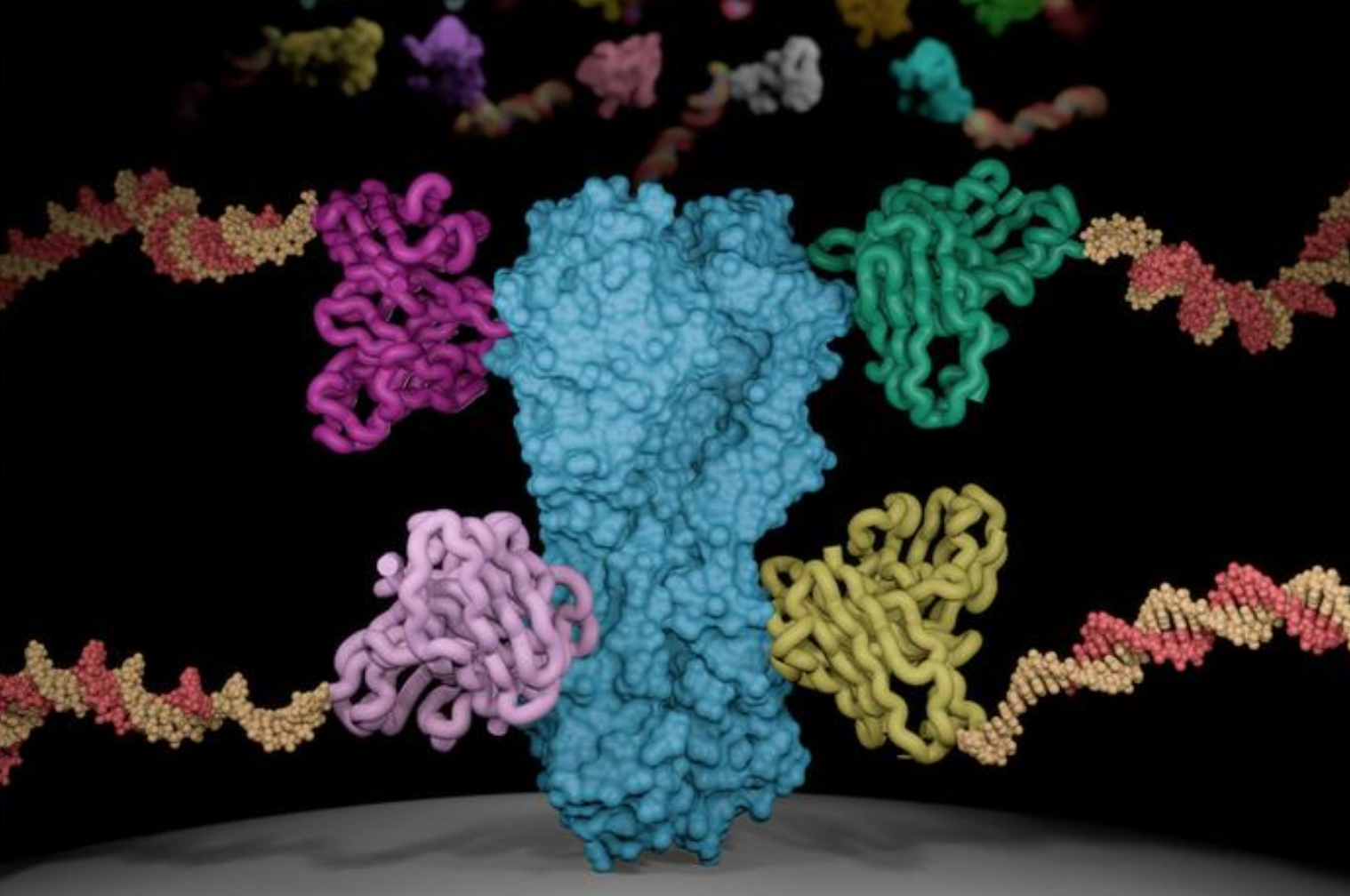
Proof of concept reveals common antibody features
For their proof-of-concept study, the researchers created a library of approximately 300 antibodies against hemagglutinin, a key influenza immune target. “Instead of analysing one antibody at a time, this approach let us evaluate thousands of antibody-antigen interactions in just a few days. It not only significantly accelerated the pace of our research but also lowered the cost, both of materials and labour,” said Wu, who also is a professor in the Carle Illinois College of Medicine at the U. of I. “We can reduce 80-90% of the cost just from the materials and supplies alone.”
The platform successfully identified common antibody features across different individuals’ immune responses. “This is one of the key research areas for influenza vaccination research, because we would like to have a vaccine that works for everyone,” Ouyang said. “Each of our immune systems is actually quite different, so sometimes it is hard to have a broadly effective vaccine, solely because of the intrinsic differences between our bodies. With this platform, we found these common antibody features among different individuals very quickly.”
Structural insights reveal antibody versatility
The researchers conducted detailed structural analysis of two antibodies, AG11-2F01 and 16.ND.92, which both utilise the immunoglobulin gene segment IGHD3-3. Despite sharing sequence similarities, cryo-electron microscopy revealed dramatically different binding modes to the hemagglutinin stem.
As the authors note in their paper, “the unique usage of IGHD3-3 for binding enables 16.ND.92 VH to interact with the HA stem exclusively through CDR H3, whereas the VH paratopes of other IGHD3-3 HA stem antibodies involved non–CDR H3 regions.”
Both antibodies demonstrated protective activity in mouse models, with 100% survival rates when administered pro-phylactically and significant protection when given therapeutically after lethal influenza challenge.
Future applications and pandemic preparedness
The researchers plan to expand oPool+ display capacity from hundreds to thousands of antibodies. “If there’s another mysterious pathogen in the future that emerges the way COVID-19 did, then once we have identified the targets on the pathogen, we could characterise all antibody response against it in a very fast way and quickly identify candidates for antibody treatments or vaccines,” Ouyang said.
The platform also shows promise for validating artificial intelligence models that predict antibody structures. “We could easily create an AI model that can make a lot of predictions, but we don’t really have an idea of how accurate
they are because we haven’t had any way to systematically validate the results,” Ouyang said. “So we are excited about using AI to create predictions of antibodies and then validating them in real time with oPool+, and feeding the
results back to the AI model to continually improve it.”
The study authors conclude that “oPool+ display represents a starting point for the future advancement of high-throughput antibody characterisations.”
Reference: Ouyang, W. O., Lv, H., Liu, W., et. al. (2025). High-throughput synthesis and specificity characterisation of natively paired influenza hemagglutinin antibodies with oPool+ display. Science Translational Medicine, 17, eadt4147. doi: https://doi.org/10.1126/scitranslmed.adt4147

