
Novel home finger-prick blood test detects Alzheimer’s disease pathology
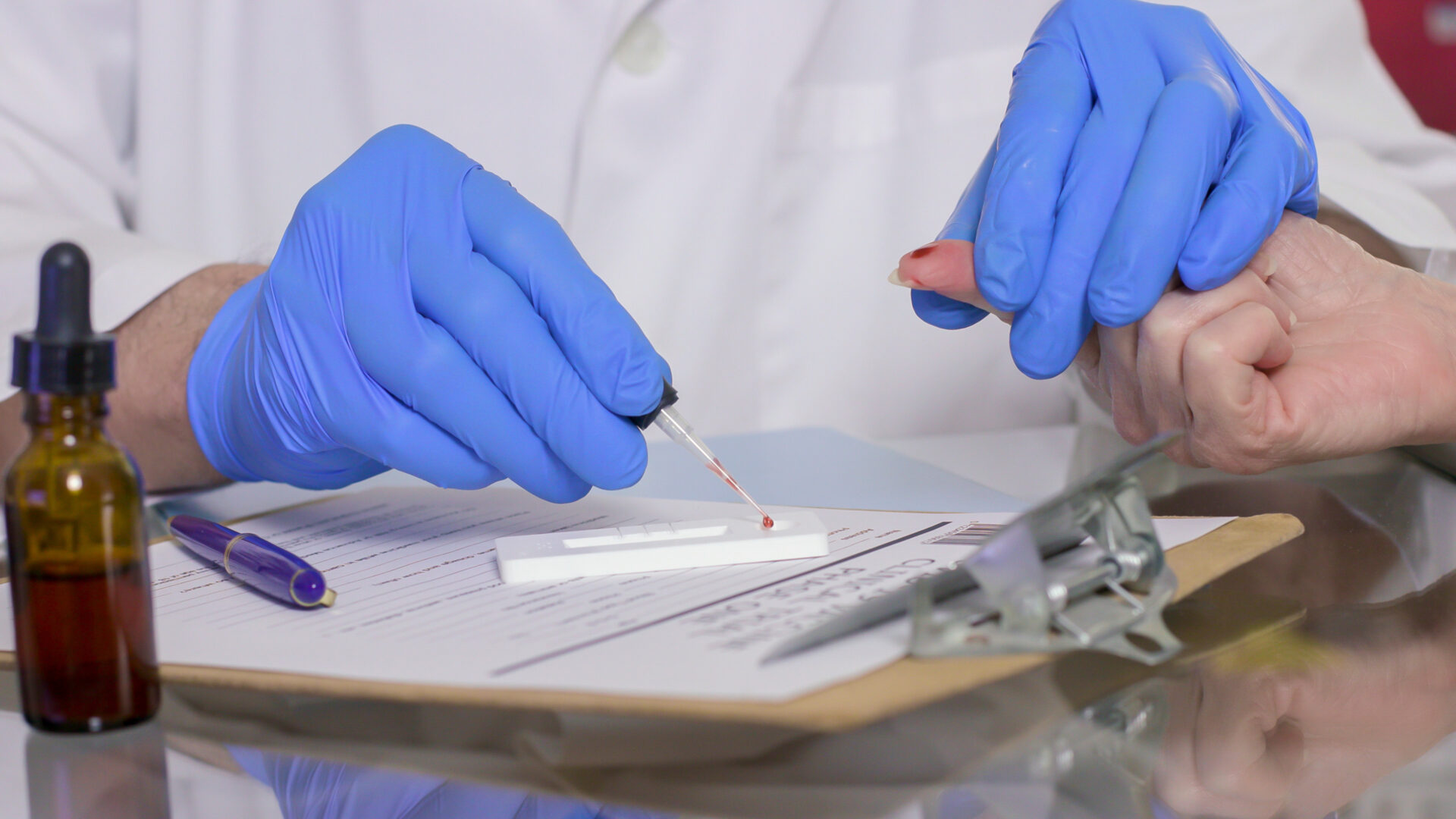
A groundbreaking international study has demonstrated that Alzheimer’s disease biomarkers can be accurately detected using simple finger-prick blood samples collected at home and posted to laboratories without refrigeration. The DROP-AD project, involving 337 participants across seven European centres, found that capillary blood spots could measure key markers including phosphorylated tau 217 (p-tau217) with 86% accuracy against spinal fluid tests, potentially transforming access to Alzheimer’s research and diagnosis.
Remote testing removes geographic barriers
The research, led by Banner Health in collaboration with the University of Exeter Medical School and supported by the National Institute for Health and Care Research, represents the first large-scale validation of this accessible testing approach. Published in Nature Medicine on 5 January 2026, the study demonstrates that finger-prick blood collection can accurately measure key markers of Alzheimer’s pathology and brain damage whilst eliminating the logistical constraints that have historically limited biomarker studies to well-resourced medical facilities.
Professor Nicholas Ashton, senior director of Banner’s Fluid Biomarker Program and lead investigator, said: “This breakthrough could fundamentally change how we conduct Alzheimer’s research by proving that the same biomarkers doctors use to detect Alzheimer’s pathology can be measured from a simple finger prick collected at home or in more remote community settings.”
Validation across multiple biomarkers
The DROP-AD project tested dried plasma spot (DPS) and dried blood spot (DBS) analysis derived from capillary blood for detecting p-tau217, glial fibrillary acidic protein (GFAP) and neurofilament light (NfL). Researchers observed strong correlations between DPS p-tau217 and venous plasma p-tau217, with a Spearman’s rank correlation of 0.74. The study found that DPS p-tau217 progressively increased with disease severity and showed good accuracy in predicting cerebrospinal fluid biomarker positivity, achieving an area under the curve of 0.864. The authors note in their discussion: “Although current guidelines recommend AD blood biomarker testing for symptomatic individuals, there is also the potential to screen cognitively unimpaired older adults using a simplified test in a research setting.”
Practical applications demonstrated
The University of Exeter Medical School played a pivotal role, recruiting participants from the PROTECT-UK study and serving as the only site to test self-collection capabilities. Participants successfully collected their own finger-prick samples without study personnel guidance after watching trained staff and receiving written instructions. The method proved effective across diverse populations, including individuals with Down syndrome who face a higher risk of Alzheimer’s disease and for whom standard blood sampling may be more complicated.
Professor Anne Corbett, professor in dementia research at the University of Exeter, said: “What excites me most is that this work makes this type of research far more accessible. We’re moving toward a future where anyone, anywhere, can contribute to advancing our understanding of brain diseases.”
Future clinical potential
Professor Clive Ballard, professor of age-related diseases at the University of Exeter Medical School, added: “Our ongoing work will determine whether this could also be a valuable way of identifying people in the community who would benefit from more detailed diagnostic tests for Alzheimer’s disease.”
The method also shows promise beyond Alzheimer’s disease, with potential applications for research into Parkinson’s disease, multiple sclerosis, amyotrophic lateral sclerosis and brain injuries through the detection of neurofilament light. However, the researchers emphasise that significant additional research and validation is required before any clinical application.
Reference:
Huber, H., Montoliu-Gaya, L., Brum, W. S., et al. (2026). A minimally invasive dried blood spot biomarker test for the detection of Alzheimer’s disease pathology. Nature Medicine. Published online 5 January 2026. https://doi.org/10.1038/s41591-025-04080-0