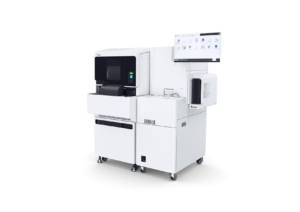
Sysmex Europe has launched two new automated blood coagulation analysers, CN-3500 and CN-6500, in specific countries in the EMEA region. They are targeted at medium- and large-scale hospitals and commercial labs, as well as other facilities, the company says.
The new instruments come with a measuring unit that uses the chemiluminescence enzyme immunoassay (CLEIA) methodology and incorporate all the unique features of their earlier automated blood coagulation analysers CN-3000/CN-6000, making it possible to measure blood coagulation testing parameters including molecular markers for blood coagulation with a single device.
“As a result the CN-3500/CN-6500 blood coagulation analysers allow for flexible measurements in response to a broad range of test orders in the fields of thrombosis and haemostasis, such as molecular markers for blood coagulation measured with CLEIA. This is in addition to the blood coagulation and platelet aggregation parameters, which can also be measured by the predecessors CN-6000 and CN-3000,” a Sysmex spokesperson said.
Sysmex notes that there has been an increase in thrombotic diseases due to ageing populations and changing lifestyles – and, as such, the field of haemostasis has seen more diverse demands for early-stage diagnosis and appropriate treatment of such conditions.
While the demand for greater diversity in testing and prompt provision of test results to physicians is on the rise, haemostasis is typically performed by using multiple instruments with different measurement principles, such as immunoassay systems and platelet aggregation analysers in addition to blood coagulation analysers, to measure different parameters. This not only adds to the complexity of the testing workflow, but also requires lengthy waits before test results become available to determine the disease state and provide appropriate medical care, posing challenges in healthcare settings.
The CN-3500/CN-6500 are integrated analysers which will significantly improve productivity, reliability, operability, and serviceability.
In future, the company says, they will invest in the development of IVD reagents for haemostasis and immunochemistry using CLEIA.




Biotium launches first ever mounting media with far-red nuclear counterstain and autofluorescence quenching reagent
, /in Product News /by panglobalHuman cerebral cortex cryosections were stained with CF 405S GFAP Antibody (glial cells, cyan), then mounted with EverBrite Hardset with NucSpot 640, or EverBrite TrueBlack Hardset with NucSpot 640. Lipofuscin autofluorescence appears orange in the merged image and is effectively quenched after mounting in EverBrite TrueBlack. Nuclei are stained with NucSpot 640 (magenta).
Biotium, a leading provider of reagents for immunofluorescence microscopy, is significantly expanding its line of antifade wet-set and hardset EverBrite Mounting Medium with options that include Biotium’s new far-red NucSpot 640 nuclear counterstain. In addition, Biotium is also releasing EverBrite TrueBlack Hardset Mounting Medium for mounting and quenching of lipofuscin autofluorescence in a single step.
Antifade mounting media, like EverBrite, typically includes DAPI as a convenient blue nuclear counterstain for researchers performing immunofluorescence microscopy. However, cross-talk between fluorescence channels and UV-induced photoconversion of DAPI can cause bleed-through fluorescence in neighbouring FITC or Cy 3 channels. Biotium developed EverBrite Mounting Media with NucSpot counterstains as a novel solution to DAPI cross-talk and UV photoconversion, offering bright and specific nuclear imaging with very limited interference in other channels. EverBrite NucSpot 640 is specific for the Cy 5 channel.
Biotium’s TrueBlack lipofuscin quenchers are unique reagents designed to quench lipofuscin autofluorescence commonly found in human and aged animal tissues. New EverBrite TrueBlack Hardset Mounting Medium is the first reagent to offer both mounting and quenching of lipofuscin autofluorescence in a single step for greater convenience. EverBrite TrueBlack Hardset Mounting Medium will be available with DAPI, NucSpot 640, or without a nuclear counterstain.
“Mounting medium has traditionally only provided antifade properties and a convenient DAPI counterstain, but does little to address other issues with fluorescence,” says Lori Roberts PhD, Director of Bioscience at Biotium. “Our new EverBrite products aim to provide both convenience and novel research solutions for our customers.”
This release adds to Biotium’s growing portfolio of novel reagents for immunofluorescence microscopy, offering innovative solutions for all user workflows. Biotium’s new EverBrite with NucSpot and EverBrite TrueBlack Hardset Mounting Medium will be available in a standard 10 mL size or 2 mL trial size. NucSpot 640 nuclear counterstain is currently available with EverBrite Hardset and EverBrite TrueBlack Hardset Mounting Medium. Mounting media variations with NucSpot 680 for the Cy 5.5 channel will be released soon, according to the company.
Vacuum Vortex Concentration methodology – how it works
, /in E-News /by panglobalSolvent evaporation specialists – BioChromato has published online a description of how the Vacuum Vortex Concentration (VVC) methodology enables users of its Smart Series of Evaporators remove high boiling solvents including water, DMSO and DMF quickly and safely.
At the heart of each BioChromato Smart Evaporator is a highly efficient spiral airflow created by a special concentrator plug or “Spiral Plug”. This novel Spiral Plug technology generates a helical flow of air or inert gas agitating the surface of the solvent, increasing its surface area and thereby significantly improving the effectiveness and speed of evaporation.
Since the evaporation vessel on a Smart Evaporator isn’t under high vacuum, there is no risk of bumping or splashing. By using VVC methodology – Smart Evaporators increase efficiency by eliminating the time-consuming task of cleaning apparatus, potential loss of samples and the need to repeat the drying process that can result from solvent bumping or splashing.
Gyros Protein Technologies and Cygnus Technologies expand collaboration, introduce new HEK 293 HCP Assay Reagent Set
, /in Product News /by panglobalGyros Protein Technologies (part of Mesa Labs’ Biopharmaceutical Development Division), a pioneer in automated nanoliter-scale immunoassays and a leading provider of peptide synthesizers and reagents, has announced the next phase of its on-going collaboration with Cygnus Technologies, a Maravai LifeSciences company, and the introduction of a new HEK 293 HCP immunoassay solution. The Cygnus HEK 293 HCP Assay Reagent Set for Gyrolab is the first of a planned range of ready-to-use bioprocess impurity reagent sets optimized for use with the Gyrolab platform to be developed by Cygnus as part of the expanded collaboration.
The extension of the collaboration agreement follows the successful launch of the ready-to-use Gyrolab CHO HCP and E. coli HCP kits, developed through a licensing and supply agreement with Cygnus. The two companies are now expanding their relationship to develop a range of ready-to-use bioprocess impurity reagent sets optimized for use with the Gyrolab platform.
HEK 293 HCP Solution
The HEK 293 HCP Assay Reagent Set for Gyrolab from Cygnus Technologies, designed for use with the Gyrolab Bioaffy 1000HC Toolbox, detects residual host cell protein (HCP) from HEK 293 cells, a cell line commonly used in viral vector production for cell and gene therapies as well as in manufacturing of vaccines. Together these combine to form the HEK 293 HCP Solution for Gyrolab. The automated nanoliter-scale immunoassay solution supports fast development and streamlined process transfer, increasing productivity, providing faster time to results with less hands-on time, and reduced sample volume and reagent consumption. The HEK 293 HCP Solution for Gyrolab enables researchers to generate more data in less time for a broader range of analytical applications.
“The collaboration with Cygnus Technologies is an exciting step for Gyros Protein Technologies, underscoring our commitment to provide leading-edge automated analysis solutions that support bioprocessing and manufacturing,” said Mark Vossenaar, Vice President, General Manager, Biopharmaceutical Development Division at Mesa Labs. “There is a real need for analytical tools that support fast turn-around time and small sample volume, to accelerate viral vector bioprocess workflows and reduce time to market. HEK 293 HCP Assay Reagent Set for Gyrolab is the first of this new, high quality range, and we hope to announce further releases in the near future.”
Sysmex launches new automated blood coagulation analysers in EMEA region
, /in Product News /by panglobalSysmex Europe has launched two new automated blood coagulation analysers, CN-3500 and CN-6500, in specific countries in the EMEA region. They are targeted at medium- and large-scale hospitals and commercial labs, as well as other facilities, the company says.
The new instruments come with a measuring unit that uses the chemiluminescence enzyme immunoassay (CLEIA) methodology and incorporate all the unique features of their earlier automated blood coagulation analysers CN-3000/CN-6000, making it possible to measure blood coagulation testing parameters including molecular markers for blood coagulation with a single device.
“As a result the CN-3500/CN-6500 blood coagulation analysers allow for flexible measurements in response to a broad range of test orders in the fields of thrombosis and haemostasis, such as molecular markers for blood coagulation measured with CLEIA. This is in addition to the blood coagulation and platelet aggregation parameters, which can also be measured by the predecessors CN-6000 and CN-3000,” a Sysmex spokesperson said.
Sysmex notes that there has been an increase in thrombotic diseases due to ageing populations and changing lifestyles – and, as such, the field of haemostasis has seen more diverse demands for early-stage diagnosis and appropriate treatment of such conditions.
While the demand for greater diversity in testing and prompt provision of test results to physicians is on the rise, haemostasis is typically performed by using multiple instruments with different measurement principles, such as immunoassay systems and platelet aggregation analysers in addition to blood coagulation analysers, to measure different parameters. This not only adds to the complexity of the testing workflow, but also requires lengthy waits before test results become available to determine the disease state and provide appropriate medical care, posing challenges in healthcare settings.
The CN-3500/CN-6500 are integrated analysers which will significantly improve productivity, reliability, operability, and serviceability.
In future, the company says, they will invest in the development of IVD reagents for haemostasis and immunochemistry using CLEIA.
Avacta’s AffiDX SARS-CoV-2 Antigen Lateral Flow Test detects Delta variant with high sensitivity
, /in Product News /by panglobalAvacta Group, the developer of diagnostics and innovative cancer therapies based on its proprietary Affimer and pre|CISION platforms, says a recent study has shown that the AffiDX antigen lateral flow test detects the Delta variant of the SARS-CoV-2 virus in clinical samples.
Lateral flow antigen tests are intended to provide a cost effective and rapid means of identifying individuals with a high viral load that means they are more likely to infect others. The clinical data for Avacta’s AffiDX SARS-CoV-2 antigen lateral flow test demonstrated 100% sensitivity for identifying infectious individuals with viral loads measured by PCR of Ct<27, which is considered infectious.
The AffiDX SARS-CoV-2 antigen lateral flow test has been evaluated with a small number of patient samples confirmed to be Delta variant positive and, for a Ct<29, the test was shown to correctly identify all the positive cases.
The AffiDX SARS-CoV-2 antigen lateral flow test is CE marked for professional use in the UK and EU. The Company has recently appointed the first distributor for the test, Calibre Scientific, and is progressing multiple commercial opportunities with other distributors and professional end users in Europe and the UK.
Dr Alastair Smith, Chief Executive Officer of Avacta Group, commented: “We are delighted to report that the AffiDX SARS-CoV-2 antigen lateral flow test detects the Delta variant with very high sensitivity for patients with a Ct value of less than 29. This is a variant of the virus that is spreading rapidly on a global scale and therefore the ability of the test to detect this variant is paramount to our commercial roll-out.
“In comparison with other lateral flow tests on the market, Avacta’s rapid antigen test demonstrates better clinical performance. This is a further huge validation of the Affimer reagent platform for use in in-vitro diagnostics.
Bio-Rad introduces SEQuoia RiboDepletion Kit for next-gen sequencing
, /in Product News /by panglobalBio-Rad Laboratories has introduced the SEQuoia RiboDepletion Kit, which improves assay efficiency by eliminating irrelevant ribosomal RNA (rRNA) fragments from an RNA-Seq library.
The SEQuoia RiboDepletion Kit is designed for genomics researchers targeting rare transcripts or working with a limited or degraded sample. The kit can retain RNA transcripts that could be lost when using other methods. In addition, the efficient elimination of irrelevant rRNA fragments helps reduce the costs of sequencing RNA samples.
“Using the SEQuoia RiboDepletion Kit, genomics researchers can obtain the highest quality sequencing data while improving efficiencies and saving costs,” said Steven Blakely, Bio-Rad Global Director of Marketing, Life Science Group, Gene Expression. “We are excited to expand our SEQuoia product line, which complements our portfolio of genomic research products that enable easy integration into NGS workflows.”
Key benefits of the SEQuoia RiboDepletion Kit
The SEQuoia RiboDepletion Kit is the latest offering in Bio-Rad’s SEQuoia portfolio, an RNA-Seq sample preparation product family.
Biotage launches Biotage PhyPrep automated platform for plasmid DNA purification
, /in Product News /by panglobalBiotage has launched their Biotage PhyPrep, a new automated platform for plasmid DNA purification that releases laboratory staff from the tedium of repetitive, manual labour – and takes full advantage of the PhyTip columns’ dual flow chromatography technology, to yield supercoiled, endotoxin-free, transfection-grade plasmid DNA.
With the new Biotage PhyPrep platform, the automated process purifying plasmid DNA reduces the risk of human error, and with each sample being handled in the same way, the plasmid yield and purities are more consistent. Many Biopharma laboratories currently outsource plasmid purifications – those laboratories can now bring that work in-house, improving process control, project deliverability while at the same time reducing costs.
Biotage PhyPrep is the first automated solution for plasmid purification in Maxi, Mega and Giga scales. The various scales differ in the volume of cell culture to be purified, with desired yields ranging from 1 mg to 10 mg of plasmid DNA.
“The launch of the Biotage PhyPrep will assist laboratories in discovering new therapies for patients, utilizing biological drug molecules such as antibodies and novel gene therapies,” said Tomas Blomquist, CEO Biotage.
Japanese Patent Office upholds key Charpentier-Doudna CRISPR patent
, /in E-News /by panglobalERS Genomics Limited, which was formed to provide broad access to the foundational CRISPR/Cas9 intellectual property co-owned by Dr. Emmanuelle Charpentier, issued a statement saying that the Japanese Patent Office (JPO) has rejected arguments filed in opposition to the second Japanese patent (JP6692856) filed by Dr. Charpentier, together with The Regents of the University of California and University of Vienna (collectively known as CVC), which covers compositions and methods for use in a variety of eukaryotic cells, in either dual-guide or single-guide format. In addition, the JPO has allowed a third CVC patent (JP2019-210828), which covers a chimeric version of the Cas9 protein.
During the JP6692856 proceedings, opponents contested novelty and inventive step. In its opposition decision, the JPO re-affirmed the patentability of the inventions, further validating the fundamental value of these patents for use of the CRISPR/Cas9 technology.
The JPO has also allowed JP2019-210828 to the CVC group. This patent covers compositions and uses of a chimeric version of the Cas9 protein in cellular and non-cellular settings and will represent the third Japanese patent granted to the group.
Michael Arciero, Vice-President of Intellectual Property and Commercial Development, ERS Genomics, said: “The JPO actions reinforce the broad and fundamental nature of our CRISPR patent portfolio, both in Japan and worldwide. This also validates the decision our licensees have made to work with ERS to enable their commercialization efforts involving CRISPR/Cas9. We are expanding our efforts to make the technology broadly available, so it can be used by as many people as possible.”
Patents have now been issued to Dr. Charpentier, The Regents of the University of California and University of Vienna for this cutting-edge technology in over 80 countries worldwide.
MIMETAS opens new Phenotypic Screening Centre
, /in E-News /by panglobalMIMETAS, a leader in human-relevant organ-on-a-chip models, has opened their Phenotypic Screening Center. The centre facilitates large-scale screening campaigns on Organ-on-a-Chip models, a powerful technology that improves the human physiological relevance of cultured tissues by utilizing microfluidic techniques. In contrast to other Organ-on-a-Chip platforms, the MIMETAS OrganoPlate technology offers the scalability and the throughput needed for drug discovery studies.
The new screening centre is the first energy-neutral laboratory building in the Netherlands. It is located in the new head office of MIMETAS in Oegstgeest, the largest life sciences cluster in The Netherlands.
“We are very proud to open up this new centre,” said Jos Joore, CEO of MIMETAS. “Our new Phenotypic Screening Center facilitates high-throughput organ-on-a-chip screening combined with high-content imaging and machine learning data analysis to identify drug candidates for today’s unmet medical needs. Our customers understand that human-relevant disease models should be at the basis of every drug discovery effort. Moreover, these cutting-edge technologies stimulate the creativity and purpose of our scientists to make a difference in the lives of patients.”
Largest Organ-on-a-Chip compound screen
MIMETAS recently reported a successful 1,546 compound screen in duplicate on a 3D angiogenesis assay in the OrganoPlate 3-lane 64. Promising hit compounds from this screen are currently under investigation.
“To our knowledge, this is the largest organ-on-a-chip screen ever reported,” explained Joore. “We partner with large pharmaceutical companies, that need our disease model screening expertise, and can bring promising candidates to the clinic fast. In this way, we make sure that we bring novel drugs to patients in the most efficient manner.”
ProBioGen, LAVA Therapeutics close second cell line development agreement
, /in E-News /by panglobalProBioGen and LAVA Therpuetics N.V. have closed a second cell line development agreement to support a bispecific gamma-delta T cell engager (TCE) candidate in LAVA’s pipeline.
Under the agreement and using its CHO.RiGHT expression platform, including its DirectedLuck Transposase technology for the generation of stable high-titer cell lines, ProBioGen will conduct cell line development of a novel gamma-delta bsTCE.
Dr. Lutz Hilbrich, ProBioGen’s Chief Executive Officer, said: “We are delighted to continue our collaboration with LAVA to develop cell lines for another novel gamma-delta bsTCE. Our proven cell line development platform, which also includes our Transposase technology, is perfectly suited for novel protein formats.”
Stephen Hurly, Chief Executive Officer and President of LAVA Therapeutics, commented: “Based on the great results from our previous agreement, we would look forward working with ProBioGen again. ProBioGen exceeded our expectations and proved to be a scientifically driven partner with a proven development platform and a dedicated analytical panel for bispecific antibody formats.”