
Siemens Healthineers introduces benchtop drug testing analyser for forensic and clinical applications
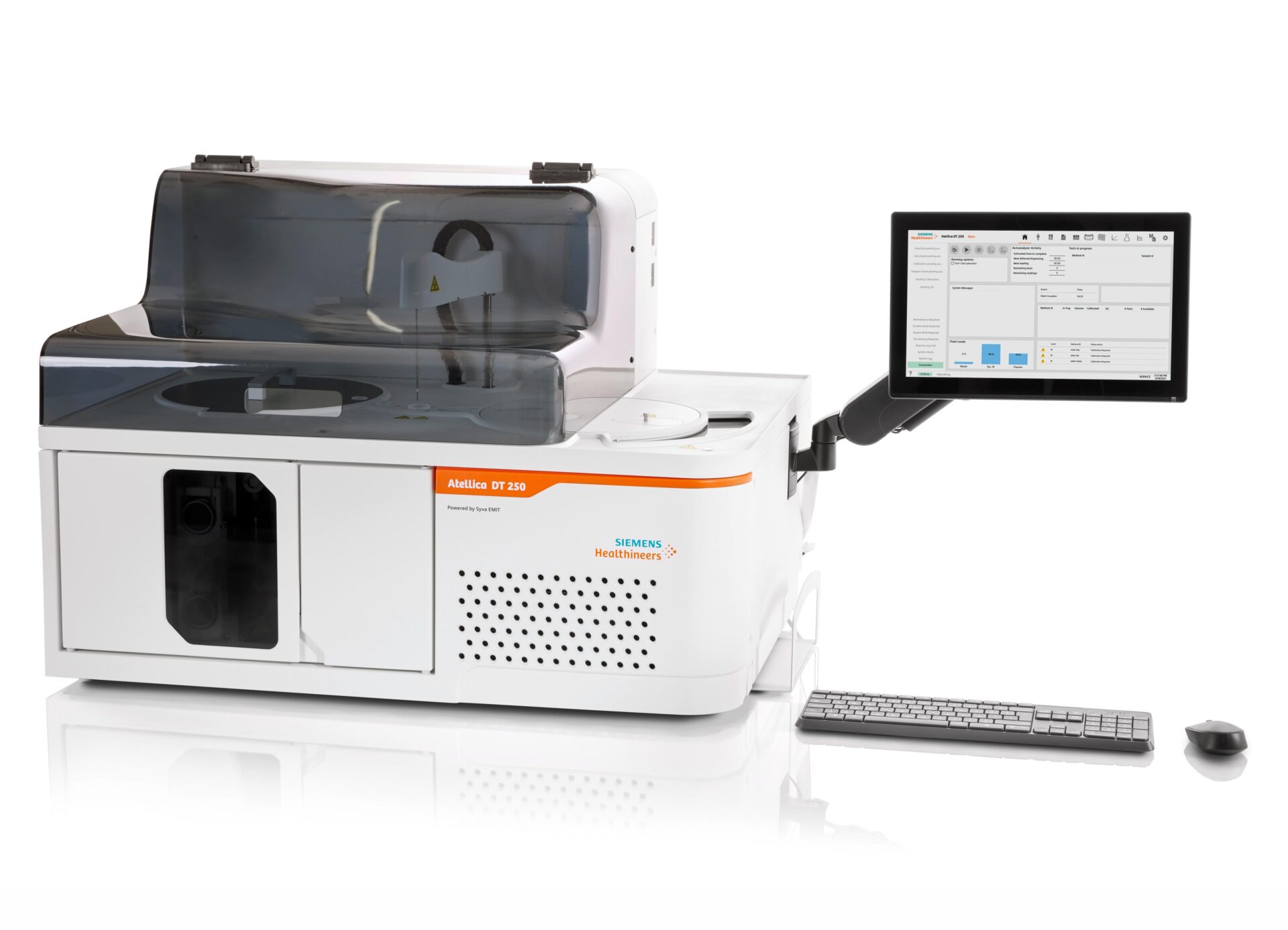
Siemens Healthineers has introduced the Atellica DT 250 Analyzer, a benchtop drug testing system designed to deliver clinical-quality results across diverse testing environments, from forensic laboratories to hospital settings.
Comprehensive testing capabilities in compact design
The new analyser consolidates drug testing capabilities previously restricted to larger floorstanding models into a single benchtop unit. The system identifies substance use, monitors therapeutic and immunosuppressant drugs, and performs serum toxicology testing. Additionally, it provides automated specimen validity testing to detect substitution, adulteration, and dilution of urine samples.
The instrument is engineered for use in both clinical environments – including physician offices and hospitals – and non-clinical settings such as treatment centres, pain management facilities, forensic laboratories, military installations, and workplace testing programmes where operator expertise may vary.
Enhanced productivity and validated technology
The Atellica DT 250 Analyzer processes 225 test results per hour, representing a 69% increase in productivity compared to Siemens Healthineers’ legacy Viva-ProE drug testing system, with first results available in as little as eight minutes for two-reagent assays. The system utilises established Syva EMIT technology and validated reagents, offering an immunoassay menu of more than 65 assays compatible with urine, serum, and
plasma samples. Ten open channels enable customisable, user-defined testing for additional flexibility.
“Quality should be non-negotiable when the stakes for drug testing are so high,” said Duncan Porter, head of Syva, Immulite, and Plasma Proteins for Siemens Healthineers. “We engineered an easy-to-use, reliable, and highly productive instrument that offers flexible testing capabilities to match individual drug testing needs and reduce operational costs that are top of program directors’ minds.”
Clinical and operational significance
Drug testing serves multiple clinical functions beyond substance detection, including determining potential drug interactions, ensuring prescribed medications remain within therapeutic ranges, and optimising medication dosing – applications that require reliable analytical performance.
The analyser addresses operational challenges in drug testing workflows by flagging suspicious samples early, helping prevent bottlenecks that can delay results when sample tampering is attempted. The system is now widely available globally, with product availability varying by country.
For more information, visit: https://shorturl.at/GCKEh
Digital issue: Please click here for more information