



Synthace and Charles River join forces to accelerate assay development in drug discovery
London-based Synthace, a software and services company specialising in assay development, has announced a collaboration with Charles River Laboratories International, Inc., a global provider of drug discovery, development, testing and manufacturing solutions. The partnership will give Charles River’s clients access to Synthace’s approach to developing, automating and transferring assays with greater robustness and efficiency.
The collaboration follows a proof-of-concept project in which Charles River used Synthace’s software to develop a 1536-well assay and complete an assay transfer, implementing a design of over 700 experimental conditions across multiple laboratories and equipment types — a scale that illustrates the practical demands now being placed on assay development teams.
Reproducibility remains a critical challenge
Reproducibility in biomedical research has long been a concern for the scientific community. According to published data, 72% of researchers acknowledge a reproducibility crisis, and the financial burden of this problem is estimated at $100 billion annually in preclinical research alone. For clinical laboratory scientists and R&D teams, the inability to reliably reproduce experimental results across different sites and equipment introduces significant uncertainty into the drug discovery pipeline.
Assays are foundational to drug discovery — they provide the means by which candidate molecules are evaluated for therapeutic activity. Yet assay development frequently becomes a time-consuming bottleneck. Biological complexity makes it difficult to optimise experimental conditions, and transferring a validated assay between laboratories or instrument platforms introduces further variability. The increasing use of artificial intelligence in target identification, whilst accelerating early discovery work, has added to the volume of experimental validation required in the wet lab, compounding existing pressures.
From OFAT to high-dimensional experimentation
Many R&D teams currently rely on one-factor-at-a-time (OFAT) approaches to assay optimisation. Whilst familiar, this methodology is limited in its ability to capture interactions between variables and is inefficient when multiple parameters require simultaneous optimisation. Design of Experiments (DoE) offers a more statistically rigorous alternative, but has historically been considered complex and resource-intensive to implement.
Synthace’s platform integrates DoE with laboratory automation software, enabling high-throughput experimentation across multiple sites and user groups. In the Charles River proof-of-concept, this approach produced more robust experimental outputs, rapid generation of conclusive data, and seamless assay transfer between laboratories and equipment.
Markus Gershater, CEO and co-founder at Synthace, said: “Computational biology has taken a significant leap forward with AI, but in doing so, the lab risks being left behind. Combining DoE, automation and software is the answer, as together they deliver a step-change in experimental power to unpick biological complexity. We call this High Dimensional Experimentation, and it will be
the next generation of experiments for drug discovery.”
Dr Rob Howes, Senior Director of Small Molecule Discovery at Charles River, commented: “Synthace allows us to conduct more technically demanding experiments with greater scientific rigour. With this, we know that the assays we’re developing are more robust, allowing a greater degree of certainty in the results we’re seeing, while also improving their reproducibility. In doing so, we’re dramatically reducing the amount of time we need to develop robust assays and ultimately speeding up this critical part of drug discovery.”
Implications for the field
For laboratories engaged in high-throughput screening and assay transfer, this collaboration signals a growing recognition that experimental design methodology — not just instrumentation or data analysis — is a key determinant of assay quality. The integration of DoE into automated workflows may offer a practical route to more consistent, transferable assays without the resource burden previously associated with such approaches.
For more information, visit: www.synthace.com
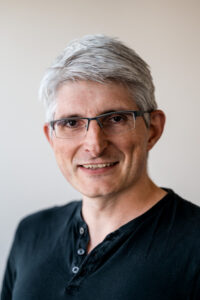
Markus Gershater, CEO and co-founder at Synthace

