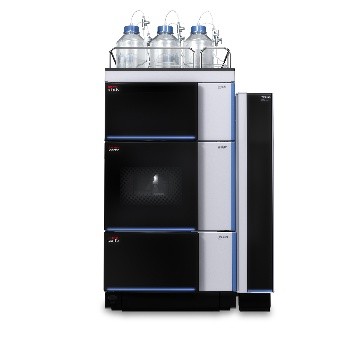

Thermo Fisher introduces new UHPLC system for automated sample cleanup
Thermo Fisher Scientific has unveiled its Transcend VTLX-1 ultra-high performance liquid chromatography (UHPLC) system designed to tackle a significant laboratory bottleneck. The new system automates complex sample cleanup and preparation workflows, enhancing efficiency for clinical research, forensic toxicology, food safety and environmental testing laboratories.
Streamlining workflows through automation
The Transcend VTLX-1 UHPLC system addresses the time-intensive challenge of sample preparation in LC-MS workflows. By automating these processes, the system minimises manual errors whilst increasing sample throughput – a crucial advantage for laboratories handling complex biological and environmental matrices.
Sample preparation is a major bottleneck in many laboratories but is required to eliminate effects from complex biological and environmental matrices in LC-MS assays. The Transcend VTLX-1 UHPLC system overcomes these challenges by enabling rapid, online sample cleanup.
Enhanced technology for better results
The system utilises Thermo Scientific TurboFlow technology or solid phase extraction (SPE) to improve sensitivity and method robustness. This technological integration delivers greater data quality and reproducibility whilst reducing costs and laboratory downtime.
“Automated, online sample cleanup with TurboFlow technology minimises manual preparation, cuts labour costs, and reduces instrument downtime for better overall lab efficiency and a smaller footprint,” says a company spokesperson.
Connected software simplifies operation
A key feature of the new system is the Thermo Scientific Aria MX software, which allows laboratories to control multiple LC-MS methods simultaneously. The software manages pump operations, valve switching, cleaning protocols and more, creating a seamless setup and control experience for laboratory personnel.
The system is designed to enhance method robustness through consistent sample cleanup and preparation methods, achieving higher reproducibility for LC-MS assays – a critical factor for laboratories requiring precision in their analytical workflows.
For more information, visit: https://bit.ly/4czVx17
Digital issue: Please click here for more information