
BioMed X launches first European XSeed Labs with Servier
BioMed X and Servier have established the first XSeed Labs facility in Europe at the Spartners incubator in Paris-Saclay. The collaboration will develop an AI-empowered platform for sterically guided design of bispecific antibodies, addressing critical constraints in cancer immunotherapy development.
The German biomedical research institute BioMed X has announced a strategic partnership with pharmaceutical company Servier to launch the first XSeed Labs incubator model in Europe. Based at Servier’s Paris-Saclay research facility within the Spartners incubator operated by BioLabs, this initiative represents a significant expansion of BioMed X’s unique academic-industry collaboration model.
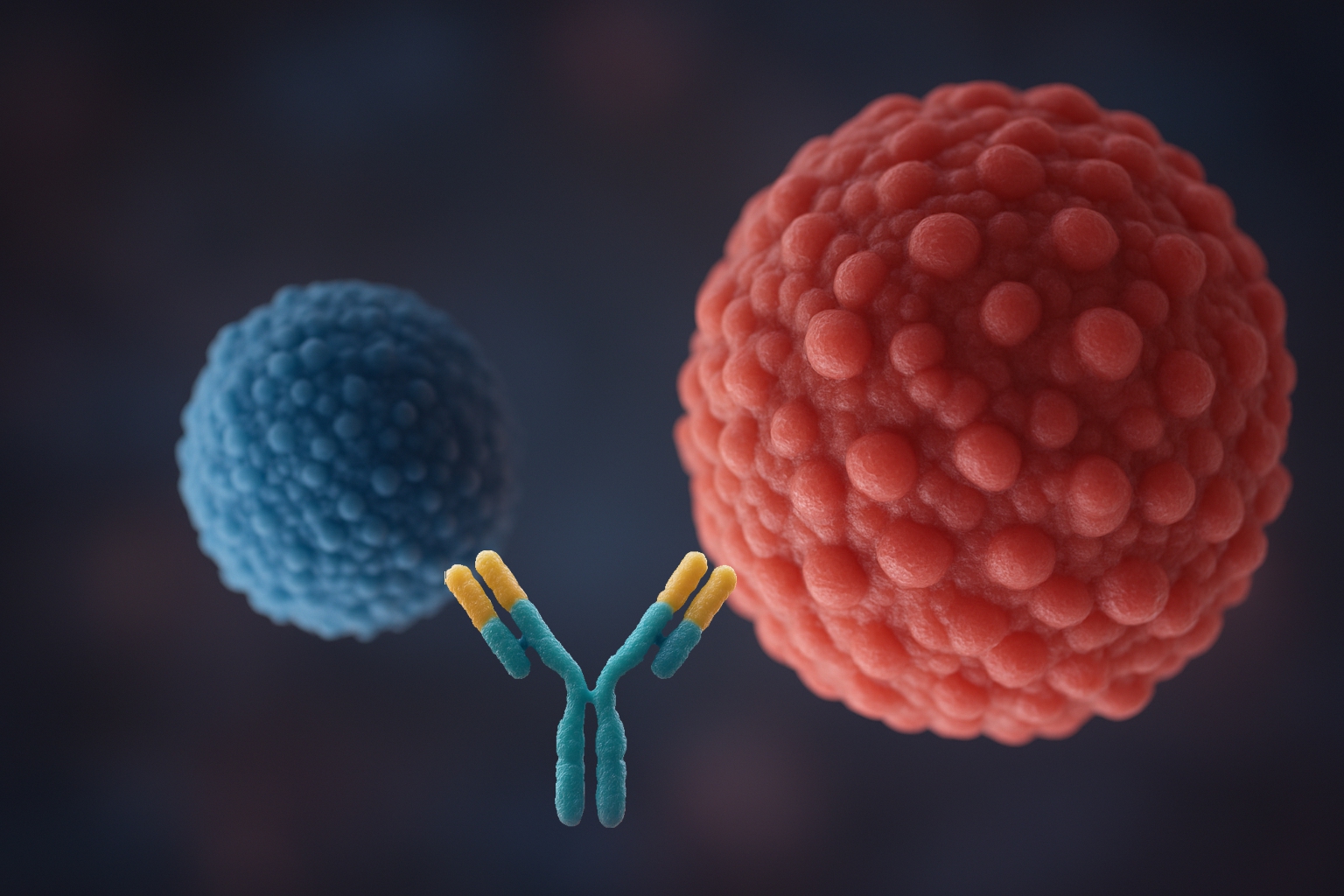
The inaugural research project, titled “New AI-Empowered Platform for Sterically Guided Design of Bispecific Antibodies,” addresses fundamental challenges in developing next-generation cancer therapeutics. Bispecific antibodies, which can simultaneously bind two different targets, represent an emerging therapeutic class showing promise in immune cell engagers (ICE) and dual-targeting antibody-drug conjugates (ADC).
Addressing structural limitations in bispecific antibody design
Current bispecific antibody development faces significant physical constraints that limit therapeutic efficacy. The simultaneous engagement of dual targets under physiological conditions requires careful consideration of steric hindrance, epitope accessibility, and spatial dynamics – factors that currently lack systematic design principles.
According to BioMed X, the two binding arms of a bispecific antibody must simultaneously engage their targets under physiological conditions, highlighting the complexity of achieving optimal therapeutic architecture whilst managing structural constraints.
The proposed AI-driven platform aims to integrate structural data, binding geometries, and cell surface topology through machine learning models, enabling rational design approaches that account for these critical parameters.
Global crowdsourcing for innovative solutions
BioMed X and Servier are seeking research proposals from academic scientists worldwide to address this challenge. The call for proposals emphasises interdisciplinary approaches combining antibody engineering, artificial intelligence, structural biology, and immuno-oncology expertise.
Specific research areas include the design and training of machine learning models for structural integration, mapping epitope combinations for optimal immune synapse formation, developing in-silico simulation tools for dynamic modelling, and validating predictive models through experimental systems.
The submission deadline for project proposals through the BioMed X Career Space portal is 31 August 2025.
Expanding innovation models across pharmaceutical R&D
Dr Christian Tidona, Founder and CEO of BioMed X, expressed enthusiasm about the European expansion: “We are excited that jointly with our partner Servier, we could expand our successful XSeed Labs model to Europe. Following our first XSeed Labs in the US, this is a great validation of our new model, showing that early innovation by academic talents placed inside an established pharma R&D campus is indeed possible and can create significant value for a pharma company’s early R&D pipeline.”
Céline Triquel, Head of R&D Open Innovation at Servier, emphasised the collaborative benefits: “How to innovate in the way we innovate? We are glad to launch another open innovation model at Servier: We’ll have soon the great opportunity to host an XSeed Labs team at Spartners. This is a chance for our current Spartners residents to enrich their community with a different way of innovating thanks to the fantastic crowdsourcing model of BioMed X.”
Building on proven success in Connecticut
The XSeed Labs model builds upon BioMed X’s established approach of combining global crowdsourcing with local incubation processes. The first XSeed Labs was established in 2024 at Boehringer Ingelheim’s R&D campus in Ridgefield, Connecticut, providing a successful template for the European expansion.
The model places outstanding research talents from leading academic institutions directly within commercial R&D ecosystems, providing access to industrial infrastructure whilst maintaining connection to BioMed X’s global research network.
Accelerating oncology therapeutic development
Triquel highlighted the patient-focused motivation behind the initiative: “And finally, a chance for the patients as we invest in R&D to speed up our journey towards new therapeutic solutions in oncology.”
This partnership represents a significant investment in addressing complex challenges in bispecific antibody design, helping to accelerate the development of more effective cancer immunotherapies through systematic integration of artificial intelligence with antibody engineering principles.
The establishment of XSeed Labs in Paris-Saclay positions Europe as a key hub in BioMed X’s expanding global network, fostering cross-pollination between academic innovation and pharmaceutical development expertise.