
Meet Nurgül Vatansever, Vice President & General Manager for the newly integrated EMEA region in Beckman Coulter Diagnostics
Nurgül Vatansever, Vice President & General Manager for EMEA (Europe, Middle East and Africa) at Beckman Coulter Diagnostics, brings more than 30 years of global healthcare leadership to her role. In this interview, she shares insights on the newly unified EMEA region in Beckman Coulter Diagnostics, the evolving diagnostics landscape, the importance of innovation, and people focused leadership.
Could you walk us through the key steps in your career that led to your current role as Vice President & General Manager for EMEA (Europe, Middle East, and Africa) at Beckman Coulter Diagnostics?
My career in healthcare spans more than 30 years, primarily across Emerging Markets. I began as the first female engineer at Hitachi Medical Systems in Turkey, a role that shaped my passion for healthcare innovation.
From there, I advanced into leadership positions at Hitachi Medical Systems, where I spent 14 years, and later at GE Healthcare. After that, I worked for 9 years at Johnson & Johnson, holding several key leadership roles. In 2019, I joined Medtronic to lead the Restorative Therapies Group across Central & Eastern Europe, the Middle East, and Africa.
I joined Beckman Coulter Diagnostics as Vice President for Eastern Europe, the Middle East, and Africa (EEMEA) in 2021 – a role that allowed me to have a direct impact on diagnostics and patient care. Next, since July 2025, I have served as Vice President & General Manager for the newly integrated EMEA region, uniting Europe, the Middle East, and Africa into a more connected, agile and customer-focused structure.
You recently took on the role of leading the EMEA Commercial Region. What was the strategic thinking behind integrating Europe, the Middle East, and Africa into one region?
Integrating Europe, the Middle East, and Africa into one EMEA region was a strategic move to create a more connected, agile organization. By coming together as one team, we unlock greater collaboration, faster decision-making, and the ability to deliver more integrated solutions for our customers across the board. This model draws on the strengths of both Western Europe and EEMEA, ensuring talent is recognized and leveraged to perform at our best – for customers, patients, and each other. It’s more than just a new structure; it’s about building a stronger, customer-focused region positioned for sustainable growth and innovation.
What key differences do you observe in diagnostic and healthcare systems across the EMEA region?
The EMEA region is highly diverse, and this diversity is reflected in its healthcare and diagnostic systems. Even within subregions, countries vary significantly in their infrastructure, regulations, and access to diagnostic technologies.
European countries generally house well‑established, publicly funded healthcare systems with broad access to advanced diagnostics, complemented by strong private-sector involvement. Harmonized regulatory frameworks support smoother processes and enable earlier adoption of innovative technologies, allowing many European countries, as well as some Middle Eastern markets and South Africa, to become early adopters of cutting-edge diagnostics.
In the Middle East and Africa, healthcare models range from highly developed systems with strong investment in automation and digitalization, particularly in Gulf countries, to emerging systems where infrastructure is improving but constraints in workforce, resources or geography still create access challenges. Regulatory environments tend to be less standardized and more variable than in Europe, which can influence speed to market and availability of certain diagnostic solutions. At the same time, many countries are rapidly innovating and leveraging digital health to strengthen their systems. Ultimately, these differences highlight the importance of tailoring solutions to local needs. At Beckman Coulter, we empower each country team to operate independently to best serve its customers, backed by the strength and resources of a global organization.
Innovation is critical in diagnostics. How do you keep the momentum going within your team and organization?
At Beckman Coulter Diagnostics, being part of Danaher gives us a unique advantage: we operate within the Danaher Business System (DBS) framework. DBS isn’t just a set of tools, but the foundation of our culture and the engine that keeps momentum going. Through DBS, we continuously adapt to the evolving needs of our customers, partners and associates. It enables us to accelerate innovation, reduce time to market, and streamline processes, ensuring we deliver impactful solutions efficiently. Every initiative is viewed through the DBS lens, fostering a mindset of continuous learning, iteration, and improvement. This disciplined approach empowers my team and the entire organization to stay agile and focused, constantly improving so we can help our customers overcome the challenges faced.
J.W. Marriott Jr. famously said, “Take care of your employees, and they’ll take care of your customers.” How does this philosophy influence your leadership approach at Beckman Coulter?
J.W. Marriott Jr.’s philosophy resonates deeply with me and with how we lead at Beckman Coulter. Our people are at the heart of everything we do. When we create an environment where associates feel valued, supported, and empowered, they bring their best selves to work, which directly translates into value for our customers.
One example is our “Your Voice Matters” survey, which gives associates a platform to share their opinions and influence company decisions.
I dedicate time to listening to associates at every level, understanding their challenges, and ensuring they have the tools and resources to succeed. When our teams feel engaged and inspired, they innovate, collaborate, and deliver solutions that truly make a difference in laboratories and, consequently, patient care. Taking care of our people isn’t just good leadership – it’s our way of ensuring a solid foundation on which to build sustainable success.
How would you describe your leadership style?
I would describe my leadership style as collaborative, inclusive, and rooted in open communication. In my first few months building a unified EMEA region, I’ve focused on listening, learning and connecting, dedicating significant time to travelling across EMEA to meet as many team members as possible. I strive to connect with associates at every level to understand their needs and foster an environment of trust and open communication. I make it a priority to spend time with those closest to the laboratories – listening to them is essential because, as our customers, they are the company’s top priority.
I began my career as the first female engineer at Hitachi Medical Systems in Turkey. While things have changed since then, I often still find myself among the few women in the room, and I work hard as a leader to empower my region to change that. As a female leader, I believe in lifting others up. My advice to aspiring women is to believe in themselves, build resilience, and advocate for work-life balance. By supporting one another, we can pave the way for meaningful impact in healthcare and beyond.
Looking ahead, where do you see the future of diagnostics in the EMEA region?
Looking ahead, I believe diagnostics in the EMEA region will become increasingly personalized and precise. Advances such as blood-based neurology biomarkers for conditions like Alzheimer’s disease and other forms of dementia have the potential to transform how these diseases are diagnosed and monitored, offering hope for better management and treatment. At Beckman Coulter, we are deeply invested in this work, developing new, blood-based, high-throughput, high-sensitivity assays to detect and measure neurological bio-markers at scale – innovations that will be critical as cases of neuro-degenerative diseases are expected to triple by 2050.
Equally important is the evolution of diagnostic platforms. Our DxI 9000 Analyzer exemplifies this progress as the first-of-its-kind high-sensitivity immunoassay system designed to meet the growing demand for faster, more accurate, reliable testing. The DxI 9000 Analyzer has developed increasingly sensitive, clinically relevant assays, enabling the platform to keep pace with today’s needs and tomorrow’s testing requirements, reflecting Beckman Coulter’s commitment to innovation, efficiency, and improved patient care.
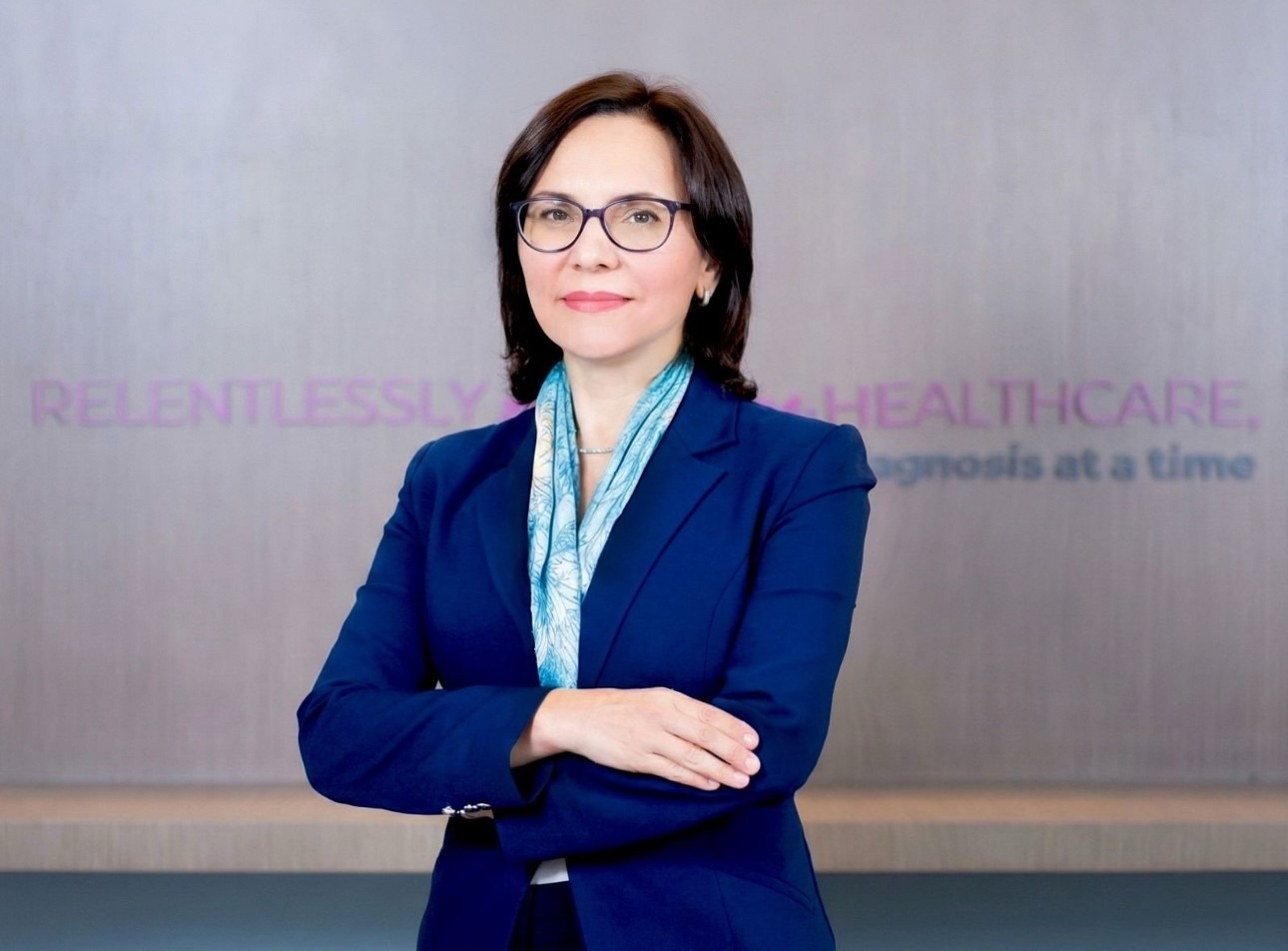
The interviewee
Nurgül Vatansever, Vice President & General Manager for EMEA, Beckman Coulter Diagnostics Beckman Coulter Diagnostics, Dubai Healthcare City, Building 34, 3rd Floor, Dubai, United Arab Emirates