
Bruker announces majority investment in MIMETAS to advance human physiology research
Bruker Corporation has announced a majority investment in MIMETAS B.V., a Leiden-based developer of organ-on-a-chip platforms and human tissue and disease models used in drug discovery and development. The investment extends Bruker’s post-genomic portfolio into microphysiological systems (MPS), also referred to as new approach methodologies (NAMs), which are built on human physiology-relevant model systems rather than conventional animal models.
Combining organ-on-a-chip systems with molecular characterisation MIMETAS’s core technology, the OrganoPlate® platform, combines a standard microtitre-plate format with membrane-free microfluidic tissue cultures, supporting perfused, biologically relevant culture systems suited to imaging, automated handling and higher-throughput workflows. The company’s portfolio also includes OrganoReady® tissue and organoid products, with supporting instrumentation and contract research services.
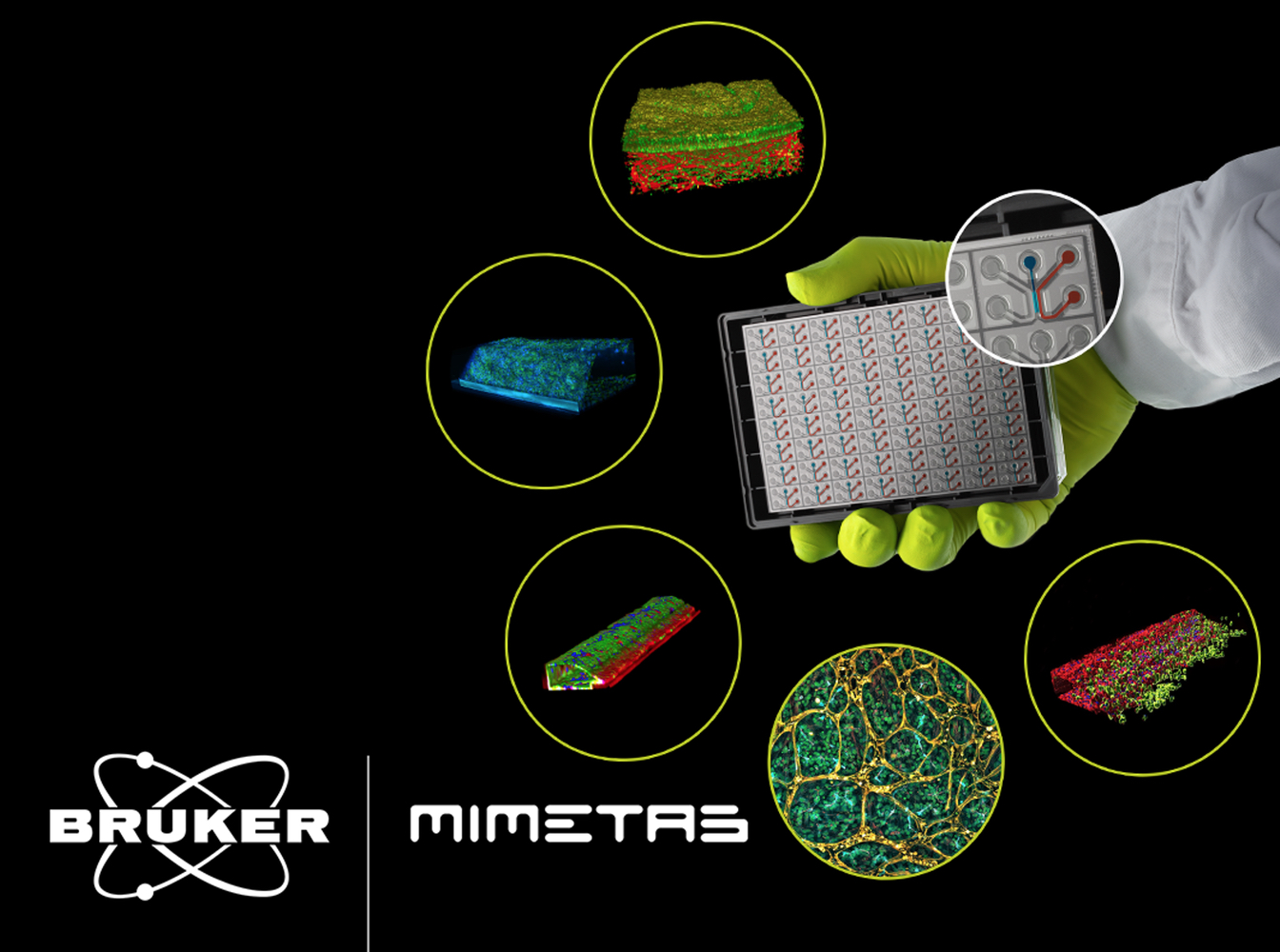
Under the arrangement, Bruker intends to combine these organ-on-a-chip and tissue-model capabilities with its existing technologies in proteomics, metabolomics, nuclear magnetic resonance (NMR), pre-clinical imaging and spatial biology. The two companies plan to develop integrated product and service workflows linking MIMETAS’s human model systems with Bruker’s molecular and cellular characterisation tools.
Frank H. Laukien, President and CEO of Bruker Corporation, said: “Human physiology-relevant tissue and disease models are becoming increasingly important for understanding disease biology and evaluating therapeutic candidates.” He noted: “The unique MIMETAS organ-on-a-chip plat- forms complement Bruker’s capabilities in multiomics, spatial biology and preclinical imaging. We believe that humanized micro-physiological systems, or NAMs, have a bright future, and will be increasingly adopted in drug discovery, development and preclinical testing.”
Clinical applications in toxicity screening
A senior scientific director at a global pharmaceutical company commented: “The OrganoReady Colon Organoid Model combined with the OrganoTEER® system has become fully integrated into our toxicity-testing workflow. The platform fits seamlessly into our routine screening and supports consistent, reproducible data generation.”
Paul Vulto and Jos Joore, co-founders and co-CEOs of MIMETAS, said: “Joining Bruker creates opportunities to scale our platforms and make advanced human tissue models available to more researchers worldwide.” They commented: “By combining our OrganoPlate and OrganoReady solutions with Bruker’s molecular and cellular characterization technologies, we aim to offer more integrated workflows for disease research, compound evaluation and drug development.”
Implications for evidence generation
Bruker and MIMETAS said the combination is expected to connect human tissue models with molecular, cellular and spatial characterisation, supporting evidence generation for disease research, drug-development decisions and artificial intelligence foundation models. Financial details of the transaction were not disclosed, and MIMETAS will continue to operate under its established brand and management.
For more information, visit: www.bruker.com