



Lyme disease is caused by Borrelia spirochaetes: predominantly Borrelia burgdorferi in North America (but also present in Europe), and predominantly B. afzelii and B. garinii in Europe and Asia and is spread to people via infected deer ticks. Infection occurs after only a minority of tick bites, but is typified by three stages. Stage 1, early localized lyme disease is characterized by the bull’s eye rash (erythema migrans (EM)). Stage 2, early disseminated infection occurs within days to weeks after the local infection as the bacteria begin to spread through the bloodstream. Stage 3, late disseminated infection, where the infection has spread throughout the body, can occur several months later in untreated or inadequately treated patients involving chronic symptoms that can be severe and disabling. Treatment by antibiotics is effective in the early localized stage of the disease but this is often hampered by late diagnosis. Diagnosis can be delayed for a number of reasons: there is a lack of awareness in the general public (as well as GPs outside of what are thought to be the high-risk areas); approximately 25% of people do not get the typical bull’s eye rash; and symptoms can be so varied and vague that, when occurring weeks or months later, are difficult to relate back to the time of the tick bite. Knowledge of a tick bite and an associated EM rash is sufficient for diagnosis. However, in cases where there is a clinical suspicion of Lyme disease but no EM rash, laboratory testing is advised. Testing for antibodies is done via a two-tiered approach, starting with a sensitive ELISA, which, if positive or equivocal, is followed by a more specific immunoblot. However, the overall sensitivity of the two-tiered tests is only 64% when done in the early stages of infection, which is when accurate diagnosis is most needed. Because of these diagnostic limitations, the prevalence of Lyme disease is likely to be far higher than is currently thought. With increasing incidence and geographic spread of the disease, better testing for diagnosis, particularly in the early stages of infection, is perhaps required. Research is ongoing into PCR methods as well as and for the detection of OspA antigens that are shed into urine. An LLT-MELISA (lymphocyte transformation test-memory lymphocyte immunostimulation assay) has been developed and is suggested to be a useful supportive diagnostic tool, particularly in infections acquired in Europe. In the USA, next-generation sequencing (NGS) has been used for specific pathogen identification and to guide treatment decisions. With technological advances making NGS quicker and cheaper, could this eventually become the next gold standard test for Lyme disease?

The second edition of the Greiner Bio-One customer magazine bioLOGICAL is now available on their website. Interesting articles about capillary blood sampling are included in this issue. In the article by Jasna Lenicek Krleza, PhD, the reader will learn about which factors to pay special attention to in capillary blood collection to get high-quality samples. The neonatal station and small patients are also featured, together with the company’s MiniCollect® capillary blood collection system. In addition, it includes tips to help users find the most suitable vein for venipuncture.
https://tinyurl.com/ycu2f3ne
Point-of-care testing (POCT) is becoming an important part of laboratory medicine although instruments are not operated by laboratory personnel. In this study, we describe the planning and insertion of regulated policies for POCT and quality management, outside of the clinical laboratory. Our results emphasize the importance of the clinical laboratory department involvement to ensure accountable and accurate results in POCT testing.
by Dr Judith Attias, Svetlana Timoshchuk and Dr Marielle Kaplan
Introduction
Point-of-care testing (POCT) refers to tests conducted outside of the central clinical laboratory division. Point-of-care (POC) tests are performed mainly by clinical staff (nurses, physicians, respiratory therapists, etc) and not by clinical lab medicine specialists who understand and work in compliance with quality control (QC) and quality assurance (QA) practices [1]. The major advantage of POCT is the improvement in turnaround time (TAT) of the results by removing transport and clinical lab processing times [2]. As a result, the global POCT market is growing steadily in recent years and it is expected to grow from 23.16 billion USD in 2016 to 36.96 billion USD in 2021 [3]. POCT can be performed in primary, secondary or tertiary healthcare institutions. The list of tests that are permitted to be performed outside the clinical lab differs from one country to another, as do the requirements for quality management, ISO 22870 insertion included [4]. In Europe, current POCT exists for complete blood count including five-part differential, pregnancy testing, blood glucose concentration, cardiac biomarkers, coagulation testing, platelet function, group A streptococcus, HIV testing, malaria screening, etc.
In Israel, a list of the tests allowed to be performed as POC tests (published by the Ministry of Health), as well as the QA requirement exists but, in fact, until recently no policy was applied for POCT insertion and specialist involvement (clinical lab staff and biomedical engineering).
The aim of our work was to list all POCT conducted in a major hospital (1000 beds) located in the north of Israel, to insert a policy for device insertion, to plan and insert a QC and QA programme and to determinate the role of the clinical lab department.
Methods
First a list of all the POCT devices dispersed all over the hospital departments was prepared by the clinical lab department while building up a strong collaboration with the biomedical engineering unit, thus allowing a multidisciplinary approach.
All the blood gas instruments were replaced by GEM family devices to ensure standardization, and connected to the hospital laboratory information system (LIS), as were the glucometers.
Then a policy for POCT insertion was written. A committee composed of representatives of the clinical lab department directors, the biomedical engineering directors and directors from the department where the POCT procedure was to be employed was formed each time. The definition of the committee’s role was to check the relevance of new POCT device insertion from professional and economic aspects.
A policy for QC performance and frequency was adopted. Four quality indices were adopted and reviewed annually:
Results
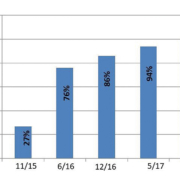
We have now 80 similar glucometers all over the hospital, 10 blood gas instruments from the same family, no general urine instrument (only sticks similar to the sticks used in the clinical lab) and 2 thromboelastograms (TEGs). At the start of the process only 27% of the departments performed glucose QC. After training, the percentage of departments performing QC had grown to 76%. At the end of 2017, we decided that glucose tests would not be done without QC or if the QC results did not meet the expected target of 100% QC performance (Fig. 1). In 2015, there were seven blood gas analysers in five different departments; the instruments were from three different companies and were not connected to the LIS. Now, ten blood gas devices similar to those used in the clinical lab (GEM family instrument which performed QC after every test) are connected to the LIS and dispersed in eight departments. The clinical lab staff audits the use of reagents annually and performs standardization in comparison to the clinical lab once a month. The results show that not all the reagents are used optimally in all departments. The Ambulatory Operating Theatre (Ambulatory OP, which includes outpatient surgery as well as elective caesarean sections) and Intensive Cardiac Care Unit (ICCU) used only 14% and 56% of the reagents, respectively, in 2017 (Fig. 2). The performance level of the instruments is good for the all instruments. Figure three show the standardization results of the Children’s Intensive Care Unit comparatively to the clinical lab results (Fig. 3). No irregularity was obtained. POCT result cancellation is performed only after a clinician’s request to the clinical lab division by mail to the clinical lab staff.
The cancellation percentage as a result of wrong identification in the different departments is low, less than 1% of the totals tests performed (data not shown). The two thromboelastograms are in the open heart surgery theatre and are mainly used by one specific anesthetist. The anesthetist performs internal QC once a week and also participates in an external QC programme. The clinical lab prepares the specimen to be analysed and the anesthetist perform the tests. The clinical lab staff then receive and review the results. The results demonstrate that the results are acceptable but not always performed in the time limit required.
From 2015 to 2017, three new blood gas devices were inserted in the Intensive Care Unit (ICU), ICCU and ambulatory surgery theatre via the POCT device committee. In 2017 the delivery room requested a blood gas device. The number of blood gas tests ordered monthly by this department was reviewed and found to be low. As the clinical lab agreed to give priority to this department for very quick results, the request for a POC blood gas device in the delivery room was rejected by the POCT committee. At the beginning of 2018, a POCT coagulation device was inserted in one department without any consultation with the POCT committee. As in Israel partial thromboplastin time is not a part of the POC allowed tests, the instrument was removed immediately as a result of the committee’s intervention.
Discussion and Conclusion
Our results demonstrate that clinical lab involvement in POCT management led to QC performance and increase QA and insertion procedure supervision. Our results demonstrate that POCT device insertion may be considerate even when it means no optimum reagent use (depending on the need of immediate results). Laboratories all over the world work according to strict QA standard and improve continually QC performance and QC review to ensure results quality. In clinical lab testing, the majority of quality errors occur in the preanalytical phase, which is performed outside the laboratory [5]. In contrast, for POCT the majority of quality errors occurred in the analytic phase [6]. There is no doubt that POCT reduces TAT but we must consider if there is a price to pay and ensure that we do not significantly lower quality. Catherine Zimmerman proposes in her review to improve clinical lab TAT by reducing the transport time of the tubes to the clinical lab and the analytic processes inside the lab, as well as at the post-analytic phase [7]. Another aspect of this issue is whether POCT improves clinical parameters significantly; for example, the length of patient stay in the Emergency Department or mortality. Some results show that rapid results with POCT did not necessarily lead to shorter stays in the Emergency Department [8]. Larsson et al. show that when properly used, POCT improves patient care, workflow and even provides significant financial benefits [9]. They also agree with Pecoraro et al. who demonstrate that further studies may be required for defining the real utility of POCT on clinical decision making [10].
Our results show only a few cancellations owing to wrong patient identification. It is important to take into consideration the possibility of underestimation because of underreporting and unknown errors. In the clinical lab, results are reviewed before release to the clinicians. If an error of any kind is suspected (for example, identification error), the clinical lab staff call the physician, inquire about the quality of the sample and ask for a new sample if there is any doubt. The source of POCT errors are usually operator incompetence, not adhering to test procedures, and use of uncontrolled reagents and devices. Consequences of POCT error may affect patient management decisions and treatment [11]. In the literature, we cannot find data about the percentage of POCT error, especially when the clinical lab is not involved in the processes.
In conclusion, in a world where everything is happening so fast and any data can be obtained so quickly, the real challenge for the clinical lab profession is to overcome POCT antagonism and, on the contrary, to be involved with and supervise all POCT processes.
References
1. Shaw JLV. Practical challenges related to point of care testing. Pract Lab Med 2015; 4: 22–29.
2. Lee-Lewandrowski E, Corboy D, Lewandorwski K, Sinclair J, McDermot S, Benzer TI. Implementation of a point-of-care satellite laboratory in the Emergency Department of an academic medical center. Arch Pathol Lab Med 2003; 127: 456–460.
3. Vashist SK. Point-of-care diagnostics: recent advances and trends. Biosensors 2017; 7(4): 62–65.
4. Boursier G, Vukasovic I, Brguljan PM, Lohmander M, Ghita I, Bernabeu Andreu FA, Barrett E, Brugnoni D, et al. Accreditation process in European countries and EFLM survey. Clin Chem Lab Med 2016; 54(4): 545–551.
5. Bonini P, Plebani M, Ceriotti F, Rubboli F. Errors in laboratory medicine. Clin Chem 2002; 48: 691–698.
6.O’Kane MJ, McManus P, McGowan N, Lynch PLM. Quality error rates in point of care testing. Clin Chem 2011; 57(9): 1267–1271
7. Zimmermann-Ivol C. POCT aux urgencies: gain de temps ou perte de gain? Pipette Swiss Lab Med 2012; 8–10.
8. Florkowski C, Don-Wauchop A, Gimenez N, Rodriguez-Capot K Wils J, Zemlin A. Point-of-care testing (POCT) and evidence-based laboratory medicine (EBLM) – does it leverage any advantage in clinical decision making? Clin Lab Sci 2017; 54(7–8): 471–494.
9.Larsson A, Greig-Pylypczuk R, Huisman A. The state of point-of-care testing: a European perspective. Ups J Med Sci 2015; 120(1): 1–10.
10. Pecoraro V, Germagnoli L, Banfi G. Point-of-care testing: where is the evidence? A systematic survey. Clin Chem Lab Med 2014; 52(3): 313–324.
11. Meir FA, Jones BA. Point-of-care testing error: sources and amplifiers, taxonomy, prevention strategies, and detection monitors. Arch Pathol Lab Med 2005; 129: 1262–1267.
The authors
Judith Attias* PhD, Svetlana Timoshchuk and Marielle Kaplan PhD
Rambam Health Care Campus,
POB9602, Haifa 3109601, Israel
*Corresponding author
E-mail: J_attias@rmc.gov.il
by Nicolas Heureux (DIASource Immunoassays, Louvain-La-Neuve, Belgium)
Vitamin D testing is part of laboratory practice since more than 30 years but has become a routine parameter only recently, due to a highly increasing amount of research in the field resulting in new clinical applications. Vitamin D actually represents a family of molecules of which 25OH Vitamin D and 1,25(OH)2 Vitamin D, under their D3 and D2 forms, are the most important to date. Physical detection methods and immunoassays exist for both molecules and are being reviewed and discussed. New developments in the measurement of C3-epi-25OH Vitamin D, 24,25(OH)2 Vitamin D, and free/bioavailable 25OH Vitamin D are also presented. The future of Vitamin D testing is considered based on the evolution of laboratories and based on the scientific research that is currently performed.
This chapter was originally published in the book Advances in Clinical Chemistry, Vol. 78 edited by Gregory S. Makowski and published by Elsevier.www.sciencedirect.com/science/article/pii/S0065242316300531



Extracellular microRNAs recently provided valuable information including the site and the status of cancers. miR141 and miR375 are the most pronounced biomarkers for the diagnosis of high-risk prostate cancer. Here, we describe attomolar detection of miR141 and miR375 released from living prostate cancer cells through the use of a plasmonic nanowire interstice (PNI) sensor.
by Dr Taejoon Kang and Professor Bongsoo Kim
Background
Prostate-specific antigen
Prostate cancer (PC) represents 27% of all cancers in men and the second leading cause of cancer death for men worldwide [1]. In 2017 for the USA alone, there were approximately 161 360 cases of PC. PC has been diagnosed by digital rectal examination and the prostate-specific antigen (PSA) test. PSA is the only tissue-specific biomarker that can aid the early diagnosis of PC. The PSA blood test, however, has limited diagnostic accuracy for PC because PSA can be increased owing to other factors including benign prostatic hyperplasia or prostatitis as well as PC. The US Preventive Services Task Force even recommended that physicians should not routinely perform PC screening based on serum PSA levels [2]. Clearly, new biomarkers are needed to overcome this problem.
Recently, it has been reported that the level of free PSA (f-PSA) is decreased in men who have PC compared with those with benign conditions [3]. Therefore, various immunoassay technologies including enzyme-linked immunosorbent assay, fluorescence immunoassay, surface plasmon resonance (SPR), electrochemical immunosensor, dark-field microscopy, chemiluminescence, surface-enhanced Raman scattering (SERS), and dynamic light scattering have been employed for the quantitative analysis of f-PSA [3].
RNAs as prostate cancer biomarkers
Long noncoding RNAs (lncRNAs, ≥200 nucleotides) are often expressed in a disease-, tissue- or developmental-specific manner. Since lncRNAs are highly dysregulated in several cancer types and exhibit a high degree of tissue- and disease-specificity, lncRNAs are regarded as candidates for cancer diagnostic biomarkers [4]. Prostate Cancer Antigen 3 (PCA3) is a prostate-specific lncRNA that is overexpressed by 60- to 100-fold in >90% of prostate tumours compared to benign prostatic tissue. Urinary PCA3 has been used as a diagnostic biomarker for PC with a sensitivity of 58–82% and a specificity of 56–76%. The sensitivity and accuracy of PCA3 are increased when used in combination with α-methylacyl-CoA racemase. Urinary PCA3 is now widely used for PC diagnosis and has been approved by the US Food and Drug Administration (FDA). MicroRNAs (miRNAs) are single-stranded, small, and noncoding RNAs. The expression patterns of miRNAs in tissue and blood samples of patients are often closely associated with disease types and also disease stages, hinting that certain miRNAs can be compelling diagnostic markers [5]. In 2008, it was first reported that the level of miR141 is upregulated in the serum of metastatic PC compared with healthy controls and benign prostatic hyperplasia patients. Since then, miR141 and miR375 have been the most pronounced biomarkers for high-risk PC, including castrate-resistant PC and metastatic PC, which account for approximately 15% of PC diagnoses and have the potential to progress to a lethal phenotype [6].
Detection methods for nucleic acid biomarkers
For the detection of nucleic acid biomarkers, polymerase chain reaction (PCR) is the most extensively used analytical tool. Although PCR is considered the gold standard for the detection of gene biomarkers, it has drawbacks including a long amplification time and the risk of erroneously amplifying contaminants or unrelated gene sequences. To overcome these limitations, PCR-free assays have been developed by taking various sensing approaches such as fluorescence resonance energy transfer, colorimetry, SPR, electrochemistry, SERS, and so on. These methods have contributed to the advance of cancer diagnosis by reducing the drawbacks of PCR. SERS is a fascinating phenomenon that significantly increases the Raman signal of molecules located within nanoscale metallic interstices (hot spots). SERS has been employed for the sensitive detection of nucleic acid because of its single-molecule sensitivity, molecular specificity, and insensitivity to quenching. It is known that the SERS enhancement strongly depends on the detailed morphology of the metal nanostructure. Although a number of promising nanostructures that can be used as efficient SERS-active platforms have been proposed, it still remains a challenging task to develop a practical SERS sensor that can detect multiple nucleic acid biomarkers simultaneously while retaining high sensitivities. The use of single-crystalline noble metal nanowires (NWs) is highly advantageous for SERS-based detection because of their well-defined geometries, atomically smooth surfaces, and simple fabrication process [7]. Previously, we developed several noble metal NW-based SERS sensors including plasmonic nanowire interstice (PNI) sensor, particle-on-NW sensor, NW on a graphene sensor, and nanogap-rich Au NW sensor [8–15]. Among them, PNI nanostructures have been widely employed for the detection of several biochemical molecules. Particularly, by combining the PNI nanostructure with the bi-temperature hybridization process, we were able to detect miRNAs with near-perfect accuracy of single nucleotide polymorphism (SNPs) and at the extremely low detection limit of 100 aM. Here, we introduce a PNI sensor which can detect the extracellular miR141 and miR375 released from living PC cells into a culture medium. This sensor shows an extremely low detection limit of 100 aM for both miR141 and miR375, and a wide dynamic range from 100 aM to 100 pM, covering the typical concentration range of extracellular miRNAs in the bloodstreams of patients. Additionally, the PNI sensor can completely discriminate the single-base mismatches of miR141 and miR375. This excellent sensing capability of the PNI sensor enables the simultaneous detection of miR141 and miR375 released from the cells of PC cell lines (LNCaP and PC-3), showing the potential applicability to a novel PC diagnostic method.
Specific and sensitive detection of miRNA
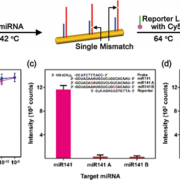
To accurately determine the expression patterns of miRNAs in biological fluid samples, it is necessary to overcome the inconsistent measurement results caused by low specificities and complicated sensing procedures. For the ultra-specific and ultra-sensitive detection of miRNAs, we applied miRNA-specific bi-temperature hybridizations to Au NW surfaces, where short miRNAs can readily crawl into the narrow hot spots of the PNI sensor for effective SERS detection. The probe locked nucleic acid (LNA)-modified PNI sensors were incubated with miRNAs at 42 °C and subsequently incubated with Cy5-labeled reporter LNA at 64 °C (Fig. 1a). If the target miRNAs have perfectly complementary sequences to both probe and reporter LNAs, sandwiched complexes of probe LNA-miRNA-reporter LNA can be stably formed on a PNI sensor, providing strong SERS signals of Cy5. In contrast, when the sample only contains single-base mismatched miRNAs, little signal was observed. Figure 1(b) displays the intensity of the Cy5 1580 cm−1 band plotted as a function of the miR141 (magenta) and miR375 (blue) concentrations. Both intensities were quite linearly increased throughout the concentration range from 100 aM to 100 pM in spite of the different sequences of miR141 and miR375. To investigate the specificity of a PNI sensor, we prepared four kinds of single-base mismatched miRNAs (miR141 A, miR141 B, miR375 A, and miR375 B). The miR141 A and miR375 A had a mismatched single base on the probe LNA recognition site, respectively, and the miR141 B and miR375 B had a mismatched single base on the reporter LNA recognition site. Figure 1(c,d) shows the plot of Cy5 1580 cm−1 band intensity obtained from the PNI sensors for perfectly matched and single-base mismatched miRNAs. The concentration of all miRNAs was 100 pM. When the single-base mismatched miRNAs (miR141 A, B and miR375 A, B) were present, featureless SERS signals were obtained from the PNI sensors. In contrast, significantly strong SERS signals were measured from the PNI sensors in the presence of miR141 and miR375 with intact sequences. In the miRNA sensing procedure using the PNI sensor, the unstable single-base mismatched miRNA–LNA hybridized structures were destroyed at the temperature over Tm. Therefore, we near-perfectly excluded the possibility of detecting single-base mismatched miRNAs.
Detection of miRNAs released from cells in culture
The PNI sensors were also employed to detect miR141 and miR375 released from the living PC cells. We prepared four types of media in which different human cancer cell lines were cultured. The cultured cell lines were LNCaP (PC cells), PC-3 (PC cells), RWPE-1 (noncancerous prostate epithelial cells), and HeLa (cervical cancer cells). For the detection of miR141 and miR375 using PNI sensors, the total extracellular miRNA released from the cells into the media were isolated and purified. Figure 2(a,b) represent the extracellular miR141 and miR375 levels determined by the PNI sensor for LNCaP, PC-3, RWPE-1, and HeLa, respectively. The levels of miR141 and miR375 in LNCaP and PC-3 culture supernatants were higher than those in RWPE-1 and HeLa, indicating that the PNI sensor can detect extracellular miRNAs released from living PC cells accurately. The well-defined PNI nanostructure which provides a highly reproducible SERS hot spot line, straightforward probe LNA immobilization, and simple miRNA–LNA hybrid formation with equalized stabilities seems to collectively contribute to the observed equally enhanced and highly reproducible SERS signals for miR141 and miR375.
Conclusion
We have developed a PNI sensor that can detect extracellular miR141 and miR375 released from the cultured cells of PC cell lines. The proposed PNI sensor exhibited a low detection limit of 100 aM, a wide dynamic range from 100 aM to 100 pM, and a perfect discrimination of single-base mismatches in target miRNAs. By using the PNI sensor, we were able to estimate the absolute amount of the released miR141 and miR375 from each PC cell line. The highly sensitive and exactly quantifiable PNI sensor could be useful for the precise diagnosis of PC patients and will be further valuable for detecting other disease-related extracellular miRNAs.
References
1. Siegel RL, Miller KD, Jemal A. Cancer statistics, 2016. CA Cancer J Clin 2016; 66: 7–30.
2. Moyer VA. Screening for prostate cancer: U.S. Preventive Services Task Force recommendation statement. Ann Intern Med 2012; 157: 120–134.
3. Cheng Z, Choi N, Wang R, Lee S, Moon KC, Yoon S-Y, Chen L, Choo J. Simultaneous detection of dual prostate specific antigens using surface-enhanced Raman scattering-based immunoassay for accurate diagnosis of prostate cancer. ACS Nano 2017; 11: 4926–4933.
4. Gupta SC, Tripatchi YN. Potential of long non-coding RNAs in cancer patients: from biomarkers to therapeutic targets. Int J Cancer 2017; 140: 1955–1967.
5. Kang T, Kim H, Lee JM, Lee H, Choi Y-S, Kang G, Seo M-K, Chung BH, Jung Y, Kim B. Ultra-specific zeptomole microRNA detection by plasmonic nanowire interstice sensor with bi-temperature hybridization. Small 2014; 10: 4200–4206.
6. Yang S, Kim H, Lee KJ, Hwang SG, Lim E-K, Jung J, Lee TJ, Park H-S, Kang T, Kim B. Attomolar detection of extracellular microRNAs released from living prostate cancer cells by a plasmonic nanowire interstice sensor. Nanoscale 2017; 9: 17387–17395.
7. Mohanty P, Yoon I, Kang T, Seo K, Varadwaj KSK, Choi W, Park Q-H, Ahn JP, Suh YD, Ihee H, Kim B. Simple vapor phase synthesis of single-crystalline ag nanowires and single nanowire surface-enhanced Raman scattering. J Am Chem Soc 2007; 129: 9576–9577.
8. Yoon I, Kang T, Choi W, Kim J, Yoo Y, Joo S-W, Park Q-H, Ihee H, Kim B. Single nanowire on a film as an efficient SERS-active platform. J Am Chem Soc 2009; 131: 758–762.
9. Kang T, Yoon I, Kim J, Ihee H, Kim B. Au nanowire-Au nanoparticles conjugated system which provides micrometer size molecular sensors. Chem Eur J 2010; 16: 1351–1355.
10. Kang T, Yoo SM, Kim B, Lee SY. Detection of single nucleotide polymorphism by a gold nanowire-on-film SERS sensor coupled with S1 nuclease treatment. Chem Eur J 2011; 17: 8657–8662.
11. Kang T, Yoo SM, Kang H, Lee H, Kang M, Lee SY, Kim B. Combining a nanowire SERRS sensor and a target recycling reaction for ultrasensitive and multiplex identification of pathogenic fungi. Small 2011; 7: 3371–3376.
12. Kang T, Yoo SM, Kang M, Lee H, Kim H, Lee SY, Kim B. Single-step multiplex detection of toxic metal ions by Au nanowires-on-chip sensor using reporter elimination. Lab Chip 2012; 12: 3077–3081.
13. Gwak R, Kim H, Yoo SM, Lee SY, Lee G-J, Lee M-K, Rhee C-K, Kang T, Kim B. Precisely determining ultralow level UO22+ in natural water with plasmonic nanowire interstice sensor. Sci Rep 2016; 6: 19646.
14. Lee JM, Hwang A, Choi HJ, Jo Y, Kim B, Kang T, Jung Y. A multivalent structure-specific RNA binder with extremely stable target binding but reduced interactions to nonspecific RNAs. Angew Chem Int Ed 2017; 56: 15998–16002.
15. Eom G, Kim H, Hwang A, Son H-Y, Choi Y, Moon J, Kim D, Lee M, Lim E-K, Jeong J, Huh Y-M, Seo M-K, Kang T, Kim B. Nanogap-rich Au nanowire SERS sensor for ultrasensitive telomerase activity detection: application to gastric and breast cancer tissue diagnosis. Adv Funct Mater 2017; 27: 1701832.
The authors
Taejoon Kang*1 PhD, Bongsoo Kim*2 PhD
1Hazards Monitoring Bionano Research Center, KRIBB, Daejeon 34141, Republic of Korea
2Department of Chemistry, KAIST, Daejeon 34141, Republic of Korea
*Corresponding author
E-mail: kangtaejoon@kribb.re.kr;
bongsoo@kaist.ac.kr
May 2026


Prins Hendrikstraat 1
5611HH Eindhoven
The Netherlands
info@clinlabint.com
PanGlobal Media is not responsible for any error or omission that might occur in the electronic display of product or company data.