




Extracellular vesicles as markers and mediators in sepsis
Raeven P, Zipperle J, Drechsler S. Theranostics 2018; 8(12):3348–3365
Sepsis is defined as life-threatening organ dysfunction caused by a dysregulated host response to infection. It remains a highly lethal condition in which current tools for early diagnosis and therapeutic decision-making are far from ideal. Extracellular vesicles (EVs), 30 nm to several micrometers in size, are released from cells upon activation and apoptosis and express membrane epitopes specific for their parental cells. Since their discovery two decades ago, their role as biomarkers and mediators in various diseases has been intensively studied. However, their potential importance in the sepsis syndrome has gained attention only recently. Sepsis and EVs are both complex fields in which standardization has long been overdue. In this review, several topics are discussed. First, we review current studies on EVs in septic patients with emphasis on their variable quality and clinical utility. Second, we discuss the diagnostic and therapeutic potential of EVs as well as their role as facilitators of cell communication via micro RNA and the relevance of microorganism-derived EVs. Third, we give an overview over the potential beneficial but also detrimental roles of EVs in sepsis. Finally, we focus on the role of EVs in selected intensive care scenarios such as coagulopathy, mechanical ventilation and blood transfusion. Overall, the prospect for EV use in septic patients is bright, ranging from rapid and precise (point-of-care) diagnostics, prevention of harmful iatrogenic interventions, to using EVs as guides of individualized therapy. Before the above is achieved, however, the EV research field requires reliable standardization of the current methods and development of new analytical procedures that can close the existing technological gaps.
Diagnostic accuracy of lipopolysaccharide-binding protein for sepsis in patients with suspected infection in the Emergency Department
García de Guadiana Romualdo L, Albaladejo Otón MD, Rebollo Acebes S, Esteban Torrella P, Hernando Holgado A, et al. Ann Clin Biochem 2018; 55(1): 143–148
BACKGROUND: Biomarkers can facilitate the diagnosis of sepsis, enabling early management and improving outcomes. Lipopolysaccharide-binding protein (LBP) has been reported as a biomarker for the detection of infection, but its diagnostic value is controversial. In this study, we assessed the diagnostic accuracy of LBP for sepsis in the Emergency Department (ED) patients, comparing it with more established biomarkers of sepsis, including procalcitonin (PCT) and C-reactive protein (CRP).
METHODS: LBP and other sepsis biomarkers, including PCT and CRP, were measured on admission in 102 adult patients presenting with suspected infection. Classification of patients was performed using the recently updated definition for sepsis (Sepsis-3). The diagnostic accuracy of LBP, CRP and PCT for sepsis was evaluated by using receiver operating characteristic curve (ROC) analysis.
RESULTS: A total of 49 patients were classified as having sepsis. In these patients, median (interquartile range) LBP (41.8 [41.1] µg/dL vs 26.2 [25] µg/dL), CRP (240 [205] mg/L vs 160 [148] mg/dL) and PCT (5.19 [13.68] µg/L vs 0.39 [1.09] µg/L) were significantly higher than in patients classified as not having sepsis (P<0.001 for all three biomarkers). ROC curve analysis and area under curve (AUC) revealed a value of 0.701 for LBP, similar to CRP (0.707) and lower than that for PCT (0.844) (P=0.012).
CONCLUSION: In adult ED patients with suspected infection, the diagnostic accuracy for sepsis of LBP is similar to that of CRP but lower than that of PCT.
An innovative approach for the integration of proteomics and metabolomics data in severe septic shock patients stratified for mortality
Cambiaghi A, Díaz R, Martinez JB, Odena A, Brunelli L, et al. Sci Rep 2018; 8(1):6681
In this work, we examined plasma metabolome, proteome and clinical features in patients with severe septic shock enrolled in the multicentre ALBIOS study. The objective was to identify changes in the levels of metabolites involved in septic shock progression and to integrate this information with the variation occurring in proteins and clinical data. Mass spectrometry-based targeted metabolomics and untargeted proteomics allowed us to quantify absolute metabolite concentration and relative protein abundance. We computed the ratio D7/D1 to take into account their variation from day 1 (D1) to day 7 (D7) after shock diagnosis. Patients were divided into two groups according to 28-day mortality. Three different elastic net logistic regression models were built: one on metabolites only, one on metabolites and proteins and one to integrate metabolomics and proteomics data with clinical parameters. Linear discriminant analysis and partial least squares discriminant analysis were also implemented. All the obtained models correctly classified the observations in the testing set. By looking at the variable importance (VIP) and the selected features, the integration of metabolomics with proteomics data showed the importance of circulating lipids and coagulation cascade in septic shock progression, thus capturing a further layer of biological information complementary to metabolomics information.
Validity of biomarkers in screening for neonatal sepsis – a single-center hospital-based study
Rashwan NI, Hassan MH, Mohey El-Deen ZM, Ahmed AE. Pediatr Neonatol 2018; doi: 10.1016/j.pedneo.2018.05.001 [Epub ahead of print]
BACKGROUND: The diagnosis of neonatal sepsis still considered to be a challenge for both clinicians and the laboratory owing to the non-specific clinical presentations. The present study aimed to compare and assess the diagnostic and prognostic values of C-reactive protein (CRP), high sensitivity CRP (hsCRP), presepsin, interleukin-6 (IL-6) and procalcitonin (PCT) in neonatal sepsis separately and in combination.
METHODS: This hospital-based cross-sectional study has been conducted on 168 neonates recruited from the Neonatal Intensive Care Unit of Qena University Hospitals, Upper Egypt. Measurements of CRP using the latex agglutination test, hsCRP, presepsin, IL6 and PCT assays using commercially available ELISA assay kits were done to all included neonates.
RESULTS: There were significantly higher serum levels of CRP among late onset versus early onset sepsis group with significantly higher serum levels of hsCRP and presepsin among early onset compared with the late onset sepsis group (P<0.05 for all). There were significantly higher hsCRP, presepsin and PCT serum levels in proven versus probable sepsis group (P<0.05 for all). Significantly higher serum levels of presepsin and PCT were noted among survivors versus non-survivors sepsis group (P<0.05 for all). The cut-off value of the serum level of CRP >6 mg/dL showed lower sensitivity and specificity than that of hsCRP at cut-off >140 ng/mL in diagnosing neonatal sepsis. The cut-off value of presepsin >200 ng/mL showed equal sensitivity and specificity to IL-6 at cut-off >22 pg/mL. The cut-off value of PCT at >389 pg/mL showed sensitivity and specificity approximate to that of hsCRP.
CONCLUSIONS: CRP could be a helpful prognostic marker in late onset neonatal sepsis. hsCRP and PCT have higher diagnostic accuracy in neonatal sepsis in comparison to other studied markers. Both IL-6 and presepsin have equal diagnostic utility in neonatal sepsis, but presepsin could be a helpful diagnostic marker in early onset neonatal sepsis.
Plasma miRNA-223 correlates with risk, inflammatory markers as well as prognosis in sepsis patients
Wu X, Yang J, Yu L, Long D. Medicine 2018; 97(27):e11352
The purpose was to evaluate the role of plasma microRNA-223 (miRNA-223) in risk and prognosis in sepsis patients, and its correlation with inflammatory markers. In this study, 187 sepsis patients from July 2015 to December 2016 were consecutively enrolled. Blood samples from septic patients and healthy controls (HCs) were collected, and plasma was separated for miRNA-223 expression detected by quantitative real-time PCR (qPCR). Enzyme-linked immune sorbent assay (ELISA) was performed to detect inflammatory markers. The results were as follows: miRNA-223 was highly expressed in sepsis patients compared to HCs (P<0.001). Receiver operating characteristic (ROC) curve revealed miRNA-223 disclosed a good diagnostic value of sepsis with area under curve (AUC) of 0.754, 95 % CI: 0.706–0.803. Sensitivity and specificity were 56.6 % and 86.6 % at the best cut-off point, respectively. Multivariate logistic analysis indicated that miRNA-223 could predict sepsis risk independently. Spearman’s correlation disclosed that miRNA-223 relative expression positively correlated with APCHE II score (r=0.459, P<0.001), CRP (r=0.326, P<0.001), TNFα (r=0.325, P<0.001), IL-1β (r=0.165, P=0.024), IL-6 (r=0.229, P=0.002) and IL-8 (r=0.154, P=0.035), while it negatively correlated with IL-10 (r=−0.289, P<0.001). miRNA-223 expression in non-survivors was higher than that in survivors (P<0.001). ROC curve revealed miRNA-223 could distinguish sepsis non-survivors from survivors with AUC of 0.600, 95 % CI: 0.505–0.695. Sensitivity and specificity were 83.5 % and 38.9 % respectively at the best cut-off point. In conclusion, plasma miRNA-223 correlates with disease severity and inflammatory markers levels, and it might serve as a novel diagnostic and prognostic biomarker in sepsis patients.
Biomarkers of endothelial dysfunction predict sepsis mortality in young infants: a matched case-control study
Wright JK, Hayford K, Tran V, Al Kibria GM, Baqui A, et al. BMC Pediatr 2018; 18(1):118
BACKGROUND: Reducing death due to neonatal sepsis is a global health priority, although there are limited tools to facilitate early recognition and treatment. We hypothesized that measuring circulating biomarkers of endothelial function and integrity (i.e. Angiopoietin-Tie2 axis) would identify young infants with sepsis and predict their clinical outcome.
METHODS: We conducted a matched case-control (1:3) study of 98 young infants aged 0–59 days of life presenting to a referral hospital in Bangladesh with suspected sepsis. Plasma levels of Ang-1, Ang-2, sICAM-1, and sVCAM-1 concentrations were measured at admission. The primary outcome was mortality (n=18); the secondary outcome was bacteremia (n=10).
RESULTS: Ang-2 concentrations at presentation were higher among infants who subsequently died of sepsis compared to survivors (aOR 2.50, P=0.024). Compared to surviving control infants, the Ang-2:Ang-1 ratio was higher among infants who died (aOR 2.29, P=0.016) and in infants with bacteremia (aOR 5.72, P=0.041), and there was an increased odds of death across Ang-2:Ang-1 ratio tertiles (aOR 4.82, P=0.013).
CONCLUSIONS: This study provides new evidence linking the Angiopoietin-Tie2 pathway with mortality and bacteremia in young infants with suspected sepsis. If validated in additional studies, markers of the angiopoietin-Tie2 axis may have clinical utility in risk stratification of infants with suspected sepsis.
Development and first evaluation of a novel multiplex real-time PCR on whole blood samples for rapid pathogen identification in critically ill patients with sepsis
van de Groep K, Bos MP, Savelkoul PHM, Rubenjan A, Gazenbeek C, et al. Eur J Clin Microbiol Infect Dis 2018; 37(7):1333–1344
Molecular tests may enable early adjustment of antimicrobial therapy and be complementary to blood culture (BC) which has imperfect sensitivity in critically ill patients. We evaluated a novel multiplex real-time PCR assay to diagnose bloodstream pathogens directly in whole blood samples (BSI-PCR). BSI-PCR included 11 species- and four genus-specific PCRs, a molecular Gram-stain PCR, and two antibiotic resistance markers. We collected 5 mL blood from critically ill patients simultaneously with clinically indicated BC. Microbial DNA was isolated using the Polaris method followed by automated DNA extraction. Sensitivity and specificity were calculated using BC as reference. BSI-PCR was evaluated in 347 BC-positive samples (representing up to 50 instances of each pathogen covered by the test) and 200 BC-negative samples. Bacterial species-specific PCR sensitivities ranged from 65 to 100 %. Sensitivity was 26 % for the Gram-positive PCR, 32 % for the Gram-negative PCR, and ranged 0 to 7 % for yeast PCRs. Yeast detection was improved to 40 % in a smaller set-up. There was no overall association between BSI-PCR sensitivity and time-to-positivity of BC (which was highly variable), yet Ct-values were lower for true-positive versus false-positive PCR results. False-positive results were observed in 84 (4 %) of the 2200 species-specific PCRs in 200 culture-negative samples, and ranged from 0 to 6 % for generic PCRs. Sensitivity of BSI-PCR was promising for individual bacterial pathogens, but still insufficient for yeasts and generic PCRs. Further development of BSI-PCR will focus on improving sensitivity by increasing input volumes and on subsequent implementation as a
bedside test.
From traditional biochemical signals to molecular markers for detection of sepsis after burn injuries
Muñoz B, Suárez-Sánchez R, Hernández-Hernández O, Franco-Cendejas R, Cortés H, Magaña JJ. Burns 2018; doi: 10.1016/j.burns.2018.04.016 [Epub ahead of print]
Sepsis is a life-threatening organ-dysfunction condition caused by a dysregulated response to an infectious condition that can cause complications in patients with major trauma. Burns are one of the most destructive forms of trauma; despite the improvements in medical care, infections remain an important cause of burn injury-related mortality and morbidity, and complicated sepsis predisposes patients to diverse complications such as organ failure, lengthening of hospital stays, and increased costs. Accurate diagnosis and early treatment of sepsis may have a beneficial impact on clinical outcome of burn-injured patients. In this review, we offer a comprehensive description of the current and traditional markers used as indicative of sepsis in burned patients. However, although these are markers of the inflammatory post-burn response, they usually fail to predict sepsis in severely burned patients because they do not reflect the severity of the infection. Identification and measurement of biomarkers in early stages of infection is important in order to provide a timely response and the effective treatment of burned patients. Therefore, we compiled important experimental evidence, demonstrating novel biomarkers, including molecular markers such as genomic DNA variations, alterations of transcriptome profiling (mRNA, miRNAs, lncRNAs and circRNAs), epigenetic markers, and advances in proteomics and metabolomics. Finally, this review summarizes next-generation technologies for the identification of markers for detection of sepsis after burn injuries.


According to the World Health Organization, depression affects more than 300 million people and is the leading cause of ill health and disability worldwide. Currently, diagnosis of depression involves the use of questionnaires about the patient’s general health, the way they are feeling and how this is affecting them. Blood tests are carried out during diagnosis, but are for the purpose of excluding other conditions, such as thyroid disease or vitamin D deficiency, that can give rise to symptoms similar to depression. There is no physical test for depression per se. Treatment for depression ranges from ‘wait and see’ and exercise for very mild forms through to self-help groups, talking therapies, such as counselling and cognitive behavioural therapy, for mild to moderate depression, as well as antidepressant medication for the more severe end of the spectrum. There are several classes of antidepressant drugs and treatment is largely through a process of trial and error in order to determine what does or does not work for certain patients, as it is recognized that there is a large variation in the way individuals respond to the different medications. Additionally, although numbers vary, conservative estimates suggest at least 30% of patients do not respond to antidepressant medication, and suffer from what is termed treatment-resistant depression.
However, recently, a line of research about one cause of depression has been gaining traction: the role of inflammation. Recent work suggests that an overactive immune system causing higher levels of inflammation results in an increased risk of depression and that these patients are less likely to respond to antidepressants; perhaps, therefore, the cause of treatment-resistant depression. It has also been noticed that patients taking anti-inflammatory medication for rheumatoid arthritis experience improvements in mood that are more profound than just feeling happier because of reduced pain; changes that have been confirmed by brain scans. Professor Ed Bullmore, Head of the Department of Psychiatry at the University of Cambridge, is certain that inflammation can cause depression and his new book, The Inflamed Mind: A radical new approach to depression, is about to bring these ideas to the attention of a much more general audience. The exciting relevance of this research for clinical lab diagnostics is the thought that a blood test for biomarkers of inflammation will help in an objective diagnosis of a certain type of depression and that treatment will be much better tailored to the individual – perhaps the individuals who fail to respond to current antidepressants. Even if this benefits only a small proportion of people with depression, because of the prevalence of the condition a large number of people will benefit.

Steroid metabolism
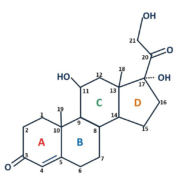
All steroids share a cyclopentanoperhydrophenanthrene nucleus, with individual species varying according to the presence of different functional groups attached to this four-ring structure, as well as by the oxidation state of the rings. Cortisol structure is given as an example in Figure 1. In humans, the major sites of steroid hormone production are the adrenal gland and the gonads. Steroids are synthesized from cholesterol via a series of enzyme-catalysed steps (Fig. 2), which are under tight regulation in healthy individuals by feedback mechanisms involving the hypothalamus and anterior pituitary. Steroids have a wide range of physiological functions which are summarized in Table 1.
Adrenocortical carcinoma – a diagnostic challenge
There are many endocrine disorders that result in the improper synthesis of steroids, and one of the rarest and most severe is adrenocortical carcinoma (ACC). ACC is a malignancy of the adrenal cortex with an annual incidence of 1 or 2 cases per million [1]. The majority of ACC cases are sporadic and occur in the fifth or sixth decade of life and more commonly in women; although ACC can be associated with several familial syndromes including Li-Fraumeni, Beckwith-Wiedemann, Lynch syndrome and multiple endocrine neoplasia type 1 [2]. Functional steroid hormone-producing tumours occur in around two-thirds of cases [3], presenting with varied signs and symptoms of steroid overproduction, most commonly Cushing’s syndrome (cortisol excess) and hyperandrogenism. ACC can progress rapidly in some patients, therefore it is vital that it is distinguished from benign adrenal adenomas, as ACC has a 5-year survival rate of <50% [2]. A surgical cure is only possible if the carcinoma is detected in its localized stage, otherwise the median survival period is <15 months [4].
The diagnosis of ACC is challenging as there is no single diagnostic tool that is able to distinguish ACC from other adrenal masses, including benign adenomas with glucocorticoid or mineralocorticoid excess, phaeochromocytoma and non-functioning adenomas. Imaging alone is insufficient for diagnosis, as although patients with ACC almost always present with tumours ≥4 cm, the presence of a large mass only has a clinical specificity of 61% [5]. Additionally, whereas up to two-thirds of tumours are functional, less than half of ACC cases present with clinical signs of steroid overproduction [3], with a further proportion presenting with other symptoms including abdominal pain. However, a significant proportion are discovered incidentally [2].
The European Network for the Study of Adrenal Tumours (ENSAT) currently recommends that the initial biochemical work-up for suspected ACC includes measurement of serum cortisol (both basal and assessment of suppression after dexamethasone), dehydroepiandrostenedione sulphate (DHEAS), androstenedione, testosterone, 17-hydroxyprogesterone, estradiol and aldosterone (if the patient is hypokalemic or hypertensive). An alternative approach is to measure steroid metabolites in urine using gas chromatography-mass spectrometry (GC-MS); increases in the excretion of metabolites of the steroid precursors 11-deoxycortisol, 17-hydroxypregnenolone and pregnenolone have been shown to provide particularly high diagnostic utility in ACC. Unfortunately, urine steroid profiling is not commonly available in clinical laboratories owing to lengthy sample preparation and complex result interpretation. Further, serum 11-deoxycortisol, 17-hydroxypregnenolone or pregnenolone measurements are rarely performed either because of lack of demand, or specificity of the available immunoassays which may be subject to significant levels of cross-reactivity.
As a result of these limitations, the use of LC-MS/MS is increasingly being adopted to provide more specific steroid hormone measurements. An approach we have taken in our laboratory is to develop and fully evaluate a multiplexed LC-MS/MS method panelling 13 steroids in serum [6] to include many of the steroid synthetic pathway intermediates currently not available for ACC work-up.
Use of a serum steroid panel
The steroids included in our serum panel are highlighted in Figure 2 and are as follows:
Samples are prepared for analysis by an initial protein precipitation step to remove steroids from their binding proteins, followed by liquid-liquid extraction in order to cleanly extract the steroids from remaining matrix components. Prepared extracts are then analysed by LC-MS/MS in which steroids are first resolved on a reverse phase C18 column by gradient elution followed by MS/MS detection using positive atmospheric pressure chemical ionization (APCI) operated in multiple reaction monitoring mode. Chromatographic separation of several isobaric (same mass to charge ratio) steroids is essential, as is the use of deuterated internal standards for all steroids in the method.
When we applied our method to adrenal tumour samples [6], we were able to show that between 4 and 7 steroids were elevated in all ACC cases in comparison to non-ACC adrenal tumours where a maximum of 1–2 steroids were abnormal. The cortisol precursor 11-deoxycortisol was most useful in the discrimination between ACC and non-ACC adrenal lesions, whereas other steroids markedly elevated in ACC included 17-hydroxypregnenolone and pregnenolone. Indeed, all steroids except testosterone in males and corticosterone and cortisone in both sexes were of use in discriminating ACC. This validates the use of a panelling approach when investigating adrenal masses.
Our findings compare well with urine steroid profiling studies. Although urine steroid profiling using 24-hour collections may offer greater clinical sensitivity compared to a single blood measurement owing to diurnal rhythms of steroid production, urine measurements rely on accurately timed collections that are often performed incorrectly and are inconvenient to the patient. Advantages of our LC-MS/MS serum panel compared to urine steroid profiling by GC-MS include a less labour intensive sample preparation, as well as less expertise required for the interpretation of complex profiles, as the serum method only targets selected steroids rather than the large number of their metabolites in urine.
Use of our LC-MS/MS serum steroid panel in ACC patients has further demonstrated the limitations of assessing serum steroids by immunoassay. We observed evidence of notable interference in ACC patients in the cortisol, progesterone, 17-hydroxyprogesterone and androstenedione immunoassays, inferred to be due to elevated concentrations of structurally related steroid precursors.
Future work
Currently, our 13-steroid serum panel has been used to study a relatively small number of ACC patients (because of the rarity of the disease), and clearly larger prospective studies are required to more fully determine the diagnostic utility of our panel in ACC. Further work is also required to clarify the effects of age, sex and diurnal variation on serum steroid panelling; nonetheless the most useful markers of ACC are markedly elevated above variation attributable to these biological factors. In addition to the complexity of interpreting biomarker panels, it is not only important to consider specific reference ranges, but to also consider the patterns in results which require an omics-based analysis approach to interpretation. The challenge surrounding this, as well as the requirement for clear presentation and reporting of results to clinicians requires close involvement of clinical colleagues for the development and introduction of such testing strategies.
The analysis of steroid panels by LC-MS/MS can also undoubtedly be used in other conditions including inborn errors of steroid metabolism such as congenital adrenal hyperplasia (CAH) and polycystic ovarian syndrome (PCOS).
Although we have demonstrated the advantages of our LC-MS/MS steroid panel compared to routine immunoassays, there are undoubtedly disadvantages of using LC-MS/MS. These include the initial cost of instrument purchase, the increased expertise required and often a more laborious sample preparation. Additionally, the specificity of mass spectrometry should not be readily assumed; careful selection of multiple reaction monitoring (MRM) transitions and chromatography conditions are essential to separate isobaric steroids and other interfering compounds. However, in the context of improving the biochemical tools available to us to aid the diagnosis of ACC, the advantages of LC-MS/MS far outweigh these limitations.
Summary
In summary, LC-MS/MS serum steroid panelling offers an additional tool for the challenge that is the diagnosis of ACC. Our method combines measurement of both common and rarely measured steroids in a single sample, which we have shown provides useful data to aid the discrimination of ACC from benign adrenal tumours. Use of LC-MS/MS gives several advantages over the immunoassay and GC-MS-based methods currently used to assess steroid overproduction, but further work is required to demonstrate the full potential of its use in the diagnosis of ACC.
References
1. Fassnacht M, Kroiss M, Allolio B. Update in adrenocortical carcinoma. J Clin Endocrinol Metab 2013; 98: 4551–4564.
2. Else T, Kim AC, Sabolch A, Ramond VM, Kandathil A, Caoili EM, Jolly S, Miller BS, Giordano TJ, Hammer GD. Adrenocortical carcinoma. Endocr Rev 2014; 35: 282–326.
3. Arlt W, Biehl M, Taylor AE, Hahner S, Libé R, Hughes BA, Schneider P, Smith DJ, Stiekema H, et al. Urine steroid metabolomics as a biomarker tool for detecting malignancy in adrenal tumours. J Clin Endocrinol Metab 2011; 96: 3775–3784.
4. Fassnacht M, Terzolo M, Allolio B, Baudin E, Haak H, Berruti A, Welin S, Schade-Brittinger C, Lacroix A, et al. Combination chemotherapy in advanced adrenocortical carcinoma. N Engl J Med 2012;366:2189–2197.
5. Hamrahian AH, Ioachimescu AG, Remer EM, Motta-Ramirez G, Bogabathina H, Levin HS, Reddy S, Gill IS, Siperstein A, Bravo EL. Clinical utility of noncontrast computed tomography attenuation value (Hounsfield units) to differentiate adrenal adenomas/hyperplasias from nonadenomas: Cleveland Clinical experience. J Clin Endocrinol Metab 2005; 90: 871–877.
6. Taylor DR, Ghataore L, Couchman L, Vincent RP, Whitelaw B, Lewis D, Diaz-Cano S, Galata G, Schulte KM, et al. A 13-steroid serum panel based on LC-MS/MS: use in detection of adrenocortical carcinoma. Clin Chem 2017; 63: 1836–1846.
The authors
Victoria Treasure* MSc and Dr David Taylor PhD
Department of Clinical Biochemistry
(Viapath), King’s College Hospital NHS Foundation Trust, London, UK
*Corresponding author
E-mail: Victoria.treasure@nhs.net
May 2026

Prins Hendrikstraat 1
5611HH Eindhoven
The Netherlands
info@clinlabint.com
PanGlobal Media is not responsible for any error or omission that might occur in the electronic display of product or company data.