


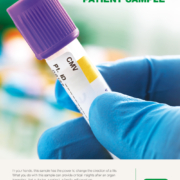
In your hands, this sample has the power to change the direction of a life. What you do with this sample can provide critical insights after an organ transplant that a doctor, a patient, a family, will count on.
Together let’s bring exceptional quality to molecular diagnostic testing.
For more information on Bio-Rad’s molecular quality controls for transplant visit: info.bio-rad.com/Molecular-Transplant-2020

by Dr Weijie Li
Cytogenetic and molecular testing has been becoming more and more important in the diagnosis of human diseases. These tests are indispensable for the diagnosis and/or prognostic prediction for some hematopoietic malignancies. This article discusses a group of lymphomas with similar morphology and phenotype but distinct cytogenetic/molecular abnormalities, with emphasis on the importance of proper cytogenetic/molecular testing in the diagnosis of these diseases.
Burkitt lymphoma (BL) is an aggressive high-grade B-cell lymphoma (HGBCL), which typically shows sheets of monomorphic mediumsized tumour cells with round nuclei, finely dispersed chromatin, and multiple basophilic small to intermediate-sized nucleoli (Fig. 1a). The cytoplasm is moderately abundant and highly basophilic with multiple lipid vacuoles better visualized on Wright’s and/or Giemsa stained air-dried smears or imprint slides. There are many mitotic and apoptotic figures, and numerous intermixed tingible body macrophages resulting in a so-called ‘starry sky’ pattern. The immunophenotype of typical BL is that of germinal centre B-cell-type (GCB), positive for immunoglobulin (Ig) M, CD19, CD20, CD22, and CD79a, CD10 and BCL6 (see Table 1 for definitions). BCL2 is usually negative. The proliferative index (as determined by Ki-67 levels) is nearly 100% (Fig. 1a) [1].
There are three clinical variants of BL: endemic, sporadic and immunodeficiency-associated. They differ mainly in their geographic distribution, clinical presentation and anatomic localization of primary tumour. Regardless of the clinical variants, the molecular hallmark of BL is the translocation of the MYC proto-oncogene (MYC) (8q24) to the Ig heavy chain region (14q32), t(8;14) (q24;q32), or less commonly to the Ig light chain kappa locus on 2p12 or the Ig light chain lambda locus on 22q11. There are other molecular cytogenetic changes, which include copy-number gains involving 1q, 7 and 12 and losses involving 6q, 13q32-34 and 17p. Gene expression profiling studies have defined a molecular signature characteristic of BL, which is different from other lymphomas such as diffuse large B-cell lymphoma (DLBCL) [2]. Mutations of the transcription factor 3 (TCF3) gene or the gene for its negative regulator, inhibitor of DNA binding 3 (ID3) have been frequently detected by next-generation sequencing analysis in sporadic BL cases. The resulting mutant proteins can activate B-cell receptor signalling, which sustains BL cell survival by engaging the phosphoinositide- 3-kinase pathway. Other mutations in CCND3, TP53, RHOA, SMARCA4 and ARID1A genes are also detected in certain BLs. Endemic cases show fewer mutations overall and lower proportion of mutations in TCF3 or ID3 [1].
Technically, all BL cases should have MYC rearrangement. It is controversial to make a diagnosis of BL when MYC rearrangement is not detectable. However, routine fluorescence in situ hybridization (FISH) and chromosomal analysis may not be able to detect this translocation owing to complex karyotype or more complicated translocation. Additionally, by gene expression profile study, some MYC-negative cases show a typical BL molecular signature [2]. Therefore, in the presence of classic morphology and phenotype, the diagnosis of BL should be made even without the demonstration of this translocation. Recent studies [3, 4] show that some true MYC-negative cases have characteristic 11q aberration, which has been recognized by the 2016 WHO classification as a provisional new entity [1, 5] and will be discussed more in detail next.
Historically, there has been no consensus on the diagnostic classification of the lymphomas with morphology resembling BL but showing more cytological pleomorphism and/or other atypical morphologic or phenotypic features. These were so-called ‘grey-zone lymphomas’ and classified as atypical BL/Burkitt-like lymphoma (BLL) by the 2001 WHO Classification of tumours of hematopoietic and lymphoid tissues. The name was then changed to B-cell lymphoma, unclassifiable, with features intermediate between BL and DLBCL by 2008 WHO classification [6]. These lymphomas were thought to represent a continuum between BL and DLBCL.
The 2016 WHO classification of tumours of hematopoietic and lymphoid tissues has shed some light on this field with the modification of the grey-zone lymphoma with features intermediate between BL and DLBCL, and the creation of Burkitt-like lymphoma with 11q aberration (BLL-11q) and large B-cell lymphoma with IRF4 rearrangement (LBL-IRF4) [1, 5].
HGBCL with MYC and BCL2 and/or BCL6 rearrangement and HGBCL, not otherwise specified
The grey-zone lymphoma with features intermediate between BL and DLBCL has been divided into two categories: HGBCL with MYC and BCL2 and/or BCL6 rearrangement (double-hit or triple-hit lymphomas); and HGBCL, not otherwise specified (NOS). These lymphomas usually occur in older adults, with men and women affected equally. They are usually present as a rapidly enlarging mass involving lymph nodes or extranodal sites with advanced stage. These lymphomas have very poor prognosis with no optimal therapeutic strategy [7–9]. Double-hit (DH)/triple-hit (TH) refers to the co-occurrence of MYC and BCL2 and/or BCL6 translocations. MYC rearrangements usually differ from those seen in BL: they often involve non-IG partner genes. These lymphomas usually have complex karyotypes. The majority (60–70%) of them have MYC/BCL2 rearrangements, with a minority (15–30%) harbouring MYC/BCL6 rearrangements and fewer (10%) harbouring rearrangements of all three genes. Rare cases of follicular lymphoma or B-lymphoblastic leukemia/lymphoma can have these DH/TH cytogenetic changes. They should not be included in this category. HGBCLs with DH/TH morphologically can resemble BL, DLBCL or lymphoblastic lymphoma. They are phenotypically mature B-cell lymphomas with the presence of CD19, CD20, CD79a, and Pax-5 and lack of TdT proteins. Most cases also produce CD10 and BCL6. HGBCL, NOS includes cases with atypical BL features or blastoid morphology without DH or TH cytogenetic findings, regardless of MYC status. They are phenotypically mature B-cell lymphomas. For cases with blastoid morphology, cyclin D1 and SOX-11 should be stained for to rule out blastoid variant of mantle cell lymphoma. Approximately 20–35% of HGBCL, NOS cases have a MYC rearrangement [1].
BLL-11q lymphomas
BLL-11q encompasses cases with morphologic, phenotypic, and gene expression resemblance to BL, but lacking MYC translocation and harbouring characteristic proximal 11q gains at 11q23.3 and distal 11q loss at 11q24-qter (Fig. 1b) [1, 3–5]. These 11q changes are likely to be the result in the upregulation of oncogenes PAFAH1B2, USP2, and CBL located in the gained regions of 11q23, and corresponding down-regulation of tumour suppressor candidate genes FLI1, ETS1, TBRG1, and EI24 located in the regions of 11q24-qter loss. Cases of BLL-11q commonly show some degree of cytomorphologic pleomorphism and tend to have a more complex karyotype than BL [1]. The phenotype is that of GCB in nearly all cases [3, 4]. Besides the classic gains and losses within 11q, additional frequently identified abnormalities include del(6q) and trisomy 12 [10]. A recent study has shown that BLL-11q lymphomas have mutational landscape distinct from BL [11], which indicates that BLL-11q is truly a distinct entity. BLL-11q cases occur over a wide age range but are more common in children and young adults. They are more frequently nodal than BL and tend to present as a single dominant mass or conglomerate mass [4, 10]. Patients tend to present with limited disease without involvement of bone marrow or central nervous system, and prognosis appears to be favourable, similar to classical BL [1].
LBL-IRF4
LBL-IRF4 most commonly affects children and young adults [1, 5]. It mainly involves the Waldeyer’s ring and cervical lymph nodes and usually presents as low stage disease. Microscopically, the tumour cells are medium to large with finely clumped chromatin and small basophilic nucleoli. A starry sky pattern is usually absent, though proliferation rate is usually high by Ki-67 stain. These lymphomas may have a diffuse growth pattern, follicular growth pattern, or follicular/diffuse pattern. The tumour cells are positive for B-cell specific markers (CD20, CD79a, Pax-5), and characteristically show high levels of IRF4and BCL6. Over 50% of the cases are also positive for BCL2 and CD10. Despite the high levels of IRF4, these cases have a GCB signature by gene expression profiling. Most cases have a cytogenetically cryptic rearrangement of IRF4 with an Ig heavy chain locus. BCL6 alterations may be detected in some cases, but essentially all cases lack MYC and BCL2 rearrangement. Most cases have shown good response to chemotherapy [12, 13].
All the lymphomas described above except BL are uncommon and quite confusing to most general pathologists. They can be easily misdiagnosed in the absence of a proper work-up plan. Based on our practical experience, a step-by-step diagnostic algorithm has been designed, as shown in Figure 2. This diagnostic scheme is not recommended for the practice in BL endemic areas, where morphology and phenotype are likely to be adequate for the diagnosis of most BL cases. When a lymphoid malignancy is encountered with BL or BLL morphology, and mature B-cell phenotype is demonstrated by flow cytometry and/or immunochemical staining, the first check required is for MYC rearrangement. If MYC rearrangement is detected by FISH or other methods, BL will be the diagnosis in the presence of classic BL morphology and phenotype. If there is morphologic and/or phenotypic atypia, further testing for BCL2 and BCL6 rearrangement is necessary. In the presence of BCL2 and/or BCL6 rearrangement, the diagnosis will be HGBCL with DH or TH. Without the rearrangements of BCL2 and BCL6, the diagnosis will be HGBCL, NOS. Based on our experience in a children’s hospital in the USA, sporadic BL cases frequently show a certain degree of atypical morphologic features. And HGBCL with DH or TH is exceedingly rare in children [7, 8, 14]. Therefore, testing for DH/TH is usually not necessary for pediatric cases. These pediatric cases should be diagnosed as BL as long as MYC rearrangement is detected unless morphologic and phenotypic atypia is significant. The HGBCL, NOS category is not applicable for pediatric cases, considering the excellent prognosis of most pediatric HGBCL cases and their distinct molecular features [14–16]. In the pediatric population, MYC+ cases with significant morphologic and/or phenotypic atypia but no DT/TH should be diagnosed as DLBCL, NOS.
Although high Myc levels (in >80% of nuclei) are present in most cases of BL, there is much more variation in the HGBCLs with DH/ TH. Although most studies have concluded that Myc staining is not reliable enough to be used for the selection of cases for cytogenetic or molecular testing, some studies suggest using a cut-off of >30% or >70% Myc positivity for case selection [17, 18].
The rearrangements of MYC, BCL2, and BCL6 should be detected by a cytogenetic/molecular method such as FISH. The presence of only copy-number changes or somatic mutations, without an underlying rearrangement, is not enough to qualify a case for this category. So-called double-expresser DLBCLs show immunohistochemical overexpression of Myc and BCL2 protein and have a relatively poor prognosis [19]. However, overexpression cannot be used as a surrogate marker for DH cytogenetic status, because most double-expressers are not DH lymphomas (although most DH lymphomas are also double-expressers).
If MYC rearrangement is absent (MYC−), the newly proposed entity, BLL with 11q, should be considered and properly tested. The diagnosis of BLL-11q is based on the presence of characteristic gain/loss patterns of 11q, together with BL/BLL morphology, GCB phenotype, and lack of MYC rearrangement. The characteristic 11q aberration is key to making the diagnosis, but its presence alone is neither specific nor diagnostic since it may also be present in MYC+ BL or DLBCL [10, 20]. The most sensitive method for detecting this characteristic cytogenetic finding is DNA microarray. The 11q aberration can be visualized by chromosomal analysis. However, chromosomal analysis relies on tumour cell viability and metaphase morphology, and the finding may not be characteristic for this aberration if the resolution is low. Another potential diagnostic strategy is FISH for chromosome 11 abnormalities. Commercially available FISH probes for chromosome 11 regions may be used to detect gains within 11q and 11q terminal loss. As a result of the variation of gain/loss spots among the cases, depending on the probes used, FISH alone may miss some cases. If MYC rearrangement is absent and there is no typical 11q aberration, the diagnosis should be HGBCL, NOS for adult patients. For pediatric patients, these lymphomas often have a Burkitt or intermediate molecular gene expression profile and show an excellent prognosis. These cases should not be classified as HGBCL, NOS. For the pediatric cases with morphology and phenotype close to BL and relatively simple karyotype, the diagnosis should be BL; otherwise the diagnosis should be DLBCL, NOS. If the case shows diffuse and levels of of IRF4 and BCL6, especially in Waldeyer’s ring and cervical regions, LBL-IRF4 with diffuse growth pattern should be considered. The diagnosis of LBL-IRF4 should be confirmed by FISH analysis for IRF4 rearrangement [21].
With the advances in cytogenetic/molecular studies of lymphomas with BL or BLL morphology, new classification of these lymphomas has been proposed. Accurate diagnosis of these lymphomas needs the combination of cytogenetic/molecular testing results, morphology and phenotype. More specific or targeted treatment for these lymphomas may be on the horizon, and hence accurately diagnosing them is clinically important.
Weijie Li MD, PhD Department of Pathology and Laboratory Medicine,
Children’s Mercy Hospital, University of Missouri-Kansas City School of
Medicine, Kansas City, MO 64108, USA
E-mail: wli@cmh.edu


Autoimmune thyroid diseases, comprised by Hashimoto thyroiditis, Graves disease, and their variants, are characterised histologically by lymphocytic infiltration of the thyroid gland, biochemically by the presence of well-defined autoantibodies, and clinically by the impairment of thyroid function. The aetiology and mechanisms of the autoimmune damage depend upon genes and environmental factors such as iodine intake and smoking.Three major autoantigens have been identified for autoimmune thyroid disease: thyroglobulin, thyroperoxidase and thyrotropin receptor. Antibodies against these autoantigens are now part of the clinical toolbox. They are not only used to confirm a diagnostic suspicion, but also to predict recurrence of future onset of thyroid autoimmunity.
by Dr Alessandra De Remigis and Dr Patrizio Caturegli
Background on autoimmune thyroid diseases
Autoimmune thyroid diseases (ATDs) comprise two major conditions: Hashimoto thyroiditis with goitre and euthyroidism or hypothyroidism, and Graves disease with goitre, hyperthyroidism and often ophthalmopathy. Hashimoto thyroiditis is named after Dr Hakaru Hashimoto who described in 1912 the thyroid pathological features of four women who had undergone thyroidecomty because of compressive symptoms [1]. Graves disease is named after Dr Robert Graves who reported three patients with hyperthyroid goitre and ocular involvement (Graves ophthalmopathy) [2]. Both conditions are characterised pathologically by infiltration of the thyroid gland with autoreactive T and B lymphocytes and biochemically by the production of thyroid autoantibodies and abnormalities in thyroid function. It is not uncommon to observe transition from one clinical picture to another within the same patient over time, suggesting the existence of common immunological mechanisms [3]. Numerous clinical variants are described for each ATD. For Hashimoto thyroiditis, in addition to the classical goitrous form, fibrous, juvenile, thyrotoxic, post-partum, and IgG4-related forms are described. For Graves disease, beside the classical goitrous form with hyperthyroidism, there is the variant with hyperthyroidism and ophthalmopathy, the one with just ophthalmopathy (called euthyroid Graves disease), and the one with ophthalmopathy and localised myxoedema. Similar to many other autoimmune diseases, ATDs can occur in isolation or associated with other autoimmune diseases, often affecting other endocrine glands. In some patients this association is clinically recognisable and defined as polyglandular autoimmune syndrome.
ATDs are the most common autoimmune diseases with a population prevalence around 2 % in women and 0.2% in men. These estimates are considered to be 10 times higher if ‘subclinical disease’ is taken into consideration [4].
The pathogenesis of ATDs remains to be elucidated but it is believed to rely on the interaction between endogenous genetic factors and exogenous environmental factors. Genes that confer susceptibility to ATDs have been investigated since the 1970s via candidate gene analysis, linkage analysis and genome-wide association studies. Only a handful of genes have been identified and confirmed to increase the risk of ATDs development, but each gene contributes only a very small effect, with odds ratios typically below 3. These genes include the class II region of the major histocompatibility complex, CTLA-4, PTPN22, CD40, CD25, FCRL3, thyroglobulin, and the TSH receptor [5]. Another endogenous factor that has been studied extensively in ATD is pregnancy [6],which is known to ameliorate disease severity. The two major environmental factors implicated in ATDs initiation and progression are iodine and smoking. High iodine intake triggers lymphocytic infiltration of the thyroid in genetically susceptible animals (BB/W rats and NOD.H-2h24 mice); and is associated with increased prevalence and incidence of autoimmune thyroiditis and overt hypothyroidism in humans [7]. Iodine supplementation should thus be kept within the WHO recommended range to prevent from one side iodine deficiency and from the other side autoimmune thyroiditis [8]. Smoking does not have a univocal effect on AITD. It increases the risk of developing Graves disease and aggravates Graves ophtalmopathy. Smoking cessation is associated wth a better response of Graves ophthalmopathy to immunosuppressive treatment [9]. However, smoking seems to have a beneficial effect on Hashimoto thyroiditis and decreases the levels of thyroid autoantibodies [10].
Significant progress has been accomplished on the identification and characterisation of the thyroid autoantigens that are targeted by the immune system in patients with ATDs, so that antibodies against thyroglobulin, thyroperoxidase and the TSH receptor are now well-established tools in the clinical arena.
Thyroid antigens and antibodies
Thyroglobulin
Thyroglobulin is a large glycoprotein made of two identical 330-kDa subunits composed of 2,768 amino acids. Each subunit contains 66 tyrosines that when iodinated and processed make up the thyroid hormones (T4 and T3). Thyroglobulin contains numerous immunodominant epitopes for both T and B lymphocytes. Some epitopes are located in the iodine-rich hormonogenic regions and are affected by the iodine content.
Thyroglobulin antibodies (TgAb) recognise predominantly conformational epitopes, tend to favour the IgG2 subclass and do not fix complement. TgAbs were originally detected by tanned red cell haemagglutination, then by quatitative RIAs or ELISAs, and more recently by automated chemiluminescent EIAs. The analytical sensitivity varies depending on the assay method used, and the cut-off value for positivity is typically set at 100 WHO units/mL.
TgAbs are a marker of underlying thyroid autoimmunity but can also be found in non-autoimmune thyroid diseases as well as in healthy controls [11]. Traditionally they are requested together with thyroperoxidase antibodies to corroborate a diagnostic suspicion of ATDs. Currently, however, the greatest utility of TgAb measurement is in the follow-up of patients with differentiated thyroid cancer. These patients undergo thyroidectomy, possibly combined with radioactive iodine administration, and are then followed by measuring thyroglobulin antigen in the serum. Since thyroglobulin is a thyroid-specific antigen, its serum levels should be undetectable after thyroid ablation in the absence of recurrence or metastasis. If the patient had autoimmune thyroiditis in addition to thyroid cancer, TgAbs can persist for years after thyroidectomy and interfere with the thyroglobulin antigen determination. In particular, they can cause falsely low or undetectable levels of thyroglobulin antigen, and therefore a false positive clinical assessement. This realisation has led to the introduction of reflex measurement of TgAbs any time thyroglobulin is measured in thyroid cancer patients. Numerous studies have attempted to distinguish the type of TgAb based on the specific epitopes they recognise. Latrofa and colleagues have recently reported a pattern of TgAb for patients with ATDs and another for patients with multinodular goitre and differentiated thyroid cancer [12]. TgAbs also seem to recognise distinct epitopes in healthy subjects and patients with clinically manifest disease [13], suggesting the potential clinical utility of TgAbs based on specific thyroglobulin epitopes rather than on the entire thyroglobulin molecule.
Thyroperoxidase
Thyroperoxidase is a large membrane-associated glycoprotein (933 amino acids with a molecular weight of approximately 105 kDa) expressed at the apical (follicular) side of the thyroid cell. It separates to the microvillar/microsomal fraction upon ultracentrifugation and for this reason was originally called M antigen. Thyroperoxidase antibodies (TPOAbs) are predominantly IgG, can fix complement and cause damage to the thyroid cell by cell-mediated cytotoxicity [14]. TPOAbs are considered more specific for autoimmune thyroiditis than TgAbs. They correlate directly with the number of autoreactive lymphocytes infiltrating the thyroid gland as well as with the degree of thyroid hypoechogenicity on thyroid ultrasound. Like TgAbs, TPOAbs were originally measured by semiquantitative methods, then by RIAs or ELISAs, and more recently by automated chemiluminescent EIAs. The analytical sensitivity, as for TgAbs, varies according the assay method used; and the cut-off for positivity is 100 WHO units/mL.
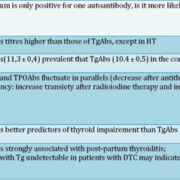
In the third National Health and Nutrition Examination Survey the presence of TPOAbs was strongly associated with TSH values greater than 4.5mUI/l and clinical hypothyroidism as well as with TSH values lower than 0.4 mUI/l and clinical hyperthyroidism [15]. These relationships were not observed for TgAbs, suggesting that their diagnostic and prognostic value is lower than that of TPOAbs [Table 1]. TPOAbs can thus be considered the best serological marker we currently have to establish or corroborate a diagnosis of autoimmune thyroiditis. They also have another unique clinical application in the prediction of post-partum thyroiditis. It has been shown that pregnant women who have TPOAbs at the beginning of pregnancy have a significantly greater risk to develop hypothyroidism in the first year after delivery, as well as permanent thyroid dysfunction in the long-term follow-up [16].
TSH Receptor autoantibodies
The thyrotropin receptor (TSHR) is a G protein-coupled glycoprotein composed of 764 amino acids with a molecular weight of approximately 87 kDa. It is composed of two subunits linked by disulphide bonds: a large extracellular A subunit at the N-terminus (residues 1-418) and a B subunit that spans the plasma membrane seven times and ends with a short cytoplasmic tail (residues 419-764). The region between residues 277 and 418 is called the hinge region, which is critical for defining the relationship among the various TSHR domains. After expression on the plasma membrane, the TSHR undergoes intramolecular cleavage so that a fragment of approximately 50 amino acids called C peptide is removed from the hinge region, leaving the A and B subunits linked by the disulphide bonds. After cleavage, some of the A subunits are shed from the cell surface. The TSHR is the master regulator of thyroid function, being involved in thyrocyte differentiation, proliferation and function [17].
Antibodies to the TSHR are found in Graves disease and are key mediators of the pathogenesis. Different categories of TSHR antibodies (TRAbs) have been identified: those with a stimulatory effect on the thyroid gland responsible for hyperthyroidism, those with an inhibitory effect on the receptor responsible for hypothyroidism, and those with neutral activity. TRAbs can be measured by immunoassays, which determine the presence and titre of the antibody but not the activity, and by bioassays. Immunoassays (the most commonly used) use a monoclonal antibody bound to a solid phase that recognises the native human TSHR produced by recombinant DNA technology in mammalian cells. Then bovine TSH labelled with biotin and the patient serum are co-incubated to compete for binding to the immobilised TSHR: the lower the signal the higher the titre of TRAbs in the patient’s serum. Sometimes it is important to establish not only whether TRAb are present but also their biological activity, usually to rule out blocking antibodies. Bioassays use cultured mammalian cells stably transfected with TSHR and then measure the increase (stimulating antibodies) or the decrease (blocking antibodies) in cAMP production, following the addition of the patient’s serum [Figure 1].
TRAbs are used in four main clinical settings: 1) to predict relapse and clinical course of Graves condition. For example, Graves disease patients with high TRAbs six months after diagnosis and medical treatment are more susceptible to relapse [18]; in addition, by combining TPOAbs and TRAbs measurements, the predictive power increases especially in those patients with moderately elevated TRAbs (6-10 IU/l) [19]; 2) to diagnose an autoimmune pathogenesis in patients with isolated Graves ophthalmopathy; 3) to distinguish in the post-partum period a thyrotoxicosis due to destructive thyroiditis from the hyperthyroidism due to Graves disease; and 4) to forecast the development of neonatal Graves disease in infants born to mothers with Graves disease.
Predictive role of thyroid autoantibodies in the natural history of ATD
In recent years there has been a resurgent interest in autoantibodies, for long considered just a mere disease biomarker rather than an important pathogenic player. Longitudinal studies of patients with autoimmune diseases have shown that autoantibodies precede the clinical diagnosis by several years, establishing the field of predictive antibodies. For ATDs, we have recently carried out a study in female US soldiers and shown that TPOAbs and TgAbs precede a clinical diagnosis of ATD by at least seven years in a significant percentage of the subjects [Figure 2], suggesting that when detected in healthy subjects, autoantibodies should not be overlooked because they can predict the onset of future clinically evident dysfunctions [20].
References
1. Hashimoto H. Archiv für Klinische Chirurgie 1912: 219-248.
2. RJ G. Newly observed affection of the thyroid gland in females (clinical lectures). Lond Med Surg J 1835.
3. Tamai H et al. J Clin Endocrinol Metab 1989; 69(1): 49-53
4. Weetman AP. Horm Res 1997; 48 Suppl 4: 51-54
5. Simmonds MJ, Gough SG. Clin Exp Immunol 2004; 136(1): 1-10
6. Landek-Salgado MA et al. Autoimmun Rev 2010; 9(3): 153-157
7. Teng W et al. N Engl J Med 2006; 354(26): 2783-2793
8. Sundick RS, Bagchi N, Brown TR. Autoimmunity 1992; 13(1): 61-68
9. Vestergaard P et al. Thyroid 2002; 12(1): 69-75
10. Belin RM et al. J Clin Endocrinol Metab 2004; 89(12): 6077-6086
11. Spencer CA et al. J Clin Endocrinol Metab 1998; 83(4): 1121-1127
12. Latrofa F et al. J Clin Endocrinol Metab 2008; 93(2): 591-596
13. Prentice L et al. J Clin Endocrinol Metab 1995; 80(3): 977-986
14. McLachlan SM, Rapoport B. Thyroid 2004; 14(7): 510-520
15. Hollowell JG et al. J Clin Endocrinol Metab 2002; 87(2): 489-499
16. Premawardhana LD et al. Thyroid 2004; 14(8): 610-615
17. Ludgate ME, Vassart G. Baillieres Clin Endocrinol Metab 1995; 9(1): 95-113
18. Schott M et al. Horm Metab Res 2005; 37(12): 741-744
19. Schott M et al. Horm Metab Res 2007; 39(1): 56-61
20. Hutfless S et al. J Clin Endocrinol Metab 2011; 96(9): E1466-71
The authors
Dr Alessandra De Remigis and Dr Patrizio Caturegli
Johns Hopkins University
Department of Pathology
Baltimore, MD, USA
e-mail: pcat@jhmi.edu
November 2025


Prins Hendrikstraat 1
5611HH Eindhoven
The Netherlands
info@clinlabint.com
PanGlobal Media is not responsible for any error or omission that might occur in the electronic display of product or company data.