


Autoimmune thyroid diseases, comprised by Hashimoto thyroiditis, Graves disease, and their variants, are characterised histologically by lymphocytic infiltration of the thyroid gland, biochemically by the presence of well-defined autoantibodies, and clinically by the impairment of thyroid function. The aetiology and mechanisms of the autoimmune damage depend upon genes and environmental factors such as iodine intake and smoking.Three major autoantigens have been identified for autoimmune thyroid disease: thyroglobulin, thyroperoxidase and thyrotropin receptor. Antibodies against these autoantigens are now part of the clinical toolbox. They are not only used to confirm a diagnostic suspicion, but also to predict recurrence of future onset of thyroid autoimmunity.
by Dr Alessandra De Remigis and Dr Patrizio Caturegli
Background on autoimmune thyroid diseases
Autoimmune thyroid diseases (ATDs) comprise two major conditions: Hashimoto thyroiditis with goitre and euthyroidism or hypothyroidism, and Graves disease with goitre, hyperthyroidism and often ophthalmopathy. Hashimoto thyroiditis is named after Dr Hakaru Hashimoto who described in 1912 the thyroid pathological features of four women who had undergone thyroidecomty because of compressive symptoms [1]. Graves disease is named after Dr Robert Graves who reported three patients with hyperthyroid goitre and ocular involvement (Graves ophthalmopathy) [2]. Both conditions are characterised pathologically by infiltration of the thyroid gland with autoreactive T and B lymphocytes and biochemically by the production of thyroid autoantibodies and abnormalities in thyroid function. It is not uncommon to observe transition from one clinical picture to another within the same patient over time, suggesting the existence of common immunological mechanisms [3]. Numerous clinical variants are described for each ATD. For Hashimoto thyroiditis, in addition to the classical goitrous form, fibrous, juvenile, thyrotoxic, post-partum, and IgG4-related forms are described. For Graves disease, beside the classical goitrous form with hyperthyroidism, there is the variant with hyperthyroidism and ophthalmopathy, the one with just ophthalmopathy (called euthyroid Graves disease), and the one with ophthalmopathy and localised myxoedema. Similar to many other autoimmune diseases, ATDs can occur in isolation or associated with other autoimmune diseases, often affecting other endocrine glands. In some patients this association is clinically recognisable and defined as polyglandular autoimmune syndrome.
ATDs are the most common autoimmune diseases with a population prevalence around 2 % in women and 0.2% in men. These estimates are considered to be 10 times higher if ‘subclinical disease’ is taken into consideration [4].
The pathogenesis of ATDs remains to be elucidated but it is believed to rely on the interaction between endogenous genetic factors and exogenous environmental factors. Genes that confer susceptibility to ATDs have been investigated since the 1970s via candidate gene analysis, linkage analysis and genome-wide association studies. Only a handful of genes have been identified and confirmed to increase the risk of ATDs development, but each gene contributes only a very small effect, with odds ratios typically below 3. These genes include the class II region of the major histocompatibility complex, CTLA-4, PTPN22, CD40, CD25, FCRL3, thyroglobulin, and the TSH receptor [5]. Another endogenous factor that has been studied extensively in ATD is pregnancy [6],which is known to ameliorate disease severity. The two major environmental factors implicated in ATDs initiation and progression are iodine and smoking. High iodine intake triggers lymphocytic infiltration of the thyroid in genetically susceptible animals (BB/W rats and NOD.H-2h24 mice); and is associated with increased prevalence and incidence of autoimmune thyroiditis and overt hypothyroidism in humans [7]. Iodine supplementation should thus be kept within the WHO recommended range to prevent from one side iodine deficiency and from the other side autoimmune thyroiditis [8]. Smoking does not have a univocal effect on AITD. It increases the risk of developing Graves disease and aggravates Graves ophtalmopathy. Smoking cessation is associated wth a better response of Graves ophthalmopathy to immunosuppressive treatment [9]. However, smoking seems to have a beneficial effect on Hashimoto thyroiditis and decreases the levels of thyroid autoantibodies [10].
Significant progress has been accomplished on the identification and characterisation of the thyroid autoantigens that are targeted by the immune system in patients with ATDs, so that antibodies against thyroglobulin, thyroperoxidase and the TSH receptor are now well-established tools in the clinical arena.
Thyroid antigens and antibodies
Thyroglobulin
Thyroglobulin is a large glycoprotein made of two identical 330-kDa subunits composed of 2,768 amino acids. Each subunit contains 66 tyrosines that when iodinated and processed make up the thyroid hormones (T4 and T3). Thyroglobulin contains numerous immunodominant epitopes for both T and B lymphocytes. Some epitopes are located in the iodine-rich hormonogenic regions and are affected by the iodine content.
Thyroglobulin antibodies (TgAb) recognise predominantly conformational epitopes, tend to favour the IgG2 subclass and do not fix complement. TgAbs were originally detected by tanned red cell haemagglutination, then by quatitative RIAs or ELISAs, and more recently by automated chemiluminescent EIAs. The analytical sensitivity varies depending on the assay method used, and the cut-off value for positivity is typically set at 100 WHO units/mL.
TgAbs are a marker of underlying thyroid autoimmunity but can also be found in non-autoimmune thyroid diseases as well as in healthy controls [11]. Traditionally they are requested together with thyroperoxidase antibodies to corroborate a diagnostic suspicion of ATDs. Currently, however, the greatest utility of TgAb measurement is in the follow-up of patients with differentiated thyroid cancer. These patients undergo thyroidectomy, possibly combined with radioactive iodine administration, and are then followed by measuring thyroglobulin antigen in the serum. Since thyroglobulin is a thyroid-specific antigen, its serum levels should be undetectable after thyroid ablation in the absence of recurrence or metastasis. If the patient had autoimmune thyroiditis in addition to thyroid cancer, TgAbs can persist for years after thyroidectomy and interfere with the thyroglobulin antigen determination. In particular, they can cause falsely low or undetectable levels of thyroglobulin antigen, and therefore a false positive clinical assessement. This realisation has led to the introduction of reflex measurement of TgAbs any time thyroglobulin is measured in thyroid cancer patients. Numerous studies have attempted to distinguish the type of TgAb based on the specific epitopes they recognise. Latrofa and colleagues have recently reported a pattern of TgAb for patients with ATDs and another for patients with multinodular goitre and differentiated thyroid cancer [12]. TgAbs also seem to recognise distinct epitopes in healthy subjects and patients with clinically manifest disease [13], suggesting the potential clinical utility of TgAbs based on specific thyroglobulin epitopes rather than on the entire thyroglobulin molecule.
Thyroperoxidase
Thyroperoxidase is a large membrane-associated glycoprotein (933 amino acids with a molecular weight of approximately 105 kDa) expressed at the apical (follicular) side of the thyroid cell. It separates to the microvillar/microsomal fraction upon ultracentrifugation and for this reason was originally called M antigen. Thyroperoxidase antibodies (TPOAbs) are predominantly IgG, can fix complement and cause damage to the thyroid cell by cell-mediated cytotoxicity [14]. TPOAbs are considered more specific for autoimmune thyroiditis than TgAbs. They correlate directly with the number of autoreactive lymphocytes infiltrating the thyroid gland as well as with the degree of thyroid hypoechogenicity on thyroid ultrasound. Like TgAbs, TPOAbs were originally measured by semiquantitative methods, then by RIAs or ELISAs, and more recently by automated chemiluminescent EIAs. The analytical sensitivity, as for TgAbs, varies according the assay method used; and the cut-off for positivity is 100 WHO units/mL.
In the third National Health and Nutrition Examination Survey the presence of TPOAbs was strongly associated with TSH values greater than 4.5mUI/l and clinical hypothyroidism as well as with TSH values lower than 0.4 mUI/l and clinical hyperthyroidism [15]. These relationships were not observed for TgAbs, suggesting that their diagnostic and prognostic value is lower than that of TPOAbs [Table 1]. TPOAbs can thus be considered the best serological marker we currently have to establish or corroborate a diagnosis of autoimmune thyroiditis. They also have another unique clinical application in the prediction of post-partum thyroiditis. It has been shown that pregnant women who have TPOAbs at the beginning of pregnancy have a significantly greater risk to develop hypothyroidism in the first year after delivery, as well as permanent thyroid dysfunction in the long-term follow-up [16].
TSH Receptor autoantibodies
The thyrotropin receptor (TSHR) is a G protein-coupled glycoprotein composed of 764 amino acids with a molecular weight of approximately 87 kDa. It is composed of two subunits linked by disulphide bonds: a large extracellular A subunit at the N-terminus (residues 1-418) and a B subunit that spans the plasma membrane seven times and ends with a short cytoplasmic tail (residues 419-764). The region between residues 277 and 418 is called the hinge region, which is critical for defining the relationship among the various TSHR domains. After expression on the plasma membrane, the TSHR undergoes intramolecular cleavage so that a fragment of approximately 50 amino acids called C peptide is removed from the hinge region, leaving the A and B subunits linked by the disulphide bonds. After cleavage, some of the A subunits are shed from the cell surface. The TSHR is the master regulator of thyroid function, being involved in thyrocyte differentiation, proliferation and function [17].
Antibodies to the TSHR are found in Graves disease and are key mediators of the pathogenesis. Different categories of TSHR antibodies (TRAbs) have been identified: those with a stimulatory effect on the thyroid gland responsible for hyperthyroidism, those with an inhibitory effect on the receptor responsible for hypothyroidism, and those with neutral activity. TRAbs can be measured by immunoassays, which determine the presence and titre of the antibody but not the activity, and by bioassays. Immunoassays (the most commonly used) use a monoclonal antibody bound to a solid phase that recognises the native human TSHR produced by recombinant DNA technology in mammalian cells. Then bovine TSH labelled with biotin and the patient serum are co-incubated to compete for binding to the immobilised TSHR: the lower the signal the higher the titre of TRAbs in the patient’s serum. Sometimes it is important to establish not only whether TRAb are present but also their biological activity, usually to rule out blocking antibodies. Bioassays use cultured mammalian cells stably transfected with TSHR and then measure the increase (stimulating antibodies) or the decrease (blocking antibodies) in cAMP production, following the addition of the patient’s serum [Figure 1].
TRAbs are used in four main clinical settings: 1) to predict relapse and clinical course of Graves condition. For example, Graves disease patients with high TRAbs six months after diagnosis and medical treatment are more susceptible to relapse [18]; in addition, by combining TPOAbs and TRAbs measurements, the predictive power increases especially in those patients with moderately elevated TRAbs (6-10 IU/l) [19]; 2) to diagnose an autoimmune pathogenesis in patients with isolated Graves ophthalmopathy; 3) to distinguish in the post-partum period a thyrotoxicosis due to destructive thyroiditis from the hyperthyroidism due to Graves disease; and 4) to forecast the development of neonatal Graves disease in infants born to mothers with Graves disease.
Predictive role of thyroid autoantibodies in the natural history of ATD
In recent years there has been a resurgent interest in autoantibodies, for long considered just a mere disease biomarker rather than an important pathogenic player. Longitudinal studies of patients with autoimmune diseases have shown that autoantibodies precede the clinical diagnosis by several years, establishing the field of predictive antibodies. For ATDs, we have recently carried out a study in female US soldiers and shown that TPOAbs and TgAbs precede a clinical diagnosis of ATD by at least seven years in a significant percentage of the subjects [Figure 2], suggesting that when detected in healthy subjects, autoantibodies should not be overlooked because they can predict the onset of future clinically evident dysfunctions [20].
References
1. Hashimoto H. Archiv für Klinische Chirurgie 1912: 219-248.
2. RJ G. Newly observed affection of the thyroid gland in females (clinical lectures). Lond Med Surg J 1835.
3. Tamai H et al. J Clin Endocrinol Metab 1989; 69(1): 49-53
4. Weetman AP. Horm Res 1997; 48 Suppl 4: 51-54
5. Simmonds MJ, Gough SG. Clin Exp Immunol 2004; 136(1): 1-10
6. Landek-Salgado MA et al. Autoimmun Rev 2010; 9(3): 153-157
7. Teng W et al. N Engl J Med 2006; 354(26): 2783-2793
8. Sundick RS, Bagchi N, Brown TR. Autoimmunity 1992; 13(1): 61-68
9. Vestergaard P et al. Thyroid 2002; 12(1): 69-75
10. Belin RM et al. J Clin Endocrinol Metab 2004; 89(12): 6077-6086
11. Spencer CA et al. J Clin Endocrinol Metab 1998; 83(4): 1121-1127
12. Latrofa F et al. J Clin Endocrinol Metab 2008; 93(2): 591-596
13. Prentice L et al. J Clin Endocrinol Metab 1995; 80(3): 977-986
14. McLachlan SM, Rapoport B. Thyroid 2004; 14(7): 510-520
15. Hollowell JG et al. J Clin Endocrinol Metab 2002; 87(2): 489-499
16. Premawardhana LD et al. Thyroid 2004; 14(8): 610-615
17. Ludgate ME, Vassart G. Baillieres Clin Endocrinol Metab 1995; 9(1): 95-113
18. Schott M et al. Horm Metab Res 2005; 37(12): 741-744
19. Schott M et al. Horm Metab Res 2007; 39(1): 56-61
20. Hutfless S et al. J Clin Endocrinol Metab 2011; 96(9): E1466-71
The authors
Dr Alessandra De Remigis and Dr Patrizio Caturegli
Johns Hopkins University
Department of Pathology
Baltimore, MD, USA
e-mail: pcat@jhmi.edu
Oxidised LDL and antibodies to oxLDL are pathogenetically significant contributors in animal models of atherosclerosis, but the pathophysiological role of anti-oxLDL in humans, discussed in this article, remains to be clarified.
by Prof. Dr Thomas Dschietzig
Oxidised LDL
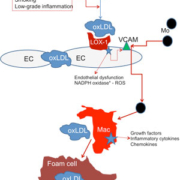
It is currently generally accepted that oxidised low-density lipoprotein (oxLDL) plays a major pathogenetic role in initiating and fueling the process of atherosclerosis [1], [Figure 1]. In the sub-endothelial space, it is taken up via different scavenger receptors (SR-A1, SR-A2, and LOX-1) on the surface of macrophages, which induces foam cell formation and the appearance of fatty streaks, the first histological signs of atherosclerosis. Moreover, oxLDL leads to endothelial dysfunction, chronic vascular inflammation and transformation of vascular smooth muscle cells into the so-called synthetic phenotype typical of vascular remodeling.
OxLDL is measured in plasma using ELISA techniques [2]. As oxidation of lipoproteins is a complex process generating hundreds of unique epitopes, the different antibodies used may vary significantly in their readings. This currently poses a major limitation since these ELISAs are not necessarily comparable, either in terms of absolute values or, more importantly, in terms of pathophysiological meaning [2]. On the other hand, the largest database, which was hitherto collected with the antibody E06 detecting the amount of oxidised phospholipid epitopes on apolipoprotein B-100 (oxPL/apoB), clearly reveals the potential clinical utility of measuring oxLDL: in several studies [2] including the Bruneck [3] and the EPIC-Norfolk study [4], oxPL/apoB was demonstrated to correlate strongly with atherosclerosis and to predict future death, myocardial infarction, stroke and need for revascularisation. In those analyses, the parameter was independent of all traditional and non-traditional risk factors, including inflammatory and thrombotic risk factors, with occasional exceptions for Lp(a). Even more importantly, in the EPIC-Norfolk study, there was evidence of increasing c-statistic values (a measure of added value of new parameters in logistic regression models) when a panel of oxidative biomarkers was added to oxPL/apoB, including Lp(a), CRP, myeloperoxidase, Lp-PLA2 (phospholipase A2) activity and soluble PLA2 mass and activity.
Auto-antibodies against oxLDL
The rate of LDL oxidation is increased when cardiovascular risk factors such as smoking, diabetes mellitus, dyslipidaemia and hypertension induce oxidative stress in the vessel wall [5]. OxLDL, in turn, represents a variety of differently modified lipid and protein components of LDL, the most abundant of which are malonyldialdehyde-LDL (MDA-LDL) and copper-oxidised LDL (Cu-LDL) [5]. This modification renders oxLDL highly immunogenic; correspondingly, auto-antibodies of the IgM and IgG classes are commonly found. Natural IgM auto-antibodies form immune complexes with oxLDL that cannot bind to Fcγ receptors on macrophages and, therefore, do not activate these key players in atherosclerosis. Hence, IgM auto-antibodies may serve to clear oxLDL particles from circulation in a non-inflammatory, protective manner. In contrast, IgG auto-antibodies obviously promote atherosclerosis because they bind and activate macrophages via Fcγ receptors [6] [Figure 2].
In animal studies, the circulating levels of free oxLDL auto-antibodies reflected the general activity of the atherosclerotic process [6]. Natural IgM antibodies – i. e. antibodies pertaining to innate immunity – recognising oxLDL were shown to be protective in different mouse models of atherosclerosis [7,8].
In clinical studies, an inverse relationship between circulating IgM anti-oxLDL and the occurrence of cardiovascular atherosclerosis (carotid artery disease, coronary artery disease) was observed while the opposite, a positive correlation, held true for IgG antibodies [9-11]. Additionally, an unstable phenotype of coronary plaque has been linked to high levels of IgG anti-oxLDL; in contrast, high levels of IgM anti-oxLDL are associated with stable plaques [6]. In these epidemiological studies, however, all described associations were not independent: after correction for other known risk factors in multivariate analyses, anti-oxLDL levels were no longer predictive of atherosclerotic burden. It remains therefore a matter of debate whether oxLDL antibodies in humans represent mere markers of disease or causal players, albeit that the above-mentioned animal studies provided remarkable evidence in favour of the latter hypothesis.
For anti-oxLDL detection by ELISA, oxidation-specific epitopes (‘model oxLDL’), mostly MDA-LDL or Cu-LDL epitopes, are generated in vitro and coupled onto micro-titre plates. Free oxLDL antibodies in diluted plasma samples bind to these epitopes and are then detected with secondary antibodies specific to IgG or IgM [see Figure 1].
Summary
Oxidised LDL and antibodies to oxLDL are pathogenetically significant contributors in animal models of atherosclerosis. As opposed to oxLDL itself, the pathophysiological role of anti-oxLDL in humans (marker or player?) remains to be clarified. Both parameters can be measured using ELISA techniques. For clinical risk assessment in patients with metabolic syndrome and atherosclerosis, circulating oxLDL appears to offer added value to traditional risk factors. It allows significant readjustment of the Framingham Risk Score [3;4] which will help determine how aggressively other risk factors should be treated. Also, combining oxLDL measurement with other parameters of oxidative damage may be useful, with the general caveat that new oxLDL tests be validated thoroughly with regard to their pathophysiological meaning.
References
1. Mitra S, Goyal T, Mehta JL. Oxidized LDL, LOX-1 and Atherosclerosis. Cardiovasc Drugs Ther 2011;25:419-429.
2. Tsimikas S, Miller YI. Oxidative modification of lipoproteins: mechanisms, role in inflammation and potential clinical applications in cardiovascular disease. Curr Pharm Des 2011;17:27-37.
3. Kiechl S, Willeit J, Mayr M, Viehweider B, Oberhollenzer M, Kronenberg F, Wiedermann CJ, Oberthaler S, Xu Q, Witztum JL, Tsimikas S. Oxidized phospholipids, lipoprotein(a), lipoprotein-associated phospholipase A2 activity, and 10-year cardiovascular outcomes: prospective results from the Bruneck study. Arterioscler Thromb Vasc Biol 2007;27:1788-1795.
4. Tsimikas S, Mallat Z, Talmud PJ, Kastelein JJ, Wareham NJ, Sandhu MS, Miller ER, Benessiano J, Tedgui A, Witztum JL, Khaw KT, Boekholdt SM. Oxidation-specific biomarkers, lipoprotein(a), and risk of fatal and nonfatal coronary events. J Am Coll Cardiol 2010;56:946-955.
5. Gounopoulos P, Merki E, Hansen LF, Choi SH, Tsimikas S. Antibodies to oxidized low density lipoprotein: epidemiological studies and potential clinical applications in cardiovascular disease. Minerva Cardioangiol 2007;55:821-837.
6. van Leeuwen M, Damoiseaux J, Duijvestijn A, Tervaert JW. The therapeutic potential of targeting B cells and anti-oxLDL antibodies in atherosclerosis. Autoimmun Rev 2009;9:53-57.
7. Lewis MJ, Malik TH, Ehrenstein MR, Boyle JJ, Botto M, Haskard DO. Immunoglobulin M is required for protection against atherosclerosis in low-density lipoprotein receptor-deficient mice. Circulation 2009;120:417-426.
8. Shaw PX, Horkko S, Chang MK, Curtiss LK, Palinski W, Silverman GJ, Witztum JL. Natural antibodies with the T15 idiotype may act in atherosclerosis, apoptotic clearance, and protective immunity. J Clin Invest 2000;105:1731-1740.
9. Hulthe J, Bokemark L, Fagerberg B. Antibodies to oxidized LDL in relation to intima-media thickness in carotid and femoral arteries in 58-year-old subjectively clinically healthy men. Arterioscler Thromb Vasc Biol 2001;21:101-107.
10. Karvonen J, Paivansalo M, Kesaniemi YA, Horkko S. Immunoglobulin M type of autoantibodies to oxidized low-density lipoprotein has an inverse relation to carotid artery atherosclerosis. Circulation 2003;108:2107-2112.
11. Tsimikas S, Brilakis ES, Lennon RJ, Miller ER, Witztum JL, McConnell JP, Kornman KS, Berger PB. Relationship of IgG and IgM autoantibodies to oxidized low density lipoprotein with coronary artery disease and cardiovascular events. J Lipid Res 2007;48:425-433.
The author
Prof. Dr med. Thomas Dschietzig
Charité Berlin, Germany

Thyroid cancer is the most common endocrine malignancy and the fastest-growing cancer in terms of incidence rates to affect women. In the last decade, thyroid cancer rates have increased in most populations worldwide. Enhanced diagnostic tools for thyroid cancer have become available and stand to impact decision-making in patient care, the extent of surgical treatment, and prognosis in long-term follow-up. This article discusses how the novel blood test TSHR mRNA plays a role in these clinical scenarios.
by Dr Mira Milas and Dr Manjula Gupta
Differentiated thyroid cancer is represented most frequently by papillary thyroid cancer and follicular thyroid cancer, with other histological variants in the mix. These cancers originate from the follicular cells which comprise the thyroid gland and produce the protein thyroglobulin (Tg) and also the essential hormones thyroxine (T4) and triiodothyronine (T3). Unlike medullary thyroid cancer, where calcitonin elevation measured from a simple blood test is virtually diagnostic of the disease, papillary and follicular cancers have no such marker. Tg functions only to detect thyroid cancer recurrence in the absence of the thyroid gland, not pre-operatively. Thus, the mainstay of initial diagnosis of the differentiated thyroid cancers has been cytology, obtained by fine needle aspiration biopsy (FNAB) of thyroid nodules that are detected by exam or by ultrasound imaging [1].
FNAB would be an excellent diagnostic tool if it allowed reliable and consistent diagnosis of differentiated thyroid cancers, but it has several limitations. Its sensitivity and specificity overall are 95% and 48%, and the positive and negative predictive values are 68% and 89%, respectively [2]. When the aspirate from a thyroid nodule contains all the morphologic features of papillary thyroid cancer, FNAB is 99% accurate in designating this malignancy. However, up to 40% of aspirates are abnormal but cannot be classified into a malignant subtype. Follicular thyroid cancer and the follicular variant of papillary thyroid cancer are examples of this – there are simply no morphological changes specific enough to allow recognition of such cancers via microscopic examination of biopsy samples. Additional complexity comes from the considerable variability among interpretations of thyroid cytology samples, both among different pathologists and when the same pathologist views the same sample at different times [2]. In 2008, a new classification system – the Bethesda system for reporting thyroid cytopathology – was developed to address this variability [3].
For those patients with thyroid nodules whose FNAB results fall into an abnormal category without definitive evidence of malignancy (Bethesda categories III, IV, V), the traditional management algorithm has relied on surgery to enable diagnosis. Although thyroidectomy in expert hands has low complication rates, these are still measurable, and most notable for the 1-3% risk of permanent voice hoarseness. Most thyroid specialists have long appreciated that using thyroid surgery in this diagnostic capacity is not ideal, especially when 60-80% of patients will be found to have benign thyroid histology.
In these patients, surgery could have been potentially avoided altogether if better diagnostic markers existed. In other patients, who undergo only partial thyroidectomy initially, a second surgery becomes necessary when thyroid cancer is confirmed. This group would benefit from markers that reliably indicated thyroid cancer at the outset, so that the appropriate extent of thyroid surgery could be accomplished at the first operation.
It is no wonder that these suboptimal clinical scenarios inspired decades of investigation into potential molecular markers of thyroid cancer [4]. Several promising innovations have come to direct availability for patient care in the last few years, and they represent very different strategies. Some investigators focused on detecting known gene mutations (e.g. BRAF, RAS, PTC/RET) associated with thyroid cancer from the aspirated specimens in FNAB. This was pioneered by the work of Nikoforov and colleagues and acknowledged as a potential diagnostic tool in the American Thyroid Association 2009 guidelines for management of thyroid nodules and thyroid cancer [1,5]. In 2011, testing for these thyroid cancer-related mutations in FNAB became commercially available. Another group of investigators also focused on information obtained via FNAB samples, but developed a 142-gene profile that would classify the nodule as benign, potentially allowing surgery to be avoided or postponed. This effort was based on a multi-institutional study and acquisition of large sample cohorts, also leading to a commercially available product in 2011 [7, 8 and see this issue of CLi, page 14].
In contrast to such tissue-based strategies, the TSHR mRNA molecular marker is derived from a peripheral blood test sample and was first available for routine testing in October 2008. It functions as a surrogate marker for circulating thyroid cancer cells, and is not detectable in individuals who have normal thyroid glands. As a blood test, it is convenient to obtain and can be measured at various time intervals, thus functioning both for initial diagnostic purposes and for later roles in prognosticating outcome from thyroid cancer surgery.
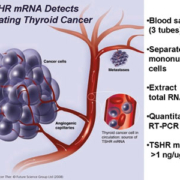
In 2002, investigators at the Cleveland Clinic, USA, led by Dr Manjula Gupta first reported the method of detecting TSHR mRNA from peripheral blood samples of patients [9], [Figure 1]. It relied on the separation of mononuclear cells from the buffy coat layer, total RNA extraction and then RT-PCR using a patented primer pair that was found to be most effective in pre-clinical studies. In 2007, the assay technique switched to quantitative RT-PCR, defining a threshold level of TSHR mRNA >1 ng/ug total RNA to indicate the presence of thyroid cancer [10]. This technique was estimated to have a sensitivity that detects fewer than ten thyroid cancer cells per one mL of blood.
Studies that were conducted at the Cleveland Clinic since 2002 elucidated the following important aspects of TSHR mRNA [summarised in reference 11].
The utility of TSHR mRNA in the management of patients with thyroid disease was validated in an additional large cohort of patients following the availability of TSHR mRNA for routine use [11]. The patterns of marker use in this study confirmed that clinicians – other than the investigators involved with the marker development – found TSHR mRNA helpful in their daily decision-making. The scenarios below are selected to highlight some of the more pertinent clinical applications of TSHR mRNA.
TSHR mRNA as an initial diagnostic marker for differentiated thyroid cancer
A thought-provoking way in which to view TSHR mRNA is that, as a solo diagnostic tool, its overall performance resembles in some ways that of thyroid nodule FNA. Original ROC curve analysis of TSHR mRNA performance identified a sensitivity of 72%, specificity of 83% and AUC as 0.82. The positive and negative predictive values were 81% and 64%, respectively. These values remained constant for the validation cohort, and slightly improved to the mid-80% range in all parameters in recent clinical verification [2012, unpublished laboratory quality control data]. Thus, it is interesting to consider whether, in patients with thyroid nodular disease, measurement of TSHR mRNA could serve as a first line of investigation, potentially avoiding the more painful and costly FNAB, or channeling use of FNAB to more selected individuals.
At present, TSHR mRNA is always used in conjunction with existing clinical standards of care. The most useful application of TSHR mRNA is in clarifying the diagnosis of follicular neoplasms –Bethesda category IV thyroid lesions – to facilitate initial diagnosis of thyroid cancer. As used at the Cleveland Clinic, TSHR mRNA is measured in all patients who have this FNAB cytology result, at least one week following the biopsy or at the time of routine pre-operative laboratory testing. Patients with an elevated TSHR mRNA level would be advised to have total thyroidectomy at the initial surgery based on the high risk of thyroid cancer (96%). As with any important medical decision, a thoughtful discussion of risks, benefits and alternative approaches takes place with the patient, taking into account the entire medical history that may be relevant to an individual. Thus, patients may still elect to proceed with a stepwise process of diagnostic hemithyroidectomy (lobectomy), followed by a second surgery for complete removal of the thyroid gland, if that meets their own expectations better or is a more acceptable treatment. Similarly, patients whose TSHR mRNA levels are undetectable and whose thyroid nodule has benign features may be candidates for observation, following a similar informed consent process. This algorithm and its success in the most recent validation cohort are summarised in Figure 2.
TSHR mRNA can also be combined with other molecularly-based strategies for thyroid cancer detection in nodules. This is a synergistic and desirable approach because, despite outstanding progress, none of the current diagnostic tools (FNAB or molecular markers) are perfect. Viewed quite realistically, their independent performance characteristics are modest to pretty good, but they represent the best tools currently available. It is important to become knowledgeable about the proper application and usage of the diagnostic tools, their expected outcomes and whether the data are sufficiently compelling to sway clinical decision-making. Consider, for example, a patient whose thyroid FNAB sample had no detectable gene mutations. This scenario actually occurs most often. Estimates of undetected mutations were reported in 90% of atypical (Bethesda III) thyroid samples and 82% of follicular neoplasms, reflecting the genetic heterogeneity of thyroid cancers [12]. The thyroid nodule may nevertheless harbour malignancy, and potentially this could be picked up by the TSHR mRNA measurement in peripheral blood. Alternately, the Afirma gene profile sorts thyroid nodules into the benign category, but does not provide risk stratification for cancer if the answer is ‘not benign’ [7, 8]. Here, TSHR mRNA measurement could gauge the likelihood of cancer and thus, again, potentially allow a surgeon to perform an appropriate extent of thyroid surgery at the 1st operation.
TSHR mRNA in the evaluation of multinodular goitre
Because it is a blood test, TSHR mRNA has versatility that, by definition, is unavailable from tissue-based markers. Thus, we observed that endocrinologists, particularly, were eager to measure TSHR mRNA levels in patients with multinodular goitres in the following scenarios: presence of too many nodules to effectively biopsy, reluctance of the patient to undergo FNAB, enlargement of thyroid nodules despite benign FNAB, the presence of mild criteria to undergo thyroid surgery for goitre with a desire (on the part of the patient, physician or both) to have more convincing reasons (such as cancer risk) that surgery is necessary. Figure 3 summarises the findings in such patients, demonstrating that elevated TSHR mRNA may facilitate identification of patients whose goitre disease may benefit from consultation with a surgeon, if not surgery itself.
TSHR mRNA in long-term prognosis and follow-up of thyroid cancer
A remarkable finding from our clinical use of TSHR mRNA was that it disappears from circulation as early as 24 hours after total thyroidectomy. In patients who were confirmed to have thyroid cancer, persistent elevation of TSHR mRNA at this timepoint occurred in 15% of cases. These individuals manifested persistent local disease, recurrence in cervical lymph node, lung or bone metastases, or histologic features of aggressive disease (tall cell subtypes, angiolymphatic invasion, extrathyroidal extension). We remain interested in the utility of TSHR mRNA for long-term prognosis of thyroid cancer. We also continue to follow thyroid cancer patients prospectively with TSHR mRNA, adding it to the panel of other modalities most commonly used for this purpose (radioiodine whole body scan, neck ultrasound, Tg and TgAB monitoring, physical exam). Those individuals whose TSHR mRNA levels suggest persistent or recurrent thyroid cancer not apparent by other means are monitored more closely [11,13].
TSHR mRNA has demonstrated a consistent performance as a unique marker in the field of thyroid diseases. Thus far, it remains the only available blood test that is molecularly-based and that can predict risk of differentiated thyroid cancer before surgery or needle biopsy. Ideally, its use can be envisioned as a key component in a multi-modality panel of options that are knowledgeably applied to appropriate clinical scenarios. Ultimately, TSHR mRNA is an innovative tool for the outlook of the modern time – it allows for a personalised diagnostic and treatment approach for each individual with thyroid nodular disease and thyroid cancer.
References
1. Cooper DS et al. Revised American Thyroid Association management guidelines for patients with thyroid nodules and differentiated thyroid cancer. Thyroid 2009 Nov;19(11):1167-214.
2. Wang CC et al. A large multicenter correlation study of thyroid nodule cytopathology and histopathology. Thyroid. 2011 Mar;21(3):243-51.
3. The Bethesda System for Reporting Thyroid Cytopathology. Ali SZ and Cibas ES, editors. Springer 2010.
4. Barbosa FG, Milas M. Peripheral thyrotropin receptor mRNA as a novel marker for differentiated thyroid cancer diagnosis and surveillance. Expert Rev Anticancer Ther 2008;8(9):1415-1424
5. Nikiforova MN, Nikiforov YE. Molecular diagnostics and predictors in thyroid cancer. Thyroid 2009 Dec;19(12):1351-61.
6. http://www.asuragen.com/ClinicalLab/informthyroid/informthyroid.aspx
7. Chudova D et al. Molecular classification of thyroid nodules using high-dimensionality genomic data. J Clin Endocrinol Metab 2010 Dec;95(12):5296-304.
8. http://www.veracyte.com/
9. Gupta MK et al. Detection of circulating thyroid cancer cells by reverse transcription-PCR for thyroid-stimulating hormone receptor and thyroglobulin: the importance of primer selection. Clin Chem 2002;48:1862-5.
10. Chia SY et al. Thyroid-stimulating hormone receptor messenger ribonucleic acid measurement in blood as a marker for circulating thyroid cancer cells and its role in the preoperative diagnosis of thyroid cancer. J Clin Endocrinol Metab 2007;92:468-475
11. Milas M et al. Circulating Thyrotropin Receptor (TSHR) mRNA as a Novel Marker of Thyroid Cancer: Clinical Applications Learned from 1,758 Samples. Annals of Surgery 2010; 252(4):643-51,
12. Nikiforov YE et al. Impact of mutational testing on the diagnosis and management of patients with cytologically indeterminate thyroid nodules: a prospective analysis of 1056 FNA samples. J Clin Endocrinol Metab 2011 Nov;96(11):3390-7.
13. Milas M et al. Effectiveness of peripheral thyrotropin receptor mRNA in follow-up of differentiated thyroid cancer. Ann Surg Oncol 2009 Feb;16(2):473-80.
The authors
Mira Milas, MD, FACS and Manjula Gupta, PhD
Cleveland Clinic Lerner College of Medicine
Department of Endocrine Surgery
Endocrinology and Metabolism Institute
9500 Euclid Avenue F20
Cleveland, OH 44195, USA
e-mail: milasm@ccf.org

The prevalence of diabetes mellitus in Asia is rapidly increasing. Diabetes in Asia develops in a shorter time, at a younger age and in individuals with a lower body mass index than in the West. This review summarises the epidemiology and pathophysiology of diabetes in Asia as well as the difficulties and challenges in using HbA1c as a diagnostic test in the region.
by Dr R. C. Hawkins
The worldwide rates of diabetes mellitus have more than doubled in the last 30 years, driven by diet, obesity and lifestyle factors [1]. The International Diabetes Federation predicts that the number of individuals affected by diabetes will increase from 240 million in 2007 to 380 million by 2025 [2]. Diabetes is an important health priority in Asia involving huge individual, societal and national costs. Agreement as to appropriate criteria for diagnosis is essential for patient management as well as healthcare planning and epidemiological discussion.
Epidemiology of diabetes in Asia
Asia is a heterogeneous region in terms of ethnicity, culture and socioeconomic development and great differences are seen in the prevalence of diabetes both between and within Asian countries. As the world’s most populous region, Asia is projected to comprise more than 60% of the global diabetic population by 2025. The effects of high population growth, ageing and increasing urbanisation suggest that India and China will remain the two countries with the highest numbers of people with diabetes (79 million and 42 million, respectively) by 2030 [3]. Other Asian countries (Indonesia, Pakistan, Bangladesh, and the Philippines) are in the top ten countries for diabetes prevalence. The prevalence of impaired glucose tolerance in Southeast Asia was estimated as 6.0% in 2007, suggesting that there is a substantial population pool at risk of developing overt diabetes. Differences between ethnic groups may be seen in a single country. In Singapore, a nationwide study in 1998 showed the prevalence of diabetes to be highest in the Indian population (12.8%) followed by Malays (11.3%) and Chinese (8.4%). Age-specific prevalence also varies between Asian populations, with a peak in Indians at 60-69 years compared to 70-89 years in Chinese. South Indians have a higher age-specific prevalence and prevalence of impaired glucose tolerance at a younger age than Chinese. A particular characteristic of diabetes in Asia is the high prevalence of young-onset diabetes. The prevalence of diabetes in China in the 35-44 year age group rose by 88% between 1994 and 2000 while the fraction of diabetics under 44 years of age rose from 25% to 35.7% in South India between 2000 and 2006. Rates of diabetes in children across the region also show alarming rises.
Pathophysiology of diabetes in Asia
The prevalence of insulin resistance and metabolic syndrome is high in Asian people. Although Asian populations have lower rates of obesity than Western populations as defined by the conventional body mass index cut-offs, the prevalence of diabetes in Asians often matches or exceeds that in the West.
Compared to Europeans, Asians have lower muscle mass and increased abdominal obesity and visceral fat. Obesity is associated with many of the metabolic mechanisms that worsen insulin tolerance. Excess lipolysis leads to elevation of blood non-esterified fatty acids and triglycerides, suppressing glucose uptake by muscle. Obesity can also diminish insulin action through leptin and adiponectin secretion. This difference in body fat varies between Asian ethnicities and explains in part the differences in diabetes prevalence seen between ethnic groups. For example, for the same age and BMI, Singaporean Indians have the greatest percentage of body fat, followed by Malays and then Chinese; an order reflecting the different prevalence of diabetes in each group. All three ethnicities have higher body fat percentages than Europeans. The World Health Organisation convened an expert consultation to review the BMI cut offs to define risks in Asian populations and recommended that for Asians, BMI of 23 kg/m2 or higher marks a moderate increase in risk while a BMI of 27.5 kg/m2 or more represents high risk. Several Asian countries have subsequently adopted lower BMI cut-offs than those used in the West. India and Japan use BMI cut-offs of 23 and 25 to define overweight and obese categories while Singapore uses 23 and 27.5 kg/m2.
Genetic differences in risk allele frequencies and location for diabetes genes between Asian and European populations may contribute to some of the physiological differences observed. Asians, especially from Southeast Asia, show higher postprandial glucose concentrations and lower insulin sensitivity than Europeans following a glucose challenge despite controlling for age, BMI, waist circumference, birth weight and diet. Frequency differences between Asian and European populations include transcription factor 7-like 2 gene TCF7L2 (rs7901349) with a minor allele frequency of 0.03 in Asians and 0.27 in Europeans and the potassium voltage-gated channel, subfamily Q, member 1 gene KCNQ1 (rs2237892) with allele frequency of 0.28-0.41 in East Asians and 0.05-0.07 in Europeans. The effect of the same genetic variant may also vary between populations. For example, the effect of the FTO variant is linked to changes in fat mass and obesity in Europeans but its link to body size is weaker in Indian populations.
Nutritional factors may also play a role in the increased rates of diabetes seen in Asia. Increasing urbanisation across Asia has seen an increase in consumption of animal products and fat. Some traditional food sources such as ghee (clarified butter), which is high in trans fatty acids, and polished rice and refined wheat (which have high glycaemic indices) may contribute to obesity and glucose intolerance. Such dietary factors, coupled with an increasingly sedentary lifestyle (e.g. replacement of bicycles with automobiles across Asia) and high cigarette smoking rates (which increases insulin resistance), are helping fuel diabetes rates across the region.
Diagnosis of diabetes mellitus in Asia
Diabetes mellitus has traditionally been defined as a state of chronic hyperglycaemia and measurement of blood glucose concentrations has been the gold standard criterion for diagnosis. The International Expert Committee recently recommended that diabetes should be diagnosed when HbA1c is ≥6.5% and this approach has been adopted by the American Diabetes Association [4].
HbA1c results from the reaction of glucose with the N-terminal valine of the β chain of haemoglobin to form the aldimide (Schiff base or labile HbA1c), which then undergoes an Amadori rearrangement to the stable ketoamine (HbA1c) [5]. To compensate for variation in the total haemoglobin concentration, HbA1c is expressed as a ratio (HbA1c/total haemoglobin). There are a variety of analytical methods for HbA1c determination, including those based on charge differences (e.g. ion-exchange chromatography, electrophoresis, capillary electrophoresis and isoelectric focusing) and structural differences (e.g. affinity chromatography, immunochemical and enzymatic assays). Methods based on charge differences face potential interferences from other haemoglobin moieties (e.g., Schiff base, carbamylated haemoglobin, and haemoglobin variants). Affinity chromatography measures all glycohaemoglobin bound to the resin, not just HbA1c, and thus results are not specific for HbA1c. However as the ratio of HbA1c to all glycohaemoglobin is fixed, it is possible to standardise the reporting to HbA1c equivalent units. Immunoassays are generally less affected by the structural changes of haemoglobin variants than other methods.
There are more than 700 known haemoglobin variants and about half of these variants are clinically silent. The prevalence and type of haemoglobinopathy in Asia differs from that seen in Western populations. Both α and β haemoglobin chain variants can interfere with HbA1c measurement [6]. Common haemoglobin variants seen in Asia affecting HbA1c measurement include HbE, HbC and HbS. Thalassaemia is also endemic in the region and may be accompanied by an increase in HbF concentration. High proportions of HbF compared to HbA can cause falsely low values for HbA1c when the ratio of HbA1c to total haemoglobin is calculated. Red cell lifespan can also be reduced in thalassaemia, causing falsely low HbA1c values. Since many commercial HbA1c methods have been optimised for Western settings, ensuring accurate measurement in Asian populations can be an analytical challenge for the laboratory.
The suggestion that diabetes should be diagnosed when HbA1c is ≥6.5% has led to increasing study in differences in HbA1c between ethnic groups. HbA1c has been shown to be higher in non-Caucasian populations, including Hispanics, Asians and Africans. In a study of Caucasian, Chinese, Malay, Eurasian and Indian outpatients in Singapore, we have shown that HbA1c in all Asian groups was higher than the Caucasian group when corrected for age, sex and fasting glycaemic concentration [7]. Compared to the Caucasian group, Malays and Indians had the highest HbA1c (both 0.6 %HbA1c units higher), followed by Eurasians and Chinese (both 0.3%). The reasons for these ethnic differences in HbA1c are unclear, with potential mechanisms including biological (e.g. glycation and erythrocyte survival) and social (cultural/economic) factors.
We recently examined the performance of HbA1c compared to oral glucose tolerance testing (OGTT) for the diagnosis of diabetes in our outpatient population. Details of OGTT with paired HbA1c samples from 2005-11 were extracted from the laboratory database for statistical analysis. OGTT (75 glucose) was performed and interpreted according to WHO recommendations with 0 and 120 min sampling. All HbA1c (turbidometric immunoinhibition method) and glucose measurements were performed on Beckman Coulter LX20 PRO analysers. Diabetes mellitus was diagnosed using three different methods: (1) fasting plasma glucose ≥ 7.0 mmol/L, (2) 120 minute post prandial plasma glucose ≥ 11.1 mmol/L and (3) fasting plasma glucose ≥ 7.0 mmol/L or 120 minute post prandial plasma glucose ≥ 11.1 mmol/L.
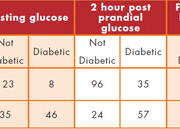
There were 212 records available with average age 57y (29-95); 134 men, 168 Chinese, 28 Indian, 16 Malay. The prevalence of diabetes by (1) was 25%, by (2) was 43%, by (3) was 48% and using a HbA1c cut-off of 6.5% was 38%. The AUC for HbA1c to predict diabetes [see Figure 1] by (1) was 0.89 (95% CI: 0.83-0.94), by (2) was 0.74 (0.67-0.81) and by (3) was 0.78 (0.72-0.85). At the suggested cut-off of HbA1c 6.5% [see Table 1], concordance, kappa and phi values between diabetes diagnosis by HbA1c and (1) was 78%, 0.54, 0.64; (2) 72%, 0.43, 0.44; and (3) 74%, 0.48, 0.50. Maximum efficiency for HbA1c in detecting diabetes as defined by (3) was 0.75 at a cut-off of 6.2% (sensitivity 0.804 (0.714-0.876), specificity 0.691 (0.596-0.776)). There was no significant difference in the age, sex or ethnic makeup of the diabetic groups identified by HbA1c testing or by the other three criteria. Thus there was significant discordance of diabetic classification between use of HbA1c and the OGTT results with a 10% absolute reduction in diabetes prevalence with use of a HbA1c cut-off of 6.5% alone. Thirty-seven percent of OGTT-positive individuals would not be identified by a HbA1c cut-off of 6.5% while 15% of OGTT-negative individuals would be identified as diabetic. These results suggest that the two approaches are not interchangeable and appear to identify different patient groups.
This small study supports reports from large epidemiological studies of lack of agreement between HbA1c- and glucose-based diagnosis and lower prevalence rates with the HbA1c-based criterion [8-10]. Moving to HbA1c-based diagnosis of diabetes can be anticipated to have a substantial effect on prevalence rates and will identify different individuals from the traditional glucose-based criteria. Given that the epidemiology and pathophysiology of diabetes in Asia differs from Western populations, it is perhaps not surprising if diagnostic criteria may need to be customised to local conditions. The need or desirability for different ethnic-based HbA1c cut-offs is unclear and further work is required to examine HbA1c in different ethnic groups within Asia. As HbA1c and glucose-based criteria appear to identify different groups, a clear algorithm outlining the order of testing is required to clarify the role of HbA1c and glucose-based criteria. Unstandardised use of HbA1c and glucose diagnostic testing will complicate epidemiological study of diabetes, both within and between countries. Although a routine combined approach using both HbA1c and glucose measurements may allow the greatest detection of diabetics, it may not be practical or economically feasible for many in Asia. These problems illustrate the difficulty in global standardisation of disease definitions using biological markers and the need to validate approaches in local ethnic populations before introduction.
References
1. Danaei G et al. National, regional, and global trends in fasting plasma glucose and diabetes prevalence since 1980: systematic analysis of health examination surveys and epidemiological studies with 370 country-years and 2•7 million participants. Lancet 2011;378:40
2. Chan JC et al. Diabetes in Asia: epidemiology, risk factors, and pathophysiology. JAMA 2009;301:2129-40
3. Ramachandran A et al. Diabetes in Asia. Lancet 2010;375:408-18
4. International Expert Committee report on the role of the A1C assay in the diagnosis of diabetes. Diabetes Care 2009;32:1327-34
5. Weykamp C et al. A review of the challenge in measuring hemoglobin A1c. J Diabetes Sci Technol 2009;3:439-45
6. Schnedl WJ et al. Hemoglobin variants and determination of glycated hemoglobin (HbA1c). Diabetes Metab Res Rev 2001;17:94-8
7. Hawkins R. Differences in HbA1c between Caucasians, Chinese, Indians, Malays and Eurasians. Clin Chim Acta 2011;412:1167
8. Malkani S et al. Implications of using hemoglobin A1C for diagnosing diabetes mellitus. Am J Med 2011;124:395-401
9. Kim CH et al. Discordance between fasting glucose-based and hemoglobin A1c-based diagnosis of diabetes mellitus in Koreans. Diabetes Res Clin Pract 2011;91:e8-e10
10. Christensen DL et al. Moving to an A1C-based diagnosis of diabetes has a different impact on prevalence in different ethnic groups. Diabetes Care 2010;33:580-2
The author
Dr Robert C Hawkins
Department of Laboratory Medicine
Tan Tock Seng Hospital
Singapore
e-mail: Robert_Hawkins@ttsh.com.sg
May 2026

Prins Hendrikstraat 1
5611HH Eindhoven
The Netherlands
info@clinlabint.com
PanGlobal Media is not responsible for any error or omission that might occur in the electronic display of product or company data.