


Medical care has been undergoing tremendous advances in the Middle East, not least in diagnostic testing. Roche Diagnostics Middle East (RDME) is a pioneer in leading this development in in vitro diagnostics (IVD), by supporting laboratories to achieve a higher level of performance, efficiency and sustainability. IVD testing directs over 60% of clinical decision-making and accounts for a small fraction of global healthcare spending. Whether it is in oncology, virology, blood screening, or research on infectious diseases, autoimmunity, inflammation, women’s health or metabolism, RDME has supported a large number of leading and prominent healthcare institutions to move from multiple analyzers and workflows to comprehensive, integrated laboratory solutions, meeting international standards and certifications.
Roche, with its unique privilege of having both pharmaceutical and diagnostics research under one roof, aims to improve healthcare and make a difference in patients’ lives. The medical solutions start from the stages of early detection and prevention of disease, to diagnosis, treatment selection and treatment monitoring. Roche Diagnostics is leading the industry by addressing unmet medical needs with new or medically enhanced diagnostic tests, supporting doctors and patients with an improved information basis for better medical decisions and treatment selection. Roche’s IVD test menu is one of the broadest in the industry and is continually being expanded based on the latest scientific advances.
Pioneering in Personalized Healthcare
Personalized Healthcare systematically uses patient characteristics, disease biology and diagnostic tests to tailor medicines to patients and improve disease management. Cooperating in the early development of new drugs is integral for the implementation of Personalized Medicine. Roche Diagnostics supports throughout the patient care chain, from screening, early detection, diagnosis and classification to therapy monitoring. Roche Diagnostic’s breakthrough HPV DNA test truly shows how Personalized Medicine works in practice, as it has offered clinicians the ability to detect the presence of specific HPV genotypes. Notably, having such a targeted test has enabled clinicians to choose the most appropriate treatment for their patients, rather than treating every HPV-infected individual with equal and aggressive therapy. This development has also given more confidence to patients, who are re-assured that the treatment they receive is tailored to their specific needs.
Leading in optimizing performance
Optimizing performance, automation and information technology are simplified with a common architecture that delivers tailor-made solutions for diverse workloads and testing requirements. Roche Diagnostics offers platforms that are designed to reduce the complexity of laboratory operation and provide efficient and compatible solutions for network cooperation. For example, Roche Diagnostics has developed medical diagnostic tests based on the Nobel prize-winning polymerase chain reaction (PCR; which exponentially amplifies small amounts of target DNA), that would otherwise be too time-consuming or impossible to perform.
Providing superior workflow solutions, including blood screening
Superior workflow solutions such as Task Targeted Automation (TTA) and Total Lab Automation (TLA) are designed to meet the needs of today’s fast developing healthcare systems. In RDME, a regional project management team is an added value to customers by providing consultancy and implementation support. TLA is customized to the specific needs of individual customers and, thanks to the modular system landscape, can be configured in 90 layouts, differing in size and shape. Roche Diagnostics is successfully delivering best in class Total Lab Solutions for Pathology and Cytology Laboratories to substantially improve the workflow with a unique and complete solution. Another example of superior workflow solutions and automation is with blood screening. Roche Diagnostics has been the preferred partner in the Blood Bank Industry by safeguarding patients through industry-leading assays and technologies. Besides offering Nucleic Acid Testing (NAT), Roche Diagnostics launched Roche Blood Safety Solutions (RBSS), which introduced serology testing of blood samples in an automated manner. As such, Roche Diagnostics is the only provider of a complete Blood Safety Solution to blood banks of any size. Fully integrated automation is offered; these standardized processes reduce manual steps, which guarantees the safety of the blood supply and offers state-of-the-art assay sensitivity and genotype coverage.
Improving therapeutic monitoring
Roche’s IVD offering can be used for treatment selection, response prediction and therapeutic monitoring once a condition has been identified. One of the best examples of this is in hepatitis, qualitative immunoassays (e.g. surface antigen; HBsAg II assay) screen for the presence of hepatitis B virus (HBV) skin, while other assays verify the existence of viral antigens or antibodies. The viral load, the amount of virus in the body, can be determined by quantitative tests. This test shows if therapy has effectively controlled the virus and whether it is replicating or not allowing doctors to monitor the stage and progression of the disease. The continual innovation in therapeutic monitoring is demonstrated in hepatitis C, where Roche Diagnostics has developed Elecsys anti-HCV II, a new state of the art diagnostic test that has an increased seroconversion sensitivity compared to other assays.
Enhancing centralization of data
Similarly, Roche offers centralization of data which is achieved with rapid and easy-to-operate systems that facilitate immediate healthcare decisions, thus placing an emphasis on patient-oriented diagnosis. One example of such a system is the Cobas IT 1000, a point-of-care IT solution that provides complete remote management of and access to all point-of-care diagnostic systems from just one hospital workstation. This automation and centralization of data management into just one workstation frees staff time and enhances the diagnostic service offered to patients.
Roche Diagnostics’ ongoing commitment to developing new analytical tools greatly benefits patients, and its technological innovations create a big impact on the healthcare development in the Middle East. As well as the analytical and technological advances described above, RDME has worked hard to establish the relevant infrastructure in the Middle East with a logistics hub, continual training for employees and a customer support center. These factors combined make RDME the leader in IVD and allow healthcare professionals to benefit from reliable, accurate and immediate results, which directly impact their diagnoses. RDME provides the deepest industry know-how and aims to become the region’s trusted IVD partner.
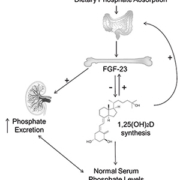
Fibroblast growth factor-23, a key regulator of phosphate and 1,25-dihydroxyvitamin D metabolism, appears to be an independent risk factor for mortality among chronic kidney disease patients. However, sample stability and poor analytical agreement between detection methods still need to be addressed for it to become a reliable biomarker.
by Dr A. Kumar, Dr W. Herrington, Dr S. Clark and Dr M. Hill
The function of fibroblast growth factor-23 and its role in chronic kidney disease
Fibroblast growth factor-23 (FGF-23) was identified as the key regulator of phosphate homeostasis from a study of renal phosphate-wasting condition autosomal dominant hypophosphatemic rickets [1]. It is secreted principally by bone-forming osteocytes and osteoblasts in response to increased dietary phosphate intake and abnormally elevated serum phosphate concentration (hyperphosphatemia). FGF-23 acts to correct raised phosphate levels by increasing urinary phosphate excretion, by direct inhibition of renal tubular phosphate reabsorption, and via reducing dietary phosphate absorption, by suppressing 1α-hydroxylation of 25-dihydroxyvitamin D to form active 1,25-dihydroxyvitamin D [1,25(OH)2D]. Low 1,25(OH)2D production also provides a negative feedback signal in phosphate homeostasis by inhibiting further FGF-23 secretion (Fig.1)[2, 3].
Chronic kidney disease (CKD) commonly causes a fall in glomerular filtration rate resulting in a reduced capacity for phosphate excretion [4]. FGF-23 levels increase early in CKD, often before any detectable rise in phosphate concentration [5] and those with the severest form of CKD, end-stage renal disease (ESRD), have FGF-23 levels that are 100 to 10,000-fold higher than healthy controls [4, 6]. Sustained suppression of renal 1,25(OH)2D synthesis by high FGF-23 levels contributes to lower serum calcium concentration, a stimulant of parathyroid hormone (PTH) secretion. PTH maintains normal serum calcium concentration by promoting reabsorption of the calcium from its reservoir in bone. The abnormal elevated levels of FGF-23 seen in CKD thus results in a disruption of the homeostatic balance of calcium and phosphate and this may impact on many normal processes including bone mineral metabolism and cardiovascular function. The consequences of prolonged derangement of bone mineral metabolism (known as CKD-mineral bone disease; CKD-MBD) is bone pain and increased fracture risk. CKD-MBD may also accelerate calcification of the vascular tree, a process that may explain some of the significantly increased cardiovascular risk in those with CKD [7]. Indeed, among CKD patients, several studies have shown FGF-23 to be an independent risk factor for mortality [8] and among those not on dialysis it appears to also predict CKD progression [4, 9]. Treatments that might positively impact on FGF-23 levels, for example, reducing dietary phosphate absorption with phosphate binders may therefore have beneficial effects on bone, renal and cardiovascular outcomes in those with CKD (both in those with hyperphosphatemia and those with high-normal serum phosphate concentration).
Methods for FGF-23 assessment
In vitro studies have shown that some of the FGF-23 synthesized by the osteocytes is cleaved between amino acid 179 and 180 by furin (a type I precursor convertase) releasing a C terminal fragment. Current immunometric methods detect either ‘intact’ FGF-23 (iFGF-23, ~32 KDa) or ‘C-terminal’ fragments (cFGF-23, ~14 KDa) in plasma or serum. The cFGF-23 assays recognize two epitopes in the C-terminus, thereby recognizing both iFGF-23 and cFGF-23 fragments. The intact assays recognize only the iFGF-23 because the epitopes flank the cleavage site [2]. At present, there is no reference method, or consensus to indicate which assay type is the most suitable for measuring circulating FGF-23. If all circulating FGF-23 is intact and biologically stable, concentrations detected by the intact and C-terminal assays should be comparable [10]. However, there is a paucity of data confirming this and so caution should be used when comparing studies using the different methods.
Several studies have assessed the performance of commercially available enzyme-linked immunosorbent assays (ELISAs) for FGF-23. Heijboer and co-workers evaluated the performance of one cFGF-23 assay (Immutopics, USA) and two iFGF-23 assays (Immutopics and Kainos Laboratories Inc., Japan) using samples from healthy volunteers and patients with expected high levels of FGF-23 [11]. Intra- and inter-assay variations were assessed in approximately 100 samples with low, normal and high FGF-23 concentrations providing <20% CV for the cFGF-23 Immutopics and iFGF-23 Kainos assays. A high intra-assay variation (22–61%) was observed for the Immutopic intact assay which may be due to lot-to-lot variation [11]. A potential difficulty observed with the Kainos intact assay is poor assay performance when using an automated plate washer, as directed in their protocol. Heijboer and co-workers found acceptable results were only obtained when the wells were washed manually, which made this method impractical for measurement of large numbers of samples [11]. However, a later version of the Kainos assay protocol (from October 2010 onwards) includes an improved wash instruction. Using plasma samples from patients with renal impairment, Devaraj and co-workers also found good inter- and intra assay precision for cFGF-23 assay (CV between 4–10.5%), however, the CVs for iFGF-23 Immutopic assay were found to be poor (6–37.5%) [12].
Poor analytical agreement exists between the commercially available FGF-23 assays, due principally to the lack of a reference method. The performance of four commercially available methods [iFGF-23 assays from Immutopics, Kainos and Millipore (USA) and a cFGF-23 assay from Immutopics] were recently compared using plasma from 31 healthy adults and 36 patients undergoing hemodialysis [13]. A broad range of FGF-23 values were obtained: whereas the patient ranges fell between 154–2561 pg/mL and 447–2063 pg/mL for iFGF-23 and cFGF-23 assay respectively, the levels for healthy adults ranged from 9.9–62 pg/mL for the two assay types. Poor analytical agreement was observed between the assays particularly in the patient group. No agreement of test results was found between the iFGF-23 and cFGF-23 assays and this was more evident at physiological concentrations than in the haemodialysis group [13]. The lack of analytical agreement between these commercially available FGF-23 methods emphasizes that they cannot be used interchangeably and that a comparison of findings from different assays requires careful interpretation. The above evaluation study was performed with plasma samples [13]. A further consideration is some assays are restricted to the sample type that can be used. The iFGF-23 Kainos assay is suitable for both plasma and serum; however, the cFGF-23 Immutopics assay is established only for plasma [10, 13] providing lower or undetectable results in serum [10, 12]. Further method comparisons, ideally on larger numbers of samples and in different patient groups, would provide a valuable insight in this area and help identify which assay type is the most suitable for measuring circulating FGF-23. Nevertheless, studies measuring either intact or C-terminal FGF-23 have reported associations with mortality risk and decline in renal function [4, 14].
Stability of FGF-23: implication for large scale epidemiological studies
Limited evidence exists for the short-term stability of FGF-23 in collected blood samples (6 hours or less) and no information is available for its long-term stability in stored samples. Smith and co-workers investigated the short-term pre-analytical stability of FGF-23, measured using iFGF-23 and cFGF-23 ELISAs from Immutopics, by performing a number of timed experiments with blood taken from 15 patients with mild CKD [6]. The effect of aprotinin, a serine protease inhibitor, and a commercially available protease inhibitor cocktail to preserve FGF-23 after blood collection was also investigated [6]. In the absence of any preservative or inhibitor, iFGF-23 degraded by approximately 40% within 2 hours of collection even when the blood samples were separated into plasma. Conversely, 2 hours after blood collection the FGF-23 concentrations had increased by approximately 35% using the cFGF-23 assay. However, with the addition of the protease inhibitor cocktail the stability of both iFGF-23 and cFGF-23 in the samples extended up to 4 hours (less than 10% change). Based on this evidence, it appears that FGF-23 cannot be measured reliably in blood samples collected without the use of any preservative or inhibitors. This could be a serious limitation for large-scale epidemiological studies, particularly if samples have already been collected and are in storage and for blood collection methods that need to be simple in order to be cost-effective and feasible.
Preliminary findings from our laboratory using samples from 54 CKD patients suggest that FGF-23 (measured by both the iFGF-23 Kainos ELISA and the cFGF-23 Immutopics ELISA) remains stable in whole blood stored for up to 96 hours without the use of a preservative [15]. The apparent lack of agreement with the results from Smith et al. may be explained by differences in the methods of sample collection. Smith et al. used a single K2-EDTA blood tube for each participant which was re-sampled at each time-point whereas we collected separate blood tubes corresponding to each time-point.
Large-scale epidemiological studies often involve the long-term frozen storage of samples prior to biomarker analyses, particularly nested case-control designed studies where it may take several years for sufficient incident cases to materialize. Limited information is available to help understand the impact of long-term frozen storage on the stability of many biomarkers, including FGF-23. Studies investigating the stability of biomarkers in different sample types stored at various temperatures (for example, −40 °C, −80 °C and in liquid nitrogen vapour) will have immense value, particularly in support of long-term blood based prospective studies and biobanks.
Summary
FGF-23 is a key regulator of phosphate homeostasis and has emerged as an important biomarker in patients with CKD. Despite an increasing amount of literature, there are still unanswered questions related to FGF-23 sample stability and the availability of robust reliable methods for measuring FGF-23. Further studies into these areas will improve the quality of clinical research into the use of FGF-23 as a potential early biomarker in CKD.
References
1. ADHR Consortium. Autosomal dominant hypophosphataemic rickets is associated with mutations in FGF23. Nat Genet. 2000; 26: 345–348.
2. Wolf M. Forging forward with 10 burning questions on FGF23 in kidney disease. J Am Soc Nephrol. 2010; 21: 1427–1435.
3. Quarles LD. Role of FGF23 in vitamin D and phosphate metabolism: implications in chronic kidney disease. Exp Cell Res. 2012; 318: 1040–1048.
4. Isakova T, Xie H, Yang W, et al. Fibroblast growth factor 23 and risks of mortality and end-stage renal disease in patients with chronic kidney disease. JAMA 2011; 305: 2432–2439.
5. Russo D, Battaglia Y. Clinical significance of FGF-23 in patients with CKD. Int J Nephrol. 2011; 2011: 364890.
6. Smith ER, Ford ML, Tomlinson LA, Weaving G, Rocks BF, Rajkumar C, Holt SG. Instability of fibroblast growth factor-23 (FGF-23): implications for clinical studies. Clin Chim Acta 2011; 412: 1008–1011.
7. London GM, Guerin AP, Marchais SJ, Metivier F, Pannier B, Adda H. Arterial media calcification in end-stage renal disease: impact on all-cause and cardiovascular mortality. Nephrol Dial Transplant. 2003; 18: 1731–1740.
8. Jean G, Terrat JC, Vanel T, Hurot JM, Lorriaux C, Mayor B, Chazot C. High levels of serum fibroblast growth factor (FGF)-23 are associated with increased mortality in long haemodialysis patients. Nephrol Dial Transplant. 2009; 24: 2792–2796.
9. Titan SM, Zatz R, Graciolli FG, dos Reis LM, Barros RT, Jorgetti V, Moyses RM. FGF-23 as a predictor of renal outcome in diabetic nephropathy. Clin J Am Soc Nephrol. 2011; 6: 241–247.
10. Shimada T, Urakawa I, Isakova T, Yamazaki Y, Epstein M, Wesseling-Perry K, Wolf M, Salusky IB, Jüppner H. Circulating fibroblast growth factor 23 in patients with end-stage renal disease treated by peritoneal dialysis is intact and biologically active. J Clin Endocrinol Metab. 2010; 95: 578–585.
11. Heijboer AC, Levitus M, Vervloet MG, Lips P, ter Wee, PM, Dijstelbloem HM, Blankenstein MA. Determination of fibroblast growth factor 23. Ann Clin Biochem. 2009; 46: 338–340.
12. Devaraj S, Duncan-Staley C, Jialal I. Evaluation of a method for fibroblast growth factor-23: a novel biomarker of adverse outcomes in patients with renal disease. Met Syndr Relat Disord. 2010; 8: 477–482.
13. Smith ER, McMahon LP, Holt SG. Method-specific differences in plasma fibroblast growth factor 23 measurement using four commercial ELISAs. Clin Chem Lab Med. 2013; 51: 1971–1981.
14. Fliser D, Kollerits B, Neyer U, Ankerst DP, Lhotta K, Lingenhel A, Ritz E, Kronenberg F, Kuen E, Konig P, Kraatz G, Mann JF, Muller GA, Kohler H, Riegler P. Fibroblast growth factor 23 (FGF23) predicts progression of chronic kidney disease: the Mild to Moderate Kidney Disease (MMKD) Study. J Am Soc Nephrol. 2007; 18: 2600–2608.
15. Illingworth N, Edmans M, Clark S, Kumar A, Sutherland S, Herrington W, Hill M. Investigation of FGF-23 sample & assay suitability for large scale epidemiological studies. Ann Clin Biochem. 2013; 50: 73–74
The authors
Aishwarya Kumar1* PhD; Will Herrington2 MBBS, MRCP; Sarah Clark1 PhD; and Michael Hill1 PhD
1Clinical Trial Service Unit and Epidemiological Studies Unit (CTSU), University of Oxford, Oxford, UK
2Oxford Kidney Unit, Oxford University Hospitals, Oxford, UK
*Corresponding author
E-mail: Aishwarya.Kumar@ctsu.ox.ac.uk

Alzheimer’s disease (AD), a progressive and eventually fatal neurodegenerative condition, was first described over a century ago. The prevalence of the disease has greatly increased since then: indeed the World Health Organization estimates that around 36 million people are living with dementia, the majority of whom are suffering from AD. This number is expected to double by 2030 and triple by 2050, mostly due to increased human longevity: the incidence of AD increases exponentially after the age of 65, with nearly 50% of people over 85 affected. Very early diagnosis and timely and effective therapy are urgently needed if health and social services are not to be totally overwhelmed catering for the needs of both patients and their frequently elderly carers.
Changes in the brains of AD patients may commence up to two decades before clinical symptoms become apparent. The two major abnormalities, beta-amyloid plaques (Aβ) and neurofibrillary tangles (NFT), are very visible at autopsy and continued improvements in medical imaging technologies may allow eventual visualization in the brains of living patients. A definitive diagnosis of AD, though, is usually still based on neuropsychological testing and MRI and/or CT scans to rule out other causes of cognitive decline at a stage of the disease when the drugs currently available, which regulate neurotransmitters, are no longer very effective.
Ongoing research to allow earlier diagnosis has found that gradually increasing concentrations of both Aβ and NFT can be detected in the cerebrospinal fluid of AD patients. And two very recently published studies give additional cause for optimism. The first, published in Nature Genetics, was a large international study that scanned the DNA from more than 74,000 AD patients and healthy controls from 15 different countries to find novel genetic risk factors. As well as the genes already implicated in the disease, such as APOE4, which is strongly linked to late-onset AD, eleven new genes were discovered that had previously not been linked to the condition. This work could facilitate very early diagnosis in individuals at risk. And a smaller British Medical Research Council study discovered a compound that actually prevents further neurodegeneration in animal models.
It has been recognized, however, that an international approach would be most effective in reducing the impact of AD and other types of dementia. To this end health ministers from the G8 countries will be meeting in London in December to develop a coordinated plan of action. It is to be hoped that the result of their deliberations will be global cooperation between companies, researchers and clinicians, and ultimately timely diagnosis and therapy for this appalling condition.

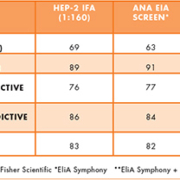
by James D. Peele, PhD The HEp-2 immunofluorescence assay (IFA) for ANA screening is excellent for ruling out many connective tissue diseases, but a positive result seldom translates into a clinically meaningful diagnosis. A new automated, efficient, enzyme immunoassay for ANA screening provides reliable, objective information that can be applied clinically with confidence.

Aminoglycosides are antibiotics largely used at the hospital. Their nephrotoxicity imposes therapeutic drug monitoring as well as kidney function monitoring. Creatinine is the most widely used biochemical marker; however, new biomarkers such as neutrophil gelatinase associated lipocalin (NGAL), cystatin C (Cys C) or kidney injury molecule-1 (KIM-1) can allow the detection of acute kidney injury more quickly.
by F. Fraissinet, E. Sacchetto and Dr E. Bigot-Corbel
Background
Aminoglycosides are bactericidal antibiotics used for the treatment of Gram-negative or endocarditis infections. The most important adverse effects of aminoglycosides are nephrotoxicity and ototoxicity. The prevalence of aminoglycoside-associated nephrotoxicity is estimated at 10 to 20 %, although it also depends on the patient’s clinical condition and exposure to nephrotoxic drugs such as cyclosporine, anti-inflammatory or iodinated drugs. In intensive care units, nephrotoxicity is most frequent (60% of patients) and associated with a high rate of mortality [1, 2]. Nephrotoxicity mainly results in nonoliguric acute kidney injury which occurs following 7 to 10 days. This toxicity may manifest as a decrease in the glomerular filtration rate with glycosuria, hypokalemia and hypocalcemia. Aminoglycosides are often administered by intravenous drip and are freely eliminated by glomerular filtration and reabsorbed by the proximal tubule. Of the injected dose, 5% is retained by epithelial cells of the proximal tubule. After endocytosis in tubular cells, these molecules accumulate in lysosomes and induce phospholipidosis, alteration of key cellular components and apoptosis. Aminoglycosides also have glomerular effects: gentamicin stimulates mesangial proliferation, produces mesangial contraction and induces neutralization of negative charges of the glomerulus [3]. Gentamicin also induces a reduction in renal blood flow with an increased renal vascular resistance. These factors contribute to decrease the glomerular filtration rate (GFR). Additional risk factors for nephrotoxicity induced by aminoglycoside have been identified as sepsis, prolonged therapy, renal or liver dysfunction, hypokalemia or hypomagnesemia. Nephrotoxicity is less frequent when aminoglycosides are administered once daily compared with 12 h [4].
Methods of detection of acute kidney injury induced by aminoglycoside therapy
Classic markers: creatinine and creatinine clearance
Creatinine is the most widely used marker in the diagnosis of the acute renal insufficiency. For defining AKI, the Risk Injury Failure Loss End stage kidney disease (RIFLE) classification is based on increase of serum creatinine concentration and decrease of glomerular filtration rate. The introduction of the RIFLE classification has increased the conceptual understanding of AKI syndrome, and this classification has been successfully tested in a number of clinical studies [5].
In spite of an easily accessible dosage, creatinine as a marker of AKI has some drawbacks. Creatinine is filtered by the glomerulus and is not bound to plasma proteins. In standard physiological conditions, the daily rate of creatinine production is constant; however, the rate of creatinine production is affected by conditions of muscular pathology or muscular loss (as occurs in intensive care and cirrhosis). In these patients, AKI does not result in an increase of serum creatinine levels. Other factors, such as age, sex, ethnic group and diet, also influence serum concentrations of creatinine. Creatinine is not the ideal marker to estimate GFR, because it is secreted by renal tubule, which artefacutally increases glomerular filtration rate. At low serum creating concentrations, creatinine is lacks sensitivity to estimate GFR. Large changes in GFR may be associated with relatively small changes in serum creatinine (See Figure 2 in Delanaye et al. [6]). The rise of the creatinine is late (occurring after 3–5 days) and is not specific for nephrotoxicity induced by aminoglycosides, and an increase of creatinine in AKI is a function of the initial concentration of creatinine [7].
To estimate GFR, formulas that use creatinine plasma concentration, such as the Modified Diet in Renal Disease formula (MDRD), Chronic Kidney Disease Epidemiology collaboration formula (CKD-EPI) or estimation of clearance creatinine by Cockroft–Gault (CG) equation, were derived in subjects with chronic, not acute, kidney disease. A limitation of the MDRD equation was an underestimation of GFR in the high range. The CKD-EPI equation performs better at high GFR levels (GFR >60 mL/min/1.73 m²). Use of serum creatinine concentration to estimate GFR supposes a steady-state between creatinine production and excretion [8]. In spite of the use of correction factors, it is more difficult to estimate GFR in Asian or African populations as well as in elderly or obese patients [9].
New biomarkers
Cystatin C
Cystatin C (CysC), a 13-kDa endogenous cysteine proteinase inhibitor, plays an important role in intracellular catabolism of various peptides and proteins. CysC is considered to be a good biomarker of decreased kidney function because it is produced at a relatively constant rate and released into plasma, and is filtered by glomeruli without tubular secretion. The influence of muscular mass is less than for creatinine, and CysC allows diagnosis of AKI 48 h before serum creatinine [10]. Equations with serum CysC concentration can also estimate GFR. If GFR is great than 60 mL/min/m², CysC measurement is more powerful than the MDRD equation. CysC is a useful biomarker for early detection of AKI in the pediatric population and for patients in the intensive care unit, as CysC determination can be performed in serum and/or in urine. In spite of efforts to standardize the procedure, there is no reference method. Production of CysC also depends on hormonal factors, so CysC cannot be used in cases of thyroid dysfunction.
Neutrophil gelatinase associated lipocalin
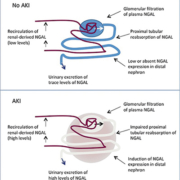
Neutrophil gelatinase associated lipocalin (NGAL) is a protein of 25 kDa protein of the lipocalin family and is covalently bound to matrix metalloproteinase-9. NGAL is expressed early in ischemic kidney impairment in animal models. During AKI, NGAL expression is induced in distal nephron epithelia resulting in elevated plasma and urinary levels of NGAL (Fig. 1) [2]. NGAL determination can be performed on serum and/or urine by immunoturbimetric or immunofluorimetric assays. There is a general agreement on a cut-off value of >150 ng/mL, but a clear cut-off NGAL concentration for AKI has not been reported. Several studies show the importance of NGAL in cardiac surgery or critically ill patients for predicting AKI. NGAL is also useful for the detection of nephrotoxicity induced by contrast agents and has prognostic value for mortality or initiation of renal replacement therapy. Plasma NGAL measurements may be influenced by a number of coexisting variables as chronic hypertension, systemic infections, inflammatory conditions or hypoxia. Changes in NGAL values are potentially associated with septic state or aminoglycoside therapy [11].
Kidney injury molecule-1
Kidney injury molecule-1 (KIM-1) is a glycoprotein localized in the apical membrane of the proximal tubule of kidney, and KIM-1 expression can be induced by nephrotoxic drugs. Urine KIM-1 is a promising biomarker of proximal tubular injury. As with NGAL, urinary KIM-1 levels predicted adverse clinical outcomes such as dialysis requirement and mortality. In a previous study, urinary KIM-1 is correlated with AKI severity in non-critically ill children treated by aminoglycosides [12].
Conclusion
Patients treated with aminoglycosides must be carefully monitored for nephrotoxicity. Creatinine has been the most used biochemical marker of AKI, but new biomarkers, such as NGAL and KIM-1, have been developed in recent years.
References
1. Oliveira JF, Silva CA, Barbieri CD, Oliveira GM, Zanetta DM, Burdmann EA. Antimicrob Agents Chemother. 2009; 53(7): 2887-2891.
2. Schmidt-Ott KM. Nephrol Dial Transplant. 2011; 26(3): 762-764.
3. Lopez-Novoa JM, Quiros Y, Vicente L, Morales AI, Lopez-Hernandez FJ. Kidney Int. 2011; 79(1): 33-45.
4. Rybak MJ, Abate BJ, Kang SL, Ruffing MJ, Lerner SA, Drusano GL. Antimicrob Agents Chemother. 1999; 43(7): 1549-1555.
5. Ricci Z, Cruz DN, Ronco C. Nat Rev Nephrol. 2011; 7(4) :201-208.
6. Delanaye P, Cavalier E, Maillard N, Krzesinski JM, Mariat C, Cristol JP, et al. [Creatinine: past and present]. Annales de Biologie Clinique 2010; 68(5): 531-543 (in French).
7. Waikar SS, Bonventre JV. J Am Soc Nephrol. 2009; 20(3): 672-679.
8. Nguyen MT, Maynard SE, Kimmel PL. Clin J Am Soc Nephrol. 2009; 4(3): 528-34.
9. Delanaye P, Cavalier E, Mariat C, Krzesinski JM, Rule AD. Kidney Int. 2011; 80(5): 439-440.
10. Herget-Rosenthal S, Marggraf G, Husing J, Goring F, Pietruck F, Janssen O, et al. Kidney Int. 2004; 66(3): 1115-1122.
11. Devarajan P. Nephrology (Carlton) 2010; 15(4): 419-428.
12. McWilliam SJ, Antoine DJ, Sabbisetti V, Turner MA, Farragher T, Bonventre JV, et al. PLoS One 2012; 7(8): e43809.
The authors
François Fraissinet1 BSc, Emilie Sacchetto2 and Edith Bigot-Corbel2* PhD
1Laboratoire de Biochimie, 86021 Poitiers, France
2Laboratoire de Biochimie, CHU de Nantes, Hôpital G et R Laënnec, 44800 Saint-Herblain, France
*Corresponding author
E-mail: edith.bigot@chu-nantes.fr
Clostridium difficile is a major cause of nosocomial infections and rapid diagnosis of the disease is essential for infection control. Several methods for C. difficile detection are employed in clinical laboratories; each method has its advantages and disadvantages. A novel method has recently been developed that allows differentiation between C. difficile-positive and -negative stool samples based on volatile organic compound evolution and their detection by headspace solid-phase microextraction gas chromatography–mass spectrometry.
by Dr Emma Tait, Prof. Stephen P. Stanforth, Prof John D. Perry and Prof. John R. Dean
Introduction
Clostridium difficile is a Gram-positive anaerobe and the causative agent of C. difficile infection (CDI). CDI is a major healthcare problem with a total of 14,687 cases reported in patients aged 2 years and over in England between April 2012 and March 2013 [1]. C. difficile is a spore-forming bacterium; dormant spores are resistant to antibiotics, heating and chemicals such as disinfectants and, therefore, can persist on surfaces and survive for long periods in the environment [2]. Ingestion of spores and their subsequent germination in the gut allows the proliferation of C. difficile in patients whose normal gut flora has been severely reduced following antibiotic treatment. Following germination, vegetative C. difficile can produce toxins and is susceptible to antibiotic treatment. Pathogenic C. difficile releases two types of toxins, toxin A and toxin B, and it is these toxins that cause the symptoms associated with CDI [3]. Clinical symptoms of C. difficile infection (CDI) include mild to severe diarrhoea, which can lead to pseudomembranous colitis and death. Diagnosis of CDI includes both clinical manifestations of symptoms supported by laboratory findings.
Diagnosis of C. difficile infection
Rapid diagnosis of CDI is essential to allow the most appropriate treatment to be prescribed, to enable proper use of hospital isolation facilities and to reduce the spread of the infection. Routine diagnostic methods in clinical microbiology laboratories employ a variety of techniques for diagnosis of CDI. These include immunoassays for detection of glutamate dehydrogenase (GDH) antigen and toxins, polymerase chain reaction (PCR) for detection of toxin B or isolation of C. difficile by culture (followed by confirmation of toxigenicity, e.g. using PCR). Immunoassays and PCR methods are typically highly automated and deliver rapid results and these have largely replaced the traditional cell cytotoxicity assay, which requires propagation of cell lines and takes days rather than hours to provide results.
Toxin immunoassays, although relatively inexpensive with rapid turnaround time, have limitations in terms of their sensitivity and specificity leading to false-negative results and false-positive results [4]. Immunoassays for GDH are typically highly sensitive for detection of C. difficile but lack specificity. Culture media for the isolation of C. difficile typically incorporate the antibiotics D-cycloserine and cefoxitin which suppress commensal bacteria; such media are based on the formulation recommended by George et al. [5]. Isolation of C. difficile via culture is sensitive but can take several days to obtain results and there may be a heavy growth of other fecal bacteria, particularly when reduced antibiotic concentrations are used [6]. Recent developments in C. difficile detection include using a chromogenic substrate which is structurally similar to naturally occurring substrate used by C. difficile toxins [7]. This allows the detection of toxigenic C. difficile, i.e. only pathogenic strains are targeted.
Identification of C. difficile-positive stool samples using gas chromatography has previously been explored [8]; volatile organic compounds (VOCs) such as p-cresol and short chain fatty acids were identified as potential markers for C. difficile. However, these methods suffered from a lack of specificity, particularly due to the high number of false positives obtained following the detection of p-cresol and isocaproic acid in stool samples without C. difficile. As a consequence, gas chromatography methods were deemed unsuitable for C. difficile detection [8]. More recent attempts to use bacterial VOC analysis as a tool for C. difficile identification have used headspace solid-phase microextraction (HS-SPME) as a VOC collection method coupled with gas chromatography–mass spectrometry (GC-MS) for VOC separation and detection [9].
Development of a novel method for detection of C. difficile in stools
A novel method for rapid identification of C. difficile in stool samples has been developed using the analysis of VOCs. Use of synthetic enzyme substrates is an effective means of differentiating bacteria, for example in chromogenic culture media [10]. These types of culture media incorporate chromogenic enzyme substrates where the action of a specific enzyme on the substrate liberates a molecule that is detectable visually, allowing the detection of pathogenic bacteria [10]. The philosophy behind the use of substrates in culture media can be applied to the analysis of bacterial VOCs, where a substrate is incorporated into a clinical sample inoculated in liquid media; the cleaved product is volatile and detectable using an analytical method such as HS-SPME-GC-MS. The detection of VOCs liberated following enzyme activity increases the specificity of bacterial VOC profiles, as these liberated VOCs act as markers for a particular species, hence aiding identification of bacteria. This approach was applied to the detection of C. difficile in stool samples.
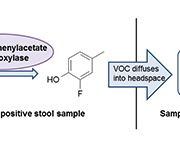
p-Cresol is formed in C. difficile by the decarboxylation of p-hydroxyphenylacetic acid. The enzyme responsible for this decarboxylation is p-hydroxyphenylacetate decarboxylase. It has been established that the hydroxyl group in the para position on the phenyl ring is an essential requirement for decarboxylation to occur [11]. C. difficile is almost unique in its ability to form p-cresol using this pathway, with the exception of a Lactobacillus strain [12]. This was exploited in the development of the novel method that allows successful differentiation between C. difficile culture-positive and -negative stool samples based on VOC generation from an enzyme substrate [13]. 3-Fluoro-4-hydroxyphenylacetic acid was used as a substrate for p-hydroxyphenylacetate decarboxylase; the evolution of the VOC 2-fluoro-4-methylphenol indicated the presence of C. difficile (Fig. 1). VOCs were detected using HS-SPME-GC-MS.
The lack of specificity of previous GC methods was often due to the detection of VOCs in C. difficile culture-negative stool samples as these VOCs were generated by commensal bacteria. Techniques employed to reduce background flora, and therefore improve the selectivity and sensitivity of methods, include alcohol shock [14] and the inclusion of antibiotics [5]. The antibiotics D-cycloserine, cefoxitin and amphotericin were added to the sample matrix and an alcohol-shock step was included to suppress background flora present in stool samples. Alcohol shock kills vegetative cells but does not affect the viability of spores and incorporation of sodium taurocholate in a culture medium can subsequently aid germination of spores [6, 15]. Inoculation of stool samples into such a culture medium allows bacterial growth and concomitant generation of VOCs.
The method was tested with 100 stool samples, of which 77 were C. difficile culture-positive and 23 culture-negative. The generation of 2-fluoro-4-methylphenol indicated the presence of C. difficile after overnight incubation. Method specificity and sensitivity were 100 % and 83.1 %, respectively, using 2-fluoro-4-methylphenol as a marker for C. difficile identification (Table 1). The VOCs isocaproic acid and p-cresol were useful indicators for C. difficile-positive stool samples, although were insufficient for identification purposes. Both VOCs, particularly p-cresol, were generated by C. difficile-negative samples; this is in agreement with previous studies [8].
Advantages and disadvantages of VOC method
The method allows the detection of C. difficile with a very high specificity (100%), i.e. 2-fluoro-4-methylphenol was not generated by C. difficile culture-negative stool samples tested. Rapid detection of VOCs was possible with confirmation of the presence of C. difficile within 18 hours. This indicates that the method could be used to screen for C. difficile in stools allowing the prompt diagnosis of culture-positive samples by the detection of 2-fluoro-4-methylphenol. However, a study on method sensitivity in terms of the number of bacterial cells required to generate a positive signal confirmed that identification of C. difficile was possible provided the stool sample contained at least 150 colony forming units (CFU). It is entirely possible that some stool samples will contain much fewer CFU and therefore 2-fluoro-4-methylphenol would not be detected and a false-negative result would be obtained. This limitation is reflected in the method sensitivity (83.1%) after evaluation with 100 stool samples. The method targets all strains of C. difficile and further testing would be required (e.g. using PCR or immunoassay) to distinguish whether positive stool samples contain toxigenic strains. As a result, it is recommended that VOC analysis should be used alongside conventional methods for C. difficile detection, including toxin detection methods, which would allow any false negative results to be eliminated.
Conclusion
C. difficile is a common cause of nosocomial infections and therefore rapid, accurate diagnosis of CDI is of extreme importance for infection control and patient care. There are currently a number of methods used in hospital laboratories for the diagnosis of CDI; however, each method has its drawbacks. A novel approach has been developed for the identification of C. difficile in stool samples that involves the incubation of stool samples in the presence of 3-fluoro-4-hydroxyphenylacetic acid which acts as a substrate for the enzyme p-hydroxyphenylacetate decarboxylase. The success of this new approach is evaluated by its application to 100 stool samples and its ability to differentiate between C. difficile culture-positive and -negative stool samples. It is envisaged that the identification of C. difficile culture-positive stool samples by the analysis of VOCs could allow rapid diagnosis of CDI. In addition, the novel approach of using enzyme substrates that release VOCs that are not normally generated by bacteria, for example fluorinated VOCs, may find application in the identification of other bacterial pathogens in clinical microbiology.
References
1. Public Health England. Summary Points on Clostridium difficile Infection (CDI). 2013; http://www.hpa.org.uk/webc/HPAwebFile/HPAweb_C/1278944283388.
2. Kuijper EJ, Coignard B, Tull P. Emergence of Clostridium difficile-associated disease in North America and Europe. Clin Microbiol Infect. 2006; 12(Suppl 6): S2−S18.
3. Voth DE, Ballard JD. Clostridium difficile toxins: mechanism of action and role in disease. Clin Microbiol Rev. 2005; 18: 247–263.
4. Eastwood K, Else P, Charlett A, Wilcox M. Comparison of nine commercially available Clostridium difficile toxin detection assays, a real-time PCR assay for C. difficile tcdB, and a glutamate dehydrogenase detection assay to cytotoxin testing and cytotoxigenic culture methods. J Clin Microbiol. 2009; 47: 3211–3217.
5. George WL, Sutter VL, Citron D, Finegold SM. Selective and differential medium for isolation of Clostridium difficile. J Clin Microbiol. 1979; 9: 214–219.
6. Nerandzic MM, Donskey CJ. Effective and reduced-cost modified selective medium for isolation of Clostridium difficile. J Clin Microbiol. 2009; 47: 397–400.
7. Darkoh C, Kaplan HB, DuPont HL. Harnessing the glucosyltransferase activities of Clostridium difficile for functional studies of toxins A and B. J Clin Microbiol. 2011; 49: 2933–2941.
8. Levett PN. Detection of Clostridium difficile in faeces by direct gas liquid chromatography. J Clin Pathol. 1987; 37: 117–119.
9. Garner CE, Smith S, Costello BL, White P, Spencer R, Probert CSJ, Ratcliffe NM. Volatile organic compounds from feces and their potential for diagnosis of gastrointestinal disease. Faseb J. 2007; 21: 1675–1688.
10. Orenga S, James AL, Manafi M, Perry JD, Pincus DH. Enzymatic substrates in microbiology. J Microbiol Meth. 2009; 79: 139–155.
11. Selmer T, Andrei PI. p-Hydroxyphenylacetate decarboxylase from Clostridium difficile. A novel glycyl radical enzyme catalysing the formation of p-cresol. Eur J Biochem. 2001; 268: 1363–1372.
12. Yokoyama MT, Carlson JR. Production of skatole and para-cresol by a rumen Lactobacillus sp. Appl Environ Microbiol. 1981; 41; 71–76.
13. Tait E, Hill KA, Perry JD, Stanforth SP, Dean JR. Development of a novel method for detection of Clostridium difficile using HS-SPME-GC-MS. J Appl Microbiol. DOI: 10.1111/jam.12418.
14. Clabots CR, Gerding SJ, Olson MM, Peterson LR, Gerding DN. Detection of asymptomatic Clostridium difficile carriage by an alcohol shock procedure. J Clin Microbiol. 1989; 27: 3286–3287.
15. Wilson KH, Kennedy MJ, Fekety FR. Use of sodium taurocholate to enhance spore recovery on a medium selective for Clostridium difficile. J Clin Microbiol. 1982; 15; 443–446.
The authors
Emma Tait1 PhD, Stephen P. Stanforth1 PhD, John D. Perry2 PhD and John R. Dean1* DSc, PhD
1Faculty of Health & Life Sciences, Department of Applied Sciences, Northumbria University, Newcastle-upon-Tyne, UK
2Department of Microbiology, Freeman Hospital, Newcastle-upon-Tyne, UK
*Corresponding author
E-mail: John.dean@northumbria.ac.uk
June 2026

Prins Hendrikstraat 1
5611HH Eindhoven
The Netherlands
info@clinlabint.com
PanGlobal Media is not responsible for any error or omission that might occur in the electronic display of product or company data.