


Scientists resurrect a fading antibiotic to outsmart drug-resistant superbugs
Vancomycin, long a last line of defence against hospital superbugs, is losing its power as resistant bacteria spread. Now researchers have found a small molecule that can restore its punch against vancomycin-resistant Enterococcus faecium, offering a fresh route to tackling one of medicine’s most stubborn antimicrobial resistance problems.
Antibiotic resistance has crept up on modern medicine, quietly turning once-routine infections into serious threats. Each year, drug-resistant bacteria blunt the effectiveness of frontline treatments, putting surgeries, cancer therapies and everyday infections at greater risk. Rather than chase an entirely new antibiotic, a team from Cold Spring Harbor Laboratory (CSHL) and Scripps Research has taken a different tack: reviving an old one.
An old drug, a new partner
The approach centres on antibiotic adjuvants, partner molecules that do not kill bacteria themselves but restore the effectiveness of drugs already in clinical use. The work builds on chemistry developed in Professor John Moses’s laboratory at CSHL, using a method called diversity oriented clicking (DOC) to generate a library of more than 150 compounds, a resource that has already fed into both antimicrobial and cancer research.
Working with Professor Howard Hang’s group at Scripps Research, the team focused on vancomycin-resistant Enterococcus faecium (VREfm), a pathogen responsible for a substantial share of healthcare-associated infections worldwide and one that has developed resistance to several last-resort antibiotics. As the authors note in their paper, published in Nature Communications, VREfm infections are “correlated with poor patient outcomes leading to high mortality rates,” underlining the urgency of finding new therapeutic angles.
Targeting the bacterial cell wall
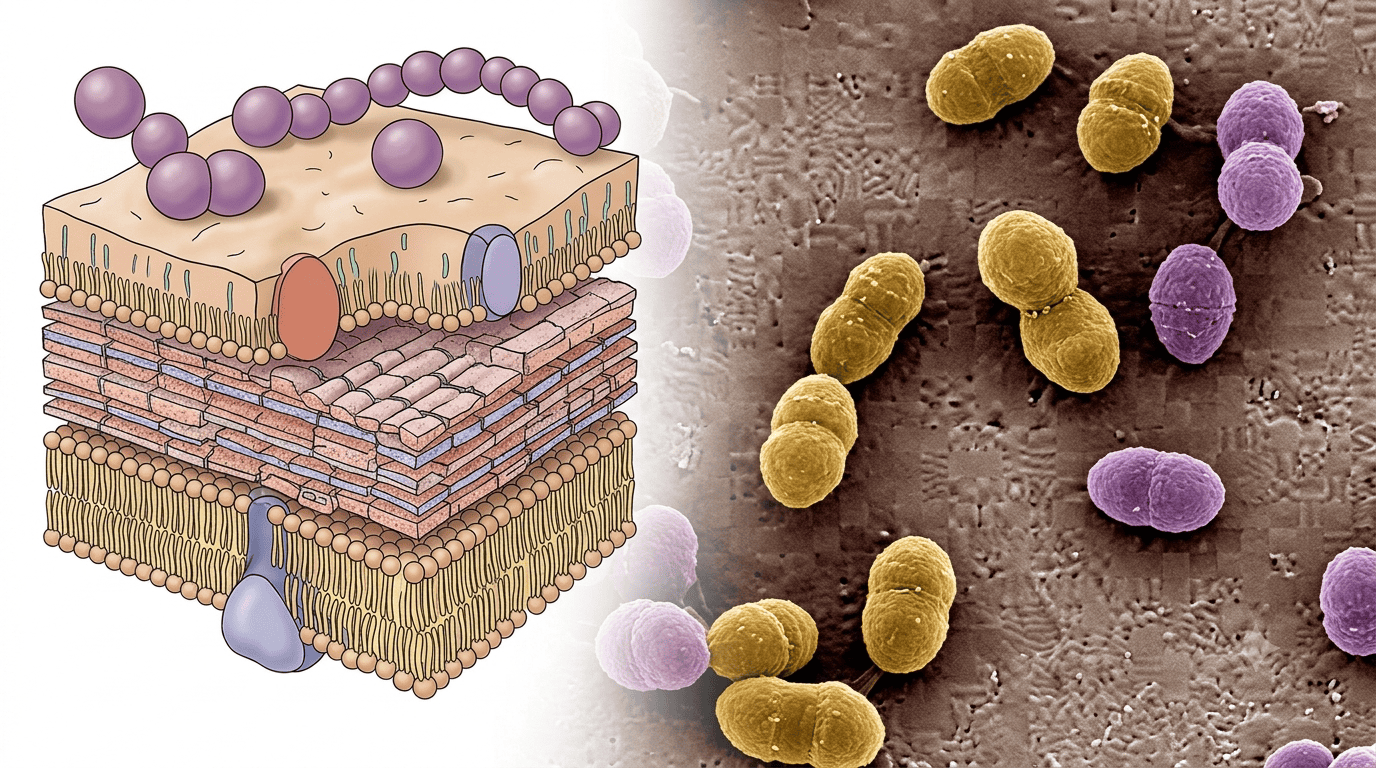
The researchers zeroed in on secreted antigen A (SagA), a highly conserved bacterial enzyme involved in remodelling the peptidoglycan cell wall. Deleting the sagA gene in VREfm impaired peptidoglycan remodelling, cell separation and growth, and crucially increased susceptibility to vancomycin, both in laboratory cultures and in a mouse model of VREfm-induced sepsis, even though the resistant strain still carried its vancomycin-resistance gene cluster.
Building on this, the team screened a library of covalent sulfonyl fluoride compounds and identified a molecule named pghi-4, first discovered in the Moses laboratory back in 2020, as the most potent inhibitor of SagA’s enzymatic activity. In combination with vancomycin, pghi-4 lowered the antibiotic’s minimum inhibitory concentration by up to eight-fold in checkerboard assays, reduced bacterial infection of macrophages in cell culture, and improved outcomes in mice with VREfm-induced sepsis when the two agents were given together.
Chemistry first, medicine second
For Moses, the origin story of the discovery is as notable as the result itself. “This discovery came from fundamental chemical research,” he explains. “Reaction development led to the discovery of the first inhibitor of an important enzyme involved in antibiotic resistance. This is a process we’re constantly refining to both keep our library of molecules up to date and add more for collaborators to take advantage of in their research.”
Commenting on the wider strategy, he says: “This work reflects a philosophy of chemistry that’s designed to accelerate drug discovery in its purest form. By using reliable, robust, and intelligent chemical reactions, we can build new molecules more efficiently. That’s exactly the approach we used here.”
A druggable target with broader promise
The authors are careful to note that pghi-4 likely acts on more than SagA alone, since its effect on vancomycin susceptibility was stronger than that seen with genetic deletion of sagA on its own, hinting at activity against a related peptidoglycan hydrolase, PGH2. Even so, they conclude that “peptidoglycan hydrolases are crucial for bacterial cell wall remodeling and are druggable targets to promote the efficacy of antibiotics against VREfm.”
The molecular library behind the discovery has been made available for collaborative research, and the team hopes similar adjuvant strategies could eventually be extended to other superbugs, including drug-resistant tuberculosis.
Reference:
Fam, K. T., Chodisetti, P. K., Wang, Z., et. al. (2026). Genetic and pharmacological inactivation of peptidoglycan remodeling increases antibiotic susceptibility of vancomycin-resistant Enterococcus faecium. Nature Communications, 17, 7581. https://doi.org/10.1038/s41467-026-74057-1