
Azenta’s FluidX tubes reach orbit in microgravity life sciences mission
Azenta, Inc. has announced a strategic partnership with UK space biotech company Frontier Space to conduct scientific experiments in microgravity, marking a notable step in the application of clinical-grade sample management technologies beyond Earth.
Mission overview and payload design
The collaboration centres on the EGGS-2 (Early Gen micro-Gravity Service) mission, launched in January 2026 aboard ISRO’s PSLV-C62 from the Satish Dhawan Space Centre. Developed in conjunction with Orbital Paradigm, the mission was designed to test Frontier’s SpaceLab Mk 2 research platform under authentic launch and spaceflight conditions. The payload incorporated 42 passive experimental samples housed in FluidX™ 0.26 mL tubes — Azenta’s precision-engineered consumables, selected for their reliability and structural durability under extreme physical stress.
The tubes were integrated into a customdesigned container built to secure and protect samples throughout the mechanical demands of launch and the operational conditions of low-Earth orbit. This design consideration reflects the exacting standards required when translating laboratory-grade sample integrity to a spaceflight context.
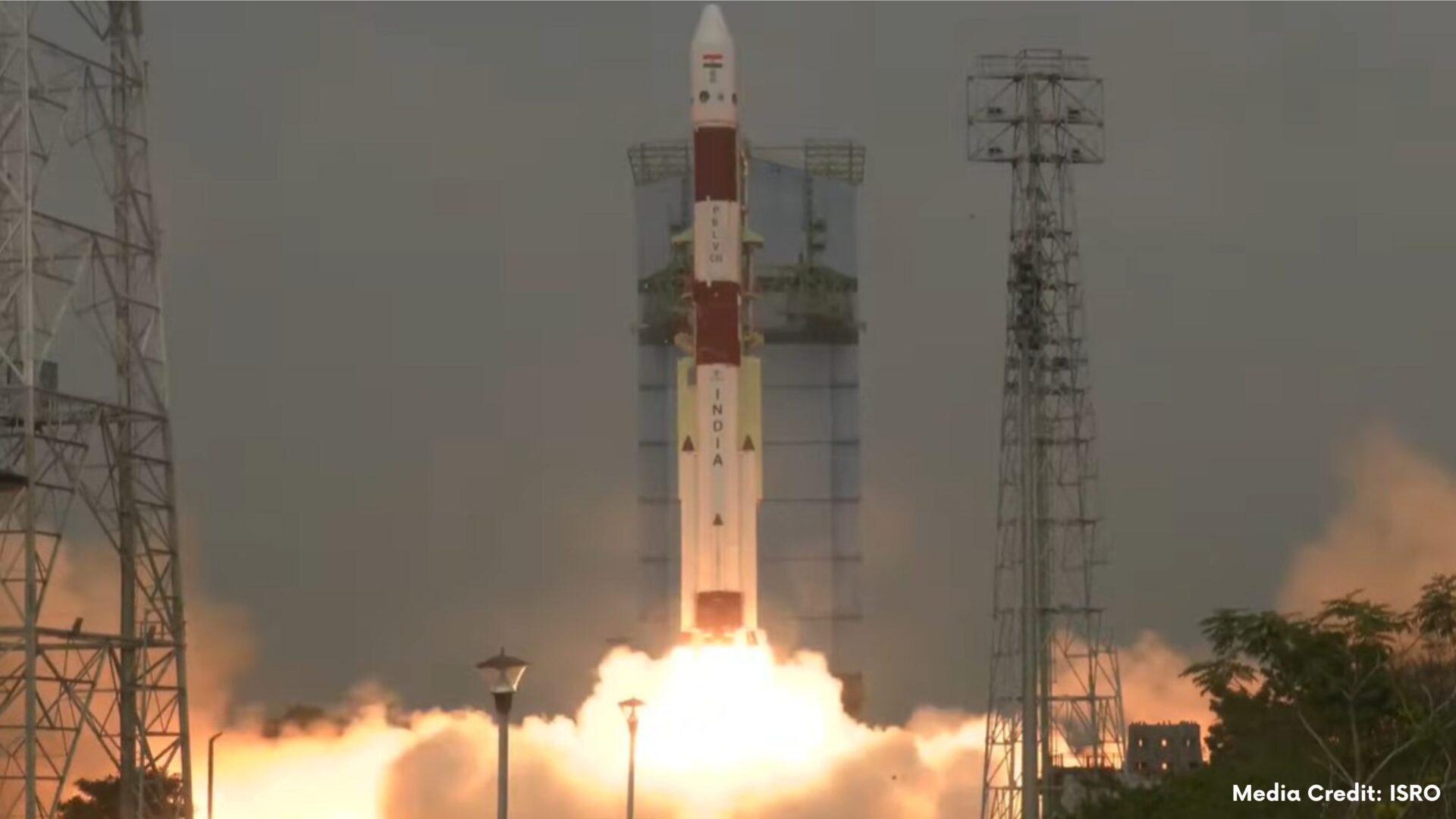
PSLV-C62 Lift Off from Satish Dhawan Space Centre (courtesy ISRO)
Thermal management and environmental monitoring
A central objective of the EGGS-2 campaign was the evaluation of the SpaceLab Mk 2 platform’s active thermal management systems — a critical capability for any life sciences research conducted in microgravity, where temperature control cannot be taken for granted. Thermal sensors embedded within the payload provided real-time monitoring of temperature fluctuations, generating data on how the space environment interacts with biological samples.
The microgravity environment is of particular scientific interest because it can accelerate certain biological processes and reveal phenomena that are difficult or impossible to reproduce under standard terrestrial conditions. For clinical researchers and pharmaceutical scientists, this represents a meaningful opportunity to investigate biological behaviours relevant to drug development and biomanufacturing with a degree of experimental control not achievable on Earth.
Industry perspectives
Dr Aqeel Shamsul, CEO of Frontier Space, commented: “SpaceLab Mk 2 is a critical demonstration of our technology’s readiness for orbital operations. By verifying our systems in real space conditions, we are building confidence in our platform and enabling faster iteration of technology development. Collaborating with trusted partners like Azenta, whose sample storage technology brings proven reliability and integrity to spaceflight conditions, is essential as we validate the foundations for future life sciences research in orbit. The success of EGGS-2 brings us closer to a future where pharmaceutical research and biomanufacturing beyond Earth become routine.”
Michael Bussmann, Vice President and General Manager, Consumables and Instruments at Azenta Life Sciences, said: “Engineered to perform under the most demanding conditions – now including spaceflight – our sample storage tubes provide the reliability and integrity needed for experiments in microgravity.”
Implications for laboratory science
For clinical laboratory scientists, this mission highlights how established sample management infrastructure — already trusted in biobanking, drug development and multiomics workflows — is beginning to find application in emerging research environments. Azenta describes the collaboration as early-stage, but the technical insights generated are expected to inform future biological and pharmaceutical studies conducted in orbit.
Azenta is headquartered in Burlington, MA, with operations across North America, Europe and Asia. Its portfolio of brands includes GENEWIZ, FluidX, Ziath, 4titude, Limfinity, Freezer Pro and Barkey.
For more information, visit: www.azenta.com