



Hyperthyroidism can result from a number of different disorders including Graves’ disease. The diagnostic gold standard is based on radiological tests but measurement of thyroid stimulating hormone receptor antibodies plays an important role in the diagnosis of Graves’. It is important to understand the diagnostic strengths and limitations of these measurements.
by Dr Christopher Boot
Introduction
Hyperthyroidism is relatively common, with a prevalence of between 0.5 and 2 % [1]. A range of symptoms and signs are associated with hyperthyroidism because of the influence of thyroid hormones on multiple organ systems. Many of the most important manifestations are related to effects on the cardiovascular system, which may include tachycardia and arrhythmias. Untreated, hyperthyroidism is associated with significant morbidity and mortality. Hyperthyroidism can usually be diagnosed through the measurement of thyroid stimulating hormone (TSH) and free thyroxine (FT4), with TSH usually suppressed and FT4 raised [occasionally free triiodothyronine (FT3) is raised in the absence of elevated FT4].
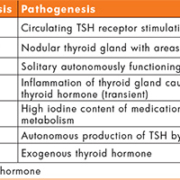
The major causes of hyperthyroidism are Graves’ disease and toxic multinodular goitre. Other etiologies include solitary toxic adenoma and thyroiditis (Table 1). Graves’ disease is the most common cause of hyperthyroidism with most other cases due to either toxic multinodular goitre or solitary toxic nodules, which result from autonomous secretion of thyroid hormones (T4 and T3) by one or more nodules. Transient thyrotoxicosis can occur as the result of thyroiditis, secondary to viral infection or autoimmunity.
Graves’ disease is an autoimmune disease characterized by stimulation of the thyroid by TSH receptor stimulating antibodies (TRAbs). This leads to the clinical features typical of hyperthyroidism such as weight loss, heat intolerance, palpitations, anxiety, tremor and tiredness. These autoantibodies may also recognize antigens in other tissues, notably fibroblasts in the eye muscles. This can lead to growth and inflammation of fat cells and muscles around the eye leading to Graves’ orbitopathy, characterized by upper eyelid retraction, lid lag, swelling, conjunctivitis and exophthalmos.
It is important to differentiate between Graves’ disease and other causes of hyperthyroidism as the approach to treatment may depend on etiology. Current guidelines recommend that all cases of hyperthyroidism are referred to an endocrinologist for further investigation to determine the cause and a treatment plan [2, 3]. This article focuses on the role of TRAb measurements in the diagnosis of Graves’ although TRAbs also provide prognostic information [4] and have a role in assessing the risk of neonatal hyperthyroidism in pregnancies involving maternal Graves’ [5].
Diagnosis of Graves’ disease
Determining the underlying cause of hyperthyroidism relies on a combination of clinical history, physical examination, biochemical testing and imaging. Certain findings are highly suggestive of Graves’ disease such as a symmetrically enlarged, non-nodular thyroid and evidence of orbitopathy. The most commonly used imaging tests are radiolabel uptake scans, which allow visualization of a thyroid radiolabel uptake pattern. In Graves’ disease there is homogenous, increased uptake of label across the thyroid, whereas in multinodular goitre there is patchy uptake with increased uptake at the sites of the over-active nodules. Radioactive iodine has largely been replaced with technetium pertechnetate (99mTc), which mimics the behaviour of iodine but exposes patients to lower radiation doses. The recommended role for TRAbs in the diagnosis of Graves’ varies. One recommended approach is to measure TRAbs in new cases of primary hyperthyroidism and where TRAb results are positive to diagnose Graves’ disease (Fig. 1). Where TRAb results are negative, uptake scans can then be used to distinguish Graves’, toxic nodule(s) and thyroiditis [6]. However, some guidelines have recommended an uptake scan as the first-line test, with TRAbs only used in certain situations [7].
TRAb assays
There are two main categories of TRAb assays. The majority of assays in clinical use detect TRAbs in patient samples through their competition with an added TSH receptor ligand for binding of the TSH receptor. These competition-based assays are sometimes referred to as thyrotropin-binding inhibitory immunoglobulin (TBII) assays. Competition-based assays do not discriminate between stimulatory TRAbs (as found in Graves’) or non-stimulating (inhibiting or neutral) TRAbs. In cases of hyperthyroidism it is assumed that any detected TRAbs are stimulating. The second category of TRAb assay is bioassays, which detect only stimulating TRAbs.
Competition-based assays have evolved over the years. Early assays used porcine thyroid membrane extracts and detected the inhibition of binding of radiolabelled TSH to these extracts. Liquid-phase assays were developed when recombinant human TSH receptor became available and the inhibition of radiolabelled TSH to recombinant TSH receptor was detected. Further evolution of competition assays involved replacement of labelled TSH with monoclonal anti-TSH receptor antibodies as the competing ligand. Modern TRAb assays typically use fluorescent or chemiluminescent labels and can be automated allowing high throughput.
Bioassays for stimulating TRAbs detect the production of cAMP in cells incubated with patient serum. Current bioassays use Chinese hamster ovary (CHO) cells transfected with human TSH receptor. These cells produce cAMP in response to TSH receptor stimulation. cAMP can be measured by immunoassay or a luciferase reporter gene may be used to generate a chemiluminescent signal in response to increasing cAMP. TRAb bioassays are more complex and expensive than competition-based assays and less commonly used in clinical practice.
Diagnostic performance of TRAb assays
The current generation of competition-based TRAb assays are generally reported to offer a high degree of diagnostic specificity and sensitivity for Graves’ disease. A meta-analysis of clinical studies using current assays indicated a pooled specificity of 99 % and sensitivity of 97 % [8]. This high diagnostic performance has led some authors to recommend TRAbs as a first-line test to distinguish Graves’ disease from other causes of hyperthyroidism. This may lead to a quicker and more cost effective diagnosis in many cases compared to initial use of imaging tests [9]. In particular, the high diagnostic specificity achieved means that untreated, hyperthyroid patients with positive TRAbs are highly likely to have Graves’ disease so that uptake scans may not be necessary in this scenario, particularly when the clinical presentation suggests Graves’. However, a recent study that compared the diagnostic sensitivity of a number of competition-based TRAb assays found significant variability with sensitivity varying from 65 to 100 % depending on the TRAb assay used [10]. Therefore, a negative TRAb result may not always rule out Graves’ disease with a high degree of certainty.
Assessment of the diagnostic performance of TRAbs in a UK tertiary referral centre
In view of the variability in reported diagnostic sensitivity and the identification of a number of cases of apparent TRAb-negative Graves’ disease in our centre, a retrospective study of the performance of TRAbs in the diagnosis of Graves’ was carried out. The Kryptor (ThermoFisher) TRAb assay was used throughout the period of the study. Results from all TRAb requests for patients referred with a new presentation of thyrotoxicosis were gathered over 18 months. Routine diagnosis of the etiology of hyperthyroidism was based on the uptake pattern on 99mTc scintigraphy, clinical course and other features in addition to TRAb concentrations. Ninety-nine cases of Grave’s disease were identified and 131 cases where an alternative cause of thyrotoxicosis was diagnosed. There was some overlap in TRAb concentrations between patients with Graves’ and patients with other etiologies (Fig. 2). Using the diagnostic cut-off of >1.8 IU/L suggested by the manufacturers of the assay, diagnostic sensitivity was 81.8 % (18 of 99 cases of Grave’s were TRAb-negative), whereas diagnostic specificity was 99.2 %. Applying a lower cut-off of >1.2 IU/L resulted in an improved sensitivity of 88.9 % but slightly lower specificity of 97.7 %.
This data from our centre demonstrated a significant number of cases of TRAb-negative Graves’ disease among patients referred with a new presentation of thyrotoxicosis. The diagnostic sensitivity of the Kryptor TRAb assay, therefore, appears to be lower than that suggested by the manufacturer’s data (96.3 %). This could possibly be as a result of more stringent classification of Graves’ in other studies, whereas this data represents the range of patients investigated in practice, which includes cases of borderline/mild hyperthyroidism. Of the 99 cases of Graves’ disease in this study, 40 patients had a FT4 of less than 30 pmol/L. Twenty percent of patients in this group had a TRAb level of <1.0 IU/L (the lower limit of quantification for the assay). Of the remaining 59 cases of Graves’ disease with a FT4 of ≥30 pmol/L, only 5 % had a TRAb level of < 1.0 IU/L. This suggests that cases of Graves’ with milder biochemical thyrotoxicosis on presentation are more likely to be TRAb-negative. Applying a lower diagnostic cut-off than that recommended by the manufacturer may improve the sensitivity of the Kryptor TRAb assay in the diagnosis of Grave’s disease. Practice in our laboratory is now to report an ‘equivocal’ range of 1.0–1.8 IU/L in addition to a cut-off for positivity of >1.8 IU/L. This better reflects the overlap in TRAb concentrations between Graves’ and other causes of thyrotoxicosis observed in our study than a binary positive/negative threshold. However, no cut-off provided 100 % diagnostic sensitivity for Graves’ disease.
Summary
TRAb assays are useful in the differentiation of Graves’ disease from other causes of thyrotoxicosis. In particular, TRAbs appear to provide a high degree of diagnostic specificity so that hyperthyroid patients with positive TRAb results are highly likely to have Graves’. Radioactive uptake scans may, therefore, not be necessary in all cases of TRAb-positive hyperthyroidism. However, some studies (including our local data) suggest that the diagnostic sensitivity of a negative TRAb result alone is not sufficient to reliably rule out Graves’ disease. Diagnostic performance is likely to vary between TRAb assays, so assay-specific reference data should be used for interpretation.
References
1. Vanderpump MPJ. The epidemiology of thyroid disease. Br Med Bull. 2011; 99: 39–51.
2. Ross DS, Burch HB, Cooper DS, Greenlee MC, Laurberg P, Maia AL, Rivkees SA, Samuels M, Sosa JA, et al. 2016 American Thyroid Association guidelines for diagnosis and management of hyperthyroidism and other causes of thyrotoxicosis. Thyroid 2016; 26: 1343–1421.
3. UK Guidelines for the use of thyroid function tests. Association of Clinical Biochemistry, British Thyroid Association and British Thyroid Foundation 2006.
4. Vos XG, Endert E, Zwinderman AH, Tijssen JG, Wiersinga WM. Predicting the risk of recurrence before the start of antithyroid drug therapy in patients with Graves’ hyperthyroidism. J Clin Endocrinol Metab. 2016; 101(4):1381–1389.
5. Laurberg P, Nygaard B, Glinoer D, Grussendorf M, Orgiazzi J. Guidelines for TSH-receptor antibody measurements in pregnancy: results of an evidence-based symposium organized by the European Thyroid Association. Eur J Endocrinol. 1998; 139: 584–586.
6. Vaidya B, Pearce SHS. Diagnosis and management of thyrotoxicosis. BMJ 2014; 349: g5128.
7. Bahn RS, Burch HB, Cooper DS, Garber JR, Greenlee MC, Klein I, Laurberg P, McDougall IR, Montori VM, et al. Hyperthyroidism and other causes of thyrotoxicosis: management guidelines of the American Thyroid Association of Clinical Endocrinologists. Endocr Pract 2011; 17: 457–520.
8. Tozzoli R, Bagnasco M, Giavarina D, Bizzaro N. TSH receptor autoantibody immunoassay in patients with Graves’ disease: improvement of diagnostic accuracy over different generations of methods. Systematic review and meta-analysis. Autoimmun Rev. 2012; 12: 107–113.
9. McKee A, Peryerl F. TSI assay utilization: impact on costs of Graves’ hyperthyroidism diagnosis. Am J Manag Care 2012; 18: e1–14.
10. Diana T, Wüster C, Kanitz M, Kahaly GJ. Highly variable sensitivity of five binding and two bio-assays for TSH-receptor antibodies. J Endocrinol Invest. 2016; 39: 1159–1165.
The author
Christopher Boot PhD, FRCPath
Department of Blood Sciences, Royal
Victoria Infirmary, Newcastle upon Tyne Hospitals NHS Foundation Trust,
Newcastle upon Tyne, UK
*Corresponding author
E-mail: christopher.boot@nuth.nhs.uk
Background
An outbreak of Zika virus (ZIKV) in Brazil terrorized the whole world and its explosive spread in the Americas caused the World Health Organization (WHO) to declare it a public health emergency of international concern in February 2016 [1]. This is because ZIKV is a suspected major cause of congenital microcephaly, Guillain-Barré syndrome and other neurologic syndromes [2–4]. ZIKV has a genome consisting of a single-stranded, positive-polarity RNA and belongs to the family Flaviviridae and the genus Flavivirus. Aedes mosquitoes, known as a major ZIKV vector, also transmit dengue and chikungunya viruses across tropical and subtropical regions around the world [5]. Moreover, antigenic similarity between ZIKV and dengue virus gives rise to serological cross-reactivity, precluding antibody-based assays from reliably distinguishing between ZIKV and dengue virus infections [6]. Thus, reliable methods for distinguishing ZIKV from dengue and chikungunya viruses are necessary in practical applications.
WHO target product profiles
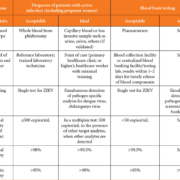
In April 2016, the WHO announced Target Product Profiles (TPPs) for a better diagnostic test for ZIKV infection. The TPPs define the desired characteristics of a ZIKV diagnostic test. The proposed TPPs consist of ‘Detection of active infection with ZIKV’ (Table 1a) and ‘Detection of evidence of prior infection’ (Table 1b). Each characteristic in the tables represents essential properties that the newly developed ZIKV diagnostic test should have at least at an acceptable level. To state the obvious, the criteria of specificity for active infection are more stringent [7].
Previous research on ZIKV diagnostics
Due to serological cross-reactivity between ZIKV and other flaviviruses, most of previous studies on ZIKV diagnosis have dealt with molecular diagnostics instead of immunological assays. Faye and colleagues developed and evaluated a one-step reverse transcription (RT)-PCR assay for ZIKV detection. The limit of detection of the assay was found to be 7.7 plaque-forming units (p.f.u.) per reaction in human serum and in the L-15 medium [8]. A quantitative real-time RT-PCR assay for ZIKV was also developed by the same research group. Analytical sensitivity of the assay was estimated at 3.2×10² RNA copies/μL [9]. However, a conventional PCR assay requires a bulky and expensive thermal cycler, prolonged reaction time, and trained technicians; these resources are not available in many low- and middle-income countries. Moreover, the RT-PCR reaction is vulnerable to inhibitors (blood, plasma and urine), thus requiring painstaking and cumbersome RNA extraction steps.
Recent research on ZIKV diagnostics
To overcome such limitations of RT-PCR, a variety of isothermal nucleic acid amplification techniques have recently been developed. Among them, reverse transcription loop-mediated isothermal amplification (RT-LAMP) is a rapid, robust, and highly sensitive isothermal RNA amplification method that uses four to six primers to amplify specific RNA sequences at 60–65°C even in the presence of inhibitors such as blood, plasma, or urine. RT-LAMP is much faster than conventional PCR, and the reaction can even proceed in an oven, water bath or with heating packs [10, 11]. Despite these advantages, the RT-LAMP assays still rely on a conventional bulky amplicon analyser such as a gel electrophoresis apparatus or a fluorescence laser-induced detector for monitoring the LAMP amplicons; this situation precludes the use of RT-LAMP in point-of-care diagnosis.
Our approaches to simple and highly sensitive diagnosis of ZIKV
To eliminate the dependence on a conventional amplicon analyser while retaining the aforementioned advantages of RT-LAMP, we selected the lateral flow assay (LFA) format for RT-LAMP amplicon analysis. The LFA, a driving principle behind pregnancy test strips, is also widely known as a superior diagnostic tool for nucleic acids owing to its high sensitivity, simplicity, selectivity and easy interpretation of results. Moreover, the Bst 3.0 polymerase used in this study for RT-LAMP retains both improved isothermal amplification performance and strong reverse transcription activity, allowing us to avoid addition of exogenous reverse transcriptase and the inhibition of reverse transcription by biological substances. By utilizing the advantages of Bst 3.0 polymerase and combining the RT-LAMP assay with the LFA, we demonstrated simple and highly sensitive detection of ZIKV RNA in human whole blood by merely observing a colorimetric signal within 35 min.
The RT-LAMP reaction and modification of amplicons in our study
As mentioned above, RT-LAMP has excellent tolerance to many inhibitors so that isothermal amplification of ZIKV RNA is possible even when human whole blood is directly used as a sample. We extracted ZIKV RNA and added it into human whole blood to mimic ZIKV-containing blood samples. Then, the spiked human whole blood was serially diluted with blood to set up a concentration range from 106 copies of RNA to a single copy per 2 μL and directly used these dilutions as samples without additional RNA purification steps. To colorimetrically detect the result of the LFA, a special modification is needed: labelling of the amplicon with digoxigenin and biotin. Among our own designed ZIKV-specific primers, two loop primers were tagged with digoxigenin at the 5´end; this approach will allow digoxigenin to label the amplicon when loop primers amplify the ZIKV RNA by the LAMP method. Labelling of the amplicon with biotin is made possible by adding biotin-labelled dUTP (Biotin-dUTP) to the mix of deoxynucleotides (dNTPs) at a certain ratio. When ZIKV RNA is amplified and this reaction consumes dNTPs, Biotin-dUTP will substitute thymine at the adenine sites of the complementary strand, resulting in labelling of the amplicon with biotin.
RT-LAMP was carried out in a 25 μL reaction mixture containing 1× Isothermal Amplification Buffer II [20 mM Tris-HCl, 10 mM (NH4)2SO2, 150 mM KCl, 2 mM MgSO4, and 0.1% Tween 20], additional 2 mM MgSO4, a dNTP mix supplemented with biotin-dUTP (2.2 mM dGTP, dATP, dCTP, 1.375 mM dTTP, and 0.0825 mM biotin-dUTP), a target-specific primer mixture (0.8 μM forward and reverse inner primers, 0.4 μM digoxigenin-labelled loop primers, and 0.2 μM forward and reverse outer primers), 8 U of Bst 3.0 DNA polymerase, and 2 μL of human whole blood spiked with ZIKV RNA ranging from 106 copies to a single copy per 2 μL. The RT-LAMP reaction mixture was incubated for 30 min.
Design and operation of the LFA
Figure 1(a) and 1(b) shows the detailed set-up and operating procedures of the LFA in our study. First, 1 μL of digoxigenin- and biotin-labelled RT-LAMP products was loaded onto the conjugate pad, so that the biotin-labelled RT-LAMP products formed a complex with gold nanoparticles (AuNPs) via streptavidin-biotin interactions. Next, 45 μL of diluent buffer was placed on the buffer loading pad, and then capillary flow transferred AuNPs from the conjugate pad to the test and control line. The AuNP–RT-LAMP complexes were immobilized at the test line by the interaction between digoxigenin and anti-digoxigenin whereas the AuNPs that did not form complexes were captured by biotin. Complexed and uncomplexed AuNPs are indicated by violet bands at the test line and control line, respectively. The colorimetric signal was easily visible with the naked eye within 5 min.
Discussion
Analysis of the limit of detection in human whole blood samples
We evaluated the limit of detection of the LFA to determine whether our method is indeed highly sensitive. Two microliters of human whole blood was directly used as a sample without any purification steps. Figure 1(c) shows the ZIKV RNA detection results for the LFA. The signal intensities on the test line gradually declined as the concentration of ZIKV RNA decreased. Notably, the presence of even a single copy of ZIKV RNA could be detected within 35 min by the LFA. These results imply that our method has a great potential for diagnosis of ZIKV infections.
References
1. Lessler J, Chaisson LH, Kucirka LM, Bi Q, Grantz K, Salje H, et al. Assessing the global threat from Zika virus. Science 2016; 353: aaf8160.
2. Schuler-Faccini L, Ribeiro E, Feitosa I, Horovitz D, Cavalcanti D, et al. Possible Association Between Zika Virus Infection and Microcephaly Brazil, 2015. MMWR Morb Mortal Wkly Rep 2016; 65: 59–62.
3. Cao-Lormeau V-M, Blake A, Mons S, Lastère S, Roche C, et al. Guillain-Barré Syndrome outbreak associated with Zika virus infection in French Polynesia: a case-control study. Lancet 2016; 387: 1531–1539.
4. WHO statement on the first meeting of the International Health Regulations (2005) (IHR 2005) Emergency Committee on Zika virus and observed increase in neurological disorders and neonatal malformations. http://www.who.int/mediacentre/news/ statements/2016/1st-emergency-committee-zika/en/ (accessed May 1).
5. Surveillance and Control of Aedes aegypti and Aedes albopictus in the United States. http://www.cdc.gov/chikungunya/resources/ vector-control.html (accessed May 1).
6. Dejnirattisai W, Supasa P, Wongwiwat W, Rouvinski A, Barba-spaeth G, et al. Nat Immunol 2016; doi:10.1038/ni.3515.
7. Target product profiles for better diagnostic tests for Zika virus infection. http://www.who.int/csr/research-and-development/zika-tpp.pdf.
8. Faye O, Faye O, Dupressoir A, Weidmann M, Ndiaye M, Alpha Sall A. One-step RT-PCR for detection of Zika virus. J Clin Virol 2008; 43: 96–101.
9. Faye O, Faye O, Diallo D, Diallo M, Weidmann M, Sall AA. Quantitative real-time PCR detection of Zika virus and evaluation with field-caught mosquitoes. Virol J 2013; 10: 311.
10. Safavieh M, Kanakasabapathy MK, Tarlan F, Ahmed MU, Zourob M, et al. Emerging loop-mediated isothermal amplification-based microchip and microdevice technologies for nucleic acid detection. ACS Biomater Sci Eng 2016; 2: 278–294.
11. Nyan D-C, Ulitzky LE, Cehan N, Williamson P, Winkelman V, et al. Rapid detection of hepatitis B virus in blood plasma by a specific and sensitive loop-mediated isothermal amplification assay. Clin Infect Dis 2014; 59: 16–23.
The authors
Dohwan Lee MS, Yong Kyoung Yoo PhD, and Jeong Hoon Lee* PhD
Department of Electrical Engineering, Kwangwoon University, Nowon, Seoul 01897, Republic of Korea.
*Corresponding author
E-mail: jhlee@kw.ac.kr

Cervical cancer is mainly caused by high-risk human papillomavirus (HPV) infection. The Pap test is the gold standard for early cervical cancer diagnosis. However, the lack of Pap test accessibility accounts for the high rates of cervical cancer mostly in developing regions. Here we discuss recent proteomic approaches towards the development of novel diagnostic and prognostic putative biomarkers.
by Georgia Kontostathi, Dr Jerome Zoidakis, Prof. Nicholas P. Anagnou, Prof. Kalliopi I. Pappa and Dr Manousos Makridakis
Background
Cervical cancer is one of the most common gynecological cancers. It shares many common characteristics such as pathways and regulatory networks with vulvar and endometrial cancer [1]. The majority of cervical cancer incidents are attributed to HPV infection by high-risk oncogenic HPV types (mostly HPV16 and HPV18). HPV infects the basal membrane of cervical epithelium leading to upregulated expression of E6 and E7 oncogenes that cause specific histological lesions such as CIN1 [cervical intraepithelial neoplasia or low-grade squamous intraepithelial lesions (LSIL)], CIN2 and CIN3 [or high-grade squamous intraepithelial lesions (HSIL)] [2, 3].
Cervical cancer is the fourth most common cancer in women worldwide, regarding incidence and mortality. It was responsible for 528 000 incidents of malignancy and 266 000 deaths in 2012, of which more than 85% occurred in developing regions [4]. The high number of cervical cancer cases in developing countries is mainly attributed to the limited availability of diagnostic tools such as Pap smear tests or HPV DNA genotyping that enable detection of early-stage lesions [5].
Current diagnostic methods
The Pap test is the most popular diagnostic technique and is based on the nuclear morphology evaluation of cervical epithelial cells. This test enables the detection of possible lesions at an early stage [6]. However, there is a wide range of sensitivity (from 33.8% to 94.0%) [7, 8] that reflects the main limitation of Pap test: the high inter-observer variability.
Other diagnostic options are based on direct probes, such as Southern blot for HPV genomic analysis. This technique has a relatively low sensitivity, is time-consuming and requires large amounts of purified DNA. More sensitive methods include commercially available kits like Digene’s HC2 test (not HPV type specific), which is based on detection of viral RNA by probes. It is used for patients with minor abnormalities detected by Pap test that need further confirmation. Finally, targeted amplification methods such as PCR, are ideal for viral load quantification and genotyping with high sensitivity. However, they are prone to environmental contamination and false-positive results [9]. A recent method [approved by the US Federal Drug Administration (FDA) in 2014] is Roche’s COBAS HPV test for use in primary screening [10]. A major drawback of the above HPV-based tests is the high cost and the requirements for specialized experimental facilities.
Some protein biomarkers have been proposed for early cervical cancer screening. One of them is p16INK4a (cyclin-dependent kinase inhibitor) which is highly expressed at dysplastic epithelium. A combinatorial stain of p16INK4a and the cell proliferation marker Ki-67 has been proposed for increased diagnostic sensitivity [11]. However, lack of a scoring system for immunohistochemistry has hampered the incorporation of the these biomarkers in wide cervical cancer screening. Also, squamous cell carcinoma antigen (SCCA) is a known cancer antigen isolated from tissue, which is usually measured by immunoassays such as ELISA in serum or plasma patients, with limited specificity and sensitivity [12, 13].
Similarly, targets of the E5 HPV protein [e.g. epidermal growth factor receptor, p21 and p27 inhibitors of cyclin-dependent kinase, cyclooxygenase-2 (cox-2), vascular endothelial growth factor, and caveolin-1] have been proposed for early stage cervical cancer detection. Moreover, putative markers that have been suggested are the ProEx C immunocytochemical assay (that targets the expression of topoisomerase II protein and the minichromosome maintenance complex II protein) as well as microRNAs which are regulated by E5, E6, and E7 HPV proteins [14].
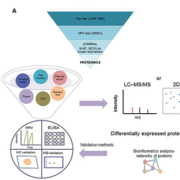
Figure 1A summarizes the different methods that have been used for the diagnosis of cervical cancer.
Current proteomic studies
The limitations of the above methods demonstrate the need for the establishment of new reliable diagnostic tests via alternative methods [15]. A novel method that can expose the association of HPV infection and cellular transformation at the molecular level is proteomics [16]. Cervical cancer models (cell cultures or tissue samples) have been studied via several proteomic methods which are either gel-based [two-dimensional gel electrophoresis (2DE)] or gel-free (liquid chromatography (LC)] in combination with mass spectrometry (MS) [17]. Proteomics can be used in order to reveal putative biomarkers for early-stage diagnosis. The role of systems biology that includes the integration of proteomics data with other available ‘OMICS’ datasets, such as genomics and transcriptomics, appears to be vital towards the direction of personalized cervical cancer medicine [18].
In this review, we present some of the most recent and interesting proteomic studies for putative biomarkers in a variety of clinical samples. Diagnostic, prognostic and predictive biomarkers have been assessed in tissue, plasma/serum, cell biopsies/cervical swabs, residual fluid from cell biopsies, cell mucous and cervicovaginal fluid (CVF) by proteomic approaches [19]. Some of the most interesting studies from each category of clinical samples are reported below. The proteomics approach workflow is presented in Figure 1B.
A proteomic study, highlighted keratin 17 as a prognostic biomarker with characteristic gradual increase from normal toward cancer stage in tissue samples. Specifically, stage specific tissue samples [normal squamous mucosa, LSIL, HSIL, and SCC (total number of samples N=22] were analysed by laser capture microdissection in combination with multidimensional liquid chromatography and tandem MS (LC-MS/MS). Proteomics analysis demonstrated differentially expressed and statistically significant proteins and after bioinformatics analysis (gene ontology) keratin 4 and keratin 17 were chosen for validation by immunohistochemistry. The gradual increase from normal towards cancer stage of keratin 17 shown by proteomics, was in total agreement with the immunohistochemistry results. Kaplan–Meier curves of keratin 17 expression and general survival of cervical cancer patients revealed a strong correlation of high keratin 17 expression with poor survival, adding prognostic value to this protein [20]. Another proteomics study focused on the pelvic lymph node metastasis (PLNM) clinical status, which is important in terms of prognosis and treatment of cervical cancer. A two-dimensional difference gel electrophoresis (2D DIGE)/matrix-assisted laser desorption/ionization time-of-flight (MALDI-TOF)-MS approach was used to compare cervical tissues of patients with PLNM (N=8) to cervical tissues from patients without lymph node metastasis (NPLNM) (N=10). Analysis led to the identification of 41 differentially expressed and statistically significant proteins. Some of them (FABP5, HspB1, and MnSOD) were validated in the PLNM group compared to the NPLNM, by Western blot and immunohistochemistry [21].
The combination of Isobaric tag for relative and absolute quantitation (iTRAQ) and targeted mass spectrometric quantification was used in order to analyse serum from CIN, early- (CES), and late-stage (CLS) cervical cancer patients. A panel of six differentially expressed proteins (alpha-1-acid glycoprotein1, alpha-1-antitrypsin, serotransferrin, haptoglobin, alpha-2-HS-glycoprotein, and vitamin D-binding protein) was validated by MRM (multiple reaction monitoring) in an independent set of 229 serum samples consisting of controls (N=49), CIN-1 to 3 designated as CIN (N=48), CES (N = 49), CLS (N=34), and ovarian cancer (N=49). The above panel discriminated patients with CIN from healthy controls with a sensitivity of 67% and specificity of 88%. Combination of the specific panel with SCCA, a well-studied putative biomarker for cervical cancer, improved discrimination of CIN, CES, and CLS patients from healthy control. Briefly, upon the comparison of the CES versus healthy group, the area under the curve was 0.86 (sensitivity/specificity = 71/90%), when using the six-protein panel and SCCA [12].
An alternative strategy was used by Boylan et al., in order to study the proteome of Pap test clinical samples. The cell-free residual fluid from cell biopsies was collected, proteins were isolated (acetone precipitation) and their concentration upon resolubilization was determined by Bradford assay. Filter aided sample preparation followed by LC-MS/MS analysis yielded 300 protein identifications per sample and 700 unique protein identifications after pooling the samples. Many of the proteins had similar biological functions to the ones identified from CVF. Thus, residual fluid could be an alternative material for the study of proteins related to cervical dysplasia [22].
The cell mucous proteome from 25 HPV-positive and pre invasive cervical disease samples has been investigated by a combination of 2DE MS, gel-based LC-MS/MS and 2DE MS after depletion of highly abundant proteins (e.g. albumin). The above approaches were combined and 107 unique proteins were identified. A bioinformatics study showed that they are related to metabolism, immune response, and transport. Proteins like acute-phase plasma proteins, α-1-antichymotrypsin and α-1-antitrypsin, were found to be both phosphorylated and glycosylated after posttranslational modifications evaluation with appropriate fluorescent dyes [23].
Table 1 highlights the above clinical proteomics studies and some of the most promising putative biomarkers that were identified.
Discussion and conclusions
Cervical cancer is the fourth most common cancer in women. The Pap test is a very efficient diagnostic approach in terms of specificity (77.8-98.8%) but has a variable sensitivity (33.8% to 94.0%) [8). Molecular tests such as HPV DNA detection by PCR and/or hybridization with adequate probes are the reference methods for the detection of HPV. The aforementioned methods are often expensive and unavailable in the developing regions where cervical cancer is very frequent (85% of cervical cancer cases). A promising idea is that proteomics will facilitate the discovery of novel biomarkers that will enable the future cervical cancer screening in developing countries in the form of antibody-based practical diagnostic self-tests (like pregnancy tests). New and advanced proteomic techniques like MRM could validate several biomarkers that will eventually be combined into panels for more accurate testing in the above diagnostic tests. Of course, the future of proteomics studies is not only promising but also challenging. New aspects of research should be taken into consideration. Redox proteomics will be used for the exploration of proteins oxidation status in order to reveal the interaction of oxidative stress and tumour development. In particular, the oxidative status of proteins in HPV-related cervical cancer cells was explored via oxidative isotope-coded affinity tags (OxICAT) and voltage-dependent anion channel 1 (VDAC1) was found to be highly oxidized in HPV-positive cervical cancer cells [24]. The important role of post-translational modifications (PTMs) such as phosphorylation and glycosylation should be thoroughly examined. The combination of systems biology and proteomics offers the possibility to elucidate cervical cancer mechanisms and identify potential biomarkers for early-stage detection.
References
1. Pappa KI, Polyzos A, Jacob-Hirsch J, Amariglio N, Vlachos GD, Loutradis D, Anagnou NP. Profiling of discrete gynecological cancers reveals novel transcriptional modules and common features shared by other cancer types and embryonic stem cells. PloS One 2015; 10(11): e0142229.
2. Doorbar J, Quint W, Banks L, Bravo IG, Stoler M, Broker TR, Stanley MA. The biology and life-cycle of human papillomaviruses. Vaccine 2012; 30(Suppl 5): F55–70.
3. Schiffman MH, Castle P. Epidemiologic studies of a necessary causal risk factor: human papillomavirus infection and cervical neoplasia. J Natl Cancer Inst. 2003; 95(6): E2.
4. Ferlay J, Soerjomataram I, Dikshit R, Eser S, Mathers C, Rebelo M, Parkin DM, Forman D, Bray F. Cancer incidence and mortality worldwide: sources, methods and major patterns in GLOBOCAN 2012. Int J Cancer 2015; 136(5): E359–386.
5. Jemal A, Bray F, Center MM, Ferlay J, Ward E, Forman D. Global cancer statistics. CA Cancer J Clin. 2011; 61(2): 69–90.
6. Wilting SM, Smeets SJ, Snijders PJ, van Wieringen WN, van de Wiel MA, Meijer GA, Ylstra B, Leemans CR, Meijer CJ, et al. Genomic profiling identifies common HPV-associated chromosomal alterations in squamous cell carcinomas of cervix and head and neck. BMC Med Genomics 2009; 2: 32.
7. Nayar R, Wilbur DC. The Pap test and Bethesda 2014. Cancer Cytopathol. 2015; 123(5): 271–281.
8. Wright TC, Jr. HPV DNA testing for cervical cancer screening. FIGO 26th Annual Report on the Results of Treatment in Gynecological Cancer. Int J Gynaecol Obstet. 2006; 95(Suppl 1): S239–246.
9. Hubbard RA. Human papillomavirus testing methods. Arch Pathol Lab Med. 2003; 127(8): 940–945.
10. Hogarth S, Hopkins M, Rotolo D. Technological accretion in diagnostics: HPV testing and cytology in cervical cancer screening. In: Consoli D, Mina A, Nelson RR, Ramlogan R (eds) Medical Innovation: Science, Technology and Practice. Routledge 2015.
11. von Knebel Doeberitz M, Reuschenbach M, Schmidt D, Bergeron C. Biomarkers for cervical cancer screening: the role of p16(INK4a) to highlight transforming HPV infections. Expert Rev Proteomics 2012; 9(2): 149–163.
12. Boichenko AP, Govorukhina N, Klip HG, van der Zee AG, Guzel C, Luider TM, Bischoff R. A panel of regulated proteins in serum from patients with cervical intraepithelial neoplasia and cervical cancer. J Proteome Res. 2014; 13(11): 4995–5007.
13. Kato H, Torigoe T. Radioimmunoassay for tumor antigen of human cervical squamous cell carcinoma. Cancer 1977; 40(4): 1621–1628.
14. de Freitas AC, Coimbra EC, Leitao Mda C. Molecular targets of HPV oncoproteins: potential biomarkers for cervical carcinogenesis. Biochim Biophys Acta 2014; 1845(2): 91–103.
15. Wentzensen N, von Knebel Doeberitz M. Biomarkers in cervical cancer screening. Dis Markers 2007; 23(4): 315–330.
16. Lomnytska M, Souchelnytskyi S. Markers of breast and gynecological malignancies: the clinical approach of proteomics-based studies. Proteomics Clin appl. 2007; 1(9): 1090–1101.
17. Di Domenico F, De Marco F, Perluigi M. Proteomics strategies to analyze HPV-transformed cells: relevance to cervical cancer. Expert Rev Proteomics 2013; 10(5): 461–472.
18. Breuer EK, Murph MM. The role of proteomics in the diagnosis and treatment of women’s cancers: current trends in technology and future opportunities. Int J Proteomics 2011; 2011: pii: 373584.
19. Kontostathi G, Zoidakis J, Anagnou NP, Pappa KI, Vlahou A, Makridakis M. Proteomics approaches in cervical cancer: focus on the discovery of biomarkers for diagnosis and drug treatment monitoring. Exp Rev Proteomics 2016; 13(8): 731–745.
20. Escobar-Hoyos LF, Yang J, Zhu J, Cavallo JA, Zhai H, Burke S, Koller A, Chen EI, Shroyer KR. Keratin 17 in premalignant and malignant squamous lesions of the cervix: proteomic discovery and immunohistochemical validation as a diagnostic and prognostic biomarker. Mod Pathol. 2014; 27(4): 621–630.
21. Wang W, Jia HL, Huang JM, Liang YC, Tan H, Geng HZ, Guo LY, Yao SZ. Identification of biomarkers for lymph node metastasis in early-stage cervical cancer by tissue-based proteomics. Br J Cancer 2014; 110(7): 1748–1758.
22. Boylan KL, Afiuni-Zadeh S, Geller MA, Hickey K, Griffin TJ, Pambuccian SE, Skubitz AP. A feasibility study to identify proteins in the residual Pap test fluid of women with normal cytology by mass spectrometry-based proteomics. Clin Proteomics 2014; 11(1): 30.
23. Panicker G, Ye Y, Wang D, Unger ER. Characterization of the human cervical mucous proteome. Clini Proteomics 2010; 6(1–2): 18–28.
24. Zhang C, Ding W, Liu Y, Hu Z, Zhu D, Wang X, Yu L, Wang L, Shen H, et al. Proteomics-based identification of VDAC1 as a tumor promoter in cervical carcinoma. Oncotarget 2016; doi: 10.18632/oncotarget.10562 [Epub ahead of print].
The authors
Georgia Kontostathi1,2 MSc; Jerome Zoidakis1 PhD; Nicholas P. Anagnou2,3 MD, PhD; Kalliopi I. Pappa3,4 MD, PhD; Manousos Makridakis*1 PhD
1Biotechnology Division, Biomedical Research Foundation, Academy of Athens (BRFAA), Athens, Greece
2Laboratory of Biology, University of
Athens School of Medicine, Athens, Greece
3Cell and Gene Therapy Laboratory,
Biomedical Research Foundation,
Academy of Athens (BRFAA), Athens, Greece
4First Department of Obstetrics and
Gynecology, University of Athens School of Medicine, Athens, Greece
*Corresponding author
E-mail: mmakrid@bioacademy.gr


Mild hypothyroidism, where plasma levels of thyroid stimulating hormone (TSH) are above the ‘normal’ upper limit but where there is no equivalent change in circulating levels of the thyroid hormones tetraiodothyronine (T4) and triiodothyronine (T3), is common in women of childbearing age; the condition is found in up to 3?% of pregnant women. While normally asymptomatic, in pregnant women mild hypothyroidism has been associated with miscarriage, perinatal death and preterm delivery, the major cause of neonatal death. Several studies have investigated whether treatment with levothyroxine, a synthetic thyroid hormone, would improve the obstetric outcome in women with borderline thyroid function, and results from the most recent study were reported at the Society for Endocrinology (BES) conference in November.
In this study, 645 women out of more than 13?000 tested at the end of the first trimester of pregnancy were found to have sub-clinical hypothyroidism (340) or isolated hypothyroxinemia (305). In the latter condition TSH levels are normal but T4 levels are below the lower reference limit. Five hundred and eighteen women with abnormal thyroid function took part in a randomized trial, with half being prescribed levothyroxine and half acting as control. Rates of stillbirth, neonatal death and delivery before 34 weeks were compared, as well as delivery between 34 and 37 weeks and cesarean sections carried out before 37 weeks. It was found that untreated women with abnormal thyroid function had an increased risk of stillbirth, delivery before 37 weeks and having an early cesarean section when compared with women with normal thyroid function and those treated with the synthetic thyroid hormone. Although the authors emphasize that larger trials are needed to confirm their findings, it seems likely that this cheap and safe drug could have a significant impact on obstetric outcome.
In the more developed countries thyroid autoimmunity is the main cause of hypothyroidism, with iodine deficiency being less frequent. Thyroid autoantibodies, particularly thyroid peroxidase antibodies (TPO), can be measurable even in women with biochemically normal thyroid function, and are a risk factor for miscarriage and preterm delivery. Elevated levels are found in up to 20?% of women, but also in as many as 31?% of sub-fertile women. There is a dearth of robust studies to assess the effect of levothyroxine on pregnancy outcomes in these women but it could be that measuring TPO in both sub-fertile as well as pregnant women, followed by treatment with levothyroxine if indicated, could result in many more healthy, full-term babies.
ZIKV infection diagnostics
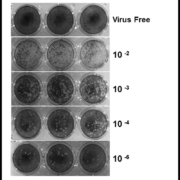
The incubation period of ZIKV disease is not clear but is likely to be a few days, similar to other arboviruses. Symptoms can begin 2 to 7 days after a mosquito bite and last for 3 to 7 additional days. In both early symptomatic or asymptomatic cases, the virus can be detected by reverse transcription (RT)-PCR after purification of plasma or serum RNA. The acute sera can be inoculated in Vero cells or C6/36 mosquito cells to attempt virus isolation, but although this technique is powerful, it is expensive and lacks clinical value. We successfully isolated ZIKV and produced enough inoculum for cell biology and immunologic studies (Fig. 1). As a result of their sensitivity and specificity, ZIKV RNA detection by different nucleic acid tests is used on a routine basis to confirm acute ZIKV cases.
RT-PCR
The real-time RT-PCR protocol designed by the Centers for Disease Control (CDC, USA) during the 2007 Yap Island outbreak is the most used and evaluated, even after the confirmation that a very low viral load occurs during the acute phase and that viremia lasts only a few days in both symptomatic and asymptomatic individuals. This CDC protocol does not amplify RNA from other flaviviruses and alphaviruses [3].
The test was designed as a one-step RT-PCR with fluorogenic probes using serum as the sample and is also used on urine samples, where the virus can be detected until 15 days after symptoms start and when the serum sample has become negative. A comparison between different sample types demonstrated that saliva may be better than serum for confirming ZIKV infection [4]. A very sensitive and specific synthetic biology tool based on isothermal amplification and toehold switch RNA sensors has been reported and is currently under evaluation in field conditions in Colombia, Brazil and Equator [5].
Many other real-time PCR tests have recently been developed, but there are no reports regarding their clinical evaluation. One test with excellent analytical performance is becoming available (Altona Diagnostics), but it has not yet reported clinical assays in ZIKV circulating zones.
Frequently, conventional PCR has been used to follow epidemics and ZIKV circulation in mosquitoes [6], and this reported test was used to confirm the first cases in Brazil. Recently, we used modified primers to perform a double-round one-step RT-PCR to detect DENV, ZIKV and CHIKV in the serum of febrile patients, obtaining samples simultaneously positive for two or even three viruses [7]. This test also detects ZIKV RNA in paired samples of serum, breast milk and urine (Fig. 2).
Serology
The main challenge to serological ZIKV diagnosis is related to its structural proximity to other flaviviruses (DENV, YFV, and WNV) because antibodies against one of them can recognize the other viruses on ELISA platforms, frequently resulting in a false positive diagnostic. For this reason, RNA detection is preferred to confirm the infection during the first week after symptoms appear. However, serological tests are recommended to facilitate the diagnosis of pregnant women living in endemic zones or women or couples wanting pre-conception counselling because ZIKV IgM positivity confirms previous exposure to the virus; in those who are negative, it is recommended to perform periodic tests to prove the absence of virus contact.
Since the first serological diagnostics were performed in Africa, there have been difficulties confirming the infection by antibodies due to cross-reactivity in neutralization tests, hemagglutination inhibition and mouse neutralization used in the 1950s [8]. During the Yap Islands’ 2007 ZIKV outbreak, in addition to molecular confirmation, 14 ZIKV cases were investigated by serology, and it was confirmed that 8/14 individuals who had a previous flavivirus infection (secondary flavivirosis) were positive by DENV IgM ELISA. In addition, ZIKV-confirmed sera had high titres in the plaque reduction neutralization test (PRNT), mainly to DENV (12/14), YFV (3/14) and WNV (6/14) [3].
Currently, the CDC uses IgM antibody capture (MAC)-ELISA in its diagnostic algorithm, in which the ZIKV antigen is obtained from infected mice brains or recombinant proteins (Fig. 3a). This test is being used to confirm recent infections and to counsel women in endemic zones. This ELISA has not yet been tested in endemic zones where other flaviviruses circulate. Recently, an assay based on non-structural protein NS1 from ZIKV adsorbed to ELISA plates has been reported (Euroimmun AG), showing excellent performance to detect both IgM and IgG using samples from endemic zones and samples with confirmed contact with other flaviviruses (Fig. 3b) [9].
Pregnant women: the priority
Considering that ZIKV infection during the first two trimesters of pregnancy can be associated with neurological defects in the fetus, it is important to evaluate the infection risk in three different groups of women: (i) women of childbearing age living in areas with virus circulation; (ii) women travelling frequently to endemic zones; and (iii) women having sexual intercourse with individuals travelling frequently to ZIKV endemic zones (Table 1). Notably, only 25% of infected individuals present signs or symptoms of the disease, but those who are asymptomatic can transmit the virus to mosquitoes and through sexual contact, can develop GBS or can transmit the virus to the fetus during pregnancy. Normally, health authorities do not recommend confirming all cases by PCR or serology, but only those needed to facilitate the surveillance of ZIKV infections or sequelae (Table 1).
CDC testing algorithm
In zones with ZIKV circulation, pregnant women should be assessed for ZIKV exposure (with or without signs or symptoms). If there are fewer than 2 weeks of putative exposition, the recommended test is RT-PCR in both serum and urine samples. If these results are negative, an IgM ZIKV-ELISA should be performed 2–12 weeks later. If the pregnant woman visits the healthcare system 2–12 weeks after having symptoms or the putative exposure, the recommended test is ZIKV IgM ELISA with simultaneous testing of IgM to DENV. If both are positive, it means a recent flavivirus infection. In this case, it is necessary to evaluate antibody titres to each virus using a plaque reduction neutralization assay (PRNT). If the neutralization titres to ZIKV are >10, the diagnosis is a recent ZIKV infection [10].
In both confirmed and presumptive ZIKV infection during pregnancy, serial ultrasounds should be performed every 3–4 weeks to assess fetal anatomy and growth. Amniocentesis to evaluate fetal infection is not recommended. After birth, neonatal serum and urine should be tested by RT-PCR and IgM. If CSF is obtained for other reasons, it can also be tested. The placenta and umbilical cord, as well as tissues from fetal losses, can be processed for PCR and immunohistochemistry.
Conclusion
Emergent ZIKV is here to stay. Virus transmission can occur during the entire year because of the tropical weather and generalized A. aegypti infestation in developing countries. Because of the concurrent arbovirus epidemics and the overlapping endemic regions, the differential diagnosis must always include ZIKV, DENV and CHIKV. The development of new technical approaches to diagnose ZIKV infections and the clinical trials to evaluate them is an imperative need, mainly because of the deep impact on childbearing women in endemic zones.
References
1. Abushouka AI, Negidac A, Ahmed H. An updated review of Zika virus. J Clin Virol 2016; 84: 53–58.
2. Dos Santos T, Rodriguez A, Almiron M, Sanhueza A, Ramon P, et al. Zika virus and the Guillain–Barré syndrome – case series from seven countries. N Engl J Med 2016; 375(16): 1598–1601.
3. Lanciotti RS, Kosoy OL, Laven JJ, Velez JO, Lambert AJ, et al. Genetic and serologic properties of Zika virus associated with an epidemic, Yap State, Micronesia, 2007. Emerg Infect Dis 2008; 14(8): 1232–1239.
4. Musso D, Roche C, Nhan TX, Robin E, Teissier A, Cao-Lormeau VM.Detection of Zika virus in saliva. J Clin Virol 2015; 68: 53–55.
5. Pardee K, Green AA, Takahashi MK, Braff D, Lamber G, et al. Rapid, Low-Cost Detection of Zika Virus Using Programmable Biomolecular Components. Cell 2016; 165: 1255–1266.
6. Faye O, Faye O, Dupressoir A, Weidmann M, Ndiaye M, Alpha Sall A. One-step RT-PCR for detection of Zika virus. J Clin Virol 2008; 43(1): 96–101.
7. Calvo EP, Sánchez-Quete F, Durán S, Sandoval I, Castellanos JE. Easy and inexpensive molecular detection of dengue, chikungunya and zika viruses in febrile patients. Acta Tropica 2016; 163: 32–37.
8. Musso D, Lanteri MC. Thoughts around the Zika virus crisis. Curr Infect Dis Rep 2016; 18(12): 46.
9. Steinhagen K, Probst C, Radzimski C, Schmidt-Chanasit J, Emmerich P, et al. Serodiagnosis of Zika virus (ZIKV) infections by a novel NS1-based ELISA devoid of cross-reactivity with dengue virus antibodies: a multicohort study of assay performance, 2015 to 2016. Euro Surveill 2016; 21(50): pii: 30426.
10. Centers for Disease Control and Prevention. Interim pregnancy guidance: testing and interpretation recommendations for a pregnant woman with possible exposure to Zika virus — United States (including U.S. territories). [https://www.cdc.gov/zika/pdfs/testing_algorithm.pdf]
The authors
Jaime E. Castellanos PhD, Shirly Parra-Álvarez and Eliana P. Calvo* PhD
Grupo de Virología, Universidad El Bosque, Bogotá, Colombia
*Corresponding author
E-mail: calvoeliana@unbosque.edu.co
May 2026

Prins Hendrikstraat 1
5611HH Eindhoven
The Netherlands
info@clinlabint.com
PanGlobal Media is not responsible for any error or omission that might occur in the electronic display of product or company data.