




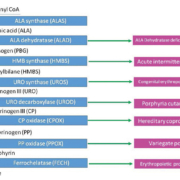
Porphyrias are a group of disorders of the heme biosynthetic pathway which clinically manifest with acute neurovisceral attacks and cutaneous lesions. Diagnosis of porphyrias is based on the accurate and precise measurement of various porphyrins and precursor molecules in a range of samples. In addition, molecular diagnostic assays can provide definitive diagnosis.
by Dr Vivion E. F. Crowley, Nadia Brazil, and Sarah Savage
What are porphyrias?
Porphyrias are a group of rare disorders each of which results from a deficiency of an individual enzyme within the heme biosynthetic pathway (Fig. 1) [1–3]. With the exception of an acquired form of porphyria cutanea tarda (PCT), all porphyrias are inherited as monogenic autosomal dominant, autosomal recessive or X-linked genetic disorders, with varying degrees of penetrance and expressivity and this impacts on the prevalence and incidence of clinically manifest porphyrias [4]. The biochemical consequence of each porphyria is the overproduction within the heme biosynthetic pathway of specific porphyrin intermediates and/or the porphyrin precursor molecules delta-aminolevulinic acid (ALA) and porphobilinogen (PBG) [2–3]. This in turn has implications for the clinical manifestation of these disorders, their overall classification and their diagnosis (see Table 2).
Clinical presentation
Porphyrias may present clinically with either or both of two symptom patterns. The first is the acute neurovisceral attack, which is a potentially life threatening episode related to excessive hepatic generation of ALA and PBG, and which is a feature only in acute intermittent porphyria (AIP), variegate porphyria (VP), hereditary coproporphyria (HCP) and the very rare ALA dehydratase deficiency porphyria (ADP) [5–7]. These attacks are characterized principally by autonomic dysfunction, including non-specific but severe abdominal pain, constipation, diarrhoea, nausea, vomiting, tachycardia, hypertension or occasionally postural hypotension. In addition, other features may include a predominantly motor peripheral neuropathy which, if left undiagnosed, may extend to respiratory failure reminiscent of Guillain–Barré syndrome, as well as cerebral dysfunction, which can vary from subtle alterations in mental state, to posterior reversible encephalopathy syndrome (PRES). Hyponatremia, most likely due to SIADH [syndrome of inappropriate antidiuretic hormone (ADH) secretion] may also contribute to CNS-related morbidity. The complex neuropathic manifestations appear to be primarily related to axonal degeneration due to direct neurotoxicity by ALA, which structurally resembles the neurotransmitter gamma-aminobutyric acid (GABA) [3, 5–7].
The second clinical presentation paradigm is cutaneous photosensitivity caused by the interaction of ultraviolet light with photoactive porphyrins in the skin resulting in the production of reactive oxygen species (ROS) and an associated inflammatory response [3]. In PCT, VP and HCP the skin lesions typically occur post-pubertally and consist of skin fragility, vesicles, bullae, hyperpigmentation and hypertrichosis affecting sun exposed areas, most usually the face and dorsum of hands [1–3]. In erythropoietic protoporphyria (EPP) and X-linked protoporphyria (XLP), which may present in childhood, there is usually no blistering but instead erythema, edema and purpura feature in the more acute setting, with subsequent chronic skin thickening noted, whereas congenital erythropoietic porphyria (CEP) is characterized by severe cutaneous photosensitivity often occurring in early infancy with bullae and vesicles rupturing and being prone to secondary infection, with resultant scaring, bone resorption, deformation and mutilation of sun-exposed skin [1, 2, 8].
Classification
The classification of porphyrias (Table 1) has traditionally been determined either on the basis of clinical manifestations, i.e. acute or non-acute (cutaneous), or on the primary organ of porphyrin overproduction, i.e. hepatic or erythropoietic [1, 3, 8]. A combined classification has recently been proposed which takes account of both of these elements [2]. However, whichever classification is adopted there should be a realization that VP, and to a lesser extent HCP, can manifest with both acute and cutaneous features either simultaneously or separately.
Clinical and biochemical diagnosis
The clinical manifestations of porphyrias, particularly the acute hepatic porphyrias, are protean and consequently, patients with a clinically active porphyria could initially present to a relatively wide spectrum of clinical specialties including, gastroenterology, acute medicine, dermatology, neurology, endocrinology and hematology amongst others [2]. In general, cutaneous porphyrias should not pose a diagnostic difficulty for an experienced dermatologist used to investigating photosensitive skin disorders, but biochemical testing is still required to define the type of porphyria present. However, definitive diagnosis of an initial acute hepatic porphyria attack is critically dependent on biochemical testing, as symptoms are often non-specific in nature (Tables 1 & 2).
The diagnosis of an acute hepatic porphyria attack is founded on demonstrating an increase in urine PBG levels in direct temporal association with the characteristic acute symptom complex, the minimum level of increase being between 2- and 5-fold [9, 10]. The urine PBG may be measured either as a random sample, where it should be reported as urine PBG to creatinine ratio or as a 24-hour urine collection, where total PBG is reported. The former has proven to be clinically efficacious and has the advantage of timeliness, reduced within-subject variation and convenience over the requirement for a 24 hour urine collection [9]. If the urine PBG is not elevated this effectively rules out an acute porphyria attack at the time of sampling, however, there are certain caveats to this. Thus it is important to note that if specific treatment with either heme preparations or carbohydrate loading has been instigated prior to the test these interventions could reduce the urine PBG level significantly, including normalization [3]. Furthermore, if the measurement of urine PBG is delayed or undertaken at a time removed from the actual acute clinical presentation e.g. by weeks or months, then the finding of a normal urine PBG at that later stage cannot effectively rule out acute porphyria [3]. In this authors experience another important caveat concerns patients with a previous confirmed diagnosis acute porphyria who present with symptoms suggestive of recurrent acute attack. In many instances these patients have a perpetually elevated urine PBG, even in between attacks, and therefore an elevated urine PBG cannot effectively guide diagnosis. In these situations a decision to treat as an acute attack has to be made on the basis of clinical findings.
Therefore, a clinically effective service for acute porphyria diagnosis requires that a timely, quality assured laboratory method for urine PBG should be available for analysis [11]. Although a qualitative method for urine PBG may suffice for the purposes of establishing a diagnosis this should be supported by the availability of a confirmatory quantitative method for urine PBG. The lack of availability of urine PBG assay is very often the basis for misdiagnosis or indeed delayed diagnosis of acute porphyria attacks [10].
In conjunction with PBG, urine ALA is often measured simultaneously and although also elevated it does not tend to reach the levels of PBG in acute porphyrias. The one exception is the extremely rare instance of autosomal recessive ADP due to defective ALA synthase 2 (ALAS2) activity, where markedly elevated urine ALA levels are reported while PBG may be normal or only slightly elevated [2, 3]. In addition, a similar pattern of urine ALA predominance relative to PBG (although not as elevated) may be observed in the context of lead poisoning, wherein patients may also present with abdominal pain and neuropathy [1, 3].
Once the diagnosis of acute porphyria has been made based on the urine PBG the next phase involves determining the type of porphyria present. This is very much dependent on the specific pattern of porphyrin overproduction observed in samples of urine, feces, plasma and erythrocytes. It is critically important that the laboratory analytical methods available extend beyond the sole measurement of total porphyrin levels [10–12]. In particular, it is essential that individual porphyrin analysis and isomer fractionation in both urine and feces is available to facilitate the identification of the porphyria-specific patterns of porphyrin overproduction [10–12]. In many instances non-porphyria disorders affecting the gastrointestinal and hepatobiliary systems or certain dietary factors may cause non-specific secondary elevations in porphyrins, e.g. coproporphyrinuria, which can be diagnostically misleading [3]. In such cases urine PBG levels will not be elevated and the pattern of porphyrins observed will not be indicative of any one of the specific porphyrias per se. Therefore, it is important to realize that a finding of elevated porphyrin levels does not automatically equate to a diagnosis of underlying porphyria. This further highlights the importance of developing specialist porphyria centres to ensure that the appropriate repertoire of quality assured testing and expert interpretation and support are available for diagnosis and management of porphyria patients [11, 13].
The diagnosis of cutaneous (non-acute) porphyrias is also very much based on the specific patterns of porphyrins observed in urine and feces. In addition, the pattern of free and zinc protoporphyrin in erythrocytes can be useful in the diagnosis of CEP, EPP and the related disorder, XLP. Moreover, the identification of the porphyria subtype, either acute or cutaneous, may also be enhanced by identifying characteristic plasma porphyrin fluorescence emission peaks, e.g. VP emission peak between 625 and 628 nm [1–3]. Finally, it is essential that all samples for porphyrin and precursor measurement are protected from light prior to analysis.
Role of genetic diagnosis
Given the heritable nature of porphyrias it is not surprising that molecular genetic analysis has also become an important diagnostic adjunct. There is an extensive allelic heterogeneity of pathogenic mutations among the implicated genes for each porphyria disorder, which means that most mutations are uniquely confined to one or at most a few kindreds. There are, however, a few exceptions to this trend, most notably in relation to founder mutations among the Swedish population and the Afrikaner population in South Africa. The general approach in the application of genetic diagnostic strategies is firstly to characterize the causative mutation in a known affected individual (proband) using a mutation scanning approach [14]. Once a putative mutation has been identified its pathogenicity for a particular porphyria should be affirmed and then more extensive family cascade genetic screening can be organized based on the analysis of this kindred-specific mutation [14].
This approach has important implications in the diagnosis of porphyria susceptibility, particularly for the autosomal dominant acute hepatic porphyrias, where both penetrance and expressivity of the disorders is low [3, 4]. Thus the penetrance among AIP, VP and HCP is between 10 and 40%, implying that the majority of patients with an autosomal dominant acute hepatic porphyria will not manifest with an acute attack (or indeed cutaneous lesions in the case of VP and HCP) in their lifetime [3, 4]. Moreover, this lack of penetrance may also extend to the absence of subclinical biochemical abnormalities indicative of an underlying autosomal dominant acute porphyria, demonstrating the limited sensitivity of biochemical testing in identifying asymptomatic family members.
Currently there is no clear-cut mechanism for discriminating between those who will manifest a clinical and/or biochemical phenotype and those who will not. While the role of environmental precipitating factors, e.g. porphyrinogenic medications, stress, prolonged fasting, menstruation [1–3], have long been recognized in triggering acute porphyria attacks, it is the presence of a pathogenic mutation which is still the single most important factor determining the overall susceptibility for an acute porphyria episode. Therefore, all patients carrying a pathogenic mutation should be regarded as pre-symptomatic carriers, i.e. capable of developing an acute attack, and one of the key applications of genetic analysis in the area is in identifying pre-symptomatic carriers to allow for appropriate counselling and management advice to prevent attacks [3, 14].
In this author’s experience another useful role for molecular diagnostics in porphyrias is in relation to those patients with an historic diagnosis of acute hepatic porphyria in whom the biochemical abnormalities have subsequently normalized over years. In such instances genetic analysis can provide a definitive diagnosis for the type of porphyria and will accommodate a more extensive family screening programme for potential pre-symptomatic carriers.
The current methods of genetic analysis vary but usually involve a confirmatory step using direct nucleotide sequencing of the putative pathogenic variants as the gold standard. However, the emergence of next generation sequencing platforms has further galvanized the diagnostic possibilities in this area. Overall, in autosomal dominant acute hepatic porphyrias, approximately 95% of mutations are identifiable [3, 14]. This sensitivity includes the application of additional methods such as ‘multiplex ligation-dependent probe amplification’ (MLPA) and gene dosage analysis for identifying complex mutations, such large gene deletions, which may not be detected using standard sequencing-based approaches [14].
In autosomal recessive porphyrias including ADP, CEP and EPP, the clinical penetrance approaches 100%. These disorders also display a level of genetic heterogeneity. In the case of EPP the presence of a relatively common low expression single nucleotide polymorphism (SNP) located in the ferrochetalase gene, FECH (IVS3-48C), appears to be essential for the clinical expression of the cutaneous phenotype in the vast majority of cases [15].
The application of molecular genetics has provided a means of establishing definitive porphyria susceptibility, however, similar to the situation for biochemical testing services any genetic diagnostic services in this area must be quality assured to a high standard and need to adopt appropriate mutation scanning assay validation protocols in accordance with international standards and best practice recommendations [11–14].
References
1. Puy H, Gouya L, Deybach JC. Porphyrias. Lancet 2010; 375(9718): 924–937.
2. Balwani M, Desnick RJ. The Porphyrias: advances in diagnosis and treatment. Blood 2012; 120: 4496–4504.
3. Badminton MN, Elder GH. The porphyrias: inherited disorders of haem synthesis. In: Marshall W, Lapsley M, Day A, Ayling R, editors. Clinical Biochemistry Metabolic and Clinical Aspects. Churchill Livingstone Elsevier 2014; pp. 533–549.
4. Elder G, Harper P, Badminton M, Sandberg S, Deybach JC. The incidence of inherited porphyrias in Europe. J Inherit Metab Dis. 2013; 36: 849–857.
5. Simon NG, Herkes GK. The neurologic manifestations of the acute porphyrias. J Clin NeuroSci. 2011; 18: 1147–1153.
6. Sonderup MW, Hift RJ. The neurological manifestations of the acute porphyrias. S Afr Med J. 2014; 104: 285–286.
7. Crimlisk HL. The little imitator-porphyria: a neuropsychiatric disorder. J Neurol Neurosurg Psychiatry. 1997; 62: 319–328.
8. Siegesmund M, van Tuyll van Serooskerker AM, Poblete-Gutierrez P, Frank J. The acute hepatic porphyrias: Current status and future challenges. Best Pract Res Gastroenterol. 2010; 24: 593–605.
9. Aarsand AK, Petersen PH, Sandberg S. Estimation and application of biological variation of urinary delta-aminolevulinic acid and porphobilinogen in healthy individuals and in patients with acute intermittent porphyria. Clin Chem. 2006; 52: 650–656.
10. Kauppinen R, von und zu Fraunberg M. Molecular and biochemical studies of acute intermittent porphyria in 196 patients and their families. Clin Chem. 2002; 48: 1891–1900.
11. Aarsand AK, Villanger JH, Støle E, Deybach JC, Marsden J, To-Figueras J, Badminton M, Elder GH, Sandberg S. European specialist porphyria laboratories: diagnostic strategies, analytical quality, clinical interpretation and reporting as assessed by an external quality assurance programme. Clin Chem. 2011; 57: 1514–1523.
12. Whatley S, Mason N, Woolf J, Newcombe R, Elder G, Badminton M. Diagnostic strategies for autosomal dominant acute porphyrias: Retrospective analysis of 467 unrelated patients referred for mutational analysis of HMBS, CPOX or PPOX gene. Clin Chem. 2009; 55: 1406–1414.
13. Tollånes MC, Aarsand AK, Villanger JH, Støle E, Deybach JC, Marsden J, To-Figueras J, Sandberg S; European Porphyria Network (EPNET). Establishing a network of specialist porphyria centres – effects on diagnostic activities and services. Orphanet J Rare Dis. 2012; 7: 93.
14. Whatley SD, Badminton MN. The role of genetic testing in the management of patients with inherited porphyria and their families. Ann Clin Biochem. 2013; 50: 204–216.
15. Gouya L, Puy H, Robreau AM, Bourgeois M, Lamoril J, Da Silva V, Grandchamp B, Deybach JC. The penetrance of dominant erythropoietic protoporphyria is modulated by expression of wildtype FECH. Nat Genet. 2002; 30: 27–28.
The authors
Vivion E. F. Crowley*1 MB MSc FRCPath FFPath(RCPI) FRCPI, Nadia Brazil2 BA (Mod) FAMLS, Sarah Savage3 BSc MSc
1Consultant Chemical Pathologist, Head of Department, Biochemistry Department, St James’s Hospital, Dublin 8, Ireland
2Porphyrin Laboratory, Biochemistry Department, St James’s Hospital, Dublin 8, Ireland
3Molecular Diagnostic Laboratory, Biochemistry Department, St James’s Hospital, Dublin 8, Ireland
*Corresponding author
E-mail: vcrowley@stjames.ie

There are many peer-reviewed papers covering the diagnosis of autoimmune diseases, and it is frequently difficult for healthcare professionals to keep up with the literature. As a special service to our readers, CLI presents a few key abstracts from the clinical and scientific literature selected by our editorial board as being particularly worthy of attention.
Blood biomarkers as outcome measures in inflammatory neurologic diseases
El Ayoubi NK, Khoury SJ. Neurotherapeutics. 2016 Oct 18. [Epub ahead of print]
Multiple sclerosis (MS) is an autoimmune demyelinating disorder of the central nervous system. Only a few biomarkers are available in MS clinical practice, such as cerebrospinal fluid oligoclonal bands and immunoglobulin index, serum anti-aquaporin 4 antibodies, and serum anti-John Cunningham virus antibodies. Thus, there is a significant unmet need for biomarkers to assess prognosis, response to therapy, or potential treatment complications. Here we describe emerging biomarkers that are in development, focusing on those from peripheral blood. There are several limitations in the process of discovery and validation of a good biomarker, such as the pathophysiological complexity of MS and the technical difficulties in globally standardizing methods for sampling, processing, and conserving biological specimens. In spite of these limitations, ongoing international collaborations allow the exploration of many interesting molecules and markers to validate diagnostic, prognostic, and therapeutic-response biomarkers.
Gene polymorphisms as predictors of response to biological therapies in psoriasis patients
Linares-Pineda TM, Cañadas-Garre M, Sánchez-Pozo A, Calleja-Hernández MÁ. Pharmacol Res. 2016; 113(Pt A): 71–80.
Psoriasis is a chronic inflammatory autoimmune skin disease, characterized by the formation of erythematous scaly plaques on the skin and joints. The therapies for psoriasis are mainly symptomatic and sometimes with poor response. Response among patients is very variable, especially with biological drugs (adalimumab, etarnecept, infliximab and ustekimumab). This variability may be partly explained by the effect of different genetic backgrounds. This has prompted the investigation of many genes, such as FCGR3A, HLA, IL17F, IL23R, PDE3A-SLCO1C1, TNFα and other associated genes, as potential candidates to predict response to the different biological drugs used for the treatment of psoriasis. In this article, we will review the influence of gene polymorphisms investigated to date on response to biological drugs in psoriasis patients.
Biomarker discovery by modeling Behçet’s disease with patient-specific human induced pluripotent stem cells
Son MY, Kim YD, Seol B, Lee MO, Na HJ, Yoo B, Chang JS, Cho YS. Stem Cells Dev. 2016 Oct 12. [Epub ahead of print]
Behçet’s disease (BD) is a chronic inflammatory and multisystemic autoimmune disease of unknown etiology. Due to the lack of a specific test for BD, its diagnosis is very difficult, and therapeutic options are limited. Induced pluripotent stem cell (iPSC) technology, which provides inaccessible disease-relevant cell types, opens a new era for disease treatment. Here, we generated BD iPSCs from patient somatic cells and differentiated them into hematopoietic precursor cells (BD iPSC-HPCs) as BD model cells. Based on comparative transcriptome analysis using our BD model cells, we identified 8 novel BD specific genes, AGTR2, CA9, CD44, CXCL1, HTN3, IL-2, PTGER4 and TSLP, that were differentially expressed in BD patients, compared to healthy controls or patients with other immune diseases. The use of CXCL1 as a BD biomarker was further validated at the protein level using both a BD iPSC-HPC-based assay system and BD patient serum samples. Furthermore, we show that our BD iPSC-HPC-based drug screening system is highly effective for testing CXCL1 BD biomarkers, as determined by monitoring the efficacy of existing anti-inflammatory drugs. Our results shed new light on the usefulness of patient-specific iPSC technology in the development of a benchmarking platform for disease-specific biomarkers, phenotype- or target-driven drug discovery, and patient-tailored therapies.
Overview of laboratory testing and clinical presentations of complement deficiencies and dysregulation
Frazer-Abel A, Sepiashvili L, Mbughuni MM, Willrich MA. Adv Clin Chem. 2016; 77: 1–75.
Historically, complement disorders have been attributed to immunodeficiency associated with severe or frequent infection. More recently, however, complement has been recognized for its role in inflammation, autoimmune disorders, and vision loss. This paradigm shift requires a fundamental change in how complement testing is performed and interpreted. Here, we provide an overview of the complement pathways and summarize recent literature related to hereditary and acquired angioedema, infectious diseases, autoimmunity, and age-related macular degeneration. The impact of complement dysregulation in atypical hemolytic uremic syndrome, paroxysmal nocturnal hemoglobinuria, and C3 glomerulopathies is also described. The advent of therapeutics such as eculizumab and other complement inhibitors has driven the need to more fully understand complement to facilitate diagnosis and monitoring. In this report, we review analytical methods and discuss challenges for the clinical laboratory in measuring this complex biochemical system.



Highly sensitive stool DNA testing of Fusobacterium nucleatum as a marker for detection of colorectal tumours in a Japanese population
BACKGROUND: Accumulating evidence shows an over-abundance of Fusobacterium nucleatum in colorectal tumour tissues. Although stool DNA testing of Fusobacterium nucleatum might be a potential marker for the detection of colorectal tumours, the difficulty in detecting Fusobacterium nucleatum in stool by conventional methods prevented further explorations. Therefore, we developed a droplet digital polymerase chain reaction (PCR) assay for detecting Fusobacterium nucleatum in stool and investigated its clinical utility in the management of colorectal tumours in a Japanese population.
METHODS: Feces were collected from 60 healthy subjects (control group) and from 11 patients with colorectal non-advanced adenomas (non-advanced adenoma group), 19 patients with colorectal advanced adenoma/carcinoma in situ (advanced adenoma/carcinoma in situ (CIS) group) and 158 patients with colorectal cancer of stages I to IV (colorectal cancer group). Absolute copy numbers of Fusobacterium nucleatum were measured by droplet digital PCR.
RESULTS: The median copy number of Fusobacterium nucleatum was 17.5 in the control group, 311 in the non-advanced adenoma group, 122 in the advanced adenoma/CIS group, and 317 in the colorectal cancer group. In comparison with that in the control group, the Fusobacterium nucleatum level was significantly higher in the non-advanced adenoma group, the advanced adenoma/CIS group and the colorectal cancer group.
CONCLUSIONS: This study illustrates the potential of stool DNA testing of Fusobacterium nucleatum by droplet digital PCR to detect individuals with colorectal tumours in a Japanese population.
A genome-wide assessment of variations of primary colorectal cancer maintained in metastases
Colorectal cancer (CRC) is a highly heterogeneous disease that is the third leading cause of cancer-related deaths worldwide. This study presents a genome-wide assessment of variations in primary colorectal cancer maintained in metastases, even in distant metastases. The purpose of this study was to determine whether intratumor heterogeneity is related to disease progression and metastasis in CRC. The results showed that 882 single nucleotide polymorphism (SNP) associated genes and 473 copy number variant (CNV) associated genes specific to metastasis were found. In addition, 57 SNPs mapped to miRNAs showed significant differences between primary tumours and metastases. Functional annotation of metastasis-specific genes suggested that adhesion and immune regulation may be essential in the development of tumours. Moreover, the locus rs12881063 in the fourteenth chromosome was found to have a high rate of the G/C type in metastases. The rate of the G/C type in nearby lymph node metastases was 66.7%, while the rate of the G/C type in distance lymph node metastases was 83.3%. These results indicate that rs12881063 may be the basis for clinical diagnosis of CRC metastasis.
High tumour mast cell density is associated with longer survival of colon cancer patients
BACKGROUND: Inflammatory cells and inflammatory mediators play an important role in colorectal cancer (CRC). Previous studies have shown that CRC patients with increased expression of cysteinyl leukotriene receptor 1 (CysLTR1) have a poorer prognosis, and Cysltr1-/- mice display fewer intestinal polyps. However, the role of mast cells (MCs) in colon cancer progression remains unclear. The aim of the present study was to explore the relevance of MCs in CRC.
MATERIAL AND METHODS: A tissue microarray from 72 CRC patients was stained with MC anti-tryptase and -chymase antibodies. Mouse colon tissue was stained with MC anti-tryptase antibody. Immunohistochemistry was used to identify MCs in patients and mice.
RESULTS: Patient colon cancer tissue had in comparison with normal colon tissue a reduced number of MCs, predominantly of chymase-positive cells. Further analysis revealed that patients with a relative high MCD in their cancer tissues showed significantly longer overall survival compared to those with a low MCD [hazard ratio (HR) 0.539; 95% confidence interval (CI), 0.302–0.961]. Similar results were observed in subgroups of patients with either no distant metastasis (p = 0.004), or <75 years (p = 0.015) at time of diagnosis. Multivariate Cox analysis showed that MCD independently correlated with reduced risk of death in colon cancer patients (HR 0.380; 95% CI 0.202-0.713). Additionally, a negative correlation was found between cytoplasmic CysLTR1 expression and number of MCs. In agreement, in the CAC mouse model, Cysltr1-/- mice showed significantly higher MCs in their polyp/tumor areas compared with wild-type mice.
CONCLUSION: A high MCD in cancer tissue correlated with longer patient survival independently from other risk factors for CRC. The concept that MCs have an anti-tumor effect in CRC is further supported by the findings of a negative correlation with CysLTR1 expression in patients and a high MCD in colon polyps/tumors from CysLTR1-/- mice.
Are hemorrhoids associated with false-positive fecal immunochemical test results?
PURPOSE: False-positive (FP) results of fecal immunochemical tests (FITs) conducted in colorectal cancer (CRC) screening could lead to performing unnecessary colonoscopies. Hemorrhoids are a possible cause of FP FIT results; however, studies on this topic are extremely rare. We investigated whether hemorrhoids are associated with FP FIT results.
MATERIALS AND METHODS: A retrospective study was conducted at a university hospital in Korea from June 2013 to May 2015. Of the 34,547 individuals who underwent FITs, 3946 aged ≥50 years who underwent colonoscopies were analysed. Logistic regression analysis was performed to determine factors associated with FP FIT results.
RESULTS: Among 3946 participants, 704 (17.8%) showed positive FIT results and 1303 (33.0%) had hemorrhoids. Of the 704 participants with positive FIT results, 165 had advanced colorectal neoplasia (ACRN) and 539 had no ACRN (FP results). Of the 1303 participants with hemorrhoids, 291 showed FP results, of whom 81 showed FP results because of hemorrhoids only. Participants with hemorrhoids had a higher rate of FP results than those without hemorrhoids (291/1176, 24.7% vs. 248/2361, 10.5%; p<0.001). Additionally, the participants with hemorrhoids as the only abnormality had a higher rate of FP results than those experiencing no such abnormalities (81/531, 15.3% vs. 38/1173, 3.2%; p<0.001). In multivariate analysis, the presence of hemorrhoids was identified as an independent predictor of FP results (adjusted odds ratio, 2.76; 95% confidence interval, 2.24-3.40; p<0.001).
CONCLUSION: Hemorrhoids are significantly associated with FP FIT results. Their presence seemed to be a non-negligible contributor of FP results in FIT-based CRC screening programmes.
Methods and patient samples
The automated chemiluminescent microparticle immunoassay (ARCHITECT PIVKA-II 2P4 CMIA, Abbott) was validated and used for quantitation of PIVKA-II using the Abbott™ Architect iSystem 2000 analyser in the Human Nutristasis Unit at St Thomas’ Hospital, London, UK. Imprecision and recovery evaluations were performed in line with the appropriate standard operating procedures as part of the validation process. The CMIA is based on a two-step sandwich reaction of binding of anti-PIVKA-II antibodies and specific PIVKA-II epitopes with subsequent addition of chemiluminescent labels and registration of the relative light units as a quantitative representation of PIVKA-II concentration in the tested sample [1].
In order to exclude possible interference with anticoagulant therapeutic agents, high PIVKA-II results were tested for warfarin, as it is the most commonly used anticoagulant that interferes with the vitamin K cycle. Samples found to be positive for warfarin were disqualified from further analysis.
Eighty-seven samples from the Gassiott Gastroenterology Clinic (GGC, St. Thomas’ Hospital, London) and the Hepatocellular Carcinoma Clinic in the Institute of Liver Studies (King’s College Hospital, London) were analysed in three groups: high-risk patients with non-HCC pathology of the liver, high-risk patients currently undergoing HCC surveillance, and patients with diagnosed HCC (group A, B and C respectively). Group A (n=29) consisted of randomly selected patients at GGC with viral and non-viral cirrhosis, steatosis, fibrosis, hepatitis and benign lesions. Group B (n=24) represented high-risk patients with changes to the liver suggestive of possible HCC discovered in the course of US/MRI/CT investigations. Finally, group C (n=34) comprised of patients diagnosed with HCC at different stages; the diagnosis was established in the course of histological examination of liver biopsy samples.
All results for PIVKA-II concentrations in patient samples were statistically processed in IBM SPSS Statistics, Version 23. Tests of normality, association between different variables and receiver operating characteristic (ROC) curve were applied for the analysis.
Results and discussion
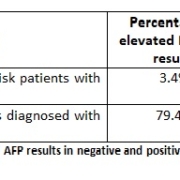
Using a cut-off of 49.4 mAU/mL, an elevated PIVKA-II concentration was found in just one patient from the negative control group, which represents 3.4% (Table 1). This patient was diagnosed with multiple cysts on the background of hepatitis; therefore, the result may be interpreted as both false positive (elevation of PIVKA-II due to non-malignant pathology) and true positive (in this case the patient would need to undergo more comprehensive screening).
In the positive group, PIVKA-II was elevated in 79.4% of the patients and demonstrated a broad scatter of values (19.06 mAU/mL for the lowest detected concentration and 340 485.5 mAU/mL for the highest detected concentration) owing to various sizes of the tumour masses at different stages of HCC and possibly existence of different PIVKA-II variants depending on the number of GLU residues involved in γ-carboxylation [19]. Normal PIVKA-II results in this group can be explained by the normalisation of PIVKA-II concentration after curative treatment, if performed [16].
Statistical processing of data showed no evidence of dependence of the results on age or gender (P>0.05 for all three groups). Area under the curve (AUC) in ROC analysis for PIVKA-II in the present research was 0.917 (CI 95% 0.847–0.986), which is suggestive of excellent clinical usefulness of PIVKA-II in HCC diagnosis (Fig. 2). AUC for alpha-fetoprotein (AFP) had slightly lower value (0.833 with CI 95% 0.722–0.945), which can still be classified as a fairly useful test (Fig. 3).
In this study the optimal cut-off value for PIVKA-II was identified by means of ROC and is 49.4 mAU/mL with sensitivity of 79.4% and specificity of 96.6%. Analysis of true and false-negative and -positive results revealed, that more than 83% of PIVKA-II results were truly reliable, whereas only 74.6% of AFP results demonstrated true diagnostic value (Table 2).
Unfortunately, sensitivity and specificity of AFP cannot accurately reflect its performance in the present study, as AFP results were available for only 17 patients from group A, which means that the study was possibly deprived of some potentially truly negative results. However, taking into account considerable difference between sensitivity and specificity rates for PIVKA-II and AFP (79.4 vs 96.6% and 70.6 vs 82.4% respectively), allows the conclusion that PIVKA-II displays slightly better clinical utility in HCC diagnosis. Similar results were reported in the previous studies [7, 20–24].
Limitations to the study
The major limitation to this research was the requirement to use anonymised samples, which prevented access to the full clinical history of the patients and impossibility to interpret the results in detail. Another limitation was the number of samples which could be considered to be insufficient to achieve aims of the project with adequate statistical power. A larger number of samples would have given the study more power and allowed a more precise ROC to be constructed and subsequently a more precise cut-off value to be identified.
Conclusion
In the present research PIVKA-II demonstrated high accuracy, sensitivity and specificity in HCC diagnosis. PIVKA-II has several advantages over AFP in terms of clinical utility for HCC diagnosis and prognosis: PIVKA-II is comparatively less frequently elevated in liver pathology [22], is more sensitive to small HCC tumours, correlates with HCC progression significantly better and has shorter half-life than AFP (40–72 hours against 5–7 days), which makes it more suitable for monitoring purposes [14]. Implementation of PIVKA-II as diagnostic test gathers pace in transplantation medicine, as this tumour marker, alongside Milan criteria has been used for recipient selection for living donor liver transplantation [16]. In addition, PIVKA-II concentrations can reflect the responsiveness of the liver to medical treatment (i.e. sorafenib), which cannot be achieved with AFP test. On the other hand, AFP is sensitive to radiological response following transarterial chemoembolisation, whereas PIVKA-II is not [12]. Also, PIVKA-II is affected by potentially interfering pharmacological agents (e.g. warfarin and certain antibiotics), it is dependent on vitamin K metabolism and can give false-positive results in non-HCC conditions which all has to be taken into account while interpreting the results.
Controversy over the best performance of tumour markers traces back to different assays used and various patient groups involved. Fortunately, AFP and PIVKA-II are independent of each other [16, 25]. Therefore, combination of PIVKA-II and AFP alongside AFP-L3, the fucosylated fraction of AFP, is suggested to be the best option for highly accurate laboratory diagnostic of HCC supplementary to imaging techniques. This multi-marker approach has been stated in the guidelines of The Japan Society of Hepatology and successfully used for diagnosis and management of HCC in Japan [26, 27].
Acknowledgement
ARCHITECT PIVKA-II 2P4 CMIA reagents and the graphics used in this article are courtesy of © Abbott Laboratories.
References
1. Kinukawa H, et al. characterization of an anti-PIVKA-II antibody and evaluation of a fully automated chemiluminescent immunoassay for PIVKA-II. Clin Biochem 2015; 48: 1120–1125.
2. Ha TY, et al. Expression pattern analysis of hepatocellular carcinoma tumour markers in viral hepatitis B and C patients undergoing liver transplantation and resection. Transplant Proc 2014; 46: 888–893.
3. Yano Y, et al. Clinical features of hepatitis C virus-related hepatocellular carcinoma and their association with α-fetoprotein and protein induced by vitamin K absence or antagonist-II. Liver Int 2006; 26: 789–795.
4. El-Serag HB, Rudolph KL. Hepatocellular carcinoma: epidemiology and molecular carcinogenesis. Gastroenterology 2007; 132: 2557–2576.
5. Aghemo A, Colombo M. Hepatocellular carcinoma in chronic hepatitis C: from bench to bedside. Semin Immunopathol 2012; 35: 111–120.
6. McMasters K, Vauthey J. Hepatocellular carcinoma: targeted therapy and multidisciplinary care. Springer 2011; Chapters 1–5, 8.
7. Ji J, et al. Diagnostic evaluation of des-gamma-carboxy prothrombin versus α-fetoprotein for hepatitis B virus-related hepatocellular carcinoma in China: a large-scale, multicentre study. PLoS One 2016; 11: e0153227.
8. Huang TS, et al. Diagnostic performance of alpha-fetoprotein, lens culinaris agglutinin-reactive alpha-fetoprotein, des-gamma carboxyprothrombin, and glypican-3 for the detection of hepatocellular carcinoma: a systematic review and meta-analysis protocol. Syst Rev 2013; 2: 37.
9. Song PP, et al. Controversies regarding and perspectives on clinical utility of biomarkers in hepatocellular carcinoma. World J Gastroenterol 2016; 22: 262–274.
10. Giorgio A, et al. Characterization of dysplastic nodules, early hepatocellular carcinoma and progressed hepatocellular carcinoma in cirrhosis with contrast-enhanced ultrasound. Anticancer Res 2011; 31: 3977–3982.
11. Chen H, et al. CT and MRI in target delineation in primary hepatocellular carcinoma. Cancer Radiother 2013; 17: 750–754.
12. Park H, Park JY. Clinical significance of AFP and PIVKA-II responses for monitoring treatment outcomes and predicting prognosis in patients with hepatocellular carcinoma. BioMed Research International 2013; 2013: 310427.
13. Yue P, et al. Des-γ-carboxyl prothrombin induces matrix metalloproteinase activity in hepatocellular carcinoma cells by involving the ERK1/2 MAPK signalling pathway. Eur J Cancer 2011; 47: 1115–1124.
14. Zhang YS, et al. Des-γ-carboxy prothrombin (DCP) as a potential autologous growth factor for the development of hepatocellular carcinoma. Cell Physiol Biochem 2014; 34: 903–915.
15. Suzuki K, et al. Positioning of novel tumor marker NX-PVKA-R in the diagnosis of hepatocellular carcinoma in comparison with PIVKA-II. Dokkyo Journal of Medical Sciences 2013; 40: 163–168
16. Inagaki Y, et al. Clinical and molecular insights into the hepatocellular carcinoma tumour marker des-γ-carboxyprothrombin. Liver Int 2010; 31: 22–35.
17. Jinghe X, et al. Vitamin K and hepatocellular carcinoma: the basic and clinic. World J Clin Cases 2015; 3: 757–764.
18. Fujikawa T, et al. Significance of des-gamma-carboxyprothrombin production in hepatocellular carcinom. Acta Med Okayama 2009; 63: 299–304.
19. Zakhary NI, et al. Impact of PIVKA-II in diagnosis of hepatocellular carcinoma. J Adv Res 2013; 4: 539–546.
20. Mathew S, et al. Biomarkers for virus-induced hepatocellular carcinoma (HCC). Infect Genet Evol 2014; 26: 327–339.
21. Lim TS, et al. Combined use of AFP, PIVKA-II, and AFP-L3 as tumor markers enhances diagnostic accuracy for hepatocellular carcinoma in cirrhotic patients. Scand J Gastroenterol 2015; 51: 344–353.
22. Seo SI, et al. Diagnostic value of PIVKA-II and alpha-fetoprotein in hepatitis B virus-associated hepatocellular carcinoma. World J Gastroenterol 2015; 21: 3928–3935.
23. De J, et al. A systematic review of des-γ-carboxy prothrombin for the diagnosis of primary hepatocellular carcinoma. Medicine 2016; 95: e3448.
24. Ette AI, et al. Utility of serum des-gamma-carboxyprothrombin in the diagnosis of hepatocellular carcinoma among Nigerians, a case–control study. BMC Gastroenterol 2015; 15: 113.
25. Choi JY, et al. Diagnostic value of AFP-L3 and PIVKA-II in hepatocellular carcinoma according to total-AFP. World J Gastroenterol 2013; 19: 339–346.
26. Kudo M. Clinical practice guidelines for hepatocellular carcinoma differ between Japan, United States, and Europe. Liver Cancer 2015; 4: 85–95.
27. Kokudo M, et al. Evidence-based clinical practice guidelines for hepatocellular carcinoma: The Japan Society of Hepatology 2013 update (3rd JSH-HCC Guidelines). Hepatol Res 2015; 45: 123–127.
The authors
Volha Klimovich*1 MSc; Kieran Voong2 MSc; Roy Sherwood3 MSc, DPhil; Dominic J Harrington2 MSc, PhD
1Clinical Biochemistry, Viapath, St Thomas’ Hospital, London, UK
2Human Nutristasis Unit, Viapath, St Thomas’ Hospital, London, UK
3Viapath, King’s College Hospital, London, UK
*Corresponding author
E-mail: klimovichvolha@gmail.com
Introduction
Human rhinoviruses (HRV) are small, positive-sense RNA viruses within the family Picornaviridae. Over 150 genotypes of this important human pathogen have been recognized within species HRVA, HRVB, and HRVC of the genus Enterovirus (http//:www.picornaviridae.com). HRV infections occur throughout the year and throughout the world. HRV are responsible for a high incidence and wide range of respiratory infections in all populations, including one-half to two-thirds of all common colds and many cases of otitis media and sinusitis in the upper respiratory tract. Lower tract infections include bronchiolitis, pneumonia and exacerbation of disease in children with asthma and cystic fibrosis, and in adults with chronic obstructive pulmonary disease. Cases of serious illness and even death due to HRV have been reported, especially in immunocompromised individuals, the elderly and infants [1, 2].
Laboratory detection of HRV is important for diagnosis and surveillance, especially in high risk populations. HRV are frequently detected as co-infections with other respiratory viruses and in individuals with long-term and asymptomatic shedding [3]. In addition to qualitative detection, accurate quantification of HRV RNA in clinical samples is needed for studies on the association of HRV viral load with viral transmission and with patient symptoms and outcomes. Viral-load studies of other respiratory viruses have shown that a correlation exists between quantity of virus and disease severity. HRV viral-load determinations may also be important for patient management, especially in asymptomatic patients who test positive for HRV at low levels. More importantly, accurate HRV viral-load assessments will be necessary for evaluating the performance of potential HRV antiviral drugs [4].
Detection
HRV were initially detected by growth in cell culture. Approximately 100 serotypes of HRV grown in cell culture were antigenically characterized by their reactions with various antisera. The serotypes were subsequently classified into two groups, A and B, according to their sensitivity towards antivirus agents [5] and are now included in HRV species A (80 genotypes) and B (32 genotypes) based on genetic sequencing. Cell culture is sensitive for detection of many, but not all HRV genotypes; 55 HRV that do not grow in the cell culture lines normally used in the clinical laboratory and have been detected only by molecular methods are classified in HRV species C (http//:www.picornaviridae.com).
The use of molecular methods for the detection of HRV in clinical specimens has provided more accurate information about the disease burden and epidemiology of these ubiquitous viruses. The molecular method most often used to detect HRV is real-time reverse-transcription (RT)-PCR [3]. RT-PCR assays, when accompanied by amplification of serially diluted standards of known RNA copy numbers (RT-qPCR), can be used to quantify the number of viral copies in a sample. By comparing the PCR Ct value (the PCR cycle at which fluorescence reaches a certain threshold) of a clinical specimen to the standard curve, the relative quantity of the analyte can be calculated [6].
Within the HRV genome, the region most frequently targeted for RT-PCR by clinical assays is the 5’ non-coding region (NCR), which exhibits the most sequence homology among the HRV genotypes. However, even in this region, there is a lot of sequence diversity, which makes it challenging to design a single, consensus PCR primer and probe set to amplify all HRV genotypes with equal efficiency. In order to amplify HRV genotypes with diverse sequences in the prime/probe binding regions, consensus PCR primer and probe sets have been designed with degenerate and modified bases or multiple oligonucleotides [7–10]. However, consensus RT-qPCR assays may not give accurate quantitative results for all HRV genotypes due to amplification inefficiency caused by base mismatches between the consensus primers and probe and the viral sequences [11].
Quantitation by RT-qPCR
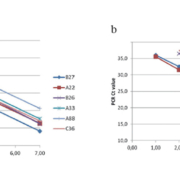
To determine if a consensus RT-qPCR assay [7] could be used to accurately quantify all genotypes of HRV, including those with sequence differences in the primer and probe binding regions, we compared the efficiency and sensitivity of a consensus RT-qPCR assay to that of genotype-specific RT-qPCR assays [4]. In Figure 1(a), the results of RT-qPCR assays using type-specific primers and probes, which exactly match the target sequences, show standard curves indicating accurate and sensitive quantification of RNA transcripts from six specific HRV genotypes. However, RT-qPCR using a consensus HRV primer and probe set did not give accurate or sensitive quantification for some HRV genotypes, especially types A33 and A88 (Fig. 1b). RNA from HRV genotypes with base mismatches between the consensus primer and probe sequences and the specific viral sequences was inaccurately quantified using the consensus assay, most likely due to poor amplification efficiency.
Quantitation by RT-dPCR
Digital RT-PCR (RT-dPCR), which provides absolute nucleic acid quantification without the need for PCR Ct values and standard curves and is less affected by poor amplification efficiency, may perform better than RT-qPCR for quantification of HRV RNA. In dPCR, an amplification reaction, which contains fluorescent dye to measure amplification, is divided into 12?000 to 200?000 independent partitions, each ideally containing no more than one target molecule. The reaction is amplified to end point and the number of fluorescent (positive) and non-fluorescent (negative) partitions is counted. In specimens with more targets than partitions, Poisson statistics are used to calculate the average number of targets per positive partition and thus, the number of targets in the original sample [12, 13]. Compared to qPCR, dPCR is less susceptible to amplification inefficiency caused by primer/probe sequence mismatches because quantification derives from a PCR reaction that cycles to endpoint rather than from an amplification curve as in qPCR. Accurate quantification by dPCR is also not dependent on a well-calibrated standard [14]. These characteristics make dPCR especially useful for quantifying viral targets with many subtypes and high sequence diversity that leads to mismatches between targets and PCR primer and probe sequences, such as HRV.
To determine if consensus RT-dPCR would perform better than consensus RT-qPCR for quantification of HRV genotypes, we similarly tested RNA transcripts of HRV genotypes, including some with sequence variation in the consensus primer and probe binding region, by RT-dPCR using both type-specific and consensus primers and probes. In Figure 2(a), the results of RT-dPCR assays using type-specific primers and probes show good correlations between the expected number of RNA copies/reaction and the observed number. When amplified by RT-dPCR using the consensus assay (Fig. 1b), in contrast to RT-qPCR, the observed number of RNA copies/reaction was also closely correlated with the expected number for most of the HRV genotypes tested.
In a previous study [4], data from 16 HRV genotypes that represented the consensus primer and probe binding sequences of 128 genotypes indicated that, when using consensus primers and probe, RT-dPCR quantification of HRV RNA was more accurate than that of RT-qPCR for some genotypes. We found that although the consensus RT-qPCR did accurately quantify many HRV genotypes, it did not accurately quantify all genotypes of HRV due to sub-optimal amplification of genotypes with sequences that do not exactly match those of the primers and probe. Consensus RT-dPCR, however, did not overcome all sequence mismatch-induced amplification inefficiency, as evidenced by genotype A88 (Fig. 2b), which has a single mismatch near the middle of the forward primer.
Although RT-dPCR has been shown to be more accurate than RT-qPCR for quantification of HRV and may be applicable to other viruses with high sequence diversity, like HIV and HBV, it has some disadvantages for routine use in a clinical laboratory. RT-dPCR has a more limited dynamic range compared to RT-qPCR (104 for RT-qPCR compared to 108 for RT-qPCR), which would require dilution and retesting of samples with high viral loads. Running an RT-dPCR assay requires more hands-on technician time and has a lower throughput than current RT-qPCR assays. Digital PCR instruments and reagents are also currently more expensive than most qPCR systems.
Conclusion
In conclusion, dPCR was a better alternative to qPCR on RNA templates known to have significant sequence diversity that cannot be avoided during primer and probe design and should be considered the better molecular method for quantification of HRV in respiratory specimens.
References
1. Brownlee JW, Turner RB. New developments in the epidemiology and clinical spectrum of rhinovirus infections. Curr Opin Pediatr 2008: 20: 67–71.
2. Gern JE. The ABCs of rhinoviruses, wheezing, and asthma. J Virol 2010: 84(15): 7418–7426.
3. Mackay IM. Human rhinoviruses: The cold wars resume. J Clin Virol 2008: 42: 297–320.
4. Sedlak RH, Nguyen T, Palileo I, Jerome KR, Kuypers J. Superiority of digital RT-PCR over real-time RT-PCR for quantitation of highly divergent human rhinoviruses. J Clin Microbiol 2017; 55(2): 442–449.
5. Andries K, Dewindt B, Snoeks J, Wouters L, Moereels H, Lewi PJ, Janssen PA. Two groups of rhinoviruses revealed by a panel of antiviral compounds present sequence divergence and differential pathogenicity. J Virol 1990: 64: 1117–1123.
6. Mackay IM, Arden KE, Nitsche A. Real-time PCR in virology. Nucleic Acids Res 2002: 30: 1292–1305.
7. Lu X, Holloway B, Dare RK, Kuypers J, Yagi S, Williams JV, Hall CB, Erdman DD. Real-time reverse transcription-PCR assay for comprehensive detection of human rhinoviruses. J Clin Microbiol 2008: 46(2): 533–539.
8. Granados A, Luinstra K, Chong S, Goodall E, Bahn L, Mubareka S, Smieja M, Mahony J. Use of an improved quantitative polymerase chain reaction assay to determine differences in human rhinovirus viral loads in different populations. Diagn Microbiol Infect Dis 2012: 74: 384–387.
9. Tapparel C, Cordey S, Van Belle S, Turin L, Wai-Ming L, Regamey N, Meylan P, Mühlemann K, Gobbini F, Kaiser L. New molecular detection tools adapted to emerging rhinoviruses and enterviruses. J Clin Microbiol 2009: 47(6): 1742–1749.
10. Bochkov YA, Grindle K, Vang F, Evans MD, Gern JE. Improved molecular typing for rhinovirus species A, B, and C. J Clin Microbiol 2014: 52(7): 2461–2471.
11. Hoffman NG, Cook L, Atienza EE, Limaye AP, Jerome KR. Marked variability of BK virus load measurement using quantitative real-time PCR among commonly used assays. J Clin Microbiol 2008: 46(8): 2671–80.
12. Vynck M, Trypsteen W, Thas O, Vandekerckhove L, De Spiegelaere W. The future of the polymerase chain reaction in virology. Mol Diagn Ther 2016: 20: 437–447.
13. Huggett JF, Cowen S, Foy CA. Considerations for digital PCR as an accurate molecular diagnostic tool. Clin Chem 2015: 61: 79–88.
14. Sedlak RH, Jerome KR. Viral diagnostics in the era of digital polymerase chain reaction. Diagn Microbiol Infect Dis 2013: 75(1): 1–4.
The author
Jane Kuypers PhD
Department of Laboratory Medicine, University of Washington, Seattle, WA, USA
Vaccine and Infectious Disease Division, Fred Hutchinson Cancer Research Center, Seattle, WA, USA
E-mail: kuypers@uw.edu
May 2026


Prins Hendrikstraat 1
5611HH Eindhoven
The Netherlands
info@clinlabint.com
PanGlobal Media is not responsible for any error or omission that might occur in the electronic display of product or company data.