• News
    • Featured Articles
    • Product News
    • E-News
  • Magazine
    • About us
    • Digital edition
    • Archived issues
    • Free subscriptions
    • Media kit
    • Submit Press Release
  • White Papers
  • Events
  • Suppliers
  • E-Alert
  • Contact us
  • FREE newsletter subscription
  • Search
  • Menu Menu
Clinical Laboratory int.
  • Allergies
  • Cardiac
  • Gastrointestinal
  • Hematology
  • Microbiology
  • Microscopy & Imaging
  • Molecular Diagnostics
  • Pathology & Histology
  • Protein Analysis
  • Rapid Tests
  • Therapeutic Drug Monitoring
  • Tumour Markers
  • Urine Analysis

Archive for category: Featured Articles

Featured Articles

C292 AIRisi thematic

Chromogranin A as a biomarker for the detection of neuroendocrine tumours

, 26 August 2020/in Featured Articles /by 3wmedia

Neuroendocrine tumours (NETs) are a heterogeneous group of tumours that vary depending on their anatomical sites, functionality and hormones produced. They are often silent clinically, and diagnosis is usually delayed. Chromogranin A (CgA) is the best-known general biomarker which is used for the diagnosis and management of NETs. It can be measured in serum or plasma using different analytical methods that include RIA, IRMA or ELISA. Raised circulating CgA is considered to be a relatively sensitive marker for the diagnosis of NET. As the test is rather non-specific, the diagnostic yield can be improved if other non-NET related conditions with raised CgA including renal failure, cardiac, hepatic and inflammatory diseases and use of proton pump inhibitor (PPI) are excluded.

by Dr Elham AlRisi and Prof. Waad-Allah S. Mula-Abed

Introduction
Neuroendocrine tumours (NETs) are a group of tumours that are usually derived from the cells of the nervous and endocrine systems. The tumours are characterized by being rare, heterogeneous and may affect different tissues and organs with neuroendocrine elements including the gastroenteropancreatic system, lungs, thyroid, parathyroid, pituitary, sympathoadrenals, and other tissues [1]. The NETs are distinctive in that their structural components of cells have the ability to synthesize, store, and secret bioactive amines and peptide hormones, a phenomenon termed ‘amine precursor uptake and decarboxylation’ (APUD) [2]. Although NETs may be considered rare, there is, however, increasing interest in their diagnosis, reported incidence and increased survival duration over time, suggesting that NETs are more prevalent than were previously reported.

The US Surveillance, Epidemiology, and End Results (SEER) Program registries in their search from 1973 to 2004, identified 35 618 patients with NETs with a significant increase in the reported annual age-adjusted incidence of NETs from 1973 (1.09/100 000) to 2004 (5.25/100 000). Using the SEER registry data, the estimated 29-year limited-duration prevalence of NETs in January 2004, was found to be 9263 and the estimated 29-year limited-duration prevalence in the United States on that date was 103 312 cases (35/100 000) [3]. The clinical presentations in patients with NETs vary according to the site where the tumour develops, which can be anywhere in the body and can range from a silent tumour, to one that is associated with an overproduction of the hormone/peptide (with their pathophysiological and clinical sequels) known to be produced by that tissue, or to a metastatic tumour. The growing interest in NETs in recent years is attributed to the increasing medical awareness, availability of laboratory markers for the detection of NETs particularly the chromogranins and the wide use of radiological imaging that have increased the diagnostic yields of these tumours.

Physiology of the granin family including chromogranin A
The secretory granules of the neuroendocrine and endocrine cells contain a family of highly acidic proteins, the granins. The most abundant forms of granins are chromogranin A (CgA), chromogranin B (CgB), secretogranin II (SgII), whereas granins the other forms that include SgIII, VGF, 7B2, and proSAAS are much less distributed in these granules. The granins are involved in the granulogenesis of the secretory granule biogenesis, with some being processed to form numerous peptides that have different physiological activities. CgA, the most studied chromogranin, was first isolated from the chromaffin cells of the adrenal medulla. It is a single polypeptide chain of 439 amino acids and 10 dibasic cleavage sites; the CgA gene is localized on chromosome 14q32 [4, 5].

Chromogranins contribute intracellularly to the overall vesicle biogenesis and facilitate the processing and regulation of other secretory proteins. Processing of chromogranins gives rise to multiple bioactive peptides that include the vasodilator vasostatin (human CgA 1–76), catecholamine release inhibitor catestatin (human CgA 352–372) and dysglycemic peptide pancreastatin (human CgA 250–301) [6]. Pancreastatin regulates glucose metabolism in cells and certain organs by inhibiting glucose-mediated insulin release from pancreatic islet cells, and inhibiting glucose uptake by adipocytes and hepatocytes. Other contributing functions of CgA include its involvement in regulating endothelial barrier, tumour angiogenesis, anti-apoptosis, and vascular structure and permeability [7].

Laboratory methods for the measurement of chromogranin A

There are different approaches for the determination of circulating CgA. The currently available methods include radioimmunoassay (RIA), immunoradiometric assay (IRMA) and enzyme-linked immunosorbent assay (ELISA). The introduction of commercially available ELISA kits for CgA assay (with their advantages of having long shelf life, technical ease, safety of use, and reported reasonable validity) has greatly improved the measurement of CgA in the diagnosis and clinical management of patients with of NETS. Currently there is increasing availability of these kits for measuring CgA in many hospital laboratories.

CgA can be measured using plasma or serum specimens. Although plasma CgA has been reported in a few studies to be higher than in serum, the difference may not affect clinical interpretation, particularly if there is consistent use of a single specimen type [6]. Different results might be reported by the different techniques, which might affect the validity indicators using these techniques. There are no universal standards for the techniques used and no universally accepted technique. There are reports that favour RIA over other methods; however, the practical advantages of ELISA techniques, especially the long shelf life, might make them attractive methods for use by many laboratories and might explain their widespread use in today’s practice [8]. Nevertheless, the selection of the analytical method to be used depends on the technical feasibility and convenience in the laboratory.

Chromogranin A and neuroendocrine tumours
CgA and its fragments are usually present in the circulation in equimolar concentration with the secretory activity of the secreting neuroendocrine tissue of both normal subjects and patients with different NETs; hence, CgA concentration in the circulation can be measured to provide information on the diagnosis, prognosis and monitoring of patients with these tumours, if other non-NET related physiological, pathological and pharmacological causes are excluded.

CgA is usually secreted by a variety of NETs, which include: carcinoids, pheochromocytoma, paraganglioma, medullary carcinoma of thyroid, parathyroid adenomas, pulmonary NETs including small cell lung cancer, gastroenteropancreatic (GEP-NETs) including functioning and nonfunctioning pancreatic islet cell tumours, some pituitary adenomas and other APUD tumours. The highest CgA values are observed in small intestine NETs and GEP-NETs associated with MEN1. Moderate-to-high CgA values are noted in pancreatic NETs, Zollinger-Ellison syndrome and gastrinomas. CgA is more frequently elevated in well-differentiated tumours compared to poorly differentiated NETs [9]. Different clinical validity indicators for CgA have been reported by different workers in the different patient cohorts. Yang et al. through their search of 13 studies that included 1260 patients with NETs and 967 healthy controls, reported an overall sensitivity, specificity and diagnostic odds ratio (DOR) of 0.73, 0.95 and 56.3, respectively, while the summary positive likelihood ratio (PLR) and negative likelihood ratio (NLR) were 14.56 and 0.26, respectively [10]. In addition, the area under the curve (AUC) of the circulating CgA in the diagnosis of NETs was 0.896. The pooled sensitivity and specificity values of CgA were 0.73 and 0.95, respectively, whereas the pooled PLR and NLR values were 14.56 and 0.26, respectively for the diagnosis of NETs. All these data suggested a higher diagnostic accuracy of CgA for the diagnosis of NETs. Among the included studies, three different assays were used to measure the circulating CgA, the sensitivity was both 0.74 by ELISA and RIA assays, and 0.69 by IRMA assay. The specificity was 0.93, 0.95 and 1.00 for ELISA, RIA and IRMA assays, respectively.

CgA values also have a prognostic role, as their high levels correlate with poor prognosis and short survival in certain NETS [11]. This relationship is usually limited in patients with gastrinomas, who have high CgA values despite the small primary tumour size and absence of metastases, possibly due to CgA secretion from G cells. Also, CgA values reflect the tumour burden, and monitoring the disease by CgA usually helps in detecting tumour recurrence or progression following treatment by surgery or radiotherapy. In patients with midgut NET, serum CgA level was the first marker to reflect tumour recurrence compared with urinary 5HIAA and radiological measurements [12]. Also, in pheochromocytoma, especially when large and lacking the proper hormonal characterization, CgA may be the only laboratory guide in the diagnosis and management of patients with such tumours [13].

Pitfalls in the interpretation of chromogranin A values
Although CgA is a useful general marker for the diagnosis and management of NETs, its universal secretion by almost all neuroendocrine cells makes its use confounded by its co-elevation in a variety of non-NET conditions including non-NET malignancies [14–16]. Hence, interpretation of CgA results must be done in the context of the overall confounding factors, whether physiological, pharmacological or pathological. Such conditions include the use of proton pump inhibitors (PPIs) or H2-receptor blockers, chronic atrophic gastritis, impaired renal function, cardiac failure, hepatic insufficiency, inflammatory bowel disease, benign prostatic hypertrophy or malignancy, rheumatoid arthritis, untreated essential hypertension, and some non-NET neoplasms. The pattern of elevation in serum CgA in certain non-NET conditions has been suggested recently to be utilized as a biomarker and prognostic marker in the stratification of some chronic diseases. This is particularly the case for heart failure where CgA might have a role in identifying those at higher risk of short- or long-term mortality [17]. The role of CgA in diabetes is not clear. However, CgA and its cleavage fragments, including WE-14, might play a part in the pathogenesis of type 1 diabetes mellitus, possibly as a T-cell autoantigen in pancreatic β-cell destruction [18]. Therefore, CgA might have a potential use as a biomarker in the future [18].

Conclusion
Chromogranin A is a secretory protein of neuroendocrine origin that is usually present with its fragments in the circulation as a result of the secretory activity of the secreting neuroendocrine cells of both normal subjects and patients with different NETs. It is the best-known general biomarker which is increasingly used for the diagnosis and management of NETs. It can be measured in plasma or serum using different analytical methods that include RIA, IRMA or ELISA. Raised circulating CgA is considered to be a relatively sensitive marker for the diagnosis of NET particularly if there is clinical suspicion and other work-up investigations that are in plan. Its measurement is also of value in monitoring the progress of treatment and prognosis of the disease. The diagnostic yield is improved if other non-NET related diseases or conditions are considered and excluded prior to the interpretation of CgA values. These conditions include the use of PPIs or H2-receptor blockers, chronic atrophic gastritis, impaired renal, cardiac, or hepatic insufficiency, inflammatory bowel disease, rheumatoid arthritis, and some non-NET neoplasms.

References
1. Kaltsas GA, Besser GM, Grossman AB. The diagnosis and medical management of advanced neuroendocrine tumors. Endocr Rev. 2004; 25(3): 458–511.
2. Pearse AG. Common cytochemical and ultrastructural characteristics of cells producing polypeptide hormones (the APUD series) and their relevance to thyroid and ultimobranchial C cells and calcitonin. Proc R Soc Lond B Biol Sci. 1968; 170(1018): 71–80.
3. Yao JC, Hassan M, Phan A, Dagohoy C, Leary C, Mares JE, Abdalla EK, Fleming JB, Vauthey JN, Rashid A, Evans DB. One hundred years after “carcinoid”: epidemiology of and prognostic factors for neuroendocrine tumors in 35,825 cases in the United States. J Clin Oncol. 2008; 26(18): 3063–3072.
4. Banks P, Helle K. The release of protein from the stimulated adrenal medulla. Biochem J 1965; 97(3): 40C–41C.
5. Bartolomucci A, Possenti R, Mahata SK, Fischer-Colbrie R, Loh YP, Salton SR. The extended granin family: structure, function, and biomedical implications. Endocr Rev. 2011; 32(6): 755–797.
6. Bech PR, Martin NM, Ramachandran R, Bloom SR. The biochemical utility of chromogranin A, chromogranin B and cocaine- and amphetamine-regulated transcript for neuroendocrine neoplasia. Ann Clin Biochem. 2014; 51(1): 8–21.
7. Taupenot L, Harper KL, O’Connor DT. The chromogranin-secretogranin family. N Engl J Med. 2003; 348(12): 1134–1149.
8. Stridsberg M, Eriksson B, Oberg K, Janson ET. A comparison between three commercial kits for chromogranin a measurements. J Endocrinol. 2003; 177(2): 337–341.
9. Modlin IM, Gustafsson BI, Moss SF, Pavel M, Tsolakis AV, Kidd M. Chromogranin A- biological function and clinical utility in neuro endocrine tumor disease. Ann Surg Oncol. 2010; 17(9): 2427–2443.
10. Yang X, Yang Y, Li Z, Cheng C, Yang T, Wang C, Liu L, Liu S. Diagnostic value of circulating chromogranin a for neuroendocrine tumors: a systematic review and meta-analysis. PLoS One 2015; 10(4): e0124884.
11. Ekeblad S, Skogseid B, Dunder K, Oberg K, Eriksson B. Prognostic factors and survival in 324 patients with pancreatic endocrine tumours treated at a single institution. Clin Cancer Res. 2008; 14(23): 7789–7803.
12. Welin S, Strisberg M, Cunningham J, Granberg D, Skogseid B, Oberg K, Eriksson B, Janson ET. Elevated plasma chromogranin A is the first indication of recurrence in radically operated midgut carcinoid tumors. Neuroendocrinology 2009; 89(3): 302–307.
13. Mula-Abed WA, Ahmed R, Ramadhan FA, Al-Kindi MK, Al-Busaidi NB, Al-Muslahi HN, Al-Lamki MA. A rare case of adrenal pheochromocytoma with unusual clinical and biochemical presentation: A case report and literature review. Oman Med J. 2015; 30(5): 382–390.
14. Gut P, Czarnywojtek A, Fischbach J, Bączyk M, Ziemnicka K,  Wrotkowska E, Gryczyńska M, Ruchała M. Chromogranin A – unspecific neuroendocrine marker. Clinical utility and potential diagnostic pitfalls. Arch Med Sci. 2016; 12(1): 1–9.
15. Glinicki P, Jeske W. Chromogranin A (CgA) – the influence of various factors in vivo and in vitro, and existing disorders on its concentration in blood. Endokrynol Pol. 2011; 62(Suppl 1): 25–28 (in Polish).
16. Capellino S, Lowin T, Angele P, Falk W, Grifka J, Straub RH. Increased chromogranin A levels indicate sympathetic hyperactivity in patients with rheumatoid arthritis and systemic lupus erythematosus. J Rheumatol. 2008; 35(1): 91–99.
17. Goetze JP, Hilsted LM, Rehfeld JF, Alehagen U. Plasma chromogranin A is a marker of death in elderly patients presenting with symptoms of heart failure. Endocr Connect. 2014; 3(1): 47–56.
18. Stadinski BD, Delong T, Reisdorph N, Reisdorph R, Powell RL, Armstrong M, Piganelli JD, Barbour G, Bradley B, Crawford F, Marrack P, Mahata SK, Kappler JW, Haskins K. Chromogranin A is an autoantigen in type 1 diabetes. Nat Immunol. 2010; 11(3): 225–231.

The authors
Elham AlRisi MD; Waad-Allah S. Mula-Abed* MBChB MSc FRCPath
Directorate of Laboratory Medicine and Pathology, Royal Hospital, Muscat, Oman

*Corresponding author
E-mail: drsharef@live.com

https://clinlabint.com/wp-content/uploads/sites/2/2020/08/C292_AIRisi_thematic.jpg 473 1000 3wmedia https://clinlabint.com/wp-content/uploads/sites/2/2020/06/clinlab-logo.png 3wmedia2020-08-26 09:41:362021-01-08 11:35:10Chromogranin A as a biomarker for the detection of neuroendocrine tumours
27407 IL KHJ23432 ILH 277 ACLTOP 50SERIES CLI 210x297 MECH X1A

ACL TOP Family 50 Series

, 26 August 2020/in Featured Articles /by 3wmedia
https://clinlabint.com/wp-content/uploads/sites/2/2020/08/27407-IL_KHJ23432_ILH-277_ACLTOP_50SERIES_CLI_210x297_MECH_X1A.gif 1416 1000 3wmedia https://clinlabint.com/wp-content/uploads/sites/2/2020/06/clinlab-logo.png 3wmedia2020-08-26 09:41:362021-01-08 11:34:55ACL TOP Family 50 Series
C310 Liu 1

Point-of-care molecular test for Zika infection

, 26 August 2020/in Featured Articles /by 3wmedia
The recent outbreak of Zika virus (ZIKV) infection has led to a serious threat to public health. Rapid and sensitive diagnostics for ZIKV infection are crucial because Zika infection is usually mild and often asymptomatic, but may have serious consequences to infants born to infected mothers. We report on a simple, sensitive, inexpensive, point-of-care diagnostic technology for rapid detection of ZIKV in saliva. We use a chemically heated cup for isothermal amplification without the need for electrical power. The detection results can be directly read out by eye.

by Dr Michael G. Mauk, Dr Jinzhao Song, Prof. Haim H. Bau, Dr Changchun Liu*
Introduction
The recent emergence of the Zika virus (ZIKV) pandemic has underscored the need for a point-of-care (POC) test that can detect viral infections, fostering widespread, accurate and timely diagnostics [1, 2]. Zika infection is often asymptomatic or has comparatively mild symptoms, such as fever and chills that are common to many other infections. However, as is widely known, Zika infection during pregnancy entails substantial risks for the newborn, including severe birth defects [3]. Hence, it is highly desirable to screen women of child-bearing age and their partners for exposure to the ZIKV. Zika episodes have created bottlenecks in conventional laboratory-based diagnostic.
Zika is spread primarily by mosquitos, but sexual and perinatal transmission, as well as transmission via blood transfusions have also been reported. Specific applications for Zika diagnostics thus include determining whether infection has occurred over the course of a pregnancy, whether sexual partners harbour infection, safeguarding the blood supply and tracking the geographic range of Zika infections [4]. In order to inform investment decisions on prevention, control and response, Lee et al. [5] modelled the economic burden for various scenarios of Zika emergence across six US states, estimating total costs (direct medical, Medicaid, productivity losses) ranging from 0.5 to 2 billion US dollars.
Ideally, a POC technology will enable rapid diagnostics tests that can be performed outside of centralized laboratories such as, for example, in doctors or dentists offices, pharmacies, rural clinics, school infirmaries, border crossings or, ultimately, as an over-the-counter test for home use. Thus, the availability of a mass-produced, inexpensive POC diagnostics device with easy-to-interpret test results, and that could be used in any almost any locale by non-specialists with minimal training, would greatly expand capabilities and options for screening, surveillance, diagnostics, monitoring and therapy.

Current diagnostics technology
According to the World Health Organization (WHO), the pipeline diagnostic ZIKV kits can be categorized into: (i) antibody/antigen-based immunoassay and (ii) nucleic acid-based molecular diagnostics [6]. Immunoassay (antibody detection) for ZIKV infection utilizes envelope proteins and NS1 as targets. The major challenge is that these antibodies cross-react with other highly homologous flaviviruses such as dengue, resulting in non-specific test results [7]. IgM and IgG antibodies, typically emerge, respectively, ~4 and ~10 days after infection, but are usually undetectable until >7–14 days post-infection. Moreover, antibody responses during pregnancy may differ from those in non-pregnant individuals [8], which may adversely impact the effectiveness of immunoassay tests. Moreover, antibody tests may not discriminate between recent and historic exposure. The Food and Drug Administration (FDA) recently authorized for emergency use of the IgM Antibody Capture Enzyme-Linked Immunosorbent Assay (Zika MAC-ELISA) to detect ZIKV [8]. However, this assay requires a lab-format with delays in generating results given current demand. More importantly, these assays are a readout for exposure to ZIKV, whereas active virus infection is not determined. Currently, several companies are developing lateral flow-based rapid diagnostic test for ZIKV antibody detection [9, 10].
Molecular diagnostics-based on reverse-transcription (RT)-PCR is highly specific and sensitive, and considered the gold standard for ZIKV detection. RT-PCR is effective in serum, semen, and saliva within 14 days post-infection, and possibly much longer in urine and semen [11, 12]. Importantly, a recent study has demonstrated that ZIKV is detectable in pregnant women throughout their pregnancy [3]. Indeed, the FDA has authorized the use of the Trioplex rRT-PCR laboratory test to detect ZIKV, dengue virus, and chikungunya virus RNA, under an Emergency Use Authorization (EUA) [13]. Several research groups and companies are developing multiplexed molecular assays to concurrently detect various members of the genus Flavivirus. Most of these RT-PCR kits require, however, instrumentation and are for central laboratory use only.

Instrument-free point-of-care molecular detection of ZIKV
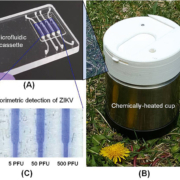
To develop inexpensive molecular detection of ZIKV without complex instrumentation, we utilized reverse-transcription loop-mediated amplification (RT-LAMP) technology [14]. We identified highly conserved regions of the ZIKV genome and designed RT-LAMP primers for the Zika lineage that is prevalent in the Americas. To enable POC molecular diagnostics, we developed a disposable microfluidic cassette (Fig. 1a) that combines viral nucleic acid capture, concentration, isothermal amplification; and detection. Our disposable, microfluidic cassette contains multiple independent amplification reactors, each equipped with a silica-based nucleic acid isolation membrane at its inlet. The advantage of such a design is to decouple the sample volume from the reaction volume, allowing one to use relatively high sample volumes to achieve high sensitivity. Nucleic acids captured by the isolation membrane directly serve as templates in an RT-LAMP amplification process without a need for an elution step, significantly simplifying flow control.
Our microfluidic cassette can be incubated with battery power or operate electricity-free. To eliminate the need for electricity, we used a simple, thermally insulated portable cup (Fig. 1b) heated by an exothermic reaction for chip-based isothermal amplification [14]. One Mg−Fe alloy pouch, which is usually used as a heater of MRE (meal, ready-to-eat), served as the heat source. Tap water was introduced into the drawer, housing the Mg-Fe pouch, through a port in the cup lid to interact with the Mg−Fe alloy to produce heat. To isolate the amplification reactor’s temperature from variable ambient conditions, we used a phase change material (PCM) to regulate the temperature, removing the need for a thermal control circuit. An aluminium heat sink was used to enhance heat transfer from the PCM to the cassette.
We tested the utility of our POC diagnostic system with raw saliva samples spiked with various concentrations of the ZIKV. Our experiments showed that our electricity-free POC diagnostic system could detect ZIKV in saliva with the sensitivity of 5 plaque forming units (p.f.u.) of ZIKV per sample within 40 min (Fig. 1c). Our POC diagnostic system is comparable to that of the benchtop assay without a need for laboratory facilities, expensive equipment and well-trained personnel [14].

Conclusion
Zika molecular diagnostics can be performed at the point of care with a low-cost, portable system based on a microfluidic cassette that integrates nucleic acid isolation and concentration, isothermal amplification, and detection. To achieve electricity-free isothermal amplification, the cassette is combined with a chemically heated cup that generates heat with an exothermic reaction. The platform can be adapted to various sample types and sizes, and multiplex detection. This flexibility is useful in view of the evolving understanding of Zika pathology and Zika biomarker levels and their persistence in different body fluids and tissues. In the future, we plan to expand system capabilities to enable concurrent detection of multiple vector-borne diseases [15]. Our system is very suitable for resource-poor settings, where funds, centralized laboratory facilities and trained personnel are in short supply, as well as for use in remote clinics and at home.

Acknowledgment

The research reported here was supported, in part by the NIH NIDCR R21DE026700, K25AI099160, R01 CA214072, to the University of Pennsylvania.

References
1. Cao-Lormeau VM, Blake A, Mons S, Lastère S, Roche C, et al. Guillain-Barré Syndrome outbreak associated with Zika virus infection in French Polynesia: a case-control study. Lancet 2016; 387(10027): 1531–1539.
2. Tang H, Hammack C, Ogden SC, Wen Z, Qian X, et al. Zika virus infects human cortical neural progenitors and attenuates their growth. Cell Stem Cell 2016; 18(5): 587–590.
3. Driggers RW, Ho CY, Korhonen EM, Kuivanen S, Jääskeläinen AJ, et al. Zika virus infection with prolonged maternal viremia and fetal brain abnormalities. N Eng J Med 2016; 374: 2142–2151.
4. Kindhauser MK, Allen T, Frank V, Santhana RS, Dye C. Zika: the origin and spread of a mosquito-borne virus. Bull World Health Organ 2016; 94: 675–686C.
5. Lee BY, Alfaro-Murillo JA, Parpia AS, Asti L, Wedlock PT, et al. The potential economic burden of Zika in the continental United States. PLOS Neg Trop Dis 2017; 11(4): e0005531.
6. Current Zika product pipeline. World Health Organization (WHO) 2016. http://www.who.int/csr/research-and-development/zika-rd-pipeline.pdf.
7. Charrel, RN, Leparc-Goffart I, Pas S, de Lamballerie X, Koopmans M, Reusken C. State of knowledge on Zika virus for an adequate laboratory response. Bull World Health 2016; 94: 574–584D.
8. New CDC laboratory test for Zika virus authorized for emergency use by FDA. Centers for Disease Control and Prevention (CDC) 2016. https://www.cdc.gov/media/releases/2016/s0226-laboratory-test-for-zika-virus.html.
9. Zika rapid test. Biocan Diagnostics Inc. http://www.zikatest.com/?page_id=6.
10. Artron Zika test. Artron Laboratories Inc. http://www.artronlab.com/home.html.
11. Gourinat AC, O’Connor O, Calvez E, Goarant C, Dupont-Rouzeyrol M. Detection of Zika virus in urine. Emerg Infect Dis 2015; 21(1): 84.
12. Mansuy JM, Dutertre M, Mengelle C, Fourcade C, Marchou B, et al. Zika virus: high infectious viral load in semen, a new sexually transmitted pathogen. Lancet Infect Dis 2016; 16: 405.
13. Trioplex real-time RT-PCR assay. CDC 2017. https://www.fda.gov/downloads/medicaldevices/safety/emergencysituations/ucm491592.pdf.
14. Song J, Mauk MG, Hackett BA, Cherry S, Bau HH, Liu C. Instrument-free point-of-care molecular detection of Zika virus. Anal Chem 2016; 88: 7289–7294.
15. Song J, Liu C, Mauk MG, Rankin SC, Lok JB, et al. Two-stage isothermal enzymatic amplification for concurrent multiplex molecular detection. Clin Chem 2017; 63(3): 714–722.

The authors
Michael G Mauk PhD, Jinzhao Song PhD, Haim H. Bau PhD, Changchun Liu* PhD
Department of Mechanical Engineering and Applied Mechanics, School of Engineering and Applied Science, University of Pennsylvania, Philadelphia, Pennsylvania 19104, United States


*Corresponding author
E-mail: lchangc@seas.upenn.edu

https://clinlabint.com/wp-content/uploads/sites/2/2020/08/C310_Liu_1.jpg 616 800 3wmedia https://clinlabint.com/wp-content/uploads/sites/2/2020/06/clinlab-logo.png 3wmedia2020-08-26 09:41:362021-01-08 11:34:52Point-of-care molecular test for Zika infection
27449 Randox AV2138 Clin Labs International PM Biosciences Alzheimer s Ad FEB17.

Randox Alzheimer’s risk testing

, 26 August 2020/in Featured Articles /by 3wmedia
https://clinlabint.com/wp-content/uploads/sites/2/2020/08/27449-Randox-AV2138-Clin-Labs-International-PM-Biosciences-Alzheimer_s-Ad-FEB17..jpg 1500 1062 3wmedia https://clinlabint.com/wp-content/uploads/sites/2/2020/06/clinlab-logo.png 3wmedia2020-08-26 09:41:362021-01-08 11:35:01Randox Alzheimer’s risk testing
C287 Tang CLI Figure 1

RAS pathway biomarkers for breast cancer prognosis

, 26 August 2020/in Featured Articles /by 3wmedia

Metastatic breast cancer is a highly heterogeneous, rapidly evolving and devastating disease that challenges our ability to find curative therapies. RAS pathway activation is an understudied research area in breast cancer. EGFR/RAS pathway activation is prevalent in breast cancer with poor prognosis. The prognostic RAS pathway biomarkers can be used to identify resistant tumour clones, stratify patients and guide therapies.

by L. L. Siewertsz van Reesema, M. P. Lee, Dr V. Zheleva, Dr J. S. Winston,
Dr C. F. O’Connor, Prof. R. R. Perry, Prof. R. A. Hoefer and Prof. A. H. Tang

Introduction
Breast cancer currently represents the second leading cause of cancer-related deaths among women in the United States [1]. In 2016 alone, an estimated 246 660 women will be diagnosed and an additional 40 450 women are expected to succumb to the disease process [1, 2]. By 2030, there are projected to be 294 000 new cases, making breast cancer a growing public health concern [3–5]. The increased breast cancer screenings, major technical advancements in breast cancer imaging and early detection, and targeted anti-cancer therapies have contributed to significant decreases in morbidity and mortality since the 1970s, and now more than 90% of patients with early-stage breast cancer have expected survival of much more than 5 years [2, 5]. Despite these amazing advancements, the prognosis for patients with high-grade, locally advanced and metastatic breast cancers remains poor with average survival less than 2 years [2, 6–8]. State-of-the-art treatments, such as anti-HER2 therapy, anti-ER therapy, anti-PI3K and anti-mTOR therapy, tumour genome-guided combination therapies, stem cell therapy, and anti-CTLA-4/PD1 immunotherapy, alone or in combination, are not curative in eradicating metastatic breast cancer [9–14]. The clinical reality is that despite similar clinical diagnoses and presentation, patients often display diverse tumour response to standard therapies. The intrinsic diversity and evolving heterogeneity of their mammary tumours can become more pronounced in relapsed or metastatic tumours after therapeutic intervention and clonal selection by ineffective treatment. This de novo and acquired tumour heterogeneity leads to diverse tumour responses in neoadjuvant and adjuvant setting following standard-of-care therapies, which in turn leads to varied clinical outcome and disparity in patient survival [6, 15, 16].

Currently, there are no reliable clinical biomarkers that can be used to consistently predict survival of patients with late-stage or metastatic breast cancers [6]. Classically utilized breast cancer biomarkers, such as estrogen receptor (ER), progesterone receptor (PR), and human epidermal growth factor receptor 2 (HER2) molecular subtypes, do not correlate with survival outcomes nor do they predict tumour responses to guided therapies in invasive disease [6]. Patients with malignant tumours are often subjected to full regimens of toxic therapies followed by a period of uncertainty awaiting to learn the response of their tumours and efficacy of their treatments. Unfortunately, some patients may be over-treated, which compromises their long-term quality of life, or, conversely, some patients may be under- or incorrectly treated and thus miss a critical window of opportunity to change prescribed anticancer regimens if therapy-resistant tumours persist after aggressive therapy. There is a pressing need to identify reliable, sensitive, and robust prognostic biomarkers to closely monitor tumour response in real-time, and, importantly, to determine whether first-line standard therapies prescribed are effective against high-risk and invasive mammary tumours, given diverse tumour response and intrinsic tumour heterogeneity [7, 16–21].

Current prognostic biomarkers used in breast cancer
Clinicopathological parameters such as patient age, TMN (tumour size, lymph node status, metastasis) staging, tumour grade and histology, and molecular subtype of breast tumours have become commonplace in justifying medical decision making and prescribing treatment modalities. Therapies for invasive and high-risk breast cancer (luminal, basal-like, HER2-positive and triple-negative breast cancer) are routinely selected based on tumour ER, PR and HER2 status, in addition to aforementioned clinicopathological parameters [22–25]. The American Society of Clinical Oncology (ASCO) updated their clinical practice guidelines this year and according to the panel, only the current gold-standard biomarkers ER, PR, and HER2 should be used to guide treatment decisions, despite the fact they do not correlate with survival outcomes, nor predict tumour response to standard-of-care therapies [26].

ER-positive breast tumours account for the majority of cases worldwide [27]. Estrogen is the main stimulation for growth in the mammary tumours allowing this clinical biomarker to direct treatment planning and assess the benefit of mainstay anti-hormone therapies such as tamoxifen and aromatase inhibitors. The expression of PR is frequently associated with ER-positive tumours where less than 1% of mammary tumours are PR-positive and ER negative [27]. Furthermore, PR expression has shown strong prognostic value with high level PR expression in invasive breast tumours displaying better outcomes to anti-hormone treatment when compared to low level PR expression [28]. Current guidelines put forth by the ASCO recommend ER and PR testing of all new cases of primary and distant recurrent breast tumours [29].

HER2 status has been identified as a strong indicator of patient overall survival. Overexpression of the HER2 oncogene leads to higher chances of relapse with shorter survival times. The development of anti-HER2 therapies, such as trastuzumab, in treating HER2 have been shown to have major benefit and therefore HER2 status is tested in the majority of breast cancer diagnoses [30]. Other emerging biomarkers such as Ki67 have a possible prognostic role in invasive breast cancers [31]. While the exact function is unknown, Ki67 is expressed in cycling tumour cells and it has strong correlation with tumour grade [31, 32]. Approaches to combining Ki67 with established biomarkers ER, PR, and HER2 are now being used to further distinguish breast cancers into clinical subtypes. However, the ASCO did not recommend using Ki67 to guide adjuvant therapies [29].

The ASCO has recognized the clinical utility of six multigene expression assays for specific subgroups of patients, including OncotypeDX (Genomic Health), EndoPredict (Sividon Diagnostics), PAM50 (Prosigna Breast Cancer Prognostic Gene Signature Assay), Breast Cancer Index, urokinase plasminogen activator, and plasminogen activator inhibitor type 1 [33–37]. Most of these assays are recommended for patients with early-stage breast cancers only; none of these multi-gene assays were encouraged for patients with HER2-positive or triple-negative cancers, in addition to late-stage or metastatic cancers [34, 35]. The development of these promising gene signature-based molecular assessment tools for breast cancer is encouraging for the personalization of breast cancer therapies; however, there still remains an unmet medical need for patients with locally advanced and metastatic breast cancers.

The potential role of RAS pathway proteins in the prognosis and treatment of breast cancer
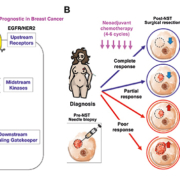
The oncogenic K-RAS carries the most common gain-of-function mutations in human cancer (30% of all human cancers) and its oncogenic role has been well-established in many types of human cancers [38, 39]. Thus, focusing on this tumour-promoting RAS signalling pathway is a logical choice of investigation for prognostic biomarker discovery and novel anticancer therapy development against oncogenic K-RAS-driven human cancer [40, 41]. The RAS pathway has been an intensely studied area of cancer research due to its activation of downstream effectors resulting in tumour proliferation, survival and motility (Fig. 1A). The loss of its most essential downstream signalling gatekeeper, SIAH (seven in absentia homologue), impeded oncogenic K-RAS-driven human pancreatic cancer and lung cancer [40, 42, 43]. Although oncogenic K-RAS mutations are rarely detected in mammary tumours (observed in about 5% of patients), genomic studies have indicated that the EGFR/HER2/K-RAS ‘pathway’ is activated in a large proportion of aggressive and malignant breast cancers [44, 45]. EGFR/HER2/K-RAS activation has been correlated with shortened survival, resistance to therapy, and tumour relapse despite aggressive treatments in breast cancer [44–47]. The mechanism and function of persistent RAS pathway activation remains elusive in breast cancer. This lack of mechanistic understanding, along with the low mutation rate of oncogenic RAS/RAF/MARK detected in mammary tumours, may contribute to the tumour-driving RAS pathway activation being understudied in the area of breast cancer research. It should also be noted that activation of RAS pathway in mammary tissues of animal models is adequate to induce oncogenic transformation and malignancy [48, 49]. Therefore, although there may not be any detectable RAS mutations in high-grade, locally advanced and metastatic breast tumours, alternative RAS pathway activation mechanisms of the RAS pathway downstream effectors may be present, promoting mammary tumorigenesis and metastasis.

Since RAS pathway activation is a major and essential signalling hub to promote human malignancies, we investigated whether EGFR/HER2/RAS pathway biomarker expression can be added to evaluate therapy efficacy and predict patient survival in breast cancer (Fig. 1A). It has been established that expression of SIAH, the most downstream signalling module and the most evolutionarily conserved component of the RAS signalling pathway, reflects RAS pathway activation, cell proliferation, and tumour growth [40, 42, 43]. In a retrospective study, 364 matched pairs of breast tumour specimens from 182 patients who received neoadjuvant systemic therapy (NST) were analysed to determine whether SIAH and/or EGFR outperform ER, PR, HER2, and Ki67 as a prognostic biomarker in locally advanced and metastatic breast cancer. The prognostic power of SIAH and EGFR, alone or in combination, is comparable to the clinical gold standards of clinical predictors (lymph node positivity, mammary tumour size, grade, stage and molecular subtypes in combination), and imaging-guided technology [50]. The activation/inactivation of the tumour-promoting RAS pathway biomarkers, SIAH and EGFR, is associated with tumour progression/regression in mammary tumours post-neoadjuvant systemic therapies (NST). We found that a marked reduction in SIAH/EGFR expression post-NST would indicate effective therapy and increased survival, while persistent high SIAH/EGFR expression post-NST would indicate ineffective therapy and decreased survival [50]. These results suggest that NST-induced reduction of SIAH and EGFR expression may be used as two useful surrogate prognostic biomarkers to quantify therapeutic efficacy, determine tumour responses, detect emerging resistant clones, and predict patient survival in high-grade and aggressive molecular subtype of breast cancer in the neoadjuvant setting in the future (Fig. 1B).

Conclusion
Early stage breast cancer is highly responsive to commonly prescribed standard of care therapies with excellent long-term survival. Locally advanced and metastatic breast cancer has a much worse prognosis despite aggressive chemo- and radiation therapies and locoregional surgical interventions. This disparity in prognosis underlines the acute need to tailor therapy and stratify patients in order to improve patient survival. The discovery of incorporating tumour heterogeneity-independent, therapy-responsive and tumour-driven RAS pathway biomarkers is prognostic in breast cancer, have a clear clinical impact to benefit breast cancer patients with locally advanced and metastatic diseases.

References
1. Siegel RL, et al. Cancer statistics, 2016. CA Cancer J Clin. 2016; 66: 7–30.
2. DeSantis C, et al. Breast cancer statistics, 2013. CA Cancer J Clin. 2014; 64: 52–62.
3. Anderson WF,  et al. Incidence of breast cancer in the United States: current and future trends. J Natl Cancer Inst. 2011; 103: 1397–1402.
4. Rahib L, et al. Projecting cancer incidence and deaths to 2030: the unexpected burden of thyroid, liver, and pancreas cancers in the United States. Cancer Res. 2014; 74: 2913–2921.
5. Graham LJ, et al. Current approaches and challenges in monitoring treatment responses in breast cancer. J Cancer 2014; 5: 58–68.
6. Tevaarwerk AJ, et al. Survival in patients with metastatic recurrent breast cancer after adjuvant chemotherapy: little evidence of improvement over the past 30 years. Cancer 2013; 119: 1140–1148.
7. Zardavas D, et al. Emerging targeted agents in metastatic breast cancer. Nat Rev Clin Oncol. 2013; 10: 191–210.
8. Lobbezoo DJ, et al. Prognosis of metastatic breast cancer subtypes: the hormone receptor/HER2-positive subtype is associated with the most favorable outcome. Breast Cancer Res Treat. 2013; 141: 507–514.
9. El Saghir NS, et al. Treatment of metastatic breast cancer: state-of-the-art, subtypes and perspectives. Crit Rev Oncol Hematol. 2011; 80: 433–449.
10. Engelman JA. Targeting PI3K signalling in cancer: opportunities, challenges and limitations. Nat Rev Cancer 2009; 9: 550–562.
11. McKeage K, Perry CM. Trastuzumab: a review of its use in the treatment of metastatic breast cancer overexpressing HER2. Drugs 2002; 62: 209–243.
12. Piccart-Gebhart MJ, et al. Trastuzumab after adjuvant chemotherapy in HER2-positive breast cancer. N Engl J Med. 2005; 353: 1659–1672.
13. Robert N, et al. Randomized phase III study of trastuzumab, paclitaxel, and carboplatin compared with trastuzumab and paclitaxel in women with HER-2-overexpressing metastatic breast cancer. J Clin Oncol. 2006; 24: 2786–2792.
14. Romond EH, et al. Trastuzumab plus adjuvant chemotherapy for operable HER2-positive breast cancer. N Engl J Med. 2005; 353: 1673–1684.
15. Vogelstein B, et al. Cancer genome landscapes. Science 2013; 339: 1546–1558.
16. Zardavas D, et al. Clinical management of breast cancer heterogeneity. Nat Rev Clin Oncol. 2015; 12: 381–394.
17. Coley HM. Mechanisms and strategies to overcome chemotherapy resistance in metastatic breast cancer. Cancer Treat Rev. 2008; 34: 378–390.
18. Haddad TC, Goetz MP. Landscape of neoadjuvant therapy for breast cancer. Ann Surg Oncol. 2015; 22: 1408–1415.
19. Holohan C, et al. Cancer drug resistance: an evolving paradigm. Nat Rev Cancer 2013; 13: 714–726.
20. Hutchinson L. Breast cancer: challenges, controversies, breakthroughs. Nat Rev Clin Oncol. 2010; 7: 669–670.
21. King TA, Morrow M. Surgical issues in patients with breast cancer receiving neoadjuvant chemotherapy. Nat Rev Clin Oncol. 2015; 12: 335–343.
22. Baselga J, et al. Pertuzumab plus trastuzumab plus docetaxel for metastatic breast cancer. N Engl J Med. 2012; 366: 109–119.
23. Bevers TB, et al. NCCN clinical practice guidelines in oncology: breast cancer screening and diagnosis. J Natl Compr Canc Netw. 2009; 7: 1060–1096.
24. Redden MH, Fuhrman GM. Neoadjuvant chemotherapy in the treatment of breast cancer. Surg Clin North Am. 2013; 93: 493–499.
25. Tolaney SM, et al. Adjuvant paclitaxel and trastuzumab for node-negative, HER2-positive breast cancer. N Engl J Med. 2015; 372: 134–141.
26. Hammond ME, et al. American Society of Clinical Oncology/College Of American Pathologists guideline recommendations for immunohistochemical testing of estrogen and progesterone receptors in breast cancer. J Clin Oncol. 2010; 28: 2784–2795.
27. Viale G, et al. Prognostic and predictive value of centrally reviewed expression of estrogen and progesterone receptors in a randomized trial comparing letrozole and tamoxifen adjuvant therapy for postmenopausal early breast cancer: BIG 1–98. J Clin Oncol. 2007; 25: 3846–3852.
28. Dowsett M, et al. Benefit from adjuvant tamoxifen therapy in primary breast cancer patients according oestrogen receptor, progesterone receptor, EGF receptor and HER2 status. Ann Oncol. 2006; 17: 818–826.
29. Runowicz CD, et al. American Cancer Society/American Society of Clinical Oncology Breast Cancer Survivorship Care Guideline. J Clin Oncol. 2016; 34: 611–635.
30. Weigel MT, Dowsett M. Current and emerging biomarkers in breast cancer: prognosis and prediction. Endocr Relat Cancer 2010; 17: R245–262.
31. Falato C, et al. Ki67 measured in metastatic tissue and prognosis in patients with advanced breast cancer. Breast Cancer Res Treat. 2014; 147: 407–414.
32. Bulfoni M, et al. In patients with metastatic breast cancer the identification of circulating tumor cells in epithelial-to-mesenchymal transition is associated with a poor prognosis. Breast Cancer Res. 2016; 18: 30.
33. Sparano JA, et al. Prospective validation of a 21-gene expression assay in breast cancer. N Engl J Med. 2015;.
34. Gyorffy B, et al. Multigene prognostic tests in breast cancer: past, present, future. Breast Cancer Res. 2015; 17: 11.
35. Goncalves R, Bose R. Using multigene tests to select treatment for early-stage breast cancer. J Natl Compr Canc Netw. 2013; 11: 174–182; quiz 182.
36. van ‘t Veer LJ, et al. Gene expression profiling predicts clinical outcome of breast cancer. Nature 2002; 415: 530–536.
37. Oakman C, et al. Breast cancer assessment tools and optimizing adjuvant therapy. Nat Rev Clin Oncol. 2010; 7: 725–732.
38. Downward J. Targeting RAS signalling pathways in cancer therapy. Nat Rev Cancer. 2003; 3: 11–22.
39. Pylayeva-Gupta Y, et al. RAS oncogenes: weaving a tumorigenic web. Nat Rev Cancer 2011; 11: 761–774.
40. Van Sciver RE, et al. Blocking SIAH proteolysis, an important K-RAS vulnerability, to control and eradicate K-RAS-driven metastatic cancer. In: A. Azmi (Ed.) Conquering RAS, Elsevier, 2016.
41. McCormick F. KRAS as a therapeutic target. Clin Cancer Res. 2015; 21: 1797–1801.
42. Ahmed AU, et al. Effect of disrupting seven-in-absentia homolog 2 function on lung cancer cell growth. J Natl Cancer Inst. 2008; 100: 1606–1629.
43. Schmidt RL, et al. Inhibition of RAS-mediated transformation and tumorigenesis by targeting the downstream E3 ubiquitin ligase seven in absentia homologue. Cancer Res. 2007; 67: 11798–11810.
44. Arteaga CL, et al. Treatment of HER2-positive breast cancer: current status and future perspectives. Nat Rev Clin Oncol. 2012; 9: 16–32.
45. Foulkes WD, et al. Triple-negative breast cancer. N Engl J Med. 2010; 363: 1938–1948.
46. Tebbutt N, et al. Targeting the ERBB family in cancer: couples therapy. Nat Rev Cancer 2013; 13: 663–673.
47. Wright KL, et al. Ras signaling is a key determinant for metastatic dissemination and poor survival of luminal breast cancer patients. Cancer Res. 2015; 75: 4960–4972.
48. Creedon H, et al. Use of a genetically engineered mouse model as a preclinical tool for HER2 breast cancer. Dis Model Mech. 2016; 9: 131–140.
49. Politi K, Pao W. How genetically engineered mouse tumor models provide insights into human cancers. J Clin Oncol. 2011; 29: 2273–2281.
50. van Reesema LL, et al. SIAH and EGFR, two RAS pathway biomarkers, are highly prognostic in locally advanced and metastatic breast cancer. EBioMedicine 2016; 11: 183–198.

The authors
Lauren L. Siewertsz van Reesema†*1 BS; Michael P. Lee†1 MS; Vasilena Zheleva2 MD; Janet S. Winston3 MD; Caroline F. O’Connor4 MD; Roger R. Perry2 MD, FACS; Richard A. Hoefer5,6,7 DO, FACS; Amy H. Tang*4,8 PhD
1Eastern Virginia Medical School, Norfolk, VA 23507, USA
2Department of Surgery, Eastern Virginia Medical School, Norfolk, VA 23507, USA
3Sentara Pathology and Pathology Sciences Medical Group, Sentara Norfolk General Hospital (SNGH), Norfolk, VA 23507, USA
4Department of Microbiology and Molecular Cell Biology, Eastern Virginia Medical School, Norfolk, VA 23507, USA
5Sentara Cancer Network, 6Dorothy G. Hoefer Comprehensive Breast Center, 7Sentara CarePlex Hospital, Newport News, Virginia 23606, USA
8Leroy T. Canoles Jr. Cancer Research Center, Eastern Virginia Medical School, Norfolk, VA 23507, USA

†Authors contributed equally to this publication.
*Corresponding author
E-mail: Tangah@evms.edu

https://clinlabint.com/wp-content/uploads/sites/2/2020/08/C287_Tang_CLI-Figure-1.jpg 356 700 3wmedia https://clinlabint.com/wp-content/uploads/sites/2/2020/06/clinlab-logo.png 3wmedia2020-08-26 09:41:362021-01-08 11:35:13RAS pathway biomarkers for breast cancer prognosis
Scientific Lit picture

Literature Review: Tumour Markers

, 26 August 2020/in Featured Articles /by 3wmedia
DcR3, TFF3 and Midkine are novel serum biomarkers in small intestinal neuroendocrine tumours
Edfeldt K, Daskalakis K, Bäcklin C, et al. Neuroendocrinology 2016; https://doi.org/10.1159/000452891
Small intestinal neuroendocrine tumours (SI-NETs) are amine- and peptide producing neoplasms. Most patients display metastases at the time of diagnosis, they have an unpredictable individual disease course and the tumours are often therapy resistant. Chromogranin A (CgA) and 5-hydroxyindoleacetic acid (5-HIAA) are the clinically most used biomarkers today, but there is a great need for novel diagnostic and prognostic biomarkers and new therapeutic targets. Sixty-nine biomarkers were screened in serum from 23 SI-NET patients and 23 healthy controls using multiplex PLA (proximity ligation assay). A refined method, PEA (proximity extension assay), was used to analyse 76 additional biomarkers. Statistical testing and multivariate classification were performed. Immunohistochemistry and ELISA assays were performed in an extended cohort. Using PLA, 19 biomarkers showed a significant difference in serum concentrations between patients and controls, and PEA revealed difference in concentrations in 13 proteins. Multivariate classification analysis revealed decoy receptor 3 (DcR3), trefoil factor 3 (TFF3) and Midkine to be good biomarkers for disease, which was confirmed by ELISA analysis. All three biomarkers were expressed in tumour tissue. DcR3 concentrations were elevated in patients with stage IV disease. High concentrations of DcR3 and TFF3 were correlated to poor survival. DcR3, TFF3 and Midkine exhibited elevated serum concentrations in SI-NET patients compared to healthy controls, and DcR3 and TFF3 were associated with poor survival. DcR3 seems to be a marker for liver metastases while TFF3 and Midkine may be new diagnostic biomarkers for SI-NETs.

Integration of multiple “OMIC” biomarkers: a precision medicine strategy for lung cancer
Robles AI, Harris CC. Lung Cancer 2017; 107: 50–58
More than half of all new lung cancer diagnoses are made in patients with locally advanced or metastatic disease, at which point therapeutic options are scarce. It is anticipated, however, that the widespread use of Low-Dose Computed Tomography (LDCT) screening, will lead to a greater proportion of lung cancers being diagnosed at an early, operable, stage. Still, the overall rate of recurrence for surgically treated Stage I lung cancer patients is up to 30% within 5 years of diagnosis. Thus, the identification and clinical application of biomarkers of early stage lung cancer are a pressing medical need. The integrative analysis of “omic,” clinical and epidemiological data for single patients is a core principle of precision medicine. Through rigorous bioinformatics and statistical analyses we have identified biomarkers of early-stage lung cancer based on DNA methylation, expression of mRNA and miRNA, inflammatory cytokines, and urinary metabolites. Beyond a more comprehensive understanding of the molecular taxonomy of lung cancer, these biomarkers can have very practical implications in the context of unmet clinical needs of early stage lung cancer patients: First, current guidelines for LDCT screening broadly include individuals based on age and history of heavy smoking. Tumour-derived circulating biomarkers in the blood and urine associated with lung cancer risk could narrow and prioritize individuals for LDCT screening. Second, a high number of nodules are identified by LDCT, of which fewer than 5% are finally diagnosed as lung cancer. Biomarkers may help discriminate malignant nodules from benign or indolent lesions. Third, the expected rise in the numbers of lung cancer patients diagnosed at an early stage will necessitate new treatment options. Circulating, urinary and tissue-based biomarkers that molecularly categorize Stage I patients after tumour resection can help identify high-risk patients who may benefit from adjuvant chemotherapy or innovative immunotherapy regimens.

Epigenetic alterations as biomarkers in pancreatic ductal adenocarcinoma
Syren P, Andersson R, Bauden M, Ansari D. Scand J Gastroenterol 2017; 52(6–7): 668–673
Pancreatic ductal adenocarcinoma (PDAC) prognosis remains very poor and has only marginally improved during the last decades. Epigenetic alterations have been the focus of many recent studies and offer valuable options for PDAC detection, prognosis and treatment. DNA methylation, histone modifications and microRNA (miR) level changes can be used as biomarkers. These alterations occur early in carcinogenesis and may be specific for PDAC. Additionally, epigenetic alterations can be analysed from cell-free DNA, free-circulating nucleosomes or shed tumour cells in blood. High-throughput methods are available for miR and DNA methylation level detection. In particular, multiple promising miR level changes have been discovered. No single epigenetic biomarker that offers a sufficient specificity has been discovered yet, but patterns containing multiple independent biomarkers exist.

Blood-based and urinary prostate cancer biomarkers: a review and comparison of novel biomarkers for detection and treatment decisions
Hendriks RJ, van Oort IM, Schalken JA. Prostate Cancer Prostatic Dis 2017; 20(1): 12–19
BACKGROUND: The diagnosis of prostate cancer (PCa) is currently based on serum PSA testing and/or abnormal digital rectal examination and histopathologic evaluation of prostate biopsies. The main drawback of PSA testing is the lack of specificity for PCa. To improve early detection of PCa more specific biomarkers are needed. In the past few years, many new promising biomarkers have been identified; however, to date, only a few have reached clinical practice.
METHODS: In this review, we discuss new blood-based and urinary biomarker models that are promising for usage in PCa detection, follow-up and treatment decision-making. These include Prostate Health Index (PHI), prostate cancer antigen 3 (PCA3), four-kallikrein panel (4K), transmembrane protease serine 2-ERG (TMPRSS2-ERG), ExoDx Prostate Intelliscore, SelectMDx and the Mi-Prostate score. Only few head-to-head studies are available for these new fluid-based biomarkers and/or models. The blood-based PHI and urinary PCA3 are two US Food and Drug Administration-approved biomarkers for diagnosis of PCa. In the second part of this review, we give an overview of published studies comparing these two available biomarkers for prediction of (1) PCa upon prostate biopsy, (2) pathological features in radical prostatectomy specimen and (3) significant PCa in patients eligible for active surveillance.
RESULTS: Studies show opposing results in comparison of PHI with PCA3 for prediction of PCa upon initial and repeat prostate biopsy. PHI and PCA3 are able to predict pathological findings on radical prostatectomy specimen, such as tumour volume and Gleason score. Only PHI could predict seminal vesicle invasion and only PCA3 could predict multifocality. There is some evidence that PHI outperforms PCA3 in predicting significant PCa in an active surveillance population.
CONCLUSIONS: Future research should focus on independent validation of promising fluid-based biomarkers/models, and prospective comparison of biomarkers with each other.

Using novel biomarkers to triage young adult women with minor cervical lesions: a cost-effectiveness analysis
Pedersen K, Sørbye SW, Kristiansen IS, Burger EA. BJOG. 2017; 124(3): 474–484
OBJECTIVE: To evaluate the short-term consequences and cost-effectiveness associated with the use of novel biomarkers to triage young adult women with minor cervical cytological lesions.
DESIGN: Model-based economic evaluation using primary epidemiological data from Norway, supplemented with data from European and American clinical trials.
SETTING: Organised cervical cancer screening in Norway.
POPULATION: Women aged 25–33 years with minor cervical cytological lesions detected at their primary screening test.
METHODS: We expanded an existing simulation model to compare 12 triage strategies involving alternative biomarkers (i.e. reflex human papillomavirus (HPV) DNA/mRNA testing, genotyping, and dual staining) with the current Norwegian triage guidelines.
MAIN OUTCOME MEASURES: The number of high-grade precancers detected and resource use (e.g. monetary costs and colposcopy referrals) for a single screening round (3 years) for each triage strategy. Cost-efficiency, defined as the additional cost per additional precancer detected of each strategy compared with the next most costly strategy.
RESULTS: Five strategies were identified as cost-efficient, and are projected to increase the precancer detection rate between 18 and 57%, compared with current guidelines; however, the strategies did not uniformly require additional resources. Strategies involving HPV mRNA testing required fewer resources, whereas HPV DNA-based strategies detected >50% more precancers, but were more costly and required twice as many colposcopy referrals compared with the current guidelines.
CONCLUSION: Strategies involving biomarkers to triage younger women with minor cervical cytological lesions have the potential to detect additional precancers, yet the optimal strategy depends on the resources available as well as decision-makers’ and women’s acceptance of additional screening procedures.
https://clinlabint.com/wp-content/uploads/sites/2/2020/08/Scientific-Lit-picture.jpg 533 800 3wmedia https://clinlabint.com/wp-content/uploads/sites/2/2020/06/clinlab-logo.png 3wmedia2020-08-26 09:41:362021-01-08 11:34:53Literature Review: Tumour Markers
27488 Siemens 9564 Atellica Solution Ad CLI A4 AACC EC

Experience the power of the Atellica Solution

, 26 August 2020/in Featured Articles /by 3wmedia
https://clinlabint.com/wp-content/uploads/sites/2/2020/08/27488-Siemens_9564_Atellica_Solution_Ad_CLI_A4_AACC-EC.jpg 1500 1062 3wmedia https://clinlabint.com/wp-content/uploads/sites/2/2020/06/clinlab-logo.png 3wmedia2020-08-26 09:41:362021-01-08 11:34:51Experience the power of the Atellica Solution
27382 Diasys AZ CLI Hydroxybutyrate 141x185 eng 170410 PRINT

ß-Hydroxybutyrate 21 FS

, 26 August 2020/in Featured Articles /by 3wmedia
https://clinlabint.com/wp-content/uploads/sites/2/2020/08/27382-Diasys-AZ_CLI_Hydroxybutyrate_141x185_eng_170410_PRINT.gif 1432 1000 3wmedia https://clinlabint.com/wp-content/uploads/sites/2/2020/06/clinlab-logo.png 3wmedia2020-08-26 09:41:362021-01-08 11:34:55ß-Hydroxybutyrate 21 FS
27176 Coris Insertion CLI 2016 12 05

Antibio-Resistance is rising up!

, 26 August 2020/in Featured Articles /by 3wmedia
https://clinlabint.com/wp-content/uploads/sites/2/2020/08/27176-Coris-Insertion-CLI-2016_12_05.jpg 320 700 3wmedia https://clinlabint.com/wp-content/uploads/sites/2/2020/06/clinlab-logo.png 3wmedia2020-08-26 09:41:362021-01-08 11:35:04Antibio-Resistance is rising up!
AD0070A EN V2 StatStrip

Stat Strip GLU

, 26 August 2020/in Featured Articles /by 3wmedia
https://clinlabint.com/wp-content/uploads/sites/2/2020/08/AD0070A_EN_V2_StatStrip.jpg 1500 1042 3wmedia https://clinlabint.com/wp-content/uploads/sites/2/2020/06/clinlab-logo.png 3wmedia2020-08-26 09:41:362021-01-08 11:36:57Stat Strip GLU
Page 112 of 146«‹110111112113114›»
Bio-Rad - Preparing for a Stress-free QC Audit

Latest issue of Clinical laboratory

May 2026

CLi Cover May 2026
17 June 2026

T-CURX acquires Pantherna Therapeutics to fast-track non-viral in vivo CAR-T therapies into the clinic

17 June 2026

Cirena secures Agilent licensing deal to unlock high-purity long RNA production

17 June 2026

SLAS Europe 2026: Trince takes top ignite award as Vienna conference draws 1,500-plus registrants

Digital edition
All articles Archived issues

Free subscription

View more product news

Get our e-alert

The leading international magazine for Clinical laboratory Equipment for everyone in the Vitro diagnostics

Sign up today
  • News
    • Featured Articles
    • Product News
    • E-News
  • Magazine
    • About us
    • Archived issues
    • Free subscriptions
    • Media kit
    • Submit Press Release
clinlab logo blackbg 1

Prins Hendrikstraat 1
5611HH Eindhoven
The Netherlands
info@clinlabint.com

PanGlobal Media is not responsible for any error or omission that might occur in the electronic display of product or company data.

Scroll to top

This site uses cookies. By continuing to browse the site, you are agreeing to our use of cookies.

Accept settingsHide notification onlyCookie settings

Cookie and Privacy Settings


How we use cookies

We may ask you to place cookies on your device. We use cookies to let us know when you visit our websites, how you interact with us, to enrich your user experience and to customise your relationship with our website.

Click on the different sections for more information. You can also change some of your preferences. Please note that blocking some types of cookies may affect your experience on our websites and the services we can provide.

Essential Website Cookies

These cookies are strictly necessary to provide you with services available through our website and to use some of its features.

Because these cookies are strictly necessary to provide the website, refusing them will affect the functioning of our site. You can always block or delete cookies by changing your browser settings and block all cookies on this website forcibly. But this will always ask you to accept/refuse cookies when you visit our site again.

We fully respect if you want to refuse cookies, but to avoid asking you each time again to kindly allow us to store a cookie for that purpose. You are always free to unsubscribe or other cookies to get a better experience. If you refuse cookies, we will delete all cookies set in our domain.

We provide you with a list of cookies stored on your computer in our domain, so that you can check what we have stored. For security reasons, we cannot display or modify cookies from other domains. You can check these in your browser's security settings.

.

Google Analytics Cookies

These cookies collect information that is used in aggregate form to help us understand how our website is used or how effective our marketing campaigns are, or to help us customise our website and application for you to improve your experience.

If you do not want us to track your visit to our site, you can disable this in your browser here:

.

Other external services

We also use various external services such as Google Webfonts, Google Maps and external video providers. Since these providers may collect personal data such as your IP address, you can block them here. Please note that this may significantly reduce the functionality and appearance of our site. Changes will only be effective once you reload the page

Google Webfont Settings:

Google Maps Settings:

Google reCaptcha settings:

Vimeo and Youtube videos embedding:

.

Privacy Beleid

U kunt meer lezen over onze cookies en privacy-instellingen op onze Privacybeleid-pagina.

Privacy policy
Accept settingsHide notification only

Subscribe now!

Become a reader.

Free subscription