


Charlie Gard, who recently died just before his first birthday, was admitted to Great Ormond Street Hospital (GOSH) when he was two months old. Founded 265 years ago, and classed as one of the top four pediatric hospitals globally, GOSH has a dedicated international workforce, including some of the world’s leading doctors, surgeons and pediatric nurses. As well as offering tireless and expert care for its young patients, GOSH is involved in over 800 research projects.
Charlie was provisionally diagnosed with mitochondrial DNA depletion syndrome (MDDS) soon after admission, and genetic tests confirmed the diagnosis. The baby had two mutations affecting his RRM2B gene, preventing the synthesis of ribonucleotide reductase, an enzyme that plays a key role in maintaining the mitochondrial deoxinucleotide triphosphate pool needed for mitochondrial DNA synthesis. Only 15 other patients have been described with RRM2B mutations in the medical literature: in all cases rapid encephalopathy and muscle breakdown caused death within a few months of onset. A team of GOSH experts did consider experimental nucleoside bypass therapy (NBT) when the baby was five months old (ethical approval was first necessary), but they concluded that his rapidly deteriorating condition did not warrant such an intervention.
One can sympathize with the child’s parents as they desperately searched for a possible cure for their terminally ill infant, waging a protracted litigation to have him treated with experimental NBT in the US by Columbia University’s Dr Michio Hirano. One cannot, however, condone the belligerent demands of around 200, 000 members of the medically ignorant public that Charlie be released from experts at GOSH, or the interventions of ill-informed public figures such as Donald Trump and even the Pope.
Dr Hirano claimed that NBT – he ‘retains a financial interest’ in the compounds he prescribes – could benefit the patient. His relevant work concerns the TK2 mutation, a more frequent cause of MDDS with a more varied prognosis. His team has recently published a paper showing that NBT is beneficial in TK2 deficient mice, and 18 patients, mostly in Italy and Spain, are undergoing experimental treatment. No peer-reviewed papers on patient prognosis have yet been published, and there are no ongoing clinical trials with NBT. Furthermore without seeing Charlie, the GOSH team or medical notes until the child was already 11 months old, Dr Hirano (and the popular press) blamed the legal procedure, declaring that it was now too late for treatment!
An evidence-based cure for MDDS is surely needed: hopefully that will be Charlie’s legacy.




Individuals with type 2 diabetes mellitus (T2DM) are at increased risk of coronary artery disease (CAD). The C677T mutation of the methylenetetrahydrofolate reductase (MTHFR) gene is associated with elevated plasma levels of homocysteine. The association of the MTHFR gene and the level of homocysteine with development of CAD has been studied in various population groups, including patients with T2DM, but the results have been variable. In practice, plasma homocysteine may be ordered as part of a screen for people with CAD or stroke, or who are at high risk for CAD or stroke but no other known risk factors. Testing of C677T polymorphism with or without elevated homocysteine is not recommended and has no clinical utility.
by Prof. Bakri Saeed and Dr Nisreen Mohammed
Type 2 diabetes mellitus and coronary artery disease
Type 2 diabetes mellitus (T2DM) is a major health problem throughout the world. It is a polygenic and multifactorial disease that is a major risk factor for cardiovascular disease. Cardiovascular disease (CVD) comprises coronary artery disease (CAD), also referred to as coronary heart disease (CHD), or ischemic heart disease (IHD), and cerebrovascular disease.
CAD due to atherosclerosis is a cause of significant morbidity and mortality, and is the leading cause of death worldwide. There are several risk factors for CAD. The well-stablished risk factors for CAD include diabetes mellitus, hypertension, smoking and dyslipidemia. There is growing interest in emerging risk factors for improved understanding of the mechanisms that underline cardiovascular disorders and CAD.
T2DM increases the risk for CAD by 2–4-fold compared to people without diabetes. CVD accounts for about 70% of deaths in people with diabetes. Identification and management of risk factors for CAD is an important aspect of management of diabetes mellitus.
Hyperhomocysteinemia and MTHFR polymorphism
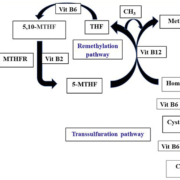
Homocysteine is a sulfur-containing amino acid formed from demethylation of methionine. Methionine is the precursor to S-adenosyl methionine (SAMe) and is one of the essential amino acids. SAMe is a major methyl donor and is involved in numerous biological reactions. Homocysteine is metabolized by either remethylation to methionine or transsulfuration to cystathionine. The former reaction is catalysed by the vitamin B12-dependent methionine synthase. The latter reaction is catalysed by the enzyme cystathionine beta-synthase, which requires vitamin B6.
The methyl donor in the remethylation of homocysteine to methionine is 5-methyltetrahydrofolate. The 5,10-methylene-tetrahydrofolate reductase (MTHFR) enzyme catalyses the reduction of 5,10-methylene-tetrahydrofolate to 5-methyltetrahydrofolate. The enzyme requires B2 (riboflavin) as a cofactor (Fig. 1).
Therefore, hyperhomocysteinemia can result from reduced activity of the enzymes involved in homocysteine metabolism or from deficiency of the vitamins which are needed as cofactors in homocysteine metabolic reactions: folate, vitamin B6 and vitamin B12.
Several mutations in the MTHFR gene have been identified and some of them affect the activity of the enzyme. The commonest MTHFR gene mutation is a cytosine-to-thymidine substitution at nucleotide 677 (C677T), which changes alanine into valine, resulting in a thermolabile enzyme with impaired enzymatic activity and leading to hyperhomocysteinemia.
There are two copies of each gene. Therefore, an individual can be homozygous for the mutated gene or can be heterozygous, having one copy of the C677T variant and one normal copy. The C677T homozygous variant enzyme is thermolabile and demonstrates 70% reduced enzyme activity in vitro. The heterozygous C677T MTHFR enzyme has 35% reduced activity in vitro.
Worldwide, the frequency of MTHFR gene mutations varies among racial and ethnic groups, in Africa MTHFR gene polymorphism is markedly low (below 10%) for the C677T allele. In the European and Asian population, estimates of 18.6% and 20.8% were reported [1].
Association with CAD
In recent years hyperhomocysteinemia has been implicated as a risk factor for CAD, independent of other known risk factors. The primary mechanism by which homocysteine promotes atherosclerosis is by impairing endothelial function, which initiates the chain of events resulting in atherosclerotic plaque formation.
Numerous studies looked into the possible association between MTHFR genotypes and plasma homocysteine levels and the incidence of different MTHFR genotypes and hyperhomocysteinemia in CAD patients [2–5]. The results of these studies have been controversial. Several studies have shown the link between the MTHFR C677T gene polymorphism and the risk for CAD but many other studies failed to show association between MTHFR genotypes and plasma homocysteine levels and their role in CAD.
Previous studies in T2DM patients were also controversial. MTHFR polymorphism and hyperhomocysteinemia were shown to be predictors of cardiovascular events among diabetic patients [6, 7], whereas other studies failed to show a role for MTHFR polymorphic variants and homocysteine in increasing susceptibility to cardiovascular disease [8, 9].
Our study
We recently screened 226 consecutive patients with T2DM, <60 years of age, diagnosed according to WHO criteria. Of these, 113 had CAD confirmed by angiography and electrocardiography (ECG) and 113 had no evidence of CAD [10]. PCR and restriction fragment length polymorphism (RFLP) using Hinf1 restriction enzyme were used to determine MTHFR genotypes.
In our study, the T allele had a significant effect on homocysteine level (P value <0.05) and showed strong association with CAD among T2DM patients (odds ratio 6.2, P <0.0001).
Our study indicates that the C677T polymorphism of the MTHFR gene is associated with hyperhomocysteinemia, and the two are independently associated with the presence of CAD in patients with T2DM.
Reasons for controversy
The outcome of these numerous studies and meta-analysis remained contradictory. There was no agreement on the association between MTHFR genotypes and plasma homocysteine levels or the incidence of different MTHFR genotypes and hyperhomocysteinemia in CAD patients.
Plasma homocysteine levels are dependent on interacting nutritional and genetic factors. Some studies suggested that people homozygous for MTHFR C667T polymorphism tend to have hyperhomocysteinemia in the context of low folic acid levels. Supplementation with the vitamins involved in homocysteine metabolism was found to lower plasma homocysteine levels.
Therefore, geographic heterogeneity, nutritional and environmental factors could affect the relationship between MTHFR genotypes and CVD risk in different populations.
Practical points
Homocysteine may be ordered as part of a screen for people with or at high risk of CAD or stroke, especially if there is family history of CAD or stroke but no other known risk factors, such as diabetes, smoking, hypertension, or dyslipidemia. Routine screening of homocysteine, like that of cholesterol, has not been recommended.
Plasma homocysteine concentration may be elevated in B12 and folate deficiency and its measurement has been suggested to give an early indicator of deficiency.
In new-born testing, greatly increased concentrations of homocysteine in the urine and blood suggests a diagnosis of homocystinuria and indicates the need for confirmation of the cause of raised levels.
Most laboratories report normal homocysteine levels in the blood between 5 and 15 µmol/L. Any measurement above 15 µmol/L is considered high.
However, it should be noted that normal levels will vary between ethnic groups and populations. Homocysteine levels increase with age, are lower in pregnancy and are influenced by drugs. These factors should be taken into consideration when interpreting results.
Testing of C677T polymorphism with or without elevated homocysteine is not recommended in patients with CAD or other diseases where MTHFR variants have been implicated, such as thrombophilia or recurrent pregnancy loss.
References
1. Schneider JA, Rees DC, Liu YT, Clegg JB. Worldwide distribution of a common methylenetetrahydrofolate reductase mutation. Am J Hum Genet 1998; 62: 1258–1260.
2. Chehadeh SWEH, Jelinek HF, Al Mahmeed WA, Tay GK, Odama UO, Elghazali GE, et al. Relationship between MTHFR C677T and A1298C gene polymorphisms and complications of type 2 diabetes mellitus in an Emirati population. Meta gene 2016; 9: 70–75.
3. Bickel C, Schnabel R, Zengin E, Lubos E, Rupprecht H, Lackner K, et al. Homocysteine concentration in coronary artery disease: Influence of three common single nucleotide polymorphisms. Nutr Metab Cardiovascular Dis 2017; 27(2): 168–175.
4. Yilmaz H, Isbir S, Agachan B, Ergen A, Farsak B, Isbir T. C677T mutation of methylenetetrahydrofolate reductase gene and serum homocysteine levels in Turkish patients with coronary artery disease. Cell Biochem Funct 2006; 24(1): 87–90.
5. Meisel C, Cascorbi I, Gerloff T, Stangl V, Laule M, Müller JM, et al. Identification of six methylenetetrahydrofolate reductase (MTHFR) genotypes resulting from common polymorphisms: impact on plasma homocysteine levels and development of coronary artery disease. Atherosclerosis 2001; 154(3): 651–658.
6. Lewis SJ, Ebrahim S, Smith GD. Meta-analysis of MTHFR 677C→T polymorphism and coronary heart disease: does totality of evidence support causal role for homocysteine and preventive potential of folate? BMJ 2005; 331(7524): 1053–1058.
7. Bennouar N, Allami A, Azeddoug H, Bendris A, Laraqui A, El Jaffali A, et al. Thermolabile methylenetetrahydrofolate reductase C677T polymorphism and homocysteine are risk factors for coronary artery disease in Moroccan population. J Biomed Biotechnol 2007(1); 80687.
8. Bahadır A, Eroz R, Türker Y. Does the MTHFR C677T gene polymorphism indicate cardiovascular disease risk in type 2 diabetes mellitus patients? Anatolian J Cardiol 2015; 15(7): 524–530.
9. Rahimi Z, Nomani H, Mozafari H, Vaisi-Raygani A, Madani H, Malek-Khosravi S, et al. Factor V G1691A, prothrombin G20210A and methylenetetrahydrofolate reductase polymorphism C677T are not associated with coronary artery disease and type 2 diabetes mellitus in western Iran. Blood Coagul Fibrinolysis 2009; 20(4): 252–256.
10. Mohammed NO, Ali IA, Elamin BK and Saeed BO. The association of methylenetetrahydrofolate reductase gene polymorphism and hyperhomocysteinaemia with coronary artery disease in Sudanese patients with type 2 diabetes. Poster at Focus 2017, Association of Clinical Biochemistry annual meeting.
The authors
Bakri Osman Saeed*1 PhD, MD, FRCPath, FRCP; Nisreen Osman Mohamed2 PhD
1Faculty of Medicine, Sudan International University, Khartoum, Sudan
2Ahfad Centre for Science and Technology, Ahfad University for Women, Khartoum, Sudan
*Corresponding author
E-mail: saeedbakri@hotmail.com
Prognostic value of molecular and imaging biomarkers in patients with supratentorial glioma
PURPOSE: We evaluated the relationship between 11C-methionine PET (11C-METH PET) findings and molecular biomarkers in patients with supratentorial glioma who underwent surgery.
METHODS: A consecutive series of 109 patients with pathologically proven glioma (64 men, 45 women; median age 43 years) referred to our Institution from March 2012 to January 2015 for tumour resection and who underwent preoperative 11C-METH PET were analysed. Semi-quantitative evaluation of the 11C-METH PET images included SUVmax, region of interest-to-normal brain SUV ratio (SUVratio) and metabolic tumour volume (MTV). Imaging findings were correlated with disease outcome in terms of progression-free survival (PFS), and compared with other clinical biological data, including IDH1 mutation status, 1p/19q codeletion and MGMT promoter methylation. The patients were monitored for a mean period of 16.7 months (median 13 months).
RESULTS: In all patients, the tumour was identified on 11C-METH PET. Significant differences in SUVmax, SUVratio and MTV were observed in relation to tumour grade (P<0.001). IDH1 mutation was found in 49 patients, 1p/19q codeletion in 58 patients and MGMT promoter methylation in 74 patients. SUVmax and SUVratio were significantly inversely correlated with the presence of IDH1 mutation (P<0.001). Using the 2016 WHO classification, SUVmax and SUVratio were significantly higher in patients with primary glioblastoma (IDH1-negative) than in those with other diffuse gliomas (P<0.001). Relapse or progression was documented in 48 patients (median PFS 8.7 months). Cox regression analysis showed that SUVmax and SUVratio, tumour grade, tumour type on 2016 WHO classification, IDH1 mutation status, 1p/19q codeletion and MGMT promoter methylation were significantly associated with PFS. None of these factors was found to be an independent prognostic factor in multivariate analysis.
CONCLUSION: 11C-METH PET parameters are significantly correlated with histological grade and IDH1 mutation status in patients with glioma. Grade, pathological classification, molecular biomarkers, SUVmax and SUVratio were prognostic factors for PFS in this cohort of patients. The trial was registered with ClinicalTrials.gov (registration: NCT02518061).
Expression of cell cycle regulators and biomarkers of proliferation and regrowth in human pituitary adenomas
PURPOSE: The pathogenesis of pituitary adenomas (PA) is complex. Ki-67, pituitary tumour transforming gene (PTTG), vascular endothelial growth factor (VEGF), cyclin D1, c-MYC and pituitary adenylate cyclase-activating peptide (PACAP) protein expression was analysed and correlated with tumour and patient characteristics.
METHODS: 74 pituitary tumour samples (48 non-functional PA, 26 functional PAs); immunohistochemical analysis of protein expression, retrospective analysis of MR images and in vitro analysis of octreotide treatment was carried out on GH3 cells.
RESULTS: PTTG expression was negatively associated with age and positively with PA size, regrowth and Ki-67 index. Cyclin D1 correlated with Ki-67 and tumour size. c-MYC negatively correlated with size of tumour and age, and correlated with PTTG expression. Somatostatin analogue treatment was associated with lower Ki-67, PTTG and cyclin D1 expression while T2 hypointense PAs were associated with lower PTTG, cyclin D1, c-MYC and Ki-67. In vitro analyses confirmed the effect of somatostatin analogue treatment on PTTG and cyclin D1 expression.
CONCLUSIONS: Interesting and novel observations on the differences in expression of tumour markers studied are reported. Correlation between Ki-67 expression, PTTG nuclear expression and recurrence/regrowth of PAs, emphasizes the role that Ki-67 and PTTG expression have as markers of increased proliferation. c-MYC and PTTG nuclear expression levels were correlated providing evidence that PTTG induces c-MYC expression in PAs and we propose that c-MYC might principally have a role in early pituitary tumorigenesis. Evidence is shown that the anti-proliferative effect of somatostatin analogue treatment in vivo occurs through regulation of the cell cycle.
Comparison of multiple tau PET measures as biomarkers in aging and Alzheimer’s Disease
The recent development of tau-specific positron emission tomography (PET) tracers enables in vivo quantification of regional tau pathology, one of the key lesions in Alzheimer’s disease (AD). Tau PET imaging may become a useful biomarker for clinical diagnosis and tracking of disease progression but there is no consensus yet on how tau PET signal is best quantified. The goal of the current study was to evaluate multiple whole-brain and region-specific approaches to detect clinically relevant tau PET signal. Two independent cohorts of cognitively normal adults and amyloid-positive (Aβ+) patients with mild cognitive impairment (MCI) or AD-dementia underwent [18F]AV-1451 PET. Methods for tau tracer quantification included: (i) in vivo Braak staging, (ii) regional uptake in Braak composite regions, (iii) several whole-brain measures of tracer uptake, (iv) regional uptake in AD-vulnerable voxels, and (v) uptake in a priori defined regions. Receiver operating curves characterized accuracy in distinguishing Aβ− controls from AD/MCI patients and yielded tau positivity cut-offs. Clinical relevance of tau PET measures was assessed by regressions against cognition and MR imaging measures. Key tracer uptake patterns were identified by a factor analysis and voxel-wise contrasts. Braak staging, global and region-specific tau measures yielded similar diagnostic accuracies, which differed between cohorts. While all tau measures were related to amyloid and global cognition, memory and hippocampal/entorhinal volume/thickness were associated with regional tracer retention in the medial temporal lobe. Key regions of tau accumulation included medial temporal and inferior/middle temporal regions, retrosplenial cortex, and banks of the superior temporal sulcus. Our data indicate that whole-brain tau PET measures might be adequate biomarkers to detect AD-related tau pathology. However, regional measures covering AD-vulnerable regions may increase sensitivity to early tau PET signal, atrophy and memory decline.
C-terminal fragments of the amyloid precursor protein in cerebrospinal fluid as potential biomarkers for Alzheimer disease
This study assesses whether C-terminal fragments (CTF) of the amyloid precursor protein (APP) are present in cerebrospinal fluid (CSF) and their potential as biomarkers for Alzheimer’s disease (AD). Immunoprecipitation and simultaneous assay by Western blotting using multiplex fluorescence imaging with specific antibodies against particular domains served to characterize CTFs of APP in human CSF. We demonstrate that APP-CTFs are detectable in human CSF, being the most abundant a 25-kDa fragment, probably resulting from proteolytic processing by η-secretase. The level of the 25-kDa APP-CTF was evaluated in three independent CSF sample sets of patients and controls. The CSF level of this 25-kDa CTF is higher in subjects with autosomal dominant AD linked to PSEN1 mutations, in demented Down syndrome individuals and in sporadic AD subjects compared to age-matched controls. Our data suggest that APP-CTF could be a potential diagnostic biomarker for AD.
Blood-based biomarkers for the identification of sports-related concussion
Sports-related concussions (SRCs) are common among athletes in the United States. Most athletes who sustain an SRC recover within 7 to 10 days; however, many athletes who sustain the injury do not recover as expected and experience prolonged, persistent symptoms. In this document, the authors provide an overview of the empirical evidence related to the use of blood-based brain biomarkers in the athlete population for diagnosis of SRCs, prognosis of recovery and return to play guidelines, and indications of neurodegeneration. The authors also provide a summary of research challenges, gaps in the literature, and future directions for research.
Brain biomarkers and pre-injury cognition are associated with long-term cognitive outcome in children with traumatic brain injury
BACKGROUND: Children with traumatic brain injury (TBI) are frequently at risk of long-term impairments of attention and executive functioning but these problems are difficult to predict. Although deficits have been reported to vary with injury severity, age at injury and sex, prognostication of outcome remains imperfect at a patient-specific level. The objective of this proof of principle study was to evaluate a variety of patient variables, along with six brain-specific and inflammatory serum protein biomarkers, as predictors of long-term cognitive outcome following pediatric TBI.
METHOD: Outcome was assessed in 23 patients via parent-rated questionnaires related to attention deficit hyperactivity disorder (ADHD) and executive functioning, using the Conners 3rd Edition Rating Scales (Conners-3) and Behaviour Rating Inventory of Executive Function (BRIEF) at a mean time since injury of 3.1 years. Partial least squares (PLS) analyses were performed to identify factors measured at the time of injury that were most closely associated with outcome on (1) the Conners-3 and (2) the Behavioural Regulation Index (BRI) and (3) Metacognition Index (MI) of the BRIEF.
RESULTS: Higher levels of neuron specific enolase (NSE) and lower levels of soluble neuron cell adhesion molecule (sNCAM) were associated with higher scores on the inattention, hyperactivity/impulsivity and executive functioning scales of the Conners-3, as well as working memory and initiate scales of the MI from the BRIEF. Higher levels of NSE only were associated with higher scores on the inhibit scale of the BRI.
CONCLUSIONS: NSE and sNCAM show promise as reliable, early predictors of long-term attention-related and executive functioning problems following pediatric TBI.
Biomarkers of stroke recovery: Consensus-based core recommendations from the Stroke Recovery and Rehabilitation Roundtable
The most difficult clinical questions in stroke rehabilitation are “What is this patient’s potential for recovery?” and “What is the best rehabilitation strategy for this person, given her/his clinical profile?” Without answers to these questions, clinicians struggle to make decisions regarding the content and focus of therapy, and researchers design studies that inadvertently mix participants who have a high likelihood of responding with those who do not. Developing and implementing biomarkers that distinguish patient subgroups will help address these issues and unravel the factors important to the recovery process. The goal of the present paper is to provide a consensus statement regarding the current state of the evidence for stroke recovery biomarkers. Biomarkers of motor, somatosensory, cognitive and language domains across the recovery timeline post-stroke are considered; with focus on brain structure and function, and exclusion of blood markers and genetics. We provide evidence for biomarkers that are considered ready to be included in clinical trials, as well as others that are promising but not ready and so represent a developmental priority. We conclude with an example that illustrates the utility of biomarkers in recovery and rehabilitation research, demonstrating how the inclusion of a biomarker may enhance future clinical trials. In this way, we propose a way forward for when and where we can include biomarkers to advance the efficacy of the practice of, and research into, rehabilitation and recovery after stroke.
Brain biomarkers of vulnerability and progression to psychosis
Identifying predictors and elucidating the fundamental mechanisms underlying onset of psychosis are critical for the development of targeted pre-emptive interventions. This article presents a selective review of findings on risk prediction algorithms and potential mechanisms of onset in youth at clinical high-risk for psychosis, focusing principally on recent findings of the North American Prodrome Longitudinal Study (NAPLS). Multivariate models incorporating risk factors from clinical, demographic, neurocognitive, and psychosocial assessments achieve high levels of predictive accuracy when applied to individuals who meet criteria for a prodromal risk syndrome. An individualized risk calculator is available to scale the risk for newly ascertained cases, which could aid in clinical decision making. At risk individuals who convert to psychosis show elevated levels of proinflammatory cytokines, as well as disrupted resting state thalamo-cortical functional connectivity at baseline, compared with those who do not. Further, converters show a steeper rate of grey matter reduction, most prominent in prefrontal cortex, that in turn is predicted by higher levels of inflammatory markers at baseline. Microglia, resident immune cells in the brain, have recently been discovered to influence synaptic plasticity in health and impair plasticity in disease. Processes that modulate microglial activation may represent convergent mechanisms that influence brain dysconnectivity and risk for onset of psychosis and thus may be targetable in developing and testing preventive interventions.


May 2026


Prins Hendrikstraat 1
5611HH Eindhoven
The Netherlands
info@clinlabint.com
PanGlobal Media is not responsible for any error or omission that might occur in the electronic display of product or company data.