

In 2013, the National Institute for Health and Care Excellence (NICE) published guidelines recommending the use of fecal calprotectin as a screening test for differentiating between inflammatory bowel disease and irritable bowel syndrome. Since then, despite a relatively slow uptake with only a few laboratories offering the test, fecal calprotectin has garnered much interest with more hospitals incorporating it into their pathology services. Therefore, the question of how well primary care is using the service arises. This, along with a brief historical context of inflammatory bowel disease and its diagnosis together with implications of calprotectin testing are discussed here.
by Dr Benjamin Palmer, Dr Wisam Jafar and Steven McCann
Historical context
Inflammatory bowel disease (IBD) is a term used to describe two relapsing chronic gastrointestinal disorders: ulcerative colitis (UC) and Crohn’s disease (CD). Both cause considerable morbidity amongst young patients in whom they occur more frequently [1]. With an estimated prevalence of 2.5–3.0 million people affected in Europe the incidence of IBD is increasing [1]. Although the etiology of IBD is unknown several theories have been put forward the most important and frequently cited elements being: gut microbiota; genetic pre-disposition; environment and immune dysregulation [2]. The two main types of IBD seen in the clinical setting are UC and CD: definitive diagnosis and confirmation is provided by endoscopy and histology. However, in 5% of cases a definitive diagnosis cannot be established: in such cases patients are diagnosed with inflammatory bowel disease unclassified (IBDU) [3, 4].
The gastrointestinal tract is colonized by a large number of diverse bacteria living in symbiosis with their host (microbiota) [5]. Disruption to the diversity and quality of the gut microbiota (dysbiosis) is now implicated in the pathogenesis of both UC and CD [2, 5, 6]. Other important participants are cytokines: as their release causes intestinal inflammation they have been implicated in some of the clinical symptoms such as diarrhea [7–9].
Historically, the two types of IBD were differentiated by the different cytokines and mature CD4+ T helper (Th) cells found elevated in tissue biopsies. UC was characterized by elevated levels of Th2 cells and interleukin (IL)-4, -5, -10 and -13 cytokines, whereas CD was defined by high levels of Th1 cells and the interferon gamma (IFNγ) cytokine [3]. However, new emerging information suggests that it is not as cut and dried as this: emphasis has now shifted towards such pathways as IL-23/IL-17 activation of more pathogenic Th17 cells playing a more significant role in the pathophysiology of not just IBD but other inflammatory diseases [10].
Complicating the clinical scenario is the high prevalence (around 10−20% of the UK population) of an unrelated functional bowel disorder called irritable bowel syndrome (IBS): the true prevalence is thought to be higher as it is suspected that many people may not seek medical advice [11]. Although it does not cause serious morbidities, IBS manifests with symptoms similar to those of IBD, making diagnosis difficult. Unlike IBD, it is not associated with inflammation and, hence, this provides a means of making a differential diagnosis.
Until recently, the diagnosis of IBD was made by clinical evaluation and a combination of biochemical and mainly endoscopic investigations that often involved repeat consultations and testing [3]. This, taken together with an ageing population, an increased public awareness of bowel cancer and the introduction of national screening campaigns has led to increased service demands in endoscopy. The fact that fecal markers, such as calprotectin, are secreted by inflamed intestinal mucosa has led to the development of laboratory assays that can detect gastrointestinal inflammation. It was because of these challenges and recent developments that led the National Institute for Health and Care Excellence (NICE) to publish guidelines on the use of fecal calprotectin in differentiating IBD from IBS in adults provided cancer is not suspected and that local reporting guidelines along with appropriate quality assurance procedures are in place [12]. A cut-off of 50 μg/g is recommended in which all patients with a calprotectin level ≥50 μg/g may be suggestive of IBD and should be referred to Gastroenterology, whereas a calprotectin level <50 μg/g is unlikely to be caused by IBD and should, therefore, be managed with a presumptive diagnosis of IBS [12]. One key study used by NICE in recommending this threshold was carried out by Tibble et al. in which 602 outpatients with lower gastrointestinal tract symptom were included [13]. In this study the authors clearly demonstrated that the IBD group of patients differed significantly (P=0.001–<0.0001) from the IBS group of patients and that a cut-off level of 10 mg/L (equivalent to 50 μg/g) provided optimal diagnostic performance [13]. However, the cut-off level of any test is dependent on the method used and, therefore, each laboratory should establish their method-specific cut-off level [12].
IBD pathway and audit outcome
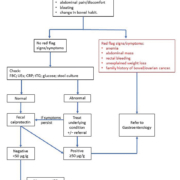
Following the recommendations of NICE, fecal calprotectin testing was incorporated into the pathology services at Stepping Hill hospital on 1 November 2014. The test is available for patients from primary care between 20 and 40 years of age who are presenting with abdominal pain or discomfort, bloating or altered bowel habits for 6 months or longer. Patients with red flag symptoms (anemia, abdominal mass, gastrointestinal infection, rectal bleeding, unexplained weight loss or a family history of ovarian or bowel cancer) should be referred directly to Gastroenterology (Fig. 1).
If the calprotectin test is negative the patient should be managed by primary care with a presumptive diagnosis of IBS; if the test is positive the patient should be referred to Gastroenterology. Then in 2016 a 1-year retrospective audit was carried out with the aim of determining how well primary care was adhering to the clinical pathway [14]. In order to achieve this, a questionnaire was designed and sent to all primary care surgeries in the catchment area for each patient who received calprotectin testing (n=587): the responses (n=217) to these questionnaires were then compared to the IBD pathway [14].
The outcome of this audit revealed that most areas of the IBD pathway were not being adhered to and, therefore, GP re-education and training was needed; a similar finding to another hospital [10]. The worst area of non-conformance was to ensure that patients had had signs/symptoms for at least 6 months: 69% of requests were not compliant [14]. Exclusion of gastrointestinal infection was second (63%), followed by ensuring age was 20–40 years (48%) [14]. Of the 216 questionnaires returned, 35% of patients had had red flag signs/symptoms at the time of the request [14]. Alarmingly, rectal bleeding was the most frequently encountered, followed by anemia, unexplained weight loss and a family history of bowel/ovarian cancer [14]. None of the patients had abdominal mass [14]. Conversely, high compliance was observed for the withdrawal of non-steroidal inflammatory drugs (NSAIDs) and antibiotics before testing [14]. Overall, only 24 requests (11%) were fully compliant for all criteria of the IBD clinical pathway [14].
Patient/clinician considerations
Unlike other fecal markers such as elastase, calprotectin is much less stable (up to 3 days at room temperature) and, therefore, it is important that patient samples are sent to the laboratory within 72 hours of collection [16]. It is still the case that samples are received by the laboratory with no date or time of collection and these are consequently rejected for analysis. Considering that calprotectin is elevated in gastrointestinal infection, in order for the test to be of clinical use, it is imperative that this is excluded.
The age restriction imposed on calprotectin testing is important and is based on the fact that IBS is more common in younger adults, that the prevalence of IBS decreases with increasing age and that new onset of symptoms after 50 years is uncommon [11, 17]. By focusing on this age group a large number of patients who do not require diagnostic testing will be excluded and, therefore, they will not add to the delay that current IBD sufferers face in receiving a colonoscopy.
Patients >40 years of age should be referred to Gastroenterology without delay, as the risk of developing colorectal cancer increases with age: colorectal cancer is the third most commonly diagnosed cancer in the UK and one of the major complications of IBD [18].
Since IBD is a relapsing disease the clinician should be aware that screening results from some patients with IBD may be negative, particularly if the disease is in a period of remittance and, therefore, the presentation of the patient, not the test result, should be the ultimate deciding factor over whether to refer. Finally, underpinning this is the need for local laboratories to determine their own method-specific cut-off values using evidence-based medicine. As with all screening tests the aim should be to optimize the test’s ability to exclude disease (IBS) so that fewer patients without disease are referred.
References
1. Trbojevic Akmacic I, Ventham NT, Theodoratou E, Vuckovic F, Kennedy NA, Krištic J, Nimmo ER, Kalla R, Drummond H, et al. Inflammatory bowel disease associates with proinflammatory potenial of the immunoglobulin G glycome. Inflamm Bowel Dis 2015; 21: 1237–1247.
2. de Souza HS, Fiocchi C. Immunopathogenesis of IBD: current state of the art. Nat Rev Gastroenterol Hepatol 2016; 186: 13–27.
3. Odze R. Diagnostic problems and advances in inflammatory bowel disease. Mod Pathol 2003; 16(4): 347–358.
4. Magro F, Giochetti P, Eliakim R, Ardissone S, Armuzzi A, Barreiro-de Acosta M, Burisch J, Gecse KB, Hart AL, et al. Third European evidence-based consensus on diagnosis and management of ulcerative colitis. Part1: definitions, diagnosis, extra-intestinal manifestations, pregnancy, cancer surveillance, surgery and ileo-anal pouch disorders. J Crohns Colitis 2017; 11(6): 649–670.
5. Salim SY, Söderholm JD. Importance of disrupted intestinal barrier in inflammatory diseases. Inflamm Bowel Dis 2011; 17(1): 362–381.
6. Ni J, Wu GD, Alenberg L, Tomov VT. Gut microbiota and IBD: causation or correlation? Nat Rev Gastroenterol Hepatol 2017; 14(10): 573–584.
7. Neurath MF. Cytokines in inflammatory bowel disease. Nat Rev Immunol 2014; 14(5): 329–342.
8. Műzes G, Molnár B, Tulassay Z, Sipos F. Changes of the cytokine profile in inflammatory bowel diseases. World J Gastroenterol 2012; 18(41): 5848–5861.
9. Ohama T, Hori M, Sato K, Ozaki H, Karaki H. Chronic treatment with interleukin-1β attenuates contractions by decreasing the activities of CPI-17 and MYPT-1 in intestinal smooth muscle. J Biol Chem 2003; 278(49): 48794–48804.
10. Iwakura Y, Ishigame H. The IL-23/IL-17 axis in inflammation. J Clin Invest 2006; 116(5): 1218–1222.
11. National Institute for Health and Care Excellence (NICE). Irritable bowel syndrome in adults: diagnosis and management of irritable bowel syndrome in primary care. NICE Clinical Guideline 61, 2008 (https://www.nice.org.uk/guidance/cg61).
12. NICE. Faecal calprotectin diagnostic tests for inflammatory diseases of the bowel. NICE Diagnostics Guidance 11, 2013 (https://www.nice.org.uk/guidance/dg11).
13. Tibble J, Teahon K, Thjodleifsson B, Roseth A, Sigthorsson G, Bridger S, Foster R, Sherwood R, Fagerhol M, Bjarnason I. A simple method for assessing intestinal inflammation in Crohn’s disease. Gut 2000; 47: 506–513.
14. Palmer B, McCann S. A one year retrospective audit on calprotectin: how well is primary care adhering to the pathway for inflammatory bowel disease. Poster presented at Focus 2017, the Association of Clinical Biochemistry national annual meeting.
15. Turvill J. Evaluation of guidelines for the use of faecal calprotectin testing in primary care. NICE 2015. (https://www.nice.org.uk/sharedlearning/evaluation-of-guidelines-for-the-use-of-faecal-calprotectin-testing-in-primary-care).
16. Tøn H1, Brandsnes, Dale S, Holtlund J, Skuibina E, Schjønsby H, Johne B. Improved assay for faecal calprotectin. Clin Chim Acta 2000; 292: 41–54.
17. Halland M, Saito YA. Irritable syndrome: new and emerging treatments. BMJ 2015; 350: h1622.
18. Adelstein B, Macaskill P, Chan SF, Katelaris PH, Irwig L. Most bowel cancer symptoms do not indicate colorectal cancer and polyps: a systematic review. BMC gastroenterol 2011; 11: 65–74.
The authors
Benjamin Palmer*1 PhD, MRSC; Wisam Jafar2 MBChB, MRCP(gastro), MSc, MA, FRCP; Steven McCann2 MSc, FRCPath
1Betsi Cadwaladr Health Board, Glan Clwyd Hospital, Rhyl, Denbighshire, Wales, UK
2Stockport NHS Foundation Trust, Stockport, Cheshire, UK
*Corresponding author
E-mail: Ben.palmer@wales.nhs.uk

October 2nd marked the 100th anniversary of the birth of Christian de Duve, Nobel Prize-winning Belgian cytologist and biochemist who discovered two cell organelles, lysosome (in 1955) and peroxisome (in 1966), for which he shared the 1974 Nobel Prize in Physiology or Medicine with fellow Belgian Albert Claude and Romanian-born American George Palade. The award recognized their ‘discoveries concerning the structural and functional organization of the cell’. Albert Claude pioneered the application of electron microscopy for the study of animal cells and developed the technique of differential centrifugation during the 1930’s and 40’s at the Rockefeller Institute while George Palade discovered what are now known as ribosomes, further demonstrating their role in protein synthesis and describing the protein secretory process. De Duve’s work was a direct consequence of Claude’s contributions in the chemical fractionation of cell components and his discovery of lysosomes laid the groundwork for the understanding of the mechanisms of several metabolic disorders such as Pompe disease and Gaucher disease. These rare diseases are grouped together under the name of Lysosomal Storage Disorders (LSDs), a group of approximately 50 inherited metabolic disorders resulting from defects in lysosomal function which affect mostly children who often die at a young and unpredictable age.
Although there are currently no cures for LSDs (despite the promises of gene therapy) and treatment is mostly symptomatic, enzyme replacement therapy (ERT) has been shown to minimize symptoms and prevent permanent organ damage. Early detection is therefore critical to allow treatment and control of these rare disorders in newborns and depends on the availability of accurate screening tests. The US FDA has recently cleared a neonatal screening test for Mucopolysaccharidosis Type 1 (MPS I), Pompe disease, Gaucher disease and Fabry disease through the de novo premarket review pathway. The Seeker system (which is also CE-marked and manufactured by Baebies, Durham, NC, USA) consists of a reagent kit and instrument for measuring the activity of enzymes associated with any of the four LSDs in dried blood samples collected from the prick of a newborn’s heel 24 to 48 hours after birth.
None of these developments would be possible without advances in fundamental research and, unfortunately, Europe is still lagging behind the US and possibly China in this respect. In Belgium, a major research funding organization (the FNRS, founded in 1928) recently announced it could only finance 20% of grant requests although 60% were qualified as exceptional or excellent. It is high time for European governments and institutions to heed the late Professor de Duve’s words: ‘To overcome disease one must first understand it’.

The best outcomes in cancer treatment can be achieved with early diagnosis. Prostate-specific antigen (PSA) is unique in that it is the only tissue-specific biomarker that can aid in the early diagnosis of cancer, in addition to its use for post-treatment monitoring. PSA is only expressed in prostate tissue and, in combination with a digital rectal examination (DRE), is an effective screening tool for the diagnosis and early detection of prostate cancer.
Although controversy continues to surround the use of PSA testing as a screening aid, much of that actually relates to misconceptions about how to implement PSA and how best to follow-up on a suspicious test result. The dramatic spike in prostate cancer detection and decline in mortality due to prostate cancer that accompanied the introduction of PSA screening in the early 1990s, and the results of more recent long-term studies in large patient populations are evidence of the value of PSA testing when properly understood and applied.
Prostate cancer represents 27% of all cancers in men and is the second deadliest form of cancer in this population. In 2016, an estimated 26,000 men died of prostate cancer. The disease is especially prevalent among African-American men and men who have first-degree relatives with prostate cancer. More aggressive prostate cancer tends to occur more often in younger men….
Download white paper to continue reading
Current emergency department strategies are aimed at reliably excluding myocardial infarction as soon as possible through clinical assessment and time-dependent measurement of high-sensitivity cardiac troponin. Point-of-care cardiac troponin methods have evolved, but can they be used to support the early rule-in or rule-out strategies for myocardial infarction?
by Dr Martha E. Lyon and Dr Andrew W. Lyon
Introduction
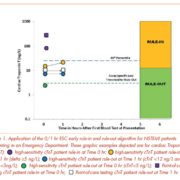
Significant attention has recently focused on early rule-in and rule-out strategies to detect non-ST-segment elevation (NSTEMI) acute myocardial infarction in the emergency department (ED) [1]. In 2015, the European Society of Cardiology (ESC) introduced guidelines for the management of acute coronary syndrome in patients without ST-segment elevation [2]. This guideline included interpretative algorithms to rule in or rule out acute myocardial infarction (AMI) based on clinical symptoms, high-sensitivity cardiac troponin (hs-cTn) concentrations at specific thresholds and changes in hs-cTn over intervals of 1 or 3 hours (Fig. 1) [2]. Importantly, the guidelines also highlighted the time-dependent uncertainty of using low concentration cut-offs in patients presenting early after the onset of pain with the following comment, “Only applicable if chest pain onset <3 h.” hs-cTn methods used in hospital clinical laboratories are expected to have an imprecision of ≤10% at the 99th percentile of a healthy population and allow for the detection of at least 50% and ideally >95% of healthy individuals [3]. The analytical qualities of the high-sensitivity methodology enable excellent diagnostic performance, that being a 99% clinical sensitivity and negative predictive value. However, it should be acknowledged that the prevalence of AMI in a specific population and the clinical sensitivity of the cardiac troponin test will influence the calculation of the negative predictive value [1]. Physicians will need to confirm that clinical trial populations are representative of their local population in order to verify the applicability of the diagnostic performance of the hs-cTn method [1].
Many studies with hs-cTn methods have investigated the derivation of upper reference limits, rates of change in hs-cTn concentration to detect AMI, assay imprecision at the 99th percentile concentration and performance characteristics of commercial assays with various interpretative thresholds [2, 4, 5]. Additional factors such as hemolysis, anticoagulant-bias, and within-subject variation will cause bias and imprecision in method results [6, 7]. An understanding of the interaction between these factors is incomplete because of the limited sample size in many clinical studies and the poor correlation between commercial assays [8]. In an initial attempt to understand this complex and complicated interaction, we used computer simulation models to predict the influence of method bias and imprecision on the rates of misclassification at low interpretative thresholds to rule out AMI and at thresholds near or exceeding the overall 99th percentile to rule in AMI. We found that at low thresholds, only method bias and not imprecision influenced the rate of misclassification whereas both method bias and imprecision would affect the early rule-in for AMI [9].
Point-of-care (POC) cardiac troponin devices
Short turnaround testing (STAT) in central hospital laboratories commonly employs the expectation of 1-hour turnaround time once the specimen has arrived in the laboratory. The ability to consistently meet the earlier time points, as outlined in the guideline algorithms, will represent a logistic challenge for many hospitals. POC methods provide an appealing alternative to central laboratory assessment, in particular for the initial rule-in when elevated cTn levels are present at Time 0 hr as well as sequential monitoring. However, prior to implementing a POC troponin method, comparison studies between the POC method and central laboratory cardiac troponin methods need to be conducted to assure concordance of the results. Several studies have reported a significant gap in the analytical sensitivity between hs-cTn and POC troponin methods [10, 11]. In 2015, Amundson and Apple described the analytical performance characteristics of POC cardiac troponin methods from nine different manufacturers [12]. These characteristics included clinical sensitivity and specificity, analytical imprecision, specimen type and preparation as well as the method principle of analysis. Although each of the devices provided different qualities, it was determined that an imprecision of ≤20% at the 99th percentile was paramount to limit both false-positive and false-negative results [12].
Accurate and precise measurement of cardiac troponin is essential for the consistent identification of NSTEMI patients with acute coronary syndrome. Currently, significant variation exists between clinical laboratory hs-cTn methods that could influence the clinical care provided to patients [8]. This also represents a challenge to the adoption of POC cTn technology.
Simulation models
Computer simulation model utility has been demonstrated with investigations of the impact of method bias and imprecision on potential clinical risk of insulin dosing errors with glucose meters [13], warfarin dosing errors with POC international normalized ratio (INR) devices [14] and with early rule-in and rule-out of AMI misclassification rates with cTn methods [9]. Clinical studies are challenging to conduct with NSTEMI patients presenting early in an emergency department because of variation in disease prevalence, poor correlation between cTn analytical methods and uncertainty in the time of pain onset. Low prevalence and variation in disease over time are common problems with other clinical laboratory biomarkers such as anti-viral antibodies as well as first-trimester pregnancy screening methods [15, 16]. One solution to this concern has been to generate finite mixture models of biomarker distributions to predict biomarker assay performance [17]. These simulated databases have been used to understand the relationship between clinical risk and assay characteristics and to extend use of the statistical information gathered in small clinical trials.
Simulation model investigation of the utility of POC cardiac troponin testing
Recognizing the lack of hs-cTn method standardization, the low incidence of NSTEMI AMI and the high cost of conducting clinical trials, few studies have assessed the utility of POC cardiac troponin methods to rule-in or rule-out AMI. To overcome these limitations, we recently used a simulation model to predict the diagnostic performance of two POC troponin methods (Radiometer AQT90 and Roche cobas h 232) relative to a hs-cTnT method (Roche cobas 6000/Elecsys) using an Emergency Department patient database proportionately expanded to n=10 000 in a finite mixture model. This study was presented at the 2017 Annual Conference for the American Association of Clinical Chemistry and Canadian Society of Clinical Chemists [18]. Finite mixture analysis of the 0-hr data obtained from the ROMI trial (n=1137 Optimal Troponin Cut-Offs for acute coronary syndrome by Roche hs-cTnT) enabled derivation of a simulation data set (n=10 000) troponin test results. Published regression equations were used to convert the hs-cTNT results into simulated AQT90 and h 232 cTnT results [19, 20]. Clinical sensitivity, specificity, positive and negative predicative values were calculated using the simulated hs-cTnT, AQT90 and h 232 data for AMI diagnosis using the limit of detection for the assays (Table 1).
The Roche hs-cTnT in this simulated data set achieved both sensitivity and negative predictive values above 99%. The predicted performance of the Radiometer AQT90 cTnT POC assay approached the estimates for hs-cTnT, suggesting POC methods are emerging that could be used both for AMI rule-in and AMI rule-out. The high limit of detection of the h 232 POC method limited its sensitivity and negative predictive values.
Conclusions
Rapid and reliable measurements of cardiac troponins are ongoing analytical challenges in laboratory medicine because this clinical tool is being used both to rule in and rule out NSTEMI. Clinical trials will be required to prospectively measure the diagnostic utility of high-sensitivity central laboratory and novel POC cTn methods, but simulation studies provide useful predictions. Our recent simulation study predicted we are now in an age where POC cTn methods are approaching analytical performance necessary to effectively rule in and rule out NSTEMI.
References
1. Morrow DA. Clinician’s guide to early rule-out strategies with high sensitivity cardiac troponin. Circulation 2017; 135: 1612–1616.
2. Roffi M, Patrono C, Collet JP, Mueller C, Valgimigli M, Andreotti F, Bax JJ, Borger MA, Brotons C et al. 2015 ESC guidelines for the management of acute coronary syndromes in patients presenting without persistent ST-segment elevation: task force for the management of acute coronary syndromes in patients presenting without persistent ST-segment elevation of the European Society of Cardiology (ESC). Eur Heart J 2016; 37: 267–315.
3. Jarolim P. High sensitivity cardiac troponin assays in the clinical laboratories. Clin Chem Lab Med 2015; 53: 635–652.
4. Wildi K, Gimenez MR, Twerenbold R, Reichlin T, Jaeger C, Heinzelmann A, Arnold C, Nelles B, Druey S et al. Misdiagnosis of myocardial infarction related to limitations of the current regulatory approach to define clinical decision values for cardiac troponin. Circulation 2015; 131: 2032–2040.
5. Love SA, Sandoval Y, Smith SW, Nicholson J, Cao J, Ler R, Schulz K, Apple FS. Incidence of undetectable, measurable, and increased cardiac troponin I concentrations above the 99th percentile using a high-sensitivity vs a contemporary assay in patients presenting to the emergency department. Clin Chem 2016; 62: 1115–1119.
6. Krintus M, Kozinski M, Boudry P, Capell NE, Koller U, Lackner K, Lefèvre G, Lennartz L, Lotz J et al. European multicenter analytical evaluation of the Abbott ARCHITECT STAT high sensitive troponin I immunoassay. Clin Chem Lab Med 2014; 52: 1657–1665.
7. Ryan JB, Wallace J, Sies CV, Florkowski CM, George PM. Evaluation of Abbott Architect high-sensitivity troponin I assay for haemolysis interference. Pathology 2015; 47: 716–718.
8. Ungerer JPJ, Tate J, Pretorius JC. Discordance with 3 cardiac troponin I and T assays: implications for the 99th percentile cut-off. Clin Chem 2016; 62: 1106–1114.
9. Lyon AW, Kavsak P, Lyon OAS, Worster A, Lyon ME. Simulation models of misclassification error for single thresholds of high-sensitivity cardiac troponin I due to assay bias and imprecision. Clin Chem 2017; 63: 585–592.
10. Palamalai V, Murakami MM, Apple FS. Diagnostic performance of four point of care troponin I assays to rule in and rule out acute myocardial infarction. Clin Biochem 2013; 46: 1631–1635.
11. Bruins Slot MHE, van der Heijden GJMG, Stelpstra SD, Hoes AW, Rutten FH. Point-of-care tests in suspected acute myocardial infarction: A systematic review. Int J Cardiol 2013; 168: 5255–5262.
12. Amundson BE, Apple FS. Cardiac troponin assays: a review of quantitative point-of-care devices and their efficacy in the diagnosis of myocardial infarction. Clin Chem Lab Med 2015; 53: 665–676.
13. Karon BS, Boyd JC, Klee GG. Glucose meter performance criteria for tight glycemic control estimated by simulation modeling. Clin Chem 2010; 56: 1091–1097.
14. Lyon ME, Sinha R, Lyon OAS, Lyon AW. Application of a simulation model to estimate treatment error and clinical risk derived from point-of-care INR device analytic performance. J Appl Lab Med 2017; 2: 25–32.
15. Harelip P, Williams D, Dezateux C, Tookey PA, Peckham CS. Analysis of rubella antibody distribution from newborn dried blood spots using finite mixture models. Epidemiol Infect 2008; 136: 1698–1706.
16. Wright D, Abele H, Baker A, Kagan KO. Impact of bias in serum free beta-human chorionic gonadotroponin and pregnancy-associated plasma protein-A multiples of the median levels on first-trimester screening of trisomy 21. Ultrasound Obstet Gynecol 2011; 38: 309–313.
17. Deb P, Trivedi PK. Demand for medical care by the elderly: a finite mixture approach. J Appl Econ 1997; 12: 313–326.
18. Lyon ME, Kavsak PA, Worster A, Lyon AW. Simulation models to rule out acute myocardial infarction with two point-of-care testing devices and a high sensitivity cardiac troponin T method. Poster Presentation. AACC/CSCC Annual Meeting, San Diego, CA, USA, 2017.
19. Bertsch T, Chapelle JP, Dempfle CE, Giannitsis E, Schwab M, Zerback R. Multicentre analytical evaluation of a new point-of-care system for the determination of cardiac and thromboembolic markers. Clin Lab 2010; 56: 37–49.
20. Le Goff C, Evrards S, Brevers E, Kaux JF, Cavalier E. Evaluation of troponin T on AQT90 and Cobas 8000 as a rule-in/-out tool in an emergency ward. Poster Presentation, EuroMed Lab Conference 2014.
The authors
Martha E. Lyon* PhD, DABCC, FACB and Andrew W. Lyon PhD
Department of Pathology & Laboratory Medicine, Division of Clinical Biochemistry, Saskatoon Health Region, Saskatoon, Saskatchewan, Canada
*Corresponding author
E-mail: martha.lyon@saskatoonhealthregion.ca

Fecal calprotectin is an effective biomarker in the differential diagnosis of inflammatory bowel disease (IBD) or irritable bowel syndrome (IBS). Since the National Institute for Health and Care Excellence (NICE) recommended its use there has been a significant increase in demand for analysis. New methods on mainline chemistry analysers can be implemented in response to the increase in workload.
by Sally Willett, Pamela Bowe, Frankie Leslie and Wayne Bradbury
Introduction
Chronic abdominal pain with diarrhea or constipation are common presenting symptoms in general practice. The differential diagnosis in this patient population is varied, but includes irritable bowel syndrome (IBS) or inflammatory bowel disease (IBD).
IBS is a chronic, relapsing and often lifelong disorder associated with disordered defecation and abdominal distention. It is not associated with any distinctive pathology and although it is troublesome for the patient it is not associated with any serious comorbidity. IBS is a relatively common diagnosis with a prevalence of 10–20% in the general population [1].
IBD is a much more serious condition, associated with a high morbidity. The term IBD includes Crohn’s disease and ulcerative colitis, conditions in which gastrointestinal inflammation can lead to major complications. Patients may require surgery and are at increased risk of colorectal cancer. Evolving treatment options, including novel drugs and surgery, aim to secure and maintain remission [2].
It is important to distinguish IBD from non-IBD, such as IBS, so that conditions can be appropriately managed and monitored. Endoscopy with histological examination of biopsy samples remains the gold standard in differentiating IBD and IBS, but is very expensive, time consuming and invasive. Conventional diagnostic testing included markers of inflammation including C-reactive protein (CRP) and erythrocyte sedimentation rate (ESR). However, these markers cannot localize inflammation to the gut. There has been intensive research into fecal biomarkers, specific for gastrointestinal inflammation over the last decade.
Calprotectin is a small calcium binding protein which contributes ~60% of the protein content of the cytosol in neutrophils [3]. During the intestinal inflammation observed in patients with IBD neutrophils migrate to the intestinal mucosa. As the inflammatory process damages the mucosal architecture the neutrophils are shed into the lumen and calprotectin is detectable in the feces. A raised fecal calprotectin concentration (>50 µg/g) has been shown to have a good diagnostic sensitivity and specificity for the detection of IBD [4].
Analytical methods for the detection of calprotectin in feces have evolved since the original enzyme-linked immunosorbent assay (ELISA) method was described in 1992 [5]. Commercial immunoassays are now available and quantitative lateral flow immunochomatographic point-of-care tests have been marketed to generate rapid results in the clinic setting. Many laboratories still use ELISA technology to analyse fecal samples for calprotectin. Such analysis is relatively labour intensive and often fecal extracts are run in duplicate at increased cost.
Since the National Institute for Health and Care Excellence (NICE) recommended the use of fecal calprotectin in primary care [2], there has been a significant increase in demand for this test. We investigated the performance of the new BÜHLMANN fCALTM turbo method which is CE marked for use on a number of mainline chemistry analysers. Implementation of this method has the potential to streamline analysis, relieving staff time and reducing cost.
Method
The BÜHLMANN fCALTM turbo particle enhanced turbidimetric immunoassay (PETIA) method on the Roche Cobas 6000 (c501) was compared to the BÜHLMANN Calprotectin ELISA method on the Dynex DS2. The study was performed within the Blood Sciences Department at North Cumbria University Hospitals.
The PETIA method uses polystyrene nanoparticles coated with specific antibodies to bind calprotectin in fecal extracts. Calprotectin in the sample mediates immune-particle agglutination and the resultant increase in turbidity is quantified by optical density.
Fecal samples were extracted using the BÜHLMANN CALEX® extraction device prior to analysis on both methods. Fifty-eight patient samples were analysed and results compared using regression analysis. Intra-assay precision was determined using 10 replicates of patient samples and inter-assay precision was calculated using 17 replicates of internal quality control material. NEQAS samples were analysed and bias relative to the all laboratory trimmed mean (ALTM) was assessed.
Results and discussion
Comparison of patient results showed good correlation (R2=0.97) consistent with previous studies [6, 7]. Regression analysis produced the following equation:
fCALTM turbo = (1.14×DS2 result)−23.42
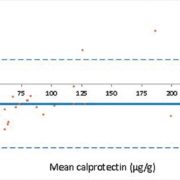
The fCALTM turbo method demonstrated a negative bias at concentrations <100 µg/g and a positive bias at higher concentrations when compared with the ELISA method (Fig. 1), which has also been observed by De Sloovere et al. [6]. The positive bias observed at higher concentrations is accounted for in local guidelines. Since the initial evaluation a field safety notice (FSN) was distributed informing users that a positive bias of 15.6% was observed using the BÜHLMANN CALEX® extraction devices. This has subsequently been corrected with the CALEX® Cap “N” devices. After the introduction of the revised extraction devices external quality assurance (EQA) results have improved, and local results show a mean bias of 54 µg/g from the NEQAS ALTM (Fig. 2). A commutable reference material for calprotectin is required to define analytical accuracy in the future.
Intra-assay precision, as determined by percent coefficient of variation (%CV), was 3.1% and 1.3% at concentrations of 48 µg/g and 247 µg/g respectively (n=10). Inter-assay precision was 3.3% at 73 µg/g and 1.1% at 247 µg/g (n=17). This is consistent with De Sloovere et al. who demonstrated %CVs of ~3% using the fCAL turbo method [6]. Since running the method routinely the internal quality control data shows a running %CV of 4.5% at 75 µg/g and 2.6% at 245 µg/g (n=23).
Historically, fecal samples required weighing and diluting in extraction buffer before analysis, which was very labour intensive and prone to error. The introduction of extraction devices has simplified the pre-analytical steps significantly. The introduction of the PETIA method into our laboratory has further simplified analysis and reduced staff time, as the fecal extracts are loaded directly onto the Cobas 6000 in barcoded CALEX tubes. The PETIA method has a large analytical range (20–1800 µg/g feces) reducing the requirement for costly repeat analysis on dilution. Although the ELISA method favours batch analysis, the PETIA method is suitable for random access testing, improving assay turnaround times. An additional wash step is implemented to eliminate carry over between fecal and blood samples.
Conclusion
It is important to accurately differentiate IBD from IBS so that appropriate patient care pathways can be instigated. The methodologies available for the quantification of fecal calprotectin have evolved significantly over the last decade. The BÜHLMANN fCALTM turbo PETIA method on the Roche Cobas 6000 (c501) demonstrated acceptable performance and is suitable for routine use within a diagnostic laboratory.
References
1. National Institute for Health and Clinical Excellence (NICE). Irritable bowel syndrome in adults: diagnosis and management. NICE clinical guideline 61, 2008.
2. NICE. Faecal calprotectin diagnostic tests for inflammatory diseases of the bowel. NICE diagnostic guideline 11, 2013.
3. Fagerhol M, Dale I, Andersson T. A radioimmunoassay for a granulocyte protein as a marker in studies on the turnover of such cells. Bull Eur Physiopathol Respir 1980; 16(Suppl): 273–282.
4. Walsham N and Sherwood R. Fecal calprotectin in inflammatory bowel disease. Clin Exp Gastroenterol 2016; 9: 21–29.
5. Roseth AG, Fagerhol MK, Aadland E, Schiønsby H. Assessment of the neutrophil dominating protein calprotectin in feces. A methodologic study. Scand J Gastroenterol 1992; 27: 793–798.
6. De Sloovere M, De Smet D, Baert F, Debrabandere J, Vanpoucke HJM. Analytical and diagnostic performance of two automated fecal calprotectin immunoassays for detection of IBD. Clin Chem Lab Med 2017; 28: 1435–1446.
7. Nilsen T, Sunde K, Hansson L, Havelka AM, Larsson A. A novel turbidimetric immunoassay for fecal calprotectin optimized for routine chemistry analysers. J Clin Lab Anal Analysis 2017; 31: 1–6.
The authors
Sally Willett FRCPath, Pamela Bowe* MSc, Frankie Leslie BSc, Wayne Bradbury FRCPath
Blood Sciences, North Cumbria University Hospitals NHS Trust, Cumberland Infirmary, Carlisle, UK
*Corresponding author
E-mail: Pamela.Bowe@ncuh.nhs.uk
In the human body, steroid hormones are involved in a variety of regulatory processes, which makes them also important diagnostic markers for a range of diseases. However, due to their high chemical similarity, they can represent a challenge for many assays – immunoassays in particular suffer from cross-reactivities. In comparison, LC-MS/MS-based assays provide high specificity in combination with the ability to determine several steroids in one run.
by Dr Marc Egelhofer
Steroids have a common distinct chemical structure – they consist of a cholesterol backbone with 3 hexane rings and a pentane ring. The hormones are synthesized in the adrenal cortex (corticosteroids) as well as in the reproductive organs (androgens, estrogens). Several doping agents are also artificial derivatives of the male sexual hormone testosterone, called anabolics, and are used abusively to increase muscle and bone synthesis.
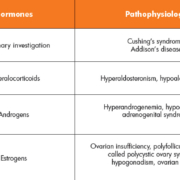
With a distinguished role in regulatory processes of the human body, dysfunctional steroid release can be responsible for many diseases with sometimes extremely unspecific symptoms (see Table 1). One example is aldosteronism, where the adrenal glands produce excessive amounts of the steroid hormone aldosterone. This leads to lowered levels of potassium in the blood (hypokalemia) and an increased excretion of hydrogen ions (alkalosis). Patients suffer from muscle spasms, fatigue, headaches, high blood pressure, and muscle weakness. However, these symptoms can be attributed to many diseases, and only the clinical evaluation of aldosterone plasma levels can ensure a correct diagnosis.
Challenging targets
The chemical similarity of the steroid structure can be a challenge, in particular in a clinical setting where requirements in specificity and selectivity need to be met. This problem becomes evident when looking at epidemiological studies of major diseases, where many different assay methods with a varying performance are used, resulting in an inability to compare data [1]. The discrepancies in assay performance also limit investigations where comparisons of absolute steroid concentration values are used, rather than relative levels. For example, absolute steroid hormone concentrations are needed when analysing effects of hormonal threshold concentrations to obtain a certain disease outcome – or not.
Steroid profiling
A lot of the published literature and of our knowledge about the physiology of steroid hormones is based on radioimmunoassays (RIA). One of the reasons for discrepancies in values, however, is that immunoassays suffer from various interferences due to antibody cross-reactions with other steroid hormones. In contrast, mass spectrometry has been recognized as the best available method for the accurate analysis of steroids in biological samples [2]. It overcomes limitations of immunoassays, while also simplifying the sample preparation in comparison to GC-MS/MS analysis that requires lengthy derivatization processes to obtain the analytes in the gaseous phase for separation.
We have developed a CE-IVD assay for mass spectrometry (MassChrom Steroids) for the determination of 15 steroid hormones. The subsequent analysis takes place in multi reaction monitoring mode (MRM). In this mode, the first and second mass spectrometers are set to a fixed certain mass. MS1 selects only the molecular ion, and ions with a different mass are disregarded. The molecular ion then fragments in the collision cell and MS2 detects the characteristic fragment. The MRM mode makes it possible to determine several steroids in a single run, thereby reducing the time for analysis and increasing the effectiveness of the method. The 15 hormones that can be analysed with this method are divided into two panels for a clear separation of each of the analytes (see Figure 1).
The chromatographic setup, including the analytical column, is identical for all analytes, thereby eliminating the need to change columns or mobile phases between separate runs. Depending on requirements and throughput, sample preparation can be performed in 96 SPE well plates or SPE columns. The assay has been tested on a range of systems, such as the AB Sciex Triple Quad 4500 or the Waters Xevo TQS instruments.
Salivary sampling
Plasma sampling can represent a problem, in particular for parameters that need to be collected several times a day or under stress-free conditions. Saliva consists of 99.5% water, electrolytes, mucus, white blood cells, epithelial cells, glycoproteins and enzymes, though saliva is also a carrier of steroid hormones. The speed at which they are transferred from blood into saliva is controlled by passage through the lipophilic layers of the capillaries and glandular epithelial cells. Consequently, the more lipophilic the molecules the faster is the transfer through these barriers. Salivary concentrations are therefore dependent on the lipophilic properties of the molecule — lipid-soluble steroids such as cortisol have higher concentrations, whereas more hydrophilic substances such as dehydroepiandrosterone-sulfate (DHEA-S) have much lower concentrations relative to the free plasma levels [3].
One of the common medical indications of cortisol testing in saliva is the screening for Cushing’s syndrome, a pathological increase of cortisol [4]. This hypercortisolism can be due to an endogenous overproduction or based on the intake of exogenous glucocorticoids. Symptoms may include obesity, hypertension, hyperglycemia, muscle weakness and osteoporosis. However, these symptoms are also not specific – the majority of individuals with some or all of the symptoms will not suffer from Cushing’s syndrome, therefore, the analysis of cortisol plays a significant role in the identification of the disease.
Cortisol levels do vary significantly over the course of the day (see Figure 2), making it a requirement to measure several times a day. Salivary sampling represents a simple, non-invasive and, for the patient, stress-free sampling method [5]. After a short introduction, patients can collect their sample by themselves at home, which results in a simple process to obtain samples at different stages of the circadian cycle.
The non-invasive nature of the collection procedure also enables samples to be obtained from patients afraid of venipuncture without provoking an unwanted adrenal stress response, especially in children and phobic patients. A disturbing influence of stress-induced adrenal activity is less likely, making salivary sampling more reliable compared with serum, in particular in stress research and pediatric applications [3].
We have developed a CE-IVD method for the determination of cortisol and cortisone in saliva with a sample prep procedure that is performed by filtration and in just a few steps (see Table 2).
The use of stable isotopically labelled internal standards for both analytes ensures reproducible and reliable quantification of the parameters. The performance data are 96-105% for the recovery of spiked samples, an intraassay variation of CV = 2-5%, and interassay variation of CV = 2-7 %, and the lower limit of quantification is 0.27 µg/l (see Figure 3).
Conclusions
Immunoassays are widely used for the measurement of steroids, though it is accepted that these methods suffer from various interferences due to antibody cross-reactions with other steroid hormones. In contrast, LC-MS/MS has been recognized as the best available method for the accurate analysis of steroids in biological samples. LC-MS/MS overcomes many limitations of immunoassays, enhances diagnostic utility of the testing, and expands diagnostic capabilities in endocrinology. In addition to the superior quality of the measurements, LC-MS/MS can help in the standardization and harmonization of steroid testing among clinical laboratories. Commercial suppliers offer complete solutions from sample to result that allow the determination of steroids with LC-MS/MS as the gold standard and without the need to go through the development of an in-house method.
References
1. Stanczyk F. et al. Standardization of Steroid Hormone Assays: Why, How and When? Cancer Epidemiol. Biomarkers Prev. 2017; 16(9): 1713-1719.
2. Rosner W. et al. Position statement: Utility, limitations, and pitfalls in measuring testosterone: an Endocrine Society position statement. J Clin Endocrinol Metab 2017; 92(2): 405-13.
3. Gröschl M. Current Status of Salivary Hormone Analysis Clin. Chem. 2008; 1759 54(11): 1759-69.
4. Nieman L.K. et al. The diagnosis of Cushing’s syndrome: an Endocrine Society Clinical Practice Guideline. J Clin Endocrinol Metab. 2008; 93(5):1526-40.
5. De Palo EF et al. Human saliva cortisone and cortisol simultaneous analysis using reverse phase HPLC technique. Clin Chim Acta. 2009; 405(1-2): 60-5.
The author
Marc Egelhofer PhD*
Chromsystems Instruments & Chemicals GmbH, Am Haag 12, 82166 Gräfelfing, Germany
*Corresponding author,
egelhofer@chromsystems.de

May 2026

Prins Hendrikstraat 1
5611HH Eindhoven
The Netherlands
info@clinlabint.com
PanGlobal Media is not responsible for any error or omission that might occur in the electronic display of product or company data.