




An electronic nose consists of an array of chemical sensors for the detection of volatile organic compounds and an algorithm for pattern recognition. Breath analysis with an electronic nose has a high diagnostic performance for atopic asthma that can be increased when combined with measurement of fractional exhaled nitric oxide.
by Dr Paolo Montuschi
Several volatile organic compounds (VOCs) have been identified in exhaled breath in healthy subjects and patients with respiratory disease by gas-chromatography/mass spectrometry (GC/MS) [1]. An electronic nose (e-nose) is an artificial system that generally consists of an array of chemical sensors for volatile detection and an algorithm for pattern recognition [2]. Several types of e-noses are available. An e-nose has been used for distinguishing between asthmatic and healthy subjects [3,4], between patients with asthma of different severity [3], between patients with lung cancer and healthy subjects [5], between patients with lung cancer and COPD [6], and between patients with asthma and COPD [7].
We compared the diagnostic performance of an e-nose with fractional exhaled nitric oxide (FENO), an independent method for assessing airway inflammation, and lung function testing in patients with asthma. We also investigated whether an e-nose could discriminate between asthmatic and healthy subjects and to establish the best sampling protocol (alveolar air vs oro-pharyngeal/airway air) for e-nose analysis. The results presented here are from a previously published study [4].
Methods
Study subjects
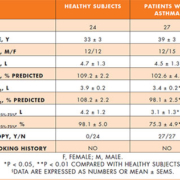
Twenty-four healthy subjects and 27 Caucasian patients with intermittent or mild persistent atopic asthma were studied [Table 1]. All asthmatic patients had a physician-based diagnosis of asthma, and the diagnosis and classification of asthma was based on clinical history, examination and pulmonary function parameters according to current guidelines [8]. Patients had intermittent asthma with symptoms equal to or less often than twice a week (step 1) or mild persistent asthma with symptoms more often than twice a week (step 2), forced expiratory volume in one second (FEV1) of 80% or greater of predicted value, and positive skin prick tests. Asthma patients were not taking any regular medication, but used inhaled short-acting β2-agonists as needed for symptom relief. Healthy subjects had no history of asthma and atopy, had negative skin prick tests and normal spirometry.
All subjects were never-smokers, had no upper respiratory tract infections in the previous 3 weeks, and were not being treated with corticosteroids or anti-inflammatory drugs for asthma in the previous 4 weeks.
Study design
The type of study was cross-sectional. Subjects attended on one occasion for clinical examination, FENO measurement, e-nose analysis, lung function tests, and skin prick testing. Informed consent was obtained from patients. The study was approved by the Ethics Committee of the Catholic University of the Sacred Heart, Rome, Italy.
Pulmonary function
Spirometry was performed with a Pony FX spirometer (Cosmed, Rome, Italy) and the best of three consecutive manoeuvres chosen.
Exhaled nitric oxide measurement
FENO was measured with the NIOX system (Aerocrine, Stockholm, Sweden) with a single breath on-line method at constant flow of 50 ml/sec according to American Thoracic Society guidelines [9].
Collection of exhaled breath
No food or drinks were allowed at least 2 hours prior to breath sampling. Two procedures for collecting exhaled breath were followed to study the differences between total exhaled breath and alveolar breath [4]. Subjects were asked to inhale to total lung capacity and to exhale into a mouthpiece connected to a Tedlar bag through a three-way valve [3]. In the first sampling procedure, the first 150 ml, considered as dead space volume, were collected into a separate Tedlar bag and discarded [Fig. 1a]. The remaining exhaled breath, principally derived from the alveolar compartment, was collected and immediately analysed with e-nose [4]. In the second sampling procedure, total exhaled breath was
collected [Fig. 1b] [4].
Electronic nose
A prototype e-nose (Libranose, University of Rome Tor Vergata, Italy), consisting of an array of eight quartz microbalance gas sensors coated by molecular films of metallo-porphyrins, was used [4]. E-nose responses are expressed as frequency changes for each sensor [Fig. 2] and then analysed by pattern recognition algorithms [2]. Ambient VOCs were subtracted from measures. Results were automatically adjusted for ambient VOCs.
Skin testing
Atopy was assessed by skin prick tests for common aeroallergens (Stallergenes, Antony, France).
Multivariate data analysis
Feed forward neural network was used to classify e-nose, FENO, spirometry data. A feed-forward neural network, a biologically derived classification model, is formed by a number of processing units (neurons), organised in layers. The datasets were divided into a training and a testing set. The first 27 measures collected were used for training and the remaining 24 measures for testing.
Statistical analysis
FENO values were expressed as medians and interquartile ranges (25th and 75th percentiles), whereas spirometry values were expressed as mean ±SEM. Unpaired t-test and Mann–Whitney U test were used for comparing groups for normally distributed and nonparametric data, respectively. Correlation was expressed as a Pearson coefficient and significance defined as a value of P<0.05.
Results
Electronic nose
The best results were obtained when e-nose analysis was performed on alveolar air as opposed to total exhaled breath [Table 2]. The diagnostic performance was determined in terms of the number of correct identifications of asthma diagnosis in the test dataset. Combination of e-nose analysis of alveolar air and FENO had the highest diagnostic performance for asthma (95.8%). The E-nose (87.5%) had a discriminating capacity that was higher than that of FENO (79.2%), spirometry (70.8%), combination of FENO and spirometry (83.3%), and combination of e-nose analysis of total exhaled breath and FENO (83.3%) [Fig. 3].
Exhaled nitric oxide
Median FENO values were higher in asthmatic patients than in healthy subjects [37. 6 (26.0–61.5) ppb vs 13.4 (10.0–19.9) ppb, P<0.0001, respectively].
Lung function tests
Both study groups had normal FEV1 values [Table 1]. Asthmatic patients had lower absolute (P = 0.032) and percentage of predicted FEV1 values (P = 0.004) than healthy subjects [Table 1]. Asthmatic patients had lower absolute (P = 0.003) and percentage of predicted forced expiratory flow between 25% and 75% of forced vital capacity (FEF25%–75%) (P = 0.002) than healthy subjects [Table 2].
Correlation between electronic nose, FeNO, and lung function tests
E-nose, FENO and lung function testing data were not correlated in either asthma or healthy control group.
Discussion
The original aspects of our study are:
1) the comparison between an e-nose and FENO, in addition to spirometry;
2) the comparison between total and alveolar exhaled air;
3) the analysis of data based on a neural network that included a training and a test analysis performed in two separate datasets for stringent quality control.
Our study indicates that an e-nose might be useful for asthma diagnosis, particularly in combination with FENO. Spirometry had the lowest diagnostic performance in line with a well-maintained lung function in patients with intermittent and persistent mild asthma. Our study confirms that FENO has a good diagnostic performance for asthma and suggests the possibility of using different non-invasive techniques for achieving a greater asthma diagnostic performance.
However, large powered studies are required to establish the diagnostic performance of e-nose, FENO and lung function testing in asthma patients. Ascertaining whether an e-nose could be used for screening of asthmatic patients requires large prospective studies. Also, the E-nose is not suitable for identifying and quantifying single breath VOCs, for which GC/MS is required.
Asthma is principally characterized by airway inflammation. It may seem surprising that the best results with the e-nose were obtained when collecting alveolar air rather than total exhaled breath which includes exhaled breath from the airways. This might reflect the contribution of oro-pharyngeal air which might introduce confounding factors making it e-nose analysis less reflective of what occurs within the respiratory system [10]. Moreover, the results of e-nose analysis of alveolar air could partially reflect the production of VOCs within the peripheral airways (mixed airways/alveolar air) due to significant inter-individual variability in dead space volume.
The lack of correlation between the e-nose results and those from FENO might indicate that these techniques reflect different aspects of airway inflammation. Formal studies to ascertain whether the e-nose could be used for assessing and monitoring airway inflammation in asthmatic patients are warranted. The E-nose is not suitable for ascertaining the cellular source of breath VOCs. Persistent airway inflammation can modify the metabolic pathways in patients with asthma. As patients included in our study were not on regular, anti-inflammatory drugs for asthma, we were unable to assess the effect of pharmacological treatment on breath VOCs, which requires controlled studies. Likewise, the effect of atopy on e-nose classification of asthma patients has to be addressed in future studies.
Validation of the classification model is essential. In our study, two different datasets for training and testing, obtained in different periods of time, were used. This way, the predictive capacity of the classification model is more suitable for a real life situation.
The E-nose analysis is a non-invasive technique that is potentially applicable to respiratory medicine. Several methodological issues including optimisation and standardisation of sample collection, transfer and storage of samples, use of calibration VOC mixtures, and qualitative and quantitative GC/MS analysis, have to be addressed.
In conclusion, an e-nose discriminates between asthma and healthy subjects and usage in combination with FENO increases the e-nose’s discriminatory ability. Large studies are required to establish the asthma diagnostic performance of e-nose. Whether this integrated non-invasive approach will translate into an early asthma diagnosis has still to be clarified.
Abbreviations
Abbreviations: FEF25%–75%, forced expiratory flow at 25% to 75% of forced vital capacity; FeNO, fractional exhaled nitric oxide; FEV1, forced expiratory volume in one second; FVC, forced vital capacity; GC/MS, gas chromatography/mass spectrometry; PEF, peak expiratory flow; VOC, volatile organic compound.
Acknowledgements
This study was supported by Merck Sharp and Dohme, and the Catholic University of the Sacred Heart.
References
1. Phillips M, Herrera J, et al. Variation in volatile organic compounds in the breath of normal humans. J Chromatogr B Biomed Sci Appl 1999; 729: 75–88.
2. Montuschi P, Mores N, et al. The electronic nose in respiratory medicine. Respiration (DOI: 10.1159/000340044, in press).
3. Dragonieri S, et al. An electronic nose in the discrimination of patients with asthma and controls. Allergy Clin Immunol. 2007; 120: 856–862.
4. Montuschi P, et al. Diagnostic performance of an electronic nose, fractional exhaled nitric oxide and lung function testing in asthma. Chest 2010; 137: 790–796.
5. Machado R, et al. Detection of lung cancer by sensor array analyses of exhaled breath. Am J Respir Care Med 2005; 171: 2186–1291.
6. Dragonieri S, et al. An electronic nose in the discrimination of patients with non-small cell lung cancer and COPD. Lung Cancer. 2009; 64: 166–170.
7. Fens N, et al: Exhaled breath profiling enables discrimination of chronic obstructive pulmonary disease and asthma. Am J Respir Crit Care Med 2009; 180: 1076–1082.
8. National Asthma Education and Prevention Program: Expert panel report III. Guidelines for the diagnosis and management of asthma. MD, Bethesda: National Heart, Lung, and Blood Institute, 2007; 1–61 (NIH publication no. 08-5847). Available at: www.nhlbi.nih.gov.
9. Recommendations for standardized procedures for the on-line and off-line measurement of exhaled lower respiratory nitric oxide and nasal nitric oxide in adults and children-1999: official statement of the American Thoracic Society 1999. Am J Respir Crit Care Med 1999; 160: 2104–2117.
10. van den Velde S, et al. Differences between alveolar air and mouth air. Anal Chem 2007; 79: 3425–3429.
The author
Paolo Montuschi, MD
Department of Pharmacology, Faculty of Medicine
Catholic University of the Sacred Heart
Largo F. Vito 1, 00168 Rome, Italy
E-mail: pmontuschi@rm.unicatt.it
Optical coherence tomography (OCT) has long been routinely used in ophthalmology, but recent studies in the field of renal cell carcinoma have demonstrated the ability of OCT to distinguish between renal malignancies and normal renal tissue. This suggests the possibility that, eventually, diagnosis by invasive biopsy could be replaced by non-invasive techniques.
by D. M. de Bruin, Dr P. Wagstaf, Dr K. Barwari, Prof. T. G. van leeuwen, Dr D. J. Faber, Prof. J. J. de la Rosette and Dr M. P. Laguna
The diagnosis of small renal masses
The diagnosis of small renal masses (SRMs) has seen a dramatic increase in presentation in recent decades. This change is mainly attributed to an increased use of abdominal imaging techniques such as computed tomography (CT) and magnetic resonance imaging (MRI). However, the large imaging depth of such modalities is accompanied by a relatively low resolution of the obtained images, hindering conclusions at the level of histological composition. Recent studies have shown an inverse correlation between tumour size and malignancy, and up to 10 % of all extirpated (and thus deemed malignant) tumours appear to be benign on histopathological examination. This inverse relationship increases to 25% when small renal masses (SRM) (≤4 cm) are considered [1]. Therefore, pre-operative diagnosis of (small) renal tumours would be desirable. However, due to the high number of non-diagnostic biopsy results (up to 30 % in SRM), systematic use of pre-operative renal mass biopsies is still not recommended in the major guidelines [2–5].
Renal mass biopsy
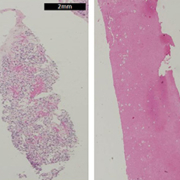
Most renal biopsies are performed percutaneously and are supported by image guidance using computed tomography (CT) or ultrasound. The biopsies are normally performed under local anesthesia in an outpatient setting. When a renal tumour is evaluated, a biopsy can deliver one of two results: diagnostic (benign or malignant) or non-diagnostic, the later including the presence of necrosis, fibrosis and normal renal parenchyma with absence of tumour cells [Figure 1]. When the biopsy is diagnostic, other characteristics such as histopathologic subtype and grade can also be assessed [4, 6, 7].
Conceptually a failed biopsy means that there is no tumour tissue available for assessment in the biopsy specimen, although other types of tissue might be present in the sample. The reason for a failed biopsy could be a technical failure of the puncture method (e.g. misfire or malfunctioning of the biopsy gun) or incorrect sampling caused by imperfect image guidance. Incorrect sampling is sometimes unavoidable due to the nature of renal tumours, which may contain necrotic and fibrotic tissue, or be mixed in nature with solid and cystic components. Also, the presence of normal renal tissue implies that the sampling is incorrect, as very few renal masses are composed of normal renal tissue. The presence of fibrotic, inflammatory, fatty or necrotic tissue in the specimen means that a differential diagnosis between malignant and benign tumour cannot be made. Besides the fact that histopathological analysis requires time, it is also subject to a certain degree of discordance among different pathologists [8].
A diagnostic imaging tool that allowed real-time visualization of micro-scale tissue architecture and subsequent differentiation of tissue type during the procedure would accelerate and simplify the overall diagnostic procedure.
Optical imaging
Optical diagnostic imaging comprises a novel group of imaging modalities that provide information by assessing differences between incident and detected light caused by the interaction of light with tissue. Scattering and absorption are tissue-specific optical properties and, by assessing these interactions,
diffeent tissue types can be distinguished.
Optical imaging has shown potential in several medical fields where they are employed routinely in various forms, ranging from pulse oximeters to fundus cameras, and experimental reports show promising results in the field of oncology [9].
Optical coherence tomography (OCT) is a technology developed in the early 1990s for ophthalmological applications [10] and is routinely used in that setting in current clinical practice. OCT is the optical equivalent of ultrasound, using light instead of sound to produce micrometer-scale resolution, cross-sectional images up to a depth of about 2 mm in renal tissue [Figure 2]. Resolutions up to 5 µm can be achieved, being 100–250 times higher than high-resolution ultrasound [11] and approaching that of microscopy. An image produced by OCT resembles the tissue structures observed in histology and can, therefore, be considered as an ‘optical biopsy’ [12] [Figure 2]. Moreover, data extracted from the original OCT images can be used for functional quantitative analysis after careful calibration of the OCT system. This finally results in a ‘functional optical biopsy’. The imaging depth is primarily limited by the scattering of light by cellular structures, hindering the return of reflections to the receiver. This scattering causes the light intensity to attenuate as it penetrates deeper into the tissue and this attenuation of OCT signal can be quantified by measuring the decay of signal intensity per unit depth. Using Lambert–Beer’s law and after careful calibration of the OCT system, a tissue specific attenuation coefficient (μOCT mm-1) can be derived [13–15]. Because malignant tissue displays an increased number, larger and more irregularly shaped nuclei with a higher refractive index and more active mitochondria, the μOCT is expected to be higher compared to normal and benign tissue [Figure 3].
In urology, the early research on OCT has been focused on tissue diagnosis predominantly in bladder and prostate cancer [12, 16] and, more recently, attention has turned to the field of renal cell carcinoma (RCC) and research is currently ongoing [17–20]. We were the first authors to publish data on the ability of OCT to differentiate renal malignancies from normal renal tissue using quantitative analysis. Subsequently, we performed an in vivo pilot study assessing the difference of the attenuation-coefficient of malignant renal tumours from normal renal parenchyma and benign tumours [18]. OCT-imaging took place using an in vivo OCT-probe during surgery, and a significant difference was found between the attenuation-coefficient of normal renal tissue and that of malignant tumours. Attenuation-coefficients of malignant and benign tumours did differ, although it is likely that the small sample size (3 benign tumours vs 11 malignant) is hindering a statistical significance, suggesting that a clear difference might be found in larger samples. Linehan et al. assessed qualitative differences of OCT images of different types of renal tumours showing that certain tumour subtypes do have different appearances on OCT-imaging; however, intriguingly, clinical distinction of tumours such as RCC from oncocytomas could not be demonstrated [19].
Future developments
Finally, anticipating the validation of results showing optical diagnostics being able to differentiate renal tissues, there is a potential role for the techniques in several clinical scenarios. Before going as far as replacing pathological examination as discussed earlier, the two techniques might be complementary with the real-time- and non-invasive nature of the optical techniques serving as guidance for correct needle placement in order to reduce the number of non-diagnostic biopsy results, as is already done in other malignancies, and the small in vivo probes necessary for such interventions are becoming commercially available. The technological configuration behind OCT allows for easy integration with diffuse reflectance spectroscopy (DRS) and Raman spectroscopy (RS). Moreover, the structural-imaging- and light-scattering based quantitative possibilities of OCT together with the quantitative light absorption sensitivity of DRS and the inelastic light scattering (and therefore biochemical) sensitivity of RS yields the full potential of a functional optical biopsy.
We would like to thank the Cure for Cancer Foundation (CFC) and the Technology Foundation (STW) for project funding. This work is part of the innovative Medical Imaging Technologies program (iMIT) of STW and the Novel Biopsy Methods program of CFC.
References
1. Tan H-J et al. Understanding the role of percutaneous biopsy in the management of patients with a small renal mass. Urology 2012; 79(2): 372–377.
2. Volpe A, Jewett MA. Current role, techniques and outcomes of percutaneous biopsy of renal tumors. Expert Rev Anticancer Ther 2009; 9(6): 773–783.
3. Motzer RJ et al. NCCN clinical practice guidelines in oncology: kidney cancer. J Natl Compr Canc Netw 2009; 7(6): 618–630.
4. Leveridge MJ et al. Outcomes of small renal mass needle core biopsy, nondiagnostic percutaneous biopsy, and the role of repeat biopsy. Eur Urol 2011; 60(3): 578–584.
5. Ljungberg B et al. EAU guidelines on renal cell carcinoma: the 2010 update. Eur Urol 2010; 58(3): 398–406.
6. Menogue SR et al. Percutaneous core biopsy of small renal mass lesions: a diagnostic tool to better stratify patients for surgical intervention. BJU Int 2012; doi: 10.1111/j.1464-410X.2012.11384.x.
7. Laguna MP et al. Biopsy of a renal mass: where are we now? Curr Opin Urol 2009; 19(5): 447–453.
8. Kümmerlin IP et al. Cytological punctures in the diagnosis of renal tumours: a study on accuracy and reproducibility. Eur Urol 2009; 55(1): 187–198.
9. Pierce MC, Javier DJ, Richards‐Kortum R. Optical contrast agents and imaging systems for detection and diagnosis of cancer. Int J Cancer 2008; 123(9): 1979–1990.
10. Huang D et al. Optical coherence tomography. Diss. Massachusetts Institute of Technology, Whitaker College of Health Sciences and Technology, 1993.
11. Fujimoto, JG et al. Optical coherence tomography: an emerging technology for biomedical imaging and optical biopsy. Neoplasia 2000; 2(1–2): 9–25.
12. Crow P et al. Optical diagnostics in urology: current applications and future prospects. BJU Int 2003; 92(4): 400–407.
13. Faber DJ et al. Quantitative measurement of attenuation coefficients of weakly scattering media using optical coherence tomography. Optics Express 2004; 12(19): 4353–4365.
14. van Leeuwen TG, Faber DJ, Aalders MC. Measurement of the axial point spread function in scattering media using single-mode fiber-based optical coherence tomography. IEEE Journal of Selected Topics in Quantum Electronics 2003; 9(2): 227–233.
15. de Bruin DM et al. Optical phantoms of varying geometry based on thin building blocks with controlled optical properties. J Biomed Opt 2010; 15(2): 025001.
16. Cauberg EC et al. Quantitative measurement of attenuation coefficients of bladder biopsies using optical coherence tomography for grading urothelial carcinoma of the bladder. J Biomed Opt 2010; 15(6): 066013.
17. Barwari K et al. Advanced diagnostics in renal mass using optical coherence tomography: a preliminary report. J Endourol 2011; 25(2): 311–315.
18. Barwari K et al. Differentiation between normal renal tissue and renal tumours using functional optical coherence tomography: a phase I in vivo human study. BJU Int 2012; 110(8 Pt B):E415–20.
19. Linehan JA et al. Feasibility of optical coherence tomography imaging to characterize renal neoplasms: limitations in resolution and depth of penetration. BJU Int 2011; 108(11): 1820–1824.
20. Onozato ML et al. Optical coherence tomography of human kidney. J Urol 2010; 183(5): 2090–2094.
The authors
D. Martijn de Bruin1,2,* Msc; Peter G. Wagstaff1 MD; Kurdo Barwari1 PhD, MD; Ton G. van Leeuwen2 PhD; Dirk J. Faber2 PhD; Jean J. de la Rosette1 PhD, MD; M. Pilar Laguna1 PhD, MD.
1 Department of Urology, Academic Medical Center, Amsterdam, Meibergdreef 9, 1105 AZ, The Netherlands
2 Department of Engineering & Physics, Academic Medical Center, Amsterdam, Meibergdreef 9, 1105 AZ, The Netherlands
*Corresponding author
E-mail: d.m.debruin@amc.uva.nl

Alzheimer’s disease (AD) is now the fifth leading cause of death in people over 65 years old. The prevalence of AD is increasing rapidly as the world population ages; data show that the incidence increases exponentially after the age of 65, with more than 40% of those aged over 85 now affected. According to a 2012 WHO report, nearly 36 million people globally are living with dementia, around two thirds of whom have AD, and this number is predicted to triple by 2050. The 18th World Alzheimer’s day on the 21st of September emphasized the need to reduce the stigma of dementia and make communities ‘dementia-friendly’. While these aims are laudable, the pressing need is for very early diagnosis and timely effective treatment if health services are not to be totally overwhelmed by the escalating numbers of AD patients needing care.
Two major abnormalities, clearly visible at autopsy, are present in abundance in the brains of AD patients, namely beta-amyloid plaques (Aβ) and neurofibrillary tangles (tau protein). However these lesions are not very evident using even advanced neuroimaging techniques, and the disease is most frequently diagnosed by psychological tests and rule-out of other causes of neurodegeneration, so that many early cases remain undiagnosed. Clinical research to allow early diagnosis has mainly focused on fluid biomarkers, and genetic risk factors and markers. Stanford University School of Medicine, USA, has been concentrating on the former approach with the aim of eventually developing a simple blood test that would confirm the onset of AD several years before clinical symptoms were apparent. Initially researchers compared signalling proteins from the blood of patients with and without AD. Their more recent work uses animal models to compare neurons from the hippocampal formation, which are very vulnerable and die in the early stages of AD, with neurons which are not affected until the late stages of the disease. Several labs based in Europe are concentrating on finding cerebrospinal fluid markers present in the early stages of AD, such as total tau, phosphorylated tau and the 42 amino acid form of Aβ, which would allow early specific and sensitive diagnosis. The search for genetic markers has demonstrated that the genes APOE and PICALM consistently affect Aβ.
Early diagnosis, however, must be followed by effective treatment. Currently cholinesterase inhibitors and NMDA receptor antagonists are used to alleviate symptoms but are not curative. Sadly just before this year’s World Alzheimer’s day it was announced that two antibody drugs targetting Aβ, namely Bapineuzumab from Pfizer and Solanezumab from Eli Lilly, had proved to be no better than placebo in Phase III clinical trials. Last year the European Parliament called for dedicated plans to reduce the burden of AD; a new funding model to ensure that big pharma doesn’t withdraw from the AD challenge could be the most valuable strategy.
Nucleic acids, which are among the best signatures of disease and pathogens, have traditionally been measured in centralised screening facilities using expensive instruments. Such tests are seldom available on point-of-care (POC) testing platforms. Advancements in simple microfluidics, cellphones and low-cost devices, isothermal and other novel amplification techniques, and reagent stabilisation approaches are now making it possible to bring some of the assays to POCs. This article highlights selected advancements in this area.
by Dr Robert Stedtfeld, Maggie Kronlein and Professor Syed Hashsham
Why point-of-care diagnostics?
Point-of-care diagnostics (POCs) bring selected capabilities of centralised screening to thousands of primary health care centres, hospitals, and clinics. Quick turnaround time, enhanced access to specialised testing by the physicians and patients, sample-in-result-out capability, simplicity, ruggedness and lower cost are among the leading reasons for the emergence of POCs. Another advantage of POCs is its flexibility to be adopted for assays that have received less attention and therefore are often “home brewed”, meaning an analyst develops it within the screening facility for routine patient care. The societal benefit–cost analysis of POCs may often exceed the traditional approaches by 10- to 100-fold. However, POCs must deliver the same quality of test results that is available with the existing centralised screening. Centralised screening is well established, has a performance record and analytical expertise ensuring reliability. POCs are emerging and, therefore, for successful integration into the overall healthcare system, POCs must provide an advantage over the existing system consisting of sample transport to a centralised location followed by analysis and reporting. Besides answering why POCs are better than the existing approaches, they must face validation and deployment challenges.
On the positive side, POCs are expected to have lower financial and acceptance barriers compared to what is faced by more expensive traditional approaches because of the need for lowering the cost of diagnostics in general. In 2011, the global in vitro testing market was $47.6 billion and projected to be $126.9 billion by 2022 (http://www.visiongain.com/). At present POCs constitute approximately one third of the total market – distributed in cardiac markers (31%), HbA1c (21%), cholesterol/lipids (16%), fecal occult blood (14%), cancer markers 98%), drug abuse (4%), and pregnancy (4%). Market forces critically determine the pace of technical development and deployment of POCs. Consider, for example, the global market for blood sugar testing (examples for genetic assays on POCs are non-existent) that is estimated to be $18 billion by 2015 and the alternative test, A1c that is only $272 million in 2012. Even though, A1c testing is now indispensable in managing diabetes, it has not received the priority it deserves due to much lower frequency of testing and therefore smaller market. Lowering the cost further, makes its deployment and diffusion even more challenging. Thus POCs must tackle the inherent bottleneck in their business model, i.e. how to succeed with an emerging or new technology, priced to be low cost, but without the access to market and high sales volumes – at least initially.
One option is to use the existing network of cellphones as one component of the POCs. Diagnostic tools based on cellphones and mobile devices have the potential to significantly reduce the economic burden and play an important role in providing universal healthcare. By 2015 the number of cellphone users will reach 1.4 billion and at least 500 million of them will have used health related applications (mHealth) in some form. Currently, more than 17,000 mHealth apps are available on various platforms. However, their ability to carry out genetic assays is yet to be harnessed. Out of the more than 2,500 genetic assays available, perhaps none are available on a mobile platform (GeneTests: www.genetests.org/). The coming decade is predicted to merge genomics, microfluidics and miniaturisation and multiply its impact many-fold by leveraging the resources and cellphone networks. Such platforms may allow the possibility of establishing an open source model for assays that are commercially not viable due to very low volumes.
A key question and the focus of this article is can genetic assays that are currently possible only in centralised screening facilities be carried out on POC platforms? We believe that through a combination of emerging molecular techniques, low-cost simple microfluidic systems, and some additional developments in detection systems and information transfer, it is possible to carry out genetic assays including mutation detection on POCs within the next 5 years and possibly sequencing within a decade.
Existing POC-adaptable genetic technologies
Nucleic acid-based amplification techniques remain the widely used analytical technique for genetic diagnostics. However, integrated systems capable of reliable detection with sensitivity and specificity required for clinical applications are still scarce. In centralised screening facilities, quantitative polymerase chain reaction (qPCR) is the workhorse for genetic analyses. Compared to qPCR, isothermal amplification strategies have been recognised as a promising alternative especially for POCs. This is because of the complexity of establishing the temperature cycling for qPCR and detection systems in POC devices. The advantages of isothermal amplification include high amplification yields (in some instances allowing a positive reaction to be observed with the naked eye), savings in power consumption without the need for temperature cycling, and low time to a positive amplification (as low as 5 minutes for larger copy numbers). Many isothermal techniques have been developed [1] including: loop-mediated isothermal amplification (LAMP), recombinase polymerase amplification (RPA), nucleic acid sequence-based amplification (NASBA), smart amplification process (SmartAmp), rolling circle amplification (RCA), multiple displacement amplification (MDA), helicase-dependent amplification (tHDA), strand displacement amplification (SDA), isothermal and chimeric primer-initiated amplification (ICAN), cross-priming amplification (CPA), single primer isothermal amplification (SPIA), self-sustained sequence replication reaction (3SR), transcription mediated amplification (TMA), genome exponential amplification reaction (GEAR) and exponential amplification reaction (EXPAR).
The benefits of one isothermal technique over another will depend on the application of interest. Techniques requiring a large number of enzymes and that are carried out at low temperature may be less amenable to POCs than those that require a single enzyme. More than one enzyme may, in general, increase the cost, rigor and complexity of the amplification reaction in a POC. While larger number of primer sets will increase the specificity, they will also make the design of primers to target a certain phylogenetic group or divergent functional gene more difficult, if not impossible. This is because of the need for multiple target specific regions, each being a certain distance (number of bases) between the other, and the increased complexity when trying to incorporate degenerate bases in multiple primer sequences within an assay. Isothermal assay enzymes that work at low temperature (less than 40°C) may have a disadvantage in hot and warm climatic conditions. However, an isothermal amplification strategy that directly incorporates primers/probes designed for previously validated qPCR assays, uses a single enzyme, can be performed at higher temperatures, and allows for accurate quantification, will greatly increase the attraction of isothermal amplification, ushering in a new era of point of care genetic diagnostics. The cost associated with licensing an amplification technique will also dictate if it can be used for POCs applications, specifically in low resource settings.
Existing POC platforms for genetic analysis
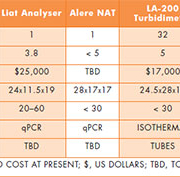
Multiple platforms have been developed for POC genetic testing with an emphasis on reduced costs, sizes, throughput, accuracy and simplicity. Table 1 is a non-exhaustive list to illustrate some of the capabilities. Ideally, POCs must simplify the genetic analysis by accepting crude or unprocessed samples. All of the listed qPCR platforms automatically perform sample processing (cell lysing and DNA purification) directly within the cartridge that the sample is dispensed. Compared to qPCR POCs, isothermal assay POCs have not focused as much on sample processing. There are two reasons for this. One, isothermal assays are generally less influenced by sample inhibitors and may not even require it in certain cases. Second, development of POCs based on isothermal assays has lagged because the assays themselves are relatively new for the diagnostics application.
Development of isothermal genetic POC devices, however, is relatively easier compared to qPCR devices. This is because isothermal genetic POCs utilise components that are inexpensive, smaller and have less power consumption. Use of such components is possible due to the high product yields of isothermal amplification techniques. LAMP, for example, produces 10 µg of DNA in a 25 µl volume compared to 0.2 µg in PCR. This high yield can be quantified with less sophisticated optics compared to those used in qPCR devices. The Gene-Z platform [figure 1], for example, uses an array of individually controlled low power light emitting diodes for excitation and optical fibres (one for each reaction well) for channelling the excitation light to a single photodiode detector for real time measurement [2].
Although POCs are generally considered as a single-assay device, multiplexing of targets (e.g. in co-infections) and analysing a given pathogen with greater depth (e.g. methicillin resistance Staphylococcus aureus, or HIV genotyping) is becoming absolutely critical. Genetic analysis is expected to allow resolution of genotype that is better than that possible by immunoassays. Use of simpler but powerful microfluidic chips (e.g. used with Gene-Z or GenePOC) instead of conventional Eppendorf tubes can be advantageous in terms of cost and power of analysis. Such microfluidic chips are increasingly changing their shape, form, and material and are bound to be simpler, better and more accessible. An example is the paper-based diagnostics platform developed by Whiteside’s group [3]. Miniaturisation obviously leads to significant reagent cost saving provided it does not run into detection-limit issues. Multiplexed detection also simplifies the analysis since manual dispensing into individual reaction tubes is not required. For example, the chip used with Gene-Z does not require external active elements for sealing, pumping, or distributing samples into individual reaction wells, eliminating potential for contamination between chips or to the device.
Type of genetic assays on POCs
So what types of genetic assays are more likely to move to POCs first? For regions with excellent centralised screening, it may be those assays where getting the results quickly using POCs saves lives or has tangible long term benefits, e.g. quickly deterring the infection and its antibiotic resistance. The leading example of this is MRSA, for which resistance has continuously increased over the past few decades. It is now known that patients are more likely to acquire MRSA in wards where the organism is screened by culturing compared to rapid molecular techniques. In such cases, detection of antibiotic resistance genes using a panel of genetic assays and POCs would minimise the practice of administering broad spectrum antibiotics because the results are not available soon enough.
In limited resource settings, the examples of genetic testing by POCs are literally endless – TB, malaria, dengue fever, HIV, flu, fungal infections and so on. This is because very little or no centralised screening occurs in such scenarios. The ability to measure dengue virus, for example, in 1–4 µl of blood could provide better tools to the 2.5 billion people who are at risk of infection and the 50–100 million people who do contract it every year. Similarly, multidrug-resistant and extensively drug-resistant TB is a global concern due to the high cost of treatment. At present, large numbers of mutations cannot be measured simultaneously using POCs. However, except the fact that isothermal mutation assays are fewer and the success rate for primer development is much lower than the signature marker probe/primer based assays, there are no technical barriers. The availability of a simple isothermal mutation assay will go a long way in making many genotyping-based diagnostics available on POCs.
In the long run, POCs may even be used to detect and quantify genetic markers associated with non-infectious diseases, such as cancer, and selected assays focusing on human genetics. Globally, cancer is responsible for 7.6 million deaths (2008 data) and projected to be rise to 13.1 million by 2030. Simple and quantitative tools capable of measuring a panel of markers may play an additional role – they may help collect data related to potentially useful but un-tested markers. Both PCR and isothermal-based assays are amenable to this application using circulating tumour cells, circulating free DNA/RNA, gene mutations, and microRNA panels. Currently utilised methods of cancer detection are highly invasive and time consuming. Minimally invasive methods on POCs may significantly increase the deployment of such capabilities.
Why do we need the wireless connectivity for POCs?
With POCs, comes the question of connectivity. Is it a must or good to have? We envision that it is important to have, but that a less useful form of device may be deployed without connectivity. Wireless connectivity via cellular phones has many advantages. Paramount among them is access to the physician and/or nurse for expert input and support. Technical advantages are automated data transfer, increased efficiency in reporting, saving time, lower equipment costs due to complexity of a touch-screen user interface and the computational power needed for data analysis.
The use of cellphones is an obvious possibility due to its ubiquitous availability and the vast network of mobile services. “There are 7 billion people on Earth; 5.1 billion own a cellphone; 4.2 billion own a toothbrush (Mobile Marketing Association Asia, 2011). By 2015 it is estimated that one third of cellphone users will have used mobile health solution in some form. However, POC genetic diagnostics and mobile networking have not yet crossed their paths. Some gene analysers (e.g. Gene-Z, Hunter) already have network enabled wireless connectivity to bridge these paths. More work is needed, however. One critical element is that transfer of data including through wireless mode must meet the requirements of the Health Insurance Portability and Accountability Act of 1996 (HIPAA) Privacy and Security Rules set by the U.S. Department of Health and Human Services. FDA clearance standards and specifications are still evolving for this area [4].
Impacts of the resulting products and devices are expected on both communicable and non-communicable diseases. Qualcomm Life provides a platform (2Net), that could be used for many different applications. According to them, “The 2Net platform is designed as an end-to-end, technology-agnostic cloud-based service that interconnects medical devices so that information is easily accessible by device users and their healthcare providers and caregivers” (http://www.qualcommlife.com/). Although the famous medical scanner or Tricorder of Star Wars fame is not yet possible, the recently announced $10 million prize by X-Prize Institute sponsored by Qualcom Life, for developing a Tricorder that can diagnose a set of 15 diseases without the intervention of the physician and weighs less than 2.3 kg is not too far from reality. In ten years, we should expect nothing less than a POC platform that is capable of sequencing-based diagnostics with assay cost of less than a dollar.
References
1. Craw P, Balachandran W. Isothermal nucleic acid amplification technologies for point-of-care diagnostics: a critical review. Lab Chip 2012; 12: 2469–2486.
2. Stedtfeld RD, Tourlousse DM, Seyrig G, Stedtfeld TM, Kronlein M, Price S, Ahmad F, Erdogan G, Tiedje JM, Hashsham SA. Gene-Z: a device for point of care genetic testing using a smartphone. Lab Chip 2012; 12: 1454–1462.
3. Martinez AW, Phillips ST, Whitesides GM, Carrilho E. Diagnostics for the developing world: microfluidic paper-based analytical devices. Anal Chem 2010; 82: 3–10.
4. Draft Guidance for Industry and Food and Drug Administration Staff – Mobile Medical Applications. July 21, 2011. www.fda.gov/medicaldevices/deviceregulationandguidance/guidancedocuments/ucm263280.htm.
The authors
Robert Stedtfeld PhD, Maggie Kronlein and
Syed Hashsham, PhD*
Civil and Environmental Engineering
1449 Engineering Research Court Rm A127
Michigan State University
East Lansing, MI 48824, USA
*Corresponding author:
E-mail: hashsham@egr.msu.edu
November 2025


Prins Hendrikstraat 1
5611HH Eindhoven
The Netherlands
info@clinlabint.com
PanGlobal Media is not responsible for any error or omission that might occur in the electronic display of product or company data.