


To be able to mobilise our healthcare system to treat patients as individuals rather than as members of larger, divergent groups, the IT Future of Medicine (ITFoM) initiative proposes to develop a new, data rich computation-based individualised medicine of the future, based on integrated molecular, physiological and anatomical models of every person (‘Virtual Patient’) in the healthcare system. The establishment of such ‘Virtual Patient’ models is now possible due to the enormous progress in analytical techniques, particularly in the ‘omics’ technology areas and in imaging, as well as sensor technologies. Complemented by continuing developments in ICT, these technological developments could, over the coming years, make the ‘Virtual Patient’ a key component in healthcare and disease therapy and prevention. ITFoM is an European consortium combining unparalleled expertise in medicine, analytics and ICT to develop the ‘Virtual patient’.
by the ITFoM consortium
Today´s medicine
Currently medicine assesses patients as parts of large, often inhomogeneous groups. Rather than as individuals, patients are treated as members of a group for which a specific therapy has been statistically shown to be more effective than other therapies. This is even regardless of the fact that this therapy might very well make the majority of patients more ill than they would be without treatment.
Today’s medicine does not take into account the tremendous diversity between human individuals. Moreover, diseases are not homogenous either in regard to clinical manifestation or underlying causative effects. In cancer this is taken to an extreme with each tumour being different, because each of these tumours is the product of a specific and unique accumulation of mutational events.
Symptoms and signs of disease often appear only late in disease progression when a large portion of the involved organ has already failed. The symptoms might be non-specific, making a diagnosis difficult. Today´s routine clinical workup of sick patients can be extensive, expensive and can have side effects. For these reasons, many advocate preventive measures that mandate predefined checkups to be carried out by primary care physicians. Only a few preventive measures are currently useful including blood pressure control, blood sugar and lipid measurements, colonoscopy in older people, gynaecological tests in women and last but not least weight control. Both in the presence or absence of symptoms and signs of diseases, the knowledge of the full genome, the metabolome, the proteome, the microbiome and the total exposure to toxins from the environment, would have a tremendous impact on both disease workup and preventive measures.
Tomorrow´s medicine
The medicine of the future will use a ‘Virtual Patient’ system that can integrate all molecular, physiological and anatomical data into personalised models of individual people, enabling prediction of the result of lifestyle choices and medical interventions on a tailored case-by-case basis. This innovative approach will revolutionise healthcare systems, with enormous benefits for prevention, diagnosis and therapy of patients. The possibility to personalise the models allows tailor-made therapy and treatment strategies for each individual. With the model-based decision of which drug or which doses of drugs will have the optimal effect in an individual patient, the model approach will help to optimise treatment and reduce side-effects dramatically. A model-based approach will also serve as a research tool to discover and validate new compounds for drug development, potential drug treatments and applications, but also new commercial opportunities in ICT, analytics and healthcare.
ITFoM: IT Future of Medicine
ITFoM – one of the six pilot initiatives within the European Future and Emerging Technologies Flagship scheme competing for a total of 1 billion EUR over a time span of 10 years – will lay the groundwork for a project that will integrate medicine, analytical techniques and IT hardware and software development for the IT driven, data-rich, individualised medicine of the future.
By now, it has become quite conceivable to develop sequencing strategies allowing the determination of the genome, epigenome and transcriptome of a tumour, for instance, in parallel to its surgical removal, allowing the surgeon to scale the extent of the operation based on the real time computational modelling of its detailed genomic, epigenomic and transcriptomic characterisation. Dramatic improvements are also expected in the capabilities of other molecular analysis techniques, such as proteomics and metabolomics.
Why ITFoM makes the difference in ‘personalised medicine’: next generation of molecular analytics
The generation of the first draft of the human genome was a worldwide concerted action that had a strong impact on the development of new technologies for molecular biology. During the last ten years high throughput technologies have been emerging not only for DNA sequencing, but also for protein and metabolite analysis. These high throughput technologies are called ‘omics’ technologies, highly parallelised approaches aiming at the generation of information on complete sets of molecules in organelles, cells, whole pathways or even organs in order to get a comprehensive view of a biological system. A variety of ‘omics’ subdisciplines have emerged, each developing its own instruments, techniques and processes. With the increasing amount of data generated by the ‘omics’ technologies, development of tools for intelligent mathematical analysis and data mining are needed. This demand has developed into a completely new area in biology, namely bioinformatics.
For the first driver of the ‘omics’ technologies, DNA sequencing, currently the so-called ‘third generation’ sequencing technology is already appearing on the market. This innovation will allow the sequencing of a whole genome within one day, the costs for sequencing are in almost free fall, it can be anticipated that very soon the goal of sequencing a whole genome for less than 1.000 $ will be reached. These innovations open the door to allowing the sequencing of the genome of each single patient and using this information for truly personalised medicine. DNA sequencing is also used to study transcriptional expression, microRNA, DNA methylation, hydroxymethylation, transcription factor
occupancy, histone modification at specific sites in the genome and overall organisation of genomes in cells.
The personal genome information will be a very important basis for future medicine, but more ‘omics’ information will be integrated: information about proteins and metabolites will allow a much more precise picture of the physiological status of a person. The aim for protein and metabolite analysis now is to apply a method that allows the detection of all proteins and all metabolites in a given sample or tissue. The same holds true for the information about protein modifications and interactions.
Other lab technologies for molecular analysis including imaging and sensor technology are also starting to increase in speed, precision, application range and information output.
Another level of complexity takes into account life style and environmental factors, and more specifically the microorganisms interacting with the human body.
All these technologies allow the generation of highly detailed information about an individual’s genetic make-up and physiological status to give an unprecedented insight into the functioning of a person’s cells, tissues, organs and even the individual as a whole.
Systems biology is a solution that provides the methodologies and tools for mathematical analysis, integration and interpretation of biological data, employing mathematical models of biological processes. Mathematical models support the understanding of data sets on a large scale and integrate existing knowledge for interpretation. Model approaches in the ITFoM will drive the development further into models that are able to generate computational simulations to predict what cannot be measured directly. The translation of these novel approaches into clinical application will allow identification of the optimal therapy or medical treatment for each person based on the individual data available.
To generate the models and implement the ‘Virtual Patient’ model into clinical practice, substantial advances must be made in underpinning hardware and software infrastructures, computational paradigms, human computer interfaces and visualisation, as well as in the instrumentation and automation of techniques required to gather and process all relevant information. Examples of the major challenges in the information and communication technologies are interoperability, data storage and processing, efficient use of computing power, statistics and medical informatics. Integration of the individual datasets is realised via the ITFoM ‘Virtual Patient’ models enabling the provision of concrete health advice on a personal basis.
The authors
IT Future of Medicine Consortium (ITFoM)
Max Planck Institute for Molecular Genetics
Ihnestrasse 63-73
14195 Berlin
Germany

According to applied physiologist Dr Brian Moore, and Dr Andrew Hodgson, Consultant Physician (Haematology) – co-founders of the Irish company ORRECO – one of the most difficult elements of competing in sport at a world class level is to balance training hard whilst ensuring adequate recovery. Dr Moore and his integrated team of high performance practitioners advised Olympic medalists and competitors at the last three Olympic games, and will do the same at the London Olympic games this year. CLi spoke to Dr Moore and his team to find out more about ORRECO’s mission and the methods it uses to help athletes reach peak performance without overtraining.
Q. Could you first tell us a little about your company. What inspired you to set up ORRECO and what did you hope to achieve? Briefly how does the company operate?
ORRECO was founded with the aim of joining the disciplines of clinical and sports haematology to deliver a unique proposition for world sport. We facilitate blood and saliva analysis for some of the world’s best athletes from an administrative base on Ireland’s western coast – the Innovation Centre at the Institute of Technology, Sligo.
Analysis occurs through a global network of partner laboratories that are located close to training (altitude, warm weather) and competition (World Cup, Championship, Olympic) venues. Results are reported in real time through our software solution DAVE (Download, Analyse, Validate and Export your results) to allow team physicians, coaches and performance staff to review information immediately and compare the results to an athlete’s performance. We cross-reference the results with training and competition data, (e.g. speed and power, GPS tracking) to understand the individual’s adaptation to training.
Recognising that testing and result reporting are just one part of the solution; we also provide a consultancy service for elite athletes and their teams. Our performance staff assists in interpretation and comparison of results against sports-specific reference ranges, as well as provides practical guidance and interventions where needed. This includes nutritional support, training-plan modification and more. Rather then rely on one specific biomarker, we use multiple assays that are aggregated by our bio-statisticians and map the athlete on a range from ‘well’ to ‘unwell’, and, from ‘peak performance’ to ‘over-reached’ or ‘over trained.’
Q. Tough training programmes are integral to sporting success, but what are the main problems that can occur if athletes over train?
We know that in the elite sport world, very small margins exist between defeat and victory. To succeed, an athlete must train extremely hard, and there are situations when a training programme requires an athlete, player or squad to be selectively overreached or overloaded for a short time period. With a subsequent, controlled reduction in training volume, a super-compensation occurs, allowing for a positive adaptation to the intense training dose and overall improved performance.
However, if athletes train too hard for too long in their pursuit of success, they will eventually fatigue and follow the performance continuum [Figure 1], which leads to injury and increased frequency of illness, such as upper-respiratory tract infections, immunosuppression, disturbed sleep patterns and depressed mood states. Biomarker analysis can help navigate the fine line required to balance adequate load with sufficient recovery.
Q. How did you establish which biomarkers were the most important for monitoring athletes in training and how do you carry out analysis of these biomarkers?
Our starting point is leveraging clinical markers that are routinely used for general health and wellness. In the context of training, we rely on biomarkers found in blood and saliva that are known signs of a normal process (e.g. adaptation), abnormal process (e.g. maladaptation), a particular condition (e.g. under performance syndrome) or disease (e.g. infection).
Biomarkers may be used to see how well the body responds to an intervention/process (e.g. training modification), a treatment (e.g. recovery solution) or a stress inducer (e.g. game, match). Our specialist team includes former speed and power coach to the New Zealand ‘All Blacks’ and Americas Cup sailing team, Dr Christian Cook; the first team physiologist to Real Madrid, Dr Carlos Gonzalez-Haro; the former Director of the Australian Institute of Sport Haematology Lab, Robin Parisotto; and Clinical and Performance Nutritionist to the British Olympic Team, Nathan Lewis (MSc). We have significant collective experience of applying, analysing and interpreting biomarkers across a range of elite sports at the very highest level of world competition. We facilitate analysis of markers that have been applied and validated in the world of elite sport. Our combined experience of working with thousands of elite athletes and monitoring them at key times during the season means we can discern trends that are consistent with either peak, or, at times, underperformance. We are especially interested in athletes’ cell counts, inflammatory markers, trace metal status, immunoglobulins and hormonal profiles.
Q. Are you satisfied with the methods and equipment used?
We are constantly looking for improvement and searching for markers that can give us objective information about an athlete’s response capabilities and/or status. For example, we utilise the routine parameters, including the differential WBC, haemoglobin and reticulocyte counts, available on the Siemens Healthcare Diagnostics ADVIA 2120 Haematology System, to give us rapid insights into an athlete’s health and wellness. We also rely on additional parameters available on this platform, such as the cellular haemoglobin of the reticulocyte (CHr) and the percentage hypochromasia of both the reticulocytes and mature red cells (%hypor and %hypom). These parameters are also routinely utilised in renal medicine to deliver specific information about the quality of erythropoiesis.
Historically, we would have used ferritin to assess the iron stores, but given the acute phase response of the parameter, we interpret the result in concert with the white cell counts and creatine kinase (CK), as we know the parameter is elevated in infection and inflammation. This information is especially important when an athlete is undertaking altitude or endurance training, as we can ensure enough iron is being made available to the developing red cells and they benefit from all their hard work. We can also pick up a functional or pre-latent iron deficiency before it impacts upon performance and track the responses to prescribed iron supplementation. Thus, in addition to looking for new techniques, we also seek to apply established principles in new ways.
Q. How do you see the future for sports medicine in general and ORRECO in particular?
As explained by our colleague, Dr Bruce Hamilton, sports medicine is no longer focused on just treating injury and illness in athletes. Increasingly, early recognition and prevention of injury and illness is the goal. Particularly when working with elite athletes, being able to identify athletes at risk of developing problems is a constant challenge, and vast amounts or research and resources are being directed at this task. Despite this, we are only just beginning to understand the risk factors behind even common injuries (e.g. hamstring muscle strains) and techniques that may be used to prevent them. Similarly, while illness and fatigue have been recognised as significant limitations to elite athletic performance for many years, to date, the understanding of risk factors and the ability to identify athletes at risk has been limited by both our knowledge base and our technical ability. The goal of tools, such as those developed by ORRECO, are to facilitate the identification and prevention of illness in highly tuned athletes, thereby allowing them to compete to the best of their ability. This is consistent with the aspirations of modern sports medicine around the world.
By integrating sports haematology and biochemistry with knowledge and expertise in clinical and performance nutrition, applied physiology, speed and power physiology, biostatistics and cellular nutrition across our team, whole avenues of possibility open up to performance science in general. ORRECO aims to provide a global resource for real-time sports haematology and biochemistry results for athletes training and competing around the world.
For more information go to www.orreco.com. An introductory video can be seen at http://vimeo.com/41485500.
Siemens Healthcare Diagnostics

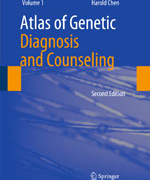
by Harold Chen. Pub. by Springer 2012, 2472pp., €519. In 3 volumes, not available separately.
ISBN 978-1-4614-1036-2.
With almost 40 years of experience in clinical genetics, Dr Chen has shared his knowledge of almost 250 genetic disorders, malformations and malfunction syndromes. The author provides a detailed outline for each disorder, describing its genetics, basic defects, clinical features, diagnostic tests, and counselling issues, including recurrence risk, prenatal diagnosis, and management. Numerous colour photographs of prenatal ultrasounds, imagings, cytogenetics, and postmortem findings illustrate the clinical features of patients at different ages, patients with varying degrees of severity, and the optimal diagnostic strategies. The disorders cited are supplemented by case histories and diagnostic confirmation by cytogenetics, biochemical, and molecular techniques, when available. The Atlas of Genetic Diagnosis and Counseling will lead to a better understanding and recognition of genetic diseases and malformation syndromes as well as better evaluation, counselling and management of affected patients. In this new edition, 47 additional genetic disorders are added, as well as extensive updates made to the previous disorders. New illustrations, as previous edition, will be supplemented by case and family history, clinical features, and laboratory data, especially molecular confirmation.
SPRINGERwww.springer.com


Sample collection is an important aspect of scientific work because it shapes, to a great extent, the study design and methodology, both of which may influence the outcomes of scientific research. However, often in scientific evaluations of studies which involve both field sample collection and laboratory work, only the laboratory research aspect receives serious attention, while other factors such as the socio-cultural, ecological and belief values of subjects who donate samples for laboratory studies are much less emphasised. These factors and how they play out in any particular study area are critical determinants of successful field sample collection especially in the developing countries.
by Dr Olufunmilola Ibironke, Dr Samuel Asaolu and Dr Clive Shiff
Urinary schistosomiasis is caused by a trematode worm, Schistosoma haematobium [1]. Infection with this parasite has been shown to be the commonest cause of haematuria and urogenital diseases in endemic areas. Thus, detection of haematuria in urine has been proposed as a valid indicator of schistosome infection, and has been widely adopted in many national schistosomiasis control programmes [2,3]. Diagnostic procedures in control programmes accordingly involve collection of urine samples from patients.
Most studies of urinary schistosomiasis in Nigeria and other endemic countries have targeted schoolchildren [4-8], because they represent the prime reservoir for the parasite, and children are amenable to mass chemotherapy [9]. However, studies have shown the debilitating effect of the parasite among adults in communities where it is endemic [10-13] and so this population also needs to be studied. As opposed to urine sample collection from children which is mostly done in schools, collection of urine from adults is difficult, particularly among persons who do not consider schistosomiasis as their major health problem when compared to malaria. In a school-based setting, after obtaining clearance from government health and school administrative authorities, researchers usually work with school teachers to get permission from pupils’ parents, and to educate the children involved in the study about how to follow urine sample collection instructions. However, for studies which involve adults, researchers, with the help of local health officers, would have to deal with patients directly to seek their individual involvement in the study, the acceptance of which depends on a number of the above mentioned factors.
Few studies have investigated the sociology of communities involved in such studies. We present here a study on urinary schistosomiasis in two villages in Ogun State, Nigeria, involving collection of urine samples from adults, to investigate the factors that drive their acceptance or refusal for inclusion in the study.
Methods and study sites
The study involved adults between the ages of 20 and 55 years who were mobilised to school halls in each village through the respective heads of the villages. Participants were informed of their right to accept or reject inclusion in the study. Many adults refused to come to school halls, many others who came rejected inclusion in the study. Some others accepted inclusion and collected urine sample containers but never came back while others accepted full participation. People in endemic communities show negative attitudes to urine sample collection for different reasons. To find out villagers’ attitudes to the urine sample collection process, we asked consenting participants why their friends or family refused to participate and in the process we identified some factors responsible for their attitudes. We also visited some households either to seek consent for inclusion or to understand reasons for refusing inclusion in the study.
This study was conducted in July, 2010, in Ogun State, Nigeria as a part of a study on the diagnosis of urinary schistosomiasis in six villages. For the purpose of comparison, two villages, Apojola located in Odeda Local Government Area (LGA), and Ogbere in Ijebu-east LGA, were selected. Apojola is located on Oyan Dam Reservoir. The inhabitants are all immigrant fishermen and their families, and are a mixture of Moslem Hausas and Christian Idomas. Awawa River serves Ogbere community. The inhabitants are mainly Christian Yorubas, and a mixture of farmers and Local Government Area civil servants. Ethical consideration, the data collection process, the population of each village, vegetation types and locations of each local government area have been reported previously [14].
Observations and discussion
Socio-cultural aspect
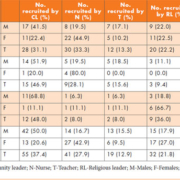
Several urinary schistosomiasis studies had been conducted in Nigeria, most of which involved urine sample collection, so there is a high level of awareness about the importance of control programmes. However, in the process of field studies there is often confusion in the minds of the participants leading to fear of exposure to strangers which was found to prevail among the villagers. Frequently researchers are mistaken for government agents visiting for revenue collections. If the researcher can work with members of the community to change these opinions it would likely improve level of cooperation for inclusion in the study. We explored this aspect in Apojola, a community located on the heavily schistosome-infested Oyan dam reservoir. We made the first attempt to recruit participants through the community leader, followed by the religious leader, a nurse and a school teacher. The number of participants recruited through the assistance of the different leaders according to age and gender are shown in Table 1a. In Table 1b, it was shown that the community leader is the most effective in helping to mobilise the villagers of both genders for urine collection.
There is also an increasing cynicism about the disease among adult patients in endemic communities. Many members of the communities who admit passing blood in the urine do not perceive it as an indication of a serious disease. They consider it as a sign of virility and puberty which is a familiar sign among adults in other villages around them. A few others who have experienced some discomfort and thought it might be a major health problem were either ashamed of their disease status or ashamed of bringing their ‘red’ urine. Past studies have noted that individuals’ perceptions on the aetiology and impact of urinary schistosomiasis differed with their levels of education and gender [13]. Lack of knowledge about the cause and effect of the disease affects patient’s turnout for sample collection and this in turn has a direct influence on field data coverage and research quality.
Apart from lack of health education on the cause of the disease, the willingness to participate in the urine sample collection process is seemingly greater among patients with some level of education than among the uneducated. We investigated how patient’s level of education impacts turnout for urine sample collection in Ogbere community. Ogbere inhabitants are a mixture of uneducated farmers, who have nought to six years of formal education, and the educated comprising teachers and Local Government Area civil servants, who have from seven to 16 years of formal education. In Table 2, data from both groups are presented for comparison to show turnout according to education level and gender.
This Table shows the percentage contributions by the Community Leader (CL), Nurse (N), Teacher (T) and Religious Leader (RL) on the total number of respondents. CL is best for mobilising males in the community (P = 0.00155). CL is also best for mobilising male and female with calculated P = 0.052 just higher than 0.05. N is best for mobilising females but this is not statistically significant.
Ecological aspect
Transmission of urinary schistosomiasis is through freshwater snails, Bulinus species, as intermediate hosts and varies with different ecological factors. In many endemic communities, the ecological factors which favour disease transmission also promote agricultural practices such as farming, cattle rearing and fishing. Therefore, transmission to humans often occurs as a result of irrigation systems for agricultural purposes or when visits are made to the rivers for washing and swimming. As such, the rate of transmission to humans varies, to a great extent, with occupation.
However, since diagnosis is by urine testing, many peasant farmers and fishermen who are thought to be the most impacted with S. haematobium because of frequent water contact may remain undiagnosed and untreated. Urine sample collection for the diagnosis of urinary schistosomiasis is preferably done between the hours of 10:00 and 14:00 for optimum egg passage [9]. These hours coincide with the time during which farmers go to farm and fishermen set nets for fish catching. This coincidence might affect turnout for sample collection and estimation of overall disease prevalence in the community.
To evaluate the impact of patient’s occupation on turnout for urine sample collection, we compared turnout of farmers and civil servants in Ogbere community. For statistical purpose, farmers, cattle rearers and fishermen are classified as farming, while students, teachers and local government workers are classified as civil servants, see Table 2. In total, there are 84 participants out of which 33 are farmers (39.2%) and 51 are civil servants (60.7%). In all, more women (79.8%) turned out for sample collection.
According to the community leader, the total adults’ population in Ogbere is 3121 and the ratio of farmers to civil servants is approximately 20:1.
Z- Distribution test was used to compare the response level between the two groups using the formula:
(see picture number 4)
where p is the difference of proportions, N1 = 149 = Educated population and N2 = 2972 = Uneducated population. At all levels of significance 0.05, 0.01 and 0.001, response from the educated civil servant population was significantly higher than response from the uneducated farmer population.
Belief structures
Christians in Apojola and Ogbere communities were relatively unhindered by religious belief regarding their willingness to come forward for education about the project and provision of their urine samples. However there was gender problem with urine collection among the Muslim families at Apojola. The Muslim families at Apojola have the culture of restricting married women within the family household compounds and forbiding male visitors of adolescent age and older from entering the compounds or visiting the women. In order to be able to collect urine samples from these Muslim women, the local community nurse and a female member of our research team were accompanied by a local female Muslim field assistant and interpreter before being allowed access to the compounds to explain the importance of the disease and purpose of the study.
Conclusion
This study attempts to find out patients‘ attitudes to scientific research especially during a field sample collection process and suggests possible reasons for rejection of inclusion in scientific research by patients. In general, this study showed that social and ecological values including educational background, occupation, religious practices and poor knowledge about the aims and objectives of the study, strongly influence turnout for urine sample collection. Therefore, such values are worth considering for a holistic understanding of the scientific study results.
References
1. Edungbola LD, Asaolu SO, Omonisi MK, Aiyedun BA. Schistosoma haematobium infection among schoolchildren in the Babana district, Kwara State, Nigeria. Afr J Med Sci 1988; 7: 187-193.
2. Koukounari A, Gabrielli AF, Toure S, Bosque-Oliva E, Zhang Y, Sellin B, Donnelly CA, Fenwick A, Webster JP. Schistosoma haematobium infection and morbidity before and after large-scale administration of praziquantel in Burkina Faso. J Infect Dis 2007; 196: 659-669.
3. Webster JP, Koukounari A, Lamberton PH, Stothard JR, Fenwick A. Evaluation and application of potential schistosome-associated morbidity markers within large-scale mass chemotherapy programmes. Parasitology 2009; 136: 1789-1799.
4. Abdel-Wahab MF, Esmat G, Ramzy I, Fouad R, Abdel-Rahman M, Yosery A, Narooz S, Strickland GT. Schistosoma haematobium infection in Egyptian schoolchildren: demonstration of both hepatic and urinary tract morbidity by ultrasonography. Trans R Soc Trop Med Hyg 1992; 86: 406-409.
5. Fenwick A, Webster JP, Bosque-Oliva E, Blair L, Fleming FM, Zhang Y, Garba A, Stothard JR, Gabrielli AF, Clements AC, Kabatereine NB, Toure S, Dembele R, Nyandindi U, Mwansa J et al. The Schistosomiasis Control Initiative (SCI): rationale, development and implementation from 2002-2008. Parasitology 2009; 136: 1719-1730.
6. French MD, Rollinson D, Basanez MG, Mgeni AF, Khamis IS, Stothard JR. School-based control of urinary schistosomiasis on Zanzibar, Tanzania: monitoring micro-haematuria with reagent strips as a rapid urological assessment. J Pediatr Urol 2007; 3: 364-368.
7. Nduka FO, Ajaero CM, Nwoke BE. Urinary schistosomiasis among school children in an endemic community in south-eastern Nigeria. Appl Parasitol 1995; 36: 34-40.
8. Okoli EI, Odaibo AB. Urinary schistosomiasis among schoolchildren in Ibadan, an urban community in south-western Nigeria. Trop Med Int Health 1999; 4: 308-315.
9. Ibironke OA, Phillips AE, Garba A, Lamine SM, Shiff C. Diagnosis of Schistosoma haematobium by detection of specific DNA fragments from filtered urine samples. Am J Trop Med Hyg 2011; 84: 998-1001.
10. Koukounari A, Webster JP, Donnelly CA, Bray BC, Naples J, Bosompem K, Shiff C. Sensitivities and specificities of diagnostic tests and infection prevalence of Schistosoma haematobium estimated from data on adults in villages northwest of Accra, Ghana. Am J Trop Med Hyg 2009; 80: 435-441.
11. Mostafa MH, Sheweita SA, O’Connor PJ. Relationship between schistosomiasis and bladder cancer. Clin Microbiol Rev 1999; 12: 97-111.
12. Mungadi IA,.Malami SA. Urinary bladder cancer and schistosomiasis in North-Western Nigeria. West Afr J Med 2007; 26: 226-229.
13. Sarkinfada F, Oyebanji AA, Sadiq IA, Ilyasu Z. Urinary schistosomiasis in the Danjarima community in Kano, Nigeria. J Infect Dev Ctries 2009; 3: 452-457.
14. Ibironke O, Koukounari A, Asaolu S, Moustaki I, Shiff C. Validation of a new test for Schistosoma haematobium based on detection of Dra1 DNA fragments in urine: evaluation through latent class analysis. PLoS Negl Trop Dis 2012; 6: e1464.
The authors
Dr Olufunmiola Ibironke*
Cell and DNA Repository
Rutgers, The State University of New Jersey
New Brunswick
New Jersey, USA
e-mail: oai5@rutgers.edu
Dr Clive Shiff
Department of Molecular Microbiology and Immunology
Johns Hopkins Bloomberg School of Public Health
Baltimore, MD, USA
e-mail: cshiff@jhsph.edu
Dr Samuel Asaolu
Department of Zoology
Obafemi Awolowo University
Ile-Ife
Nigeria
*Corresponding author
May 2026

Prins Hendrikstraat 1
5611HH Eindhoven
The Netherlands
info@clinlabint.com
PanGlobal Media is not responsible for any error or omission that might occur in the electronic display of product or company data.