

The interest in newborn screening for lysosomal storage disorders (LSDs) has increased significantly due to newly developed enzyme replacement therapies, the need for early diagnosis, and advances in technical developments. However, testing for lysosomal storage disorders in newborn screening (NBS) raises many challenges for primary health care and their providers. The high frequency of late-onset mutations makes lysosomal storage disorders a broad health problem beyond childhood, as well as a challenge for diagnosis and therapy.
by Professor David C. Kasper
Clinical Background
Lysosomal storage disorders (LSDs) may be an attractive candidate for newborn screening (NBS). These disorders result in the accumulation of macromolecular substrates that would normally be degraded by enzymes involved in lysosomal metabolism [1]. Although individual LSDs are rare, their combined incidence has been estimated at 1 per 7,700 live births for Caucasians [2]. LSDs have a progressive course, and can present at any age affecting any number of tissues and organ systems [3]. In most cases, treatment is directed toward symptomatic care of secondary complications. The development of novel diagnostic techniques was strengthened by the availability of treatment strategies including enzyme replacement, stem cell transplantation and substrate reduction although limitations of these therapies still exist [4]. Nonetheless, early diagnosis and treatment is essential for optimal treatment thus leading to the support of implementing LSDs to the NBS panel. However, the current experience of nationwide screening for LSDs is still limited.
Laboratory diagnostics
The increased technological capacity implies that expanded NBS programmes can now identify a broader range of conditions where early detection and pre-symptomatic treatment result in clinical benefit. However, the technology for a simultaneous screening of several enzyme activities related to LSDs from more or less one single blood sample was initially complicated, time-consuming and laborious but finally new protocols and technologies are now available that allow a simplified screening procedure. For future implementation of high-throughput LSD assays in routine clinical diagnostics, sample handling and mass spectrometric analysis has to be simplified; specifically, sample pre-treatment, speed of analysis and finally detection must become more integrated [5]. In this context it is also mandatory to achieve high laboratory standards in terms of technical proficiency and reproducibility of results. Hereby, quality control materials provided by the Newborn Screening Quality Assurance Program at the Centers for Disease Control and Prevention (CDC, Atlanta, GA, USA) are available [6].
Protocols for analysing lysosomal enzyme activities evolve continuously. In addition to fluorescent methods, using, for example, 4-methylumbelliferone, efforts have been made to use tandem mass spectrometry (MS/MS) particularly for high-throughput analysis in routine newborn screening laboratories. MS/MS procedures were refined and optimised, but the complexity of sample preparation prior to mass spectrometry still remains. Drawbacks of these protocols were the need of liquid-liquid extraction (LLE), solid phase extraction (SPE), and the handling with hazardous organic compounds such as ethyl acetate. Novel aspects such as online multi-dimensional chromatography prior to flow injection analysis facilitate ease-of-use sample introduction and increased speed of analysis. Our research group previously reported the use of TurboFlow (Turbulent Flow Chromatography) for online sample clean-up to remove matrix interferences such as salts, proteins and detergents for the analysis of lysosomal enzyme activities in dried blood spot samples [7]. Subsequently, purified analytes of interest that were removed from potential matrix interferences were transferred from a TurboFlow column to an analytical column for ultra high performance liquid chromatography (UHPLC) separation prior to MS/MS analysis in order to separate enzymatic products from residual substrate. This simplified protocol has recently been evaluated in a comprehensive pilot screening of more than 8,500 newborns to demonstrate the technical feasibility and robustness [8]. Moreover, the incubation time was reduced tremendously from 12–16h to 3h [9]. However, novel buffer systems for the combined incubation of more than 6 or 9 enzymes simultaneously are on the horizon including substrates for mucopolysaccharidosis type II, IVA and VI [10]. These new buffer systems might allow the incubation of several enzymes in one reaction vial, and help to reduce costs for personnel, consumables and reagents. We conclude that multiplex MS/MS screening assays are reliable for nationwide LSD NBS, and for selective metabolite screening in high-risk population.
In our experience, comparing biochemical with genetic data of affected patients, we did not observe any correlation between mutation and lack of enzyme activity measured biochemically by MS/MS, nor could type of mutation be estimated by the level of decreased enzyme activity. However, it is mandatory to confirm biochemically suspected cases by genetic mutation analysis.
The nationwide LSD screening experience
The nationwide screening for LSDs is the beginning of a new category of disorders that will confront us with challenging topics regarding NBS. Currently, routine newborn screening for LSDs has been introduced for Pompe disease in Taiwan and for Krabbe disease in the State of New York, respectively. The Austrian Newborn Screening Center and others, for example in Washington State and Italy, have successfully started pilot studies using multiplexed MS/MS screening assays.
We report the results of a comprehensive pilot screening of ~35,000 newborns for four LSDs using a multiplex MS/MS based assay including genetic mutation analysis [11]. Our results revealed a surprisingly high number of enzyme deficiencies among a predominantly Caucasian population in a Central European country. The results finally confirmed 15 newborns with at least one mutation including diminished lysosomal enzyme activity, demonstrating the high overall incidence of 1 : 2315 among the Austrian population. Frequency, positive predictive value and technical practicability make nationwide NBS for LSDs technical feasible. In our screening, the positive cases contribute predominantly to Fabry disease with an incidence of late-onset Fabry disease of 1 : 4100 among the Austrian population. Fabry disease is found among all ethnic, racial, and demographic groups and is not restricted to a specific ethnic background. Our results are concurrent with those from Spada et al. who reported a high incidence of 1 : 3100 for late-onset and 1 : 37 000 for the classic phenotype [12]. Furthermore, several studies have shown that patients with renal insufficiency, cerebral infarctions, or left ventricular hypertrophy of unknown aetiology might suffer from Fabry disease [13]. We conclude that a putative NBS may be beneficial to identify severe clinical cases and but has the drawbacks of detecting mild forms, late onsets and asymptomatic cases.
Future perspectives
The high incidence of the late-onset phenotypes in Fabry, Gaucher and Pompe disease raises the question when genetic screening for this disease should be undertaken, in the neonatal period or at early maturity. Clearly, early detection, genetic counselling, and therapeutic intervention are beneficial for the classic phenotype but the time of screening for the late-onset variants of Fabry and other treatable diseases may raise concerns. A recent study revealed that long-term treatment led to substantial and sustained clinical benefits; however advanced cardiac and renal disease cannot be reversed later on making early diagnosis crucial. NBS is less controversial for infantile Pompe. In Taiwan, first prospective Pompe screening including the initiation of treatment before onset of obvious symptoms and significant irreversible muscle damage clearly demonstrated the benefit for infants. The central nervous system cannot be treated by enzyme replacement therapies for neuronopathic LSDs like for Gaucher II and Niemann-Pick A, and thus highlights the importance of consented genotyping and phenotype prediction after biochemical first-line screening. Apart the potential clinical benefit for patients, NBS for LSDs can provide reproductive risk information for parents and future adults. This situation is common for screening of metabolic disorders as they are inherited predominately in a recessive manner.
In conclusion, our study shows that Pompe, Gaucher and Fabry are frequent disorders with great public health implications. Even though the American College of Medical Genetics (ACMG) ranked LSDs with low priority in 2006, two LSDs including Pompe and Krabbe were finally nominated for consideration by the federal advisory committee. Currently, three states initiated NBS for LSDs, three other states have passed legislation [14]. LSDs belong to a new category of disorders for which population-based screening assays exist, and new high-throughput screening assays and novel treatment strategies are on the horizon for many others. Challenges of the future may include the implementation of the LSDs in routine NBS, dealing with the identification of late-onset phenotypes, and optimal therapy schemes potentially including cost-intensive enzyme replacement therapies.
References
1. Wenger DA, Coppola S, and Liu SL. Insights into the diagnosis and treatment of lysosomal storage diseases. Arch Neurol 2003; 60(3): 322–328.
2. Ranierri E, et al. Pilot neonatal screening program for lysosomal storage disorders, using lamp-1. Southeast Asian J Trop Med Public Health 1999; 30(Suppl 2): 111–113.
3. Beck M. Variable clinical presentation in lysosomal storage disorders. J Inherit Metab Dis 2001; 24(Suppl 2): 47–51; discussion 45–46.
4. Beck M. Therapy for lysosomal storage disorders. IUBMB Life 2010; 62(1): 33–40.
5. Annesley T, et al. Mass spectrometry in the clinical laboratory: how have we done, and where do we need to be? Clin Chem 2009; 55(6): 1236–1239.
6. De Jesus VR, et al. Development and evaluation of quality control dried blood spot materials in newborn screening for lysosomal storage disorders. Clin Chem 2009; 55(1): 158–64.
7. Kasper DC, et al. The application of multiplexed, multi-dimensional ultra-high-performance liquid chromatography/tandem mass spectrometry to the high-throughput screening of lysosomal storage disorders in newborn dried bloodspots. Rapid Commun Mass Spectrom 2010; 24(7): 986–994.
8. Metz TF, et al. Simplified newborn screening protocol for lysosomal storage disorders. Clin Chem 2011; 57(9): 1286–1294.
9. Mechtler TP, et al. Short-incubation mass spectrometry assay for lysosomal storage disorders in newborn and high-risk population screening. Journal of Chromatography B 2012; in press.
10. Gelb MH, and Scott CR. Screening for three lysosomal storage diseases in a NBS laboratory and the potential to expand to a nine-plex assay. APHL Newborn Screening and Genetics Testing Symposium San Diego, CA, USA; 7–10 November, 2011.
11. Mechtler TP, et al. Neonatal screening for lysosomal storage disorders: feasibility and incidence from a nationwide study in Austria. Lancet 2012; 379(9813): 335–341.
12. Spada M, et al. High incidence of later-onset fabry disease revealed by newborn screening. Am J Hum Genet 2006; 79(1): 31–40.
13. Monserrat L, et al. Prevalence of fabry disease in a cohort of 508 unrelated patients with hypertrophic cardiomyopathy. J Am Coll Cardiol 2007; 50(25): 2399–2403.
14. Zhou H, Fernhoff P, and Vogt RF. Newborn bloodspot screening for lysosomal storage disorders. Journal of Pediatrics 2011; 159: 7–13.
The author
David Kasper, PhD
Department of Pediatrics and Adolescent Medicine, Medical University of Vienna, Währinger Gürtel 18–20, A-1090 Vienna, Austria
e-mail: david.kasper@meduniwien.ac.at
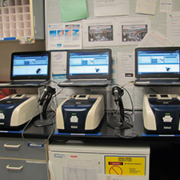
FilmArray is a highly automated small instrument capable of detecting infectious agents using PCR technology. Due to its simplicity the tests could be performed in a rapid-response core laboratory by general medical technologists. This operational model has demonstrated achievements in reducing turn-around-time and thus improved patient care.
by Dr M. Xu, Dr X. Qin, Dr M. L. Astion and Dr J. C. Rutledge
Acute respiratory infection and the importance of early diagnosis
Acute respiratory infection is one of the major causes of outpatient visits and hospitalization in young children and older patients with chronic respiratory diseases. Most acute respiratory infections are caused by viral agents, whereas bacterial infections occur much less frequently. Occasionally, patients with viral infection, but without a definitive diagnosis, are given antibiotics unnecessarily. Viral respiratory infection in immunocompromised patients has significant morbidity and mortality implications, and early initiation of appropriate antiviral therapy can be life-saving. In addition, isolation of patients with viral respiratory infection plays a critical role in infection prevention. Therefore, laboratory tests providing accurate and timely determination of the infectious agents associated with respiratory diseases are crucial in clinical practice.
Methods of diagnosis of acute respiratory infection
Many diagnostic tests for respiratory viral infection are available. Point-of-care tests for detecting viral antigens have the shortest turn-around-time, usually just a few minutes. These rapid antigen tests are available for only a limited number of viruses such as influenza A (Flu A), influenza B (Flu B) and respiratory syncytial virus (RSV), though the sensitivity of rapid antigen tests is low ranging from 20–80%, with a generally acceptable specificity if the tests are used during the respiratory virus season [1]. Direct fluorescence assay (DFA) has higher sensitivity (~80%) than rapid antigen tests and reasonable turn-around-time (TAT) of a few hours [1]. However, these are complex assays requiring specialized and experienced technologists. Viral culture has long been considered as the gold standard for detection of respiratory viral infection with the shortcoming of requiring days for the definitive identification of viral etiology.
In the past few years, several molecular tests have been developed to detect viral RNA or DNA using the polymerase chain reaction (PCR) method. One study compared the rapid antigen test, DFA, and viral culture with RT-PCR in the detection of influenza A H1N1 2009, and found sensitivities of only 18%, 39% and 46% respectively [2]. The specificity of all methods is not significantly lower than that of realtime PCR, which is over 90%. The authors recommended that all DFA negative results should be tested with realtime PCR. Although most molecular tests using PCR technology show high sensitivity and specificity, they are technically complex, time consuming, and require specialized medical technologists to perform the tests. This type of molecular assays is usually only available in large reference laboratories or medical centres with specialized microbiology, virology, or molecular laboratories. These specialized laboratories usually do not operate during evening and night shifts and perform these tests in batches, and, therefore, the TAT for most molecular testing is relatively long, ranging from 6 to 24 hours.
Emerging new technology
FilmArray (BioFire, previously named Idaho Technologies; Salt Lake City, UT) is a newly developed small desk-top single-specimen-flow instrument with fully automated process for detection of respiratory infectious agents by real time PCR technology [3]. The respiratory panel performed on FilmArray is able to detect 17 viral agents including adenovirus, coronavirus HKU1, coronavirus NL63, coronavirus 229E, coronavirus OC43, human metapneumovirus, rhinovirus/enterovirus, Flu A, Flu A H1, Flu A H1 2009, Flu A H3, Flu B, parainfluenza 1, 2, 3, 4, and RSV, plus Bordetella pertussis, Chlamydophila pneumoniae, and Mycoplasma pneumoniae from respiratory specimens. The test requires only 5 minutes hands-on time of a technologist and 65 minutes total of analyser time. The testing pouch contains all the reagents for nucleic acid extraction, reverse transcription, and two steps of PCR amplification. The built-in software automatically analyses the specific melting curves of the PCR products and reports the results as positive or negative for specific infectious agents. General medical technologists with proper training are able to perform the test without any difficulties. Several comparative studies between FilmArray and other molecular tests for respiratory viral agents have shown comparable results for the detection of respiratory infectious agents [4–6].
Impact on TAT and patient care
Our rapid response core laboratory (Core Lab) is staffed by approximately 35 full-time employees (FTEs). It provides tests of general chemistry, hematology, coagulation, urinalysis, blood gas, limited therapeutic drug monitoring, and a few rapid manual tests such as monospot, pregnancy test, and sickle screen. Our Core Lab also went through a major process improvement using the Toyota production system to streamline the testing workflow [7], and testing was designed based on a lean, single-piece flow principle without batching [7]. Using these principles we eliminated STAT testing. All the tests performed in core lab are standardized to meet a TAT of 1 hour, where TAT is defined as the time from sample receipt in the laboratory to the time the result is verified in laboratory information system. To provide 24-hour per day, 7-day per week (24/7) service to our emergency department (ED) and urgent care centre, we implemented the FilmArray respiratory panel in the Core Lab [8]. Prior to implementing the FilmArray testing, we sent our respiratory samples to a regional reference laboratory performing viral testing using the DFA method. The regional reference laboratory had an on-site facility for performing DFA testing. During the first 4 months of testing using FilmArray, we tested twice as many samples as the same time period the previous year. The average TAT was reduced from 7 hours the previous year using DFA, to 1.6 hours using FilmArray. With FilmArray, 82% of the tests were completed within 2 hours, and 95% were completed within 3 hours. Previously, with DFA, none of the tests were completed within 2 hours and only 2% of time the tests were completed within 3 hours. In addition, FilmArray detected 17 viral agents, whereas DFA detected only 8. The additional viral agents detected by FilmArray include 4 types of corona virus, 3 additional types of Flu A, parainfluenza 4, and rhinovirus/enterovirus. Although no specific treatments exist for some of the above viral agents, such as corona viruses, parainfluenza virus and rhinovirus, detection of them allowed physicians to make a specific diagnosis, which gave patients reassurance and prevented further costly diagnostic work-up and unnecessary use of antibiotics.
After implementing the FilmArray respiratory panel, we also looked at the effect of shortened TAT on patients admitted to the ED. The current guidelines for treating patients of positive Flu A and Flu B with oseltamivir recommend administering the medication within 48 hours of onset of symptoms. We found that due to the fast TAT of respiratory viral testing, more than 80% of patients admitted to the ED were given the medication or prescription in the ED or within 3 hours of discharge from the ED. This practice would have been impossible previously with DFA testing at the reference lab, which had an average of 7 hours of test TAT.
Finally, the additional clinical benefit of early detection of the infectious agents is the ability to cohort the patients effectively for appropriate isolation. As part of our hospital infection prevention policy, admission of patients with respiratory symptoms is subject to FilmArray respiratory viral screening at no charge. Clearly, the early and appropriate isolation of patients with respiratory symptoms has potential positive impact on infection prevention and overall cost savings for both patients and hospitals. One such example concerns two patients with respiratory symptoms who were scheduled for surgery. The respiratory viral testing results were negative for influenza virus for both patients, and this eliminated the need for the strict isolation procedures, such as wearing masks for staff and using negative pressure for the operating room, that would have had to have been used in the absence of test results.
Financial consideration
Although the price of FilmArray respiratory viral panel is slightly higher than that of other conventional PCR methods, the labour saving due to its simplicity is substantial and offsets the supply costs. In addition, the sample requirement for FilmArray test is a nasal swab rather than a nasal wash, which was the sample of choice for the DFA respiratory viral assay. It is much easier for nursing staff to collect a nasal swab than a nasal wash. In addition, the nasal wash creates an aerosol that mandates room cleaning and 30-minute room closure before the next use. The cost saving for a busy ED room time is difficult to calculate but is significant. One report examined the financial consequence of reducing ED boarding (the length of time a patient stays in the ED) and found that a 1-hour reduction in ED boarding time would have resulted in $9693 (~£6058) to $13,298 (~£8311) of additional daily revenue [9].
Future trends
The simplicity of the FilmArray assay gives it the potential to expand in small general laboratories. Currently, BioFire Diagnostics Inc. is developing gastrointestinal, blood culture ID, and sepsis panels using FilmArray technology. The current major drawback of FilmArray is its restriction to single-sample throughput. The further improvement to provide higher throughput will expand its utility in high-volume clinical laboratories.
In summary, due to its simplicity and clinical utility, the FilmArray is the first multiplex molecular test that has entered the general clinical laboratory, rather than a specialized laboratory. This marks a new era in laboratory medicine. FilmArray significantly improves the diagnosis and care of patients with respiratory infections. Overall, new and emerging technologies like FilmArray will allow more infectious agents to be detected earlier and more accurately by instruments situated in general core laboratories rather than in specialized laboratories, thereby speeding results from a 7/24 operations.
References
1. Takahashi H, Otsuka Y, Patterson BK. Diagnostic tests for influenza and other respiratory viruses: determining performance specifications based on clinical setting. J Infect Chemother 2010; 16: 155–61.
2. Ganzenmueller T, Kluba J, Hilfrich B et al. Comparison of the performance of direct fluorescent antibody staining, a point-of-care rapid antigen test and virus isolation with that of RT-PCR for the detection of novel 2009 influenza A (H1N1) virus in respiratory specimens. J Med Microbiol 2010; 59: 713–7.
3. Poritz MA, Blaschke AJ, Byington CL et al. FilmArray, an automated nested multiplex PCR system for multi-pathogen detection: development and application to respiratory tract infection. PLoS One 2011; 6: e26047
4. Loeffelholz MJ, Pong DL, Pyles RB et al. Comparison of the FilmArray Respiratory Panel and Prodesse real-time PCR assays for detection of respiratory pathogens. J Clin Microbiol 2011; 49: 4083–8.
5. Rand KH, Rampersaud H, Houck HJ. Comparison of two multiplex methods for detection of respiratory viruses: FilmArray RP and xTAG RVP. J Clin Microbiol 2011; 49: 2449–53.
6. Pierce VM, Elkan M, Leet M et al. Comparison of the Idaho Technology FilmArray system to real-time PCR for detection of respiratory pathogens in children. J Clin Microbiol 2012; 50: 364–71.
7. Rutledge J, Xu M, Simpson J. Application of the Toyota Production System improves core laboratory operations. Am J Clin Pathol 2010; 133: 24–31.
8. Xu M, Qin X, Astion ML et al. Implementation of FilmArray respiratory viral panel in a core laboratory improves testing turn-around-time and patient care. Am J Clin Pathol Jan. 2013, In press.
9. Pines JM, Batt RJ, Hilton JA, et al. The financial consequences of lost demand and reducing boarding in hospital emergency departments. Ann Em Med 2011; 58: 331–40.
The authors
Min Xu, MD, PhD
Xuan Qin, PhD
Michael L. Astion, MD, PhD
Joe C. Rutledge, MD
Department of Laboratories, Seattle Children’s Hospital,
4800 Sand Point Way NE, A6901
Seattle, WA 98105, USA
E-mail: min.xu@seattlechildrens.org
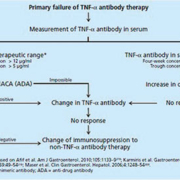
The introduction of infliximab and adalimumab, monoclonal antibodies against TNF-α, to induce and maintain clinical remission in patients with moderate to severe inflammatory bowel disease has generated new perspectives managing these disorders [1]. However, about a third of all CED patients in clinical studies treated with TNF-α antibodies exhibited no primary response (primary treatment failures) and up to 40% of patients, after having exhibited primary therapy response, show a decrease in efficacy with increasing duration of therapy (secondary treatment failures*) and do need multiple dose adjustments to re-induce or maintain clinical response.
by Dr J. Stein
Clinically important factors predicting treatment response include brief disease duration, a predominantly inflammatory disease course and disease involving the colon, non-smoker status and moderate to severe disease activity (overview in Yanai and Hanauer [2]). At first, the development of antibodies against infliximab in the sense of anti-drug antibodies (ADA) [3] occurring especially in patients undergoing episodic administration of IFX (36–61% of cases) [4] was proposed as the primary cause of this phenomenon. It is now considered increasingly questionable that ADA alone are responsible for therapy failure in patients treated with IFX. In fact, multiple studies have reported IFX trough levels that were either undetectable or very low despite the absence of ADA [5-7], which points to other factors that may influence the pharmacokinetics of these agents. A retrospective analysis of the ACT1 and ACT2 studies found an inverse correlation with serum albumin concentrations [8]. Albumin concentrations < 3 g/dl correlated with a significantly poorer initial response (primary non-responders). Several strategies can be undertaken in cases of loss of response: dose escalation (increasing the dose or shortening the interval), switching to another anti-TNF-α drug, or changing to other immunosuppressive drugs. The decision as to which is the best option for the management of these patients remains largely empirical. Data from studies suggests that measurement of anti-TNF-α trough levels and ADAs could be useful in therapeutic drug monitoring in IBD patients, as part of an individualized therapy. Figures 1a and 1b summarize an algorithm for the management of TNF-α antibody therapy based on currently available data. Methods used to detect anti-TNF-α drug concentrations and ADA concentrations are mainly based on enzyme-linked immunosorbent assay (ELISA) and radioimmunoassay (RIA) or less frequently EMSA (electrophoretic mobility shift assay). Compared to the more complex RIA- or EMSA- based detection methods, the most commonly used and, as a rule, easily performed enzyme-coupled immunoabsorptive assays (EIA) exhibit some limitations which are important for the timing of measurement: Since anti-TNF-α drugs are able to bind to antibodies to form immune complexes, they cannot be detected by ELISA and their presence can only be ascertained by detectable ADAs regardless of the serum levels of the anti-TNF-a drug. However, when ADAs are negative, it is important to know the levels of the anti-TNF-α drugs: if anti-TNF-α serum levels are undetectable, the result is a true negative, but if anti-TNF-α levels are detectable and ADA levels are negative, the result is considered inconclusive because it might be either a true negative result or a false negative result if the antibodies have bound to the anti-TNF-α drug. Therefore, anti-TNF-α drug concentrations should be determined when the drug levels are expected to be lowest, i.e. just before the next administration of the drug (trough level) and at the same time antibody titres are measured to enable further interpretation. When an EIA is used, the optimum trough level stands at > 4–5 μg/ml [5,8], compared with cut-off values of > 1 μg/ml with RIA [9,10].
* Defined as recurrence following initially effective remission maintenance with TNF-α antibodies.
References
1. Chaparro M, et al. Aliment Pharmacol Ther 2012; 35: 971–986.
2. Yanai H, et al. Am J Gastroenterol. 2011; 106: 685–98.
3. Baert F, et al. N Engl J Med. 2003; 348(7): 601–608.
4. Cassinotti A, et al. Pract Gastroenterol. 2010; 34:11–20.
5. Maser EA, et al. Clin Gastroenterol Hepatol. 2006; 4:1248–1254.
6. St Clair EW, et al. Arthritis Rheum. 2002; 46: 1451–9.
7. Fasanmade AA, et al. Int J Clin Pharmacol Ther. 2010; 48: 297–308.
8. Seow CH, et al. Gut. 2010; 59: 49–54.
9. Steenholdt C, et al. Scand J Gastroenterol. 2011; 46: 310–318.
10. Bendtzen K, et al. Scand J Gastroenterol. 2009; 44: 774–781.
The author
J. Stein, MD, PhD
Crohn Colitis Centre
Frankfurt, Germany
Much like do-it-yourself (DIY) hardware stores, DIY or at-home diagnostic test kits possess both benefits and drawbacks. Making a decision is tricky. It may become even more so as a host of new kits arrive on the market, some of which are aimed at potentially deadly diseases like cancers.
The growth in the DIY kit market is driven by a combination of several factors:
Many kit developers are beginning to see easier opportunities in the developing world, especially in large emerging countries such as Brazil, India and China. All these have a rising number of affluent consumers, accompanied by lifestyle changes which heighten the risk of diseases such as diabetes or AIDS. At the same time, medical regulations are more lax than in the West; for example, it is not impossible that kits are packaged differently, without the visible labels which warn that a specific test is not (yet) approved by health regulators.
What is common to both the West and large emerging markets, as far as DIY test kits go, is the Internet. Not only does the Net allow consumers to become aware of new tests, but it also provides them a channel for access to vendors, credit card payments and delivery by mail order. As a follow-on, some DIY kit producers are working to provide encrypted transfer of data and access to the test results, again over the Internet.
No one doubts the utility of DIY kits in areas such as ovulation and pregnancy testing. Most physicians also agree that the monitoring of chronic diseases is far better served by emerging DIY diagnostic technologies. For example, a relatively new test for patients taking the anticoagulant warfarin does away with the need for weekly visits to a physician – to ensure that their blood is neither too thick to cause a stroke, nor too thin to be life threatening in case of a wound or high blood pressure. This is also the case for at-home diabetes tests, which permit day-to-day modifications in insulin intake. Blood pressure too, it is now accepted, needs to be monitored throughout the day to give a true reading, rather than once at a doctor’s.
However, there are several areas where healthcare professionals are apprehensive about the growth in DIY tests, and are likely to remain so for some time. This is mainly because even state-of-the-art DIY technology has an approximately 10% risk of error. While the psychological impact of a false positive – which has a similar error level to false negatives in most DIY tests – can be serious, a false negative on a major allergy, urinary tract or yeast infection, or for that matter, HIV, would be devastating.
One of the fastest-paced developments in clinical laboratories has been in the area of quality control (QC) systems. Its driver has been the increase in the performance and sophistication of QC software, which has progressively tightened benchmarks for acceptable standards. On the plus side, improved QC systems clearly help a laboratory to serve the needs of patients more efficiently. Less clear is the latest, paradigm-shifting QC guideline known as EP-23; it is so far restricted to the US (where it originates), but is likely to have a major impact on Europe.
Quality control in a lab concerns routine operational and technical activities to verify that a particular test is conducted correctly. The main aim of QC software has been to ensure the validity of both test methodology and results, to define and set acceptable SDs (standard deviations), and to correct errors if they occur (ideally before they do so), or flag them as such.
There is a wide variety of software for laboratory QC. Market leaders such as Westgard and Bio-Rad supply end-to-end solutions. Other vendors provide application specific software, for example Hematronix’s Real-Time and Quantimetrix’s Quantrol Online for monitoring performance against peers, Boston Biomedica’s AccuChart for infectious disease testing, etc.
Staff challenges
The capability of the staff who run laboratory tests is a major issue, but this has long been attended to – in terms of accreditation of study programmes and training courses as well as requirements for continuing education to stay abreast of developments in the field. In the US, the Clinical Laboratory Improvement Amendments Act (1988) legally ensures that laboratory staff have to be up to the mark.
On the other hand, staffing has recently begun posing another set of problems. This is because many laboratory personnel who ushered in the IT era have begun to retire. In spite of high levels of unemployment, finding an adequately qualified pool of new recruits is proving to be a major problem in the US. [1]
As with any other core systems software, QC has been in perpetual evolution – a result of ever-changing regulations and market forces. Even the most intuitive and adaptive software requires people, experienced people, to tweak and adapt the programs in order to get them to work well and deliver the best results within a particular environment. QC is no exception.
The need for qualified personnel is set to increase dramatically as US laboratories shift away from the current system of equivalent QC to risk-based analysis, which is based on a more scientifically rigorous methodology. The US has decided to completely abandon equivalent QC in favour of a new risk-based analysis system, known as EP-23.
Equivalent versus risk-based QC
Standard operating procedures (and inbuilt IT system capabilities) for equivalent QC usually entailed running controls just once a month. In case of an aberration, the entire month load of patients (or over 8% of the annual total) needed to be recalled, samples retaken and tests rerun. Scheduling the re-tests alongside a current batch almost invariably led to capacity bottlenecks, which could then spill over into the subsequent months. Risk-based analysis is meant to do away with such contingencies.
Nevertheless, risk-based analysis also means more complex software, and more human intervention. It requires identifying potential error sources in a test or device, and implementing (external or ‘wet’) controls to reduce the risk. Meanwhile, the pathways to implement EP-23 remain somewhat nebulous. Proponents of risk-based analysis, on their part, acknowledge its complexity, but argue that the costs of error in equivalent QC far outweigh the latter, not only in terms of re-running tests but in case of wrong diagnosis.
EP-23 will drive need for skilled lab staff
Clearly, EP-23 will rely heavily on experienced laboratory personnel. The Clinical and Laboratory Standards Institute (CLSI), the US professional society mandated with establishing EP-23, notes: [2]
“The decision of how the laboratory performs its risk assessment to develop a quality control plan (QCP) will be up to the laboratory director. Some tests analysed on the same analyser may have risks of error so similar that they can be grouped on the same QCP, with only minor additions or deletions for individual tests, while other tests on the same analyser may have significantly greater, or lesser, risks and need a completely different approach to a QCP.” It also acknowledges that there “is no specific format that is required for the presentation of a QCP.”
In an official presentation on EP-23 by the Centers for Disease Control, [3] CLSI goes on to add: “Labs will receive guidance to enable them to develop effective, cost-efficient QC protocols that will ensure appropriate application of local regulatory requirements based on the technologies selected by the lab and reflective of the lab’s unique environmental aspects. Labs will receive guidance to develop QC processes and procedures to reduce negative impact of test system’s limitation, while considering laboratory environmental/operator factors like personnel competency, temperature, storage conditions, clinical use of test results, etc.”
In such a scenario, a looming shortage of qualified personnel would hardly help.
Large laboratories clearly have an edge in being ready for a shift to EP-23, since they can afford to recruit specialist consultants to manage the changeover. For their smaller counterparts, the outlook is likely to be very different.
Europe and EP-23
The impact of EP-23 on Europe remains to be seen. At present, the EU has made no official comment, in spite of the inevitable issues which could arise, for example within the framework of the International Conference for Harmonization (ICH).
Part of the reason for its nonchalance may simply lie in the fact that there is no similar European laboratory QC standard, like EP-23. Indeed, several EU countries have their own national systems covering QC in laboratories – for example Belgium’s Directive pratique pour la mise en place d’un système qualité dans les laboratoires agréés dans le cadre de l’INAMI, France’s Guide de bonne exécution des analyses de biologie clinique, and Britain’s CPA Manual for Laboratory Accreditation.
On its part, European standard EN 45001, currently recommended for laboratories, is far broader in scope than EP-23. It covers not only QC but technical competence, human resources, organizational structure, document management and much more. It is also based on the international ISO Guide 25. ISO 25 is currently under revision, and is due to replace EN 45001.
US proponents for globalizing EP-23 note that its inspiration too lies in the accepted ISO standard, 14971. Between the sweeping generalities of EN 45001 and the different national systems in place for lab QC, it may be hard to argue that EP-23 could be a good path forward for Europe too.
References
1. http://www.healthcareitnews.com/
news/lab-staff-shortages-call-better-point-care-diagnostics
2. http://www.clsi.org/Content/NavigationMenu/Education/EP23QA/EP23_Q_A.htm
3. http://wwwn.cdc.gov/cliac/pdf/Addenda/cliac0908/Addendum%20N.pdf
May 2026

Prins Hendrikstraat 1
5611HH Eindhoven
The Netherlands
info@clinlabint.com
PanGlobal Media is not responsible for any error or omission that might occur in the electronic display of product or company data.