• News
    • Featured Articles
    • Product News
    • E-News
  • Magazine
    • About us
    • Digital edition
    • Archived issues
    • Free subscriptions
    • Media kit
    • Submit Press Release
  • White Papers
  • Events
  • Suppliers
  • E-Alert
  • Contact us
  • FREE newsletter subscription
  • Search
  • Menu Menu
Clinical Laboratory int.
  • Allergies
  • Cardiac
  • Gastrointestinal
  • Hematology
  • Microbiology
  • Microscopy & Imaging
  • Molecular Diagnostics
  • Pathology & Histology
  • Protein Analysis
  • Rapid Tests
  • Therapeutic Drug Monitoring
  • Tumour Markers
  • Urine Analysis

Archive for category: Featured Articles

Featured Articles

Frances1 689cca

A breakthrough in timely ovarian cancer diagnosis?

, 26 August 2020/in Featured Articles /by 3wmedia

While globally ovarian cancer is the eighth most common cancer in women, in the developed countries (with the exception of Japan) the disease is much more prevalent. In Europe it is the fifth most frequently diagnosed cancer in women, with an average lifetime risk of 1 in 70, and in both Europe and North America the disease accounts for over 5% of all female cancer deaths. In addition, unlike with most other cancers, the five year survival rate of only 45% has barely improved in the last 30 years. This poor prognosis is largely due to the non-specific symptoms, resulting in diagnosis at Stage III or IV when the tumour has already metastasized. But if ovarian cancer is diagnosed early, the five year survival rate exceeds 90%.
Much work in recent decades has concentrated on finding a simple screening method that would allow more timely diagnosis; so far none has had a significant effect on mortality. An assay for the most frequently used biomarker, CA125, was developed around 30 years ago. Normally elevated in the serum of patients diagnosed with symptomatic ovarian cancer, CA125 is ideal in disease management, but its use to enable early disease detection has remained controversial. Specificity is very limited as the serum level is raised in several benign conditions (such as endometriosis) as well as in other cancers. In addition sensitivity is only about 50% in patients with Stage I or II disease. More recently human epididymis protein 4 (HE4) has been advocated as a useful marker for ovarian cancer detection. Its level is not elevated as a result of benign pelvic disease so its specificity is higher than CA125, but levels of HE4 are also raised in some other cancers. Recent work on ovarian cancer screening has suggested that screening utilizing a combination of these two biomarkers may be the best approach for early disease detection.
Now exciting preliminary data from the Anderson Cancer Center have just been published. Over 4,000 women, healthy at the start of the study, were classified into three risk groups based on a mathematical model- the ROCA- incorporating their age and CA125 serum level. Follow-up over eleven years was dependent on the evolving perceived risk. The US researchers were ‘cautiously optimistic’ about this approach, but await results from a similar trial in the UK, involving more than 200,000 women, which will be available within two years. Hopefully, though, screening using the ROCA will lead to more timely diagnosis and thus a better survival rate for ovarian cancer patients.

https://clinlabint.com/wp-content/uploads/sites/2/2020/08/Frances1_689cca.jpg 384 300 3wmedia https://clinlabint.com/wp-content/uploads/sites/2/2020/06/clinlab-logo.png 3wmedia2020-08-26 09:46:162021-01-08 11:38:22A breakthrough in timely ovarian cancer diagnosis?
26248 Phadia Lab ad 210x297uf MP

ImmunoCAP® allergy and EliA™ autoimmunity assays

, 26 August 2020/in Featured Articles /by 3wmedia
https://clinlabint.com/wp-content/uploads/sites/2/2020/08/26248-Phadia-Lab_ad_210x297uf_MP.jpg 990 700 3wmedia https://clinlabint.com/wp-content/uploads/sites/2/2020/06/clinlab-logo.png 3wmedia2020-08-26 09:46:162021-01-08 11:38:35ImmunoCAP® allergy and EliA™ autoimmunity assays
26251 Siemens 9186 XA1 CLI 8

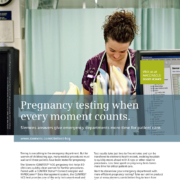
Pregnancy testing when every moment counts

, 26 August 2020/in Featured Articles /by 3wmedia
https://clinlabint.com/wp-content/uploads/sites/2/2020/08/26251-Siemens-9186-XA1_CLI_8.jpg 990 700 3wmedia https://clinlabint.com/wp-content/uploads/sites/2/2020/06/clinlab-logo.png 3wmedia2020-08-26 09:46:162021-01-08 11:38:25Pregnancy testing when every moment counts
C81 photo

Genetic diagnostics in pediatric hearing loss

, 26 August 2020/in Featured Articles /by 3wmedia

Hearing impairment in newborn children is one of the most frequent forms of sensorineural disorders, affecting 1 in 1000 infants. In half of the cases the hearing loss has a genetic basis, and over 70 genes have been identified so far, making hearing loss genetically exceptionally heterogeneous. Early detection in newborns, in combination with a genetic diagnosis is critical for the selection of a proper intervention and the development of speech, language and communication skills.

by Dr Isabelle Schrauwen

Hearing impairment in infants can be due to environmental influences such as cytomegalovirus infection, but in industrialized countries, however, most cases of early-onset hearing impairment have a genetic basis. Genetic hearing loss is non-syndromic in 70% of cases, whereas other symptoms (apart from hearing loss) are noticeable in 30% of cases (syndromic hearing loss). Autosomal recessive non-syndromic hearing loss (ARNSHL) is most common (80%) and is typically prelingual in onset, and autosomal dominant non-syndromic hearing loss (ADNSHL), X-linked and mitochondrial hearing loss are less frequent (20 and <1% respectively). To date, over 70 genes have been found to be implicated in non-syndromic hearing loss (NSHL), of which 40 are autosomal recessive. The most frequent causes of ARNSHL in most populations are mutations in GJB2, with a frequency ranging from 10 to 50% of all ARNSHL cases.

The implementation of newborn hearing screening in many countries has lead to an early detection of hearing loss and deafness in infants. This, together with improved genetic diagnostics and neuroimaging, has lead to a better understanding and better intervention of hearing loss overall [1].

The importance of a genetic diagnosis in pediatric hearing impairment
Clinical tests are not always sufficient for an accurate diagnosis and genetic diagnostics can provide answers that clinical tests cannot. Identification of the genetic cause can help predict the progression of the hearing loss and also direct the choice of the most appropriate treatment or method of communication. In addition, some apparent forms of non-syndromic hearing loss can be diagnosed to be syndromic as they give other symptoms at a later age (such as goitre in Pendred syndrome or retinitis pigmentosa in Usher syndrome). For Usher syndrome, preventative measures can be taken including sunlight protection and vitamin therapy to minimize the rate of progression of retinitis pigmentosa [2]. Furthermore, autosomal recessive mutations in GJB2 often cause a stable form of hearing loss and patients usually have good prospects with a cochlear implant. Knowing the gene responsible can also be very important to the parents, reducing their feelings of guilt and predicting the likelihood of subsequent children having hearing loss.

In addition, more extensive screening will also be very useful in providing a more accurate picture of the prevalence of different types of deafness affecting people across the world. Finally, advances in molecular and cellular therapies for hearing loss are also gene-specific [3], and identification of the genetic cause is key.

Gene-specific sequencing
Until recently, routine molecular diagnostics for hearing impairment consisted of the gene-specific sequencing of certain deafness genes, mainly with Sanger sequencing. GJB2 testing is offered most frequently in routine diagnostics, as it is responsible for a large number of ARNSHL cases. When there is evidence of progression of the hearing loss, or the presence of a goitre, an enlarged vestibular aqueduct (EVA), or Mondini dysplasia, SLC26A4 will be analysed, and when a specific phenotype is seen, other genes might also be analysed (OTOF, TECTA, COCH, WFS1, or a mitochondrial mutation). The selection criteria are typically: (1) high frequency cause of deafness (i.e. GJB2); (2) association with another recognizable feature (i.e. SLC26A4 and EVA); or (3) a recognizable
audioprofile (i.e. WFS1) [4].

Syndromic forms of deafness usually only have one or a few candidate genes responsible for each syndrome. However, for non-syndromic deafness, it is very difficult, and often impossible, to determine candidate genes because of the large number of causative genes leading to a relatively indistinguishable phenotype. GJB2 sequencing will identify 10–50% of ARNSHL cases, but the remaining cases of hearing loss display a high degree of genetic heterogeneity and unless a specific audioprofile is present it is hard to diagnose these with a gene-specific test. Traditionally, with gene-specific tests, it has therefore been difficult to establish a genetic diagnosis due to extreme genetic heterogeneity and a lack of phenotypic variability.

Microarrays
The analysis of multiple mutations in several genes in parallel was made possible by the development of single nucleotide extension microarrays [5]. These microarrays detect a specific mutation by hybridizing primers to patient DNA, followed by a single base extension. This technology therefore only detects known mutations, and a panel of 198 mutations in 8 genes [GJB2, GJB6, GJB3, GJA1, SLC26A4, SLC26A5 and the mitochondrial genes encoding 12S rRNA and tRNA-Ser(UCN)] underlying sensorineural (mostly non-syndromic) hearing loss has been developed [5]. Although new mutations cannot be picked up, this technique can provide some additional diagnostic value in GJB2 negative cases.

An Affymetrix resequencing microarray capable of resequencing 13 genes mutated in NSHL was also developed (GJB2, GJB6, CDH23, KCNE1, KCNQ1, MYO7A, OTOF, PDS, MYO6, SLC26A5, TMIE, TMPRSS3, USH1C) [6], but the number of genes here is also limited and specific kinds of mutations such as insertion/deletion (indel) mutations cannot be detected accurately.

Custom gene enrichment with next-generation sequencing
The need for new and better diagnostic methods for extremely heterogeneous diseases has been filled by the availability of next-generation sequencing, which has made it possible to sequence a large number of genes at the same time. This has lead to an immense growth of custom hearing-loss gene panels. Several labs have adopted this approach in-house already [7–9], and several labs offer this test for ARNSHL, ADNSHL, some cases of syndromic hearing loss, or all of the above.

The most commonly available systems for massive parallel sequencing are: Illumina, 454, or SOLiD. The Illumina platform is the most widely used platform to date and relies on cyclic reversible termination technology. Before massive parallel sequencing, DNA will be enriched for a custom selection of hearing-loss genes. In a diagnostic setting, sensitivity and specificity are important, and different enrichment methods perform differently in these criteria. Capture enrichment methods have been used more often and are easy to use, but PCR-based methods seem to have a better performance. A portion of targeted bases in repetitive regions cannot be captured, whereas PCR is able to enrich 100% of the desired target area. This is crucial to the sensitivity of detecting variants.

Although PCR-based techniques are usually more labour-intensive, microdroplet PCR methods have improved this greatly [9]. By using barcoding, custom hearing-loss panels are now offered for a competitive price in several labs across the world, and depending on the genes included in the panel, will offer a genetic diagnosis in the majority of cases.

Exome sequencing
Exome sequencing is also emerging as a diagnostic tool for many diseases and has decreased in price significantly in recent years. Exome sequencing targets every coding exon in the genome for enrichment prior to next-generation sequencing. Though current exome kits provide insufficient target enrichment in a diagnostic setting for deafness [9], as the regions of interest might not been completely covered and coverage depth may not be high enough for a diagnostic setting. Exome sequencing has therefore a decreased sensitivity to detect mutations in known genes compared to the custom panels available, but does allow the identification of new genes. In addition, given the amount of data that arises from exome sequencing, identification of the causative mutation among the list of variants will be more challenging. Although over 70 genes have already been discovered, there are still many more to be found, and the identification of new genes will greatly improve our understanding of deafness. Since its introduction, exome sequencing has lead to a fast rise in the identification of hearing-loss-related genes.

Future techniques and conclusions
Other technologies, such as Ion torrent, Pacific Biosystems, and specifically the emerging Oxford Nanopore technique, might offer very cost-effective sequencing methods for the future of molecular diagnostics in many diseases. Furthermore, genome sequencing might be shown useful in the diagnosis of hearing loss if the price of sequencing keeps dropping.

In conclusion, a genetic test ideally has to be sensitive, specific, accurate and low in cost. Gene-specific analysis of GJB2 will detect a 10–40% of ARNSHL cases, and custom gene panels with next-generation sequencing will provide a diagnosis in the majority of genetic hearing-loss cases. It is anticipated that within the coming years genetic testing will be routinely implemented in pediatric hearing loss, leading to better intervention and choice of treatment.

References
1. Paludetti G, et al. Infant hearing loss: from diagnosis to therapy Official Report of XXI Conference of Italian Society of Pediatric Otorhinolaryngology. Acta Otorhinolaryngol Ital 2012; 32: 347–70.
2. Hamel C. Retinitis pigmentosa. Orphanet J Rare Dis 2006; 1: 40.
3. Hildebrand MS, et al. Advances in molecular and cellular therapies for hearing loss. Mol Ther 2008; 16: 224–36.
4. Hilgert N, et al. Forty-six genes causing nonsyndromic hearing impairment: which ones should be analyzed in DNA diagnostics? Mutation Res 2009; 681: 189–96.
5. Gardner P, et al. Simultaneous multigene mutation detection in patients with sensorineural hearing loss through a novel diagnostic microarray: a new approach for newborn screening follow-up. Pediatrics 2006; 118: 985–94.
6. Kothiyal P, et al. High-throughput detection of mutations responsible for childhood hearing loss using resequencing microarrays. BMC Biotechnol 2010; 10: 10.
7. Shearer AE, et al. Comprehensive genetic testing for hereditary hearing loss using massively parallel sequencing. Proc Natl Acad Sci U S A 2010; 107: 21104–9.
8. Brownstein Z, et al. Targeted genomic capture and massively parallel sequencing to identify genes for hereditary hearing loss in Middle Eastern families. Genome Biol 2011; 12: R89.
9. Schrauwen I, et al. (2013) A sensitive and specific diagnostic test for hearing loss using a microdroplet PCR-based approach and next generation sequencing. Am J Med Genet A 2013; 161A: 145–52.

The author
Isabelle Schrauwen PhD 1,2
1 Department of Medical Genetics, University of Antwerp, Antwerp, Belgium
2 The Translational Genomics Research Institute (TGen), Phoenix, AZ, USA
E-mail: isabelle.schrauwen@ua.ac.be

https://clinlabint.com/wp-content/uploads/sites/2/2020/08/C81_photo.jpg 224 300 3wmedia https://clinlabint.com/wp-content/uploads/sites/2/2020/06/clinlab-logo.png 3wmedia2020-08-26 09:46:162021-01-08 11:38:38Genetic diagnostics in pediatric hearing loss
CLI 1309 Mindray NEW

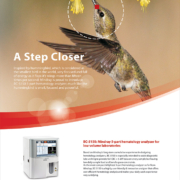
BC-5150 5-part hematology analyzer

, 26 August 2020/in Featured Articles /by 3wmedia
https://clinlabint.com/wp-content/uploads/sites/2/2020/08/CLI_1309_Mindray-NEW.jpg 977 700 3wmedia https://clinlabint.com/wp-content/uploads/sites/2/2020/06/clinlab-logo.png 3wmedia2020-08-26 09:46:162021-01-08 11:38:20BC-5150 5-part hematology analyzer
26171 Gonotec

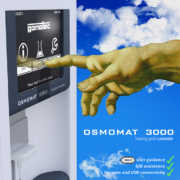
OSMOMAT 3000 freezing point osmometer

, 26 August 2020/in Featured Articles /by 3wmedia
https://clinlabint.com/wp-content/uploads/sites/2/2020/08/26171-Gonotec.jpg 990 700 3wmedia https://clinlabint.com/wp-content/uploads/sites/2/2020/06/clinlab-logo.png 3wmedia2020-08-26 09:46:162021-01-08 11:38:30OSMOMAT 3000 freezing point osmometer
26229 MP Biomedical Print AD A5 V2

…we can customize a Rapid DOA solution for you

, 26 August 2020/in Featured Articles /by 3wmedia
https://clinlabint.com/wp-content/uploads/sites/2/2020/08/26229-MP_Biomedical_Print-AD-A5-V2.jpg 1000 667 3wmedia https://clinlabint.com/wp-content/uploads/sites/2/2020/06/clinlab-logo.png 3wmedia2020-08-26 09:46:162021-01-08 11:38:41…we can customize a Rapid DOA solution for you
C89 Fig1 Kastrup

YKL-40: a new prognostic biomarker in patients with coronary artery disease

, 26 August 2020/in Featured Articles /by 3wmedia

Inflammation is of importance for the progression of coronary artery disease. Until now, there has been no biomarker to monitor the effect of treatment regimes. YKL-40 is a new biomarker of inflammation, which if highly elevated in the disease, is a strong prognostic predictor of death and potentially can be used to monitor disease activity.

by Prof. J. Kastrup, Dr M. Harutyunyan-Bønsager and Dr N. D. Mygind

Clinical background
The number of patients with coronary artery disease (CAD) is increasing worldwide, and CAD is the most common cause of death in western countries. Although the prognosis and quality of life for patients has improved due to more aggressive and invasive treatment regimes, in the US someone will have a coronary event approximately every 25 seconds, and someone will die of one approximately every minute. Therefore CAD is an increasing economic burden and the total estimated direct and indirect costs of CAD in the US in 2010 were $503.2 billion [1].

Currently, there is a lack of new biomarkers for monitoring the effect of the patients’ treatment and for predicting their risk of a heart attack, heart failure and cardiac death.

Coronary artery disease and inflammation
It has been well established that inflammation plays an important role in development and progression of atherosclerosis in the coronary arteries [2]. Moreover, inflammation is also involved in the inflammatory pathways inducing extracellular matrix remodelling and heart failure progression [3]. The inflammatory biomarker high-sensitivity C-reactive protein (hs-CRP) is associated with atherosclerosis and the incidence of coronary events [4], but its association with the extent and severity of atherosclerosis remains controversial. Therefore, it is not very useful for continuous monitoring of treatment effects and progression of the disease.

The inflammatory biomarker YKL-40
YKL-40 is a glycoprotein mainly produced by macrophages and neutrophils, which are important for the development of atherosclerosis, and is stimulated by hypoxia [5]. Serum YKL-40 is suggested to be a biomarker of diseases characterized by inflammation [5] and its plasma concentration has been shown to increase reversibly in patients by more than 25% following an inflammatory stimulus.

YKL-40 is not a disease specific biomarker, but plays a role in cell migration and adhesion, angiogenesis, remodelling of the extracellular matrix, cell proliferation and differentiation [5]. Macrophages in atherosclerotic plaques, especially those located more deeply in the atherosclerotic lesion, express YKL-40 [6], and macrophages in early atherosclerotic lesions express the highest amount of YKL-40 mRNA. As Hs-CRP is mainly produced in the liver, it is likely that biomarkers such as YKL-40 (secreted from inflammatory cells within the atherosclerotic plaque) could be superior for monitoring CAD.

YKL-40 in healthy subjects
The normal YKL-40 value in a healthy subject from the general population has recently been published [7]. In 3130 subjects the median YKL-40 value was 40 µg/L and increased exponentially with age.

YKL-40 in coronary artery disease
Serum YKL-40 has been found to be increased in both acute and coronary artery disease [8]. Serum YKL-40 levels were also significantly increased in patients with acute ST-elevation myocardial infarction and thereafter consistently decreased from a maximum value just after the myocardial infarction and during a 360 day follow-up period towards its normal levels. Plasma YKL-40 levels were found to correlate inversely with left ventricular ejection fraction (LVEF) recovery, but not with infarct size in patients with STEMI [9, 10].

Although highly increased in patients with stable CAD, it has not been possible to detect any relationship between serum YKL-40 level and the degree of CAD as evaluated by the number of vessels involved or the degree of artery stenosis [11]. In patients with stable CAD, revascularization with balloon angioplasty of significant stable coronary artery lesions has no effect on YKL-40 levels within a 6 month follow-up period (unpublished data).

This indicates that YKL-40 not is a measurement of the amount of ischemia within the myocardium. Serum YKL-40 seems to be more a measurement of ongoing inflammatory activity rather than the presence of stabilized chronic lesions.

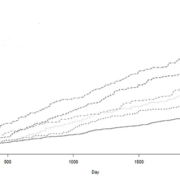
Therefore, it is very interesting that serum YKL-40 was a very strong prognostic biomarker for death within a 2.6 and 6 year follow-up period in patients with stable CAD [12, 13] [Fig. 1].

YKL-40 and heart failure
The consequence of CAD is often the development of severe heart failure. It has recently been demonstrated that serum YKL-40 is increased in heart failure and that YKL-40 is an independent significant prognostic biomarker for death [15]. It is interesting that serum YKL-40 measured in all-comers at acute hospital admission is a very strong predictor of death, especially within the first year, in patients with heart disease [16]. Of patients admitted with disease of the heart, those with elevated YKL-40 had a hazard ratio of death within the first year after discharge from the hospital at 2.5 compared to heart patients with normal serum YKL-40 levels. YKL-40 remained an independent biomarker of mortality, even after adjusting for other known risk factors such as age, hs-CRP and NT-proBNP [16].

YKL-40 for monitoring CAD activity

Statin treatment is used in CAD for lowering cholesterol levels. However, it also has an anti-inflammatory action. Therefore, it is very interesting that serum YKL-40 is significantly lower in patients with stable CAD on statin treatment compared to patients without [14] [Fig. 2].

This difference seems to be independent of the effect that statins have on lowering cholesterol levels, indicating that the YKL-40 level can be regulated by the direct anti-inflammatory action of statins [14]. This is unlike the situation with the inflammatory biomarker hs-CRP, which has been shown to correlate to cholesterol levels in statin-treated CAD patients [14].

Moreover, the mortality is also lower in stable CAD on statins compared to non-statins [12, 13]. This indicates that YKL-40 could be used to monitor the anti-inflammatory effect of statin treatment. Whether YKL-40 is also useful for
monitoring the effects of other anti-angina medications remains to be investigated.

Conclusion and future perspective
YKL-40 is a new inflammatory biomarker in ischemic heart disease. It is increased in both acute and chronic coronary artery disease and is a very strong diagnostic biomarker for death. It is suggested to be a mirror of the active inflammatory atherosclerotic processes in CAD, more than a measurement of degree of myocardial ischemia induced by stable coronary lesions. Since YKL-40 is lower in patients on statin treatment, it can potentially be used to monitor disease activity and the effect of anti-inflammatory or stabilizing treatment regimes.

Conflict of interest
A patent application (WO 2009/092382) is published and pending.

References

1. Roger VL, Go AS, Lloyd-Jones DM, Benjamin EJ, Berry JD, Borden WB, et al. Circulation 2012; 125(1): e2–e220.
2. Hansson GK. J Thromb Haemost 2009; 7 Suppl 1: 328–331.
3. Radauceanu A, Ducki C, Virion JM, Rossignol P, Mallat Z, McMurray J, et al. J Card Fail 2008; 14(6): 467–474.
4. Corrado E, Rizzo M, Coppola G, Fattouch K, Novo G, Marturana I, et al. J Atheroscler Thromb 2010; 17(1): 1–11.
5. Kastrup J. Immunobiology 2012; 217(5): 483–491.
6. Boot RG, van Achterberg TA, van Aken BE, Renkema GH, Jacobs MJ, Aerts JM, et al. Arterioscler Thromb Vasc Biol 1999; 19(3): 687–694.
7. Bojesen SE, Johansen JS, Nordestgaard BG. Clin Chim Acta 2011; 412: 709–712.
8. Wang Y, Ripa RS, Johansen JS, Gabrielsen A, Steinbruchel DA, Friis T, et al. Scand Cardiovasc J 2008; 42(5): 295–302.
9. Nojgaard C, Host NB, Christensen IJ, Poulsen SH, Egstrup K, Price PA, et al. Coron Artery Dis 2008; 19(4): 257–263.
10. Hedegaard A, Ripa RS, Johansen JS, Jorgensen E, Kastrup J. Scand J Clin Lab Invest 2010; 70(2): 80–86.
11. Mathiasen AB, Harutyunyan MJ, Jorgensen E, Helqvist S, Ripa R, Gotze JP, et al. Scand J Clin Lab Invest 2011; 71(5): 439–447.
12. Kastrup J, Johansen JS, Winkel P, Hansen JF, Hildebrandt P, Jensen GB, et al. Eur Heart J 2009; 30(9): 1066–1072.
13. Harutyunyan M, Gotze JP, Winkel P, Johansen JS, Hansen JF, Jensen GB, Hilden J, Kjøller E, Kolmos HJ, Gluud C, Kastrup J. Immunobiology 2013; 218(7): 945–951.
14. Mygind ND, Harutyunyan MJ, Mathiasen AB, Ripa RS, Thune JJ, Gotze JP, et al. Inflamm Res 2011; 60(3): 281–287.
15. Harutyunyan M, Christiansen M, Johansen JS, Køber L, Torp-Petersen C, Kastrup J. Immunobiology. 2012; 217(6): 652–656.
16. Mygind ND, Iversen K, Køber L, Goetze JP, Nielsen H, Boesgaard S, Bay M, Johansen JS, Nielsen OW, Kirk V, Kastrup J. J Intern Med 2013; 273(2): 205–216.

The authors
Jens Kastrup* MD, DMSc; Marina Harutyunyan-Bønsager MD; and Naja Dam Mygind MD

Department of Cardiology B, The Heart Centre, Rigshospitalet Copenhagen University Hospital, Copenhagen, Denmark

*Corresponding author
E-mail: jens.kastrup@regionh.dk

https://clinlabint.com/wp-content/uploads/sites/2/2020/08/C89_Fig1_Kastrup.jpg 320 600 3wmedia https://clinlabint.com/wp-content/uploads/sites/2/2020/06/clinlab-logo.png 3wmedia2020-08-26 09:46:162021-01-08 11:38:23YKL-40: a new prognostic biomarker in patients with coronary artery disease
26297 IL KHJ17438 fINL 330 ACL TOP FAMILY ClinLab 210x297 300d

The new ACL TOP 300 CTS

, 26 August 2020/in Featured Articles /by 3wmedia
https://clinlabint.com/wp-content/uploads/sites/2/2020/08/26297-IL-KHJ17438_fINL-330_ACL_TOP_FAMILY_ClinLab_210x297_300d.jpg 988 700 3wmedia https://clinlabint.com/wp-content/uploads/sites/2/2020/06/clinlab-logo.png 3wmedia2020-08-26 09:46:162021-01-08 11:38:36The new ACL TOP 300 CTS
Snibe

CLIA Since 1995

, 26 August 2020/in Featured Articles /by 3wmedia
https://clinlabint.com/wp-content/uploads/sites/2/2020/08/Snibe.jpg 1000 681 3wmedia https://clinlabint.com/wp-content/uploads/sites/2/2020/06/clinlab-logo.png 3wmedia2020-08-26 09:46:162021-01-08 11:38:25CLIA Since 1995
Page 48 of 146«‹4647484950›»
Bio-Rad - Preparing for a Stress-free QC Audit

Latest issue of Clinical laboratory

May 2026

CLi Cover May 2026
18 June 2026

Thermo Fisher Scientific launches compact electrophoresis system for routine nucleic acid verification

18 June 2026

IKA launches next-generation magnetic stirrers with integrated safety architecture

18 June 2026

PhoreMost appoints CMO and readies first-in-human trials for novel brain cancer compound

Digital edition
All articles Archived issues

Free subscription

View more product news

Get our e-alert

The leading international magazine for Clinical laboratory Equipment for everyone in the Vitro diagnostics

Sign up today
  • News
    • Featured Articles
    • Product News
    • E-News
  • Magazine
    • About us
    • Archived issues
    • Free subscriptions
    • Media kit
    • Submit Press Release
clinlab logo blackbg 1

Prins Hendrikstraat 1
5611HH Eindhoven
The Netherlands
info@clinlabint.com

PanGlobal Media is not responsible for any error or omission that might occur in the electronic display of product or company data.

Scroll to top

This site uses cookies. By continuing to browse the site, you are agreeing to our use of cookies.

Accept settingsHide notification onlyCookie settings

Cookie and Privacy Settings


How we use cookies

We may ask you to place cookies on your device. We use cookies to let us know when you visit our websites, how you interact with us, to enrich your user experience and to customise your relationship with our website.

Click on the different sections for more information. You can also change some of your preferences. Please note that blocking some types of cookies may affect your experience on our websites and the services we can provide.

Essential Website Cookies

These cookies are strictly necessary to provide you with services available through our website and to use some of its features.

Because these cookies are strictly necessary to provide the website, refusing them will affect the functioning of our site. You can always block or delete cookies by changing your browser settings and block all cookies on this website forcibly. But this will always ask you to accept/refuse cookies when you visit our site again.

We fully respect if you want to refuse cookies, but to avoid asking you each time again to kindly allow us to store a cookie for that purpose. You are always free to unsubscribe or other cookies to get a better experience. If you refuse cookies, we will delete all cookies set in our domain.

We provide you with a list of cookies stored on your computer in our domain, so that you can check what we have stored. For security reasons, we cannot display or modify cookies from other domains. You can check these in your browser's security settings.

.

Google Analytics Cookies

These cookies collect information that is used in aggregate form to help us understand how our website is used or how effective our marketing campaigns are, or to help us customise our website and application for you to improve your experience.

If you do not want us to track your visit to our site, you can disable this in your browser here:

.

Other external services

We also use various external services such as Google Webfonts, Google Maps and external video providers. Since these providers may collect personal data such as your IP address, you can block them here. Please note that this may significantly reduce the functionality and appearance of our site. Changes will only be effective once you reload the page

Google Webfont Settings:

Google Maps Settings:

Google reCaptcha settings:

Vimeo and Youtube videos embedding:

.

Privacy Beleid

U kunt meer lezen over onze cookies en privacy-instellingen op onze Privacybeleid-pagina.

Privacy policy
Accept settingsHide notification only

Subscribe now!

Become a reader.

Free subscription