• News
    • Featured Articles
    • Product News
    • E-News
  • Magazine
    • About us
    • Digital edition
    • Archived issues
    • Free subscriptions
    • Media kit
    • Submit Press Release
  • White Papers
  • Events
  • Suppliers
  • E-Alert
  • Contact us
  • FREE newsletter subscription
  • Search
  • Menu Menu
Clinical Laboratory int.
  • Allergies
  • Cardiac
  • Gastrointestinal
  • Hematology
  • Microbiology
  • Microscopy & Imaging
  • Molecular Diagnostics
  • Pathology & Histology
  • Protein Analysis
  • Rapid Tests
  • Therapeutic Drug Monitoring
  • Tumour Markers
  • Urine Analysis

Archive for category: Featured Articles

Featured Articles

C125 Capalbo Cimadomo Figure1

Preimplantation genetic screening and related issues

, 26 August 2020/in Featured Articles /by 3wmedia

Preimplantation genetic screening is a diagnostic approach dedicated to patients undergoing IVF with the proper indications (advanced maternal age, recurrent implantation failure, recurrent pregnancy loss) in order to increase pregnancy rates per transfer via euploid embryo selection. This strategy, and all the associated techniques, are in constant evolution and will shed more light on unexplored aspects of embryology, such as female meiosis or chromosomal mosaicism, creating new criteria for embryo selection.

by Dr D. Cimadomo, Dr A. Capalbo, Dr L. Rienzi and Dr  F. M. Ubaldi

Background
Preimplantation genetic diagnosis (PGD) and preimplantation genetic screening (PGS) are two diagnostic approaches increasingly exploited in recent decades within assisted reproduction facilities in the presence of specific indications. PGD is used to identify unaffected embryos in couples at high reproductive risk of a hereditary disease. Usually, these couples conceive naturally and undergo prenatal genetic testing, i.e. villocentesis or amniocentesis; procedures that are invasive and carry a high risk of subsequent miscarriage. The ultimate aim of PGD is, therefore, to prevent the conception of a fetus affected specifically and uniquely by a pathology whose causative mutations have been identified and characterized in the parental genomes before conception. Consequently, PGD depends on a preliminary ad hoc work-up for each couple approaching to an IVF cycle. PGS, instead, is meant to identify only chromosomally normal embryos, thus looking for the presence of chromosomal abnormalities. Since the development of aneuploidies is a de novo event directly linked to maternal age, this diagnostic method is independent from any specific preliminary set-up, thus being identical for each PGS cycle. The indications for this analysis are mainly advanced reproductive maternal age (more than 35 years old; AMA), recurrent implantation failure (more than three failed IVF attempts; RIF) and recurrent pregnancy loss (more than three miscarriages; RPL). From an embryological perspective there is no difference between PGD and PGS. Indeed, strategy and planning of the cycle and biopsy techniques are similar, whereas the genetic technical aspects are significantly different.

Testing for aneuploidy
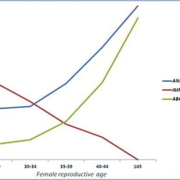
Interestingly, the data collected by the ESHRE PGD consortium IX showed a constant increase in the number of the PGD cycles approached uniquely for euploid embryo selection. In particular, more than 60% of PGD cycles were actually PGS for AMA, RIF or RPL patients, and this percentage is still currently increasing. There is, in fact, a striking impact of aneuploidies on human reproduction. In particular, their incidence in newborns is around 0.3%, mostly represented by trisomies of chromosomes 13, 18 and 21 and sex chromosome aneuploidies. However, tracking backwards through the developmental stages sees this incidence sharply increase, involving other chromosomes and reaching an incidence of up to 60% in preimplantation embryos and 70% in eggs or polar bodies [1]. On the contrary, this incidence in sperm is definitely less severe, as it is never greater than 3–4%. Moreover, a significant number of spontaneous abortions are linked to aneuploidies (more than 60% of products of conception follow chromosomal abnormalities), both increase exponentially with maternal age and fertility rate collapses (Fig. 1) [2].

From a biological perspective, the origin of high trisomy rates found in clinically recognized pregnancies (which sharply increases in patients older than 35 years) resides mainly in maternal meiosis I and II [3]. Recent data obtained through array comparative genomic hybridization (aCGH) on polar bodies (PBs) showed that chromatid errors in female meiosis, such as premature separation of sister chromatids, definitely outnumber impairments involving whole chromosomes as previously thought [4, 5]. Capalbo et al. [5] performed analyses on biopsies at sequential stages of development, in particular the two PBs, a single blastomere at day 3 of embryo development and also a trophectoderm (TE) sample at the blastocyst stage (Fig. 2). This study design allowed the determination of PB analysis accuracy and the impact of male and mitotic errors as well as the evaluation of the occurrence of correction mechanisms throughout preimplantation development. It came to light that 76 out of 78 (97.4%) abnormal meiotic segregations concerned errors involving chromatids rather than whole chromosomes at meiosis I. Furthermore, it unveiled not only a false positive rate in PB biopsy analysis of 20.5%, as just 79.5% (62/78) of meiotic segregation errors identified in PB biopsies were confirmed in blastomeres, but also a false negative rate of 47.6%, as 10 out of 21 embryos showed mitotic or male-derived aneuploidies confirmed at day 3 and at the blastocyst stage of development, which are, obviously, not observable in PBs. This evidence subverts our previous scenario of chromosomal aneuploidy genesis, as well as undermining the reliability of the PB analysis strategy.

Chromosomal mosaicism
From a diagnostic perspective in PGS, post-zygotic mitotic segregation errors are definitely more troubling than meiotic ones, as, whereas the latter involve the same aberrant chromosomal layout in the whole developing embryo, the former entail the phenomenon of chromosomal mosaicism. In the last decade several publications focused on the problem of mosaicism and its influence on PGD/PGS, claiming an incidence fluctuating between 25% [6, 7] and up to more than 70% [8]. Even when these data are analysed with a critical approach, it still emerges that mosaicism is a substantial source of misdiagnosis when the embryo is biopsied at day 3 post-fertilization. This evidence encouraged a shift of the biopsy strategy toward the blastocyst stage and, to this end, different studies were conducted in order to thoroughly describe its cytogenetic constitution and the impact of biopsy itself on embryonic developmental competence. In particular, Capalbo et al. [9] published data outlining the impact of chromosomal mosaicism on a diagnosis at day 5/6 of embryo development as well as the aneuploid cells setting between inner cell mass (ICM) and TE. To this end, a novel method of ICM biopsy was conceived [as described in 9], characterized via KRT18 staining [as described in 10] and its efficiency tested. It led to the absence of TE contamination in 85.7% of the ICM biopsy products, and a low TE contamination rate (only 2% of TE cells) in the rest of them. These data attest the reliability of this biopsy procedure to test the influence of mosaicism at the blastocyst stage. The study design entailed a preliminary aCGH analysis on a TE biopsy during blastocyst-stage PGS clinical cycles, followed by FISH re-analysis of three further fragments of TE and of the ICM from those blastocysts found to be carriers of copy-number chromosomal errors as well as euploid embryos. This revealed that at the blastocyst stage of development, 79.1% of the aneuploidies were constitutional, while 20.9% of them were mosaic. However, only 4% of the blastocysts were found to be mosaic diploid/aneuploid, being at risk of misdiagnosis due to mosaicism when testing at the blastocyst stage. These data strengthen the theory that the impact of mosaicism could be critical at day 3 of embryo development, but it has definitely less influence at the blastocyst stage, thus strongly presenting the latter as the most reliable candidate biopsy stage to perform PGS. Importantly, in the same paper, Capalbo et al. demonstrated that, after excluding low grade mosaicism (<20% of aneuploid cells) and mosaicism confined to one or two TE sections, in 97.1% of cases concordance for all chromosomes re-analysed by FISH between ICM and TE was observed. On a per embryo analysis, instead, complete concordance in TE-based prediction of ICM chromosomal complement was reported (Fig. 3) [9]. Northrop et al. [11] conducted a similar analysis exploiting a single nucleotide polymorphism (SNP) array, which is a comprehensive chromosomal screening technique. This method was found to detect aneuploidy in samples possessing more than 25% aneuploidy, thus when as few as 2 of the 5 cells within a TE biopsy contain the same chromosomal error. Their data showed no preferential aneuploid cell migration to the TE layer, as aneuploidy was observed in 31% of ICM samples (15 out of 48 ICM products) and 32% of TE ones (46 of 144 TE products). Furthermore, a mosaicism rate of 24% was attested, since 12 out of 50 blastocysts screened showed more than a single diagnosis in all of the multiple sections that were re-analysed.

Does the biopsy procedure affect embryo reproductive competence?

One  concern about PGS is that biopsy could affect embryo reproductive competence. To investigate this possibility, Scott et al. [12] designed a randomized and paired clinical trial. They selected two of the best quality embryos from the same patient to be transferred and randomized them, one to undergo biopsy, either at day 3 or at day 5 of embryo development, and the other as a control. The biopsy was submitted to SNP array analysis. If only one embryo implanted, buccal DNA obtained from the neonate after delivery was analysed by SNP array to determine whether the implanted embryo was the control one or not. The data collected clearly showed that conducting the biopsy at the cleavage stage affects the clinical outcome, as an absolute reduction in implantation rate of 19.6% with respect to the control was reported. On the contrary, blastocyst biopsy led to a non-significant overall reduction of implantation of 3%; thus an implantation rate equivalent to the control. It is still unclear whether this is due to a smaller proportion of the embryo’s total number of cells being removed, or to the fact that only extra-embryonic cells are involved, or to a higher stress-tolerance of the blastocyst; however, it is still additional important evidence supporting TE biopsy as the ‘gold standard’ for PGS. From a clinical perspective, the same authors also published a randomized controlled trial [13] comparing the clinical outcomes of single euploid blastocyst transfer versus double untested blastocyst transfer. Ongoing pregnancy rates per randomized patient were similar between the two groups (60.7% in the study group vs 65.1% in the control group), whereas a higher multiple pregnancy rate in the control group was recorded (54% vs 0% in the study group). Ultimately then, PGS on TE biopsy associated with a single euploid blastocyst transfer elicits the same clinical outcomes as conventional IVF, but reduces its risks.

Conclusion
In conclusion, PGS is an important diagnostic approach for patients with the proper indications (AMA, RIF or RPL), performed in order to boost implantation rate per transfer. Euploid embryo selection prevents useless and potentially detrimental embryo transfers. Consequently, further advantages of performing PGS are a lower time-to-pregnancy and a higher cost-effectiveness of each single treatment. Moreover, by adopting a biopsy strategy at day 5/6, it is possible to take advantage of a more robust genetic analysis, a high clinical predictive value, the absence of impact of the biopsy on embryo quality, a low influence of mosaicism, as well as a reduced number of embryos to analyse per cycle, as only developmentally competent ones would reach the blastocyst stage. These last aspects will help in reducing costs, thus extending the patients population that can benefit from this technology. Finally, novel comprehensive chromosomal screening techniques, i.e. aCGH, SNP array and quantitative real-time PCR (qPCR), provide us with reliable, sensible and accurate analysis methods, making of PGS also a technically solid approach.

References
1. Nagaoka SI, Hassold TJ, Hunt PA. Human aneuploidy: mechanisms and new insights into an age-old problem. Nat Rev Genet. 2012; 13(7): 493-504.
2. Heffner LJ. Advanced maternal age–how old is too old? N Engl J Med. 2004; 351(19): 1927-1929.
3. Hassold T, Hunt P. To err (meiotically) is human: the genesis of human aneuploidy. Nat Rev Genet. 2001; 2(4): 280-291.
4. Handyside AH, Montag M, Magli MC, Repping S, et al. Multiple meiotic errors caused by predivision of chromatids in women of advanced maternal age undergoing in vitro fertilisation. Eur J Hum Genet. 2012; 20(7): 742-747.
5. Capalbo A, Bono S, Spizzichino L, Biricik A, et al. Sequential comprehensive chromosome analysis on polar bodies, blastomeres and trophoblast: insights into female meiotic errors and chromosomal segregation in the preimplantation window of embryo development. Hum Reprod. 2013; 28(2): 509-518.
6. Voullaire L, Slater H, Williamson R, Wilton L. Chromosome analysis of blastomeres from human embryos by using comparative genomic hybridization. Hum Genet. 2000; 106(2): 210-217.
7. Wells D, Delhanty JD. Comprehensive chromosomal analysis of human preimplantation embryos using whole genome amplification and single cell comparative genomic hybridization. Mol Hum Reprod. 2000; 6(11): 1055-1062.
8. Mertzanidou A, Wilton L, Cheng J, Spits C, et al. Microarray analysis reveals abnormal chromosomal complements in over 70% of 14 normally developing human embryos. Hum Reprod. 2013; 28(1): 256-264.
9. Capalbo A, Wright G, Elliott T, Ubaldi FM, et al. FISH reanalysis of inner cell mass and trophectoderm samples of previously array-CGH screened blastocysts shows high accuracy of diagnosis and no major diagnostic impact of mosaicism at the blastocyst stage. Hum Reprod. 2013; 28(8): 2298-2307.
10. Cauffman G, De Rycke M, Sermon K, Liebaers I, Van de Velde H. Markers that define stemness in ESC are unable to identify the totipotent cells in human preimplantation embryos. Hum Reprod. 2009; 24(1): 63-70.
11. Northrop LE, Treff NR, Levy B, Scott RT Jr. SNP microarray-based 24 chromosome aneuploidy screening demonstrates that cleavage-stage FISH poorly predicts aneuploidy in embryos that develop to morphologically normal blastocysts. Mol Hum Reprod. 2010; 16(8): 590-600.
12. Scott RT Jr, Upham KM, Forman EJ, Zhao T, Treff NR. Cleavage-stage biopsy significantly impairs human embryonic implantation potential while blastocyst biopsy does not: a randomized and paired clinical trial. Fertil Steril. 2013; 100(3): 624-630.
13. Forman EJ, Hong KH, Ferry KM, Tao X, et al. In vitro fertilization with single euploid blastocyst transfer: a randomized controlled trial. Fertil Steril. 2013; 100(1): 100-107.

The authors
Danilo Cimadomo BSc, Antonio Capalbo* PhD, Laura Rienzi MS, Filippo Maria Ubaldi MS
G.EN.E.R.A. Centre for Reproductive
Medicine, Clinica Valle Giulia, Via G. De Notaris 2b, 00197 Rome, Italy
*Corresponding author
E-mail: capalbo@generaroma.it


https://clinlabint.com/wp-content/uploads/sites/2/2020/08/C125-Capalbo_Cimadomo_Figure1.jpg 341 500 3wmedia https://clinlabint.com/wp-content/uploads/sites/2/2020/06/clinlab-logo.png 3wmedia2020-08-26 09:45:402021-01-08 11:37:56Preimplantation genetic screening and related issues
C111 Euroimmun Fig1

Molecular allergology – probing deeper into the triggers of allergies

, 26 August 2020/in Featured Articles /by 3wmedia

Molecular allergology is a cutting edge technology that enables the triggers of allergies to be characterized to a new level of detail. Two new component-resolved immunoblot test systems provide in-depth profiling of allergic reactions against birch and grass pollens and against bee and wasp venoms. The molecular tests supplement the established Euroline allergy range, which comprises a comprehensive spectrum of application-oriented profiles designed for use in any diagnostic laboratory.

by Dr Jacqueline Gosink

Advanced diagnostic approach
Molecular allergology or component-resolved diagnostics is a novel approach to allergy diagnostics, whereby single purified allergen components (SPAC) are used for specific IgE detection in place of the usual whole extracts. This powerful technology introduces a new dimension to differential allergy diagnostics.

Precise, in-depth profiling
The raw allergen preparations of substances such as pollen that are traditionally used for in vitro allergy diagnostics are generally not well characterized and are thus difficult to standardize. In contrast, the allergenic targets used in molecular allergology tests are defined recombinant proteins, which are capable of delivering precise information about the source of sensitization.
The in-depth profiling enables allergologists to:

  • Identify disease-causing allergens
  • Assess the risk of cross reactions
  • Determine patients’ suitability for specific immunotherapy

Multiple pollen sensitizations
Pollen allergies are the most frequently occurring inhalation allergies, with sensitizations to birch and grass pollen as the most common ones. Typically, patients with multiple pollen sensitizations suffer from rhinitis, conjunctivitis and allergic asthma. The allergen extract-based determination of specific IgE antibodies encompasses sensitizations against major allergens and cross reacting minor allergens.
The Euroline SPAC Pollen 1 profile (Figure 1) combines the major and minor allergens of birch (Bet v1, Bet v2, Bet v4, Bet v6) and timothy grass (Phl p1, Phl p5, Phl p7, Phl p12), allowing the differentiation of pollen cross reactions from true multiple pollen sensitizations.
The efficacy of the assay has been confirmed by clinical studies. In one study the test successfully confirmed sensitizations to birch or grass pollen in 77 patients with clinically and anamnestically diagnosed allergies (1), and in a further study the test verified allergic reactions in 44 patients with birch and grass pollen double sensitizations (2). Furthermore, the test system correlated well with comparable commercial assays, demonstrating an EAST class correlation of 95-100% for each of the allergen components.

Bee and wasp venom allergies
Bee and wasp venom stings can pose a problem in the summer months. Whereas a normal reaction to a sting involves local swelling, itching and reddening, persons with an allergy can develop severe systemic reactions, including anaphylactic shock. Bee and wasp venom reactions can be identified using the single allergen components i208 (bee venom) and i209 (wasp venom). i208 represents the main bee venom marker rApi m1 from the honey bee (Apis mellifera) and i209 is the main allergen rVes v5 from the common wasp (Vespula vulgaris). Both preparations are free of cross-reactive carbohydrate determinant (CCD), providing higher reliability in result interpretation. The SPAC analysis allows true double sensitization to be distinguished from cross reactions between insect venoms. The Euroline SPAC Insect Venoms 1 profile (Figure 1) provides the recombinant antigens i208 and i209 together with the corresponding extracts i1 (bee venom) and i3 (wasp venom), allowing an efficient and comprehensive investigation of bee and wasp venom sensitizations with one test.

Fast and easy test procedure
The molecular allergology immunoblot tests are fast and simple to perform and are suitable for use in any diagnostic laboratory. The test procedure is based on established Euroline technology and consists of three basic steps: serum incubation (60 min), conjugate incubation (60 min) and chromogen substrate incubation (10 min). The in-between washing steps are short, and the entire procedure can be completed in 2.5 to 3 hours. All reagents are ready to use, saving time and reducing the risk of errors.

Only small amounts of sample material, typically 400 μl, are required per test. In a special volume-optimized version of the protocol the test can be performed with as little as 100 μl of patient sample, making it ideal for use in pediatrics.

Since the allergens are configured as a line blot with related allergens grouped together, the evaluation of profiles is effortless. Results are classified according to the RAST/EAST system. All profiles additionally include an indicator band of CCD to aid interpretation of the relevance of specific IgE results, for example in cases where positive IgE reactions are inconsistent with the clinical picture.

Fully automated processing
The standardized design of Euroline test strips allows automated processing using immunoblot incubators such as the EUROBlotOne (Figure 2). This advanced system automates the entire Euroline procedure from sample entry to report release. The compact, tabletop device has a high walkaway capacity: up to 44 strips can be incubated per run, and different tests can be combined in one run. All dilution, incubation and washing steps are performed automatically, and the integrated barcode scanner ensures that the correct samples are pipetted. User-friendly menus provide easy navigation, and error-detection features ensure high reliability. Test strips are subsequently digitalized using a special camera module.

Results are then automatically evaluated and archived using the worldwide-established and user-friendly EUROLineScan software. The software automatically identifies, quantifies and assigns bands, and a full results report is available within minutes of completing the incubation (Figure 3). The extensive individual data is administered and documented by the system, and all images and data are electronically archived, eliminating the need to store potentially infectious blot strips. The software can be easily integrated into LIS software, for example the EUROLabOffice system, for a smooth daily laboratory routine.

Comprehensive Euroline allergy range
The new molecular allergy tests are part of the established Euroline allergy range, which provides efficient multiparameter analysis of IgE antibodies against up to 36 different allergens in parallel. The immunoblots are composed from a wide portfolio of allergens, comprising both SPAC and native extracts which have been extensively purified and carefully quality controlled to ensure consistency. All profiles are application-oriented, each one being designed to address a particular diagnostic inquiry.

The Euroline system offers a very competitive price per allergen, making this system the ideal choice for laboratories wanting to perform state-of-the art allergy diagnostics on a small budget.

Perspectives
The advent of molecular allergology technology represents a quantum leap for allergy diagnostics. Component-resolved allergy test systems are unrivalled in the depth of diagnostic information they deliver and hence the level of support they provide for therapeutic decision-making. The Euroline SPAC range will soon be expanded to include further test systems based on this cutting-edge technology.

References
1. Weimann et al. 30th Annual Congress of the EAACI, Istanbul, Turkey, June 2011.
2. Weimann et al. 20th IFCC-EFLM European Congress of Clinical Chemistry and Laboratory Medicine (EuroMedLab), Milan, Italy, May 2013.

The author
Jacqueline Gosink PhD
Euroimmun AG
Luebeck, Germany

https://clinlabint.com/wp-content/uploads/sites/2/2020/08/C111_Euroimmun_Fig1.jpg 178 400 3wmedia https://clinlabint.com/wp-content/uploads/sites/2/2020/06/clinlab-logo.png 3wmedia2020-08-26 09:45:402021-01-08 11:37:59Molecular allergology – probing deeper into the triggers of allergies
Frances1 d07308

Sugar: a bad and good drug

, 26 August 2020/in Featured Articles /by 3wmedia

Recently a senior Dutch health official claimed that sugar is ‘the most dangerous drug of the times’ and called for cigarette packet-type warnings stating that ‘sugar is addictive and bad for health’ to be mandatory on the labels of products such as soft drinks and sweets.
A plethora of studies has examined the effects of overconsumption of sugar. Many are based on consumers reporting the amount of sugar in their diet; under-reporting is very common in such surveys, though a recently discovered biomarker based on the ratio of Carbon 12 and 13 can now measure long-term sugar intake from a single blood or hair sample. Other studies don’t distinguish between free monosaccharides and disaccharides added to food products and those occurring naturally in food. While recognising the limitations of many studies, most of us would accept that overconsumption of sugar is linked to obesity, dental caries, macular degeneration and Alzheimer’s disease in older age, cardiovascular disease and diabetes. And hypoglycemia (defined as a blood glucose level of < 2.5mmol/L), a frequent problem in diabetes patients receiving treatment, can also occur in non-diabetic subjects as a result of a diet that is too high in refined sugars and too low in complex carbohydrates. And the treatment for hypoglycemia is the sugar dextrose (= glucose), given orally or by intravenous drip depending on how low the glucose level is and how alert the patient.
Hypoglycemia is unfortunately becoming more common in neonates. Around one in three suffer from the condition in the West, reflecting the increase in gestational and maternal diabetes as well as the rising number of pre-term births. Careful management of the newborn is necessary to avoid seizures and serious brain injury, and this normally involves extra feeding with formula (in addition to breast milk, which often interrupts normal breastfeeding) and repeated blood glucose tests involving heel pricks. If a seriously low glucose level persists, babies are admitted to intensive care and intravenous dextrose is administered. However the good news is that a New Zealand study has just been published in ‘The Lancet‘ involving 514 neonates considered at high risk of hypoglycaemia. The babies diagnosed with the condition were randomly assigned to one of two groups. One hundred and eighteen were treated with six applications of 40% dextrose gel over two days, applied to the inside of the cheek, and 119 were treated with placebo gel. The blood glucose levels of the former group stabilised quicker, fewer babies needed extra formula feeds and fewer were admitted to intensive care. Sugar may be a ‘dangerous drug’ but it can also be invaluable!

https://clinlabint.com/wp-content/uploads/sites/2/2020/08/Frances1_d07308.jpg 300 225 3wmedia https://clinlabint.com/wp-content/uploads/sites/2/2020/06/clinlab-logo.png 3wmedia2020-08-26 09:45:402021-01-08 11:38:11Sugar: a bad and good drug
26219 Randox Clinical Laboratory International DecJan 2014

RIQAS – Randox Int’l Quality Assessment Scheme

, 26 August 2020/in Featured Articles /by 3wmedia
https://clinlabint.com/wp-content/uploads/sites/2/2020/08/26219-Randox-Clinical-Laboratory-International-DecJan-2014.jpg 924 700 3wmedia https://clinlabint.com/wp-content/uploads/sites/2/2020/06/clinlab-logo.png 3wmedia2020-08-26 09:45:402021-01-08 11:37:53RIQAS – Randox Int’l Quality Assessment Scheme
24606 Alifax Molto Meyer EN 2013 29 10 13

Alfred 60 AST: significant time reduction in urine culture

, 26 August 2020/in Featured Articles /by 3wmedia
https://clinlabint.com/wp-content/uploads/sites/2/2020/08/24606-Alifax_Molto-Meyer_EN_2013_29-10-13.jpg 991 700 3wmedia https://clinlabint.com/wp-content/uploads/sites/2/2020/06/clinlab-logo.png 3wmedia2020-08-26 09:45:402021-01-08 11:38:02Alfred 60 AST: significant time reduction in urine culture
26218 RANDOX Updated AV1377 Molecular Diagnostics Clinical Chemistry KRAS BRAF PIK3CA SEP13

Rapid profiling of point mutations in the KRAS, BRAF and PIK3CA genes

, 26 August 2020/in Featured Articles /by 3wmedia
https://clinlabint.com/wp-content/uploads/sites/2/2020/08/26218-RANDOX-Updated-AV1377-Molecular-Diagnostics-Clinical-Chemistry-KRAS-BRAF-PIK3CA-SEP13.jpg 988 700 3wmedia https://clinlabint.com/wp-content/uploads/sites/2/2020/06/clinlab-logo.png 3wmedia2020-08-26 09:45:402021-01-08 11:38:17Rapid profiling of point mutations in the KRAS, BRAF and PIK3CA genes
26233 Span CLI November 2013 PDF

Embracing The Neglected

, 26 August 2020/in Featured Articles /by 3wmedia
https://clinlabint.com/wp-content/uploads/sites/2/2020/08/26233-Span-CLI-November-2013-_PDF_.jpg 990 700 3wmedia https://clinlabint.com/wp-content/uploads/sites/2/2020/06/clinlab-logo.png 3wmedia2020-08-26 09:45:402021-01-08 11:38:06Embracing The Neglected
Frances1 036d58

Pre-eclampsia: the good and bad news

, 26 August 2020/in Featured Articles /by 3wmedia

Affecting around one in twenty pregnancies, pre-eclampsia is a leading cause of fetal morbidity and mortality globally. Around half a million babies die as a result of the condition annually. Severe pre-eclampsia, leading to eclampsia characterized by seizures, is also the second leading cause of maternal mortality (after hemorrhage) in most countries: an estimated 76,000 women die from it each year. A diagnosis of this multisystemic disorder has classically been made if hypertension and proteinuria are present. Pre-eclampsia can only be resolved by delivery of the placenta, thus management must weigh the severity of the condition against the risk to the fetus of an induced, premature delivery.
The launch of a rapid test measuring the plasma level of placental growth factor (PLGF), a biomarker of placental function, four years ago offered the possibility of a more timely diagnosis of pre-eclampsia and its severity that could facilitate optimal management for both mother and baby, including the administration of corticosteroids to accelerate fetal lung development prior to premature delivery. The level of PLGF normally rises during pregnancy up to 26 to 30 weeks’ gestation, and then falls until full-term, but its level is abnormally low in women with pre-term pre-eclampsia. Recently the published results of a large multicentre study using this rapid test made very encouraging reading. During the study, PLGF was measured in 625 pregnant women between 20 and 35 weeks gestation with suspected pre-eclampsia. The condition was confirmed in 55% of these women, with outcome being the delivery of the fetus within 14 days. The authors concluded that the test had high sensitivity in women presenting with suspected pre-eclampsia before 35 weeks’ gestation, and indicated need for delivery better than other diagnostic methods.
Although this research is good news for pregnant women and their babies, another aspect of pre-eclampsia has largely been ignored and is not generally known by either health-workers or women themselves, namely the subsequent increased health risk in older women who suffered from pre-eclampsia in pregnancy. A robust meta-analysis has linked the condition with a fourfold increased risk of hypertension, and a twofold increased risk of ischemic heart disease, stroke and venous thromboembolism, later in  life. A recent study from Australia found that the endothelial dysfunction associated with pre-eclampsia persists, causing the increased risk. At the very least previous pre-eclampsia should be flagged as important in an older woman’s medical history!

https://clinlabint.com/wp-content/uploads/sites/2/2020/08/Frances1_036d58.jpg 300 225 3wmedia https://clinlabint.com/wp-content/uploads/sites/2/2020/06/clinlab-logo.png 3wmedia2020-08-26 09:45:402021-01-08 11:37:56Pre-eclampsia: the good and bad news
p26 02

Improved tools to diagnose venom allergies

, 26 August 2020/in Featured Articles /by 3wmedia

Bee and wasp venom allergy is a potentially life-threatening condition and diagnostic errors can therefore have serious consequences. Currently, the diagnosis of allergy to stinging insects relies on patient case history and quantification of specific IgE antibodies and skin prick testing to identify the responsible insect. However, the diagnosis can sometimes be problematic as patients may have very low levels of specific IgE and also because many patients show positive test results to several venom species. Moreover it is often difficult for the patient to identify the offending insect. Component based specific IgE testing helps to increase the sensitivity of testing as well as to resolve which stinging insect species the patient is sensitized to. By applying these new component-specific IgE tests and including testing for serum tryptase, the certainty in identifying patients that will benefit from relevant and safe venom immunotherapy treatment increases greatly.

by Magnus Borres, MD, PhD, MPH

Background
Venoms from stinging insects such as bees and wasps (Hymenoptera) can induce anaphylaxis in susceptible people, and stinging insects are the second most common cause of anaphylaxis in Europe and USA (prevalence of 0.3 to 7.5% in Europe).  Most of the severe and fatal reactions to insect stings in Europe are caused by members of the Vespidae family – commonly known as wasps. In contrast to many other IgE mediated allergic reactions, venom allergies may arise very unexpectedly as they can affect also individuals that do not have a genetic pre-disposition to make IgE antibodies. 

The reactions elicited by a bee or wasp sting can range from mild/local immediate reactions, to larger often late local reactions up to immediate systemic reactions, eventually leading into life threatening conditions requiring emergency treatment.

Markers and risk factors in venom allergies
The presence of specific IgE antibodies to venoms supports the diagnosis of an allergic reaction. In many patients however, the levels are low and there is no direct correlation between the levels of specific IgE antibodies and the risk for reactions. In fact, it is not uncommon that severe reactions occur in patients with very low or sometimes even undetectable venom-specific IgE levels. This exemplifies the need for highly sensitive diagnostic tests that can detect and quantify very low specific IgE levels.
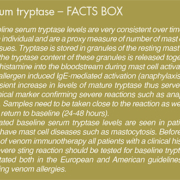
The risk of developing severe reactions after a Hymenoptera sting is dependent on several factors, such as the patient’s history of previous reactions, serum tryptase levels, age and specific IgE-sensitization. People who have already suffered from severe systemic reactions due to stings are predisposed for future reactions – up to 80% will develop severe reactions following a subsequent sting.  However, in 50% of the fatal cases no previous systemic reaction has occurred. Serum tryptase is an important marker for evaluating the risk for systemic reactions, where elevated baseline tryptase levels indicate a higher risk for severe anaphylactic reactions. Approximately a fourth of patients who experience severe venom reactions have elevated baseline levels of this marker. The risk for severe reaction to venom stings also increases with age, and is higher in adults than in children and adolescents. This may be explained by an increased number of mast cells in addition to other contributing clinical conditions in older people.

Identify the little beast!
For patients who are highly allergic to insect stings the treatment option is to undergo venom immunotherapy (VIT) aiming at inducing tolerance. For selecting the most effective treatment, correct identification of the Hymenoptera species that causes reactions in the patient is crucial. This is however not trivial as many patients do not know what insect stung them, and as approximately 60% of the patients show up positive to both bee and wasp in venom extract-based tests.

Diagnostic in vitro tests in venom allergies
Patient history forms the basis in diagnosing a venom allergy and specific IgE antibody test results can support the doctor in the diagnosis and in choosing the appropriate treatment. Whether the reaction in a patient is IgE mediated or not needs to be established. This is usually done by in vitro testing for specific IgE and/or skin prick testing, but as many as 10-20% who seek medical care for sting-induced reactions are negative in these extract-based tests. The reason may be that the reaction was due to another pathogenic mechanism than an allergic reaction, or it could have been caused by an underlying mast cell disease. When using conventional extract based test, which due to the preparation procedure may be low in content of certain allergenic proteins, the sensitivity may not be high enough to pick up certain sensitizations. In addition patients reacting for the first time to a sting may initially have levels of venom-specific IgE below the detection limit.
On the other hand, it is common that patients appear to be sensitized to both bee and wasp venoms when using extractbased specific IgE tests, even in cases when proven non-reactive to one of the species.  Diagnostic tests capable of discriminating between clinically relevant and irrelevant sensitizations, while reliably detecting true co-sensitization to both species greatly improves proper diagnosis and selection of therapeutic interventions. 
There has thus been a need to increase both the sensitivity to detect low levels of IgE antibodies and the specificity to distinguish between sensitization to different Hymenoptera species. Recently this has become possible through the introduction of component-resolved diagnostics, or molecular allergology.

What is molecular allergology?
Molecular allergology allows the measurement of specific IgE antibodies to single, pure allergen molecules, thereby helping to identify the exact allergenic molecule (component) that a patient is sensitized to. All allergen sources contain several allergenic molecules, and the ability to produce these by recombinant means and assay them individually greatly increases the precision of specific IgE measurements. Using this component-resolved testing it is possible to discriminate between species-specific sensitizations, where the patient is genuinely sensitized to the allergen source, and sensitizations due to cross-reactivity. Cross-reactivity occurs when antibodies directed against one molecule cross-recognize a very similar but yet distinct  protein. Such cross-reactivity may arise due to high similarity between some components in bees and wasps, but may also be caused by carbohydrate structures (CCDs) on proteins in plants and invertebrates. CCD antibodies do not cause symptoms and are thus clinically irrelevant, but may confuse test results greatly. Recombinant components used in molecular allergology are free of CCD structures and are therefore very specific. In addition, tests that identify antibodies to CCD are available to further increase diagnostic accuracy.

Molecular allergology improves the allergy diagnosis
Results from extract-based tests give the first, although crude answers that guide the diagnosis, while further analyses using component-based testing take the diagnosis to completely new levels by offering improved test sensitivity, resolving ambiguous extract test results and guiding the selection of optimal treatment. In cases where the patient has a convincing history of bee or wasp allergy, but extract -based tests turn out negative, allergen component testing offers increased sensitivity to detect relevant sensitizations. These tests contain only one single pure allergen component therefore the sensitivity to detect antibodies directed to this unique protein is increased as compared to extract-based tests. However the strength of the extract-based test is that they do contain all relevant allergenic proteins in the allergen source, including minor allergens. 

Component-based testing enables the discrimination between true co-sensitization and sensitization due to cross-reactivity. Extract-based test results may indicate sensitization to both bee and wasp venoms, but using component testing it is possible to investigate if these sensitizations are clinically irrelevant or truly suggest allergy to both species. The recombinant markers for bee (Api m 1), common wasp (Ves v 1 and Ves v5) and/or paper wasp (Pol d 5) should be used to determine unambiguously if the sensitization is species-specific or not. CCD-antibodies can also give rise to double positive test results in the absence of specific Hymenoptera venom sensitization since these antibodies often are induced by grass sensitization.

When extract-based test turn out positive to either bee or wasp only, there is little questioning about what species that patient reacts to. Even though this indicates a true Hymenoptera venom sensitization, additional testing with component-based tests can confirm if the patient is sensitized to a major allergen in the relevant species. Venom immunotherapy treatment may be more effective in patients who are sensitized to these major allergens.

New diagnostic tools in Hymenoptera venom allergy are now available for clinicians
The recent development of IgE tests against species-specific allergen components in Hymenoptera venom allergy offers diagnostic tools that greatly improve the ability to differentiate between sensitization to bees and wasp, and helps in discriminating between clinically relevant and irrelevant sensitizations.
Identification of which molecules that triggers the severe reaction is of vital importance for the clinician when considering venom immunotherapy. The combined use of venom components and Tryptase optimize the diagnosis and management of patients with a suspicion of venom allergy.  Currently only Thermo Fisher Scientific, formerly known as Phadia, Uppsala, Sweden, have both tryptase and allergen component test available on the same technology platform.

The author
By Magnus Borres, MD, PhD, MPH
Pediatric Allergist, Uppsala University Hospital, Uppsala, Sweden
Medical Director, ImmunoDiagnostics, Thermo Fisher Scientific, Uppsala, Sweden

https://clinlabint.com/wp-content/uploads/sites/2/2020/08/p26_02.jpg 330 400 3wmedia https://clinlabint.com/wp-content/uploads/sites/2/2020/06/clinlab-logo.png 3wmedia2020-08-26 09:45:402021-01-08 11:38:00Improved tools to diagnose venom allergies
26437 Eurogentec AD Dispensing CLI 92x132 0913 V1 2

Secure your in-house qPCR Dx assays

, 26 August 2020/in Featured Articles /by 3wmedia
https://clinlabint.com/wp-content/uploads/sites/2/2020/08/26437-Eurogentec-AD-Dispensing-CLI-92x132-0913-V1-2.jpg 999 700 3wmedia https://clinlabint.com/wp-content/uploads/sites/2/2020/06/clinlab-logo.png 3wmedia2020-08-26 09:45:402021-01-08 11:38:12Secure your in-house qPCR Dx assays
Page 56 of 146«‹5455565758›»
Bio-Rad - Preparing for a Stress-free QC Audit

Latest issue of Clinical laboratory

June 2026

CLi Cover June 2026
18 June 2026

Immunoglobulin Assays

18 June 2026

euroimmun From Revvity | Fully automated specialty testing with the IDS i20.

18 June 2026

HOLOGIC | A New Approach to Gastrointestinal Bacterial Testing.1,2

Digital edition
All articles Archived issues

Free subscription

View more product news

Get our e-alert

The leading international magazine for Clinical laboratory Equipment for everyone in the Vitro diagnostics

Sign up today
  • News
    • Featured Articles
    • Product News
    • E-News
  • Magazine
    • About us
    • Archived issues
    • Free subscriptions
    • Media kit
    • Submit Press Release
clinlab logo blackbg 1

Prins Hendrikstraat 1
5611HH Eindhoven
The Netherlands
info@clinlabint.com

PanGlobal Media is not responsible for any error or omission that might occur in the electronic display of product or company data.

Scroll to top

This site uses cookies. By continuing to browse the site, you are agreeing to our use of cookies.

Accept settingsHide notification onlyCookie settings

Cookie and Privacy Settings


How we use cookies

We may ask you to place cookies on your device. We use cookies to let us know when you visit our websites, how you interact with us, to enrich your user experience and to customise your relationship with our website.

Click on the different sections for more information. You can also change some of your preferences. Please note that blocking some types of cookies may affect your experience on our websites and the services we can provide.

Essential Website Cookies

These cookies are strictly necessary to provide you with services available through our website and to use some of its features.

Because these cookies are strictly necessary to provide the website, refusing them will affect the functioning of our site. You can always block or delete cookies by changing your browser settings and block all cookies on this website forcibly. But this will always ask you to accept/refuse cookies when you visit our site again.

We fully respect if you want to refuse cookies, but to avoid asking you each time again to kindly allow us to store a cookie for that purpose. You are always free to unsubscribe or other cookies to get a better experience. If you refuse cookies, we will delete all cookies set in our domain.

We provide you with a list of cookies stored on your computer in our domain, so that you can check what we have stored. For security reasons, we cannot display or modify cookies from other domains. You can check these in your browser's security settings.

.

Google Analytics Cookies

These cookies collect information that is used in aggregate form to help us understand how our website is used or how effective our marketing campaigns are, or to help us customise our website and application for you to improve your experience.

If you do not want us to track your visit to our site, you can disable this in your browser here:

.

Other external services

We also use various external services such as Google Webfonts, Google Maps and external video providers. Since these providers may collect personal data such as your IP address, you can block them here. Please note that this may significantly reduce the functionality and appearance of our site. Changes will only be effective once you reload the page

Google Webfont Settings:

Google Maps Settings:

Google reCaptcha settings:

Vimeo and Youtube videos embedding:

.

Privacy Beleid

U kunt meer lezen over onze cookies en privacy-instellingen op onze Privacybeleid-pagina.

Privacy policy
Accept settingsHide notification only

Subscribe now!

Become a reader.

Free subscription