


Which is the most common parasitic disease of the nervous system, which affection is the leading cause of seizures and acquired epilepsy in the developing world but still preventable? The answer: neurocysticercosis. An orphan disease suffering from the absence of a real ‘gold standard’ diagnosis. Meanwhile, many laboratories perform immunodiagnosis but what is its real value and what can it tell us?
by Dr Jean-François Carod
What is neurocysticercosis?
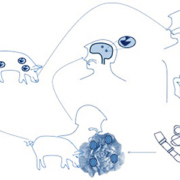
Cysticercosis of the central nervous system (neurocysticercosis) is caused by the larval stage (cysticerci) of the pork tapeworm Taenia solium. When people eat undercooked pork containing viable cysticerci, they develop an intestinal tapeworm infection (Fig. 1). Humans can also become intermediate hosts, however, by directly ingesting T. solium eggs shed in the feces of human carriers of the parasite. These eggs then develop into cysticerci, which migrate mostly into muscle (causing cysticercosis) and into the central nervous system where the cysticerci can cause seizures and many other neurological symptoms, neurocysticercosis (NCC). NCC is a major cause of epilepsy in endemic countries. It is the most important neurological disease of parasitic origin in humans. The pathogenesis is unclear but symptoms seem to correlate with the stage of the cyst. Starting as a viable entity, the cyst then gradually degenerates and become calcified. Seizures seem to appear at the degenerating and calcified stage but treatment is effective on the living cysts. Human cysticercosis is endemic in the Andean area of South America, Brazil, Central America and Mexico; China, the Indian subcontinent, South-East Asia; and Sub-Saharan Africa including Madagascar.
Why do we need to diagnose it?
Diagnosing NCC is required in the event of unexplained encephalitic disorders such as first onset of seizures in countries where NCC is endemic or in patients travelling in countries where NCC is endemic and who may have been at risk of infection (e.g. exposed to NCC risk factors, such as inadequate hand and food hygiene).
How can it be diagnosed?
The diagnosis of cysticercosis of the central nervous system involves the interpretation of non-specific clinical manifestations, such as seizures, often with characteristic findings on computed tomography (CT) or magnetic resonance imaging (MRI) of the brain, and the use of specific serological tests (Fig. 2). Diagnostic criteria based on objective clinical, imaging, immunological and epidemiological data have been proposed but are not generally used in areas endemic for the disease [1].
Serology is indicated for the diagnosis of T. solium seropositivity. But from a positive serology to the assessment of NCC diagnosis, there is a huge gap. A positive T. solium serology is not predictive for a neurological localization and serology may remain positive years after the end of the infection.
No single test can lead to a definitive diagnosis of NCC. CT-scan or MRI may be performed on the presentation of clinical symptoms that could be attributed to NCC (first onset of seizure, unexplained headache…) for people who were exposed to NCC risk factors. Imaging may show typical ring lesions with or without inflammation and calcification. However, the image is not pathognomonic of NCC unless hooks (scolex) are visible inside the ring. Thus, serology may give the clue if positive. A positive serology (antibody) may be confirmed by Western-blot or electro-immuno transfer blot (EITB), which show the typical bands specific of T. solium glycoproteins. Antigen detection in the blood can also be performed. This test is specific for T. solium and does not require laboratory confirmation. Both antigen and antibody assays can be performed in the cerebrospinal fluid (CSF). The presence of antibody or antigen in the CSF may contribute towards the assessment of the neurological localization of the disease. In developing countries, the regions most affected by T. solium infection, CT-scan and, of course, MRI are unaffordable, if ever available.
What are the current laboratory tools?
The laboratory diagnosis of cysticercosis is basically the immunodiagnostic based firstly on antibody detection with ELISA (enzyme-linked immunosorbent assay) or immunoblot.
The detection of antibodies against T. solium is a common method of infection diagnosis, but presents many limitations as a single cyst carrier may not be easily detected. Commercially available tests include essentially ELISA and Western-blots. Western-blots are the ‘gold standard’ assays for the detection of specific antibodies against T. solium. The reference Western-blot assay remains the one developed at the Centers for Disease Control (CDC), Georgia, USA, by Tsang et al. [2]. It employs a specific fraction of T. solium cysts. Many of the components have been identified and cloned. The test is very specific for exposure and/or disease and to confirm the diagnosis. Both ELISA tests and Western-blot relay on antigens that have varied significantly throughout the years (Fig. 3) [3]. Historically, the first assays used crude soluble extracts, then purified proteins such as lentil lectin glycoproteins (LLGPs) Recent trends, though not yet commercialized, tend to emphasize the use of recombinant proteins. Designing recombinant antigens requires a proteinomic approach (Fig. 4) that is now frequently used in development units. Current studies propose the use of nanobodies for diagnostic purposes. These evolutions increased both the sensitivity and the specificity of the tests.
Another available technique is based on the detection of circulating parasitic antigens using monoclonal antibodies [4]. This test is capable of detecting single cyst carriers and is more specific than available antibody ELISA tests. Its main advantage is its ability to monitor the response to cysticidal therapy.
Understanding the performance assessment of T. solium detection tests
Most commercially available ELISA tests have been evaluated by poor methodology. Assessing that a performance evaluation used the proper method means ensuring that the study used a serum bank of parasitologically-defined sera to assess test sensitivity. Defined cysticercosis sera should ideally include the following sera: two or more viable cysts, single viable cysts, degenerating cysts, calcified cysts.
Each series should be initially tested separately. A parasitologically-defined sera should correspond to the Del Brutto criteria [1]. In the absence of a true ‘gold standard’ for the diagnosis of neurocysticercosis, positive sera (cases) should be taken from patients with (1) absolute diagnosis of NCC, or (2) probable NCC diagnosis.
The test specificity should be carefully evaluated using defined negative and potentially cross-reactive sera. Negative sera (control) should be taken from the same area and if possible from people exposed to the same risk factors as the positive cases, with age and sex correlation. Negative cases are usually taken from blood donors of developed countries. Those people have not been in contact with many parasitic infections and the sensitivity of the test will not be accurate/reliable for use in developing countries. This is why specificity should not only be assessed on negative samples from Western countries but also on other parasitic infections from cysticercosis-free developing countries.
What are the new trends in laboratory tests?
If only immunodiagnostic tools based on antibody or antigen detection are currently commercialized, new approaches have been developed including molecular biology (gene amplification in CSF mostly) (Fig. 5). However, so far none constitutes a ‘gold standard’. Table 1 summarizes the pros and cons of NCC diagnosis tools.
Conclusions and future
A test is reliable and useful if it contributes to a care improvement; that is to say to an appropriate therapy for all the patients. As for NCC; the decision to treat is still subject to controversy. Furthermore, even basic serologies are unaffordable or unavailable in endemic countries, not to mention imaging. The key will be in developing a reliable rapid test able to screen infected patients and correlated to neurological lesions of cysticerci.
References
1. Del Brutto OH. Diagnostic criteria for neurocysticercosis, revisited. Pathog Glob Health 2012; 106(5): 299–304.
2. Tsang VC, Brand JA, Boyer AE. An enzyme-linked immunoelectrotransfer blot assay and glycoprotein antigens for diagnosing human cysticercosis (Taenia solium). J Infec Dis. 1989; 159(1): 50–59.
3. Esquivel-Velázquez M, Ostoa-Saloma P, Morales-Montor J, Hernández-Bello R, Larralde C. Immunodiagnosis of neurocysticercosis: ways to focus on the challenge. J Biomed Biotechnol. 2011; 2011: 516042. Doi:10.1155/2011/516042.
4. Garcia HH, Harrison LJ, Parkhouse RM, Montenegro T, Martinez SM, Tsang VC, Gilman RH. A specific antigen-detection ELISA for the diagnosis of human neurocysticercosis. The Cysticercosis Working Group in Peru. Trans R Soc Trop Med Hyg. 1998; 92(4): 411–414.
The author
Jean-François Carod Pharm D, MSc
Laboratoire de Biologie Médicale, GCS de l’ARC Jurassien, Centre Hospitalier Louis Jaillon, 2 Montée de l’hôpital, 39200 Saint-Claude, France.
E-mail: jean-francois.carod@ch-stclaude.fr
Colorectal cancer is one of the most prevalent types of cancer and is the fourth most common cause of cancer mortality. Identification of non-invasive biomarkers representative of disease heterogeneity is critical for diagnosis of early stage disease when the chance for cure is greatest. This article discusses two such biomarkers, brain-derived neurotrophic growth factor and lipocalin 2, which also reflect key independent risk factors for the disease obesity.
by Dr K. Y. C. Fung, Dr B. Tabor, Prof. P. Gibbs, Dr J. Tie, Dr P. McMurrick, Mr J. Moore, Prof. A. Ruszkiewicz, Prof. A. Burgess, Dr L. Cosgrove
Biomarkers for colorectal cancer: current status
Colorectal cancer (CRC) is one of the most commonly diagnosed cancers worldwide where epidemiological studies have drawn strong correlations between its incidence and lifestyle factors [1, 2]. The incidence of CRC varies considerably with geographic region, where it is highest in affluent countries (e.g. in the USA, UK, Europe, Australia and New Zealand the incidence is approximately 20–45 per 100 000) and lowest in African and Asian countries (incidence of approximately 5–20 per 100 000) [2]. In countries with increasing industrialization such as Japan, Korea and Singapore, the incidence of CRC is rapidly approaching that of high risk countries with a longer history of affluence [2]. For most sporadic CRC, the transformation from normal colonic mucosa to carcinoma is believed to occur over 10–15 yrs [3]. This relatively long time frame for disease development enables implementation of population screening programmes for disease detection as early stage diagnosis and removal of premalignant (adenoma or polyp) or early stage malignant disease (stage I) can either prevent the occurrence of CRC or significantly increase the chance of a complete cure.
Ideally, diagnostic tests are robust and cost effective and biomarkers should have high sensitivity and specificity for the disease they are proposed to detect. Currently, colonoscopy is regarded as the ‘gold standard’ for CRC diagnosis (sensitivity and specificity greater than 95%) but it is expensive and invasive. Accordingly, low cost alternatives such as the fecal occult blood test (FOBT) and the fecal immune test (FIT) are currently in use in population screening programmes in a number of countries [4]. These tests detect the presence of blood in stool samples and have low specificity for CRC. Their low sensitivity also leads to high rates of false positive results and they do not reliably detect early stage disease [5, 6]. As a result, identification of suitable biomarker(s) with high sensitivity and specificity for CRC that can be included in a non-invasive test suitable for population screening is urgently required. Despite extensive research efforts, no single biomarker has been identified and it is becoming apparent that a panel of biomarkers panel reflecting the heterogeneity of the disease will be more effective.
Sporadic CRC is linked to multiple environmental risk factors, with obesity consistently demonstrated to be a significant and independent risk factor [1]. Brain-derived neurotrophic growth factor (BDNF) and lipocalin 2 (LCN2) are two protein biomarkers that have been implicated in both obesity and CRC. BDNF has been shown to have a key role in neural regulation of appetite and food intake control [7], where low BDNF levels in the hypothalamic region of the brain have been associated with decreased satiety and weight gain. There is also evidence indicating that serum BDNF levels are lower in patients with type 2 diabetes in comparison to controls [8]. Similarly, elevated levels of circulating LCN2 have been documented in obese men and women and in patients with metabolic syndrome [9]. With the aim of identifying a panel of biomarkers to identify individuals potentially at risk of developing CRC, we investigated the utility of BDNF and LCN2 as individual biomarkers and as a biomarker panel to determine if this combination provided higher sensitivity for CRC diagnosis.
BDNF and LCN2 as CRC biomarkers
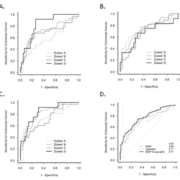
We have previously reported on the utility of circulating BDNF and lipocalin as biomarkers for CRC [10, 11]. In these studies, enzyme-linked immunosorbent assays (ELISAs) were used to measure the concentrations of each biomarker in the sera of a cohort of CRC patients (n=97) and age/gender matched controls (n=99). In this cohort, the median BDNF concentration was found to be significantly lower (P<0.0001) in the control population (18.8 ng/mL, range 4.0–56.5 ng/mL) when compared to the CRC group (23.4 ng/mL, range 3.0–43.1 ng/mL). Conversely, in the same cohort, the median concentration of LCN2 was significantly higher (P<0.0001) in the CRC group (121.5 ng/mL, range 31.65–432.6 ng/mL) when compared to the control group (86.36 ng/mL, range 17.11–189.9 ng/mL). At 95% specificity, the sensitivity of BDNF was 18% [area under curve (AUC) 0.69, P<0.0001)] and the sensitivity of LCN2 was 31% (AUC 0.71, P<0.0001). Although both biomarkers performed equally well at separating CRC patients from the normal cohort (demonstrated by the AUC), neither biomarker when considered alone reached the desired sensitivity for clinical use as a diagnostic approach for CRC.
Figure 1 shows the receiver operating characteristic (ROC) curve for BDNF, LCN2 and for BDNF and LCN2 in combination. Table 1 summarizes the sensitivity at 95% specificity for BDNF and LCN2 individually and as a biomarker combination for each disease stage. LCN2 had consistently higher sensitivity than BDNF for diagnosing CRC overall and at each Dukes’ stage, and the LCN2 and BDNF combination does not appear to improve diagnostic efficacy. For example, at 95% specificity, the sensitivity was 33% for the LCN2 and BDNF combination (compared with 32% for LCN2).
Strategies for biomarker identification
Current strategies for CRC biomarker identification include identification of tumour specific biomarkers and biomarkers indicative of the disease process, such as inflammation, the immune response, angiogenesis, and metastasis. Investigators have also reported on the utility of biomarker combinations that include established tumour markers such as CEA and CA19-9 [12, 13]. These strategies have yielded many promising individual candidate markers and marker panels that have been tested in small cohort studies, but none has resulted in the sensitivity and specificity required for population based screening. This lack of success has been attributed to factors such as small sample size, over-representation of late stage disease in test cohorts leading to overestimation of biomarker sensitivity, and disease heterogeneity where CRC subsets with different genetic backgrounds have been characterized [14].
As part of our strategy, we have also considered biomarkers indicative of established risk factors such as obesity and type 2 diabetes. Inclusion of these biomarkers, or biomarkers that are indicative of other risk factors, should enable us to identify those individuals who may be at greater risk of developing the disease and hence improve our ability for earlier diagnosis. This is critical for reducing mortality and morbidity associated with CRC where the 5-year survival rate for patients with stage I disease is >90% in comparison to 5% at stage D. Currently, more than 50% of malignancies are detected at an advanced stage despite the implementation of screening programmes. Although the BDNF and LCN2 combination does not provide adequate sensitivity and specificity for use in a clinical setting, it is possible that a combination of (one of) these markers with a CRC tumour specific marker may yield the desired analytical performance.
Future directions
The lack of FDA approval for any biomarkers as a diagnostic for CRC highlights the challenges associated with discovery, verification and validation of biomarkers. While –omics technologies (e.g. genomics, transcriptomics and proteomics) have been, and continues to be, the primary tool for discovery of novel biomarkers, these efforts have largely focused on identification of tumour specific markers. Incorporation of biomarkers representative of other disease factors will likely improve our chances of identifying a panel of markers to successfully diagnose CRC. Furthermore, stratification of risk based on genotype or environmental/lifestyle factors together with a panel of molecular biomarkers may prove to be more successful than any one of these factors alone for early diagnosis.
Acknowledgements
We thank the Victorian Cancer Biobank (Melbourne, Victoria) for their assistance with sample collection and Ms Ilka Priebe for technical assistance with the ELISAs. This work was funded by the CSIRO Preventative Health National Research Flagship and the National Health and Medical Research Council (grant number 1017078).
References
1. World Cancer Research Fund / American Institute for Cancer Research. Food, nutrition, physical activity, and the prevention of cancer: a global perspective. Washington, DC: AICR 2007.
2. Jemal A, Bray F, et al. Global cancer statistics. CA Cancer J Clin. 2011; 61(2): 69–90.
3. Fearon ER, Vogelstein B. A genetic model for colorectal tumorigenesis. Cell 1990; 61(5): 759–767.
4. Hewitson P, Glasziou P, Watson E, Towler B, Irwig L. Cochrane systematic review of colorectal cancer screening using the fecal occult blood test (hemoccult): an update. Am J Gastroenterol. 2008; 103(6): 1541–1549.
5. Morikawa T, Kato J, Yamaji Y, Wada R, Mitsushima T, Shiratori Y. A comparison of the immunochemical fecal occult blood test and total colonoscopy in the asymptomatic population. Gastroenterology 2005; 129(2): 422–428.
6. Parra-Blanco A, Gimeno-García AZ, Quintero E, Nicolás D, et al. Diagnostic accuracy of immunochemical versus guaiac faecal occult blood tests for colorectal cancer screening. J Gastroenterol. 2010; 45(7): 703–712.
7. Vanevski F, Xu B. Molecular and neural bases underlying roles of BDNF in the control of body weight. Front Neurosci. 2013; 7: 37.
8. Fujinami A, Ohta K, Obayashi H, Fukui M, et al. Serum brain-derived neurotrophic factor in patients with type 2 diabetes mellitus: Relationship to glucose metabolism and biomarkers of insulin resistance. Clin Biochem. 2008; 41(10–11): 812–817.
9. Wang Y, Lam KS, Kraegen EW, Sweeney G, et al. Lipocalin-2 is an inflammatory marker closely associated with obesity, insulin resistance, and hyperglycemia in humans. Clin Chem. 2007; 53(1): 34–41.
10. Brierley GV, Priebe IK, Purins L, Fung KY, et al. Serum concentrations of brain-derived neurotrophic factor (BDNF) are decreased in colorectal cancer patients. Cancer Biomark. 2013; 13(2): 67–73.
11. Fung KY, Priebe I, Purins L, Tabor B, et al. Performance of serum lipocalin 2 as a diagnostic marker for colorectal cancer. Cancer Biomark. 2013; 13(2): 75–79.
12. Herszényi L, Farinati F, Cardin R, István G, et al. Tumor marker utility and prognostic relevance of cathepsin B, cathepsin L, urokinase-type plasminogen activator, plasminogen activator inhibitor type-1, CEA and CA 19-9 in colorectal cancer. BMC Cancer 2008; 8: 194.
13. Shimwell NJ, Wei W, Wilson S, Wakelam MJ, et al. Assessment of novel combinations of biomarkers for the detection of colorectal cancer. Cancer Biomark. 2010; 7(3): 123–132.
14. Tao S, Hundt S, Haug U, Brenner H. Sensitivity estimates of blood-based tests for colorectal cancer detection: impact of overrepresentation of advanced stage disease. Am J Gastroenterol. 2011; 106(2): 242–253.
The authors
Kim Y. C. Fung1* PhD; Bruce Tabor1 PhD; Peter Gibbs2 MBBS, MD, FRACP; Jeanne Tie2 MD; Paul McMurrick3 MBBS, FRACS; James Moore4 MBBS, MD, FRACS; Andrew Ruszkiewicz5 MD, FRCPA; Antony Burgess6 PhD; and Leah Cosgrove1 PhD
1CSIRO, Preventative Health National Research Flagship, Australia
2Royal Melbourne Hospital, Melbourne, Australia
3Cabrini Hospital, Melbourne, Australia
4Royal Adelaide Hospital, Adelaide, Australia
5SA Pathology, Adelaide, Australia
6Walter and Eliza Hall Institute of Medical Research, Melbourne, Australia
*Corresponding author
E-mail: Kim.fung@csiro.au



Prostate specific antigen (PSA) has significantly improved the early detection of prostate cancer (PCa), reducing the related mortality rate. However, PSA has a low specificity, being affected by many benign conditions. [-2]proPSA, a PSA precursor, is a more specific and accurate biomarker indicating prostate biopsy in men at real risk of PCa.
by Dr A. Abrate, Dr M. Lazzeri and Prof. G. Guazzoni
PSA as a marker for prostate cancer
Prostate specific antigen (PSA) is a serum marker widely used for the early detection of prostate cancer (PCa). Its introduction into clinical practice in the early 1990s had an extraordinary impact on the diagnosis and management of PCa. In fact, 20 years after its introduction, the PSA-based PCa opportunistic or systematic screening has resulted in a stage migration to more organ-confined tumours at the time of diagnosis, and consequently to a consistent reduction in PCa related mortality [1, 2]. However, PSA is not a perfect marker for the detection of PCa because of its low specificity and sensitivity. Its levels may increase as a result of benign conditions, such as benign prostatic hyperplasia (BPH) and chronic prostatitis. Moreover, PSA levels are also affected by biologic variability, which may be related to differences in androgen levels, prostate manipulation or ejaculation. Finally, alterations in PSA levels may be related to sample handling, laboratory processing, or assay standardization. All these factors made it difficult to find an appropriate PSA cut-off point diagnostic for PCa (for many years considered to be 4 ng/ml).
Thus, prostate biopsy is still mandatory to confirm the diagnosis. However, this is positive in only approximately 30% of patients [3], and the European Association of Urology suggests a repeat biopsy if PSA is persistently elevated, the digital rectal examination (DRE) is suspicious, or there is a pathological diagnosis of atypical small acinar proliferation (ASAP) or high-grade prostatic intraepithelial neoplasia (HG-PIN) [4]. Finally, PCa (also high-grade cancer) is not rare (approximately 15.2%) among men with PSA levels lower than 4 ng/ml, the previously widely accepted cut-off point [5].
Considering all these observations, it is clear that PSA is an organ-specific rather than an ideal cancer-specific marker.
The introduction into clinical practice of measuring the levels of several derivatives of PSA (free PSA, percentage of free PSA, PSA density, PSA velocity) improved the accuracy of total PSA (tPSA) in detecting PCa. Recently, free PSA (fPSA) has been found to include several subforms, such as proPSA. In particular [-2]proPSA seems to be specific for PCa, opening new ways for early cancer detection.
Biological basis of proPSA
The currently measurable serum tPSA consists of either a complexed form (cPSA, 70–90%), bound by protease inhibitors (primarily alpha1-antichymotrypsin), and a non-complexed form (fPSA). Recently fPSA has been discovered to exist in at least three molecular forms: proPSA, benign PSA (BPSA), and inactive intact PSA (iPSA), covering approximately 33%, 28%, and 39% of fPSA respectively (Fig. 1) [6]. In particular, proPSA is a proenzyme (precursor) of PSA, which is associated with PCa [7].
PSA is synthesized with a 17-amino acid leader sequence (preproPSA) that is cleaved co-translationally to generate an inactive 244-amino acid precursor protein (proPSA, with seven additional amino acids compared to mature PSA). proPSA is normally secreted from the prostate luminal epithelial cells. Immediately after its release into the lumen, the pro-leader part is removed, creating the active form, by the effect of human kallikrein (hK)-2 and hK-4, which have a trypsin-like activity and are expressed predominantly by prostate secretory epithelium. Other kallikreins, localized in the prostate, such as hK216 or prostin17, are involved in the conversion and activation of proPSA. Cleavage of the N-terminal seven amino acids from proPSA generates the active enzyme, which has a mass of 33 kDa.
The partial removal of this leader sequence leads to other truncated forms of proPSA. Thus, theoretically seven isoforms of proPSA could exist, although only [-1], [-2], [-4], [-5], [-7]proPSA were found; there is still no evidence of [-3], [-6]proPSA. However, all forms of proPSA are enzymatically inactive [8]. It is possible to detect three truncated forms of proPSA in serum: [-5/-7], [-4] and [-2]proPSA, which is the most stable form (Fig. 1).
Notably, in vitro experiments showed that the [-2]proPSA form cannot be activated by either hK2 or trypsin; thus, once it is formed, [-2]proPSA is resistant to activation into the mature PSA form and consequently this is the most reliable test.
Mikolajczyk et al. [7], using a monoclonal antibody recognizing [-2]proPSA, found increased staining in the secretions from malignant prostate glands. In particular [-2]proPSA is differentially elevated in peripheral gland cancer tissue; conversely transition zone tissue contains little or no proPSA.
The increased serum tPSA concentrations in patients with PCa do not result from increased expression but rather from an increased release of PSA into the bloodstream, due to disruption of the epithelial architecture. fPSA is catalytically inactive because of internal cleavages, occurring in seminal plasma, and does not form complexes with protease inhibitors or other proteins: in PCa %fPSA is lower presumably because, consequently to an increased release of PSA into the bloodstream, a very low part is still degraded into the ducts.
In another later study [9], Mikolajczyk et al. found that [-2]proPSA was specifically higher in patients with PCa. Analysing a small number of patients with biopsy positive for PCa and tPSA between 6 and 24 ng/ml, they found that [-2]proPSA constituted a high fraction of fPSA (25% to 95%), which was greater than in patients with a negative biopsy. However, the molecular basis for the proPSA elevation in PCa is uncertain, although a decreased cleavage by hK2 could be the cause.
Clinical utility of proPSA
Sokoll et al. [10] were the first to study the role of proPSA in the early detection of PCa. The study involved archival serum from 119 men (31 PCa, 88 non-cancer), obtained before biopsy and in the tPSA range of 2.5–4.0 ng/ml. The serum levels of tPSA, fPSA, proPSA, and proPSA/fPSA ratio (%proPSA) were analysed: PSA and %fPSA values were similar between the non-cancer and PCa groups, and %proPSA was relatively higher in the PCa group (50.1±4.4%) compared to the non-cancer group (35.5±6.7%; P=0.07). Concerning the clinical utility, the area under the curve (AUC) for %proPSA was 0.688 compared to 0.567 for %fPSA. At fixed sensitivity of 75%, the specificity was significantly greater for %proPSA at 59% compared with %fPSA at 33% (P<0.0001).
Afterwards, the Prostate Health Index (PHI) has been proposed as a mathematical algorithm combining tPSA, fPSA and [-2]proPSA according to the formula: ([-2]proPSA/fPSA) × √tPSA.
A large American prospective trial [11], involving 892 men who had tPSA levels of 2–10 ng/ml and negative digital rectal examination results, showed that PHI had greater predictive accuracy for prostate biopsy outcome (AUC 0.703) than [-2]proPSA (AUC 0.557), %fPSA (AUC 0.648) and PSA (AUC 0.525), directly correlating with Gleason score (GS) (P=0.013), with an AUC of 0.724 for GS ≥4+3 disease. Moreover, men with PHI >55 had a 42% likelihood of being diagnosed with high-grade disease on biopsy compared to 26% of men with PHI 0–24.9.
Accordingly, an observational European multicenter cohort study involved 646 men with tPSA levels of 2–10 ng/ml, who had undergone prostate biopsy [12]. [-2]proPSA and PHI improved the predictive accuracy for the detection of overall PCa (and also GS ≥7 disease) compared to PSA and derivatives. In fact, at 90% sensitivity, the PHI cut-off of 27.6 could avoid 100 (15.5%) biopsies, missing 26 (9.8%) cancers (23 with GS 6, three with GS 3+4).
Moreover, a PHI based nomogram to predict PCa at extended prostate biopsy was developed and validated over 729 patients [13]. Including PHI in a multivariable logistic regression model, based on patient age, prostate volume, digital rectal examination and biopsy history, significantly increased predictive accuracy by 7% from 0.73 to 0.80 (P<0.001). Decision curve analysis showed that using the PHI based nomogram resulted in the highest net benefit.
Recently, it was demonstrated that PHI might have a role in screening patients at high risk of PCa [14]. Specifically, the study involved 158 men with a positive family history undergoing prostate biopsy within the multicentre European PROMEtheuS cohort. Similarly to previous studies in the general population, PHI outperformed tPSA and %fPSA for PCa detection on biopsy (AUC 0.73, 0.55 and 0.60, respectively). In addition, both [-2]proPSA and PHI were directly associated with GS in men with a positive family history. Overall, the authors reported that using a PHI cutoff value of 25.5 would have avoided 17.2% of biopsies while missing only two GS 7 cancers. On decision curve analysis, the addition of PHI to a base predictive model that included age, prostate volume, tPSA, fPSA and %fPSA resulted in net benefit at threshold probabilities of 35–65%. This result suggests that PHI should be incorporated into a multivariable risk assessment for high-risk patients because it offers improved performance for PCa detection.
Conclusions
[-2]proPSA and PHI are more accurate than the currently used tests (PSA and derivatives) in predicting the presence of PCa at biopsy. Their implementation in clinical practice has the potential to significantly increase physicians’ ability to detect PCa and avoid unnecessary biopsies. Further work is needed to confirm and generalize these data on wider populations.
References
1. Hoffman RM, Stone SN, Espey D, Potosky AL. Differences between men with screening-detected versus clinically diagnosed prostate cancers in the USA. BMC Cancer 2005; 5: 27.
2. Siegel R, Naishadham D, Jemal A. Cancer statistics, 2013. CA Cancer J Clin. 2013; 63: 11–30
3. Vickers AJ, Cronin AM, Roobol MJ, et al. The relationship between prostate-specific antigen and prostate cancer risk: the Prostate Biopsy Collaborative Group. Clin Cancer Res. 2010; 16: 4374–4381.
4. Heidenreich A, Bellmunt J, Bolla M, et al. EAU guidelines on prostate cancer. Part 1: screening, diagnosis, and treatment of clinically localised disease. Eur Urol. 2011; 59: 61–71.
5. Thompson IM, Pauler DK, Goodman PJ, et al. Prevalence of prostate cancer among men with a prostate-specific antigen level < or =4.0 ng per milliliter. N Engl J Med. 2004; 350: 2239–2246.
6. Mikolajczyk SD, Rittenhouse HG. Pro PSA: a more cancer specific form of prostate specific antigen for the early detection of prostate cancer. Keio J Med. 2003; 52: 86–91.
7. Mikolajczyk SD, Millar LS, Wang TJ, et al. A precursor form of prostate-specific antigen is more highly elevated in prostate cancer compared with benign transition zone prostate tissue. Cancer Res. 2000; 60: 756–759.
8. Jansen FH, Roobol M, Jenster G, Schroder FH, Bangma CH. Screening for prostate cancer in 2008 II: the importance of molecular subforms of prostate-specific antigen and tissue kallikreins. Eur Urol. 2009; 55: 563–74.
9. Mikolajczyk SD, Marker KM, Millar LS, et al. A truncated precursor form of prostate-specific antigen is a more specific serum marker of prostate cancer. Cancer Res. 2001; 61: 6958–6963
10. Sokoll LJ, Chan DW, Mikolajczyk SD, et al. Proenzyme psa for the early detection of prostate cancer in the 2.5–4.0 ng/ml total psa range: preliminary analysis. Urology 2003; 61: 274–276.
11. Catalona WJ, Partin AW, Sanda MG, et al. A multicenter study of [-2]pro-prostate specific antigen combined with prostate specific antigen and free prostate specific antigen for prostate cancer detection in the 2.0 to 10.0 ng/ml prostate specific antigen range. J Urol. 2011; 185: 1650–1655.
12. Lazzeri M, Haese A, de la Taille A, et al. Serum isoform [-2]proPSA derivatives significantly improve prediction of prostate cancer at initial biopsy in a total PSA range of 2-10 ng/ml: a multicentric European study. Eur Urol. 2013; 63: 986–994.
13. Lughezzani G, Lazzeri M, Larcher A, et al. Development and internal validation of a Prostate Health Index based nomogram for predicting prostate cancer at extended biopsy. J Urol. 2012; 188: 1144–1150.
14. Lazzeri M, Haese A, Abrate A, et al. Clinical performance of serum prostate-specific antigen isoform [-2]proPSA (p2PSA) and its derivatives, %p2PSA and the prostate health index (PHI), in men with a family history of prostate cancer: results from a multicentre European study, the PROMEtheuS project. BJU Int. 2013; 112: 313–321.
The author
Alberto Abrate* MD; Massimo Lazzeri MD, PhD; and Giorgio Guazzoni MD
Dept of Urology, Ospedale San Raffaele Turro, San Raffaele
Scientific Institute, Milan, Italy
*Corresponding author
E-mail: alberto.abrate@gmail.com
Autoantibody detection is a powerful laboratory tool for clinical diagnosis in the autoimmune diseases field. Among the techniques most widely used worldwide, indirect immunfluorescence (IFA) plays a particularly important role not only in the diagnosis but in the follow up of many diseases and remains the hallmark despite the introduction of new techniques in the routine of clinical laboratories. Witness to this is the renaissance of the antinuclear antibodies (ANA) screening on HEp2 cells by this techique or the renewal of the detection of anti-endomysium antibodies on monkey esophagus as the gold standard serological test for celiac disease. Therefore, IFA is a technique in full validity and requires a level of standardization that unfortunately is far from being achieved.
by Petraki Munujos, PhD
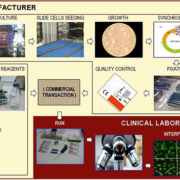
The efforts to improve standardization of indirect immunofluorescence as a diagnostic tool are numerous worldwide. Traditionally, the players involved in standardization have been clinical laboratories, clinicians, regulators, and to a lesser degree, diagnostic reagents manufacturers. Energy has been concentrated basically in aspects like the control of laboratory procedures, unification of nomenclatures and classifications, guidelines on how to report the results, preparation of recommendations, definition of diagnostic criteria and diagnostic algorithms and development of external quality control programs. In these iniatives, laboratory staff, clinicians and regulators are mainly involved. Nevertheless, those aspects regarding the design, development and manufacturing of the reagents, which involve manufacturers, are basically ignored. And this is probably due to the fact that the evolution of the technology has led to a truncated view of the test procedure resulting in a misconception of what needs to be standardized. In other words, the execution of many procedures is nowadays being shared between the manufacturer, who actually initiates the assay, and the laboratory, where the test is finalized. In old scientific articles related to ANA, the Material and Methods section usually started with the cell culture, the preparation of the slides and the fixation among others, and the sample incubation was only one more step of the whole procedure. Currently, the Material and Methods section starts with the sample preparation and instead of describing all the preliminary steps, one can find the name and references of the manufacturer. Figure 1 illustrates what would be the whole test procedure, showing the part performed in the clinical laboratory, actually the only part which is taken into consideration when dealing with standardization. So, to ensure appropriate use of indirect immunofluorescence testing, clinicians, diagnostic laboratories, regulators and reagents manufacturers should be involved and share the tasks of identifying and managing the key points leading to proper results.
Evidences of disparity
At the level of the manufacturer, the potential variability in the performance of the kits lies in features like the reagents and materials that are purchased or manufactured to become components of the kit, the procedures and conditions of manufacturing (fixatives, temperatures, formulations), the reliability of the serum samples used to set up the calibration of the determination (basically, the sample dilution which actuallly acts as the cut-off point), and the stability of the final product (1).
When approaching the participation of the manufacturer in the standardization of antibody testing, it is observed that what basically matters for industry is the standardization of the manufacturing processes. This normally occurs in an environment of Quality System Certifications, like GMP, ISO-9001 or ISO-13485 and under the requirements of the European Directive on In Vitro Medical Devices, and it is strengthened by the manufacturer’s own interest in having robust and reliable processes. Nevertheless, despite regulatory compliant and well implemented standardized processes, there are several aspects that make final reagents differ from one manufacturer to another. Below are reviewed some examples of variation on the results depending on the manufacturer source.
Dense fine speckles 70 (DFS70) antigen
As with other fluorescence patterns, the typical DFS pattern (lens epithelium-derived growth factor) can vary depending on the manufacturer source of the HEp2 slides used. The variations consist basically in different sensitivities and even in positive and negative results for the same sample run in different slide brands. Inconsistencies are also observed when comparing fluorescence with the results obtained by means of ELISA (2,3).
Ribosomal P protein (Rib P)
In studies performed by Mahler et al. (4) to determine the sentitivity of the immunofluorescence technique to detect antibodies against ribosomal P protein, several different HEp2 slides manufacturers were used, resulting in significant differences in patterns of staining for monospecific anti-Rib-P sera. Differing patterns were observed for the same sample, from a fine speckled nucleoplasmic pattern, to a diffuse cytoplasmic staining, or a fine speckled cytoplasmic pattern.
CDC/AF Reference Human Sera
When running reference sera on HEp2 slides coming from different manufacturers, variations of unknown origin can be observed. While most brands produce the expected specific pattern, there are often differences among brands like the ones shown in Figure 2.
Labile nuclear antigens
Most of the patterns observed when analysing the presence of ANA in patients sera by IFA on HEp2 cells slides are suitably detected in most slides brands. However, there are some antigens for which expression may significantly vary from one manufacturer to another like Jo1, PCNA or SSA/Ro (5). These antigens are not always well preserved in the substrates and they can be extremely sensitive to handling, to certain fixatives and in some cases, they can be just washed out during the manufacturing process, resulting in a poor presence or a total lack of antigenic molecules available to capture the antibody being analysed.
Antineutrophil cytoplasmic antibodies (ANCA)
The neutrophil substrates used in the detection of ANCA may vary in their ability to give the typical immunofluorescence patterns described and established by consensus groups, i.e. a diffuse granular cytoplasmic staining with higher interlobular intensity (C-ANCA), a compact staining of the perinuclear zone of the cytoplasm (P-ANCA) and a broad non homogeneous perinuclear staining, eventually accompanied by a diffuse cytoplasmic pattern with no accentuation of the interlobular zone (X-ANCA). In general, substrates differ in their ability to distinguish between a C-ANCA and X-ANCA. In a study by Pollock et al. (6), it was observed that although all commercial neutrophil substrates consistently demonstrated nuclear extension of perinuclear fluorescence with sera containing P-ANCA with MPO specificity, there were more problems in P-ANCA testing than in C-ANCA, due basically to the eventual presence of additional cytoplasmic fluorescence.
Crithidia luciliae
In a similar way as observed in HEp2 cells immunofluorescence patterns, the anti-nDNA test on Crithidia luciliae slides may show significant differences among manufacturers. The variety of strains available in cell banks contribute to the heterogeneity of results. Apart from the kinetoplast, other organelles can be stained by antibodies from the sample, like the nucleus, the basal body and the flagellum. Depending on the conditions of preparation of C. luciliae substrates and on the nature of the sample analysed, different patterns of stained organelles can be observed. Nevertheless, the only specific staining to be considered as a positive result is the kinetoplast staining. In addition to anti-nDNA antibodies, there are other antibodies in the serum of lupus patients that can react with the substrate. The so called anti-nucleosome antibodies are antibodies that react with histones exposed in the nucleosome. It is well known that treating C. luciliae substrate with HCL eliminates histone from the kinetoplast (7). This could be another point of possible discrepancy among manufacturing processes if some include the histone removal procedure and some others do not. Furthermore, the cell cycle of C. luciliae may influence histone appearance in the kinetoplast. Therefore, the manufacturing process of C. luciliae slides, including culture, harvest, fixation and drying, can cause variation in the results.
Aspects providing variablity
Among the players participating in autoimmune diagnostics, there is no doubt that manufacturers hold the know-how of preparing diagnostic kits and are the true experts in the development of test methods. However, despite the standardized manufacturing processes and the CE-certifications or FDA approvals, there are several aspects that are found to be sources of variabilty. These aspects should be addressed and recommendations on key points should be created by specialized committees with the participation of laboratory experts, clinicians and manufacturers. The definition and control of the raw materials incorporated in the kit production is a common and regulated practice in any kind of manufacturing process. But recommendations on nature, compostion or quality grades of key materials, including culture media, cell type and strain or fluorescent conjugates is still lacking. In the case of tests based on cellular substrates, extracellular matrix (ECM) proteins are commonly used to aid the spreading and growth of cells on the slide glass surface. Many ECM proteins contain defined amino acid sequences to which cell surface integrin receptors bind specifically. ECM, together with growth factors in the culture medium, work to produce an appropriate in vitro proliferative response, promoting cell growth and spreading. Altering cell-ECM contacts results in coordinated changes in cell, cytoskeletal, and nuclear form. Thus, the choice of the right ECM to coat the glass slides used as growing surface deserves our attention since it might have a direct effect on the fluorescent pattern finally observed (8). It is also common to use synchronization agents to achieve a greater rate of mitotic cells. Due to the fact that these compounds may be toxic for the cell, some cell disturbances may occur that can impact the morphology or the behaviour of the final cell preparation.
Diagnosis by means of tissue sections remains very important in liver autoimmune diseases like autoimmune hepatitis (AIH) or primary billiary cirrhosis (PBC). In particular, the detection of anti-smooth muscle antibodies (ASMA), antibodies to liver-kidney microsomes (LKM antibodies) and anti-mitochondrial antibodies (AMA) are considered important diagnostic tools. Only a few guidelines have been published on the obtention of tissue sections (9), while the variations in the preparation of tissue blocks regarding orientation, preservation conditions, and sectioning keep on contributing to the heterogeneity of results, especially in the case of tissues that are not morphologically homogeneous. For instance, the LKM antibodies can only be well defined if the kidney section has the proper orientation that allows the distinction between proximal and distal renal tubules and, thus, between LKM and AMA.
Considering that the expression and topographical distribution of autoantigens is under the direct influence of the HEp-2 fixation method, some immunofluorescence patterns are not adequately expressed due to the way that the antigenic substrate is prepared. This aspect equally affects tissue and cell substrates. As for the sensitivity of the tests, differences among manufacturers are due to the use of fixatives to prolong shelf-life. The use of slides without fixation seems to be the best choice for most autoantibody patterns. Nevertheless, there are several staining patterns that need the substrate to be fixed (figure 3), like anti-islet cells antibodies or anti-adrenal cortex antibodies.
A less frequent but significant source of variability in the immunofluorescence on tissue sections can be found in the origin of the animal used (Figure 4). Definition of suitable species and strains should be addressed in some cases in which the levels of antigen expression may differ. This affects the sensitivity of the test, especially in samples with moderate or low titers of antibody.
Considering the complexity and diversity of manufacturing processes and subprocesses and their impact on the final test performance, it is important to combine the efforts of laboratory experts, clinicians and manufacturers in the task of standardizing those key aspects that could otherwise keep on undermining the successful harmonization of the results obtained in the clinical laboratory.
References
1. Fritzler MJ, Wiik A, Fritzler ML, Barr SG. The use and abuse of commercial kits used to detect autoantibodies. Arthritis Res Ther 2003, 5:192-201
2. N.Bizzaro, E.Tonuttiand D.Villalta, «Recognizing the dense fine speckled/lens epithelium-derived growth factor/p75 pattern on HEP-2 cells: not an easy task! Comment on the article by Mariz et al,» Arthritis Rheum, vol. 63, no. 12, pp. 4036-4037, 2011
3. Mahler M. The clinical significance of anti-DFS70 antibodies as part of ANA testing. In: K. Conrad, E.K.L. Chan, M.J. Fritzler, R.L. Humbel, P.L. Meroni, G. Steiner, Y. Shoenfeld (Eds.). Infection, Tumors and Autoimmunity, AUTOANTIGENS, AUTOANTIBODIES, AUTOIMMUNITY, Volume 9, p.342-350. PABST, 2013.
4. Mahler M, Ngo JT, Schulte-Pelkum J, Luettich T, Fritzler MJ. Limited reliability of the indirect immunofluorescence technique for the detection of anti-Rib-P antibodies. Arthritis Research & Therapy 2008, 10:R131
5. Dellavance A, de Melo Cruvinel W, Carvalho Francescantonio PL, Pitangueira Mangueira CL, Drugowick IC, RodriguesSE; Coelho Andrade LE. Variability in the recognition of distinctive immunofluorescence patterns in different brands of HEp-2 cell slides J Bras Patol Med Lab 2013;49( 3):182-190.
6. Pollock W, Clarke K, Gallagher K, Hall J, Luckhurst E, McEvoy R, Melny J, Neil J, Nikoloutsopoulos A, Thompson T, Trevisin M, Savige J. Immunofluorescent patterns produced by antineutrophil cytoplasmic antibodies (ANCA) vary depending on neutrophil substrate and conjugate. J Clin Pathol 2002;55:680–683
7. Kobkitjaroen J, Jaiyen J, Kongkriengdach S, Potprasart S, Viriyataveekul R. Comparison of Three Commercial Crithidia luciliae Immunofluorescence Test (CLIFT) Kits for Anti-dsDNA Detection. Siriraj Med J 2013;65:9-11
8. (Integrin Binding and Cell Spreading on Extracellular Matrix Act at Different Points in the Cell Cycle to Promote Hepatocyte Growth Hansen LK,. Mooney DJ, Vacanti JP, Ingber DE. Molecular Biology of the Cell 1994;5:967-975
9. Vergani D, Alvarez F, Bianchi FB, Cançado ELR, Mackay IR, Manns MP, Nishioka M, Penner E. Liver autoimmune serology: a consensus statement from the committee for autoimmune serology of the International Autoimmune Hepatitis Group. Journal of Hepatology 2004;41: 677–683
Colorectal cancer is one of the commonest types of cancer and contributes significantly to cancer-related mortality. Recent research has focused on the identification, development, validation of sensitive and specific biomarkers to improve early diagnosis, to assess disease outcome, accurately predict response to therapy or monitor disease status after treatment.
by Dr Caroline Coghlin and Professor Graeme I Murray
The requirement for biomarkers in colorectal cancer
Colorectal cancer (CRC) represents a heterogeneous disease with variable clinical presentations and equally variable outcomes observed between individual patients. At the molecular level, although several well-described pathways are known to exist in CRC tumorigenesis the reality is likely to be much more complex. In addition to genetic alterations, numerous interactions exist between multiple abnormal signalling networks and between the tumour cells and their microenvironment. Surgery is the mainstay of treatment in primary CRC but options for adjuvant or neoadjuvant chemotherapy are advancing. Given these choices, and the potential toxicity associated with some agents used, the need for validated and reliable biomarkers to aid in CRC diagnosis, management and predictive and prognostic stratification is growing [1].
Diagnostic, prognostic and predictive biomarkers
The detection of protein biomarkers using immunohistochemistry in fixed tissue is a reliable technique widely used in the histopathology laboratory setting. Accurate diagnosis of primary CRC is often clear from its site of origin detected colonoscopically or with imaging modalities and from the morphological features revealed on histology. However, diagnosis of CRC in secondary sites can be more difficult. CRC cells frequently express CK20 and CDX2 (an intestinal-specific transcription factor) and they are generally negative for CK7. Therefore, a targeted panel of immunohistochemical markers can aid in the diagnosis of metastatic CRC and so guide appropriate treatment [2].
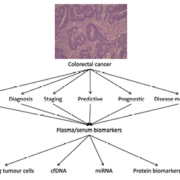
Accurate prognosis in CRC currently relies on pathological and clinical staging including use of the tumour, node, metastasis (TNM) system. In the past, assay of plasma biomarkers such as carcinoembryonic antigen (CEA) and CA19.9 to aid in prognostic stratification was advocated but, while these markers may still have a role in disease monitoring after surgery, as diagnostic and prognostic tools such biomarkers lack sensitivity and specificity. A large body of research has focused on comparative proteomic analysis of primary site CRC, normal control tissue and metastatic tissue in attempts to identify clinically useful prognostic and predictive CRC biomarkers [3, 4]. Candidate markers have included the mismatch repair proteins, especially MLH1 and MSH2 (which may be linked with a better prognosis in early CRC but also with a poor response to some chemotherapeutic agents such, as 5-fluorouracil) along with many other molecules involved in diverse cellular processes such as matrix degradation, oxidative metabolism or protein folding [3, 4]. There is, however, often a deficiency in the consistent follow-up studies necessary for the validation of such potential biomarkers. This aspect of study remains crucial to enable the robust and reliable clinical application of biomarkers in CRC [Fig. 1].
Plasma/serum biomarkers in CRC
The goal of screening programmes for CRC is to decrease mortality and reduce morbidity associated with the disease by identifying cancers at an early stage when intervention is more likely to succeed. Fecal occult blood or DNA testing and targeted colonoscopy are methods commonly employed to screen for early lesions. Fecal testing has the disadvantage of poor patient acceptability and it also lacks sensitivity. Colonoscopy, while accurate, is invasive and associated with a small but significant risk to the patient. With this in mind, the ultimate aim of many recent studies has been to identify robust plasma-based biomarkers which represent an acceptable form of patient testing. Such biomarkers should ideally be able to identify early invasive or perhaps even pre-invasive CRC in a sensitive and specific manner.
Circulating tumour cells (CTCs) are malignant cells originating from a primary tumour or its metastases which have gained access to the bloodstream. Several methods have recently been developed to identify these cells which may be associated with a poorer prognosis or an increased risk of relapse after surgery. In addition, molecular genetic characterisation of CTCs has potential implications for targeted therapy and therefore predictive value. CTCs in CRC patients are more abundant in central blood compartments such as the mesenteric vessels but peripheral blood can also be a source providing enrichment techniques are employed. In patients with metastatic CRC identification of CTCs in peripheral blood is associated with an adverse prognosis [5]. In addition, post-operative measurement of CTC levels may be used to predict tumour recurrence after surgery [6]. However, attempts to link CTC levels in early stage CRC (stage 1 disease) with an adverse prognosis have shown less convincing results and therefore the utility of this method as a screening modality is currently unclear [7].
Increased levels of circulating cell-free DNA (cfDNA) in cancer patients have been studied as a potential biomarker of the disease [8]. The precise source of these cfDNA fragments in conditions such as CRC remains controversial but tumour cell apoptosis, necrosis, or possibly active secretion have been suggested as putative mechanisms. A recent study used quantitative real-time PCR to detect ALU repeats in the plasma or serum of operated or non-operated CRC patients and compared the levels of circulating cfDNA detected with normal healthy controls [9]. The results showed that circulating levels of cfDNA were significantly higher in non-operated CRC patients when compared with operated patients and controls. This study concluded that quantification of serum cfDNA could be important in detecting and monitoring CRC patients in both early and late stage disease. The predictive value of cfDNA analysis has also been suggested. A subset of patients with initial wild type KRAS status receiving monotherapy with epidermal growth factor receptor (EGFR) inhibitors have been shown to develop early KRAS mutations detectable in cfDNA in the serum months before imaging revealed disease progression [10]. Despite progress in the detection and monitoring of cfDNA there are no reproducible studies to date to show direct and consistent correlation between CRC stage and circulating cfDNA levels. As laboratories use different methods to detect, analyse and monitor cfDNA, future translation to clinical use will require further standardization to ensure consistency in analysis.
MicroRNAs (miRNAs) are small non-coding RNA strands that can post-transcriptionally regulate the expression of multiple target genes. They have been implicated in several steps in carcinogenesis and their measurement in the serum of CRC patients has shown early promise for disease detection and monitoring of cancer recurrence after surgery [8]. miRNA-29c is thought to suppress tumorigenesis by inhibiting cell proliferation and migration. Circulating miRNA-29c levels have been studied as a potential biomarker for both early and late recurrence following surgery in colorectal cancer [11]. The oncogenic miRNA, miRNA-21, which negatively regulates tumour suppressor genes, has shown promise as a possible diagnostic and prognostic marker in CRC. Levels of this miRNA were significantly raised in CRC patients and patients with colonic adenomas when compared with healthy controls [12]. Serum miRNA-21 levels also fell in those patients undergoing curative surgery. Increased levels of this miRNA in both tumour tissue and the patients’ serum were found to be significantly associated with tumour size, the presence of metastasis and reduced survival. A possible drawback of miRNA analysis in cancer patients is the variable extraction rates of these small molecules from patients’ plasma or serum. To date this has produced inconsistent results between different studies. Once again a standardized approach will be required.
Proteomic analysis of tissue samples in CRC has been proven a valuable technique for the identification of potential biomarkers. Given the issues surrounding patient acceptability with the use of faecal material or invasive techniques in CRC screening, recent studies have focused on identifying plasma or serum protein biomarkers which can aid in the early diagnosis of CRC. Choi et al. analysed plasma samples from patients with colorectal adenomas or invasive disease and identified a panel of proteins, including three cytokines, which were differentially expressed between the study groups [13]. Another group used combinations of serum CEA, cytokines and CA19.9 to try to differentiate adenoma-bearing patients from healthy controls or those with established CRC [14]. Multiplex protein arrays have been developed to analyse serum samples from CRC patients, adenoma-bearing patients and healthy controls. Initial results indicated that combinations of CEA and IL-8 or CEA and C-reactive protein showed the best screening performance for early CRC or adenoma detection [15]. However, although the overall specificity of the tests employed was relatively high, the sensitivity was much lower (particularly with regard to adenoma detection) and the authors concluded that clinical use of such novel systems could be made in combination with established techniques such as faecal testing, for screening purposes.
Conclusions
Although significant progress has been made recently in the development of biomarkers in CRC there is still a relative lack of consistent follow-up data available for the validation of such markers. This aspect of research needs to be addressed in order to facilitate the transition of putative biomarkers from the research stage into robust and reliable clinical applications. The search for acceptable plasma-based biomarkers to aid in screening is gaining momentum but perhaps in future a combination of techniques will be required to accurately guide early diagnosis and intervention in colorectal cancer.
References
1. De Wit M, Fijneman RJ, Verheul HM, et al. Proteomics in colorectal cancer translational research: biomarker discovery for clinical applications. Clin Biochem. 2013; 46: 466–479.
2. Coghlin C, Murray GI. Following the protein biomarker trail to colorectal cancer. Colorectal Cancer 2012; 1: 93–96.
3. Ralton LD, Murray GI. Biomarkers for colorectal cancer: identification through proteomics Curr Proteomics 2010; 7: 212–221.
4. O’Dwyer D, Ralton LD, O’Shea A, Murray GI. The proteomics of colorectal cancer: identification of a protein signature associated with prognosis. PLoS One 2011; 6: e27718.
5. Groot Koerkamp B, Rahbari NN, Büchler MW, Koch M, Weitz J. Circulating tumor cells and prognosis of patients with resectable colorectal liver metastases or widespread metastatic molorectal mancer: a meta-analysis. Ann Surg Oncol. 2013; 20: 2156–2165.
6. Galizia G, Gemei M, Orditura M, et al. Postoperative detection of circulating tumor cells predicts tumor recurrence in colorectal cancer patients. J Gastointest Surg. 2013; Epub ahead of print, doi: 10.1007/s11605-013-2258-6.
7. Linuma H, Watanabe T, Mimori K et al. Clinical significance of circulating tumor cells, including cancer stem-like cells, in peripheral blood for recurrence and prognosis in patients with Dukes’ stage B and C colorectal cancer. J Clin Oncol. 2011; 29: 1547–1555.
8. Schwarzenbach H, Hoon DS, Pantel K. Cell-free nucleic acids as biomarkers in cancer patients. Nat Rev Cancer 2011; 11: 426–437.
9. da Silva Filho BF, Gurgel AP, Neto MÁ, et al. Circulating cell-free DNA in serum as a biomarker of colorectal cancer. J Clin Pathol. 2013; 66: 775–778.
10. Misale S, Yaeger R, Hobor S et al. Emergence of KRAS mutations and acquired resistance to anti-EGFR therapy in colorectal cancer. Nature 2012; 486: 532–536.
11. Yang I-P, Tsai H-L, Huang C-W, et al. The functional significance of microRNA-29c in patients with colorectal cancer: A potential circulating biomarker for predicting early relapse. PLoS One 2013; 8: e66842.
12. Toiyama Y, Takahashi M, Hur K, et al. Serum miR-21 as a diagnostic and prognostic biomarker in colorectal cancer. J Natl Cancer Inst. 2013; 105: 849–859.
13. Choi JW, Liu H, Shin D H, et al. Proteomic and cytokine plasma biomarkers for predicting progression from colorectal adenoma to carcinoma in human patients. Proteomics 2013; 13: 2361–2374.
14. Pengjun Z, Xinyu W, Feng G, et al. Multiplexed cytokine profiling of serum for detection of colorectal cancer. Future Oncol. 2013; 9: 1017–1027.
15. Bünger S, Haug U, Kelly M, et al. A novel multiplex-protein array for serum diagnostics of colon cancer: a case-control study. BMC Cancer 2012; 12: 393. doi: 10.1186/1471-2407-12-393.
The authors
Caroline Coghlin1 BA, BM Bch, DRCOphth, FRCPath; Graeme I. Murray2* MB ChB, PhD, DSc, FRCPath
1Department of Pathology, Aberdeen Royal Infirmary, NHS Grampian, Aberdeen, UK
2Pathology, Division of Applied Medicine, School of Medicine and Dentistry, University of Aberdeen, Aberdeen, UK
*Corresponding author
E-mail: g.i.murray@abdn.ac.uk

June 2026

Prins Hendrikstraat 1
5611HH Eindhoven
The Netherlands
info@clinlabint.com
PanGlobal Media is not responsible for any error or omission that might occur in the electronic display of product or company data.