


A series of independent evaluations of the Beckman Coulter DxN VERIS Molecular Diagnostics System demonstrated how workflow efficiencies that can be achieved with the DxN VERIS have the potential to improve productivity, while making the best use of existing space and staffing levels.
Background
Virology laboratories throughout the world face a number of challenges that need to be addressed in order to meet service user requirements. These include:
Evaluation of a new automated molecular diagnostics method
In 2014/2015, a number of hospital laboratories across Europe became beta trial sites for a new, fully automated molecular diagnostics system, the DxN VERIS Molecular Diagnostics System (Beckman Coulter Inc.), including the virology section at the Hospital Clinic of Barcelona, Spain, the department of laboratory medicine at Niguarda Hospital, Milan, Italy, the department of clinical microbiology at the Hospital Universitario 12 de Octubre, Madrid, Spain and the virology department at Sheffield Teaching Hospitals NHS Foundation Trust, UK.
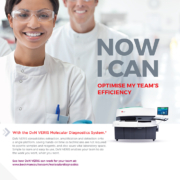
The DxN VERIS System, launched at ECCMID 2015, consolidates nucleic acid extraction, amplification, quantification and detection onto a single automated instrument for a number of molecular targets, including HIV-1, HCV, HBV and CMV. The system offers single sample random access and the potential to improve clinical laboratory workflow efficiency.
The performances of the VERIS assays for CMV, HBV, HCV and HIV-1 were evaluated using standard and control samples, as well as clinical samples, and were compared to various existing viral load methods in each laboratory. In addition, a series of independent time/workflow analysis studies were performed by Nexus Global Solutions (Plano, Texas, USA).
Productivity and workflow improvements
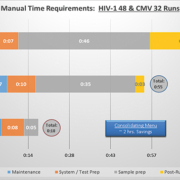
The results of the comparative workflow studies performed in these participating laboratories are summarized below:
Duncan Whittaker, Laboratory Manager Virology at Sheffield Teaching Hospitals NHS Foundation Trust, shared his experience:
“Hands on time requirements were measured specifically for the HIV-1 and CMV assays. If these two assays alone were consolidated onto the DxN VERIS it would save around 2 hours manual time per day. If all four parameters were consolidated onto the DxN VERIS system, it is estimated that this would ultimately save at least 0.6 whole time equivalent (WTE) biomedical scientists.”
Diana Fanti, Molecular Biology Laboratory Manager at Niguarda Hospital, Milan, commented:
“By reducing manual intervention and automating processes from sample loading to reporting of results, the DxN VERIS offers the potential to transform clinical laboratory workflows. Each assay is supplied in a unique, single cartridge system, and all consumables and reagents are stored on-board, which cuts preparation time compared to alternative methods”.
Rafael Delgado, Head of Clinical Microbiology at the Hospital Universitario 12 de Octubre, Madrid, agreed:
“One of the most important aspects of the system for our laboratory is the ability to process samples as they are received in the laboratory. With our pervious method, we had to work in batches of 24 or 48, collecting and storing samples throughout the day (or overnight) until we had sufficient for a single run. Then results were not available until the entire run was completed. Now, with the random access capabilities of the DxN VERIS system, this has changed. We receive samples around the clock and we are able to run them straight away. This has improved our response times significantly, from 24-28 hours to just 4-5 hours from sample receipt, and with comparable quality of results compared to our previous method.”
Driving efficiency
DxN VERIS assays are supplied in a unique single cartridge system, which saves further preparation time and effort compared to alternative methods.
The DxN VERIS System also allows more efficient use of staff. Dr Fanti commented:
“By transforming laboratory organization and workflows and reducing manual intervention, viral loads (which account for about 50% of the molecular workload) could be completed in a single day using the DxN VERIS. Requiring fewer people to be dedicated to this purpose, this makes it possible to accomplish more work with the same number of staff.”
Duncan Whittaker agreed, stating:
“The ease of use of the DxN VERIS would help to address staffing issues, as routine operation could be performed by medical laboratory assistants, allowing biomedical scientists to be redeployed more effectively in more skilled areas. Training staff to use the DxN VERIS is very quick and straightforward, taking just 20 minutes. Furthermore, as there is less hands on intervention required, the laboratory could achieve more without any increase in staff. With an annual cost improvement package to meet, anything that helps to increase productivity is a bonus.”
Rafael Delgado also appreciated the benefits for laboratory staff, commenting:
“The DxN VERIS system has been well received by laboratory staff and has expanded our service capabilities. Fully automated from the loading of samples to obtaining results, it is easy to operate by laboratory technicians of all abilities. In addition, since it involves minimal manual intervention and fewer steps than our previous method, there is less opportunity for error and staff have more time to perform other important tasks in the laboratory.”
Conclusions
In conclusion, Duncan Whittaker continued:
“Following the workflow analysis study, it was apparent that the improved workflow and time savings that can be achieved using the DxN VERIS Molecular Diagnostics System could have an enormous impact on the challenges faced by our laboratory. In terms of addressing increasing workloads, the reduced manual intervention required for DxN VERIS would allow more work to be performed per member of staff. The more efficient workflow would free staff to perform other tasks, which would allow the laboratory to develop new services and further increase the department’s test repertoire. This, and improved turnaround times, would help the laboratory to remain competitive in an increasingly competitive environment.”
Since early 2016, the Clinical Microbiology department at the Hospital Universitario 12 de Octubre, Madrid, has also been using the DxN VERIS System routinely for HBV and HCV viral load quantifications. Rafael Delgado commented:
“Our experiences in evaluating the DxN VERIS system enabled us to appreciate its potential as an enabler for an improved molecular biology clinical service. The increased automation and random access offer workflow improvements that simplify laboratory tasks and reduce the potential for human error. Furthermore, its overall performance and ease of use facilitated the smooth introduction of the technology in our laboratory.”
“Our annual volume of HBV and HCV samples is around 7,000 and, as a clinical laboratory working closely alongside medical staff, our viral load results support timely clinical decision making and subsequent patient management. In this respect the DxN VERIS system is ideal for our needs, providing same day results to our outpatient clinics.”
Beckman Couter is commited to providing an increasing menu of assays for the DxN VERIS Molecular Diagnostics System.
Email: info@beckmanmolecular.com or visit www.beckmancoulter.com/moleculardiagnostics
Contributors
Professor Jordi Vila, Head of Department of Clinical Microbiology and Dr Angeles Marcos, Head of the Virology Section
Hospital Clinic, School of Medicine
University of Barcelona, Spain
Providing a full range of medical and surgical specialties for a local population of over half a million, the Hospital Clinic of Barcelona is also a National and International Centre of reference. The Hospital’s Department of Clinical Microbiology, also a reference laboratory for organ transplantation, operates 24 hours a day, seven days a week and, like many laboratories throughout Europe, has experienced increasing workloads in recent years. HBV HCV CMV and HIV-1 viral loads constitute an annual workload volume of nearly 19,000 tests.
Diana Fanti, Molecular Biology Laboratory Manager
Department of Laboratory Medicine, Niguarda Hospital, Milan, Italy
Niguarda Hospital in Milan is one of Italy’s leading General Hospitals, and provides an extensive range of medical disciplines for adults and children throughout the Lombardy region and beyond. The hospital’s Department of Laboratory Medicine aims to offer a complete, continuous and prompt diagnostic laboratory testing service and is committed to research into automation and analysis to ensure this is maintained. Its busy Molecular Biology Laboratory performed an estimated 40,000 tests in 2015, which is approximately 10% increase on the previous year.
Rafael Delgado, Head of Clinical Microbiology
Hospital Universitario 12 de Octubre, Madrid, Spain
With 1,300 beds and over 6,000 employees, the Hospital Universitario 12 de Octubre in Madrid is one of the largest hospitals in Spain, serving a population of more than 500,000 people in and around the capital. It is an important teaching and research center with a number of areas of expertise, including organ transplantation and the diagnosis and treatment of cancer. The hospital’s Clinical Microbiology Department has a significant serology workload, processing more than 250 serology samples every day, which includes viral load testing for targets such as cytomegalovirus (CMV), hepatitis B virus (HBV), hepatitis C virus (HCV) and human immunodeficiency virus type 1 (HIV-1).
Duncan Whittaker, Laboratory Manager Virology
Sheffield Teaching Hospitals NHS Foundation Trust
The Department of Virology at Sheffield Teaching Hospitals NHS Foundation Trust provides a valuable diagnostic testing service to the people of Sheffield, serving the local community and five teaching hospitals within the trust as well as the Sheffield Children’s Hospital. It is also a referral laboratory receiving samples from further afield for a variety of tests, including routine viral loads and molecular diagnostics. The department’s annual automated workload includes around 105,000 serology samples (more than 300,000 tests) and 65,000 samples for molecular testing (around 129,000 tests), as well as 60,000 samples for Chlamydia and Gonorrhoea testing.
With 1,300 beds and over 6,000 employees, the Hospital Universitario 12 de Octubre in Madrid is one of the largest hospitals in Spain, serving a population of more than 500,000 people in and around the capital. It is an important teaching and research centre with a number of areas of expertise, including organ transplantation and the diagnosis and treatment of cancer.
The hospital’s Clinical Microbiology Department has a significant serology workload, processing more than 250 serology samples every day. This includes viral load testing for targets such as cytomegalovirus (CMV), hepatitis B virus (HBV), hepatitis C virus (HCV) and human immunodeficiency virus type 1 (HIV-1).
The serology laboratory faces a number of challenges that need to be addressed in order to meet future workload and service user requirements. Not least, the available space in the laboratory is limited due to the instrumentation that is required. Our existing viral load method requires separate sample preparation and amplification/detection platforms, and involves considerable manual intervention. Furthermore, as samples are processed in batches, this requires additional space for pre-analytical sample storage.
On reviewing our processes, we identified the need for increased automation within the laboratory, to reduce the number of manual steps and improve workflow efficiencies, and improve laboratory response times.
Evaluating new technology
In 2014-2015, we had the opportunity to evaluate a new, fully automated, random access platform for viral load analyses. The DxN VERIS Molecular Diagnostics System (Beckman Coulter) consolidates DNA extraction, nucleic acid amplification, quantification and detection onto a single automated instrument for a number of molecular targets. We evaluated the performance of the VERIS assays for CMV, HBV, HCV and HIV-1 using standard and control samples, as well as clinical samples, comparing them to our existing viral load method (COBAS Ampliprep®/COBAS TaqMan® assays, Roche).
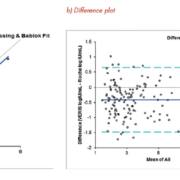
All four assays were found to have comparable performance to our existing method, demonstrating excellent sensitivity, specificity and precision [1,2]. The correlation between both methods for HBV viral load quantification, for example, is shown in figure 1. A precision analysis for the VERIS HBV assay, which was calculated for five levels tested in duplicate over 20 days, gave a ‘within run’ standard deviation of ≤0.09 Log IU/mL and a ‘between run’ standard deviation of ≤0.09 Log IU/mL (table 1). Moreover, repeated analysis of negative samples alongside high positive samples at different rack positions showed no cross contamination, giving confidence in results. This random access technology provided the first result in just 75 minutes for HBV and CMV DNA, and in 90 minutes for HCV and HIV-1 RNA, with subsequent results every 2.5 minutes.
Our experiences in evaluating the DxN VERIS system led us to appreciate its potential as an enabler for an improved molecular biology clinical service. The increased automation and random access offer workflow improvements that simplify laboratory tasks and reduce the potential for human error. Furthermore, its overall performance and ease of use facilitated the smooth introduction of the technology in our laboratory.
Rapid results inform prompt treatment decisions
Early in 2016, we began to use the DxN VERIS System routinely for HBV and HCV viral load quantifications. Our annual volume of HBV and HCV samples is around 7,000 and, as a clinical laboratory working closely alongside medical staff, our viral load results support timely clinical decision making and subsequent patient management. In this respect the DxN VERIS system is ideal for our needs, providing same day results to our outpatient clinics.
One of the most important aspects of the system for our laboratory is the ability to process samples as they are received in the laboratory. With our previous method, we had to work in batches of 24 or 48, collecting and storing samples throughout the day (or overnight) until we had a sufficient number of samples for a single run. Then results were not available until the entire run was completed. This had a huge impact on response times.
Now, with the random access capabilities of the DxN VERIS system, this has changed. We receive samples around the clock and we are able to run them straight away. This has improved our response times significantly, from 24-28 hours to just 4-5 hours from sample receipt, and with comparable quality of results compared to our previous method.
At the moment we enter results into the patient record manually, but soon we will be moving to a barcode system that will transfer all details and results into the electronic patient record automatically, saving time and further reducing opportunities for human error.
Expanding laboratory capabilities
The DxN VERIS system has been well received by laboratory staff and has expanded our service capabilities. Fully automated from the loading of samples to obtaining results, it is easy to operate by laboratory technicians of all abilities. In addition, since it involves minimal manual intervention and fewer steps than our previous method, there is less opportunity for error and staff have more time to perform other important tasks in the laboratory.
One of our objectives as a clinical microbiology department is to offer a more complete panel of assays on a 24-hour basis. Previously, this was not possible for molecular diagnostic investigations such as HBV and HCV viral loads, because it was not practical to run one or two samples at a time on our previous system. The random access and ease of use of the DxN VERIS system has enabled us to operate our HBV/HCV viral load service 24 hours per day, making it ideal to meet the variable needs of our laboratory in terms of workload volume and response times.
For further information about the DxN VERIS Molecular Diagnostic System and the VERIS assays currently available, please contact: Tiffany Page, Senior Pan European Marketing Manager Molecular Diagnostics, Email: info@beckmanmolecular.com or visit www.beckmancoulter.com/moleculardiagnostics
References
1. Rafael Delgado (2015) Evaluation in a Clinical Setting of the General Performance of DxN VERIS CMV and HBV Viral Load Assay. Oral presentation, ECCMID, Copenhagen.
2. Gutiérrez, F, Zurita, S, Pérez-Rivilla, A and Delgado, R (2015) Evaluation of the Automated DxN VERIS System for Human Immunodeficiency Virus Type-1 (HIV-1) and Hepatitis C Virus (HCV) Viral Load (VL) Monitoring. Poster presentation ESCV, Edinburgh.
The author
Rafael Delgado, Head of Clinical Microbiology Hospital
Universitario 12 de Octubre, Madrid, Spain.

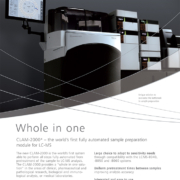


Liquid chromatography-mass spectrometry (LC-MS/MS) is an analytical chemistry technique that combines the physio-chemical separation capabilities of liquid chromatography (via conventional chromatography within a column) with the analytic power of mass spectrometry. It allows the user to properly ascertain the individual mass/charge ratio of analytes present in a chromatographic peak. The high throughput capabilities of this technique will bring value to the clinical lab, where time taken to analyse samples is paramount. Bringing LC-MS/MS testing into the clinical setting has been a slow process, however, the medical device industry is on the verge of a fundamental breakthrough that could help drive the adoption of this technique.
LC-MS/MS is used primarily for the identification and quantification of particular molecules within a substance, and its application in diagnostics is a promising venture due to its potential ability to increase throughputs and streamline the processes needed. As such, patient data can be analysed quickly and accurately in order to provide improved patient care. Broadly speaking, the methodology can be divided into three parts. Initially, sample preparation is undertaken; be it whole blood, plasma, saliva or urine – the sample must be prepared to ensure large proteins and salts that may dirty the instrumentation are removed. Conventionally, this phase has been undertaken manually, which can be time-consuming and prone to human error. As such there is a need for the automation of this step to improve efficiency and reliability before LC-MS/MS is adopted by the clinical laboratory. Once sample preparation is complete, the liquid chromatography and mass spectrometry steps can take place, in which the sample is separated and analysed respectively.
LC-MS/MS and the clinical laboratory
Although adoption of LC-MS/MS in the clinical laboratory has been slow but steady, this technique has demonstrated vast improvements in analytical specificity when compared to conventional immunoassays. Mass spectrometry’s strength lies in its ability to be extremely specific to the target analyte, due to the absence of cross reactivity; the likes of which can be common in antibody-based immunoassay (IA) methods. However, the uptake of this technique by clinical labs has not been as rapid as expected, with many choosing to continue using immunoassay-based methods instead.
There are a number of factors causing clinical labs to be cautious about the mainstream use of LC-MS/MS systems. There are numerous LC and MS systems available to choose from, something which in itself can seem overwhelming to a clinical scientist who is not an LC-MS/MS expert. In addition, there is a range of options for calibrators and controls available, along with the internal expertise required to develop and validate methods, and set-up and run the instruments. The final factor to impact the decision is often cost, since investment in such systems is commonly high, especially when taking into account the automated components required to help reduce labour needs for sample preparation. As such, finance options are often limited. When combined, these factors can make immunoassay analysers seem like the simpler option.
The emergence of connected components
Although used in many clinical labs, immunoassay techniques are not always accurate. For example small molecule biomarkers, such as steroid hormones, prove challenging due to the lack of specificity in the binding sites on small molecules, a fact that many clinical scientists are all too aware of. Recent improvements to LC-MS/MS systems have focused on advancing both ease of use and efficacy, essentially to make them a viable alternative to IA methods. Laboratory managers can find ample published documentation that shows just how beneficial LC-MS/MS systems are when used in place of IAs. For instance, a study by Nigel W. Brown and colleagues published in Clinical Chemistry in 2005 demonstrated that LC-MS/MS was far more precise than a microparticle enzyme immunoassay (MEIA), which was ‘significantly affected by patient cohort’ (Brown, N et al. Clinical Chemistry 2005; 51(3): 586-593).
Clinical laboratories are faced with increasing complexities in their daily workflows, and there are pressures to provide detailed analyses of patient samples using streamlined and well-coordinated practices. The need to provide efficient turnaround on samples is also on the increase. There is, therefore, a trend where system manufacturers are looking to provide laboratories with the ability to advance efficiency through the implementation of compatible technologies, such as the combination of stand-alone elements (automated sample handlers, LC-MS/MS reagent kits, and software), which are supplied together to better manage workflows. These connected component-based systems, by which the different components of the LC-MS/MS system (sample preparation, liquid chromatography, and mass spectrometry) are placed in tandem with each other, is a big step in the right direction to increase productivity and efficiency, while simplifying the number of decisions that the lab needs to make. However, there are still improvements that can be made. The issue lies in the fact that connected components are not the same as a fully-integrated, automated system with dedicated assays and diagnostic kits that are regulatory compliant. The development of properly synergized components can truly simplify the decisions faced by clinical scientists and enable LC-MS/MS to become an integral part of the clinical laboratory.
The needs of the lab
Clinical labs require a high level of automation with a number of its systems, owing to the high turnover rate demanded to meet the needs of patient care. In addition, easy to use technologies that include walk away operations are essential, and considered commonplace to clinical scientists, owing to the multitude of responsibilities placed on laboratory personnel. These busy labs require built-for-purpose, fully integrated analysers that are able to greatly reduce installation, validation, and training times, having the system ready to operate in a matter of weeks, rather than months. Streamlining the procedure without compromising the quality of the analysis via implementation of better integrated systems can be considered an essential next step in the medical devices industry. Furthermore, results obtained from these systems need not be in isolation: standardization between laboratories using the same system will be achievable owing to the inclusion of dedicated test kits that are fully validated and ready for use with the analyser. The ideal next-generation system for the clinical laboratory will encompass every step, including automated sample preparation, handling and LC-MS in one unit. Moreover, it will be labelled as a medical device, have dedicated assay kits, and be produced, serviced, and supported by a single manufacturer. Finally, such a device would ideally be able to connect bi-directionally with the laboratory information system (LIS) and furthermore to the laboratory automation system (LAS).
In the end, technologies that are able to advance the state of play for laboratory sample analysis are required in order to ensure laboratory personnel can be confident in the analyses they are making. Beyond connected components, the introduction of integrated LC-MS/MS systems into the laboratory could lead to a paradigm shift with regards to specificity in small molecule analysis that is expected by clinical scientists. Systems that can lead to better quality of care for patients and improved analysis for physicians will essentially help healthcare systems operate more efficiently.
The author
Sarah Robinson, Ph.D,
Market Development Specialist,
Thermo Fisher Scientific
& Expert Consultant to the EFLM
Working Group on Test Evaluation
May 2026

Prins Hendrikstraat 1
5611HH Eindhoven
The Netherlands
info@clinlabint.com
PanGlobal Media is not responsible for any error or omission that might occur in the electronic display of product or company data.