






Published guidelines provide different approaches for laboratories to follow when investigating celiac disease. The aim is to minimize time to diagnosis and reduce unnecessary investigations. Variability between IgA tissue transglutaminase tests must be considered when implementing the local diagnostic strategy. Determining best practice depends on the assays used, expertise available, cost and local clinical audit of outcomes.
by K. Swallow, Dr G. Wild, Dr W. Egner and Dr R. Sargur
Background
Celiac disease is a common autoimmune condition affecting approximately 1 : 100 in the UK [1, 2]. Early diagnosis is key to appropriate management. Symptoms are eliminated by following a gluten-free diet after a confirmed diagnosis. Following best practice guidance can reduce repeated visits to GP practices and outpatient departments, and numerous requests for laboratory tests.
In recent years, guidelines for the diagnosis and management of celiac disease have been published by the National Institute of Health and Care Excellence (NICE) [1] and the European Society of Paediatric Gastroenterology, Hepatology and Nutrition (ESPGHAN) [3]. The guidelines provide algorithms for laboratory testing strategies and recommendations about when a duodenal biopsy should be performed in both symptomatic and asymptomatic patients. There is a perceived need to avoid invasive procedures in children by using optimal in vitro testing.
Guidelines: recommendations for diagnostic testing in symptomatic patients
There are some similarities and several notable differences between the guidelines given for symptomatic patients. Both NICE and ESPGHAN guidance recommend IgA tissue transglutaminase antibodies (TTG Ab) as the first-line screening test. ESPGHAN also recommend testing all patients for IgA deficiency. NICE only recommend checking for IgA deficiency if the IgA TTG Ab result is negative. After this initial test the recommended pathways by the two groups differ; however, both base the strategies on the level of positivity of the IgA TTG Ab result.
NICE pathway after IgA TTG Ab testing
NICE recommend that if the TTG Ab test is positive the patient should be referred for confirmatory biopsy. If it is ‘equivocal’, IgA endomysial antibodies (EMA) should be tested in order to determine if the TTG Ab result is potentially false positive or if the patient should be referred to a gastroenterologist. A patient with negative IgA TTG Ab should be checked for IgA deficiency and IgG TTG/EMA performed if they are found to be deficient. The guidelines do not provide information regarding the definition of the ‘equivocal’ range for TTG Ab assays.
ESPGHAN pathway after IgA TTG Ab testing
For symptomatic patients the diagnosis can be made with or without the need for duodenal biopsy, dependent on the serological test results. As with NICE, all patients with positive IgA TTG Ab should be referred to a gastroenterologist. They also suggest using IgG TTG/EMA if the patient is IgA deficient.
ESPGHAN stratify the level of positivity based upon levels above the normal range or ‘upper limit of normal’ (ULN). If the TTG Ab result is >10× ULN the decision to go to biopsy is made after further testing EMA and HLA-DQ2/DQ8. If all tests (TTG Ab, EMA and HLA-DQ2/DQ8) are positive, a patient may be diagnosed without the need for duodenal biopsy. Biopsy is recommended if EMA and/or HLA typing is negative, or if TTG is positive but <10× ULN.
Guidance for testing in asymptomatic patients (screening)
Several conditions, including IgA deficiency, autoimmune disease (type I diabetes, hypothyroidism, pernicious anemia), Down syndrome, or a having a first degree relative with celiac disease, are associated with an increased risk of the condition. Both sets of guidance recommend that screening should be considered in these groups. NICE testing follows the same pathway as recommended for symptomatic patients. ESPGHAN guidance takes a different approach, recommending HLA-DQ2/DQ8 as the first line test since virtually all celiac cases have these haplotypes. TTG Ab titres are then used to determine if EMA and/or biopsy are required. In this algorithm all patients would need a biopsy to confirm a diagnosis. In contrast NICE state that HLA typing should not be used in initial diagnosis, but can be of use to gastroenterologists in certain cases. Cost of testing will be a factor, as will the availability of an adequate testing strategy for HLA typing.
Laboratory testing for celiac disease: things to consider
Serological tests
The IgA TTG Ab test is an integral part of both published guidelines. This test does not have an international reference preparation, therefore kits available from different manufacturers all perform in a slightly different manner. Monitoring performance of different TTG Ab assays via the UK National External Quality Assessment Service (NEQAS) external quality assurance scheme [4] provided evidence of the lack of consensus between assays from different manufacturers and between laboratories using the same assay. The same sample can generate a range of results when measured as ULNs, with the potential for different pathways being followed depending on the laboratory performing the test. This emphasizes that currently a generic statement about the level of positivity cannot easily be used across the board without local validation of outcomes.
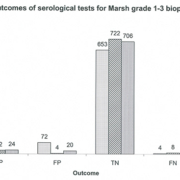
Clinical audit plays an important role in determining whether published guidelines work when there is poor standardization of assays. Audit of your cohort using your assays should be performed. Data published about our experience of serological assay performance when following different testing strategies highlights that false positive IgA TTG Ab results, even at very high titres, can be problematic (Fig. 1) [5]. Other centres have also noted false positive IgA TTG Abs at high levels [6, 7]. Conversely, there are a number of reports that show following ESPGHAN guidance works well [2, 8, 9] and that avoiding biopsy could be reasonably justified in children with high IgA TTG Ab titres.
In all guidelines the EMA test by immunofluorescence is used as a secondary test dependent on the IgA TTG Ab result. Leading to the question about why this test is not used alone if it is being used as a confirmatory check for the TTG Ab test. The EMA test is considered by some to be more expensive, as the laboratory has to have the correct equipment and staff that are competent at performing the test and reading immunofluorescence slides [10] and internal quality control is sometimes more difficult for general laboratories. Alternatively, the IgA TTG Ab assay is an easily automated test that is readily available in non-specialist laboratories on a number of assay platforms. Testing for both TTG and EMA initially in all patients will increase costs with little added benefit [1, 3, 5, 8, 9, 11]. A decision has to be made about which screening test is the most appropriate, both in performance and practicality, for each laboratory. This decision should be made based upon the IgA TTG Ab assay used, so cannot be generalized between laboratories until harmonization of the test is established [5, 9, 11, 12].
Genetic testing
Using HLA-DQ2/DQ8 screening has flaws because of a large false positive population. Individuals with these HLA types are at greater risk of developing celiac disease [3, 8]. Approximately 30% of the healthy Caucasian population have HLA-DQ2 and do not go on to develop the disease [10]. Implementing HLA testing as an initial screening test in asymptomatic children can lead to further testing in some patients that do not have, or will not develop celiac disease. It is also much more expensive than serological tests.
Duodenal biopsy
Duodenal biopsy is considered to be the ‘gold standard’ for diagnosis. However, this is an invasive procedure that is not without risk of complications. Current guidelines explicitly agree that the number of biopsies carried out should be minimized by only performing them in patients that are determined to be at a high risk of having celiac disease following serological tests. There are mixed opinions on whether a diagnosis can be made without the need for biopsy [5, 7, 8, 9, 12]. Duodenal biopsy is the most costly procedure performed during diagnosis of celiac disease. If the numbers of biopsies are reduced, cost savings will be made as well as preventing unnecessary harm in some patients [11].
Best testing strategy?
This depends on your local set-up and audit of outcomes. Current guidelines provide a starting point for determining which tests should be done and when. However the difference in performance between TTG Ab assays has not been adequately recognized. Clinical audit and local validation can help laboratories to decide if it is appropriate to follow the recommended pathways, with the assays that they currently use [5, 7, 8, 9, 11, 12]. This is the only method that can provide a true reflection of the sensitivity, specificity and positive or negative predictive values of the tests locally. This provides an evidence base for justification of the test strategy being used.
Conclusions
The guidelines provide recommendations for the best testing approach but this is not mandatory. A different strategy, for example, using EMA as the first-line screen, could be employed if there is sufficient evidence that this would work better in your laboratory, for your cohort and is economically justified. You must know how your assays perform and assess this using in-house clinical audit and discuss with your local clinicians to provide the best service locally.
The ultimate aim is to provide an approach that will benefit the patient by being the fastest and most reliable method for diagnosis. This relies on selection of the strategy with the best positive and negative predictive values, to avoid biopsies that are not required. Cost is also a major factor in the current economic climate that must be considered when deciding upon the test strategy. It is not currently possible to diagnose celiac disease on the basis of one test result. Choosing the most appropriate strategy for your laboratory can reduce the number of unnecessary referrals and biopsies [11], thereby reducing cost to the healthcare system without an impact on patient care.
References
1. National Institute of Clinical Excellence (NICE) guideline 86. Celiac disease: recognition and assessment of celiac disease, 2009. http://tinyurl.com/q3wspfp
2. Mubarak A, Wolters VM, Gmelig-Meyling FH, Ten Kate FJ, Houwen RH. Tissue transglutaminase levels above 100 U/mL and celiac disease: a prospective study. World J Gastroenterol. 2012; 18(32): 4399–4403.
3. Husby S, Koletzko S, Korponay-Szabó IR, Mearin ML, Phillips A, Shamir R, Troncone R, et al. European Society for Pediatric Gastroenterology, Hepatology, and Nutrition. European Society for Paediatric Gastroenterology, Hepatology, and Nutrition guidelines for the diagnosis of celiac disease. J Pediatr Gastroenterol Nutr. 2012; 54: 136–160.
4. Egner W, Shrimpton A, Sargur R, Patel D, Swallow K. ESPGHAN guidance on celiac disease 2012: multiples of ULN for decision making do not harmonise assay performance across centres. J Pediatr Gastroenterol Nutr. 2012; 55: 733–735.
5. Swallow K, Wild G, Sargur R, Sanders DS, Aziz I, Hopper AD, Egner W. Quality not quantity for transglutaminase antibody 2: the performance of an endomysial and tissue transglutaminase test in screening celiac disease remains stable over time. Clin Exp Immunol; 2013; 171: 100–106.
6. Gidrewicz D, Lyon ME, Trevenen C, Butzner JD. How do the 2012 ESPGHAN celiac disease guidelines perform in a GI clinic. Gastroenterology 2013, 144(5)S1: S-14.
7. Bhardwaj M, Banoub H, Sumar N, Lawson M, Chong S. The impact of ESPGHAN guidelines on the investigations for celiac disease. Arch Dis Child. 2013; 98(Suppl 1): A92.
8. Klapp G, Masip E, Bolonio M, Donat E, Polo B, Ramos D, Ribes-Koninckx C. Celiac disease: the new proposed ESPGHAN diagnostic criteria do work well in a selected population. J Pediatr Gastroenterol Nutr. 2013; 56(3): 251–256.
9. Wolf J, Hasenclever D, Petroff D, Richter T, Uhlig HH, Laaβ MW, Hauer A, et al. Antibodies in the diagnosis of celiac disease: a biopsy controlled, international, multicentre study of 376 children with celiac disease and 695 controls. PLOS One 2014; 9(5): e97853 and Correction PLOS One 2014; 9(8): e105230.
10. Van Heel DA and West J. Recent advances in celiac disease. Gut 2006; 55(7): 1073–1046.
11. Hopper AD, Hadjivassiliou M, Hurlstone DP, Lobo AJ, McAlindon ME, Egner W, Wild G, Sanders DS. What is the role of serologic testing in celiac disease? A prospective, biopsy confirmed study with economic analysis. Clin Gastroenterol Hepatol. 2008; 6: 314–320.
12. Beltran L, Koenig M, Egner W, Howard M, Butt A, Austin MR, Patel D, et al. High titre circulating tissue transglutaminase-2 antibodies predict small bowel villous atrophy, but decision cut-off limits must be locally validated. Clin Expt Immunol. 2014; 176: 190–198.
The authors
Kirsty Swallow* BSc, MSc; Graeme Wild PhD; William Egner PhD, MD, FRCP, FRCPath; and Ravishankar Sargur MD, FRCP, FRCPath
Protein Reference Unit and Immunology Department, Northern General Hospital, Sheffield, UK.
*Corresponding author
E-mail: Kirsty.swallow@sth.nhs.uk
Thiopurine methyltransferase (TPMT) is an enzyme involved in the metabolism of thiopurine drugs such as azathioprine. TPMT genotyping or measurement of enzyme activity prior to treatment enables prediction of those individuals most at risk of myelotoxicity in whom these drugs should be avoided or used in reduced doses.
by Dr Joshua Ryan, Christiaan Sies and Associate Professor Chris Florkowski
Background
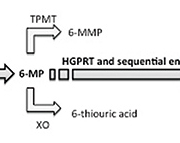
Thiopurine drugs azathioprine (AZA) and 6-mercaptopurine (6-MP) are widely used as steroid-sparing agents in autoimmune diseases such as inflammatory bowel disease (IBD), autoimmune hepatitis, rheumatoid arthritis as well as following organ transplantation and in leukaemia [1, 2]. In the body, AZA is rapidly converted, largely non-enzymatically, into 6-MP which is subsequently metabolized to the active compound 6-thioguanine (6-TG) by several sequential enzymes starting with hypoxanthine guanine phosphoribosyltransferase (HGPRT) (Fig. 1) [1].
6-TG is a nucleotide analogue that is incorporated into DNA and RNA thereby interfering with cellular function and protein synthesis and also blocks the cellular signalling protein Rac 1, resulting in T cell apoptosis [3]. Although these mechanisms underlie the therapeutic action of thiopurine drugs, excessive and toxic levels of 6-TG however, can cause myelosuppression and life-threatening leukopenia [3]. Two additional enzymes xanthine oxidase (which normally converts xanthine to uric acid and is inhibited by the gout treatment drug allopurinol) and thiopurine methyltransferase (TPMT; an enzyme whose natural substrate is unknown) play important roles in thiopurine drug metabolism, providing alternative pathways that convert 6-MP into the inactive metabolites 6-thiouric acid and 6-methyl-mercaptopurine (6-MMP), respectively (Fig. 1) [1, 3].
Any factors that reduce the activity of these pathways, either acquired (e.g. allopurinol) or inherited (e.g. TPMT deficiency) can result in a greater proportion of the drug being metabolized to active metabolites, conferring increased risk of toxicity.
TPMT deficiency, pathophysiology and clinical effects
The activity of this enzyme in the body is co-dominantly inherited and the TPMT gene is on chromosome 6 [4]. The majority of the population (89–92%) inherit two normally functioning copies of the gene (allele designated TMPT*1). A smaller proportion (8–11%) inherit one deficiency allele (of which 29 have been identified) giving low TPMT activity and rarely, 0.3% of individuals are homozygous for the deficiency alleles resulting in virtually no TMPT activity [1, 3].
The TPMT*3A variant is a double mutant allele (G460A on exon 7 and A719G on exon 10), TPMT*3C has the same A719G mutation on exon 10 mutation as for TPMT*3A and TPMT*2 has a G238C point mutation on exon 5 [3]. Together, alleles TPMT*2, *3A and *3C account for the majority (up to 95%) of deficiency alleles that are seen in Caucasian, Asian and African-American populations [3, 5]. The resulting trimodal distribution of enzyme levels (low, intermediate, normal) was demonstrated in our local population in a study of 407 patient samples referred to Canterbury Health Laboratories from throughout New Zealand over a 2-year period (Fig. 2) [6]. Patients with reduced red blood cell (RBC) TPMT activity below 12units/mL RBCs went on to have TPMT genotyping for three common deficiency alleles (*2, *3A, *3C) [6]. The three groups of patients identified had enzyme activity that reflected the underlying genotype (i.e. normal TPMT, deficiency allele heterozygotes and deficiency allele homozygotes) although there was some overlap in enzyme activities seen between the normal and heterozygous deficiency patients (Fig. 2).
Patients with inherited TPMT deficiency (i.e. homozygous for deficiency alleles) are at high risk of potentially fatal myelosuppression, as in these patients a greater proportion of the thiopurine drug is metabolized to active metabolites resulting in bone marrow toxicity. In these patients AZA should be avoided or the dose markedly reduced [1, 3]. Heterozygotes for deficiency alleles also have increased rates of adverse effects and in these patients, some dose reduction (by 50–67%) is recommended [3].
Enzyme activity measurement
TPMT enzyme activity may be measured in RBCs prior to commencing the thiopurine drugs to identify TPMT status (‘phenotype’) and to help guide drug and dose decisions. Traditional enzymatic methods used a 6-MP substrate and radiolabelled methyl donor and the radiolabelled product (6-MMP) was measured by scintillation counting [1, 6]. More recent methods have avoided the use of radiolabelled compounds by using HPLC-UV or mass spectrometry for product detection [3]. Patients found to have low levels on phenotyping may be confirmed using genetic testing of TPMT. In-house studies on a local population found TPMT activity levels ≥10.7 units/mL RBC excluded the presence of a deficiency allele (normal reference interval 9.3–17.6 units/mL RBC) [6]. It should be noted, however that reporting units may vary between laboratories (e.g. reported per mL of RBC or per g of Hb to adjust for variations in hematocrit) and results should be interpreted relative to lab-specific reference intervals [4].
Measurement of RBC TPMT enzyme activity, however, has some important caveats. For example, TPMT activity is not reliable in patients who have received a blood transfusion in the preceding 120 days (i.e. RBC average life span) due to interference from donor RBC TPMT [3]. Chronic renal failure may elevate TPMT activity and higher levels are seen in pre-dialysis samples compared with those collected following dialysis [1,4]. Differences have also been reported with other diseases (e.g. IBD, autoimmune hepatitis, pemphigus) but the differences are small and clinically unimportant [4]. Various drug compounds can affect TPMT activity causing a decrease (e.g. sulfasalazine) or increase (e.g. methotrexate, trimethoprim) of in vitro activity however, in assays with a RBC wash step the interfering compounds may be largely removed [4].
In our laboratory, samples are collected in EDTA whole blood and stored refrigerated (or chilled with an ice pack for transport). A previous local study of samples referred to Canterbury Health Laboratories over 8 years (n=6348) found delay in analysis had a small but significant reduction on TPMT activity of 0.26 units/mL RBC for each additional day prior to analysis [2]. Another published review found TMPT activity to be relatively stable at room temperature or refrigerated for 7 days, although may be reduced in some disease states such as leukaemia [4].
The role of genotyping
Genotyping may also be used to assess TPMT status prior to commencing AZA or 6-MP either alone or commonly to confirm low enzyme activity. It has the advantage of not being affected by blood transfusions and is less affected by pre-analytical factors. The limitation is that only common deficiency alleles are tested for (e.g. TPMT*2, *3A, *3C) and rare deficiency alleles will be missed using genotyping alone [1]. Enzyme activity measurement may also identify those patients who have ultra-high TPMT activity (up to 2% of patients) and who may require higher than usual doses, information that routine genotyping alone would not provide [3].
The place of 6-TG monitoring and other investigations
Once treatment has been initiated (ideally following TPMT assessment), ongoing treatment is usually monitored by measurement of the metabolite 6-TG, for which therapeutic ranges have been suggested – for example RBC 6-TG >235 pmol/8×108 cells is associated with maximum efficacy in IBD [3]. The metabolite 6-MMP is usually monitored together with 6-TG in order to differentiate non-compliance or inadequate dose (i.e. low 6-TG and 6-MMP), from those patients where AZA is preferentially metabolized to 6-MMP (i.e. high 6-MMP and low 6–TG) [3]. In the latter scenario, increasing the dose can lead to further elevation of RBC 6-MMP and values >5700 pmol/ 8×10⁸ cells are associated with hepatotoxicity [3].
All of the above, however does not obviate the need for patients on thiopurine drugs to undergo regular monitoring of routine blood tests (e.g. full blood count, liver function tests) to allow early detection of the most serious adverse effects of myelosuppression and liver dysfunction [3, 5]. This monitoring in required regardless of TPMT status and especially given that TMPT deficiency does not predict all cases of myelosuppression in patients on these medications [3].
Recommended ractice
The US Food and Drug Administration (FDA) and prescribing information for AZA and 6-MP recommend assessing TPMT status with genotyping or phenotyping prior to starting treatment with thiopurine drugs [7]. There is, however considerable variation in what guidelines recommend in routine practice regarding TPMT and indeed, some systematic reviews have concluded that there is insufficient evidence for TPMT testing in chronic inflammatory diseases [5]. Based on a frequency of 1 in 300 for homozygous deficiency, we calculated that in New Zealand with an assay cost of $57.75 per assay (in 2005), this would equate to a cost of $17,250 per potentially fatal episode averted [6]. Similar calculations in the United Kingdom have indicated that the costs per quality adjusted life-year (QALY) gained are well within acceptable thresholds [3].
Future developments and conclusion
As with many other drugs, the metabolism of AZA and 6-MP is complex and information is accumulating on other inherited and acquired factors contributing to the adverse effects of these medications. For example, inherited differences in other enzymes involved in their metabolism such as xanthine oxidase and inosine triphosphate pyro-phosphohydrolase (ITPase) may have a role and further study on these mechanisms is required [3].
In conclusion, TPMT provides a paradigm where testing that provides information about the genetic makeup of an individual (directly or indirectly through enzyme testing) enables important guidance on drug dosing, with the potential to avoid serious side-effects. Measuring TPMT activity in RBCs prior to starting AZA or 6-MP (with confirmatory genotyping) is a simple yet effective way to detect those with TPMT deficiency who are at particular risk of bone marrow toxicity, although ongoing monitoring with routine bloods is required in all patients to identify serious drug adverse effects.
References
1. Gearry RB, Barclay ML, et al. Thiopurie methyltransferase and 6-thioguanine nucleotide measurement: early experience of use in clinical practice. IMJ 2005; 35: 580–585.
2. Van Egmond R, Barclay ML, et al. Preanalytical stringency: what factors may confound interpretation of thiopurine S-methyl transferase enzyme activity. Ann Clin Biochem. 2013; 50: 479–484.
3. Ford LT, Berg JD. Thiopurine S-methyltransferase (TPMT) assessment prior to starting thiopurine drug treatment; a pharmacogenomic test whose time has come. J Clin Pathol. 2010; 63: 288–295.
4. Loit E, Tricco AC, et al. Pre-analytic and analytic sources of variation in thiopurine methyltransferase activity measurement in patients prescribed thiopurine-based drugs: a systematic review. Clin Biochem. 2011; 44: 751–757.
5. Booth RA, Ansari MT, et al. Ann Int Med. 2011; 154: 814–823.
6. Sies C, Florkowski C, et al. Measurement of thiopurine methyl transferase activity guides dose-initiation and prevents toxicity from azathioprine. NZMJ 2005; 118: U1324.
7. Nguyen CM, Mendes MAS, Ma JD. Thiopurine Methyltransferase (TPMT) genotyping to predict myelosuppression risk. PLoS Curr. 2011; 3:RRN1236.
The authors
Joshua Ryan MB MAACB FRCPA, Christiaan Sies MSc, Chris Florkowski* MD MRCP(UK) FRACP FRCPA
Canterbury Health Laboratories, Christchurch, New Zealand
*Corresponding author
E-mail: Chris.florkowski@cdhb.health.nz
Systemic lupus erythematosus (SLE) is a chronic autoimmune disease associated with diverse clinical manifestations. Accurate diagnosis, prediction of disease activity, organ involvement and management remains problematic owing to a lack of reliable biomarkers. This article reviews traditional and a few promising candidate biomarkers in SLE with specific clinical implications.
by Dr Anne E. Tebo
Background
Systemic lupus erythematosus (SLE) is a chronic autoimmune disease characterized by heterogeneity in disease manifestations as well as diversity in immunologic and therapeutic responses. Despite longstanding research efforts, precise diagnosis and prediction of response to treatment remain problematic owing to variable disease presentation and course as well as a lack of sensitive and specific biomarkers [1, 2]. Several factors contribute to the immune abnormality and clinical heterogeneity that occurs in SLE; these include genetic, epigenetic, environmental, and hormonal influences. The interplay between these elements drives the production of a variety of autoantibodies, complement products, inflammatory markers and other mediators identified as biomarkers to diagnose, monitor, stratify and/or predict disease risk, course or response to treatment [1–7]. These biomarkers – genetic, biologic, biochemical or molecular – may correlate with disease pathogenesis or specific clinical manifestations and can be evaluated qualitatively or quantitatively in laboratories. Notable amongst these are diverse autoantibodies and complement products which (in addition to clinical manifestations such as skin lesions, arthritis, renal disorder, hematologic changes, neurologic disorder amongst others) are traditionally considered hallmarks of disease [8, 9]. This review article highlights traditional and a few promising candidate serologic, cellular and urine biomarkers for diagnosing and predicting disease activity as well as renal involvement in SLE.
Biomarkers for the diagnosis of SLE
The updated American College of Rheumatology (ACR) revised criteria for the classification of SLE [8] is largely used in clinical practice to diagnose patients. In addition to specific clinical manifestations, the guidelines recommend testing for antinuclear antibodies (ANA), anti-double stranded deoxyribonucleic acid (anti-dsDNA), anti-Smith (anti-Sm) and antiphospholipid antibodies (lupus anticoagulant, IgG and IgM antibodies to cardiolipin (aCL) and beta2 glycoprotein I (anti-β2GPI). Recently, the Systemic Lupus Collaborating Clinics proposed the SLICC criteria for SLE in view of recent knowledge of the immunology of SLE [9]. Based on the SLICC rule for the classification of SLE, a patient must satisfy at least four criteria, including at least one clinical criterion and one immunologic criterion or must have biopsy-proven lupus nephritis (LN) in the presence of ANAs or anti-dsDNA antibodies. SLE is also associated with a variety of extractable nuclear antibodies such as anti-SSA, anti-SSB, and anti-snRNP as well as anti-ribosomal P, anti-histone, anti-nucleosome, anti-PCNA and anti-C1q autoantibodies [3, 5, 6]. The diagnostic characteristics of these autoantibodies (especially the anti-dsDNA antibodies) have been reported to be variable, which may be attributable the diversity of analytical methods, target antigens, patient demographics and SLE clinical subsets investigated [3, 5, 6, 11].
In addition to specific autoantibody tests, the proposed SLICC criteria recommend testing for complements C3, C4 and CH50 as well as using the direct Coombs assay. In the past several years, serum C3, C4 and CH50 levels have traditionally been used to diagnose and monitor disease activity in SLE patients [reviewed in 1, 2, 4]. However, in vitro activation may compromise interpretation of results and serum complement levels do not differentiate between consumption and production, which may be important for diagnosis. There is some evidence that cell-bound complement activation products (CB-CAPs) may facilitate SLE diagnosis [4, 12, 13]. These include complement C4-derived ligand deposited on erythrocytes (EC4d), platelets (PC4d), B lymphocytes (BC4d) and reticulocytes as detected by flow cytometry. Compared to disease controls, there is a relative increase of cell-bound C4d (CB-C4d) in SLE. However, the actual relevance of a single CB-C4d assay to the diagnosis of SLE is thought to be unlikely, although a panel of EC4d and BC4d assays is proposed to be predictive of SLE [12]. Further studies in diverse SLE clinical subsets and populations are required to determine the optimal CB-C4d panels for diagnostic evaluation.
Biomarkers for assessing disease activity
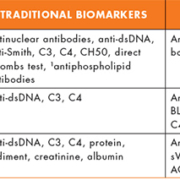
There are currently no consensus measures or biomarkers to reliably evaluate disease activity, predict flares and their differentiation from permanent damage in SLE patients. Disease activity indices such as the SLE disease activity index 2000 (SLEDAI-2K), British Isles Lupus Assessment Group (BILAG 2004), and the Systemic Lupus International Collaborating Clinics/American College of Rheumatology Damage Index (SDI) are all complex and mostly used in academic centres and/or in clinical trials [reviewed in 14]. In addition to routine serologic markers for inflammation, anti-dsDNA antibodies, C3, and C4 have been traditionally used to assess disease activity and predict flares in SLE (Table 1). For patients with LN, urine analysis for protein, sediment, protein-creatinine ratio and albumin are used to evaluate activity, monitor treatment response and predict relapse. Several studies have examined the associations between traditional and non-traditional biomarkers to determine optimal panel of markers associated with disease activity or predicting severity [reviewed in 1–7]. The outcomes in these investigations have been inconsistent, probably due to variability in detection methods and heterogeneity in patient populations. These inconsistencies have hampered the adoption of an acceptable biomarker panel to evaluate and monitor disease activity.
A number of promising candidate biomarkers associated with disease activity in SLE have been identified and are reviewed in other publications [1, 2, 4–7]. These include biomarkers for serologic (autoantibodies, cytokines and cytokine receptors, markers of endothelial cell activation, and soluble cell surface molecules), cellular (cell-bound C4d, CD27high plasma cells and other lymphocyte subsets) and urine [neutrophil gelatinase-associated lipocalin (NGAL), sVCAM-1 (soluble vascular cell adhesion molecule 1), MCP-1 (monocyte chemotactic protein 1), and TWEAK (tumor necrosis factor-like weak inducer of apoptosis), immunoglobulin free light chain, von Willebrand factor, IL-6] analyses. Of the several autoantibodies described, anti-nucleosome and anti-C1q antibodies appear to significantly correlate with disease activity and/or predict flares [2, 4, 6]. Chromatin, the DNA-histone complex found in the nucleus is organized into a repeating series of nucleosomes. In SLE patients, anti-nucleosome antibodies are more likely to be detected in patients with LN and may serve as a useful biomarker in the diagnosis of active LN [reviewed in 2]. Anti-C1q IgG antibodies that target epitopes present within the collagen-like tail of C1q are also seen in varying prevalence in SLE patients. Increasing titres in anti-C1q antibodies have been suggested to predict renal flares [2, 4, 6]. Other serologic biomarkers such as cytokines (IFN-α/β, IFN-γ, IL-1, IL-6, IL-10, IL-12, IL-15, IL-17, IL-21, and TNF-α), IFN-inducible chemokines, a few cytokine receptors, complements, specific markers of endothelial cell activation, BLys and several others associated with SLE pathogenesis and disease activity have been described [1, 2, 4]. However, these have mostly been reported in research studies and are beyond the scope of this article.
Quite a number of studies have shown that elevated levels of complement activation cleavage products may reflect disease activity more accurately and are more likely than conventional measurements in the prediction disease flares. Of these, the best described is the Cd4 fragment, which is capable of binding several cell types. In one study, EC4d levels were observed to be higher in patients with ‘more active’ and ‘most active’ SLE compared with those with ‘less active’ disease [13]. EC4d measurements were also found to be associated with specific measures of disease activity even after adjusting for serum levels of C3, C4 and anti-dsDNA antibodies [13]. However, independent prospective investigations with appropriate controls are needed to validate these observations.
Biomarkers for renal involvement
Of the different clinical subsets of SLE, LN is one of the most common and associated with significant morbidity and mortality. In the US, approximately 35% of adults with SLE have clinical evidence of nephritis at the time of diagnosis, with an estimated 50–60% developing nephritis during the first 10 years of disease [reviewed in 15]. Among these patients, quite a few will progress to end-stage renal disease. Improved methods for detecting LN would allow earlier treatment preventing irreversible impairment of renal function and damage. In place of invasive, subjective and costly serial renal biopsies, tests such as creatinine clearance, levels of urine protein and sediment as well as serologic determinations of C3, C4, creatinine level and anti-dsDNA titres have for decades been used to follow the onset, course, and severity of LN. It is however, recognized that these analyses are inadequate as they are limited in responsiveness to change and therefore unsuitable for patient care [7, 15].
In an effort to reliably diagnose LN, several candidate biomarkers have identified [1, 2, 7]. Among autoantibodies, antichromatin/anti-nucleosome and anti-C1q antibodies have shown some promise as biomarkers of renal involvement as previously described in this article. Of the urine protein biomarkers NGAL, sVCAM-1, MCP-1 and TWEAK, amongst others, have received considerable attention (Table 1) [1, 2, 7]. Of these, NGAL has been much studied. It is a small protein expressed in the neutrophils and certain epithelial cells, including the renal tubules. Under normal physiologic conditions, NGAL expressions are low in urine and plasma, but quickly rise from basal concentrations in response to kidney injury to reach diagnostic thresholds within a very short period of time. This is in contrast to the routinely used kidney function tests such as creatinine, where increased concentrations may not be observed until 24 to 48 hours after injury and often lack sensitivity. Urine NGAL is, however, not specific for SLE and further studies are necessary to establish accurate reference ranges based on age, gender and ethnicity. Like NGAL, urine sVCAM-1, sICAM-1 (soluble intercellular CAM-1) and MCP-1 have been shown in human studies to be strongly correlated with LN activity and severity [reviewed in 7]. With the identification of these novel urinary biomarkers for diagnosing and differentiating active versus inactive LN, several studies have examined their relationship with histological features of LN. Brunner et al. 2012 examined a number of established markers (anti-dsDNA, serum C3, C4, creatinine, urinary protein : creatinine ratio, etc.) and a few candidate urinary biomarkers [MCP-1, NGAL, lipocalin-type prostaglandin D-synthetase (L-PGDS), α1-acid-blycoprotein (AAG/AGP), transferrin (TF), and ceruloplasmin (CP)] in urine samples from 76 SLE patients collected within 2 months of kidney biopsy [reviewed in 7]. These urinary biomarkers were compared with histopathologic features of the kidney biopsy such mesangial expansion, capillary proliferation, crescent formation, wire loops, or fibrosis. Overall, their results indicated that levels of specific urinary biomarkers were increased in active LN and appeared to correlate with distinctive histologic features in renal biopsies. Furthermore, based on the presence of defined urine proteins, the authors could predict specific LN signatures. LN activity signature was defined by a combination of urinary MCP-1, AAG, and CP levels and protein : creatinine ratio while LN chronicity was characterized by NGAL, MCP-1 and creatinine clearance. The combined tests of MCP-1, AAG, TF, creatinine clearance and serum C4 was indicative of a potential biomarker panel for membranous nephritis. However, like NGAL, increased expression of these urine biomarkers is not exclusive to LN. Future studies are likely to highlight the relevance of specific urine biomarker proteins in predicting renal involvement in SLE.
Conclusion
There is considerable evidence that no single biomarker will be sufficient to diagnose, monitor and stratify all patients with SLE. Ideally, new biomarkers should provide information not available from traditional tests. Recent efforts geared towards the discovery and validation of biomarker ‘panels’ or ‘signatures’ of SLE represent an informed approach. Validation studies with endpoints that ensure a true measure of the intended clinical process in diverse cohorts coupled with robust analytical assays and high statistical power to confirm these panels are needed.
References
1. Illei GG, Tackey E, Lapteva L, Lipsky PE. Biomarkers in systemic lupus erythematosus. I. General overview of biomarkers and their applicability. Arthritis Rheum. 2004; 50: 1709–1720.
2. Liu CC, Kao AH, Manzi S, Ahearn JM. Biomarkers in systemic lupus erythematosus: challenges and prospects for the future. Ther Adv Musculoskelet Dis. 2013; 5: 210–233.
3. To CH, Petri M. Is antibody clustering predictive of clinical subsets and damage in systemic lupus erythematosus? Arthritis Rheum. 2005; 52: 4003–4010.
4. Leffler J, Bengtsson AA, Blom AM. The complement system in systemic lupus erythematosus: an update. Ann Rheum Dis. 2014; 73: 1601–1606.
5. Jeltsch-David H, Muller S. Neuropsychiatric systemic lupus erythematosus: pathogenesis and biomarkers. Nat Rev Neurol. 2014; 10(10): 579–596.
6. Cozzani E, Drosera M, Gasparini G, Parodi A. Serology of lupus erythematosus: correlation between immunopathological features and clinical aspects. Autoimmune Dis. 2014; 2014: 321359.
7. Bennett M, Brunner HI. Biomarkers and updates on pediatrics lupus nephritis. Rheum Dis Clin North Am. 2013; 39: 833–853.
8. Hochberg MC. Updating the American College of Rheumatology revised criteria for the classification of systemic lupus erythematosus. Arthritis Rheum. 1997; 40: 1725.
9. Petri M, Orbai AM, Alarcón GS, et al. Derivation and validation of the Systemic Lupus International Collaborating Clinics classification criteria for systemic lupus erythematosus. Arthritis Rheum. 2012; 64: 2677–2686.
10. Yu C, Gershwin ME, Chang C. Diagnostic criteria for systemic lupus erythematosus: a critical review. J Autoimmun. 2014; 48–49: 10–13.
11. Isenberg DA, Manson JJ, Ehrenstein MR, Rahman A. Fifty years of anti-ds DNA antibodies: are we approaching journey’s end? Rheumatology (Oxford) 2007; 46: 1052–1056.
12. Kalunian KC, Chatham WW, Massarotti EM, Reyes-Thomas J, Harris C, Furie RA, Chitkara P, Putterman C, Gross RL, Somers EC, Kirou KA, Ramsey-Goldman R, Hsieh C, Buyon JP, Dervieux T, Weinstein A. Measurement of cell-bound complement activation products enhances diagnostic performance in systemic lupus erythematosus. Arthritis Rheum. 2012; 64: 4040–4047.
13. Kao AH, Navratil JS, Ruffing MJ, Liu CC, Hawkins D, McKinnon KM, Danchenko N, Ahearn JM, Manzi S. Erythrocyte C3d and C4d for monitoring disease activity in systemic lupus erythematosus. Arthritis Rheum. 2010; 62: 837–844.
14. Romero-Diaz J, Isenberg D, Ramsey-Goldman R. Measures of adult systemic lupus erythematosus: updated version of British Isles Lupus Assessment Group (BILAG 2004), European Consensus Lupus Activity Measurements (ECLAM), Systemic Lupus Activity Measure, Revised (SLAM-R), Systemic Lupus Activity Questionnaire for Population Studies (SLAQ), Systemic Lupus Erythematosus Disease Activity Index 2000 (SLEDAI-2K), and Systemic Lupus International Collaborating Clinics/American College of Rheumatology Damage Index (SDI). Arthritis Care Res. (Hoboken). 2011; 63(Suppl 11): S37–46.
15. Hahn BH, McMahon MA. American College of Rheumatology guidelines for screening, treatment, and management of lupus nephritis. Arthritis Care Res. (Hoboken). 2012; 64: 797–808.
The author
Anne E. Tebo1,2 PhD
1Department of Pathology, University of Utah School of Medicine, Salt Lake City, UT 84132, USA
2ARUP Institute for Clinical and Experimental Pathology, Salt Lake City, UT 84108, USA
E-mail: anne.tebo@hsc.utah.edu;
anne.tebo@aruplab.com
The application of mass spectrometry has evolved considerably since its first use and mass spectrometric methods were initially introduced in laboratory medicine approximately 40 years ago [1]. The very recent popularity of clinical mass spectrometry can be attributed to the high specificity, accuracy and reliability due to the direct analysis of ions without the risk of cross reactivity as described for antibody detection in immunoassays [2] as well as the ability to detect multi-analytes in a single run. Initially, GC-MS was used for biological analysis, however, this method requires volatile analytes, demanding extensive extraction and derivatization steps for nonvolatile and thermally unstable compounds typically found in clinical analysis. This is not particularly attractive in a clinical setting, in contrast to LC-MS/MS which offers the advantages of mass spectrometry analysis in combination with a simpler sample preparation technique.
by Dr Nihâl Yüksekdag, Dr Marc Egelhofer and Dr Richard Lukacin
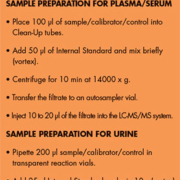
One such example is the analysis of methylmalonic acid (MMA), an important biomarker for the identification of vitamin B12 deficiency which, if left untreated, can lead in the long term to permanent neurological damage and/or to hematological and gastroenterological diseases. The sole determination of holoTC, the active form of vitamin B12, does not have the same diagnostic significance as the combined measurement of holoTC and MMA, as the MMA concentration shows a possible vitamin B12 deficiency even before the actual vitamin level decreases [3]. Traditionally, the reference method for this parameter in plasma/serum is GC-MS which, as mentioned above, requires an extremely complex sample preparation that can take several hours [4]. In contrast to this, the sample preparation for LC-MS/MS from Chromsystems is much easier, and, with just a few minutes processing time, considerably faster, while requiring only one quarter of the sample material (see table 1).
Furthermore, data from plasma and urine MMA determinations by the reference GC-MS method and the new LC-MS/MS technology show a strong correlation and excellent agreement (Fig. 1). Therefore, the described LC-MS/MS technique represents a fast, reliable and robust method for routine analysis, achieving a higher throughput and higher efficiency.
Sample preparation as a pivotal step
The correct analytical procedure from extraction and sample preparation, through to the chromatography and MS setup is a prerequisite to achieve optimal results by mass spectrometry, and to fulfil the requirements in clinical diagnostics. The development of an appropriate sample preparation procedure can be complicated and time-consuming, requiring considerable work in order to sensibly embed it in the overall analytical procedure. The ultimate goal is the enrichment of the molecule of interest by a simultaneous elimination of compounds that cause ion suppression or enhancement effects. Moreover, components from plastic, chemicals like salts or particularly from the human matrix (whole blood, serum, plasma, urine), potentially co-eluting from the LC system can compete with the analytes during the ionization process. This leads to a change in compound ionization, and consequently alters the MS signal at the detector [5]. This process is called “ion suppression” and Bonfiglio et al [6] systematically analysed these effects and have found not surprisingly that they are dependent on the sample preparation technique used as well as the compound to be analysed. More polar analytes also showed stronger effects than less polar ones. Short-term variations in ionization can also compromise the accuracy of analyses, if the method is not sufficiently robust. If these variations have a differential impact on the target analyte and internal standard, the overall analysis is affected [7]. The authors also concluded the need for calibration material to be as similar as possible to the sample matrix. In addition, the choice of an appropriate internal standard helps to reduce matrix effects; whenever possible, an isotopically labelled version of the analyte is the ideal choice.
Depending on sample specimens and analyte characteristics, sample preparation techniques can encompass liquid-liquid extraction, solid phase extraction or protein precipitation and are also crucial for the removal of materials that may contaminate the column, trap-column or the analytical system.
Considering all of these factors, successful method development where all parameters work well within at least acceptable levels of CVs, recovery and appropriate limits of quantification (LOQs) can be very challenging. Furthermore, full establishment of a method that is comprehensively validated in the laboratory is a laborious process. The use of commercially available kits, like the one mentioned above for MMA, which have gone through numerous optimization, verification and validation processes from sample preparation through to MS analysis represents a secure, robust and time-saving alternative for clinical laboratories.
Multi-analyte determination
The capability of LC-MS/MS systems for the analysis of several compounds in a single run sounds efficient and relevant, e.g. for the simultaneous analysis of drugs and their metabolites, but may not be as easy as it seems. Every single analyte in a patient sample may possess different chemical and physical properties that affect its recovery in the sample preparation procedure. Consequently, some compounds may be extracted more efficiently than others. Therefore, it can be a highly complex task with a significant amount of work to develop a general sample preparation procedure for quantification of numerous drugs and metabolites, with many of them being analysed in a single run (see Fig. 2), aimed at simplifying the laboratory workflow.
Automation for a higher throughput
One of the major challenges clinical laboratories have been facing is the simplification and acceleration of sample preparation for LC-MS/MS. By using an automated workflow potential pipetting errors can be minimized and, in parallel, the throughput can be drastically increased. This is relevant, for example, to large transplant centres that analyse a high number of patient samples for immunosuppressive drugs, but nevertheless need to achieve fast and reliable results by LC-MS/MS. To date, there is only one system on the market (MassSTAR) that allows a fully automated CE-IVD workflow for immunosuppressants including sample tracking, LIMS connectivity and clotting detection. The automated method offers a time saving of approximately 80% compared to manual preparation. A comparison between manual and automated sample preparation and measurement techniques for the four immunosuppressants cyclosporine A, everolimus, sirolimus and tacrolimus showed very high correlations (Fig. 3). Automated and manual preparation procedures therefore produce almost the same results, with automation reducing the time needed for sample extraction while also increasing sample throughput. These automation options are also provided by Chromsystems for other parameters, such as vitamin D3/D2, the immunosuppressant mycophenolic acid and antiepileptics, for which comparable correlations between the manual and the automated methods have also been shown.
A gold standard in routine
LC-MS/MS is a valuable technique that is often used in reference methods for a wide range of parameters. Its main drivers for growth in clinical laboratories are the limitations of immunoassays for low molecular weight compounds, the easier workflows and higher throughput [8]. However, there are certain downfalls that need to be addressed with one of the most, or even the most critical factor in clinical mass spectrometry being the application of an appropriate sample preparation procedure that is robust as well as reliably fulfilling analytical requirements. A number of proven and CE-IVD approved LC-MS/MS kits for sample preparation from Chromsystems are available and simplify the workflow in the laboratory. Furthermore, automation is also possible for a range of parameters, reducing hands-on time and increasing throughput for those laboratories with the need for higher throughput.
References
1. Vogeser M, Kirchhoff F (2011) Progress in automation of LC-MS in laboratory medicine. Clin Biochem 44(1): 4-13.
2. Korecka M, Shaw L, (2009) Review of the newest HPLC methods with mass spectrometry detection for determination of immunosuppressive drugs in clinical practice. Ann. Transplant 14(2): 61-72.
3. Obeid R, (2014) Methylmalonic acid – a biomarker for vitamin B12 deficiency. DIALOG 1/2014.
4. Obeid R, Geisel J, Kirchhoff F, Bernhardt K, Ranke D, Lukačin R. (2014) External validation of a novel commercially available mass spectrometry kit for MMA in serum/plasma and urine. Poster presented at the congress of the International Federation of Clinical Chemistry and Laboratory Medicine (IFCC) WorldLab, Istanbul, Turkey.
5. Schneider H, Steimer W. (2006) Tandem mass spectrometry in drug monitoring: experience and pitfalls in application. J Lab Med 30(6): 428-437.
6. Bonfiglio R, King RC, Olah TV, Merkle K. (1999) The effects of sample preparation methods on the variability of the electrospray ionization response for model drug compounds. Rapid Commun Mass Spectrom 13(12): 1175-1185.
7. Vogeser M, Seger C. (2010) Pitfalls associated with the use of liquid chromatography-tandem mass spectrometry in the clinical laboratory. Clin Chem 56(8): 1234-1244.
8. Grebe S, Singh R. (2011) LC-MS/MS in the Clinical Laboratory – Where to From Here? Clin Biochem Rev 32: 5-31.
The authors
Nihâl Yüksekdağ PhD, Marc Egelhofer PhD*, and Richard Lukačin PhD.
Chromsystems Instruments & Chemicals GmbH, Am Haag 12, 82166 Gräfelfing, Germany
*Corresponding author, egelhofer@chromsystems.de
Advances in Next Generation Sequencing (NGS) are bringing much higher throughput and rapidly reducing costs, whilst facilitating new mechanisms for disease prediction. Consequently, the clinical applications of NGS technologies are continuing to develop, with the potential to change the face of genetic medicine [1].
by Hannah Murfet (BSc, PCQI), Product Quality Manager, Horizon Discovery
Applications of NGS in a clinical context are varied, and may include interrogation of known disease-related genes as part of targeted gene panels, exome sequencing, or genome sequencing of both coding and non-coding regions. However, as NGS moves further into the clinic, care must be taken to ensure high levels of quality assurance, rigorous validation, recording of data, quality control, and reporting are maintained. [1] [2]
Guidelines specific to NGS are beginning to emerge and to be adopted by clinical laboratories working with these technologies, in addition to those mandated by clinical accreditation and certification programmes. In this article we give an overview of the specific guidance set out by the American College of Medical Genetics and Genomics in its September 2013 report ‘ACMG clinical laboratory standards for next-generation sequencing’, and the New York State Department of Health’s January 2014 document ‘Next Generation Sequencing (NGS) guidelines for somatic genetic variant detection’.
Quality Assurance
Quality assurance (QA) in the clinical context comprises maintenance of a desired level of quality for laboratory services. Typically, quality management systems take a three tier hierarchy. At the highest level the policies define the organisation’s strategy and focus. Underneath this sit the procedures, which define and document instructions for performing business/quality management or technical activities. Underpinning both of these tiers are accurate records.
In the case of New York State Department of Health guidelines, there is clear focus on the requirement for SOPs, which can be broken down into two levels. The first level states the required flow of information, demonstrating the sequence of events, and associated responsibilities or authorities. The first level procedures are best kept at a relatively high level, and may reference more specific and detailed level two processes.
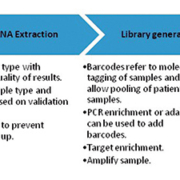
Testing sequences may be incorporated into one or more level one processes, depending on the complexity of the clinical laboratory’s operations. An overview of the typical testing sequence is shown in the figure below.
Level two processes are best documented as clear ‘how to’ guides, detailing all responsibilities, materials and procedures necessary to complete the activity. For laboratory-focused activities, validation study inputs and outputs can establish clear and consistent protocols, supporting training and laboratory operation.
Accurate record keeping should include which instruments were used in each test, as well as documentation of all reagent lot numbers. Any deviations from standard procedures should be recorded, including any corrective measures [1]. Templates may be generated to ensure consistency in output records for both testing and reporting.
In addition to documented processes, implementation of predetermined checkpoints or key performance indicators should be included to permit the monitoring of QA over time. Once established, these may act as a trigger for assay drift, operator variability, or equipment issues.
In the US, compliance to the HIPAA Act (Health Insurance Portability and Accountability Act) must be implemented to ensure traceability and protection of patient data, and many authorities mandate record retention periods, including CLIA who dictate that records and test reports must be stored for at least two years [1].
Clinical laboratories may look to further certification to ensure tight QA, such as the implementation of ISO 15189, especially in countries where no formal accreditation schemes are in place. [3]
Validation
Validation involves the in-depth assessment of protocols, tests, materials and platforms, providing confidence that critical requirements are being met. Test development and platform optimization should include factors such as determination of sample pooling parameters, and use of synthetic variants to create a strong data set, to compare tools and optimize the workflow. Validation of each entire test should be undertaken, using set conditions for sensitivity, specificity, robustness and reproducibility. It should be noted that the first test developed may naturally carry a higher validation burden than subsequent tests developed for the same platform. Platform validation and quality management are also vital. [1,2]
Specific validation requirements for NGS as set out by the New York State Department of Health are listed below. These guidelines may be used as a basic checklist for coverage, or to supplement more general accreditation or certification requirements, e.g. those required by CLIA or ISO 15189. [1]
Data
NGS has the potential to create huge amounts of data, meaning that accurate and efficient systems for data storage and collection are more essential than ever. Data protocols are generally established through the validation stages, then monitored at predetermined checkpoints with key performance indicators to ensure consistency and accuracy of service provision.
The list below gives an overview of NGS specific data requirements from the New York State Department of Health. [1]
Accuracy
Robustness
Precision
Repeatability and Reproducibility
Analytical Sensitivity and Specificity
A minimum data set is expected, to establish key performance characteristics, including: base calling; read alignment; variant calling; and variant annotation.
Quality Control
In contrast to quality assurance where the infrastructure for quality is established to maintain the right service, quality control addresses testing and sampling to confirm outputs against requirements. Quality control takes place across all aspects of a process from reagents used, to software and in-assay controls.
Quality control of reagent lots is best implemented at the point of goods inspection. A clear label should be placed on the reagent under inspection, and testing performed to validate/confirm analytical sensitivity. Quality control of software updates can be handled through a version control and impact assessment process. All re-validation must be clearly documented and demonstrate consistency in analytical sensitivity.
Sample identity confirmation is essential, especially if samples are pooled. Proficiency testing protocols must be established to allow for execution as required by clinical accreditation bodies (such as CLIA). Quality control stops may be added to laboratory process before the sequencing run, to the run itself and at the end before data analysis.
Use of control materials /reagents at all stages of the sequencing procedure supports quality control. No Template Controls (NTC) should be used at all amplification steps; a negative Control should be used upon initial validation, and periodically thereafter; and a Positive / Sensitivity Control should be used in each sequencing run. [1]
Several different QC protocols may need to be followed, and quality control measures applied can vary depending on chosen methods and instrumentation, but they should always include procedures to identify sample preparation failures and failed sequencing runs. Documentation for QC protocols is best detailed in the relevant SOP.
Reports
Specific requirements around the generation, approval, issue and re-issue of reports are included as part of accreditation programmes, such as CLIA, and standards certifications, such as ISO 15189. The most essential reporting requirements related to NGS are as follows [1,2]:
Conclusions
While complete understanding of the clinical implications of some variants is still to be fully understood, there are clear prospects emerging for NGS to support further development and adoption of companion diagnostics. As the overall picture for NGS evolves, sell-defined guidelines are being developed for everything from quality assurance to reporting. It is expected that guidance and certification will continue to develop as NGS becomes an ever more common technology within the clinical laboratory.
References
1. American College of Medical Genetics and Genomics. (2013, September). ACMG clinical laboratory standards for next-generation sequencing.
2. New York State Department of Health. (2014, January). “Next Generation” Sequencing (NGS) guidelines for somatic genetic variant detection.
3. Horizon Discovery. (n.d.). ISO 15189: A Standard of Yin and Yang.
November 2025


Prins Hendrikstraat 1
5611HH Eindhoven
The Netherlands
info@clinlabint.com
PanGlobal Media is not responsible for any error or omission that might occur in the electronic display of product or company data.