




Testosterone is a steroid hormone that develops and maintains the primary and secondary sex characteristics in men. In recent years, there has been an explosive increase in prescriptions for testosterone replacement therapy (TRT) in adult men who are thought to have adult-onset hyopgonadism. This increase has been fueled by changing demographics and by increased public awareness of so-called “low-T” syndrome. Despite recent controversies about risks for cardiovascular complications in men receiving TRT, the trend of increased testing and treatment for low-T is likely to continue. This article explores current controversies and unanswered questions regarding testing for low-T in men. Topics covered include variations in reference intervals for testosterone and thresholds for interpretation of results. Controversies and questions surrounding testing for free (unbound) testosterone will also be explored. Finally, the emerging evidence regarding the roles of dihydrotestosterone and estradiol will be discussed in the context of testing for low-T.
by Dr Michael Samoszuk
Testosterone metabolites include estradiol (produced by the aromatase enzyme found in fat and other tissues such as testes) and dihydrotestosterone (DHT)-an androgenic hormone that is approximately three- to ten-times more potent than testosterone. DHT is produced from testosterone by 5-alpha reductase, an enzyme that is found primarily in hair follicles, prostate, testes, and adrenal glands but not in skeletal muscle.
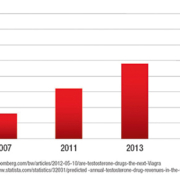
In recent years, there has been an explosive increase in prescriptions (Figure 1) for testosterone replacement therapy (TRT) in men who are thought to have adult onset hypo-gonadism, a condition that is often referred to as “low-T”. This condition is characterized by a variety of signs and symptoms, including loss of body hair, accumulation of visceral and body fat, loss of skeletal muscle, anemia, mood disturbances, loss of libido, and erectile dysfunction. Because of changing demographics and increased awareness of low-T due to marketing campaigns, it is likely that testing for (and treatment of) low-T will continue to increase significantly in the next five years. This increased testing and treatment for low-T will probably occur despite recent controversies about the cardiovascular risks that may be associated with TRT.
How should total testosterone levels be interpreted in men being tested for low-T?
There is considerable variation in the reference intervals for total testosterone assays that are produced by various manufacturers of in vitro diagnostics (Table 1). It is notable that the reference intervals are based on the range of values between the 5th-95th percentiles of men of various ages. Because the populations of men that were used to derive these reference intervals are poorly defined with respect to age distribution and possible symptoms of low-T, it is unclear if these reference intervals provide a reliable basis for interpreting test results from men being tested for low-T. Of particular concern are the lower limits of the reference intervals, which may be too low to identify the significant proportion of men who are truly hypo-gonadal but whose total testosterone levels fall above the 5th percentile of the reference range.
Reference intervals for total testosterone levels reported by reference laboratories also have considerable variation (Table 2). The variation is of particular concern at the low end of the reference interval because many clinicians use this value to determine whether or not a man should be diagnosed as having low-T. Unanswered questions regarding the use of reference intervals that are reported by clinical laboratories include:
An emerging way to interpret total testosterone levels in men is to use a clinical threshold (cut-off) value for the level. Although there are significant differences in the definitions of the clinical thresholds (Table 3), it appears that the clinical threshold for diagnosing low-T probably lies somewhere between 300-500 ng/dL. Notably, this range lies considerably above the 5th percentiles for testosterone values that are listed in Tables 1 and 2. It should also be noted that all sources of the clinical thresholds listed in Table 3 also recommend the primacy of clinical signs and symptoms when interpreting total testosterone values.
Unanswered questions regarding the use of clinical threshold values are:
Should free testosterone be measured?
Testosterone circulates in the blood in a free (unbound) form and a bound form. Sex-hormone binding globulin (SHBG) and albumin are the primary sources of binding of testosterone.
Approximately 2% of total testosterone circulates in the free form. Current thinking is that the free testosterone is mostly responsible for the biological activity of the hormone, and the bound form is thought to be mostly inactive. The free and bound forms can be directly measured by a variety of methods, or a mathematical formula can be used to calculate the percentage of free testosterone, based on the values for total testosterone, SHBG and albumin.
There is substantial confusion over the best way to determine free testosterone and how to interpret the results. Unanswered questions include:
Is there a role for testing for DHT?
Testing for DHT is not commonly performed in the evaluation of men being evaluated or treated for hypo-gonadism. At this time, it is not clear how to interpret the test results. There is some evidence, however, that treatment of low-T with topical testosterone preparations can sometimes preferentially elevate the DHT levels due to the presence of 5-alpha reductase in skin and hair follicles. In theory, this phenomenon could account for so-called treatment failures of men who receive topical therapy. It is likely that as our understanding of TRT improves, there will be an increased interest in clinical testing for this metabolite of testosterone.
Is it necessary or helpful to measure estradiol in men being evaluated or treated for low testosterone?
There is now considerable evidence that estradiol levels in men play an important role in modulating the effects of testosterone on sexual function, body fat, lean muscle mass, and bone density. Nevertheless, estradiol levels are still not commonly measured in men who are being evaluated or treated for low-T. This is because the interpretive criteria for such testing are still not well understood. In some men, estradiol levels are measured in order to determine if TRT is causing an increase in estradiol due to aromatization of the testosterone. This can lead to symptoms of high estradiol such as bloating, fluid retention, and breast tenderness. Some experts now recommend calculating a ratio of testosterone to estradiol, but this approach is not yet widely accepted. Nevertheless, it is likely that clinical laboratories will experience an increased demand for estradiol testing in men as our understanding and prevalence of TRT increase.
Conclusion
From the preceding discussion, it should be apparent that our understanding of laboratory testing for low-T in men lags considerably behind the growing demand for testing and treatment of low-T. Clinical laboratories, manufacturers of in vitro diagnostic tests, and clinicians should be aware of the many unanswered questions in this field. They should also begin to prepare to educate themselves about the important changes in this field that are likely to occur in the next few years. For further details about this subject, the interested reader is referred to the following sources.
References
Bhasin S, Cunningham GR, Hayes FJ, Matsumoto AM, Snyder PJ, Swerdloff RS, Montori VM. Testosterone therapy in adult men with androgen deficiency syndromes: an Endocrine Society clinical practice guideline. J Clin Endocrinol Metab 2006: 91, 1995-2010.
Finkelstein JS, et al. Gonadal steroids and body composition, strength and sexual function in men. N Engl J Med 2013: 369, 1011-22.
Morgentaler A, Khera M, Maggi M, Zitzmann M. Commentary: Who is a candidate for testosterone therapy? A synthesis of international expert opinions. J Sex Med 2014: 11, 2636-45.
www.peaktestosterone.com A testosterone and men’s health blog that is an excellent source of information and peer-reviewed publications on this topic.
The author
Michael Samoszuk, M.D.
Chief Medical Officer
Beckman Coulter Diagnostics



The burden of cardiovascular disease continues to take its toll in terms of diminished quality of life, reduced life expectancy, and the direct and indirect medical costs of treating and caring for patients. This is in spite of downward trends in mortality in the US and Western Europe, especially in the two decades leading up to the year 2000.
by Bernard Cook, PhD
This decline could, in part, be attributed to the success of patient educational campaigns to reduce smoking, lower levels of cholesterol and blood pressure, and encourage lifestyle changes in exercise and diet. Alongside the wider use of effective medications such as cholesterol-lowering statins, these steps are said to have contributed to an observed decline in coronary heart disease (CHD) deaths [1].
However, the rate of improvement is being affected by other, conflicting trends, such as increasing extreme obesity, sedentary lifestyles, the prevalence of hypertension and the rise in type 2 diabetes mellitus even in children.
The World Health Organization first defined myocardial infarction (MI) in 1979 based on clinical presentation, ECG results and elevated blood enzymes such as total CK and the CK-MB isoform. However, there were no standardized definitions, with clinicians defining MI differently, even within the same hospital. The arrival of cardiac troponin assays in the 1990s opened the door for a much needed reappraisal. It was discovered that a greater sensitivity and specificity for MI diagnosis could be achieved by using troponin (a more cardiac-specific marker than CK-MB) and lower cut-offs, presenting the possibility of using the rise and fall of troponin levels to establish ‘early rule-out protocols’.
Highly sensitive troponin is biomarker of choice
Performance expectations have risen as the sensitivity of troponin assays has improved. Nowadays, the modern, highly sensitive troponin assay has become the gold standard biomarker for the early diagnosis of an acute MI, with standards benchmarked by recent international guidelines.
The first steps towards international conformity were taken in 2000 when the European Society of Cardiology (ESC) and the American College of Cardiology (ACC) collaborated on a redefinition of MI. For the first time this gave a central role to the use of biomarkers such as troponin [2]. By 2007, this collaboration had expanded to include the American Heart Association (AHA) and the World Heart Federation (WHF) and saw the publication of the first universal definition of MI. This further established troponin as the preferred biomarker when diagnosing a heart attack [3].
Five years later, in 2012, the Third Universal Definition of Myocardial Infarction [4] laid down the criteria for the contemporary use of troponin assays by today’s clinicians to reduce the time it takes to rule out acute myocardial infarction (AMI). Crucially, this defined an increased cTn concentration as a value exceeding the 99th percentile of a normal reference population apparently free from heart disease [5, 6].
Establishing upper reference limits
The current definition states that the 99th percentile limit should be determined using a healthy population [5, 7]. It is acceptable to confirm this cut-off from information published in peer-reviewed literature or in the assay manufacturer’s own product literature. Further, troponin assays should demonstrate optimal precision with a coefficient of variation of 10% or less at the 99th percentile value and high sensitivity assays should be able to detect troponin in at least 50% of the reference population [7, 8, 9]. Troponin assays with an imprecision greater than 20% CV at the 99th percentile do not fit the criteria for contemporary use.
In today’s current clinical practice, when patients present to an emergency department with chest pain and acute coronary syndrome is suspected, the requirement for the highly sensitive troponin (Tn) assays, such as Beckman Coulter’s AccuTnI+3 assay, is to rule out non-ST-segment-elevation myocardial infarction (NSTEMI) as quickly as possible. Further, distinguishing acute from chronic c-Tn elevations requires serial measurements to detect significant changes [5].
There are conflicting positions about how to best establish a 99th percentile upper reference limit (URL) for troponin. The first maintains that the URL study should include younger subjects, and should not include subjects with potential cardiovascular disease or cardiac risk factors. The second contends the study should include subjects from a population that represents the intended use for troponin: patients whose demographics reflect those of subjects presenting to the emergency department, including older individuals without known cardiovascular disease. Additionally, other methods for selecting a cardiac-healthy population have been employed, such as samples collected from apparently healthy blood donors.
In a study by Moretti et al to establish that the AccuTnI +3 assay demonstrates a coefficient of variation of 10%, the authors found that 62% of the apparently 330 healthy group of blood donors used in the study had measurable values of troponin between the Limit of Detection (LoD) and 99th percentile values [10]. There were no significant differences related to gender and no correlation between cTnI and age.
Predictive accuracy at early observation times
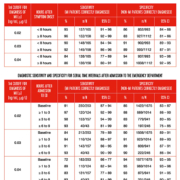
Storrow et al conducted a multicentre, prospective study, involving more than 1,900 patients, to investigate and compare clinical performance at pre-defined serial sampling intervals: on admission/at 1-3 hours/3-6 hours and 6-9 hours. Patients selected from 14 centres were those presenting with chest pain or equivalent ischemic symptoms suggestive of acute coronary syndromes [11]. Results from this study reinforced current clinical practice that troponin testing provides a high degree of accuracy at early observation times, on admission and three hours later, only needing to be repeated after six hours when clinical suspicion remains high.
The findings, published late 2014 in Clinical Biochemistry, compared emergency department TnI serial sampling intervals to determine optimal diagnostic thresholds, and reported on representative diagnostic performance characteristics for early rule-in and rule-out of MI [11]. Diagnosis was adjudicated by an independent central committee of cardiologists. Study samples were tested using Beckman Coulter’s AccuTnI+3 assay at four independent testing facilities.
Specific results from Storrow showed that TnI ≥0.03 ng/mL provided 96.0% sensitivity and 89.4% specificity at 1-3 hours after admission, and 94.9% sensitivity and 86.7% specificity at 3–6 hours. When troponin levels were <0.03 ng/mL, being able to give a negative predictive value (NPV) depended on knowing the time symptoms started. If it was determined that symptoms started approximately eight hours before admission or examination, the NPV was 99.1%. Testing at 1-3 hours gave a NPV of 99.5%; and 99.0% at 3-6 hours when TnI is >0.03 ng/mL. However, Storrow noted that 50–58% of patients with troponin levels of ≥0.03 ng/mL were diagnosed with MI, depending on the time symptoms started or admission.
Positive predictive values emphasize the importance of taking serial samples and observing rising or falling patterns of the delta TnI when low cut-offs are used. Storrow noted that even a single elevated TnI value increased the risk of MI. As TnI values rose, the probability of MI increased, with values ≥0.20 ng/mL associated with an almost 90% probability [11].
Importance of establishing absolute delta values
A change in serial troponin values (delta) can be reported as a percentage or absolute concentrations between the repeat measurements. However, serial measurements must be calculated with values from the same cTn assay [12]. The larger the value set for the delta, the higher the specificity (and the lower the sensitivity) for acute cardiac injury including AMI [13], and the smaller the value set, the higher the sensitivity.
In a separate report using the AccuTnI+3 assay, Storrow confirmed that absolute delta performed significantly better than relative delta at each time interval; for example, at 1-3 hours (AUC were 0.84 vs 0.69), 3-6 hours (0.85 vs 0.73), and 6-9 hours (0.91 vs 0.79) [14]. Current recommendations propose ≥20% delta within 3-6 hours; however, in this study, results were optimized using an absolute delta of 0.01 or 0.02 ng/mL.
Being able to determine the degree of serial change in high sensitive troponin assay concentrations seems to be the most accurate way of differentiating between those patients suffering AMI and those with more chronic heart conditions. Currently, there is no official consensus on a way of establishing or confirming delta values. Until this is in place, the US Task Force in Clinical Applications of Cardiac Bio-markers recommends that institutions agree on a delta value based on available peer-reviewed data for individual assays and then modify based on empirical findings and feedback [15].
Another study of 874 patients, published in the International Journal of Cardiology, used the Beckman Coulter AccuTnI assay to demonstrate that an algorithm incorporating cTnI concentration and delta cTn values with this assay could allow accurate diagnosis of AMI within two hours from presentation and an earlier rule-out of AMI in the majority of patients.
Cullen et al assessed the accuracy of delta cTn at two and six hours compared to the cTn concentration above the 99th percentile reference value for AMI in a prospective study of adult patients presenting with symptoms suggestive of possible acute coronary syndrome [16]. The area under the ROC curve for diagnosing AMI at two hours was 0.89 [95%CI, 0.84–0.95] for absolute delta cTn versus 0.79 [95%CI 0.73–0.85] for the relative change. Specificity and PPV at two hours were optimized using a delta cTnI ≥0.03 μg/L (95.8% [95%CI 94.1–97.0] and 61.4% [95%CI 50.9–70.9] respectively). Sensitivity and NPV for AMI were optimized using the 99th percentile with the addition of a delta of 0.03 μg/L (97.1% [95%CI 90.2–99.2] and 99.7% [95%CI 99–99.9] respectively).
Labs to adopt lower high sensitive assay cut-offs
With the newer highly sensitive troponin assays, the resulting shift to lower cTn cutoffs will increase the number of patients that are monitored for MI, and will also identify patients with elevated cTn due to other conditions. Published guidance now recommends that all manufacturers demonstrate the true clinical performance of their cTn assays in the contemporary clinical setting through an appropriately designed clinical study [17]. Out-of-date clinical cut-offs and diagnostic criteria may not accurately diagnose MI in some instances. It may take time for laboratories to adopt lower cut-offs, but doing so will ultimately improve patient care [18].
References
1. Ford ES, Capewell S. Coronary heart disease mortality among young adults in the U.S. from 1980 through 2002: concealed leveling of mortality rates. J Am Coll Cardiol. 2007 Nov 27; 50(22):2128-32. Epub 2007 Nov 13.
2. Myocardial Infarction Redefined – a consensus document of the Joint European Society of Cardiology/American College of Cardiology Committee for the redefinition of myocardial infarction. Eur. Heart J 2000; 21: 1502-1513. J Am Coll Cardiol 2000; 36: 959-969.
3. Thygesen K, Alpert JS, White HD; Joint ESC/ACC/AHA/WHF Task Force for the Redefinition of Myocardial Infarction. Universal definition of myocardial infarction. Eur Heart J 2007; 28: 2525-38.
4. Joint ESC/ACCF/AHA/WHF Task Force for the Universal Definition of Myocardial Infarction. Third universal definition of myocardial infarction. European Heart Journal 2012; 33: 2551-2567. Available online at: http://www.escardio.org/guidelines.
5. Thygesen K, Alpert JS, Jaffe AS, et al. Third universal definition of myocardial infarction. Eur Heart J 2012; 33: 2251–2267.
6. Morrow DA, Cannon CP, Jesse RL, et al. National Academy of Clinical Biochemistry laboratory medicine practice guidelines: clinical characteristics and utilization of biochemical markers in acute coronary syndromes. Clin Chem 2007; 53: 552–574.
7. Collinson PO, Heung YM, Gaze D, Boa F, Senior R, Christenson R, et al. Influence of population selection on the 99th percentile reference value for cardiac troponin assays. Clin Chem 2012; 58:219-25.
8. Apple FS, Collinson PO, and for the IFCC Task Force on Clinical Applications of Cardiac Biomarkers: analytical characteristics of high-sensitivity cardiac troponin assays. Clin Chem 2012; 58:54-61.
9. Apple FS. Ler R, Murakami MM. Determination of 19 cardiac troponin I and T assay 99th percentile values from a common, presumably healthy, population. Clin Chem 2012; 58:1574-81.
10. Moretti M et al. Analytical performance and clinical decision limit of a new release for cardiac troponin I assay. Ann Clin Biochem, April 7, 2014.
11. Storrow AB, et al. Diagnostic performance of cardiac Troponin I for early rule-in and rule-out of acute myocardial infarction: Results of a prospective multicenter trial. Clinical Biochemistry 2014; e-pub ahead of print.
12. Keller T, Zeller T, Ojeda F, Tzikas S, Lillpopp L, Sinning C, et al. Serial changes in highly sensitive troponin I assay and early diagnosis of myocardial infarction. JAMA 2011; 306:2684-93.
13. Korley FK, Jaffe ASJ. Preparing the United States for high-sensitivity cardiac troponin assays. J Am Coll Cardiol 2013; 61:1753-8.
14. Storrow AB, et al. Absolute and relative changes (delta) in troponin I for early diagnosis of myocardial infarction: Results of a prospective multicentre trial. Clin Biochem (2014), http://dx.doi.org/10.1016/j.clinbiochem.2014.09.012.
15. Task Force On Clinical Applications of Cardiac Bio-Markers. Using High Sensitivity Cardiac Troponin Assays in Practice. The International Federation of Clinical Chemistry and Laboratory Medicine (IFCC). 2014. http://www.ifcc.org/media/259738/201405_TF_CB_IFCC_practice%20Summary.pdf.
16. Cullen L, Parsonage WA, Greenslade J, Lamanna A, Hammett CJ, Than M, et al. Delta troponin for the early diagnosis of AMI in emergency patients with chest pain. Int J Cardiol 2013;168:2602–8.
17. Letter to Manufacturers of Troponin Assays Listed with the FDA. Available online at: http://www.fda.gov/MedicalDevices/ProductsandMedicalProcedures/InVitroDiagnostics/ucm230118.htm.
18. Mills NL, Lee KK, McAllister DA, Churchhouse AMD, MacLeod M, Stoddart M, Walker S, Denvir MA, Fox KAA, Newby DE. Implications of lowering threshold of plasma troponin concentration in diagnosis of myocardial infarction: cohort study. BMJ 2012; 344: e1533.
The author
Dr Bernard Cook is Senior Scientific Manager, Beckman Coulter Diagnostics. He has co-authored several scientific papers and is actively involved in the diagnostics industry, which includes being the former chairman of the industry division of the American Association for Clinical Chemistry.
Recently, low-molecular-weight-peptide enrichment from blood samples by on-chip fractionation with nanopore platforms has been established successfully for the quantification and phenotypic characterization of the substrate degradome – the peptide products generated by the protease activity of a tumour environment. This article will provide evidence for this peptidomics-based approach and the clinical relevance in future therapeutic benefits will also be discussed.
by Dr Xu Qian and Dr Tony Y. Hu
Introduction
The development of cancer is a multistep process involving initiation, progression, local-regional recurrence, tumour metastasis and the host anti-tumour response. We are also now aware that changes in the broad genetic and epigenetic landscape as well as molecular mechanisms beyond histology and clinical characteristics contribute to this process. One such mechanism is the relationship between the repertoire of proteases expressed by a tissue and their substrates, which was found to be important in all steps of tumour progression by interactions with tumour cells and the tumour milieu.
Considering the systematic role of proteases in malignant tumour development, it was thought that it might be possible to detect signature products of substrate proteolysis – the substrate degradome – in the patient’s blood samples that are the result of protease dysregulation. This might then function as a diagnostic marker for tumour progression and a surrogate marker for monitoring the effects of protease-inhibitor therapy. This approach, called ‘exogenous peptidomics’ [1], based on mass spectrometry (MS) has proven its usefulness in the discovery of peptides from biofluids.
Challenges remain in this field as a consequence of the low molecular weight, low concentrations and quick degradation of such peptides in the peripheral blood of cancer patients. We recently developed an MS-based on-chip fractionation method assisted by nanopore technology, which has the advantages of being simple, high-throughput, high-resolution, and non-invasive [2]. We successfully identified circulating carboxypeptidase N (CPN)-catalysed C3f-fragments in a breast cancer mouse model as well as in patients with breast cancer [3] and matrix metalloproteinases (MMP)-9-catalysed C3f-fragments in an ovarian cancer mouse model [4]. This review discusses the applications of this new approach for studying peptide profiling in relation to tumour-resident proteases as biomarkers and potential therapy target.
Proteases and the substrate degradome in cancer development
The developing tumour microenvironment is composed of proliferating tumour cells, blood vessels, infiltrating inflammatory cells, a variety of associated tissue cells and tumour stroma, as well as secreted cytokines, chemokines, growth factors and matrix-degrading proteases. Intracellular and extracellular proteases that can function as signalling molecules play an indispensable role in this neoplastic process by enhancing cell proliferation, survival, adhesion, migration, angiogenesis, senescence, autophagy, apoptosis and evasion of the immune system in the tumour microenvironment [5–7]. For example, intracellular granzyme B is a well-known protease facilitating the ability of NK cells and CD8+ T-cells to kill their targets in the tumour milieu [8]. Elevated levels of granzyme B were also found in pre-metastatic niches presenting a novel role for the activation of CD8+ T-cells in constraining myeloid cell activity through direct killing [9]. Interestingly, recent publications suggested that granzyme B has a double-edged function. Regulatory T (Treg)-cells derived from the tumour environment may induce NK and CD8+ T-cell death in a granzyme B- and perforin-dependent fashion [10, 11] or kill CD4+ effector T-cells via granzyme B in the presence of IL-2 [12]. These findings indicate that granzyme B is relevant for Treg-cell-mediated suppression of tumour clearance in vivo.
Extracellular matrix (ECM) degradation by proteolysis is critical for tumour invasion and metastasis. Many proteases such as matrix metalloproteinases (MMPs), cathepsin and the urokinase-type plasminogen activator system play roles in the degradation of ECM in tumour progression [13, 14]. Extracellular granzyme B released from migrating cytotoxic lymphocytes was found to participate in the remodelling of vascular basement membranes (BMs) by cleaving BM constituents and enabling chemokine-driven movement through BMs in vitro [15]. Recently, another granzyme family member, granzyme M, was reported to be an inducer of epithelial-mesenchymal transition (EMT) in cancers associated with STAT3 activation [16]. Cancer cells with EMT features were capable of changing their shape, polarity and motility in a malignant manner. In the same study, overexpression of granzyme M in cancer cells was found to promote chemoresistance. The EMT phenotype of cancer cells was also achieved by increased MMP-9 production and MMP-9-mediated degradation of E-cadherin, involving ERK1/2 pathways [17].
In elucidating the role of proteases in cancer development, it is also important to gain a better understanding of the substrate degradome, which consists of the terminal peptide products of the activities of the multistage proteases. We have, therefore, identified hundreds of substrates of granzyme B, affecting cell lysis, receptors, cytokines and growth factors, as well as extracellular-matrix-structural proteins and intracellular proteins involved in cell signalling and cycle regulation [15, 18]. Besides granzyme B, MMPs cleave an increasingly large set of substrates, such as elastin, fibronectin, laminin and collagen IV [14, 19, 20]. However, given the broad range of substrate function, the mechanism of protease temporal and spatial regulation remains largely unknown. The exact role of proteases and substrates in cancer biology both at tissue level and in circulation is still needs to be clearly defined.
A new tool for the detection of circulating tumour-associated peptides as biomarkers
The proteolytic products of a protease are a useful indicator of the protease concentration in serum. This is necessary, in part, because of the low concentration of protease itself in serum compared with high detection limits, the quick degradation of the protease, and the inaccuracy of detection methodology such as enzyme linked immunosorbent assay (ELISA) as a result of irreversible non-specificity. New protocols are currently being developed for the detection and validation of substrate/peptides via peptidomics [21, 22].
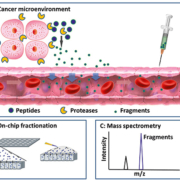
Our group developed a platform mainly including peptide on-chip fractionation followed by a matrix-assisted laser desorption/ionization time-of-flight (MALDI-TOF) MS analysis [23]. Briefly, nanoporous silica (NPS) thin films with nanotextures are used to capture and preserve low-molecular-weight peptides from 5 μl serum or plasma samples, whereas high-molecular-weight proteins are excluded by a wash step (Fig. 1). By this on-chip fractionation, low-molecular-weight peptides are enriched and separated. The peptides appear as m/z peaks that could be detected by MALDI-TOF MS analysis. The main advantage of this platform is that it allows specific profiling of the peptidome with high-throughput, high-resolution and a simple loading step.
Using this unique platform, we tested one hypothesis that, in breast cancer, CPN activity and its proteolytic products could be detected in interstitial fluid and blood [3]. CPN together with its substrate/peptide product levels may vary during tumour initiation and progression, indicating different disease states. We confirmed by ex vivo peptide cleavage assay and in vivo validation that the previously identified substrate C3f_S1304-R1320 was cleaved by CPN specifically at the C-terminal arginine. Moreover, six fragments generated from C3f_S1304-R1320 cleavage by CPN increased significantly in mouse sera at 2 weeks after orthotopic implantation relative to normal controls. The most important finding, however, documented that the plasma levels of substrate/peptide products of CPN were apparently elevated in patients with early stage breast cancer relative to controls, but levels of CPN protein itself were unchanged. These observations indicate that there may be additional regulation of CPN at different stages of tumour development. It is likely that inhibition of CPN protease activity is included within this additional regulation. However, the presence and frequency of substrate/peptides of CPN in the early stage of breast cancer makes them potential biomarkers for early diagnosis.
Recently, we investigated MMP-9 activity with the aim of monitoring a novel therapeutic strategy. To do this we used a HeyA8-MDR-induced ovarian cancer mouse model, where HeyA8-MDR cells are a human drug-resistant ovarian cancer cell line [4]. This study provided two major observations: (1) C3f was cleaved by MMP-9 in the tumour microenvironment. Two fragments generated specifically by this proteolysis were released and were detectable in mouse serum. (2) Treatment with ephrin type-A receptor 2-siRNA-multistage vectors (MSV-EphA2) induced apoptosis of tumour cells and a down-regulation of MMP-9 in tumour tissue. Moreover, the decreased level of circulating C3f cleavage fragments correlated with MSV-EphA2 treatment. Therefore, this change could be tracked and used to monitor treatment efficiency in real-time by a simple on-chip blood test. Taken together, these data suggest that the effect of EphA2 treatment extends to the peripheral blood, well beyond the tumour microenvironment at the tissue level, and thus can be easily assessed.
We reasoned that, from these two experimental approaches, it might be possible to gain information about the dynamic processes of proteases and their substrate/peptide products in patients with cancer. Consequently, further research in this field combined with other investigations aimed at improving the management of patients with cancer by early diagnosis, accurate characterization of disease, focused, treatment efficiency, and prognosis is essential.
Conclusion
In summary, MS-based on-chip fractionation assisted by nanopore platforms has been shown to be a highly sensitive and practical tool for the quantification and characterization of the circulating degradome. The combination of cellular protease function as well as substrate/peptide analysis provides a biologically meaningful picture of a specific tumour-entity at the level of the single peptide. Analysis of the circulating pepidome will be complementary to the standard diagnostic or prognostic procedure, such as routine blood test and tissue biopsy, for patients with cancer. This approach also holds great promise as a tool for monitoring novel therapeutic targets. For further development of this technique, many predicted targets still await validation as direct protease substrates and clarification of biological relevance in the network of protease and its inhibitors. We should pay much attention to the potential pitfalls.
References
1. Peccerella T, Lukan N, Hofheinz R, Schadendorf D, Kostrezewa M, Neumaier M, Findeisen P. Endoprotease profiling with double-tagged peptide substrates: a new diagnostic approach in oncology. Clin chem. 2010; 56(2): 272–280.
2. Fan J, Niu S, Dong A, Shi J, Wu HJ, Fine DH, et al. Nanopore film based enrichment and quantification of low abundance hepcidin from human bodily fluids. Nanomedicine. 2014; 10(5): 879–888.
3. Li Y, Li Y, Chen T, Kuklina AS, Bernard P, Esteva FJ, et al. Circulating proteolytic products of carboxypeptidase N for early detection of breast cancer. Clin Chem. 2014; 60(1): 233–242.
4. Deng Z, Li Y, Fan J, Wang G, Li Y, Zhang Y, et al. Circulating peptidome to indicate the tumor-resident proteolysis. Sci Rep. 2015; 5: 9327.
5. D’Eliseo D, Pisu P, Romano C, Tubaro A, De Nunzio C, Morrone S, et al. Granzyme B is expressed in urothelial carcinoma and promotes cancer cell invasion. Int J Cancer 2010; 127(6): 1283–1294.
6. Hu SX, Wang S, Wang JP, Mills GB, Zhou Y, Xu HJ. Expression of endogenous granzyme B in a subset of human primary breast carcinomas. Br J Cancer 2003; 89(1): 135–139.
7. Jezierska A, Motyl T. Matrix metalloproteinase-2 involvement in breast cancer progression: a mini-review. Med Sci Monit. 2009; 15(2): RA32–40.
8. Keefe D, Shi L, Feske S, Massol R, Navarro F, Kirchhausen T, et al. Perforin triggers a plasma membrane-repair response that facilitates CTL induction of apoptosis. Immunity 2005; 23(3): 249–262.
9. Zhang W, Zhang C, Li W, Deng J, Herrmann A, Priceman SJ, et al. CD8+ T-cell immunosurveillance constrains lymphoid premetastatic myeloid cell accumulation. Eur J Immunol. 2015; 45(1): 71–81.
10. Gondek DC, Lu LF, Quezada SA, Sakaguchi S, Noelle RJ. Cutting edge: contact-mediated suppression by CD4+CD25+ regulatory cells involves a granzyme B-dependent, perforin-independent mechanism. J Immunol. 2005; 174(4): 1783–1786.
11. Cao X, Cai SF, Fehniger TA, Song J, Collins LI, et al. Granzyme B and perforin are important for regulatory T cell-mediated suppression of tumor clearance. Immunity 2007; 27(4): 635–646.
12. Strauss L, Bergmann C, Whiteside TL. Human circulating CD4+CD25highFoxp3+ regulatory T cells kill autologous CD8+ but not CD4+ responder cells by Fas-mediated apoptosis. J Immunol. 2009; 182(3): 1469–1480.
13. Parks WC, Wilson CL, Lopez-Boado YS. Matrix metalloproteinases as modulators of inflammation and innate immunity. Nat Rev Immunol. 2004; 4(8): 617–629.
14. Ota I, Li XY, Hu Y, Weiss SJ. Induction of a MT1-MMP and MT2-MMP-dependent basement membrane transmigration program in cancer cells by Snail1. Proc Natl Acad Sci U S A. 2009; 106(48): 20318–2023.
15. Prakash MD, Munoz MA, Jain R, Tong PL, Koskinen A, Regner M, et al. Granzyme B promotes cytotoxic lymphocyte transmigration via basement membrane remodeling. Immunity 2014; 41(6): 960–972.
16. Wang H, Sun Q, Wu Y, Wang L, Zhou C, Ma W, et al. Granzyme M expressed by tumor cells promotes chemoresistance and EMT in vitro and metastasis in vivo associated with STAT3 activation. Oncotarget. 2015; 6(8): 5818–5831.
17. Zuo JH, Zhu W, Li MY, Li XH, Yi H, Zeng GQ, et al. Activation of EGFR promotes squamous carcinoma SCC10A cell migration and invasion via inducing EMT-like phenotype change and MMP-9-mediated degradation of E-cadherin. J Cell Biochem. 2011; 112(9): 2508–2517.
18. Boivin WA, Cooper DM, Hiebert PR, Granville DJ. Intracellular versus extracellular granzyme B in immunity and disease: challenging the dogma. Lab Invest. 2009; 89(11): 1195–1220.
19. Martinez A, Oh HR, Unsworth EJ, Bregonzio C, Saavedra JM, Stetler-Stevenson WG, et al. Matrix metalloproteinase-2 cleavage of adrenomedullin produces a vasoconstrictor out of a vasodilator. Biochem J. 2004; 383(Pt. 3): 413–418.
20. Wang S, Dangerfield JP, Young RE, Nourshargh S. PECAM-1, alpha6 integrins and neutrophil elastase cooperate in mediating neutrophil transmigration. J Cell Sci. 2005; 118(Pt 9): 2067–2076.
21. Kwong GA, von Maltzahn G, Murugappan G, Abudayyeh O, Mo S, Papayannopoulos IA, et al. Mass-encoded synthetic biomarkers for multiplexed urinary monitoring of disease. Nat Biotech. 2013; 31(1): 63–70.
22. Ueda K, Saichi N, Takami S, Kang D, Toyama A, Daigo Y, et al. A comprehensive peptidome profiling technology for the identification of early detection biomarkers for lung adenocarcinoma. PLoS One. 2011; 6(4): e18567.
23. Hu Y, Peng Y, Lin K, Shen H, Brousseau LC, 3rd, Sakamoto J, et al. Surface engineering on mesoporous silica chips for enriching low molecular weight phosphorylated proteins. Nanoscale 2011; 3(2): 421–428.
The authors
Xu Qian MD1,2, Tony Y. Hu PhD*1,3
1Dept of Nanomedicine, Houston Methodist Research Institute, Houston, TX 77030, USA
2Key Laboratory of Laboratory Medicine, Ministry of Education, Zhejiang Provincial Key Laboratory of Medical Genetics, Wenzhou Medical University, Zhejiang, PR China
3Dept of Cell and Developmental Biology, Weill Cornell Medical College of Cornell University, NY 10065, USA
*Corresponding author
E-mail: yhu@houstonmethodist.org

June 2026

Prins Hendrikstraat 1
5611HH Eindhoven
The Netherlands
info@clinlabint.com
PanGlobal Media is not responsible for any error or omission that might occur in the electronic display of product or company data.