

Kidney disease is one of the most life-threatening complications of diabetes and as the global incidence of diabetes soars, largely due to the dramatic increase in type 2 diabetes (T2DM), there will be a seismic shift in the number of patients in need of treatment through dialysis or transplant. Since up to 40% of diabetic patients develop symptoms of diabetic kidney disease (DKD), accurate and early identification of which patients are at the highest risk of progression from DKD to end stage renal disease (ESRD) will enable early initiation of protective renal therapies with subsequent reduction in healthcare costs and improved patient outcomes.
The cytokine TNFα, part of the Tumour Necrosis Factor (TNF) superfamily that plays a key role in homeostasis, has been implicated in the pathogenesis of diabetic kidney disease for over 20 years [1]. Researchers conclude that the elevated levels seen in diabetic patients could be the result of a TNFα driven dysregulation of the inflammatory/apoptotic pathways, which leads to kidney injury. The spotlight has recently shifted onto the TNF α receptors, Tumour Necrosis Factor Receptor 1 (TNFR1) and Tumour Necrosis Factor Receptor 2 (TNFR2), after a number of studies showed how elevated levels of these proteins were a predictor of progressive kidney disease.
In this article we look at the development of an In-Vitro Diagnostic test (IVD), the ‘EKF sTNFR1 Test’. This has been developed by EKF Diagnostics to measure levels of TNFR1 in plasma or serum in light of scientific evidence that this robust biomarker provides valuable prognostic information for diabetic patients at risk of progressive renal decline and ESRD.
The scientific evidence for the involvement of TNF receptors in kidney disease
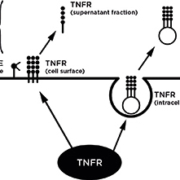
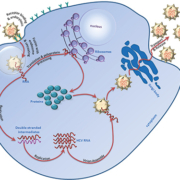
Cytokine TNFα is a transmembrane protein generated by many cells, including lipocytes, endothelial cells and leukocytes. After processing by TNFα-converting enzyme (TACE), the soluble form of TNFα is cleaved from transmembrane TNFα and mediates its biological activities through binding the receptors TNFR1 and TNFR2 either in their transmembrane or soluble forms to activate inflammatory and stress response pathways (Figure 1). Transmembrane TNF-α also binds to TNFR1 and TNFR2 so that both transmembrane and soluble TNF-α can mediate downstream signalling events (apoptosis, cell proliferation and cytokine production).
In 2009, at the Joslin Diabetes Center, USA (the world’s largest diabetes research centre and an affiliate of the Harvard Medical School), researchers found that the presence of circulating soluble TNF receptors (sTNFR1 and sTNFR2) were strongly correlated with decreased renal function, or glomerular filtration rate (GFR). The research threw up questions about why these soluble receptors were indicative of renal disease. Were they playing an active part in causing disease, or were they just the by-product of the process? Elevations in circulating sTNFR1 have previously been reported in a wide variety of clinical conditions including cancer, congestive heart failure, rheumatoid arthritis, neurological diseases and infection; so what was their role in kidney disease?
Interestingly, as Niewczas et al. [2] pointed out, the decline of renal function was occurring in T1DM patients who had normal albumin excretion levels. This gave a clue to the researchers that the concentrations of these receptors were not merely markers of the injury leading to ESRD but were also involved in the inception of renal function decline, playing a part in inflammation and apoptosis.
1n 2012, the Joslin researchers published two further studies, on Type 1 and Type 2 diabetes cohorts, [3,4] and found that TNF receptor levels were robust predictors of progressive decline in GFR. The results showed that Type 1 Diabetes patients who had normal renal function at the onset, but TNFR2 levels in the highest quartile had a 60% cumulative incidence of reaching stage 3 Chronic Kidney Disease (CKD) with subsequent risk of progression to ESRD (compared to less than 20% in the lowest three quartiles) (Figure 2).
Most significantly, in Type 2 Diabetes patients with evidence of overt Kidney Disease (as evidence by elevated levels of albumin excretion levels) at the onset of the study, those with levels of TNFR1 in the fourth quartile had an 80% chance of developing renal disease over the twelve year period (compared to less than 20% of those in the lower three quartiles) (Figure 3).
These studies revealed that elevated TNF Receptor levels were a robust predictor of progressive disease in both Type 1 diabetes and Type 2 diabetes. In both studies, the levels of the TNFα levels also tended to predict progressive kidney disease, but less strongly than the TNF receptor levels. The data provided further evidence that inflammation in general, and the TNFα signalling pathway in particular, plays a role in kidney disease.
TNF receptors (TNFR1 and TNFR2) and their role in the disease process
So how are circulating TNFR receptors associated with early GFR reduction and kidney damage? It is known that the 55 kD TNFR1 and 75 kD TNFR2 receptors play a crucial part in apoptosis, survival and key aspects of the inflammatory and immune response. TNFR1 is abundant on all nucleated cells, but TNFR2 expression is restricted mainly to endothelial cells and leukocytes although this varies between normal and diseased tissues. Circulating TNFR1 in the plasma is released by two mechanisms: the inducible cleavage of the 34 kD TNFR1 extracellular domain by an enzyme known as ADAM17 and the constitutive release of a full-length 55 kD TNFR1 within exosome-like vesicles.
It is not-well understood whether the same mechanisms apply to TNFR2 release, or how this process is regulated and the biology of the soluble forms remain largely undiscovered. What is understood, however, is that in plasma, TNF receptors block TNFα from binding its target cell surface receptor and can therefore cause a prolonged and delayed effect of the cytokine. How subsequent damage occurs to the kidney is not well known, however sTNFRs have been shown to be involved in tubulointerstitial fibrosis, the characteristic tissue scaring that leads to kidney disease [5].
Seeing into the future: a powerful diagnostic test for DKD
The diagnosis of DKD is conventionally made by assessment of overall GFR and the presence of kidney damage is ascertained by either kidney biopsy or other markers of kidney damage such as microalbuminuria or proteinuria (collectively known as albuminuria – a condition where protein is lost in the urine). GFR is estimated in clinical practice using readily calculated equations that adjust serum creatinine values (measurement of the by-product of muscle metabolism cleared by the kidneys) to age, sex, and ethnicity. However, while laboratory tests which assess both serum creatinine and albuminuria are inexpensive and readily available, these parameters have a low predictive value.
In 2012, EKF Diagnostics signed an exclusive licence agreement for novel kidney biomarker technology that focused on sTNFR1 and sTNFR2. This was developed by a team led by Prof. Andrzej Krolewski, MD, PhD, Head of Section on Genetics and Epidemiology at the Joslin Diabetes Center, Professor of Medicine at Harvard Medical School. Prof. Krowlewski was recently awarded the American Diabetes Association’s 2014 Kelly West Award in Epidemiology for services to diabetes epidemiology.
EKF Diagnostics has worked in partnership with Joslin and other key diabetes research centres to further validate the clinical utility of the markers and develop its first IVD product, the sTNFR1 test kit. The sTNFR1 test is an easy-to-use, microtitre plate ELISA-based assay requiring minimal training, which uses standard laboratory equipment and monoclonal antibodies to analyse just 50 µL of blood serum or plasma. Accurate and reliable results are obtained in a few hours and the standard assay format means that the test requires minimal training.
Julian Baines, Group Chief Executive Officer of EKF Diagnostics highlights the benefits of the test, “Our new sTNFR1 test adds greatly to information provided by standard clinical tests and provides valuable long term prognostic information for progressive renal decline to ESRD with the potential to streamline diabetic patient management, reduce time and costs and improve patient outcomes.”
Further evidence for the use of sTNFRs for the early prediction of DKD
A number of high impact studies published this year have independently corroborated the original research by the Joslin Diabetes Center. This newly published data from eminent European research centres in France (SURDIAGNE Study Group) and Finland (FinnDiane Study Group) add to the expanding data set underpinning the value of sTNFR1/2 biomarkers.
In the FinnDiane cohort study of over 400 subjects with Type 1 Diabetes followed over an average of 9 years, researchers found that, “Circulating levels of sTNFR1 were independently associated with incidence of ESRD. This association was reported as both significant and biologically plausible and demonstrated added value of sTNFR1 as a biomarker” [6].
In France, Saulnier et al. [7] found results from a study of n=522 Type 2 Diabetes patients with DKD were in accordance with published data, showing a deleterious effect of TNFR1 serum concentrations on renal outcomes.
Further evidence continues to mount for how TNFR biomarkers could be used to improve diabetic patient management and outcomes through early intervention. Lopes-Virella et al. [8] have shown in a large cohort of type 1 diabetes patients, followed for six years, how high levels of sTNFR1 and sTNFR2 can predict progression to macroalbuminuria in patients completely free of disease at baseline. TNFR biomarkers can also help doctors to stratify patients with early kidney disease according to the risk of ESRD. Skupien et al [9] show a strong association between a single baseline measurement of TNFR2 serum concentration combined with measurement of HbA1c levels and the future rate of renal function decline in T1DM patients with proteinuria. Identifying patients at highest risk can ensure they are enrolled in therapeutic programmes to delay the rapid decline in renal function.
The future management of kidney disease
Recent statistics show that 25-40% of patients with diabetes are at significant risk of progression to ESRD and cardiovascular morbidity and mortality [10]. The global increase in the incidence in Type 2 diabetes will put more pressure on healthcare systems making it imperative to identify patients at risk of progressive diabetic kidney disease, and initiate protective renal and cardiovascular therapies. Improving outcomes for chronic kidney disease in diabetic patients also has an important impact on mortality; for example, compared with non-diabetic individuals, patients with Type 1 diabetes have no increase in mortality in absence of DKD [11]. There is now solid evidence that sTNFR1 and sTNFR2 can be useful as biomarkers to predict the progression of kidney disease – and not just in patients with diabetes: recent research in Sweden has shown how circulating sTNFRs are relevant biomarkers for kidney damage and dysfunction in elderly individuals in a community setting [12].
Current treatments for CKD, such as control of hypertension and lifestyle interventions (weight loss, diet control, smoking cessation), can reduce the risk of progression to ESRD; therefore, an advanced knowledge of disease risk up to 10 years in advance that the sTNFR1 test kit can provide would be an extremely valuable tool to effectively prevent or reduce morbidity and mortality. Significantly, the sTNFR1 test is also contributing to the development of new targeted therapies aimed at delaying or halting decline in renal function.
References
1. Hasegawa G et al. Possible role of tumor necrosis factor and interleukin-1 in the development of diabetic nephropathy. Kidney Int. 1991; 40: 1007 –1012.
2. Niewczas MA et al. Serum concentrations of markers of TNF alpha and Fas-mediated pathways and renal function in nonproteinuric patients with type 1 diabetes. Clin J Am Soc Nephrol. 2009; 4: 62-70.
3. Ghoda T et al. Circulating TNF receptors 1 and 2 predict stage 3 CKD in Type 1 diabetes. J Am Soc Nephrol. 2012; 23: 516-24.
4. Niewczas MA et al. Circulating TNF receptors 1 and 2 predict ESRD in Type 2 Diabetes. J Am Soc Nephrol. 2012; 23: 507-15.
5. Guo G et al. Role of TNFR1 and TNFR2 receptors in tubulointerstitial fibrosis of obstructive nephropathy. Am J Physiol. 1999; 277: F766–F772.
6. Forsblom C et al. Added Value of Soluble Tumor Necrosis Factor Alpha Receptor-1 as a Biomarker of ESRD Risk in Patients With Type 1 Diabetes. Diabetes Care 2014; 37: 1–9.
7. Saulnier et al. Association of Serum Concentration of TNFR1 With All-Cause Mortality in Patients With Type 2 Diabetes and Chronic Kidney Disease: Follow-up of the SURDIAGENE Cohort Published online before print March 12, 2014, doi: 10.2337/dc13-2580.
8. Lopes-Virella MF et al. Baseline markers of inflammation are associated with progression to macroalbuminuria in type 1 diabetic subjects. Diabetes Care 2013; 36: 2317-23. doi: 10.2337/dc12-2521.
9. Skupien et al. Synergism between circulating tumor necrosis factor receptor 2 and HbA1c in determining renal decline during 5-18 years of follow-up in patients with type 1 diabetes and proteinuria. In press: Accepted for publication in Diabetes Care, April 22, 2014.
10. MacIsaac RJ. Markers of and Risk Factors for the Development and Progression of Diabetic Kidney Disease.American Journal of Kidney Diseases 2014; 63: S39–S62.
11. Orchard TJ et al. In the absence of renal disease, 20 year mortality risk in type 1 diabetes is comparable to that of the general population: a report from the Pittsburgh Epidemiology of Diabetes Complications Study. Diabetologia 2010; 53: 2312– 2319.
12. Carlsson AC et al. Soluble TNF Receptors and Kidney Dysfunction in the Elderly. J Am Soc Nephrol. 2014; 25: 1313-1320.
The author
Fergus Fleming
EKF Diagnostic Holdings Plc
Cardiff, UKwww.ekf-diagnostic.com
Over the last few years, hepatitis C virus (HCV) infection has emerged as one of the most significant causes of chronic liver disease worldwide, with estimated prevalence ranging from 2.2 to 3.0%. Since January 2011, the Infectious Diseases Department of San Raffaele Scientific Institute in Milan carried out a prevention programme called ‘EASY test project’, to diagnose the HCV infection. In these four years a total of 35,000 subjects have been approached to inform them about HCV infection and other sexually transmitted diseases. Of the total eligible volunteers, 6500 (18,6% of contacted subjects) performed HCV tests on saliva and completed the interview in the alternative ‘street lab’. We believe that increasing awareness of these alternative tests among individuals at risk and providers may be an appropriate strategy to increase the number of people who know their serological status and who could be linked to care and engaged in care!
by M.R. Parisi, Dr L. Soldini, Dr G. Vidoni, Dr K. Schlusnus, Dr F. Dorigatti, and Prof. A. Lazzarin
Background
Over the last few years, hepatitis C virus (HCV) infection has emerged as one of the most significant causes of chronic liver disease worldwide, with estimated prevalence ranging from 2.2 to 3.0% (1).
In our country, the proportion of subjects infected with HCV is approximately 2% of the general population with a gradient that increases from the north to the south and the islands and with age (60% of patients with hepatitis C are over 65 years old). It is estimated that about 1 million people in Italy are ill with hepatitis C (2).
As acute HCV infection is usually asymptomatic, early diagnosis is rare. Those people who are developing chronic infection, even though undiagnosed, may suffer serious liver damage. In fact, a significant proportion of HCV infected subjects will ultimately progress to liver cirrhosis and/or hepatocellular carcinoma, making chronic HCV infection a major health problem (3, 4).
Despite the excellent accuracy of the tests currently available for the detection of anti-HCV antibodies (anti-HCV), the delay in reporting the results, the need for specialized equipment for processing the samples and interpreting the results, as well as the need to transfer individuals to sample collection and processing centres, limit their use as screening tools. Serologic points-of-care tests (POCTs) have several advantages, namely that they require little specialized apparatus, can be brought to the individuals who are to be tested and allow diagnosis in as little as a few minutes in different clinical settings (5). These advantages might be translated into increased testing opportunity and, ultimately, identification of more patients who could benefit from antiviral treatment (6). Over the last few years, several tests for rapid detection of anti-HCV have been developed and are currently in use in various countries; however, only recently, the first POCT was approved by the U.S. Food and Drug Administration (7). The investigation of the diagnostic accuracy of POCTs and rapid tests for the detection of anti-HCV is a highly relevant topic. As well as the great importance of the issue in terms of public health, there is a lack of studies evaluating the performance of several of the currently used tests.
EASY test project
Since January 2011, the Infectious Diseases Department of San Raffaele Scientific Institute in Milan carried out a Prevention Program called “EASY test project”, using the new oral test (rapid and non-invasive) the OraQuick® HCV Rapid Antibody Test (OraSure technologies, Inc.) to diagnose the HCV infection. The test is a single-use, immunoassay for the qualitative detection of antibodies to hepatitis C virus (anti-HCV) in oral fluid, fingerstick whole blood, venipuncture whole blood and plasma specimens. The HCV rapid test received the FDA approval for use with oral fluid on 28 June 2010.
The clinical sensitivity and specificity of the OraQuick HCV test using oral fluid were 97.8% (95% confidence interval [CI]) and 100% (95% CI, 98.4-100%), respectively (8).
The main objective of the project is to evaluate the acceptability of an alternative, free and anonymous HCV test offer, available in different settings (in Points of Care, STDs Prevention clinics and General Practitioner surgeries) (9, 10). Furthermore, contacting the ‘hard-to-reach’ people with this anonymous and free test offer could reduce or stop this public health problem, by making an easy link to healthcare.
Subjects who underwent the test were asked to complete an anonymous questionnaire, through which it has been possible to collect a series of data on risk behaviours of the population tested. The questionnaire was devised with the intention of collecting demographic and risk behaviour data, as well as previous HCV/HIV testing experience, information about sex, drug use, educational level, nationality, general behaviours, use of HIV/HCV prevention services, previous surgical practices, invasive diagnostic practices, dental cares, tattoos or sexually transmitted diseases. Post-test counselling has been provided to all HCV reactive and non-reactive subjects, by the Infectious Diseases Department physicians involved in the study. The test was been carried out by a biologist or a practitioner, following the manufacturer’s procedures.
If the HCV oral test provided a preliminary positive result, a venipuncture was performed immediately for standard test confirmation, supported by the post-test counselling.
The results were received in two working days. At this point, the HCV-positive patient was contacted directly by the infectious diseases specialist for the visit and the diagnostic procedures to define the liver disease status and eventually to start the treatment, according to the guidelines for when HCV viral load and genotype are identified.
In these four years a total of 35,000 subjects have been approached to inform them about HCV infection and other sexually transmitted diseases. Of the total eligible volunteers, 6500 (18.6%) performed HCV tests on saliva and completed the interview in the alternative ‘street lab’. From the questionnaires we know that this initiative has been much appreciated.
Discussion
In recent years, advances in detection technology made available a range of POCTs for different infectious diseases. It is now possible to screen and diagnose those conditions at primary healthcare settings, using minimally invasive tests. In the present study, a new POCT for HCV infection has been performed on oral fluid. The use of oral fluid is an attractive alternative based on the fact that collection of plasma or serum samples requires equipment and training, and is more time consuming.
The FDA-approved OraQuick HCV Rapid Antibody Test (OraSure Technologies) is one of the most studied rapid tests for the diagnosis of HCV infection.
The development of rapid alternative tests for the diagnosis of HCV infection is to facilitate access to testing to reduce the individual risk of disease progression and social costs.
Despite the excellent sensitivity and specificity of third-generation enzyme immunoassays (EIAs), the turnaround time for reporting test results is at least one day, thereby making it difficult to deliver the results to tested individuals at first visit. Rapid tests are formatted such that they do not require complicated instrumentation or testing by skilled technical staff. They potentially generate results within an hour and therefore may be used for point-of-care testing. Rapid tests are obviously more expensive than conventional immunoassays and are not designed for testing large batches of specimens. However, in no-clinical settings and laboratories that conduct low-volume testing, adoption of rapid oral testing can be cost-effective. CDC guidelines formulated for confirming screening anti-HCV results remain to be refined to accommodate rapid anti-HCV testing. It is important to emphasize that OraQuick HCV test has not been approved for general screening. A positive result of a rapid anti-HCV positive test is indicative of the presence of anti-HCV and, again, does not indicate active infection (11).
We successfully conducted this rapid HCV testing and counselling programme with the goal of spreading the use of saliva test anonymously and free of charge. We aim to facilitate access to testing in alternative settings, in order to understand if the ‘hard-to access’ population would access salivary rapid testing versus the conventional settings.
Increasing awareness of these alternative tests among individuals at risk and providers may be an appropriate strategy to increase the number of people who know their serological status and who could be linked to care and engaged in care!
The recent introduction of rapid oral HCV antibody test could completely change the HCV diagnosis approach by facilitating the possibility of testing millions of people worldwide (in particular in the developing countries).
For these reasons, we hope the oral-fluid based rapid HCV tests could become the ‘gold standard’ to facilitate the HCV screening access and become the standard of care and the basis for the national HCV testing algorithm in many countries with spread HCV epidemic, also in the dental care surgeries.
References
1. Lavanchy D. The global burden of hepatitis C. Liver Int. 2009; 29: 74–81.
2. Istituto Superiore di Sanita (ISS). Available at: www.iss.it.
3. Hoofnagle JH. Hepatitis C: the clinical spectrum of disease. Hepatology 1997; 26: 15S–20S.
4. Hutin Y, Kitler M, Dore G, Perz J, Armstrong G, Dusheiko G, et al. Global burden of disease (GBD) for hepatitis C. J Clin Pharmacol. 2004; 44: 20–29.
5. Ferreira-Gonzales A, Shiffman ML. Use of diagnostic testing for managing hepatitis C virus infection. Semin Liver Dis. 2004; 24: 9–18.
6. Tucker JD, Bien CH, Peeling RW. Point-of-care testing for sexually transmitted infections: recent advances and implications for disease control. Curr Opin Infect Dis. 2013; 26: 73–79.
7. Food and Drug Administration. Available at: http://www.accessdata.fda.gov/scripts/cdrh/cfdocs/cfClia/detail
8. OraQuick HCV Rapid Antibody Test. Available from:
http://www.fda.gov/MedicalDevices/productsandMedicalProcedures/DeviceApprovalsandClearances/Recently-approved-Devices
9. Parisi MR, Soldini L, Di Perri G, Tiberi S, Lazzarin A, et al. Offer of rapid testing and alternative biological samples as practical tools to implement HIV screening programs. New Microbiol. 2009; 32(4): 391–396.
10. Parisi MR, Soldini L, Vidoni GM, Clemente F, Mabellini C, Belloni T, Nozza S, Brignolo L, Negri S, Rusconi S, Schlusnus K, Dorigatti F, Lazzarin A. Cross-sectional study of community serostatus to highlight undiagnosed HIV infections with oral fluid HIV-1/2 rapid test in non-conventional settings. New Microbiol. 2013; 36(2): 121–132.
11. Center for Disease Control and Prevention. Recommendations for prevention and control of hepatitis C virus (HCV) infection and HCV-related chronic disease. Available from: http://www.cdc.gov/hepatitis/hcv/Management.htm.
The authors
Maria Rita Parisi*1 MSc, Laura Soldini2 MD, Gianmarino Vidoni3 MD, Karin Schlusnus4 PhD, Fernanda Dorigatti2 MD, Adriano Lazzarin1 MD
1Division of Immunology, Transplantation and Infectious Diseases, Vita-Salute University, San Raffaele Scientific Institute, Milan, Italy
2Laboraf Diagnostic and Research OSR S.p.A., San Raffaele Scientific Institute, Milan, Italy
3Prevention Department, Reference Centre for HIV and STDs, Local Public Health Unit, Milan, Italy
4ANLAIDS Lombardia Onlus, Milan, Italy
*Corresponding author
E-mail: parisi.mariarita@hsr.it


June 2026

Prins Hendrikstraat 1
5611HH Eindhoven
The Netherlands
info@clinlabint.com
PanGlobal Media is not responsible for any error or omission that might occur in the electronic display of product or company data.