



External Quality Assessment (EQA) is the cornerstone of quality assurance and method validation in clinical testing labs in the UK, ensuring that the results of patient investigations are reliable and comparable wherever they are produced. In this article we focus specifically on EQA for laboratories performing trace element measurements, although many of the points are applicable to the wider pathology areas.
by S.-J. Bainbridge and Dr C. F. Harrington
Introduction
External Quality Assessment (EQA), also termed proficiency testing (PT), involves the regular distribution of test materials to participating laboratories so that they may evaluate their analytical performance against a peer-group, detect any accuracy or other problems that may develop with the assay and so improve the results that they produce. The key elements that differentiate EQA from PT include: education and support; identification of method poor performance; and method evaluation [1].
Historically clinical science was one of the first disciplines to realize the usefulness of EQA and take steps to implement schemes that would be of use in the hospital laboratory. The first proficiency survey of UK clinical pathology laboratories was reported in 1953 and revealed a wide spectrum of results for the common tests [2]. Further surveys in the 1950s and 60s confirmed the need for regular PT. In 1969, the National Quality Control Scheme was initiated by the Wolfson Research Laboratories, Birmingham and involved the distribution of specimens every 14 days [2]. This is now known as the UK National External Quality Assessment Scheme (UKNEQAS) and is responsible for about 30 different schemes.
In 2013, the importance of EQA in the NHS pathology services was emphasized by Dr Ian Barnes in a Department of Health review into quality assurance [3]. The review assessed current NHS quality assurance frameworks and governance mechanisms for pathology services. It gathered a diverse range of evidence: examining expectations of pathology services; identifying areas for improvement; and recommending a system-wide way forward. It recommended strengthening and standardizing the current quality assurance structures that are in place, which are based on the Royal College of Pathologists (RCPath) Joint Working Group for Quality Assessment (JWGQA), which co-ordinates and oversees the standards and performance of EQA schemes for all schemes regardless of provider.
EQA for trace elements
The Trace Elements External Quality Assessment Scheme (TEQAS), which is part of UKNEQAS but based in Guildford, UK, was established in 1979 with distribution of specimens on a monthly schedule to UK hospital laboratories measuring copper and zinc in serum. During the next five years the scheme developed with inclusion of other participants and the introduction of additional analytes and specimen types. Following an international conference on Aluminium and Renal Disease in 1986, a two year arrangement was established with the EU Commission to fund participation in the serum aluminium programme for European laboratories involved with the monitoring of patients with chronic renal failure. An outcome of this work was the realization that analytical standards of performance for this measurement were very poor. In collaboration with the UK Department of Health it was proposed that the scheme should be linked to UKNEQAS in order to provide a mechanism for referral of poor performers to the Clinical Chemistry Advisory Panel. This link was formally established by the Advisory Committee on Analytical Laboratory Standards in 1988. The aims of TEQAS are consistent with the intentions of UK NEQAS, to:
The main TEQAS scheme provides EQA for: Al, Cr, Co, Cu, Se and Zn in serum; As, Cd, Cr, Co, Pb, Mg, Mn, Hg, Se, Tl and Zn in whole blood; and As, Cd, Cr, Co, Cu, Fe, Pb, Mn, Hg, Ni, Tl and Zn in urine. This operates on a monthly cycle, with the results from the measurement of two specimens being returned on-line on the last day of each month. The report is then available five days later to download. Two smaller schemes providing Al in dialysis fluid and Cu and Fe in solid matrices are also available, but have a more limited number of participants.
The main steps in the EQA process
For a better appreciation of the overall EQA scheme it is useful to divide it into a number of process-based areas as shown in Figure 1. The activities that comprise these areas are also shown. Some of these areas come under particular focus as part of ISO 17043:
Design
Appropriate design of the PT scheme ensures that participants will have paid for a service that provides high quality comparable test items that are representative of patient samples they would normally expect to analyse. These test items will have undergone thorough assessment procedures in accordance with acceptable statistics to ensure a homogenous and stable test item.
Materials
The participants can be assured that the materials used in the production of the PT samples have been ethically and legally obtained and that the competence of the suppliers have been evaluated and verified to ensure their products or services do not affect the quality of the PT scheme.
Evaluation
ISO 17043:2010 ensures the evaluation of the participants performance is conducted fairly and consistently guaranteeing they receive an accurate evaluation calculated from the use of robust statistical methods.
Knowledge and Experience
In addition to all this ISO 17043:2010 ensures that the operations of the PT scheme are carried out by personnel that have the training, skills and competence necessary to professionally carry out their assigned tasks. Participants can feel secure in knowing that they have access to the specialist knowledge and expertise in the field of trace element testing to be able to discuss any concerns they may have.
Establishment of performance criteria
Measurements of performance are based on deviations of results from target values, which are used to calculate a Z-score. As EQA has developed, various organizations have produced documents that summarize best practice. Those from authoritative international bodies include:
All these documents recommend that assessment of performance should be based upon calculation of a Z-score (or a derivative which takes uncertainty into consideration).
The Z-score is calculated as:
x-X/ SDPT
where x = laboratory result,
X = target value, and
SDPT = standard deviation for PT (also represented as σ)
The ‘standard deviation for PT’ is set by the scheme organizer but should ideally be a value that will allow the score to demonstrate whether or not the performance is fit for the purpose for which the assay is being used. It is recommended that this value be set so that a Z-score of up to ±2 indicates acceptable performance and a score of more than ±3 indicates unsatisfactory performance.
In the TEQAS scheme, we have used quality specifications based on biological variation for the ‘standard deviation for PT’ and the determination of these quality specifications has been published [5]. For assays where there is insufficient data to prepare specifications in this way we have produced values that are related to performance within the scheme during recent years.
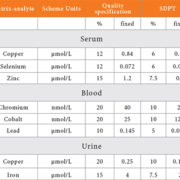
The quality specifications and their corresponding SDPT for some illustrative elements are shown in Table 1. These are presented as either a percentage of the target value or a fixed value depending on the concentration of the target value, and the one used is whichever is the greater. This allows for the increase in imprecision at low concentrations and conforms to a ‘funnel’ shape.
Scheme accreditation
Accreditation is fast becoming a preferred mechanism for delivering confidence in UK Healthcare and with the application of BS EN ISO 15189:2012 into Medical Laboratories and its requirement for the laboratories to seek confirmation for confidence in their results, the need for EQA schemes in the relevant fields of medical laboratories is ever increasing. Participation in a suitable scheme can be an effective way of demonstrating the laboratories’ technical competence. ISO 15189:2012 requires laboratories to evaluate their PT providers and a recognized acceptable basis of their evaluation recommended by the UK Accreditation Service (UKAS) is the participation in PT schemes with those providers that have been accredited to ISO/IEC 17043:2010. This International Standard specifies criteria and the general requirements for the competence of the PT providers and their responsibility for all tasks in the development and operation of the PT scheme. Some of the main differences introduced with ISO 17043 are summarized in Table 2.
Assessment of conformance
When conducting an assessment of a PT scheme for conformance to ISO 17043:2010, the assessors will take a holistic approach looking at the management system as a whole. The assessment will include areas such as scheme organization, scheme management, evaluation processes, technical competence and impartiality and integrity. Each separate area of the PT scheme are all interlinked and therefore when accreditation is granted by the accreditation body (UKAS in the UK) it will not be given on a single fact but the overall competence of the PT provider. Accreditation to ISO 17043:2010 can be a hard and thorough task for PT providers to undertake but once accreditation is granted it provides the necessary assurance of a competent and professional scheme which can provide an open and honest service whilst maintaining confidentiality for all those participants enrolled in the scheme.
Summary
The 2013 Barnes review into quality assurance in the NHS pathology services reinforced the importance of quality assurance and this article has discussed the implications of recently introduced ISO standards for clinical pathology departments (ISO 15189:2012) as well as for EQA scheme providers (ISO 17043:2010). This strengthens and standardizes the systems used in clinical testing laboratories and ensures high quality and comparable results for patient tests.
References
1. James D, Ames D, Lopez B, Still R, Simpson W, Twomey. External quality assessment: best practice. J Clin Pathol. 2014; doi: 10.1136/jclinpath-2013-20621.
2. Bullock DG. External quality assessment schemes for clinical chemistry in the United Kingdom. Ann Ist Super Sanita 1995; 31: 61–69.
3. Barnes I. Pathology Quality Assurance Review 2014. www.england.nhs.uk/wp-content/uploads/2014/01/path-qa-review.pdf
4. Thompson M, Ellison SLR, Wood R. The International Harmonized Protocol for the proficiency testing of analytical chemistry laboratories (IUPAC Technical Report). Pure Appl Chem. 2006; 78: 145–196.
5. Arnaud J, Weber J-P, Weykamp CW, Parsons PJ, Angerer J, Mairiaux E, Mazarrasa O, Valkonen S, Meditto A, Patriarca M, Taylor A. Quality specifications for the determination of copper, zinc, and selenium in human serum or plasma: evaluation of an approach based on biological and analytical variation. Clin Chem. 2008; 54(11): 1892-1899.
6. Summary of ISO 15189 additional requirements. CPA UK Ltd, 2012. http://www.ukas.com/Library/Services/CPA/Summary%20of%20Idifferences%20betwen%20ISO%2015189%20&%20CPA.pdf
The authors
Sarah-Jane Bainbridge and Chris F. Harrington* PhD
TEQAS, Trace Element Centre, Surrey Research Park, Guildford GU2 7YD, UK
*Corresponding author
E-mail: Chris.harrington1@nhs.net

Metabolic syndrome is characterized by a collection of disorders, making it difficult to diagnose and stage. This article describes the criteria used for diagnosis as well as discussing treatment strategies.
by Prof. Giuseppe Derosa and Dr Pamela Maffioli
Definition and grading
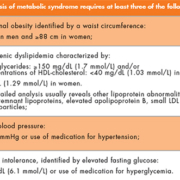
Metabolic syndrome is a combination of medical disorders that increases the risk of developing cardiovascular disease; it affects one in five people in the United States, and prevalence increases with age. There are different definitions of metabolic syndrome; according to the Adult Treatment Panel (ATP) III [1], metabolic syndrome requires the presence of at least three of the listed criteria (Table 1).
Recently insulin resistance has been cited to be associated with other metabolic risk factors and correlates with cardiovascular risk. The pro-inflammatory state has also been developed and used as a marker to predict coronary vascular diseases in metabolic syndrome: it is identified by higher C-reactive protein (CRP) levels, commonly present in people with metabolic syndrome. One cause of elevated CRP is obesity, because adipose tissue releases inflammatory cytokines that may elicit higher CRP levels. Also, the pro-thrombotic state has been recently considered for the definition of metabolic syndrome, characterized by increased plasma plasminogen activator inhibitor-1 (PAI-1) and fibrinogen. However, the ATP III panel did not find adequate evidence to recommend routine measurement of insulin-resistance, pro-inflammatory state (e.g. high-sensitivity C-reactive protein), or pro-thrombotic state (e.g. fibrinogen or PAI-1) in the diagnosis of the metabolic syndrome.
The World Health Organization (WHO) criteria, instead, emphasized insulin resistance as the major underlying risk factor and required evidence of insulin resistance for diagnosis (Table 2) [2, 3].
The International Diabetes Federation (IDF), instead, dropped the WHO requirement for insulin resistance, but made abdominal obesity necessary for the diagnosis, with particular emphasis on waist measurement as a simple screening tool [4]; the other criteria (Table 3) were essentially identical to those provided by ATP III [1].
The American Association of Clinical Endocrinologists (AACE) proposed a third set of clinical criteria for the insulin resistance syndrome [5]. These criteria appear to be a hybrid of those of the ATP III and WHO metabolic syndrome. However, no defined number of risk factors is specified and diagnosis is left to clinical judgment (Table 4).
Given that multiple definitions of the same disease can generate confusion among physicians, the major organizations made an attempt to unify the various criteria for the definition of metabolic syndrome [6]. It was agreed that there should not be an obligatory component, but that waist measurement would continue to be a useful preliminary screening tool. Three abnormal findings out of five would qualify a person for the metabolic syndrome according to the unified definition shown in Table 5.
As readers can easily understand, individuals with metabolic syndrome are at increased risk for coronary heart disease (CHD) [7]. In particular, in the absence of diabetes, the metabolic syndrome generally did not raise the 10-year risk for CHD by more than 20% [8], in particular 10-year risk generally ranged from 10% to 20% for men and did not exceed 10% for women. However, in the presence of diabetes, the risk increases. Obviously, patients fulfilling all or almost all of the metabolic syndrome potential criteria, have earlier and more serious organ damage, at both cardiac and vascular levels, than patients with only three out of five components of the metabolic syndrome definition.
Treatment
Despite the grade of metabolic syndrome, however, there are two general approaches to its treatment. The first strategy modifies root causes, overweight/obesity and physical inactivity, and their closely associated condition, insulin resistance. The second approach directly treats the metabolic risk factors such as atherogenic dyslipidemia, hypertension, the pro-thrombotic state, and underlying insulin resistance. ATP III recommended that obesity be the primary target of intervention for metabolic syndrome [9]. First-line therapy should be weight reduction; the current recommendations for the treatment of overweight and obese people include increased physical activity and reduced calorie intake [10, 11]. Pharmacological treatment with orlistat can be another option, and when it is not tolerated, bariatric surgery should be considered. However, surgery irreversibly changes the overall architecture of the digestive tract; in this regard, the endoscopic duodenal–jejunal bypass liner can be another option. It consists of a sheath that is inserted endoscopically through the mouth into the digestive tract of the obese patient creating a physical barrier between the intestinal wall and the food ingested. The device can be considered as an alternative to bariatric surgery because of the minimal adverse events and the possibility to easily remove the device when the desired weight has been achieved [12]. Weight loss is important because it lowers serum cholesterol and triglycerides, raises HDL-cholesterol, lowers blood pressure and glucose, and reduces insulin resistance. Published data further show that weight reduction can decrease serum levels of CRP and PAI-1 [13–16]. In addition, other lipid and non-lipid risk factors associated with the metabolic syndrome should be appropriately treated. Atherogenic dyslipidemia includes elevated serum triglycerides and apolipoprotein B, increased small LDL particles, and reduced level of HDL-cholesterol. The treatment strategy for atherogenic dyslipidemia in metabolic syndrome focuses on triglycerides. If triglycerides are ≥150 mg/dL and HDL-cholesterol is <40 mg/dL, a diagnosis of atherogenic dyslipidemia is made. If triglycerides are <200 mg/dL, and specific drug therapy to reduce triglyceride-rich lipoproteins is not indicated. However, if the patient has CHD or CHD risk equivalents, LDL-cholesterol goal has to be considered together with the use of a drug to raise HDL-cholesterol (fibrate). On the other hand, if triglycerides are 200–499 mg/dL, non-HDL cholesterol becomes a secondary target of therapy. Goals for non-HDL cholesterol are 30 mg/dL higher than those for LDL-cholesterol. First the LDL-cholesterol goal is attained, and if non-HDL remains elevated, additional therapy may be required to achieve the non-HDL goal. Alternative approaches for treatment of elevated non-HDL cholesterol that persists after the LDL goal has been achieved are (a) higher doses of statins, or (b) moderate doses of statins + triglyceride-lowering drug (fibrate). If triglycerides are very high (≥500 mg/dL), attention turns first to prevention of acute pancreatitis, which is more likely to occur when triglycerides are >1000 mg/dL. Triglyceride-lowering drugs (fibrate) become the first line therapy; although statins can be used to lower LDL-cholesterol to reach the LDL-cholesterol goal, in these patients it is often difficult (and unnecessary) to achieve a non-HDL cholesterol goal of only 30 mg/dL higher than for LDL-cholesterol [9].
Conclusion
In conclusion, metabolic syndrome increases cardiovascular risk; a multifactorial approach is necessary in order to prevent the development of the various components of this disease.
References
1. National Cholesterol Education Program (NCEP) Expert Panel on Detection, Evaluation, and Treatment of High Blood Cholesterol in Adults (Adult Treatment Panel III). Third report of the National Cholesterol Education Program (NCEP) expert panel on detection, evaluation, and treatment of high blood cholesterol in adults (Adult Treatment Panel III) final report. Circulation 2002; 106: 3143–3421.
2. Alberti KG, Zimmet PZ. Definition, diagnosis and classification of diabetes mellitus and its complications. Part 1: diagnosis and classification of diabetes mellitus: provisional report of a WHO consultation. Diabet Med. 1998; 15: 539–553.
3. World Health Organization. Definition, diagnosis and classification of diabetes mellitus and its complications: report of a WHO Consultation. Part 1: diagnosis and classification of diabetes mellitus. Geneva, Switzerland: World Health Organization; 1999. Available at: http:// whqlibdoc.who.int/hq/1999/WHO_NCD_NCS_99.2.pdf.
4. Alberti KG, Zimmet P, Shaw J; IDF Epidemiology Task Force Consensus Group. The metabolic syndrome: a new worldwide definition. Lancet 2005; 366: 1059–1062.
5. Einhorn D, Reaven GM, Cobin RH, Ford E, Ganda OP, Handelsman Y, Hellman R, Jellinger PS, Kendall D, Krauss RM, Neufeld ND, Petak SM, Rodbard HW, Seibel JA, Smith DA, Wilson PW. American College of Endocrinology position statement on the insulin resistance syndrome. Endocr Pract. 2003; 9: 237–252.
6. Alberti KG, Eckel RH, Grundy SM, Zimmet PZ, Cleeman JI, Donato KA, Fruchart JC, James WP, Loria CM, Smith SC Jr; International Diabetes Federation Task Force on Epidemiology and Prevention; Hational Heart, Lung, and Blood Institute; American Heart Association; World Heart Federation; International Atherosclerosis Society; International Association for the Study of Obesity. Harmonizing the metabolic syndrome: a joint interim statement of the International Diabetes Federation Task Force on Epidemiology and Prevention; National Heart, Lung, and Blood Institute; American Heart Association; World Heart Federation; International Atherosclerosis Society; and International Association for the Study of Obesity. Circulation 2009; 120 (16): 1640–1645.
7. Lakka HM, Laaksonen DE, Lakka TA, et al. The metabolic syndrome and total and cardiovascular disease mortality in middle-aged men. JAMA 2002; 288: 2709–2716.
8. Wilson PW, D’Agostino RB, Levy D, Belanger AM, Silbrshatz H, Kannel WB. Prediction of coronary heart disease using risk factor categories. Circulation 1998; 97: 1837–1847.
9. National Cholesterol Education Program (NCEP) Expert Panel on Detection, Evaluation, and Treatment of High Blood Cholesterol in Adults (Adult Treatment Panel III). Third Report of the National Cholesterol Education Program (NCEP) Expert Panel on Detection, Evaluation, and Treatment of High Blood Cholesterol in Adults (Adult Treatment Panel III) final report. Circulation. 2002; 106 (25): 3143–3421.
10. American Diabetes Association. Nutrition principles and recommendations in diabetes. Diabetes Care 2004; 27(S1): 36–46.
11. American Diabetes Association. Physical activity/exercise and diabetes. Diabetes Care 2004; 27(S1): 58–62.
12. Derosa G, Maffioli P. Possible therapies for obesity: focus on the available options for its treatment. Nutrition 2014; doi: 10.1016/j.nut.2014.09.005.
13. Dengel DR, Galecki AT, Hagberg JM, Pratley RE. The independent and combined effects of weight loss and aerobic exercise on blood pressure and oral glucose tolerance in older men. Am J Hypertens. 1998; 11: 1405–1412.
14. Ahmad F, Considine RV, Bauer TL, Ohannesian JP, Marco CC, Goldstein BJ. Improved sensitivity to insulin in obese subjects following weight loss is accompanied by reduced protein-tyrosine phosphatases in adipose tissue. Metabolism 1997; 46: 1140–1145.
15. Su HY, Sheu WH, Chin HM, Jeng CY, Chen YD, Reaven GM. Effect of weight loss on blood pressure and insulin resistance in normotensive and hypertensive obese individuals. Am J Hypertens. 1995; 8: 1067–1071.
16. Derosa G, Limas CP, Macías PC, Estrella A, Maffioli P. Dietary and nutraceutical approach to type 2 diabetes. Arch Med Sci. 2014; 10(2): 336–344.
The authors
Giuseppe Derosa1,2 MD, PhD, Pamela Maffioli1,3 MD
1Department of Internal Medicine and Therapeutics, University of Pavia, Fondazione IRCCS Policlinico S. Matteo, PAVIA, Italy.
2Center for the Study of Endocrine-Metabolic Pathophysiology and Clinical Research, University of Pavia, PAVIA, Italy.
3PhD School in Experimental Medicine, University of Pavia, PAVIA, Italy
E-mail: giuseppe.derosa@unipv.it

The analysis of histopathology slides is routinely performed in a manual, semi-quantitative manner which is open to observer variability. This article summarizes how technological advances in image analysis software allow the objective and standardized quantification of such samples while driving pathology towards a more personalized medicine.
by Dr Peter Caie
Introduction
The assessment of stained tissue sections by manual observation down a microscope has been, and still is, the steadfast manner in which histopathologists observe diseased tissue architecture in order to report on a patient’s prognosis. The tissue, for example the tumour microenvironment, is complex, highly heterogeneous and heterotypic. Although specific stains exist to aid in the identification and semi-quantification of histopathological features or biomarkers, the empirical field is subjective and therefore open to observer variability. In colorectal cancer (CRC) this can be the case for reporting items from the minimal core clinical data set such as differentiation [1] or promising histopathological features such as tumour budding [2] and lymphovascular invasion [3]. Similarly, in breast cancer discrepancies exist in the reproducibilty of manual reporting of human epidermal receptor protein-2 (HER2) by fluorescence in situ hybridization (FISH) or immunohistochemistry and the scoring of estrogen receptor (ER), both of which have predictive implications for patient treatment strategies [4]. Some reproducibility issues may be overcome through molecular pathology and the objective automated quantification of molecular biomarkers extracted from patient tissue samples. Modern methodology in quantitative pathology, spanning the classical ‘omics’ fields, has the ability to create a wealth of complex big data. Indeed, the field of molecular pathology has seen an explosion of big data specifically in translational genomics, transcriptomics and proteomics and which has the ability to map aberrant molecular pathways with direct impact on clinical decisions. The automated and standardized extraction of large data sets from tissue, has been termed ‘tissue datafication’. The automated quantification of molecular pathology, such as next-generation sequencing (NCS), gene-chip transcriptomics and reverse phase protein arrays may still suffer from reproducibility issues. These may occur from poor and small sample sizes or tissue artefacts which can stem from multiple sources: surgical ischemia, fixation and sample preparation. Standardization is therefore the key to accurate tissue datafication in order to report reproducible results which translate to the clinic. Tissue heterogeneity, both inter-patient and intra-patient, poses a very real problem for the effective personalized treatment decisions for patients. Tissue is often homogenized in order to extract the DNA, RNA or protein required for many molecular pathology techniques. In doing so the tissue heterogeneity (both subpopulation and spatial heterogeneity) is invariably lost and a single end-point is reported from the most dominant signal within the complex sample. A patient may therefore initially respond to a targeted treatment such as cetuximab in CRC but relapse within a set time period because of the existence of resistant KRAS and BRAF mutated subpopulations within the tumour [5]. Effective personalized combination therapy must rely on the capture of molecular end-points across the heterogeneous disease. Quantitative pathology must take into account the imperfection of the tissue sample as well as its heterogeneity in order to produce standardized and reproducible results. With the advent of digital pathology and associated image analysis solutions, histopathology has joined the ranks of molecular pathology with the ability to generate robust and standardized quantitative big data. Image analysis can also capture the heterogeneity across a patient sample by digitally segmenting the tumour subpopulations while extracting quantitative hierarchical morphological or biomarker data (Fig. 1). This review will discuss datafication of the tissue section through image analysis and its benefits as well as some of the challenges within the field.
Quantitative pathology through image analysis
Image analysis has been well established in order to quantify in vitro cell-based assays [6, 7] but has been slow to translate to molecular pathology and histopathology. This is in part due to the more complex and heterogeneous nature of the tissue as well as the need for extensive validation for clinical research compared with cell culture work. Advances in both whole-slide scanners and analysis software are now making the translation of image analysis to clinical research a reality. The use of standardized and automated image analysis solutions overcomes the reproducibility issues associated with manual semi-quantitative scoring of tissue as it negates observer variability. Image analysis has many uses within quantitative histopathology where it can report biomarker expression at sub-cellular resolution, quantify set histopathological features, identify heterogeneous subpopulations or the spatial heterogeneity of tumour and host interaction as well as identify novel histopathological features. Standardization is always the key to reproducible results and the field of image analysis is no different. Standardization and validation must be present throughout the entire process from tissue section cutting, mounting, labelling and digitizing. There are a growing number of whole-slide imagers on the market but it is paramount that these allow the use of identical image capture profiles and associated image quality across all the patient samples used in a study. Once the tissue is digitized in a standardized manner the image analysis algorithms themselves must be of a high enough quality in order to deal with the complex and heterogeneous tissue. Simplified algorithms have their use for basic biomarker quantification but may report false results or classifications owing to heterogeneous cell populations or inter-patient heterogeneity. Autofluorescence or non-specific staining in the sample may result in the reporting of false positives or inaccurate parameters when quantifying histopathological features in the complex tumour microenvironment. The image analysis workflow must therefore be robust enough to take into account or build in quality control steps to negate tissue labelling artefact [8].
Image analysis can quantify biomarkers
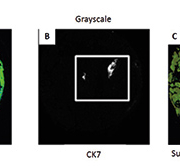
Whole-slide image analysis of molecular biomarkers labelled via antibodies or probes such as in FISH, avoids the contamination of signals from heterogeneous subpopulations that occur when the tissue is homogenized (Fig. 2A). This has advantages over destructive assays as the tissue structure, spatial orientation and sub-localization of molecules are retained [9] and heterogeneity can be compartmentalized and quantified while providing insight into cellular interactions within the tumour and its microenvironment. In order to quantify the biomarker in question the algorithm must segment the cells and nuclei within a region of interest, e.g. the tumour or stroma (Fig. 2B). This gives a further advantage to automated image analysis as morphometric and texture parameters may be captured and co-registered to the cell’s expression of the desired biomarker. This additional information can be used to identify a morphological surrogate to a biomarker or to capture a more definitive result that reduces false positives. When immunofluorescence is applied to biomarker quantification a continuous data capture across the dynamic range of intensity can be reported. The intensity of the fluorophore signal directly correlates to the level of protein expression and therefore returns a more accurate result than the classical 1+, 2+, 3+ manual scoring of chromogenic assays. This continuous data can be used to calculate robust cut-off points for positive and negative expression, or for patient categorization, in software such as X-Tile[ 10] or TMA Navigator [11].
Image analysis can quantify histopathological features
Image analysis may also be employed for the quantification of histopathological features. Observer variability occurs when manual semi-quantification of certain set histopathological features across tissue sections stained with hematoxylin and eosin (H&E) are reported [1–3]. Automated image analysis with the aid of specific labels negates observer variability and introduces standardization which is applicable across heterogeneous patient cohorts. In this manner tumour buds, lymphatic vessel density and invasion were co-registered upon the same tissue section and all quantified using the same algorithm across a CRC patient cohort [8]. This methodology allowed the computer-based algorithm to quantify small lymphatic vessels that were invaded by up to five cancer cells and which often go unreported because of their obscurity in H&E stained sections (Fig. 3). The results showed that these so called ‘occult lymphatic invasion’ events were independently predictive of poor prognosis in stage II CRC patients.
Similarly image analysis may be employed to quantify the host response to the tumour and not just the tumour itself; such as the lymphocytic infiltration within the cancer microenvironment. The immunoscore in CRC uses image analysis to quantify CD3+ and CD8+ lymphocytes at either the invasive front or the centre of the tumour section [12]. The automated quantification of lymphocytes and their spatial heterogeneity have also been shown to be prognostic in breast cancer [13].
Image analysis can identify novel features
Research pathologists apply their extensive experience to identify novel or significant prognostic features within the tissue section. Automated segmentation of digitized tissue sections now allows the quantification and standardization of complex and subtle morphological features or signatures in a continuous data capture manner. These features are extracted from every possible computer segmented object within the image. This image analysis methodology quantifies and profiles the complex phenome of the tumour’s microenvironment in an a priori ‘measure-everything big-data’ approach. Parameters extracted from single objects segmented across the digitized tissue section include morphometrics, texture and spatial heterogeneity. This is performed in an attempt to identify and quantify novel clinically relevant histopathological objects or predictive features from large exported image based multi-parametric big data sets. This emerging methodology has been termed ‘Tissue Phenomics’ by Gerd Binnig a Nobel Laureate and expert in image analysis. These objects may represent single or combinations of morphometrically quantifiable histological features, which may prove too subtle to observe by eye but which could prove prognostic or predictive. Beck et al. demonstrated this technique in breast cancer and found the stromal microenvironment to be specifically relevant to prognosis [14]. The big data created by image analysis approaches such as these needs to be distilled in order to identify the significant parameters which answer the clinical question being investigated. Bioinformatics must be applied which allows redundant parameters to be discarded and clinically relevant cut-offs to be applied to the remaining significant features. The reduced end result of a few significant parameters from potentially thousands of captured features should form a clinically translatable test which must then be validated across multiple international cohorts.
Future developments and challenges to the field
Technological advances in both image capture and analysis are beginning to see the translational of automated big data from the realm of academic research to clinical tests. Further technological advances such as co-registering of tissue sections and the ability to multiplex numerous biomarkers on a single tissue section will add greater value to the field. This multiplexed, next-generation immunohistochemistry [15] approach coupled with automated quantification may allow whole molecular pathways to be mapped at the single cell level. There are, however, challenges within the field. The automated quantification of pathology requires expensive whole-slide scanners as well as image analysis workstations alongside associated IT infrastructure to archive and keep secure the images and associated analysis. Fast Ethernet connections are also essential to recall these images in a time dependent manner. Another challenge is the acceptance of automated analysis within the clinical environment. This challenge will need to be overcome by validating the standardized and automated image analysis algorithms across multiple cohorts. The many applications of the field, such as objective, standardized and reproducible quantification of biomarkers, histopathological features and the profiling of a tumour’s heterogeneity hold advantages for both the pathologist and the patient. The negating of observer variability should increase the accuracy of patient results as should the application of clinically relevant categorical cut-offs across a continuous data set captured per patient. The capture of the molecular and histopathological prognostic and predictive signatures across heterogeneous subpopulations as the potential to turn traditional population based statistics into a more personalized one which informs the optimal treatment regimen for the individual patient.
References
1. Compton CC. Colorectal carcinoma: diagnostic, prognostic, and molecular features. Mod Pathol. 2003; 16: 376–388.
2. Puppa G, Senore C, Sheahan K, Vieth M, et al. Diagnostic reproducibility of tumour budding in colorectal cancer: a multicentre, multinational study using virtual microscopy. Histopathology 2012; 61: 562–575.
3. Harris EI, Lewin DN, Wang HL, Lauwers GY, et al. Lymphovascular invasion in colorectal cancer: an interobserver variability study. Am J Surg Pathol. 2008; 32:1816–1821.
4. Gown AM. Current issues in ER and HER2 testing by IHC in breast cancer. Mod Pathol. 2008; 21: S8–S15.
5. Baldus SE, Schaefer KL, Engers R, Hartleb D, et al. Prevalence and heterogeneity of KRAS, BRAF, and PIK3CA mutations in primary colorectal adenocarcinomas and their corresponding metastases. Clin Cancer Res. 2010; 16: 790–799.
6. Caie PD, Walls RE, Ingleston-Orme A, Daya S, et al. High-content phenotypic profiling of drug response signatures across distinct cancer cells. Mol Cancer Ther. 2010; 9: 1913–1926.
7. Gasparri F, Mariani M, Sola F, Galvani A. Quantification of the proliferation index of human dermal fibroblast cultures with the ArrayScan high-content screening reader. J Biomol Screen. 2004; 9: 232–243.
8. Caie PD, Turnbull AK, Farrington SM, Oniscu A, Harrison DJ. Quantification of tumour budding, lymphatic vessel density and invasion through image analysis in colorectal cancer. J Transl Med. 2014; 12: 156.
9. Kumar A, Rao A, Bhavani S, Newberg JY, Murphy RF. Automated analysis of immunohistochemistry images identifies candidate location biomarkers for cancers. Proc Natl Acad Sci U S A 2014; 111: 18249–18254.
10. Camp RL, Dolled-Filhart M, Rimm CL. X-tile: a new bio-informatics tool for biomarker assessment and outcome-based cut-point optimization. Clin Cancer Res. 2004; 10: 7252–7259.
11. Lubbock AL, Katz E, Harrison DJ, Overton IM. TMA Navigator: Network inference, patient stratification and survival analysis with tissue microarray data. Nucleic Acids Res. 2013; 41(Web Server issue): W562–568.
12. Galon J, Mlecnik B, Bindea G, Angell HK, et al. Towards the introduction of the Immunoscore in the classification of malignant tumors. J Pathol. 2013; 232: 199–209.
13. Yuan Y. Modelling the spatial heterogeneity and molecular correlates of lymphocytic infiltration in triple-negative breast cancer. J R Soc Interface 2015; 12: 20141153.
14. Beck AH, Sangoi AR, Leung S, Marinelli RJ, et al. Systematic analysis of breast cancer morphology uncovers stromal features associated with survival. Sci Transl Med. 2011; 3: 108ra113.
15. Rimm DL. Next-gen immunohistochemistry. Nat Methods 2014; 11: 381–383.
The author
Peter Caie PhD
School of Medicine, University of St Andrews, St Andrews KY16 9TF, UK
E-mail: Pdc5@st-andrews.ac.uk
June 2026

Prins Hendrikstraat 1
5611HH Eindhoven
The Netherlands
info@clinlabint.com
PanGlobal Media is not responsible for any error or omission that might occur in the electronic display of product or company data.