



The UK prime minister recently announced an investment package worth £300 million pounds for genomic research. This will include the sequencing of 100,000 genomes by 2017. The project, driven by Genomics England, will have a major impact on many areas of healthcare. Next-generation sequencing (NGS) technology is the method by which this sequencing will be achieved. NGS is currently being used in many healthcare services.
by Dr K. Gilmour
Background
Sequencing of the first human genome took 10 years to complete at a cost of USD300 billion. Although genomics has been recognized and hailed as the future of medicine, the costs associated with sequencing were considered prohibitive. Scientists proposed that large-scale projects would be required to decipher the secrets within each genome and how they interconnect with disease susceptibility, progression and treatment. In 2005 next-generation sequencing (NGS) became commercially available and in the 9 years since has transformed genomics beyond all recognition. Large-scale projects are now financially feasible and the potential of genomics and its link with healthcare can finally be realized.
Different NGS technologies are commercially available with Illumina and Ion torrent™ (Life Technology) probably considered the market leaders. Some NGS instruments can generate a terabase of sequence data in a single run. This equates to around 500 human genomes a week, each costing near to the USD1000 mark in reagents, a financial figure hailed as the ultimate goal. NGS is faster, more accurate and much more sensitive than traditional Sanger sequencing and will contribute directly to improvements in diagnostic medicine, personalized medicine and medical research.
An overview of NGS technology
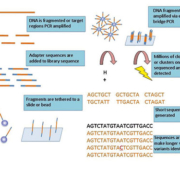
The details of the NGS workflow differ from technology to technology but the main principle remains the same. Extracted DNA from human, animal or microbe sources, is turned into a ‘library’ of DNA. This usually involves making the large pieces of DNA smaller (fragmenting) and then adding special handles known as ‘adapter DNA’ to the ends of each of the DNA fragments (Fig. 1). Adapters are merely small pieces of DNA of known sequence, which can be used to manipulate the fragments of DNA in order to sequence them. This manipulation includes tethering the individual fragments to either a slide or a tiny bead onto which the fragment is clonally amplified producing millions of DNA molecules all of the same sequence. The whole library of different clonally amplified fragments is then sequenced simultaneously. NGS sequencing chemistry produces a detectable ‘signal’. This signal is often fluorescent, so each time a single nucleotide (A, G, C or T) is incorporated into a DNA molecule a tiny amount of light is emitted and detected. The individual sequence produced is known as a ‘read’ and once the millions of small reads in the reaction have been generated they are aligned and assembled via computer algorithms into much longer sequences. Because millions of reads are generated even molecules of low abundance can be sampled making this technique extremely sensitive. Large sequencers able to generate hundreds of human genome sequences a week can be used in high-throughput research projects. Small, fast bench-top sequencers are also available and are highly suited to the demands of a clinical laboratory.
Human genomics
Identifying the genes involved in rare disorders can help doctors to diagnose and understand the underlying cause and nature of the disease and in turn determine what treatment a patient requires. Genomics offers a global look at all genes and how they interact instead of focusing on specific genes and biochemical pathways. Sequencing the exomes (the parts of the genome that encode genes) of only a few people with a rare genetic disorder can locate the mutated gene involved [1]. Genome-wide association studies (GWAS) are also allowing researchers to identify genes associated with many common diseases and so they help predict how likely people are to suffer from specific diseases in their life-time including such things as Parkinson’s disease [2].
NGS in non-invasive prenatal diagnosis
The sensitivity of NGS makes it ideal for non-invasive prenatal diagnosis of fetal aneuploidies. Maternal blood often contains cell-free fetal DNA at very low concentrations. NGS can be used to pick up anomalies in this DNA and so a simple blood test can replace invasive techniques [3].
Personalized medicine
The ability to stratify patient responses to drugs based on the individual’s genetic content has revolutionised how drug trials are performed and the speed at which new drugs reach the manufacturing stage. In cancer medicine, determining the genetic profile of a patient’s tumour can predict which drugs the tumour will potentially respond to thus reducing the likelihood of exposure to a drug with terrible side effects and no clinical benefit [4]. Currently, tumours of many cancer types are regularly tested for individual gene mutations, the results of which determine the treatment. As research reveals further biomarkers of drug response, multiple genes will need to be tested. It is no longer cost effective to test for each of these biomarkers individually and NGS offers the ability to sequence all or part of the tumour genome. The sensitivity of NGS allows mutations to be detected in tissue that contains only a small number of tumour cells. In most hospitals tumour tissue is formalin fixed and embedded in paraffin (FFPE) before being section and mounted on slides for histopathology review. This process can often lead to DNA damage, including fragmentation, rendering the DNA useless for some molecular techniques. As NGS relies on short DNA fragments, FFPE extracted DNA can still be used [5].
NGS in microbiology
In order to prescribe the correct anti-retroviral drugs, the resistance genes of the HIV strain a patient carries are often sequenced. Sanger sequencing would require 20% of the HIV viral population to contain the drug resistance gene in order to be detected. ‘Deep sequencing’ or sequencing the genome many times using NGS can detect resistance genes even if present in less than 1% of the viral population [6]. Outbreaks of dangerous Escherichia coli strains can now be detected early and spread prevented because of the speed at which the sequencing and reconstruction of the relationships of the isolated strains can be achieved [7]. NGS continues to grow as the technology of choice in microbiology.
Possible problems with NGS
With any new technology or venture on the scale of the Genomics England ‘100,000 Genomes Project’ there are potential problems.
Data analysis
The availability of small bench top sequencers means that even small diagnostic labs will be able to use NGS. Different NGS platforms generate different types of data with differing degrees of quality. Because of the inherent errors of enzymatic driven sequencing and the variability in the sequencing signals generated, a host of clever computer algorithms are needed to determine the likelihood of every base in the sequence being correct. The algorithms used to do these analyses are often sold packaged as software or analysis pipelines and are designed by in-house bioinformaticians. With the misinterpretation of sequence data carrying such dire consequences, robust data analysis is paramount. Illumina will be the technology used for all the sequence data generated by the 100,000 Genome Project so all data will likely be handled, processed and analysed in a very similar manner leading to reproducible and robust results. Other clinical laboratories entering into the sequencing revolution will be bombarded with options of technology as well as analysis methods. Clinical laboratories in most countries adhere to a set of rigorous assessments and standards and all clinical tests must be fully validated. Validation of NGS is complicated but best practice guidelines are aiming to simplify the process. ‘Targeted sequencing’, where panels of only a few to a few hundred clinically relevant genes are sequenced makes validation and analysis easier. Unifying analysis processes will remain an important consideration in the future.
Data storage and security
The 100, 000 Genome Project will produce petabytes of data, but even small diagnostic labs will be producing large quantities of data. Targeted gene panels will help but data storage could still be an issue. NGS generates sequence files and associated raw data files and deciding what should be stored and discarded is debated. The Royal College of Pathologists guidelines recommend that data and records pertaining to pathology tests be retained for a minimum of 25 years. DNA sequence is of a highly sensitive nature as even without patient details attached, it contains all the information to link it the individual from which it was taken. Secure storage of DNA sequence with compression and encryption is an important consideration. The Medical Research Council in the UK has earmarked £24 million pounds of the Genomics England funding for computing power, including analysis and secure storage.
Ethical implications
The mainstream adoption of any new technology has ethical implications. Whilst sequencing a patient’s tumour to determine a cancer treatment plan another gene mutation could be identified, unrelated to the condition being treated. In the UK all patients must consent to any germ-line genetic test. Genetic counselling is offered and patients are helped to come to terms with the implications of the findings. Serendipitous discoveries have the potential to create many ethical dilemmas for clinicians.
The future: a learning healthcare system
Although powerful, medical genomics has so far not had the major impact on healthcare predicted at the time of the release of the first human genome. The 100,000 Genome Project will change that. The project hopes to link up genomic data with the medical records for each patient. This means that research data can be actively generated as the project persists. Every person consenting to the project will be a walking research project from which we can learn important lessons about treatment and response [8]. This could transform our UK healthcare system into a learning environment like no other in the world. It will generate the evidence on which future improvements can be made. With strong collaborative partnerships set up with Illumina, the Wellcome Trust Sanger institute, Medical Research Council, and Cancer Research UK to name but a few, this the Genomics England project has the potential to be a great success.
So-called ‘third generation sequencing’ technology is already a reality and NGS sequencing chemistries are continually evolving and improving. Although it is unlikely in the very near future that every person in the country will have their genome sequenced, NGS is still contributing massively to healthcare improvements in genomics and other clinical diagnostic areas.
References
1. Boycott KM, Vanstone MR, Bulman DE, MacKenzie AE. Rare-disease genetics in the era of next-generation sequencing: discovery to translation. Nat Rev Genet. 2013; 14(10): 681–691.
2. Nalls MA, Pankratz N, Lill CM, Do CB, Hernandez DG, Saad M, DeStefano AL, Kara E, Bras J, et al. Large-scale meta-analysis of genome-wide association data identifies six new risk loci for Parkinson’s disease. Nat Genet. 2014; doi: 10.1038/ng.3043. [Epub ahead of print].
3. Nepomnyashchaya YN, Artemov AV, Roumiantsev SA, Roumyantsev AG, Zhavoronkov A. Non-invasive prenatal diagnostics of aneuploidy using next-generation DNA sequencing technologies, and clinical considerations. Clin Chem Lab Med. 2013; 51(6): 1141–1154.
4. Jackson SE, Chester JD. Personalised cancer medicine. Int J Cancer 2014; doi: 10.1002/ijc.28940. [Epub ahead of print].
5. Fairley JA, Gilmour K, Walsh K. Making the most of pathological specimens: molecular diagnosis in formalin-fixed, paraffin embedded tissue. Curr Drug Targets 2012; 13(12): 1475–1487.
6. Gibson RM, Schmotzer CL, Quiñones-Mateu ME. Next-generation sequencing to help monitor patients infected with HIV: ready for clinical use? Curr Infect Dis Rep. 2014; 16(4): 401.
7. Veenemans J, Overdevest IT, Snelders E, Willemsen I, Hendriks Y, Adesokan A,Doran G, Bruso S, Rolfe A, Pettersson A, Kluytmans JA. Next-generation sequencing for typing and detection of resistance genes: performance of a new commercial method during an outbreak of extended-spectrum-beta-lactamase-producing Escherichia coli. J Clin Microbiol. 2014; 52(7): 2454–2460.
8. Ginsburg G. Medical genomics: gather and use genetic data in health care. Nature 2014; 508(7497): 451–453.
The author
Katelyn Gilmour PhD
Molecular Pathology, Dept. Laboratory Medicine, Royal Infirmary of Edinburgh, Edinburgh EH16 4SA, UK
*Corresponding author
E-mail: Katelyn.gilmour@nhslothian.scot.nhs.uk
Kidney disease is one of the most life-threatening complications of diabetes and as the global incidence of diabetes soars, largely due to the dramatic increase in type 2 diabetes (T2DM), there will be a seismic shift in the number of patients in need of treatment through dialysis or transplant. Since up to 40% of diabetic patients develop symptoms of diabetic kidney disease (DKD), accurate and early identification of which patients are at the highest risk of progression from DKD to end stage renal disease (ESRD) will enable early initiation of protective renal therapies with subsequent reduction in healthcare costs and improved patient outcomes.
The cytokine TNFα, part of the Tumour Necrosis Factor (TNF) superfamily that plays a key role in homeostasis, has been implicated in the pathogenesis of diabetic kidney disease for over 20 years [1]. Researchers conclude that the elevated levels seen in diabetic patients could be the result of a TNFα driven dysregulation of the inflammatory/apoptotic pathways, which leads to kidney injury. The spotlight has recently shifted onto the TNF α receptors, Tumour Necrosis Factor Receptor 1 (TNFR1) and Tumour Necrosis Factor Receptor 2 (TNFR2), after a number of studies showed how elevated levels of these proteins were a predictor of progressive kidney disease.
In this article we look at the development of an In-Vitro Diagnostic test (IVD), the ‘EKF sTNFR1 Test’. This has been developed by EKF Diagnostics to measure levels of TNFR1 in plasma or serum in light of scientific evidence that this robust biomarker provides valuable prognostic information for diabetic patients at risk of progressive renal decline and ESRD.
The scientific evidence for the involvement of TNF receptors in kidney disease
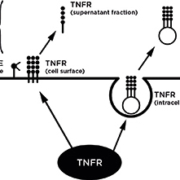
Cytokine TNFα is a transmembrane protein generated by many cells, including lipocytes, endothelial cells and leukocytes. After processing by TNFα-converting enzyme (TACE), the soluble form of TNFα is cleaved from transmembrane TNFα and mediates its biological activities through binding the receptors TNFR1 and TNFR2 either in their transmembrane or soluble forms to activate inflammatory and stress response pathways (Figure 1). Transmembrane TNF-α also binds to TNFR1 and TNFR2 so that both transmembrane and soluble TNF-α can mediate downstream signalling events (apoptosis, cell proliferation and cytokine production).
In 2009, at the Joslin Diabetes Center, USA (the world’s largest diabetes research centre and an affiliate of the Harvard Medical School), researchers found that the presence of circulating soluble TNF receptors (sTNFR1 and sTNFR2) were strongly correlated with decreased renal function, or glomerular filtration rate (GFR). The research threw up questions about why these soluble receptors were indicative of renal disease. Were they playing an active part in causing disease, or were they just the by-product of the process? Elevations in circulating sTNFR1 have previously been reported in a wide variety of clinical conditions including cancer, congestive heart failure, rheumatoid arthritis, neurological diseases and infection; so what was their role in kidney disease?
Interestingly, as Niewczas et al. [2] pointed out, the decline of renal function was occurring in T1DM patients who had normal albumin excretion levels. This gave a clue to the researchers that the concentrations of these receptors were not merely markers of the injury leading to ESRD but were also involved in the inception of renal function decline, playing a part in inflammation and apoptosis.
1n 2012, the Joslin researchers published two further studies, on Type 1 and Type 2 diabetes cohorts, [3,4] and found that TNF receptor levels were robust predictors of progressive decline in GFR. The results showed that Type 1 Diabetes patients who had normal renal function at the onset, but TNFR2 levels in the highest quartile had a 60% cumulative incidence of reaching stage 3 Chronic Kidney Disease (CKD) with subsequent risk of progression to ESRD (compared to less than 20% in the lowest three quartiles) (Figure 2).
Most significantly, in Type 2 Diabetes patients with evidence of overt Kidney Disease (as evidence by elevated levels of albumin excretion levels) at the onset of the study, those with levels of TNFR1 in the fourth quartile had an 80% chance of developing renal disease over the twelve year period (compared to less than 20% of those in the lower three quartiles) (Figure 3).
These studies revealed that elevated TNF Receptor levels were a robust predictor of progressive disease in both Type 1 diabetes and Type 2 diabetes. In both studies, the levels of the TNFα levels also tended to predict progressive kidney disease, but less strongly than the TNF receptor levels. The data provided further evidence that inflammation in general, and the TNFα signalling pathway in particular, plays a role in kidney disease.
TNF receptors (TNFR1 and TNFR2) and their role in the disease process
So how are circulating TNFR receptors associated with early GFR reduction and kidney damage? It is known that the 55 kD TNFR1 and 75 kD TNFR2 receptors play a crucial part in apoptosis, survival and key aspects of the inflammatory and immune response. TNFR1 is abundant on all nucleated cells, but TNFR2 expression is restricted mainly to endothelial cells and leukocytes although this varies between normal and diseased tissues. Circulating TNFR1 in the plasma is released by two mechanisms: the inducible cleavage of the 34 kD TNFR1 extracellular domain by an enzyme known as ADAM17 and the constitutive release of a full-length 55 kD TNFR1 within exosome-like vesicles.
It is not-well understood whether the same mechanisms apply to TNFR2 release, or how this process is regulated and the biology of the soluble forms remain largely undiscovered. What is understood, however, is that in plasma, TNF receptors block TNFα from binding its target cell surface receptor and can therefore cause a prolonged and delayed effect of the cytokine. How subsequent damage occurs to the kidney is not well known, however sTNFRs have been shown to be involved in tubulointerstitial fibrosis, the characteristic tissue scaring that leads to kidney disease [5].
Seeing into the future: a powerful diagnostic test for DKD
The diagnosis of DKD is conventionally made by assessment of overall GFR and the presence of kidney damage is ascertained by either kidney biopsy or other markers of kidney damage such as microalbuminuria or proteinuria (collectively known as albuminuria – a condition where protein is lost in the urine). GFR is estimated in clinical practice using readily calculated equations that adjust serum creatinine values (measurement of the by-product of muscle metabolism cleared by the kidneys) to age, sex, and ethnicity. However, while laboratory tests which assess both serum creatinine and albuminuria are inexpensive and readily available, these parameters have a low predictive value.
In 2012, EKF Diagnostics signed an exclusive licence agreement for novel kidney biomarker technology that focused on sTNFR1 and sTNFR2. This was developed by a team led by Prof. Andrzej Krolewski, MD, PhD, Head of Section on Genetics and Epidemiology at the Joslin Diabetes Center, Professor of Medicine at Harvard Medical School. Prof. Krowlewski was recently awarded the American Diabetes Association’s 2014 Kelly West Award in Epidemiology for services to diabetes epidemiology.
EKF Diagnostics has worked in partnership with Joslin and other key diabetes research centres to further validate the clinical utility of the markers and develop its first IVD product, the sTNFR1 test kit. The sTNFR1 test is an easy-to-use, microtitre plate ELISA-based assay requiring minimal training, which uses standard laboratory equipment and monoclonal antibodies to analyse just 50 µL of blood serum or plasma. Accurate and reliable results are obtained in a few hours and the standard assay format means that the test requires minimal training.
Julian Baines, Group Chief Executive Officer of EKF Diagnostics highlights the benefits of the test, “Our new sTNFR1 test adds greatly to information provided by standard clinical tests and provides valuable long term prognostic information for progressive renal decline to ESRD with the potential to streamline diabetic patient management, reduce time and costs and improve patient outcomes.”
Further evidence for the use of sTNFRs for the early prediction of DKD
A number of high impact studies published this year have independently corroborated the original research by the Joslin Diabetes Center. This newly published data from eminent European research centres in France (SURDIAGNE Study Group) and Finland (FinnDiane Study Group) add to the expanding data set underpinning the value of sTNFR1/2 biomarkers.
In the FinnDiane cohort study of over 400 subjects with Type 1 Diabetes followed over an average of 9 years, researchers found that, “Circulating levels of sTNFR1 were independently associated with incidence of ESRD. This association was reported as both significant and biologically plausible and demonstrated added value of sTNFR1 as a biomarker” [6].
In France, Saulnier et al. [7] found results from a study of n=522 Type 2 Diabetes patients with DKD were in accordance with published data, showing a deleterious effect of TNFR1 serum concentrations on renal outcomes.
Further evidence continues to mount for how TNFR biomarkers could be used to improve diabetic patient management and outcomes through early intervention. Lopes-Virella et al. [8] have shown in a large cohort of type 1 diabetes patients, followed for six years, how high levels of sTNFR1 and sTNFR2 can predict progression to macroalbuminuria in patients completely free of disease at baseline. TNFR biomarkers can also help doctors to stratify patients with early kidney disease according to the risk of ESRD. Skupien et al [9] show a strong association between a single baseline measurement of TNFR2 serum concentration combined with measurement of HbA1c levels and the future rate of renal function decline in T1DM patients with proteinuria. Identifying patients at highest risk can ensure they are enrolled in therapeutic programmes to delay the rapid decline in renal function.
The future management of kidney disease
Recent statistics show that 25-40% of patients with diabetes are at significant risk of progression to ESRD and cardiovascular morbidity and mortality [10]. The global increase in the incidence in Type 2 diabetes will put more pressure on healthcare systems making it imperative to identify patients at risk of progressive diabetic kidney disease, and initiate protective renal and cardiovascular therapies. Improving outcomes for chronic kidney disease in diabetic patients also has an important impact on mortality; for example, compared with non-diabetic individuals, patients with Type 1 diabetes have no increase in mortality in absence of DKD [11]. There is now solid evidence that sTNFR1 and sTNFR2 can be useful as biomarkers to predict the progression of kidney disease – and not just in patients with diabetes: recent research in Sweden has shown how circulating sTNFRs are relevant biomarkers for kidney damage and dysfunction in elderly individuals in a community setting [12].
Current treatments for CKD, such as control of hypertension and lifestyle interventions (weight loss, diet control, smoking cessation), can reduce the risk of progression to ESRD; therefore, an advanced knowledge of disease risk up to 10 years in advance that the sTNFR1 test kit can provide would be an extremely valuable tool to effectively prevent or reduce morbidity and mortality. Significantly, the sTNFR1 test is also contributing to the development of new targeted therapies aimed at delaying or halting decline in renal function.
References
1. Hasegawa G et al. Possible role of tumor necrosis factor and interleukin-1 in the development of diabetic nephropathy. Kidney Int. 1991; 40: 1007 –1012.
2. Niewczas MA et al. Serum concentrations of markers of TNF alpha and Fas-mediated pathways and renal function in nonproteinuric patients with type 1 diabetes. Clin J Am Soc Nephrol. 2009; 4: 62-70.
3. Ghoda T et al. Circulating TNF receptors 1 and 2 predict stage 3 CKD in Type 1 diabetes. J Am Soc Nephrol. 2012; 23: 516-24.
4. Niewczas MA et al. Circulating TNF receptors 1 and 2 predict ESRD in Type 2 Diabetes. J Am Soc Nephrol. 2012; 23: 507-15.
5. Guo G et al. Role of TNFR1 and TNFR2 receptors in tubulointerstitial fibrosis of obstructive nephropathy. Am J Physiol. 1999; 277: F766–F772.
6. Forsblom C et al. Added Value of Soluble Tumor Necrosis Factor Alpha Receptor-1 as a Biomarker of ESRD Risk in Patients With Type 1 Diabetes. Diabetes Care 2014; 37: 1–9.
7. Saulnier et al. Association of Serum Concentration of TNFR1 With All-Cause Mortality in Patients With Type 2 Diabetes and Chronic Kidney Disease: Follow-up of the SURDIAGENE Cohort Published online before print March 12, 2014, doi: 10.2337/dc13-2580.
8. Lopes-Virella MF et al. Baseline markers of inflammation are associated with progression to macroalbuminuria in type 1 diabetic subjects. Diabetes Care 2013; 36: 2317-23. doi: 10.2337/dc12-2521.
9. Skupien et al. Synergism between circulating tumor necrosis factor receptor 2 and HbA1c in determining renal decline during 5-18 years of follow-up in patients with type 1 diabetes and proteinuria. In press: Accepted for publication in Diabetes Care, April 22, 2014.
10. MacIsaac RJ. Markers of and Risk Factors for the Development and Progression of Diabetic Kidney Disease.American Journal of Kidney Diseases 2014; 63: S39–S62.
11. Orchard TJ et al. In the absence of renal disease, 20 year mortality risk in type 1 diabetes is comparable to that of the general population: a report from the Pittsburgh Epidemiology of Diabetes Complications Study. Diabetologia 2010; 53: 2312– 2319.
12. Carlsson AC et al. Soluble TNF Receptors and Kidney Dysfunction in the Elderly. J Am Soc Nephrol. 2014; 25: 1313-1320.
The author
Fergus Fleming
EKF Diagnostic Holdings Plc
Cardiff, UKwww.ekf-diagnostic.com
June 2026

Prins Hendrikstraat 1
5611HH Eindhoven
The Netherlands
info@clinlabint.com
PanGlobal Media is not responsible for any error or omission that might occur in the electronic display of product or company data.