



Following the trend in the US, pressure is mounting on big European hospital labs to consolidate their operations and boost workflow performances while at the same time making better use of their staff. The Aptio Automation system from Siemens Healthcare Diagnostics goes a long way to fulfill these objectives. Here we take a look at three specific examples of hospitals that have integrated the system and how it has helped both their clinical and operational effectiveness
National Health Service (NHS) Tayside
NHS Tayside serves a population of 480,000 through a network of 22 hospitals/infirmaries and 69 general-practice sites that rely on two laboratories. The Blood Sciences Laboratory is located at the 900-bed Ninewells Hospital in Dundee, one of the UK’s major teaching hospitals. Here, Aptio Automation merges the three former individual labs onto a single track, providing a full complement of pre- and post-analytical sample-processing modules along with comprehensive analytics. The efficiencies gained have empowered the Ninewells Hospital laboratory to take on 73% of the testing that historically had been conducted at the 260-bed Perth Royal Infirmary (PRI), enabling the smaller PRI laboratory to focus exclusively on acute admissions and inpatient testing. Ninewells now handles 100% of the general practice testing in the entire region.
“Underpinning all of our actions is the commitment to reduce waste and variation—and most of all, to prevent harm to patients,” says Dr. Bill Bartlett, Tayside’s joint clinical director of diagnostics. “Aptio Automation is helping us enable our vision of cost-effective, patient-focused care.”
Using Aptio Automation, Tayside now processes 7,000 tubes per day—a 20% increase in the workload of its main laboratory with no additional staff. Decreased TAT across the board drove a 61% improvement in the TAT for add-on tests – all with the high-quality results derived from the consistency and standardization enabled by automation. Increased capacity has even enabled Tayside to introduce new testing protocols that improve the quality of care and can save the hospital money.
While Tayside staff had ideas about what they needed and wanted to do, Siemens gave them data-driven information to guide their decision making. “Siemens’ expertise and consultative approach was paramount to the success of this project, from beginning to end,” says Dr. Bartlett. “We relied on them to evaluate workloads from a variety of locations and to recommend the optimal mix of instruments to support peak loads. They devised the final track layout for the new space and helped optimize the use of automation to best manage the workflow.”
Carlos Haya Hospital Malaga
Rising along Spain’s Mediterranean coast, Malaga has a population of approximately 600,000 through tourism, construction, and technology services. The healthcare needs of locals and tourists are met by the 1,100-bed Universitario Carlos Haya Hospital. Part of the government-run Andalusian Public Health System, Carlos Haya is a regional institution with four hospitals: the General Hospital, Civil Hospital, CARE Joseph Estrada, and Hospital Materno Infantil. The latter, in addition to providing healthcare for mothers and infants, houses the core laboratory that serves as the reference lab for all four hospitals. The Carlos Haya General Hospital also operates a biochemistry lab and its own emergency lab.
Hospitals in Spain are classified into three tiers, depending on the complexity of the diseases they can treat. Materno Infantil holds the highest rating, Tier 3, which means it handles the most difficult cases. Its core lab provides testing across a wide spectrum of disease states, performing seven million tests a year for approximately 660,000 patients.
The great leap forward occurred in 2012, with the implementation of Siemens Aptio Automation integrated with the Siemens CentraLink Data Management System. The solution delivers extensive automation, customization, and traceability, while eliminating the need for third-party informatics software.
“Aptio Automation strengthened our preanalytical and analytical phases, giving us more capacity, more versatility, and overall, more possibility,” says Dr. Manuel Rodriguez, who is responsible for biochemistry and automation labs. “CentraLink, meanwhile, makes it much easier to manage quality. It facilitates sample follow-up and management of repetitions. With CentraLink control over instrument alarms, we gain comprehensive information on the situation of a particular sample. What’s more, the solution is simple, problem-free, and easy to use.”
Hospital Clinic de Barcelona (CDB)
In 2001, the Hospital Clinic de Barcelona in Spain was among the first healthcare providers in the world to create an automated core laboratory. Today the laboratory is gaining even greater efficiencies with Aptio Automation connecting analytical systems across all four core laboratory disciplines: clinical chemistry, immunoassay, hematology, and hemostasis.
Over the course of its 13-year journey with Siemens, the laboratory has been able to consolidate instruments, integrate and automate STAT testing, reallocate staff to higher-value responsibilities, and save upwards of €600,000 in tube costs – all while increasing clinicians’ trust in the laboratory to support excellence in patient care.
In 2000, Hospital Clinic de Barcelona established the Biomedical Diagnostic Centre (CDB) to provide high-quality, comprehensive service in all areas of laboratory medicine and to be a reference for excellence in the related specialties. The CDB uses a client-focused model to optimize the use of resources while ensuring advanced technological development in healthcare and research.
The CDB is divided into five specialty departments and an operative core laboratory where high-volume automated testing is performed. In total, the CDB is composed of 100 staff specialists from the various laboratory areas along with 300 professionals representing pathology, biochemistry, molecular genetics, hemotherapy and hemostasis, immunology, and microbiology specialties.
The CDB recently began a project to create a Molecular Biology Core Laboratory, which will integrate the most frequently tested molecular technologies.
“Economic pressure is an ongoing fact of life,” says Dr. Aurea Mira, director of the CDB. “Lab automation allows us to improve workflows, optimize human and technology resources, and save money. It also raises hospital awareness of the lab as a provider of fast, accurate testing that supports good clinical outcomes.”




Liquid chromatography-mass spectrometry (LC-MS/MS) is one of the most promising diagnostic technologies in the in-vitro diagnostics industry, but it is not yet widely adopted by mainstream laboratories. An estimated five percent of LC-MS/MS instruments reside in truly clinical diagnostic settings while the majority are deployed in research and reference laboratories.
by Dr Bori Shushan
There are three compelling reasons for clinical labs to incorporate LC-MS/MS solutions into their routine operations:
Testing quality
Direct measurement technology is more specific and can address the limitations inherent to immunoassay testing. In particular, for small-molecule analyte testing, immunoassay results can be elevated due to the presence of metabolites from other drugs with core structures that are similar to the targeted analyte.
Workflow efficiency
As LC-MS/MS solutions are typically found in specialty laboratories, most clinical labs must outsource certain tests. Transporting samples adds complexity, cost, and time to the testing process. In drugs of abuse testing for example, patients are initially screened using immunoassay and then confirmed using LC-MS/MS. Having this capability within the laboratory can provide quick turnaround times for faster diagnosis and treatment for patients. LC-MS/MS methods can also test for multiple analytes simultaneously where immunoassay methods require a separate test for each analyte.
Meeting market demand
The market demand that LC-MS/MS addresses arises from trends such as the growing use of opiates and increasingly more stringent regulations. On-site LC-MS/MS testing can deliver both qualitative and quantitative accuracy and precision to help clinicians understand the actual consumption of abused and or prescription drugs.
While the reasons for adopting LC-MS/MS are compelling, there are logistical and regulatory barriers to entry rooted in the current state of LC-MS/MS automation. LC-MS/MS processes are automated to some degree, but the entire process must be improved. Workflows still require many manual steps, including sample preparation and data entry into LIMS systems. This takes labour and time and can lead to errors, all of which are unacceptable to regulatory bodies and laboratory managers. The industry recognizes that innovative solutions are required to address these analytical challenges; however, only when LC-MS/MS achieves the rigorous engineering and quality developments required for regulatory approval will more labs be allowed to adopt this gold standard technology and make a meaningful advancement in diagnostic testing.
Head and neck cancers (HNC) are a globally prevalent malignancy. Despite the efforts of reducing several known etiological factors such as smoking and drinking to lower the incidence of HNC at the population level, the incidence of oropharyngeal cancers (OPC) is on the rise. OPC is caused by human papillomavirus (HPV) and most prevalent in a younger age group. This review critically examines the epidemiology, biology and laboratory detection of OPC and provides future insights into combating this debilitating disease.
by X. C. Sun, P. Tran and Dr C. Punyadeera
Introduction
Head and neck cancers (HNC) are the sixth most prevalent neoplasm in the world with approximately 650 000 cases diagnosed each year [1–5]. Oral and oropharyngeal squamous cell carcinomas (OSCC & OPSCC) together constitute 90% of malignancies in the head and neck region. Several known traditional etiological factors such as tobacco and alcohol use are recognized in the development of these cancers. More recently, human papillomavirus (HPV) infection is recognized as an additional risk factor for the development of a subset of HNCs, mainly OPSCC [6].
In recent decades, the overall incidence of HNC caused by smoking and alcohol is on the decline. In contrast, HPV+ve OPSCC is on the rise. In developed countries such as the United States of America, the incidence of HPV+ve OPSCC is escalating, with predictions that more than 50% of patients will be HPV+ve by 2030 [7]. Interestingly, patients who are HPV+ve OPSCC are relatively younger than HPV-ve HNC patients and are therefore less likely to have any history of chronic or excessive alcohol or tobacco use but are more likely to engage in social habits that increase the likelihood of HPV transmission (oral sex). The clear distinction between HPV+ve OPSCC and HPV-ve cases provides multiple downstream inputs that can be applied into clinical treatment modalities. Conversely, it provides an exciting opportunity for the development of early diagnostic and screening methods to combat HNC at a population level through prevention strategies.
HPV+ve OPSCC are both clinically and biologically distinct tumour entities compared with HPV-ve counterparts. Classically, HPV+ve OPSCC patients present with a molecular profile that includes retinoblastoma (pRB) pathway inactivation, p53 degradation and p16 upregulation. Clinically, HPV+ve OPSCC patients often present with smaller primary tumours but more advanced nodal disease, similar rates of metastasis and differing patterns of metastasis [8, 9]. In addition, patients with HPV+ve tumours have better prognosis with 5-year survival at 75% (c.f. 25% for HPV-ve patients). There are a number of techniques for the diagnosis and detection of HPV+ve OPSCC, including histopathology, polymerase chain reaction (PCR) and immunohistochemistry (IHC).
Biology
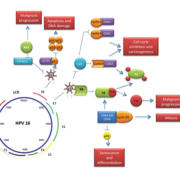
Upon integration of HPV DNA into the host genome, E6 and E7 viral oncoproteins activate a number of pathways within the host cell. The primary molecular target of E7 is the Rb protein and the E7 viral oncoprotein reprogrammes terminally differentiated epithelial cells to re-enter the cell cycle. E7 disrupts the Rb–E2F complex leading to the release of E2F, subsequently resulting in cyclin A and E activation and entry of the cell into S phase. As a consequence p16 is overexpressed [10, 11]. The E6-associated protein (E6-AP) is a specific ubiquitin-ligase that binds to the viral E6 oncoprotein, resulting in p53 degradation. E6 and E7 have also been shown to interfere with growth inhibitory cytokines [such as tumour necrosis factor-α (TNFα)] and to disrupt the mitochondrial apoptotic pathway by interfering with pro-apoptotic BAK and BAX [10]. E6 and E7 alone are insufficient to cause malignant cell transformation; however, due to their interference with proliferation checkpoints and apoptotic pathways, it is certain that the accumulation and damaged DNA, mitotic defects and integration of foreign DNA substantially increase the risk of malignant progression [10].
Detection methods
A number of diagnostic methods are currently available to evaluate whether a tumour is HPV+ve. These methods include both indirect as well as the direct methods; i.e. the latter includes the detection of HPV genomic DNA (gDNA). Besides clinical examination, current methods for the diagnosis of HPV status include tissue biopsy staining for p16 (indirect method). Biopsies may fail when tumours are too small to access or when they are located in hidden anatomical sites [10]. Other methods include the detection of HPV gDNA using PCR and in situ hybridization (ISH) as well as the detection of HPV viral transcripts E6 and E7 by PCR.
p16 detection by IHC is widely used in cervical cancer cases for the detection of HPV and it is being studied extensively in the field of HNC [12]. During immortalization of host cells, the E7 protein binds to Rb, resulting in the compensatory overexpression of the tumour suppressor gene p16 in HPV-infected tumour cells. Therefore, IHC detection of p16 is considered as an indirect surrogate marker to determine the presence of HPV [11]. However, there are pitfalls associated with p16 IHC detection. A number of studies have shown suboptimal specificity of IHC [10, 11]. As a consequence of the extreme anatomical and biological heterogeneity in HNC, elevation of p16 by non-viral materials may contribute to a considerable false positive rate [11]. Although it has been reported that p16-positive patients have a better prognosis and increased radiosensitivity, it has been advised that p16 detection by IHC alone cannot accurately identify HPV infection in HNC [12].
Detection of HPV gDNA is a widely used method because of its high sensitivity and cost-effectiveness. Common primers (MY09/MY11 and GP5/GP6) that target the L1 open reading frame are used to detect wide-spectrum HPV genotypes [11]. However, standard PCR primers do not allow detection of specific HPV genotypes [10]. In addition, the target L1 region could also be deleted upon viral integration, which may affect sensitivity of the test [10, 11]. Although, specific E6 and E7 primers have been designed and used to overcome L1 deletion, this method still lacks the ability to distinguish stromal/tumour and episomal/integrated DNA materials and is prone to contamination interference, which undermines the clinical usefulness [11].
The HPV DNA ISH method is unique because of its high specificity and the ability to be evaluated microscopically. The visible hybridization signals that precipitate within the nuclei help distinguish integrated and episomal DNA [11]. It is noteworthy that the presence of HPV DNA detected by ISH significantly correlates with p16 detection by IHC. [10]. However, ISH methods carry lower sensitivity compared to its excellent specificity [11]. The detection of HPV-16 viral transcripts E6 and E7 can highlight whether a patient is suffering from persistent infection – information that is clinically more valuable [12]. However, because of the fragile nature of mRNA, formalin-fixed paraffin-embedded (FFPE) specimens are often not ideal for RNA analysis and frozen fresh specimen are required [12].
The detection of HPV-specific IgG in serum is a useful biomarker to determine previous and current HPV infection status [13]. Serological biomarkers are not site-specific, and can arise due to HPV infections at sites other than the oral cavity, hence potentially affecting the specificity of the assay.
The effect of Gardasil™
From treatment and management of HPV-related diseases, the paradigm of HPV care has shifted to a preventative approach since the breakthrough introduction of the HPV vaccine, Gardasil™ (Merck & Co.). The biologic basis of HPV vaccines relies on the mechanism of neutralizing antibodies generated against virus-like particles (VLP), which consist of the major capsid protein HPV L1 [10]. The quadrivalent HPV 6/11/16/18 vaccine Gardasil™ was licensed by the FDA to prevent cervical, vaginal and vulvar infections in women in 2006 and genital warts in men in 2009, followed by the licensing of bivalent HPV 16/18 vaccine Cervarix™ (GlaxoSmithKline), in women in 2009 [14].
The benefits of HPV vaccination for the oral cavity include not only the biologically-plausible direct effect on oral infections, but also the sequential oral infection reduction following genital infection reduction, due to the sexually transmitted nature of HPV. To date, there are only a few studies examining the effect of Gardasil on oral infection; however, the results showed a promising outlook with high vaccine efficacy (as high as 93% in 4 years time, as recorded by randomized controlled trial in Costa Rica) [15] and reduced viral prevalence (oral prevalence dropped to 1.4% from 9.3% in the 15–23 age group in youth clinics in Sweden) [16].
Future outlook
As previously mentioned, HPV-related OPSCC involve a new segment of the population, which is distinctively different to the traditional HNC patient cohort caused by excessive smoking and drinking. This requires clinicians to conduct thorough cancer screening of at-risk groups. Such screening programmes should pay particular attention to cervical lymph nodes as some subtypes of HNC, especially OPSCC, involve hard-to-examine areas for clinical visual examination.
As a result of the sexually transmitted nature of HPV, some studies have advocated routine sexual behaviour education in clinical practice. However, this practice carries inherent controversies of sexual harassment and confidentiality [17]. Public awareness campaigns have been argued to be a more efficient preventative means in altering patients’ behaviour. Studies have shown that many oral health practitioners have limited knowledge with regards to HPV-related HNC and HPV vaccinations [17]. Professional bodies and health authorities are required to address this knowledge gap by establishing new clinical guidelines and using continuing educational methods, in order to effectively control the rising trend of HPV-related HNC.
Conclusion
All current diagnostic methods require excision of tumour tissue and this can be challenging when they are located in hidden sites. Efforts have been made globally to develop a less invasive, more cost-effective and clinically-relevant test. Serology tests that detect HPV-specific IgG have been shown to indicate viral presence and are linked with prognostication; however, this method inherently lacks site specificity [10]. Oral specimens, more specifically oral rinse, have shown promise in this field. Oral rinse samples not only are non-invasive and cost-effective, the proximity of collection to the area of interest ensures the localized sampling field. It is also important to note that shedding of normal cells into the oral cavity/oral pharynx may interfere with and/or decrease the HPV detection level [10]. OraRisk® HPV test, uses oral rinses for HPV detection [10]. Translational collaborations between scientists and clinicians have resulted in an assortment of tumour markers and diagnostic techniques for OPSCC. However, these need to be tested in clinical trials to determine the cost-effectiveness.
Acknowledgments
This work is supported by Garnett Passé & Rodney Williams Memorial Foundation and the Queensland Centre for Head and Neck Cancer funded by Atlantic Philanthropies, the Queensland Government and the Princess Alexandra Hospital.
References
1. Pfaffe T, Cooper-White J, Beyerlein P, Kostner K, Punyadeera C. Diagnostic potential of saliva: current state and future applications. Clin Chem. 2011; 57(5): 675–687.
2. Nagadia R, Pandit P, Coman WB, Cooper-White J, Punyadeera C. miRNAs in head and neck cancer revisited. Cell Oncol (Dordr). 2013; 36(1): 1–7.
3. Ovchinnikov DA, Cooper MA, Pandit P, Coman WB, Cooper-White JJ, Keith P, Wolvetang EJ, Slowey PD, Punyadeera C. Tumor-suppressor gene promoter hypermethylation in saliva of head and neck cancer patients. Transl Oncol. 2012; 5(5): 321–326.
4. Kulasinghe A, Perry C, Jovanovic L, Nelson C, Punyadeera C. Circulating tumour cells in metastatic head and neck cancers. Int J Cancer 2015; 136(11): 2515–2523.
5. Ovchinnikov DA, Wan Y, Coman WB, Pandit P, Cooper-White JJ, Herman JG, Punyadeera C. DNA methylation at the novel CpG sites in the promoter of MED15/PCQAP gene as a biomarker for head and neck cancers. Biomark Insights 2014; 9: 53–60.
6. Warnakulasuriya S. Global epidemiology of oral and oropharyngeal cancer. Oral Oncol. 2009; 45(4–5): 309–316.
7. Chaturvedi AK. Epidemiology and clinical aspects of HPV in head and neck cancers. Head Neck Pathol. 2012; 6(Suppl 1): S16–24.
8. Galbraith NS. Infectious disease control. BMJ 1990; 300(6738): 1477–1478.
9. Powell NG, Evans M. Human papillomavirus-associated head and neck cancer: oncogenic mechanisms, epidemiology and clinical behaviour. Diagn Histopathol. 2015; 21(2): 49–64.
10. Chai RC, Lambie D, Verma M, Punyadeera C. Current trends in the etiology and diagnosis of HPV-related head and neck cancers. Cancer Med. 2015; doi: 10.1002/cam4.424.
11. El-Naggar AK, Westra WH. p16 expression as a surrogate marker for HPV-related oropharyngeal carcinoma: a guide for interpretative relevance and consistency. Head Neck 2012; 34(4): 459–461.
12. Bussu F, et al. HPV infection in squamous cell carcinomas arising from different mucosal sites of the head and neck region. Is p16 immunohistochemistry a reliable surrogate marker? Br J Cancer 2013; 108(5): 1157–1162.
13. Castle PE, Shields T, Kirnbauer R, Manos MM, Burk RD, Glass AG, Scott DR, Sherman ME, Schiffman M. Sexual behavior, human papillomavirus type 16 (HPV 16) infection, and HPV 16 seropositivity. Sex Transm Dis. 2002; 29(3): 182–187.
14. Sanders AE, Slade GD, Patton LL. National prevalence of oral HPV infection and related risk factors in the U.S. adult population. Oral Dis. 2012; 18(5): 430–441.
15. Herrero R, Quint W, Hildesheim A, Gonzalez P, Struijk L, Katki HA, Porras C, Schiffman M, Rodriguez AC, Solomon D, Jimenez S, Schiller JT, Lowy DR, van Doorn LJ, Wacholder S, Kreimer AR; CVT Vaccine Group. Reduced prevalence of oral human papillomavirus (HPV) 4 years after bivalent HPV vaccination in a randomized clinical trial in Costa Rica. PLoS One 2013; 8(7): e68329.
16. Grün N, Ährlund-Richter A, Franzén J, Mirzaie L, Marions L, Ramqvist T, Dalianis T. Oral human papillomavirus (HPV) prevalence in youth and cervical HPV prevalence in women attending a youth clinic in Sweden, a follow up-study 2013-2014 after gradual introduction of public HPV vaccination. Infect Dis (Lond). 2015; 47(1): 57–61.
17. Daley E, DeBate R, Dodd V, Dyer K, Fuhrmann H, Helmy H, Smith SA. Exploring awareness, attitudes, and perceived role among oral health providers regarding HPV-related oral cancers. J Public Health Dent. 2011; 71(2): 136–142.
18. Salazar C, Calvopiña D, Punyadeera C. miRNAs in human papilloma virus associated oral and oropharyngeal squamous cell carcinomas. Expert Rev Mol Diagn. 2014; 14(8): 1033–1040.
The authors
Xiaohang Charles Sun1, Peter Tran1 and Chamindie Punyadeera*2 MSc, PhD
1School of Dentistry, The University of Queensland, Brisbane, Australia
2The Institute of Health and Biomedical Innovation, Queensland University of Technology, Brisbane, Australia.
*Corresponding author
E-mail: chamindie.punyadeera@qut.edu.au
Rapid diagnostic testing enables life-saving scale up of HIV diagnosis but is vulnerable to false positive results. Confirmation testing can be impractical or cost prohibitive in resource-limited settings. Retesting a diluted blood sample is evaluated and proposed, at a proof of concept level, as a simple cost-effective HIV confirmation methodology.
by Derryck Klarkowski and Dr Erwan Piriou
Background
The diagnosis of HIV infection in developed countries is based on initial screening for HIV antibodies, and if detected, confirmation with nucleic acid testing (NAT) [1]. This ensures high sensitivity and specificity. However, the current World Health Organization (WHO) HIV Testing Services Guidelines do not include specific confirmation testing for the diagnosis of HIV across large population groups in resource-limited settings [2]. Instead WHO recommends that diagnosis be made on the basis of rapid diagnostic tests (RDTs) only (or equivalent enzyme immune assay tests) requiring a minimum of two positive test results, using test devices from different sources, for a positive diagnosis (or three in low prevalence settings) [2]. Although the WHO strategy has enabled life-saving scale-up of HIV diagnosis the significant compromise is that without confirmation there is a risk that patients/clients can be falsely diagnosed as HIV positive [3]. This is also well demonstrated in the study discussed now in this article where the WHO RDT algorithm resulted in 6.8% false positive results (n = 2897). Incorrect HIV diagnosis can have devastating consequences for the individual as well as wasting often over-stretched resources required for treatment and care.
Médecins Sans Frontières (MSF) has strongly advocated for the use of serological HIV confirmation testing in resource-limited settings when it is impractical to perform NAT [4–6]. Commercial confirmation kits are available that detect individual specific HIV antibodies, such as gp40, gp120, p24 and p32, that significantly increase the accuracy of testing at a considerably lower cost than NAT, and this type of confirmation testing can be performed by non-specialized laboratories. The downside, however, is that commercial confirmation kits nevertheless add cost, albeit reduced compared to NAT, and logistical complications that restrict their widespread use.
To address this, MSF has recently published a simplified confirmation approach based on antibody dilution requiring only the use of an additional routinely used RDT test device [7]. This study has been published as a ‘proof of concept’ paper and requires further testing across different settings for refinement before it can be generally recommended.
Causes of false positive HIV antibody detection
As with all tests, false positive HIV RDTs can be caused by user error (clerical mistakes, incorrect test performance, misinterpretation and cross-contamination). Other causes for HIV tests include nonspecific IgG binding [2], cross reactivity [2, 5], contaminating proteins [2] and pseudo-antigens created during the manufacturing process [5]. However, a key additional vulnerability for HIV antibody detection testing is that all commonly available HIV RDTs share a common gp41 detection antigen. Therefore, a cross-reactive antibody interacting with gp41 will act as a pan-cross-reactive antibody across multiple test devices [5].
The WHO algorithm is based on the assumption that HIV RDTs that use different antigen preparations are independent and, therefore, by requiring two positive tests (at a prevalence >5%) before reporting HIV positivity, the algorithm assumes that the second test confirms the result of the initial screening test [2]. However, in one MSF published study 50% of false positive samples had cross-reactive anti-gp41 activity, identified by Western blot (WB), that was the likely cause of the double false positive reactions with the two independent RDTs used in the testing algorithm [4].
MSF has proposed that early-immune-response broad-specificity polyclonal B-lymphocyte antibodies are a potential source of HIV RDT cross-reactive interfering antibodies [4]. These antibodies are likely to have increased frequency and intensity in resource-limited settings because of the higher prevalence of concomitant infections [8–10]. Additionally, displaced populations and individuals, such as caused by oppression, conflict and famine, are likely to have a greater vulnerability to cross-reacting infections than stable communities.
Theoretical basis for dilution methodology
Confirmation by dilution is based on the established sensitive/less sensitive (S/LS) methodology developed to identify recent HIV infection for the purposes of incidence surveys [11–15]. This methodology is based on the principle that HIV antibody titres increase over a period of several months after initial infection. Samples are initially tested using a high sensitivity HIV enzyme immunoassay (EIA) and if reactive are then further tested by the same EIA assay but using a diluted sample and reduced incubation time to reduce sensitivity. Samples testing positive on the sensitive (S) test but negative on the less sensitive (LS) test are designated a recent infection. The methodology has been successfully extended to the use of RDTs [13–15]. Confirmation by dilution adapts the S/LS principle to differentiate between high titre true HIV antibodies and low titre cross-reacting antibodies.
One postulated source of cross-reactive antibodies are broad spectrum antibodies produced in the early immune response to a wide range of infectious disease antigens, and these antibodies can cause nonspecific cross reactivity in HIV serological testing [5]. In proposing dilution as a methodology to confirm HIV infection, we postulate that cross-reacting antibodies will have a low titre relative to specific HIV antibodies.
Cross-reacting antibodies can generally be expected to have low avidity, as has been demonstrated by work in blood donors [16] and in MSF findings [4]. This will result in weakly positive results that can provide an alert for the tester; however, manufacturers generally state that any positive test line independent of strength should be interpreted as a positive result. Cross-reactive antibodies can also have high avidity as shown in a previous MSF publication where 7 of 24 (29.2%) false positive samples (total sample size 229) had strongly positive test lines in two RDTs but had a low titre relative to the confirmed true HIV antibodies [4].
The use of dilution as a supplementary confirmatory test by using antibody relative titres has been previously reported by Urwijitaroon et al. [17]. In another study, 41 samples were found positive using the HIV RDT Determine™ and 23 were negative on dilution [18]. Only 1 of these 23 samples was confirmed to be positive using serological confirmation (INNO-LIA™).
Field testing
A study was conducted at two sites in north western Ethiopia in programmes covering both residents and seasonal migrant workers. Seasonal workers are transient and, as postulated by MSF, may potentially have a higher risk of false positivity caused by cross-reacting antibodies [4, 5].
The study recruited 2897 individuals, and 265 (9.1%) samples tested as positive using two HIV RDTs from different manufacturers and would have been interpreted as HIV positive using the WHO algorithm [2]. Of the negative samples, 229 (approximately every 11th sample) were selected as a control. All algorithm-positive and negative control samples were further tested by dilution in situ, and additional confirmation testing performed by reference laboratories using WB and NAT for indeterminate WB samples.
All negative samples were confirmed as negative (100% sensitivity). However, 18/265 (6.8%) algorithm ‘positive’ samples were identified as HIV negative (false positive) by either WB or NAT.
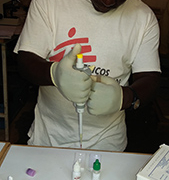
Dilution testing was performed by titrating the patient’s plasma using confirmed seronegative plasma from healthy blood donors using a micropipette. Ten microlitres of patient plasma was first diluted 1 : 10 in 90 µL of negative plasma followed by a serial 4-fold dilution from 1:40 to 1 : 10,240. Testing was performed using Determine™ HIV-1/2 (Alere Laboratories, Japan) following manufacturer’s instructions. Tests were interpreted as positive if there was any colouration of the test line and the highest dilution that gave a positive result was recorded. Where the lowest dilution (1 : 10) was negative, the sample was reported as negative.
Findings and conclusion
In this study, based on a specific population group over a specific time period, repeating the RDT test using the sample diluted 1 : 160 identified all false positive results and misidentified one true positive (see Table 1). However, there is a safety net that any sample with a reactive HIV RDT test that is not resolved as a true positive at the time of testing is not reported as negative but as inconclusive [2]. The patient/client is advised that testing has been inconclusive and testing should be repeated at a later time; WHO recommends retesting after 14 days. This allows time for true HIV antibodies to increase in titre.
The discriminatory threshold dilution may vary between different settings. In an earlier MSF study, a dilution of 1 : 1000 differentiated 229 true HIV positive from 27 HIV false positive samples (unpublished data, for further details see Klarkowski et al. [4]).
One strength of this MSF study is that NAT testing was available to resolve indeterminate WB samples which made it possible to rule out early seroconversion as a potential cause of false positive results. The limitation is that the findings are restricted to a single cohort with a single RDT and should be viewed as a ‘proof of concept’. More experience is needed in different settings and by different workers before the dilution methodology can be considered for potential scale up. It is proposed that the methodology has potential for use as a supplementary test in a confirmatory algorithm, whereby double positive RDT results are tested by dilution, with positive results above a determined threshold confirming HIV infection. Dilution results below the threshold would require further testing, such as repeat testing at a later time or NAT, to rule out false negative results either due to seroconversion or misclassification by the lower sensitivity dilution test.
References
1. Centers for Disease Control and Prevention and Association of Public Health Laboratories. Laboratory testing for the diagnosis of HIV infection: updated recommendations. 2014; http://stacks.cdc.gov/view/cdc/23447.
2. World Health Organization. Consolidated guidelines on HIV testing services. 2015; http://www.who.int/hiv/pub/guidelines/hiv-testing-services/en/.
3. Johnson C, Fonner V, Sands A, Tsui S, Ford N, Wong V, Obermeyer C, Baggaley R. Annex 14 A report on the misdiagnosis of HIV status. In: World Health Organization. Consolidated Guidelines on HIV Testing Services. 2015; http://www.who.int/hiv/pub/guidelines/hiv-testing-services/en/.
4. Klarkowski DB, Wazome JM, Lokuge KM, Shanks L, Mills CF, O’Brien DP. The evaluation of a rapid in situ HIV confirmation test in a programme with a high failure rate of the WHO HIV two-test diagnostic algorithm. PLoS One 2009; 4(2): e4351.
5. Klarkowski D, O’Brien DP, Shanks L, Singh KP. Causes of false positive HIV rapid diagnostic test results. Expert Rev Anti-infect Ther. 2013; 12(1): 49-62
6. Shanks L, Klarkowski D, O’Brien DP. False positive HIV diagnoses in resource limited settings: operational lessons learned for HIV programmes. PLoS ONE 2013; 8(3): e59906.
7. Shanks L, Siddiqui MR, Abebe A, Piriou E, Pearce N, Ariti C, Masiga J, Muluneh L, Wazome J, Ritmeijer K, Klarkowski D. Dilution testing using rapid diagnostic tests in a HIV diagnostic algorithm: a novel alternative for confirmation testing in resource limited settings. Virol J. 2015; 12: 75.DOI 10.1186/s12985-015-0306-4
8. Messele T, Abdulkadir M, Fontanet AL, Petros B, Hamann D, Koot M, Roos MT, Schellekens PT, Miedema F, Rinke de Wit TF. Reduced naive and increased activated CD4 and CD8 cells in healthy adult Ethiopians compared with their Dutch counterparts. Clin Exp Immunol. 1999; 115(3): 443–50.
9. Clerici M, Butto S, Lukwiya M, Saresella M, Declich S, Trabattoni D, Pastori C, Piconi S, Fracasso C, Fabiani M, Ferrante P, Rizzardini G, Lopalco L. Immune activation in Africa is environmentally-driven and is associated with upregulation of CCR5. Italian-Ugandan AIDS Project. AIDS 2000; 14(14): 2083–2092.
10. Clerici M, Declich S, Rizzardini G. African enigma: key player in human immunodeficiency virus pathogenesis in developing countries? Clin Diagn Lab Immunol. 2001; 8(5): 864–866.
11. World Health Organization Technical Working Group on HIV Incidence Assays. When and how to use assays for recent infection to estimate HIV incidence at a population level. 2011; http://www.who.int/diagnostics_laboratory/hiv_incidence_may13_final.pdf 2011.
12. Constantine NT, Sill AM, Jack N, Kreisel K, Edwards J, Cafarella T, Smith H, Bartholomew C, Cleghorn FR, Blattner WA. Improved classification of recent HIV-1 infection by employing a two-stage sensitive/less-sensitive test strategy. J Acquir Immune Defic Syndr. 2003; 32: 94–103.
13. Soroka SD, Granade TC, Candal D, Parekh BS. Modification of rapid human immunodeficiency virus (HIV) antibody assay protocols for detecting recent HIV seroconversion. Clin Diagn Lab Immunol. 2005; 12: 918–21.
14. Kshatriya R, Cachafeiro AA, Kerr RJS, Nelson JA, Fiscus SA. Comparison of two rapid human immunodeficiency virus (HIV) assays, Determine™ HIV-1/2 and OraQuick Advance Rapid HIV-1/2, for detection of recent HIV seroconversion. J Clin Microbiol. 2008; 46(10): 3482–3483.
15. Girardi SB, Barreto AM, Barreto CC, Proietti AB, Carvalho SM, Loureiro P, Sabino EC. Evaluation of rapid tests for human immunodeficiency virus as a tool to detect recent seroconversion. Braz J Infect Dis. 2012; 16(5): 452–456.
16. Bouillon M, Aubin E, Roberge C, Bazin R, Lemieux R. Reduced frequency of blood donors with false-positive HIV-1 and -2 antibody EIA reactivity after elution of low-affinity nonspecific natural antibodies. Transfusion 2002; 42(8): 1046–1052.
17. Urwijitaroon Y, Barusrux S, Romphruk A, Puapairoj C, Thongkrajai P. Anti-HIV Antibody Titer: An Alternative Supplementary Test for Diagnosis of HIV-1 Infection. Asian Pac J Allergy Immunol. 1997; 15:193–198.
18. Duedu KO, Hayford AA and Sagoe KW. Misclassification of recent HIV-1 seroconversion in sub-Saharan Africa using the sensitive/less sensitive technique. Virol J. 2011; 8: 176.
The authors
Derryck Klarkowski* MAppSc, Erwan Piriou PhD
Médecins Sans Frontières, Amsterdam, The Netherlands
*Corresponding author
E-mail: derryck.klarkowski@gmail.com
June 2026

Prins Hendrikstraat 1
5611HH Eindhoven
The Netherlands
info@clinlabint.com
PanGlobal Media is not responsible for any error or omission that might occur in the electronic display of product or company data.