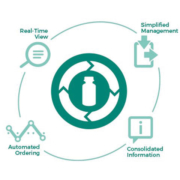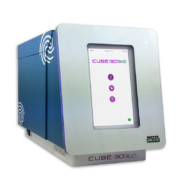
Digitization has revolutionized connectivity by increasing productivity and improving lab efficiency like never before. Thanks to connected devices, technical teams no longer need to remain in front of their workstations, or even in the laboratory. The secure Connect.One network architecture allows laboratories to benefit from remote monitoring of their automated analysers, meaning Stago can check they are operating correctly and diagnose and analyse any malfunctions as part of a proactive approach. Designed to meet international data privacy and security guidelines, Connect.One will become a cornerstone for integrating new applications. Systems connected to Connect.One can also send QC results to My Expert QC (Stago’s externalized IQC platform), as well as activity statistics to simplify the management of “Cost Per Reportable Results” contracts. Connect.One can track analyser performance and send notifications in case of problems while downloading software improvements from a secure infrastructure. Using their connected devices, laboratories can increase productivity, efficiency and operational flexibility by receiving a higher level of support and expertise from Stago.
PCSK9 protein (proprotein convertase subtilisin/kexin type 9) plays a major regulatory role in cholesterol homeostasis, mainly by reducing LDL-Receptor levels on the surface of hepatic cells. Reduced LDLR levels result in decreased metabolism of LDL-particles, which could lead to hypercholesterolemia. This activity made PCSK9 a novel target in cholesterol lowering therapy. The PCSK9 inhibitors (PSK9i) are a newer class of injectable drugs that have been shown to dramatically lower LDL cholesterol levels, by up to 60% when combined with a statin. PCSK9 inhibitors are monoclonal antibodies (MAbs), a type of biologic drug. PCSK9 has a key impact not only on circulating LDL-Cholesterol level but also on cardiovascular risk and atherosclerotic process. The determination of PCSK9 levels is obviously of great diagnostic as well as treatment monitoring importance. Applications include atherosclerosis, cardiovascular disease, lipid metabolism and diabetology. BioVendor’s Human PCSK9 ELISA (RD191473200R) is a sandwich enzyme immunoassay for the quantitative measurement of PCSK9 in human serum and plasma samples (EDTA, citrate, heparin) using a 96-well assay format. The total assay time is less than 3.5 hours. Standard is recombinant protein and components of the kit are provided ready to use, concentrated or lyophilized. Limit of detection is 9 pg/ml.
The new Lactate Scout 4 hand-held lactate analyser for fast and accurate sports performance monitoring is designed for use in the field as a training companion for individuals or sports teams. For both sports training and personal fitness, measuring lactate helps to define workout intensities for maximum fat catabolism, increases in endurance, and avoiding critical over-exhaustion. Use of Lactate Scout 4 will help coaches and athletes to rapidly determine optimum training programs, define training zones, and avoid inefficient training regimes. The new analyser is ideal for field training since it is pocket-sized, weighing just 60g, with simple push-button navigation and an e-paper screen that can be read easily in any light conditions. Lactate Scout 4 is quick and simple to use, requiring no calibration and returns a result in 10 seconds with just a 0.2 µl capillary blood sample. Functionality of the Lactate Scout 4 is further enhanced by Bluetooth connectivity to all major brands of heart rate monitor. Heart rate data can now be collected and collated using the step test function to provide in-depth analysis of performance. Up to 500 lactate results can also be stored on the device, all of which are compensated for the influence of low and high hematocrit levels. Adding to its practicality and reliability, the Lactate Scout 4 can undertake 1,000 tests using just two CR2450 lithium batteries. Read more
https://clinlabint.com/wp-content/uploads/sites/2/2020/08/C398_EKF.png5998003wmediahttps://clinlabint.com/wp-content/uploads/sites/2/2020/06/clinlab-logo.png3wmedia2020-08-26 09:17:222021-01-08 11:21:01Pocket-sized lactate analyser for sports performance monitoring
European CE marking has been confirmed for Beckman Coulter’s Early Sepsis Indicator, a hematology-based solution designed to alert emergency department clinicians to the possibility of sepsis or risk of developing sepsis. The first early sepsis warning solution to be offered as part of a routine CBC with differential test, the Early Sepsis Indicator gives physicians a rapid and simple tool that can aid in the fight against sepsis. The new marker will be commercially available on the recently launched DxH 900 hematology analyser. Sepsis is an often-deadly condition that affects 26 million people worldwide every year and is increasing at a rate of 1.5% annually. Timely and accurate detection solutions in the acute-care setting are key components to stopping the progression of sepsis, as patients with less severe sepsis can progress to severe sepsis or septic shock within 72 hours. Up to half of patients with sepsis die. In addition to the human toll, this global crisis places a significant clinical and economic burden on the healthcare system. A clear link exists between the timeliness of treatment and the possibility of death. When antibiotics are administered early to patients with septic shock, the likelihood of death is decreased by 7.6% per hour. Because emergency department personnel are often on the front line of care for people facing critical conditions, giving them a simple and easy tool for detecting sepsis can help make significant strides against this prevailing threat. The fact that this early warning indicator is part of a routine blood test means that clinicians receive results rapidly, with no additional workflow burden to the laboratory or emergency department. The Early Sepsis Indicator uses the DxH 900 hematology analyser’s Coulter technology, which characterizes cells in their nearnative states. The system’s powerful VCS 360 technology can uniquely detect morphological changes in monocytes – cells of the innate immune system that provide a first line of defense against infections. Monocytes play a role in the dysregulated immune response to sepsis, and identifying morphological changes provides insight into possible sepsis earlier than other indicators. The company plans to submit a 510(k) for the Early Sepsis Indicator to the U.S. FDA in the near future. After receiving 510(k) clearance, the Early Sepsis Indicator will be released to the U.S. market. Read more
https://clinlabint.com/wp-content/uploads/sites/2/2020/08/C367_Beckman.jpg5338003wmediahttps://clinlabint.com/wp-content/uploads/sites/2/2020/06/clinlab-logo.png3wmedia2020-08-26 09:17:222021-01-08 11:21:12Beckman Coulter achieves CE Mark for its Early Sepsis Indicator
LBM Bioesterel in France, Arcispedale S. Maria Nuova in Italy and Friarage Hospital in the United Kingdom are among the first laboratories to install the Atellica® Solution immunoassay and clinical chemistry analysers. The trending motivators for installing the latest innovation from Siemens Healthineers include the unprecedented flexibility to automate redundant and complex procedures to simplify testing workflows and to grow patient testing capacity. This is expected to enable the laboratories to keep up with rising demands and decreasing reimbursement rates—all in an effort to achieve long-term sustainability in a value-based healthcare delivery model. “Our company is facing a significant reduction in margins due to lower social security payments,” explained Dr. Pierre-Antoine Flé, Associate Director at LBM Bioesterel in France. “In order to limit this impact while increasing our production capacity, our company has chosen the Atellica Solution, which responds particularly to our future needs.” With the flexibility to combine up to 10 components into more than 300 customizable configurations, to operate either as a standalone system or connected to Aptio® Automation and to integrate seamlessly with other disciplines in a total laboratory system, the Atellica Solution offers scalability for long-term growth. LBM Bioesterel anticipates it will be able to redeploy up to 30 percent of its staff. This is because of the ability to manage the configuration with a single operator and because of features such as automatic quality control (QC) and calibration with on-board refrigeration in the Atellica® Sample Handler—an integrated component of the Atellica Solution. Laboratories can program the Atellica Solution to automatically deploy the right materials at the right time to specific analysers to perform QC and calibration without operator intervention. This function significantly streamlines otherwise complex procedural workflows and lessens hands-on time for the operator, while eliminating unnecessary waste and decreasing the potential for human error. Friarage Hospital in the United Kingdom, a member of the South Tees Hospitals NHS Foundation Trust, was drawn to automatic QC and calibration and to other proactive features designed to increase efficiency in the lab. “We are very pleased with the support from the Siemens Healthineers teams both in setting up the new instrumentation and in the handling of verification, validation and global study protocols,” said Karl Hubbert, Services Manager Pathology, at Friarage Hospital. “We are looking forward to reduced maintenance and intervention elements, on-board QC stability and programming of QC intervals, as well as sorting of samples post analytics.” Designed with algorithms to monitor system operations, the Atellica Solution can automatically initiate alerts and recommendations for corrective actions to maximize workflow. A system check and recovery procedure is included in the daily maintenance and also available on demand. This feature increases productivity, minimizes downtime, reduces the need for sample reruns and optimizes consumables and reagent usage. For Dr. Luigi Vecchia, Director of Clinical Chemistry and Endocrinology Laboratory at Arcispedale S. Maria Nuova in Italy, independent sample management and quality control are priorities. “The Atellica Solution—with its advanced technical features from sample transportation to real prioritization of urgent samples, and from reagent management to calibration and quality control management—takes us to the future of the laboratory. We are proud to be among the first to test it,” said Dr. Vecchia. The patented, bi-directional, magnetic sample-transport technology and multi-camera vision system for intelligent sample routing provide independent control over every sample, whether routine or STAT (emergency). The immunoassay analyser uses a dual incubation ring design, rigorous temperature and humidity controls of the reaction environment, powerful magnets for relevant particle separation and robust washing protocols to deliver high throughput, while contributing to rapid and high-precision results.
www.healthcare.siemens.com/integrated-chemistry/systems/atellica-solution-analyzers Read more
https://clinlabint.com/wp-content/uploads/sites/2/2020/08/C322_Siemens_01.jpg6008003wmediahttps://clinlabint.com/wp-content/uploads/sites/2/2020/06/clinlab-logo.png3wmedia2020-08-26 09:17:222021-01-08 11:21:20Laboratories across Europe evaluate and adopt the Atellica Solution from Siemens Healthineers
A large portfolio of single colour CE-IVD and ASR (analyte-specific reagent) conjugated antibodies is now available from Beckman Coulter Life Sciences. With the launch of two Kappa and two Lambda polyclonal antibodies in 2018, the company has introduced more than 30 additional CE-IVD reagents and 10 new ASRs in the last couple of years. The entire portfolio of single colour antibodies for flow cytometry is manufactured under Good Manufacturing Practices (GMP). High standard, single colour reagents are at the heart of robust and consistent lab-developed tests (LDTs). Even so, establishing robust, accurate and reproducible assays can be a challenge. Several studies show the inadequacy of non-clinical-grade reagents because of inferior performance and problems around reproducibility. A recent study published in Nature showed that monoclonal antibodies were among the most commonly used tools in life sciences but also the greatest source of false findings. Poor quality conjugated antibodies, their specifications and performance can significantly distort data interpretation, in particular when analysing abnormal populations. To be able to routinely run Lab Developed Tests (LDTs), a high-end lab needs skilled staff with significant expertise in data interpretation. However, even with the right staff and robust procedures, poor reagent quality often leads to failed quality controls, challenges in interpreting data – and can even lead to false results. The list of potential pitfalls associated with poor antibodies is long and can have a negative impact on a study’s outcome. This is because of lack of reproducibility across lots, poor conjugation quality, low binding affinity, and non-specific staining. Read more
https://clinlabint.com/wp-content/uploads/sites/2/2020/08/C425_Beckman-Coulter-Clin-Flow_Single-Color-Antibodies.jpg5338003wmediahttps://clinlabint.com/wp-content/uploads/sites/2/2020/06/clinlab-logo.png3wmedia2020-08-26 09:17:222021-01-08 11:20:56Single colour CE-IVD and ASRs in flow cytometry
Flow cytometric immunophenotyping is a rapidly evolving IVD technology which is establishing a place in the routine lab for the assessment of leukemia and certain lymphomas. At the heart of the test is a panel of antibodies that can detect markers or antigens on the cells. However, this depends on the accurate interpretation of complex patterns, determining whether a pattern is consistent (normal) or inconsistent with an expected population. To aid in this complex pattern recognition, Beckman Coulter has developed a unique educational resource, the ClearLLab CaseBook. Users can also download the data to continue their diagnostic practice. The casebook is based on the ClearLLab 5C reagents which were the first preformulated, IVD antibody cocktails for leukemia and lymphoma immunophenotyping to be granted de novo authorization by the Food and Drug Administration (FDA) for in vitro diagnostic use. ClearLLab reagents simplify and standardize the process removing one of the limitations to flow cytometry gaining its place in the routine lab, and eliminating the need for a lab to manually prepare and design panels, a time- consuming process. The ClearLLab 5C Casebook provides the clinical history of 16 patients, illustrating the progressive analysis of flow cytometric immunophenotyping data by means of numerous colour-coded illustrated scatter plots. These first assess and then assign the cells before giving a detailed characterization of the aberrant population according to the presence or absence of antigens. It includes patients with characteristic findings typical of various lymphoid and myeloid neoplasms as well as those with clinical and/or laboratory findings suggesting an underlying neoplastic process, but in which no immunophenotypic abnormality is identified. Specimen types include peripheral blood, bone marrow, and lymph nodes. Each case concludes with an assessment of the immunophenotypic findings as well as potential pitfalls. Flow cytometry has several advantages over immunohistochemistry in cancer detection. This includes its ability to define distinct cell populations by their size and granularity, exclude weakly expressed surface antigens and measure several antigens at the same time with multi-colour analysis.
Co-oximetry is a methodology that measures the levels of the oxygen-carrying protein hemoglobin, which is the chief component of red blood cells. Co-oximetry is a useful tool in that it helps determine the levels of various forms of hemoglobin and can be used to diagnose a variety of conditions related to oxygen content in blood. Oxygen content is an important indicator of oxygen transport within the body. The oxygen transport of arterial blood is used to evaluate the ability of transporting oxygen from the lungs to the tissue. Randox Quality Control announce the launch of a new CO-Oximetry programme to complement their existing Blood Gas programme. Combining 7 parameters in a user-friendly, liquid ready-to-use format, the new RIQAS CO-Oximetry EQA programme has been designed with consolidation and convenience in mind – it’s even suitable for use in point-of-care testing. RIQAS is the world’s largest EQA scheme with 45,000 participants and 33 programmes ensuring peer groups are maximized. The added benefit of comprehensive yet user-friendly reports available within 72 hours of the submission date allowing corrective action to be taken in a timely manner saves time, money, and reputation by eliminating the need for expensive retesting, providing peace of mind. To complement the RIQAS CO-Oximetry EQA programme, the RIQAS Blood Gas EQA programme incorporates 10 parameters into a liquid ready-to-use format for ease of use. Read more
CellaVision DC-1 is the newest addition to the CellaVision family of analysers. It has been custom-designed to meet the specific needs of smaller low-volume hematology labs – enabling them to implement the best-practice digital methodology for performing blood cell differentials that many large labs today regard as standard practice. CellaVision DC-1 is a semi-automated single-slide analyser that, although smaller, works just like the company’s existing analysers. A single slide is loaded onto the CellaVision DC-1 for processing. During processing the slide is automatically positioned under the microscope, the monolayer is identified, cells are located, and high-quality digital images are captured. Innovative image analysis technology delivers a pre-classification of white blood cells and a pre-characterization of red blood cell morphology for review and verification by the medical technologist or pathologist on a computer screen. Structured interfaces, smart functionalities and embedded tools help speed up the review process while promoting accuracy and consistency.
The DxM MicroScan WalkAway system is a diagnostic system for bacterial identification and antibiotic susceptibility testing for microbiology laboratories. The DxM MicroScan WalkAway system uses direct minimum inhibitory concentrations (MIC) for detection of antimicrobial resistance, offering greater confidence in results through gold-standard accuracy and the broadest breadth of first-time reporting. Emerging antimicrobial resistance (AMR) threatens the effective prevention and treatment of an ever-increasing range of infections caused by bacteria, parasites, viruses and fungi, according to the World Health Organization. Up to 50,000 people die because of AMR in the U.S. and Europe alone, and one study claims that 10 million people a year could die from this global crisis by the year 2050. Timely, accurate detection of emerging AMR is of critical importance in helping to ensure patients are protected against the risk of worsening infection or its progression to life-threatening conditions such as sepsis or septic shock. The DxM MicroScan WalkAway system allows detection of emerging resistance to the toughest pathogens. As new issues have arisen, such as carbapenemases or other resistance mechanisms, MicroScan has adapted. The panels have been updated to assist in identifying these new resistance mechanisms. At the same time, the system’s delivery of first-time gold-standard MIC accuracy helps laboratories achieve their operational goals by reducing costs associated with confirmatory—or offline—testing. Added workflow enhancements include a new fluid-level sensing technology for added assurance, easy-to-view external LED indicators that show status at a glance, quick bottle release that simplifies reagent maintenance, and integrated reliability improvements that maximize uptime. The DxM MicroScan WalkAway system is part of a full line of microbiology solutions from Beckman Coulter. Automation and standardization of all core aspects of specimen testing creates workflow efficiencies for the laboratory. Read more
https://clinlabint.com/wp-content/uploads/sites/2/2020/08/C386_Beckman.jpg4805633wmediahttps://clinlabint.com/wp-content/uploads/sites/2/2020/06/clinlab-logo.png3wmedia2020-08-26 09:17:222021-01-08 11:21:09Emerging antimicrobial resistance detection system
We may ask you to place cookies on your device. We use cookies to let us know when you visit our websites, how you interact with us, to enrich your user experience and to customise your relationship with our website.
Click on the different sections for more information. You can also change some of your preferences. Please note that blocking some types of cookies may affect your experience on our websites and the services we can provide.
Essential Website Cookies
These cookies are strictly necessary to provide you with services available through our website and to use some of its features.
Because these cookies are strictly necessary to provide the website, refusing them will affect the functioning of our site. You can always block or delete cookies by changing your browser settings and block all cookies on this website forcibly. But this will always ask you to accept/refuse cookies when you visit our site again.
We fully respect if you want to refuse cookies, but to avoid asking you each time again to kindly allow us to store a cookie for that purpose. You are always free to unsubscribe or other cookies to get a better experience. If you refuse cookies, we will delete all cookies set in our domain.
We provide you with a list of cookies stored on your computer in our domain, so that you can check what we have stored. For security reasons, we cannot display or modify cookies from other domains. You can check these in your browser's security settings.
.
Google Analytics Cookies
These cookies collect information that is used in aggregate form to help us understand how our website is used or how effective our marketing campaigns are, or to help us customise our website and application for you to improve your experience.
If you do not want us to track your visit to our site, you can disable this in your browser here:
.
Other external services
We also use various external services such as Google Webfonts, Google Maps and external video providers. Since these providers may collect personal data such as your IP address, you can block them here. Please note that this may significantly reduce the functionality and appearance of our site. Changes will only be effective once you reload the page
Google Webfont Settings:
Google Maps Settings:
Google reCaptcha settings:
Vimeo and Youtube videos embedding:
.
Privacy Beleid
U kunt meer lezen over onze cookies en privacy-instellingen op onze Privacybeleid-pagina.