The new assay MassChrom® Amino Acid Analysis (AAA) from Chromsystems is designed for the quantitative determination of 48 amino acids in plasma/serum. It is CE0123-IVD certified and can be used for a range of applications including follow-up testing in newborn screening, therapy monitoring as well as for other amino acid testing purposes, such as aminoacidopathy diagnosis or nutritional research. 48 of the clinically most important amino acids are analysed with a run time of 20 min. Alternatively, the same assay allows the determination of 7 parameters for the common metabolic diseases PKU and MSUD in 8-9 min – ideal for laboratories with a higher sample throughput. Both modes can be used without changes to the chromatographic setup or sample preparation.
For more information, click here Read more
https://clinlabint.com/wp-content/uploads/sites/2/2020/08/Amino_Acid_Analysis-scaled.jpg186025603wmediahttps://clinlabint.com/wp-content/uploads/sites/2/2020/06/clinlab-logo.png3wmedia2020-08-26 09:16:522021-01-08 11:20:36New Assay Amino Acid Analysis (AAA) by LC-MS/MS
Cardiovascular disease caused by atherosclerosis is the leading cause of morbidity in Western Countries [1]. It involves the hardening and narrowing of vessels in the systemic system. The process originates from the build-up of fatty deposits through a process known as atherogenesis. If the build-up increases, plaque rupturing may occur leading to myocardial infarction [2].
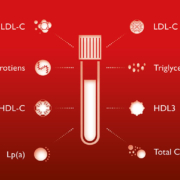
The mission of The National Lipid Association (NLA) is “to enhance the practice of lipid management in clinical medicine.” NLA advocates advancing the current lipid testing profile as the traditional panel consists of testing LDL cholesterol (LDL-C), HDL cholesterol (HDL-C) and triglycerides, which only detects approximately 20 % of all atherosclerotic cardiovascular disease patients. Advanced lipid testing is recommended to optimize patient treatment [3].
Offering a total solution for lipid and cardiac risk testing, Randox has developed novel and superior performance markers to identify the true weight of lipid profiling. Its range of niche and superior performance assays comprises 13 assays including: small dense LDL-C (sdLDL-C), Lipoprotein (a) (Lp(a)) and HDL3-C.
sdLDL-C will more readily permeate the inner arterial wall having a lower affinity to the hepatic LDL-C receptor which circulates in the blood longer and more susceptible to oxidation. As sdLDL-C is particularly atherogenic, a person with elevated sdLDL-C levels has a 3-fold increased risk of myocardial infarction [4].
Elevated Lp(a) levels are associated robustly and specifically with increased cardiovascular disease (CVD) risk. The unique Randox Lp(a) assay is one of the only methodologies on the market that detect the non-variable part of the Lp(a) molecule which suffers minimal size related bias.
HDL3-C is the scavenger of cholesterol within arterial walls and if HDL3-C levels are significantly depleted, the ability to remove this cholesterol is reduced. Therefore, it is widely accepted that there is an inverse correlation between HDL3-C and CVD risk.
It is necessary to review the traditional lipid testing panel, enabling clinicians to gain a more comprehensive view of a patient’s CVD risk and therefore take the appropriate measures to prevent CVD related deaths. References 1. Burnett JR. Lipids, lipoproteins, atherosclerosis and cardiovascular disease. Clin Biochem Rev 2004; 25(1): 2 [cited: 3 December 2018]. https://www.ncbi.nlm.nih.gov/pmc/articles/PMC1853363/. 2. Zimmermaann KA. Circulatory system: facts, function & diseases. Live Science [Online] 16 March 2018 [cited: 3 December 2018]. https://www.livescience.com/22486-circulatory-system.html. 3. National Lipid Association. National Lipid Association releases updated recommendations on the use of PCSK9 inhibitors at the 15th Annual Scientific Session. [Online] no date [cited: 3 December 2018]. https://www.lipid.org/nla/national-lipid-association-releases-updated-recommendations-use-pcsk9-inhibitors-15th-annual. 4. Austin MA, Breslow JL, Hennekens CH, Buring JE, Willett WC, Krauss RM. LDL subclass patterns and risk of MI. JAMA 1988; 260(13): 1917–1921. Read more
https://clinlabint.com/wp-content/uploads/sites/2/2020/08/Randox_Lipid_Graphic.jpg5188003wmediahttps://clinlabint.com/wp-content/uploads/sites/2/2020/06/clinlab-logo.png3wmedia2020-08-26 09:16:522021-01-08 11:20:40Total solution for lipid and cardiac risk testing
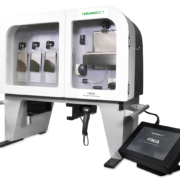
The Finia Fill and Finish System is a first-of-its-kind device developed to help bring reproducibility and control to cell therapy manufacturing. Finia is a fully automated, modular, functionally closed system that creates the final formulation of cell and gene therapies and divides them into user-defined doses for patients. The technology automates a process that is currently manual and labour-intensive with the added risk of error. The production and delivery of cell-based therapies is a complex and logistically challenging process. Developers and manufacturers appreciate support in determining when to automate, which processes to automate and how to integrate automation into their existing process. Finia combines, mixes and divides the final product into predetermined volumes, all under controlled, refrigerated temperature. It automatically removes air before it seals the final product bags, simplifying the downstream process. Finia also works with Terumo BCT’s Cell Processing Application software in the customers’ network to facilitate compliance to current good manufacturing practices (cGMP), including electronic record-keeping, control of process workflow, user credentialing and permission, and guidance of operators through the process with an intuitive user interface module (UIM). Read more
https://clinlabint.com/wp-content/uploads/sites/2/2020/08/Terumo_TERPR001a_15431123.jpg97511783wmediahttps://clinlabint.com/wp-content/uploads/sites/2/2020/06/clinlab-logo.png3wmedia2020-08-26 09:16:522021-01-08 11:20:46Device to accelerate cell therapy manufacturing
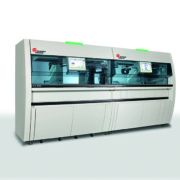
Beckman Coulter announced early May that the latest addition to its automation portfolio, the DxA 5000 total laboratory automation solution, has achieved European CE Mark and China Food and Drug Administration approval. In today’s healthcare environment, laboratories are highly focused on enhancing patient care by driving faster turnaround time, delivering quality results and improving laboratory operations. The DxA 5000 helps laboratories meet these challenges through a collection of patented innovations that deliver rapid and consistent turnaround time, provide a new level of comprehensive pre-analytical sample quality detection, and reduce the number of manual processing steps to significantly improve laboratory efficiency. Reporting results faster to physicians can positively impact patient outcomes. In the laboratory, specimen centrifugation is typically the most time-consuming pre-analytical activity. The DxA 5000 sets a new standard by utilizing a universal centrifugation protocol that significantly reduces the pre-analytical processing time by up to 73% for connected analysers across multiple disciplines. Additionally, the DxA 5000 supports laboratories in delivering highly consistent turnaround time to their physicians. Leveraging first-of-its-kind dynamic system software, the DxA 5000 utilizes Intelligent Routing to bring automated patient-centric workflow to the laboratory. By understanding the tests requested, sample volume available and real-time analyser capacity and status, the DxA 5000 continuously calculates the most expeditious route for every patient sample – both STAT and routine. Research shows errors that occur in the pre-analytical phase of testing may contribute up to 75% of erroneous test results, with 26% possibly having adverse effects on patient care. Moreover, a vast majority of the factors causing erroneous results occur outside the laboratory, including inadequate volume, mislabeled samples and incorrect tube type. The DxA 5000 is designed with a sharp focus on sample quality assessment, screening each sample at multiple points to help laboratories substantially reduce the risk of errors. In three seconds, the system detects patient tube parameters such as volume, sample identification, tube type, cap colour, orders pending and tube weight. The system is also designed to check for sample volume at three separate points: pre-centrifugation, post-centrifugation and prior to sample storage to continually ensure sufficient volume is available for the tests ordered. Together, these quality assessments reduce the potential for release of erroneous results and can help accelerate time to result by quickly alerting the laboratory when a new patient sample is needed. In addition to improving sample quality, laboratories also require workflow solutions that help them manage high volumes of outpatient, outreach and network samples, while processing urgent requests for both patient wards and emergency departments. The DxA 5000 simultaneously manages high volumes of multiple discipline requests, with a large variety of patient sample tubes and sizes, without impact to overall system throughput or STAT turnaround time. By automating sample processing steps, the DxA 5000 supports laboratories in delivering a higher number of results per hour with the same staffing level. Based on research and work performed with the company’s laboratory partners, sample processing steps are shown to make up approximately 70% of a laboratory’s labour hours. The DxA 5000 significantly reduces the number of manual steps in sample processing to as few as one. From sample accessioning and quality assessment to add-on test management and sample disposal, the DxA 5000 enables laboratory professionals to deliver high-quality results and improve efficiency, empowering them to focus their efforts and skills on managing patient sample exceptions. The first in a suite of DxA systems currently in development, the DxA 5000 enhances Beckman Coulter’s comprehensive portfolio of scalable solutions and is a key component of its vision to bring workflow automation to laboratories of all sizes. Beckman Coulter has received purchase orders for more than 20 DxA 5000 systems across multiple countries where regulatory clearance has been achieved.
https://clinlabint.com/wp-content/uploads/sites/2/2020/08/C436_BECKMAN_DxA_5000_NEW_IMAGE.jpg6138003wmediahttps://clinlabint.com/wp-content/uploads/sites/2/2020/06/clinlab-logo.png3wmedia2020-08-26 09:16:522021-01-08 11:20:50Total laboratory automation solution sets new standard for turnaround time
Cytel Inc., an advanced analytics leader providing sophisticated quantitative insights to decision-makers in clinical investigation, has launched East Alloy. This new platform is a web-native extension of Cytel’s world-renowned East software for adaptive clinical trial design and analysis.
By leveraging the speed of cloud computing and the pace of SaaS delivery, East Alloy enables easy implementation of computationally intensive Bayesian methods that may be otherwise impractical. The launch of East Alloy builds on Cytel’s time-tested record of delivering cutting-edge Bayesian tools and engines to the pharmaceutical industry for optimized clinical trials.
Bayesian methods are of growing interest to the drug development industry, as they allow clinical investigators to leverage historical trial data as well as learnings from new data as it accrues throughout a trial. The result is better-informed decision making, greater program flexibility, and the ability to run smaller, more resource-efficient trials.
“Our longstanding dedication to adaptive Bayesian approaches means we’re perfectly placed to meet and exceed the growing innovation needs of the pharmaceutical sector,” said Pantelis Vlachos, Director and Strategic Consultant at Cytel. “But it’s key to ensure our customers can practically implement this kind of innovation. East Alloy, reinforced by industry-leading verification, training, and support from Cytel experts, means users can sustainably adopt Bayesian designs to expedite clinical development and overcome uncertainty without compromising scientific rigor.”
The release of East Alloy follows the launch of East Hosted in 2019, which brought Cytel’s East software into the cloud for the first time to simplify the deployment of software updates, reduce on-premise IT burden, and ultimately broaden access to Cytel’s trial design and analysis engines.
For more information about Cytel, visit: https://www.cytel.com
https://clinlabint.com/wp-content/uploads/sites/2/2020/08/Pantelis_Vlachos.png7726963wmediahttps://clinlabint.com/wp-content/uploads/sites/2/2020/06/clinlab-logo.png3wmedia2020-08-26 09:16:522021-01-08 11:20:28Cytel announces East Alloy for easy access to verified Bayesian methods
Siemens Healthineers has a released an informative eBook titled “Coagulation abnormalities in COVID-19 patients – current testing and treatment protocols” to provide quick access to coagulation testing and treatment recommendations.
The eBook can be downloaded for free from their website: https://bit.ly/2CcpB5I
Because coagulation tests are important in the management of COVID-19 patients, the company has compiled an eBook for quick access to:
Thrombosis risk factors
An ISTH-recommended coagulation testing algorithm
Leading recommendations for anticoagulation treatment
Relevant parameters for patient monitoring
The eBook provides an overview of COVID-19 and thrombosis; it looks at laboratory testing in the identification of coagulation abnormalities in COVID-19 patients; and provides information on the treatment of coagulation abnormalities in COVID-19 patients.
Authors of the eBook write that while it’s not unusual for infections to raise the risk of clotting, the COVID-19 virus is associated with an unprecedented range of clotting-related disorders in affected patients. “From benign skin lesions on the feet to life-threatening thrombotic events, the COVID-19 virus has demonstrated a strikingly high prevalence of deadly blood clots. Studies show that about 25% and even up to 70% of critically ill patients have confirmed venous thromboembolism or pulmonary embolism. Another study found that approximately 70% of COVID-19 patients who died had disseminated intravascular coagulation.”
They add that Siemens Healthineers’s coagulation tests play an important role in the diagnosis, treatment, and management of coagulation abnormalities in COVID-19 patients and point out that the company has changed their production model to produce these assays at a higher volume than ever before.
“We are proud to support you in the fight against COVID-19. Behind every healthcare professional there are 53,000 Healthineers,” Siemens Healthineers says. Read more
https://clinlabint.com/wp-content/uploads/sites/2/2020/08/PRODUCT_SIEMENS_2.jpg4176923wmediahttps://clinlabint.com/wp-content/uploads/sites/2/2020/06/clinlab-logo.png3wmedia2020-08-26 09:16:522021-01-08 11:20:32Siemens Healthineers releases free eBook on coagulation testing protocols for COVID-19 patients
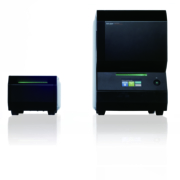
Shimadzu’s iMLayer boosts spatial resolution for MS imaging experiments. It enables reproducible matrix coating with small crystals and minimizes delocalization effects. Get a crystal clear view of microstructures in your sample.
Features
Creation of fine matrix crystals by unique matrix vapor deposition technology (sublimation) enabling high resolution MS imaging experiments
Minimized delocalization effects compared to conventional spraying method due to sublimation technique
Good reproducibility through automated matrix layer thickness control
Simple touch pad operation making the easy-to-use standalone instrument a sample preparation tool for any MS imaging experiment
https://clinlabint.com/wp-content/uploads/sites/2/2020/08/iMLayer.jpg7379583wmediahttps://clinlabint.com/wp-content/uploads/sites/2/2020/06/clinlab-logo.png3wmedia2020-08-26 09:16:522021-01-08 11:20:37Revolutionary sample preparation for MS imaging
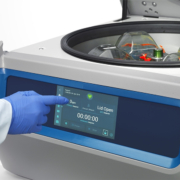
Featuring an ergonomically enhanced, novel industrial design complemented by a wide range of rotors, the Thermo Scientific general purpose Pro Centrifuge Series has been developed to deliver a safe and regulatory-compliant benchtop separation solution to meet an array of application needs, from clinical protocols and cell culture procedures to microplate processing. The series has been equipped with an advanced touchscreen interface that gives users easy access to prestored protocols, temperature control and system health checks to improve productivity and reduce time spent performing manual maintenance. The general purpose Pro Centrifuge Series provides scientists with: a unique glass touchscreen that facilitates a simpler user interface for immediate, effortless workflow and operation monitoring, and easy cleaning; an ergonomically enhanced industrial design that enables the quick and safe change of any of its 19 rotor types in just three seconds through its Auto-Lock rotor exchange function; superior sample capacity, performance and bio-containment through its Fiberlite carbon fibre rotors and ClickSeal biocontainment lids; a compact separation solution fea-turing connectivity-ready technology, while optimizing benchtop space. The ge-neral purpose Pro Centrifuge Series meets global compliance standards and includes the Thermo Scientific Sorvall, Thermo Scientific Multifuge and Thermo Scientific Megafuge configurations, which can be easily configured with a selection of rotors to address a range of application needs. Read more
https://clinlabint.com/wp-content/uploads/sites/2/2020/08/Thermo_General_Purpose_Pro_Centrifuge_Series.jpg6008003wmediahttps://clinlabint.com/wp-content/uploads/sites/2/2020/06/clinlab-logo.png3wmedia2020-08-26 09:16:522021-01-08 11:20:43Centrifuge with full colour touchscreen
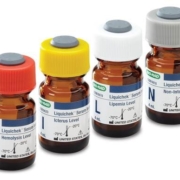
Although your instruments may automatically detect HIL interferences, shouldn’t the lab’s QC program include pre-analytical checks to monitor instruments’ ability to detect them? Studies show that interferences from hemolysed, icteric or lipemic (HIL) specimens are amongst the most common pre-analytical errors. Liquichek Serum Indices is a quality indicator intended for use as part of laboratory interference testing to monitor an instrument’s ability to detect these three types of samples. Replicating relevant concentrations of HIL interferences using human-sourced materials will allow confidence in the instrument’s performance. With Bio-Rad’s Unity Interlaboratory Program, the user is able to compare instrument responses among peer groups to help avoid costly test repeats.
https://tinyurl.com/yxpmoe2e Read more
https://clinlabint.com/wp-content/uploads/sites/2/2020/08/Bio-Rad_FCP_CLI_October.jpg3875423wmediahttps://clinlabint.com/wp-content/uploads/sites/2/2020/06/clinlab-logo.png3wmedia2020-08-26 09:16:522021-01-08 11:20:46Quality indicator monitors instrument HIL interference detection
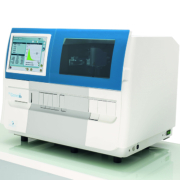
The new ST Genesia analyser is designed to automate and standardize results for thrombin generation. For laboratories, this is a significant step forward for assisting with assessment of thrombotic and hemorrhagic risks in patients. ST Genesia is an automated analyser, based on the same principles as the CAT system, which measures thrombin generation. Designed to support clinical applications in the lab, the key difference between systems is that CAT’s main purpose is for research and development. ST Genesia aims at standardizing and automating the thrombin generation test in order to make it widely accessible and available for use in in-vitro diagnostics (IVD). ST Genesia is designed to add to the information usually provided by routine tests (TP, TCA, etc.) or specialized tests (Anti-Xa, ECA) and offer an improved assessment of thrombotic and hemorrhagic risks. A range of reagents specifically developed for ST Genesia is available including STG-ThromboScreen for thrombin generation assessment in patients who are likely to suffer from thrombophilia; STG-BleedScreen for thrombin generation assessment in patients with bleeding risk, such as hemophiliacs; STG-DrugScreen for assessment of the effect of anticoagulants on treated patients, which could be useful for people at risk of drug accumulation (impaired renal function, people over 75, etc.).
https://clinlabint.com/wp-content/uploads/sites/2/2020/08/C439_STAGO_ST_Genesia.jpg6008003wmediahttps://clinlabint.com/wp-content/uploads/sites/2/2020/06/clinlab-logo.png3wmedia2020-08-26 09:16:522021-01-08 11:20:50Thrombin generation now available in laboratories
We may ask you to place cookies on your device. We use cookies to let us know when you visit our websites, how you interact with us, to enrich your user experience and to customise your relationship with our website.
Click on the different sections for more information. You can also change some of your preferences. Please note that blocking some types of cookies may affect your experience on our websites and the services we can provide.
Essential Website Cookies
These cookies are strictly necessary to provide you with services available through our website and to use some of its features.
Because these cookies are strictly necessary to provide the website, refusing them will affect the functioning of our site. You can always block or delete cookies by changing your browser settings and block all cookies on this website forcibly. But this will always ask you to accept/refuse cookies when you visit our site again.
We fully respect if you want to refuse cookies, but to avoid asking you each time again to kindly allow us to store a cookie for that purpose. You are always free to unsubscribe or other cookies to get a better experience. If you refuse cookies, we will delete all cookies set in our domain.
We provide you with a list of cookies stored on your computer in our domain, so that you can check what we have stored. For security reasons, we cannot display or modify cookies from other domains. You can check these in your browser's security settings.
.
Google Analytics Cookies
These cookies collect information that is used in aggregate form to help us understand how our website is used or how effective our marketing campaigns are, or to help us customise our website and application for you to improve your experience.
If you do not want us to track your visit to our site, you can disable this in your browser here:
.
Other external services
We also use various external services such as Google Webfonts, Google Maps and external video providers. Since these providers may collect personal data such as your IP address, you can block them here. Please note that this may significantly reduce the functionality and appearance of our site. Changes will only be effective once you reload the page
Google Webfont Settings:
Google Maps Settings:
Google reCaptcha settings:
Vimeo and Youtube videos embedding:
.
Privacy Beleid
U kunt meer lezen over onze cookies en privacy-instellingen op onze Privacybeleid-pagina.