


Modern hematology emphasizes a multiparametric diagnostic approach and the basic parameters, beside history of the disease and clinical examination, are morphological, immunophenotypic and genetic evaluation. Flow cytometry plays an important role in diagnosis of a large group of hematological diseases. This article reviews the basic principles of flow cytometry and its use in hematology diagnosis, with emphasis on chronic lymphoproliferations.
by Dr Nataša Lazić
Introduction
In modern diagnostics, flow cytometry has an important place as one of the basic and irreplaceable tools for diagnosis, classification, monitoring and prediction of malignant hematological disease [1]. The extreme complexity of these diseases, on one hand, and the availability of the different therapeutic protocols for the different types of these diseases on the other, makes accurate and precise diagnosis imperative. Contributing to this is the fact that the World Health Organization (WHO), in the Classification of Tumours of Hemopoietic and Lymphoid Tissues, suggests a multiparametric approach in diagnosing these diseases; basic parameters required are morphological, immunophenotypic and genetic analysis for each entity of the disease, in addition to a detailed history of the disease and clinical examination [2, 3]. The clinical picture and cell morphology, as a well-known and traditionally-used means of examination, are insufficient in many cases; quite often, because of a similar clinical presentation and cell morphology, it is not possible to draw a diagnostic conclusion based on these findings or a wrong diagnosis may be reached in some cases.
Coulter’s principle of measuring the change in the electrical impedance of the individual cells flowing through the measuring cell, in the late 1940s, was the basis for construction of the first hematologic counter and later for the flow cytometer. Later inventions added new detection capabilities, such as light scatter and fluorescence detection. Fluorescent activated cell sorting (FACS) was invented in the late 1960s by Herzenberg, Bonner, Sweet and Hullet. Introduced as a commercial machine in the early 1970s, this is the class of instruments now commonly referred to as flow cytometer [4]. The invention of monoclonal antibodies by Milstein and colleagues in 1977 opened new perspective for flow cytometry. Further developments, especially in electronics, led to modern cytometers with multiple lasers, detectors, better performance characteristics, and the ability to measure larger amounts of data.
Flow cytometry principles
Flow cytometry is a powerful technology that simultaneously measures many aspects of single particles, usually cells. Any suspended particle or cell from 0.2–150 μm is suitable for analysis. However, it can also measure soluble molecules if trapped onto a particulate surface and bound by fluorochromes. Virtually any component or function of a cell can be measured if the fluorescent probe can be made to detect it.
Sample preparation should provide a homogeneous suspension of cells with monoclonal antibodies conjugated with fluorochromes of a different emission spectrum. Depending on the sample, it most often includes incubation, erythrocyte lysis, centrifugation, washing and fixation.
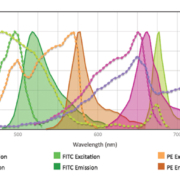
The cytometer needs to be adjusted to have the appropriate performance characteristics (linearity, sensitivity, CV, electronic and optical background noise, fluorescence detector efficiency, etc). This is achieved by adjusting voltages on the detectors and by spectral overlap compensation (Fig. 1).
The three main systems of flow cytometer are fluidics, optics and electronics (Fig. 2). Parameters measured include forward scatter (FSC) corresponding to cell size, side scatter (SSC) depending on internal complexity and fluorescence intensity for different fluorochromes.
Becoming more available in clinical laboratories, a wide range of clinical applications of flow cytometry are constantly expanding and the most common among them are in, for example, lymphoma and leukemia diagnosis, stem cell enumeration for transplantation, estimation of minimal residual disease, paroxysmal nocturnal hemoglobinuria diagnosis, immunodeficiencies, HIV infection.
Flow cytometry in hematology
Flow cytometric immunophenotyping enables examination of the phenotype of the separate cells in the suspension and summarizing of the results, which gives data about the presence or absence of antigen expression as well as the expression intensity [5]. Hence, an immunophenotypic pattern is obtained on the cell population of interest for the examined disease. Meanwhile, there are no separate antigens specific for the particular disease. Instead, their mutual relation is observed and analysed, which makes the analysis of the flow cytometry results very demanding and complex, but usually very useful and precise owing to the huge amount of data that can be collected from the cells [6]. Therefore, flow cytometry helps with determining the cell line, the degree of cell maturity, abnormal patterns of expression and provides a detailed immunophenotype of the pathological cell population [7]. From information on all the aforementioned factors, a diagnostic conclusion is drawn if there is a phenotype characteristic for some disease. In the case of an atypical phenotype, the disease is assigned to the appropriate group and additional tests should be done to gain a precise diagnosis (such as immunohistochemical, FISH, molecular tests).
CD markers (clusters of differentiation) are blood cell antigens that enable their characterization. CD nomenclature was developed and reviewed by HLDA (Human Leukocyte Differentiation Antigen) workshops started in 1982. There were 10 such workshops and the nomenclature now encompasses about 400 CD markers. Monoclonal antibodies against those antigens are used for immunophenotype characterization.
The antibody panel for the analysis of the sample to be tested by flow cytometry depends, to a large extent, on the available information of other findings made for that patient. According to the Bethesda Group recommendations from 2006, which were aimed at regulating a more systematic approach in this field (and are still valid today), before sending a sample to flow cytometry, a detailed history of the disease, clinical examination, microscopic examination of cell morphology, and other laboratory tests should be carried out, and based on this, diagnosis or differential diagnosis determined. In this way significant rationalization and cost reduction can be achieved [8].
Immunophenotype characterization for chronic lymphoproliferative disorders
For both of the two major groups of malignant hematologic diseases, those derived from mature and from immature cells, flow cytometry is of a great importance. Neoplasms of mature lymphoid cells, according to the WHO Classification, include chronic lymphoid leukemia and non-Hodgkin’s lymphoma. Their basic characteristic is that they have an immunophenotype similar to mature lymphoid cells and, accordingly, they show an absence of immaturity indicators (CD34, TdT). According to the origin, in relation to the cell line, they can be divided into T, B and NK neoplasms. [7]
Mature B-cell lymphoproliferations make up most of the malignant blood diseases: 90 % of the total lymphoid malignancies, according to WHO data. They present 4 % of the newly discovered carcinomas per year. As already known, the malignant cell derived from B-cell lineage in most cases imitates the normal B-cells stopped at a certain maturity level. The classification of this disease group mostly relies on this fact. The most common in this group are chronic lymphocytic leukemia (CLL), hairy cell leukemia (HCL), follicular lymphoma, splenic marginal zone lymphoma, mantle cell lymphoma (MCL), plasma cell leukemia [12]. Immunophenotype characterization in the diagnosis of B-cell chronic lymphoproliferative diseases is an irreplaceable method and, together with morphology, it presents the essential search that should be undertaken in the diagnosis of these diseases[2, 9]. Based on the finding of the immunophenotype characterization it is possible to discover aberrant expression patterns and establish the phenotypic characteristics related to particular diseases. The application of a scoring system as an additional tool is the result of a need for some standardization and quantification in the diagnosis of B-cell chronic lymphoproliferative diseases. In order to increase the precision of the scoring system, different studies with different CD markers are taken [10–12]. The most common scoring system of 5 points includes CD5, CD23, FMC7, CD79b and surface immunoglobulin chains with an accuracy of 96.6 % if a three-point cut-off is used [10].
In most cases of CLL, cell morphology is characteristic and typical for this disease. However, in a number of cases, flow cytometry has a huge and decisive significance for diagnosis (Fig. 3) [13]. CLL and MCL share many morphological and immunophenotypic features [14]. As a result of their partial overlap, a differential diagnosis of MCL is most considered when making a diagnosis of CLL. Because of the different therapeutic approach and prognoses of the diseases, their diagnostic differentiation is very important. For that purpose cyclin D1 testing is recommended [15, 16]. Unlike the other chronic lymphoproliferations, HCL cells do not match any stage of the normal lymphoid cells development. Morphologically typical HCL cells have fine, hair-like, cytoplasmic projections, which are sometimes difficult to find in the peripheral blood smear. Because of this and a very specific immunophenotype, flow cytometry is essential for HCL diagnosis [14, 17].
Advantages
The possibility of combining more antibodies in the same tube and analysing their interactions on the population of interest for the given disease is the greatest advantage of multiparametric flow cytometry, which involves simultaneously collecting and analysing a large amount of data from cells or particles.
Considerations
Comprehensive analysis involves considering possible causes of false-positive or false-negative results, thus avoiding an incomplete or incorrect interpretation of flow cytometry data (Fig. 4).
Other difficulties, such as non-standardized methods, particularly the issue of regulation in cytometry, different antibody panels, cut-off values, analysis subjectivity – recommended visual approach, result analysis complexity, report form, etc., are the subject of work by various associations dealing with cytometry in order to achieve harmonization in this area [13].
References
1. Paiva A, Alves GVA, Sales VSF, Silva ASJ, Silva DGKC, Alves E, Bahia F, Freitas RV, De Oliveira Paiva HD, Cavalcanti GB, Jr. Utility of flow cytometry immunophenotyping and hematological profile in chronic lymphoproliferative disorders. Blood 2017; 130: 5326 [poster abstract].
2. Swerdlow SH, Campo E, Harris NL, Jaffe ES, Pileri SA, Stein H, Thiele J, Vardiman J (eds). WHO classification of tumors of haematopoietic and lymphoid tissues. IARC 2008; Chapters 1, 8, 10. ISBN 978-9283224310.
3. Boyd SD, Natkunam Y, Allen JR, Warnke R. Selective immunophenotyping for diagnosis of B-cell neoplasms: immunohistochemistry and flow cytometry strategies and results. Appl Immunohistochem Mol Morphol 2013; 21: 116–131.
4. Herzenberg LA, Parks D, Sahaf B, Perez O, Roederer M, Herzenberg LA. The history and future of the fluorescence activated cell sorter and flow cytometry: a view from Stanford. Clin Chem 2002; 48: 1819–1827.
5. Braylan RC. Impact of flow cytometry on the diagnosis and characterization of lymphomas, chronic lymphoproliferative disorders and plasma cell neoplasias. Cytometry A 2004; 58: 57–61.
6. Brown M, Wittwer C. Flow cytometry: principles and clinical applications in hematology. Clin Chem 2000; 4: 1221–1229.
7. Craig FE, Foon FA. Flow cytometric immunophenotyping for hematologic neoplasms. Blood 2008; 111: 3941–3967.
8. Oberley MJ, Fitzgerald S, Yang DT, Morgan A, Johnson J, Leith C. Value-based flow testing of chronic lymphoproliferative disorders: a quality improvement project to develop an algorithm to streamline testing and reduce costs. Am J Clin Pathol 2014; 142: 411–418.
9. D’Arena G, Keating MJ, Carotenuto M. Chronic lymphoproliferative disorders: an integrated point of view for the differential diagnosis. Leuk Lymphoma 2000; 36: 225–237.
10. Matutes E, Wotherspoon A, Catovsky D. Differential diagnosis in chronic lymphocytic leukemia. Best Pract Res Clin Haematol 2007; 20: 367–384.
11. Matutes E, Owusu-Ankomah K, Morilla R, Garcia Marco J, Houlihan A, Que TH, Catovsky D. The immunological profile of B cell disorders and proposal of a scoring system for the diagnosis of CLL. Leukemia 1994; 8: 1640–1645.
12. Moreau EJ, Matutes E, A’Hern RP, Morilla AM, Morilla RM, Owusu-Ankomah KA, Seon BK, Catovsky D. Improvement of the chronic lymphocytic leukemia scoring system with the monoclonal antibody SN8 (CD79b). Am J Clin Pathol 1997; 108: 378–382.
13. Rawstron AC, at al. Reproducible diagnosis of chronic lymphocytic leukemia by flow cytometry: an European Research Initiative on CLL (ERIC) & European Society for Clinical Cell Analysis (ESCCA) Harmonisation project. Cytometry B Clin Cytom 2018; 9: 121–128.
14. Asaad NY, Abd El-Wahed MM, Dawoud MM. Diagnosis and prognosis of B-cell chronic lymphocytic leukemia/small lymphocytic lymphoma (B-CLL/SLL) and Mantle cell lymphoma (MCL). J Egypt Natl Canc Inst 2005; 17: 279–290.
15. Matutes E, Polliack A. Morphological and immunophenotypic features of chronic lymphocytic leukemia. Rev Clin Exp Hematol 2000; 4: 22–47.
16. Vose JM. Mantle cell lymphoma; update on diagnosis, risk stratification and clinical management. Am J Hematol 2015; 90: 739–745.
17. Bacal NS, Mantovani E, Grossl S, Nozawa ST, Kanayama RH, Brito ACM, Albers CEM, de Campos Guerra JC, Mangueira CLP. Flow cytometry: immunophenotyping in 48 hairy cell leukemia cases and relevance of fluorescence intensity in CDs expression for diagnosis. Einstein 2007; 5: 123–128.
The authors
Nataša Lazić MD
Institute for Clinical Laboratory Diagnostics, University Clinical Centre of the Republika Srpska, Republika Srpska, Bosnia and Herzegovina
*Corresponding author
E-mail: natasa.lazic.bl@gmail.com


In May it was reported that, owing to an IT error, from 2009 to 2018, approximately 450,000 women aged between 68 and 71 were not recalled for their final mammogram appointments in England. Jeremy Hunt, the health secretary has been quoted as saying that between 135 and 270 women “may have had their lives shortened as a result”. The panic-quelling response came very quickly. The Guardian newspaper reported that Sir
Richard Peto, a professor of medical statistics at Oxford University, had written that there is still substantial uncertainty about the exact ages that mammographic screening should start and end. Additionally, a group of academics and GPs wrote a letter to The Times newspaper saying that the women should not be concerned unless they notice a lump or other symptoms and that the breast cancer screening programme mostly causes more unintended harm than good; many women and doctors avoid breast screening as it has no impact on all-cause death; and that the most dangerous and advanced cancers are not prevented by screening programmes. Breast cancer charities retorted that mammographic screening remains the best tool available for detecting breast cancer at an early and therefore more easily treatable stage and we must not forget that the programme does save lives. The UK’s NHS breast screening programme began in 1988 and national coverage was reached in the mid-1990s. However, over twenty years on, there seems to be an increasing body of data to suggest that the ‘accidental’ harm resulting from mammography because of over-detection and over-treatment of clinically unimportant lumps has been underestimated. The often-quoted figure is that for every woman whose life is extended, three receive unnecessary surgery, chemotherapy or radiotherapy. Hence our ‘best tool available’ seems to be a rather blunt tool. Biomarkers, surely, could provide the refinement needed to stratify patients according to therapy response. This will enable the delivery of individually tailored treatment plans and so will, crucially, prevent the unnecessary administration of chemotherapy and radiotherapy. Work on this is, of course, underway. The EU-funded RESPONSIFY study in Germany has already led to two parameters being included into German breast cancer guidelines for the treatment of HER2-positive breast cancer. Additionally, a gene-expression panel that predicts whether chemotherapy will be beneficial for preventing recurrence is already being used, with some success for the low and high scores. Further work is needed, but perhaps the day is in sight where women will no longer undergo unnecessary chemotherapy.
The importance of fast turnaround times
Conventional LC-MS/MS workflows typically involve a large number of manual and time-consuming processes. Indeed, while advances in the performance of LC separation and MS analysis techniques mean that measurement acquisition steps now take a matter of minutes to complete, batching of samples, sample preparation, data analysis and equipment maintenance can significantly extend the length of time that must be invested in each sample run. Moreover, the burden associated with manual data entry can significantly lengthen timelines. To ensure quality, further data validation steps are required before final reporting, resulting in significant amount of time devoted to processes that do not add real value to operations.
Traditional LC-MS/MS methods also require users to ensure careful batching and multiple runs need scheduling at appropriate times, which may prove challenging when faced with shift patterns or a weekend testing service. Overall, the labor intensive LC-MS/MS workflows limit sample throughput, while requiring a high level of human input and incurring a significant operating expense. As such, these methods do not fit well with the working practices of the clinical laboratory.
The need for accurate analysis
Manual methods also leave measurements vulnerable to human error. Even when analyses are performed by the most experienced laboratory scientists, these multi-step workflows are susceptible to mistakes, omissions or even small variations in the way protocols are conducted. If errors are identified, repeat experiments are required to correct them. This can significantly add to the time taken to obtain clinically useful insights, prevent timely patient treatment decisions and even undermine confidence in the accuracy of findings.
Given the complexity of conventional LC-MS/MS workflows, and to reduce the potential of human error, the operation of these systems has traditionally been assigned to highly skilled scientists with specialist knowhow. High levels of expertise are also essential for sample preparation and data analysis. As a consequence, many clinical laboratories have been facing the need to train their personnel, which can place an additional burden on budgets and bandwidth.
Automated LC-MS/MS driving process optimization
Analytical methods within the clinical lab must be automated, reliable and provide walk-away capabilities to meet clinicians’ need for rapid turnaround of accurate results. By eliminating many of the error-prone and time-consuming manual steps involved in traditional workflows, fully automated, random access LC-MS/MS systems are well placed to simplify and accelerate the collection of high quality data. This ability to assess samples quickly, while maintaining a high level of accuracy, would be especially beneficial to those assays that involve more complex processes, since they could be streamlined and automated to simplify workflow.
Undoubtedly, the future of clinical analysis is trending towards the broader adoption of fully automated systems. Automation will greatly benefit LC-MS/MS workflows, making this powerful technique accessible for a wide range of clinical applications, without the need to create a new team of highly trained experts. Laboratories that are already performing clinical LC-MS/MS testing will also be able to better manage their highly trained experts and apply their talents to the development and early implementation of newer, more esoteric, high value analytes – expanding the laboratory’s overall service capabilities as a result. Furthermore, while the capital cost of currently available LC-MS/MS systems is relatively high, operational costs related to materials are actually low. If the volume of samples is high enough, then the economy of scale will make cost of ownership comparable to alternative clinical testing methods.
Labs already performing laboratory developed tests (LDTs) using LC-MS/MS may be more resistant to automation. The development and validation of MS assays takes a significant amount of time and expertise, so there may be concern over the impact that automation will have on their existing LDT protocols. However, automation will not be a limiting factor in a laboratory’s ability to develop and implement LDTs. Automation has the potential to reduce the need for highly trained staff to apply themselves to the repetitive tasks, allowing them to focus on the development of emerging, clinically needed LDTs.
Meeting the needs of clinical LC-MS/MS analysis
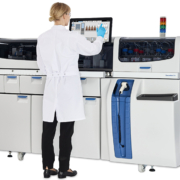
The need for an automated LC-MS/MS system that addresses the unique requirements of the clinical laboratory has led to the development of the new Thermo Scientific™ Cascadion™ SM Clinical Analyser*. Designed to eliminate, automate and simplify many of the manual processes involved in traditional LC-MS/MS workflows, the system gives users all of the power of this important technology in an easy to implement tool.
Owing to its random access capability, the Cascadion SM Clinical Analyser removes the need for long periods of batch loading, and instead facilitates continuous, uninterrupted operation for rapid turnaround of results. This is particularly important for the out-of-hours service and processing of STAT samples. Moreover, by minimizing the potential for human error, the technology is enabling the collection of accurate measurements, the first time around. When implemented in the clinical setting, this level of dependability is helping to accelerate clinical outcomes and deliver real value for clinical laboratories.
Furthermore, because the system can be operated by non-LC-MS/MS experts, experienced scientists have more time to work in other capacities. With more time back in their daily routine, this gives clinical researchers, for example, the opportunity to develop new tests to meet an urgent unmet need or to support better patient care. This level of ease-of-use and simplicity not only relates to run-to-run performance, it also extends to system maintenance too. A recent study from Argent Global Services has found that monthly maintenance takes approximately 18 minutes, meaning that significant amounts of time can be saved and put to better use.
Conclusion
LC-MS/MS systems offer clear benefits for clinical applications. However, the lack of automated systems has posed a barrier to their broader uptake in the clinical setting. Requiring expert operation and the investment of significant time and resources to ensure compatibility with sample preparation processes and data review and reporting systems, traditional technologies have, until now, not adequately addressed the needs of clinical laboratories.
Fully automated, random access LC-MS/MS technology, designed specifically for clinical use, is alleviating these pain points and enabling clinicians to benefit from quality results at high throughputs, while reducing the need to perform repetitive manual tasks. The impact of these systems is benefitting clinical laboratories, helping to improve operational efficiencies and ensure clinicians receive the results they need to make informed treatment decisions in a timely fashion.
*This product is IVD/CE-marked. Product is not 510(k) cleared and not yet available for sale in the U.S.
Reference
Zhang V & Rockwood A. “Impact of Automation on Mass Spectrometry”. Clinica Chimica Acta 450 (2015): 298-303.

Extracellular vesicles as markers and mediators in sepsis
Raeven P, Zipperle J, Drechsler S. Theranostics 2018; 8(12):3348–3365
Sepsis is defined as life-threatening organ dysfunction caused by a dysregulated host response to infection. It remains a highly lethal condition in which current tools for early diagnosis and therapeutic decision-making are far from ideal. Extracellular vesicles (EVs), 30 nm to several micrometers in size, are released from cells upon activation and apoptosis and express membrane epitopes specific for their parental cells. Since their discovery two decades ago, their role as biomarkers and mediators in various diseases has been intensively studied. However, their potential importance in the sepsis syndrome has gained attention only recently. Sepsis and EVs are both complex fields in which standardization has long been overdue. In this review, several topics are discussed. First, we review current studies on EVs in septic patients with emphasis on their variable quality and clinical utility. Second, we discuss the diagnostic and therapeutic potential of EVs as well as their role as facilitators of cell communication via micro RNA and the relevance of microorganism-derived EVs. Third, we give an overview over the potential beneficial but also detrimental roles of EVs in sepsis. Finally, we focus on the role of EVs in selected intensive care scenarios such as coagulopathy, mechanical ventilation and blood transfusion. Overall, the prospect for EV use in septic patients is bright, ranging from rapid and precise (point-of-care) diagnostics, prevention of harmful iatrogenic interventions, to using EVs as guides of individualized therapy. Before the above is achieved, however, the EV research field requires reliable standardization of the current methods and development of new analytical procedures that can close the existing technological gaps.
Diagnostic accuracy of lipopolysaccharide-binding protein for sepsis in patients with suspected infection in the Emergency Department
García de Guadiana Romualdo L, Albaladejo Otón MD, Rebollo Acebes S, Esteban Torrella P, Hernando Holgado A, et al. Ann Clin Biochem 2018; 55(1): 143–148
BACKGROUND: Biomarkers can facilitate the diagnosis of sepsis, enabling early management and improving outcomes. Lipopolysaccharide-binding protein (LBP) has been reported as a biomarker for the detection of infection, but its diagnostic value is controversial. In this study, we assessed the diagnostic accuracy of LBP for sepsis in the Emergency Department (ED) patients, comparing it with more established biomarkers of sepsis, including procalcitonin (PCT) and C-reactive protein (CRP).
METHODS: LBP and other sepsis biomarkers, including PCT and CRP, were measured on admission in 102 adult patients presenting with suspected infection. Classification of patients was performed using the recently updated definition for sepsis (Sepsis-3). The diagnostic accuracy of LBP, CRP and PCT for sepsis was evaluated by using receiver operating characteristic curve (ROC) analysis.
RESULTS: A total of 49 patients were classified as having sepsis. In these patients, median (interquartile range) LBP (41.8 [41.1] µg/dL vs 26.2 [25] µg/dL), CRP (240 [205] mg/L vs 160 [148] mg/dL) and PCT (5.19 [13.68] µg/L vs 0.39 [1.09] µg/L) were significantly higher than in patients classified as not having sepsis (P<0.001 for all three biomarkers). ROC curve analysis and area under curve (AUC) revealed a value of 0.701 for LBP, similar to CRP (0.707) and lower than that for PCT (0.844) (P=0.012).
CONCLUSION: In adult ED patients with suspected infection, the diagnostic accuracy for sepsis of LBP is similar to that of CRP but lower than that of PCT.
An innovative approach for the integration of proteomics and metabolomics data in severe septic shock patients stratified for mortality
Cambiaghi A, Díaz R, Martinez JB, Odena A, Brunelli L, et al. Sci Rep 2018; 8(1):6681
In this work, we examined plasma metabolome, proteome and clinical features in patients with severe septic shock enrolled in the multicentre ALBIOS study. The objective was to identify changes in the levels of metabolites involved in septic shock progression and to integrate this information with the variation occurring in proteins and clinical data. Mass spectrometry-based targeted metabolomics and untargeted proteomics allowed us to quantify absolute metabolite concentration and relative protein abundance. We computed the ratio D7/D1 to take into account their variation from day 1 (D1) to day 7 (D7) after shock diagnosis. Patients were divided into two groups according to 28-day mortality. Three different elastic net logistic regression models were built: one on metabolites only, one on metabolites and proteins and one to integrate metabolomics and proteomics data with clinical parameters. Linear discriminant analysis and partial least squares discriminant analysis were also implemented. All the obtained models correctly classified the observations in the testing set. By looking at the variable importance (VIP) and the selected features, the integration of metabolomics with proteomics data showed the importance of circulating lipids and coagulation cascade in septic shock progression, thus capturing a further layer of biological information complementary to metabolomics information.
Validity of biomarkers in screening for neonatal sepsis – a single-center hospital-based study
Rashwan NI, Hassan MH, Mohey El-Deen ZM, Ahmed AE. Pediatr Neonatol 2018; doi: 10.1016/j.pedneo.2018.05.001 [Epub ahead of print]
BACKGROUND: The diagnosis of neonatal sepsis still considered to be a challenge for both clinicians and the laboratory owing to the non-specific clinical presentations. The present study aimed to compare and assess the diagnostic and prognostic values of C-reactive protein (CRP), high sensitivity CRP (hsCRP), presepsin, interleukin-6 (IL-6) and procalcitonin (PCT) in neonatal sepsis separately and in combination.
METHODS: This hospital-based cross-sectional study has been conducted on 168 neonates recruited from the Neonatal Intensive Care Unit of Qena University Hospitals, Upper Egypt. Measurements of CRP using the latex agglutination test, hsCRP, presepsin, IL6 and PCT assays using commercially available ELISA assay kits were done to all included neonates.
RESULTS: There were significantly higher serum levels of CRP among late onset versus early onset sepsis group with significantly higher serum levels of hsCRP and presepsin among early onset compared with the late onset sepsis group (P<0.05 for all). There were significantly higher hsCRP, presepsin and PCT serum levels in proven versus probable sepsis group (P<0.05 for all). Significantly higher serum levels of presepsin and PCT were noted among survivors versus non-survivors sepsis group (P<0.05 for all). The cut-off value of the serum level of CRP >6 mg/dL showed lower sensitivity and specificity than that of hsCRP at cut-off >140 ng/mL in diagnosing neonatal sepsis. The cut-off value of presepsin >200 ng/mL showed equal sensitivity and specificity to IL-6 at cut-off >22 pg/mL. The cut-off value of PCT at >389 pg/mL showed sensitivity and specificity approximate to that of hsCRP.
CONCLUSIONS: CRP could be a helpful prognostic marker in late onset neonatal sepsis. hsCRP and PCT have higher diagnostic accuracy in neonatal sepsis in comparison to other studied markers. Both IL-6 and presepsin have equal diagnostic utility in neonatal sepsis, but presepsin could be a helpful diagnostic marker in early onset neonatal sepsis.
Plasma miRNA-223 correlates with risk, inflammatory markers as well as prognosis in sepsis patients
Wu X, Yang J, Yu L, Long D. Medicine 2018; 97(27):e11352
The purpose was to evaluate the role of plasma microRNA-223 (miRNA-223) in risk and prognosis in sepsis patients, and its correlation with inflammatory markers. In this study, 187 sepsis patients from July 2015 to December 2016 were consecutively enrolled. Blood samples from septic patients and healthy controls (HCs) were collected, and plasma was separated for miRNA-223 expression detected by quantitative real-time PCR (qPCR). Enzyme-linked immune sorbent assay (ELISA) was performed to detect inflammatory markers. The results were as follows: miRNA-223 was highly expressed in sepsis patients compared to HCs (P<0.001). Receiver operating characteristic (ROC) curve revealed miRNA-223 disclosed a good diagnostic value of sepsis with area under curve (AUC) of 0.754, 95 % CI: 0.706–0.803. Sensitivity and specificity were 56.6 % and 86.6 % at the best cut-off point, respectively. Multivariate logistic analysis indicated that miRNA-223 could predict sepsis risk independently. Spearman’s correlation disclosed that miRNA-223 relative expression positively correlated with APCHE II score (r=0.459, P<0.001), CRP (r=0.326, P<0.001), TNFα (r=0.325, P<0.001), IL-1β (r=0.165, P=0.024), IL-6 (r=0.229, P=0.002) and IL-8 (r=0.154, P=0.035), while it negatively correlated with IL-10 (r=−0.289, P<0.001). miRNA-223 expression in non-survivors was higher than that in survivors (P<0.001). ROC curve revealed miRNA-223 could distinguish sepsis non-survivors from survivors with AUC of 0.600, 95 % CI: 0.505–0.695. Sensitivity and specificity were 83.5 % and 38.9 % respectively at the best cut-off point. In conclusion, plasma miRNA-223 correlates with disease severity and inflammatory markers levels, and it might serve as a novel diagnostic and prognostic biomarker in sepsis patients.
Biomarkers of endothelial dysfunction predict sepsis mortality in young infants: a matched case-control study
Wright JK, Hayford K, Tran V, Al Kibria GM, Baqui A, et al. BMC Pediatr 2018; 18(1):118
BACKGROUND: Reducing death due to neonatal sepsis is a global health priority, although there are limited tools to facilitate early recognition and treatment. We hypothesized that measuring circulating biomarkers of endothelial function and integrity (i.e. Angiopoietin-Tie2 axis) would identify young infants with sepsis and predict their clinical outcome.
METHODS: We conducted a matched case-control (1:3) study of 98 young infants aged 0–59 days of life presenting to a referral hospital in Bangladesh with suspected sepsis. Plasma levels of Ang-1, Ang-2, sICAM-1, and sVCAM-1 concentrations were measured at admission. The primary outcome was mortality (n=18); the secondary outcome was bacteremia (n=10).
RESULTS: Ang-2 concentrations at presentation were higher among infants who subsequently died of sepsis compared to survivors (aOR 2.50, P=0.024). Compared to surviving control infants, the Ang-2:Ang-1 ratio was higher among infants who died (aOR 2.29, P=0.016) and in infants with bacteremia (aOR 5.72, P=0.041), and there was an increased odds of death across Ang-2:Ang-1 ratio tertiles (aOR 4.82, P=0.013).
CONCLUSIONS: This study provides new evidence linking the Angiopoietin-Tie2 pathway with mortality and bacteremia in young infants with suspected sepsis. If validated in additional studies, markers of the angiopoietin-Tie2 axis may have clinical utility in risk stratification of infants with suspected sepsis.
Development and first evaluation of a novel multiplex real-time PCR on whole blood samples for rapid pathogen identification in critically ill patients with sepsis
van de Groep K, Bos MP, Savelkoul PHM, Rubenjan A, Gazenbeek C, et al. Eur J Clin Microbiol Infect Dis 2018; 37(7):1333–1344
Molecular tests may enable early adjustment of antimicrobial therapy and be complementary to blood culture (BC) which has imperfect sensitivity in critically ill patients. We evaluated a novel multiplex real-time PCR assay to diagnose bloodstream pathogens directly in whole blood samples (BSI-PCR). BSI-PCR included 11 species- and four genus-specific PCRs, a molecular Gram-stain PCR, and two antibiotic resistance markers. We collected 5 mL blood from critically ill patients simultaneously with clinically indicated BC. Microbial DNA was isolated using the Polaris method followed by automated DNA extraction. Sensitivity and specificity were calculated using BC as reference. BSI-PCR was evaluated in 347 BC-positive samples (representing up to 50 instances of each pathogen covered by the test) and 200 BC-negative samples. Bacterial species-specific PCR sensitivities ranged from 65 to 100 %. Sensitivity was 26 % for the Gram-positive PCR, 32 % for the Gram-negative PCR, and ranged 0 to 7 % for yeast PCRs. Yeast detection was improved to 40 % in a smaller set-up. There was no overall association between BSI-PCR sensitivity and time-to-positivity of BC (which was highly variable), yet Ct-values were lower for true-positive versus false-positive PCR results. False-positive results were observed in 84 (4 %) of the 2200 species-specific PCRs in 200 culture-negative samples, and ranged from 0 to 6 % for generic PCRs. Sensitivity of BSI-PCR was promising for individual bacterial pathogens, but still insufficient for yeasts and generic PCRs. Further development of BSI-PCR will focus on improving sensitivity by increasing input volumes and on subsequent implementation as a
bedside test.
From traditional biochemical signals to molecular markers for detection of sepsis after burn injuries
Muñoz B, Suárez-Sánchez R, Hernández-Hernández O, Franco-Cendejas R, Cortés H, Magaña JJ. Burns 2018; doi: 10.1016/j.burns.2018.04.016 [Epub ahead of print]
Sepsis is a life-threatening organ-dysfunction condition caused by a dysregulated response to an infectious condition that can cause complications in patients with major trauma. Burns are one of the most destructive forms of trauma; despite the improvements in medical care, infections remain an important cause of burn injury-related mortality and morbidity, and complicated sepsis predisposes patients to diverse complications such as organ failure, lengthening of hospital stays, and increased costs. Accurate diagnosis and early treatment of sepsis may have a beneficial impact on clinical outcome of burn-injured patients. In this review, we offer a comprehensive description of the current and traditional markers used as indicative of sepsis in burned patients. However, although these are markers of the inflammatory post-burn response, they usually fail to predict sepsis in severely burned patients because they do not reflect the severity of the infection. Identification and measurement of biomarkers in early stages of infection is important in order to provide a timely response and the effective treatment of burned patients. Therefore, we compiled important experimental evidence, demonstrating novel biomarkers, including molecular markers such as genomic DNA variations, alterations of transcriptome profiling (mRNA, miRNAs, lncRNAs and circRNAs), epigenetic markers, and advances in proteomics and metabolomics. Finally, this review summarizes next-generation technologies for the identification of markers for detection of sepsis after burn injuries.


According to the World Health Organization, depression affects more than 300 million people and is the leading cause of ill health and disability worldwide. Currently, diagnosis of depression involves the use of questionnaires about the patient’s general health, the way they are feeling and how this is affecting them. Blood tests are carried out during diagnosis, but are for the purpose of excluding other conditions, such as thyroid disease or vitamin D deficiency, that can give rise to symptoms similar to depression. There is no physical test for depression per se. Treatment for depression ranges from ‘wait and see’ and exercise for very mild forms through to self-help groups, talking therapies, such as counselling and cognitive behavioural therapy, for mild to moderate depression, as well as antidepressant medication for the more severe end of the spectrum. There are several classes of antidepressant drugs and treatment is largely through a process of trial and error in order to determine what does or does not work for certain patients, as it is recognized that there is a large variation in the way individuals respond to the different medications. Additionally, although numbers vary, conservative estimates suggest at least 30% of patients do not respond to antidepressant medication, and suffer from what is termed treatment-resistant depression.
However, recently, a line of research about one cause of depression has been gaining traction: the role of inflammation. Recent work suggests that an overactive immune system causing higher levels of inflammation results in an increased risk of depression and that these patients are less likely to respond to antidepressants; perhaps, therefore, the cause of treatment-resistant depression. It has also been noticed that patients taking anti-inflammatory medication for rheumatoid arthritis experience improvements in mood that are more profound than just feeling happier because of reduced pain; changes that have been confirmed by brain scans. Professor Ed Bullmore, Head of the Department of Psychiatry at the University of Cambridge, is certain that inflammation can cause depression and his new book, The Inflamed Mind: A radical new approach to depression, is about to bring these ideas to the attention of a much more general audience. The exciting relevance of this research for clinical lab diagnostics is the thought that a blood test for biomarkers of inflammation will help in an objective diagnosis of a certain type of depression and that treatment will be much better tailored to the individual – perhaps the individuals who fail to respond to current antidepressants. Even if this benefits only a small proportion of people with depression, because of the prevalence of the condition a large number of people will benefit.

May 2026

Prins Hendrikstraat 1
5611HH Eindhoven
The Netherlands
info@clinlabint.com
PanGlobal Media is not responsible for any error or omission that might occur in the electronic display of product or company data.